Formula details
Product Details
Overview
Vacuum Tube Annealing Furnace: Overview and Thermal Capabilities
Surface oxidation, decarburization, and uneven thermal stress degrade precision metal components during conventional heat treatment. Our vacuum tube annealing furnace systems solve these vulnerabilities by isolating sensitive workloads inside an engineered, gas-tight process tube. By combining clean vacuum levels with uniform thermal energy transfer, we deliver repeatable metallurgical restructuring across exotic alloys, refractory metals, and precision stampings.
| PROCESS CYCLE PROFILE | ||||
| Temp (°C) |
Ramped Heat ↗ Roughing & Turbo Evac |
Soak Recrystallization & Stress Relief |
Controlled Cooling ↘ Atmosphere: Vacuum or Ultra-High-Purity Inert Gas |
Fast Quench Rapid Temperature Reduction |
| 0 ───── Pumpdown ───── Dwell ───── Cool-down ─────► Time | ||||
Bright Annealing, Recrystallization, and Stress Relief
Precision components demand precise microstructure control without physical distortion. Our vacuum annealing equipment delivers clean thermal profiles tailored to critical metallurgy:
-
- Stress Relief Annealing: Eliminates internal residual stresses induced by cold-working, drawing, or machining without sacrificing dimensional tolerances.
- Full Recrystallization: Restores mechanical ductility and grain boundary structure in work-hardened stainless steels, nickel alloys, and copper-beryllium wires.
- Bright Annealing: Maintains an active, pristine surface finish throughout heating and cooling phases, eliminating secondary acid pickling, polishing, or chemical descaling.
Zero-Oxidation and Zero-Decarburization Protection
High-carbon steels and active titanium alloys readily react with ambient oxygen and moisture at elevated temperatures. Our high vacuum tube furnace systems seal the process space to mitigate outgassing:
-
- Ultra-Low Oxygen Partial Pressure: Evacuation routines drop ambient oxygen levels below critical reaction thresholds, preventing tarnishing, surface embrittlement, and phase boundary defects.
- Decarburization Elimination: Operating under vacuum or neutral carrier gases safeguards the surface carbon concentration of sensitive tool and spring steels.
- Repeatable Surface Finish: Direct-pump configurations ensure every part exits the hot zone with a bright, mirror-like finish.
Atmosphere Flexibility: Vacuum Purge and UHP Gas Backfill
Every metallurgical formulation requires specific environmental control. We design our gas-handling systems for seamless transitions between vacuum processing and positive-pressure gas sweeps:
-
- Cyclic Vacuum Purge: Multiple pump-and-purge cycles drive residual atmospheric moisture and oxygen down to parts-per-million (ppm) levels before thermal ramp-up.
- Inert and Reducing Gas Backfill: Mass flow control systems manage the targeted introduction of ultra-high-purity (UHP) argon, nitrogen, or dry hydrogen mixes to actively strip native oxides.
- Targeted Gas Distribution: Directional gas lances flow fresh gas uniformly across the work charge to eliminate stagnant pockets and thermal drift.
Horizontal Split-Hinge vs. Fixed-Tube Ergonomics
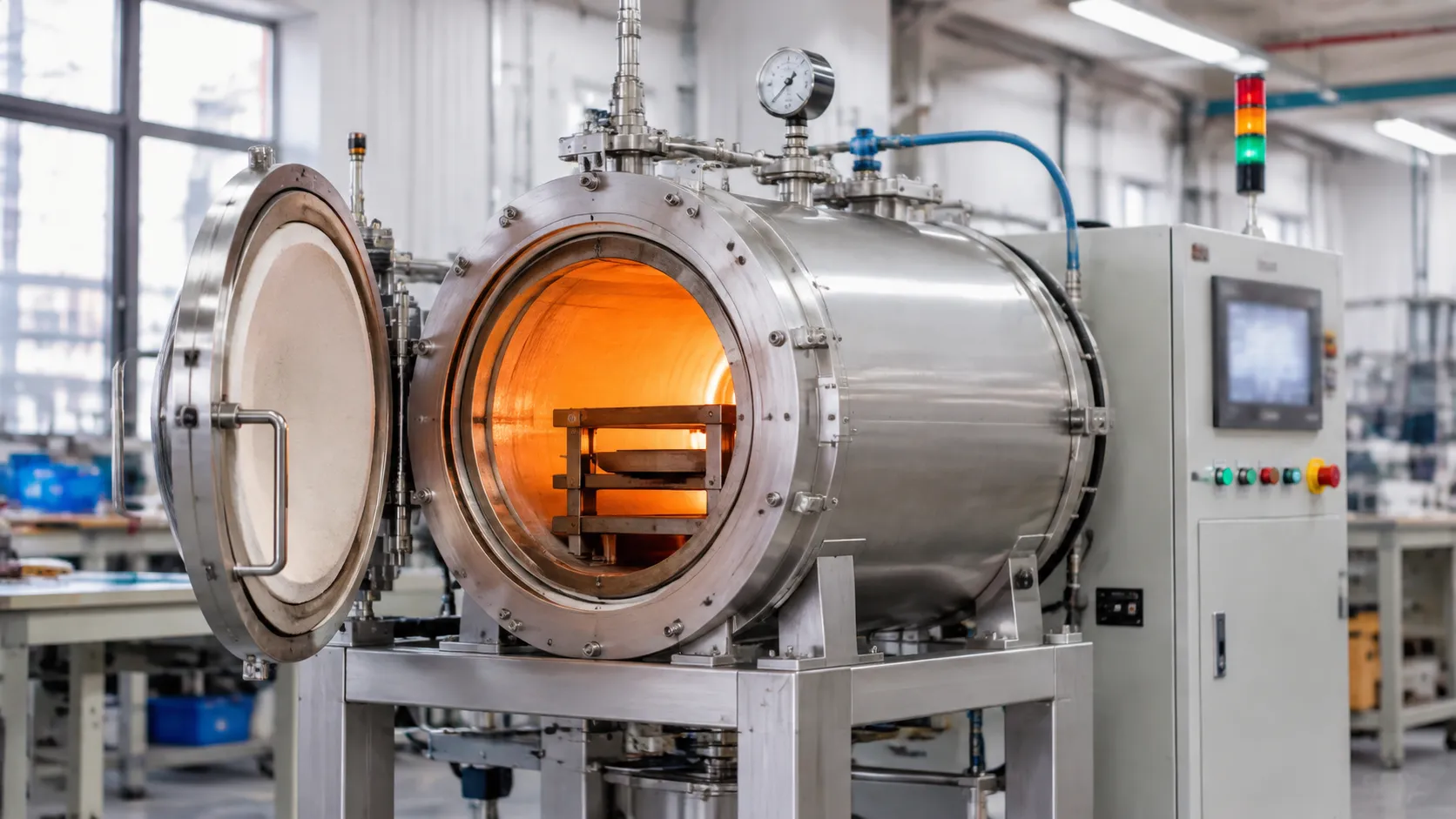
Selecting the correct chassis architecture dictates your shop-floor throughput, ease of loading, and maintenance cycles. We engineer both split tube vacuum furnace and fixed-chassis systems to match specific operational workflows:
| Feature | Horizontal Split-Hinge Furnace | Fixed-Tube Furnace Chassis |
|---|---|---|
| Tube Access & Loading | 180° swing-open access along the entire tube axis | Linear end-loading via push-pull rods or sample sleds |
| Rapid Thermal Quenching | Split shell can be opened at temperature for fast passive cooling | Enclosed shell limits natural radiant cooling rates |
| Tube Inspection | Instant visual checks of quartz or alumina tube condition | Requires complete axial removal for full tube inspection |
| Structural Footprint | Hinged frame requiring upper/lateral opening clearance | Compact, rigid profile optimized for inline conveyor setups |
| Ideal Operational Focus | High-mix R&D, rapid thermal cycling, prototype wire runs | Continuous processing, long soak runs, dedicated runs |
Technical Specifications and Operating Parameters
A reliable vacuum tube annealing furnace must deliver precise control over thermal and atmospheric variables. We design our systems to maintain tight temperature uniformity across multi-zone configurations, ensuring consistent material properties. Choosing the right tube material is critical for long-term operational success, as documented in our vacuum furnace brazing cycle guide and process parameters.
Core Operating Parameters
| Feature | Specification Range |
|---|---|
| Max Temperature | 1200°C (Quartz) to 1700°C (Alumina) |
| Uniformity | ±1°C to ±5°C depending on zone count |
| Vacuum Level | 10^-1 Torr (Rough) to 10^-6 Torr (Turbo) |
| Cooling | Water-cooled end flanges |
| Sealing | Dual Viton O-rings with cooling channels |
Vacuum and Material Selection
We provide scalable vacuum packages to match your specific outgassing and pressure requirements. For standard applications, rotary vane roughing pumps are sufficient, while high-vacuum needs are met with diffusion or turbomolecular systems to reach 10^-6 Torr ranges.
When configuring your process tube, consider these material limitations:
-
- Fused Quartz: Excellent for thermal shock resistance and high transparency; rated up to 1200°C.
- Recrystallized Alumina: Superior chemical resistance and structural integrity for high-temperature sintering up to 1700°C.
Electrical and Mechanical Integrity
System longevity relies on robust electrical distribution and airtight sealing. All furnace chassis are engineered for stable power input, utilizing PID-controlled SCR power regulators to prevent thermal oscillations. We utilize water-cooled stainless steel flanges combined with high-performance double Viton O-rings to ensure vacuum integrity even during extended high-temperature cycles. This structural design is vital for those managing nickel brazing in vacuum furnace guide and specs for precision metallic components.
Core Subsystems and Engineering Construction
Heating Element Selection by Thermal Range
We match the heating technology directly to your peak operating temperatures and work tube chemistry:
| Element Type | Max Operating Temp | Typical Tube Material | Primary Annealing Use |
|---|---|---|---|
| Kanthal A1 / APM (FeCrAl) | Up to 1200°C | Fused Quartz | Bright annealing of stainless alloys, copper, nickel wire |
| Silicon Carbide (SiC) | 1200°C – 1400°C | High-Purity Alumina | Tool steels, titanium alloys, magnetic core stress relief |
| Molybdenum Disilicide (MoSi₂) | 1400°C – 1750°C | Recrystallized Alumina | Refractory metals (tungsten, tantalum), high-entropy alloys |
Our spiral-wound and U-shaped elements sit evenly around the process chamber to prevent hot spots. This layout ensures radial heat transfer into the tube, protecting both quartz and alumina from localized thermal shock. Selecting the right setup for your specific throughput mirrors the selection criteria used across various vacuum furnace applications.
Graded Ceramic Fiber Insulation Chambers
We construct our hot zones using ultra-pure, multi-layer vacuum-formed ceramic fiber modules.
-
- Low Thermal Mass: Rapid heat-up rates (up to 30°C/min) with low energy consumption.
- Graded Layering: High-alumina board lines the hot interior face, backed by lightweight silicate fibers toward the outer chassis.
- Dual-Shell Housing: An external air-cooled or water-assisted double shell keeps the outer furnace skin below 50°C during sustained 1600°C soaking cycles.
Atmosphere Gas Management with Multi-Channel MFCs
For processes requiring inert gas purging or reducing atmospheres, we integrate digital mass flow controllers (MFCs):
-
- Multi-Gas Control: Dedicated channels for high-purity Argon (Ar), Nitrogen (N₂), and up to 5% Hydrogen (H₂) blends.
- Calibrated Precision: Mass flow control within ±1% full scale to maintain stable furnace chamber overpressures (typically 0.02 to 0.05 MPa).
- Automated Purge Cycles: Fully programmable solenoid routing for automatic vacuum-to-gas cycling before heat-up.
Digital Vacuum Monitoring: Integrated Pirani and Penning Gauges
To cover the entire pressure spectrum without blind spots, this high vacuum tube furnace pairs complementary sensor technologies:
-
- Digital Pirani Gauge: Handles atmospheric pressure down to rough vacuum levels (1.0 × 10⁻¹ Pa), managing pump crossovers and purge interlocks.
- Inverted Magnetron / Penning Gauge: Measures high vacuum ranges down to 1.0 × 10⁻⁵ Pa during turbomolecular pumping.
- Digital Gauge Controller: Displays live readouts on the main panel and feeds continuous analog signals to the system PLC for automatic process interlocks.
PLC Touchscreen Automation and Multi-Segment Ramping
Real-time process stability relies on industrial-grade automation:
-
- Programmable Thermal Profiles: Up to 50 distinct segments per recipe for multi-stage preheating, isothermal holding, and controlled cooling ramps.
- Precision PID Control: Multi-loop PID microprocessors adjust power outputs via phase-angle fired SCR (Silicon Controlled Rectifier) units, holding setpoint temperatures within ±1°C.
- Data Logging and Safety Interlocks: USB-exported run logs trace time-temperature-vacuum curves. Auto-abort sequences instantly kill element power if cooling water flow drops or chamber pressure spikes.
Target Metallurgical and Industrial Applications
When your parts demand mirror-bright surfaces, uniform grain growth, or spotless joins, this system isolates the workload from ambient air and volatile chemistries across rigorous industrial heat treatment workflows.
Refractory and Non-Ferrous Metal Heat Treatment
Titanium, tantalum, zirconium, and molybdenum react aggressively with trace oxygen, nitrogen, and hydrogen at elevated temperatures. Our furnace delivers the deep vacuum and clean atmosphere required to prevent embrittlement.
Titanium and Zirconium: Stress relief and recrystallization without alpha-case layer formation.
Refractory Metals (Mo, Ta, W): High-temperature ductility restoration under high vacuum or ultra-pure argon backfill.
Copper and Nickel Alloys: Complete bright annealing without surface scaling, preserving electrical conductivity.
Medical Device and Precision Wire Processing
Medical implants and micro-wire components require flawless surface chemistry and exact mechanical properties.
Nitinol Shape-Memory Setting: Precise thermal soak profiles lock in superelastic and shape-memory phases without oxide pickup.
Stainless Steel Capillary Tubes and Stents: Decarburization-free annealing keeps walls ductile for subsequent micro-drawing passes.
Ultra-Fine Precious Wire: Platinum, gold, and tungsten filament processing with zero surface dragging or soot contamination.
Semiconductor Annealing and 2D Nanomaterial Synthesis
Precision electronics manufacturing relies on clean environments free of trace particulates.
Wafer Contact Alloying: Low-temperature ohmic contact formation in inert gas or forming gas atmospheres.
CVD and 2D Materials: Controlled synthesis of graphene, hexagonal boron nitride (h-BN), and transition metal dichalcogenides (TMDs) with precise precursor vapor delivery.
Defect Annealing: High-purity silicon carbide (SiC) and gallium nitride (GaN) post-implantation lattice healing.
Flux-Free Vacuum Brazing and Advanced Ceramics
Active flux leaves corrosive chemical residues that destroy high-vacuum and aerospace assemblies. By maintaining low leak-back rates and uniform heating along the tube bore, our system supports flux-free vacuum brazing and high-density sintering.
| Application Process | Typical Atmosphere | Target Temperature Range | Primary Process Objective |
|---|---|---|---|
| Titanium / Stainless Brazing | High Vacuum (10⁻⁵ mbar) | 850°C – 1050°C | Clean alloy wetting without corrosive flux cleanup |
| Alumina / Zirconia Sintering | Air or Pure Oxygen Backfill | 1400°C – 1650°C | Grain boundary density control with minimal porosity |
| Carbide Solid-State Sintering | Vacuum / Argon Purge | 1200°C – 1500°C | Prevents decarburization while maximizing hardness |
Safety Systems and Industry Compliance Standards
Operating a vacuum tube annealing furnace requires rigorous safety protocols to protect both the operator and the integrity of the material under heat. Our systems integrate dual-loop over-temperature protection, which utilizes thermocouple redundancy to prevent thermal runaway if the primary sensor fails. These control logic pathways ensure the furnace enters a safe state immediately upon detecting any deviation from the programmed thermal profile.
Safety fail-safes are hard-wired into the infrastructure to monitor critical operational variables:
Cooling Water Interlocks: Real-time sensors track flow rate and pressure, automatically shutting down heating elements if a loss of cooling is detected.
Vacuum Integrity Monitoring: Pressure loss sensors trigger emergency isolation valves to protect the pump package and the sample in the event of a breach.
Hydrogen Safety Modules: For processes involving reactive or combustible atmospheres, we integrate explosion-proof gas management systems, including automatic nitrogen purging, flame arrestors, and hydrogen leak detection sensors.
We ensure that every industrial tube annealing furnace adheres to strict international benchmarks. Our control panels are engineered to meet CE, ISO 9001, and UL-compliant standards, ensuring that electrical architecture, grounding, and component safety exceed global industrial requirements. Understanding the key differences between vacuum furnace vs atmosphere furnace systems is essential when selecting the appropriate safety interlocks for your specific thermal processing needs.
Custom Configuration and Ancillary Options for Vacuum Tube Annealing Furnaces
I design my vacuum tube annealing furnace systems to be highly modular, ensuring they adapt to specific metallurgical requirements rather than forcing a "one-size-fits-all" approach. Whether you require extended isothermal zones for uniform heat treatment or rapid processing throughput, these configurable options optimize your workflow.
Modular Enhancements for Process Optimization
-
- Multi-Zone Heating: Independent thermal control zones expand the length of the isothermal hot zone, reducing temperature gradients during complex annealing cycles.
- Rapid Cooling: Integrated pneumatic blowers provide forced convection cooling, significantly shortening cycle times for high-volume production.
- Automated Material Handling: Precision pull-rod mechanisms and programmable push-pull loaders ensure consistent placement and retrieval of samples, minimizing manual intervention.
- Particulate Processing: Custom rotary and tilt drive integrations allow for the uniform heating of powders and granular materials, preventing clumping and ensuring complete atmosphere exposure.
- Material Carriers: Tailored sample sleds and high-purity quartz boats are available to accommodate diverse geometries, from delicate medical components to heavy-duty industrial alloys.
Configuration Overview Table
| Feature | Primary Function | Ideal Application |
|---|---|---|
| Multi-Zone Control | Isothermal Stability | Long-part precision annealing |
| Pneumatic Blower | Rapid Cycle Turnaround | High-volume production lines |
| Rotary Drive | Homogeneous Mixing | Powder and particulate sintering |
| Pull-Rod System | Automated Loading | Sensitive or controlled environments |
| Quartz Boats | Contamination Control | Semiconductor and thin-film work |
These configurations allow for the seamless integration of continuous annealing furnace for steel strip principles into smaller tube-scale setups, providing the versatility needed for advanced material R&D and specialized manufacturing. By prioritizing these ancillary systems, I ensure that each vacuum tube annealing furnace functions as a precise instrument tailored to your exact industrial demands.
Quality Testing and After-Sales Engineering Support
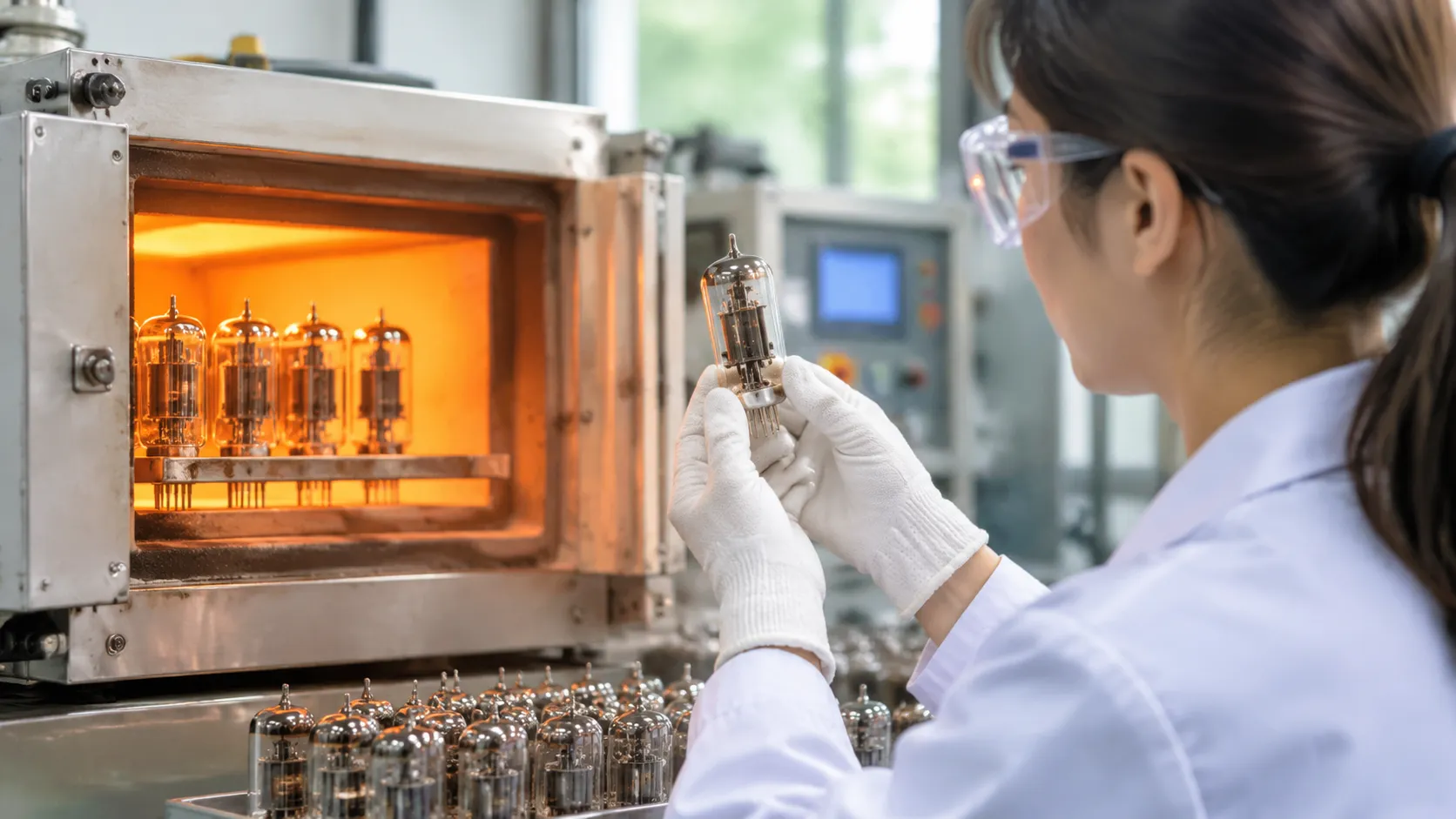
Temperature Uniformity Surveys (TUS) Compliant with AMS 2750
We calibrate our hot zones to guarantee reliable soak temperatures and tight process control:
-
- Multi-Point Profiling: We map hot zones using calibrated Type N and Type S multi-point thermocouple arrays under true vacuum and gas flow conditions.
- AMS 2750 Compliance: Our standard surveys confirm temperature uniformity within ±3°C to ±5°C across the active heating length, meeting Class 2 furnace standards.
- Thermal Balancing: We adjust multi-zone PID offsets directly in the controller to balance end-loss radiative cooling before shipment.
| Test Parameter | Validation Standard | Documented Pass Criteria |
|---|---|---|
| Uniformity (TUS) | AMS 2750 / Nadcap | ±3°C at 600°C, 900°C, and 1150°C |
| Helium Leak Rate | ASTM E498 | Leak rate < 1 × 10⁻⁹ mbar·L/s |
| Leak-Back Rate | Baseline Pumping Test | < 0.5 Pa/hr (ambient, isolated) |
| Over-Temp Interlock | Electrical Safety Audit | Shutdown response within 200 milliseconds |
Factory Acceptance Testing (FAT) and Baseline Documentation
To uphold our rigorous quality certifications, we verify and log the operational parameters of every industrial tube annealing furnace:
-
- Helium Mass Spectrometer Sniffing: We test every seal, water cooling jacket, and tube flange to locate any micro-leaks before high-temperature runs.
- Baseline Leak-Back Verification: We bake out the tube assembly, isolate the vacuum pump station, and record the pressure rise over 12 hours to verify a clean, outgassing-free vessel.
- Full Cycle Stress Runs: We run standard heating and rapid cool-down profiles to confirm stable power distribution and solid flange cooling integrity.
- Comprehensive Documentation: Each vacuum annealing equipment package ships with complete FAT checklists, electrical wiring schematics, and sensor calibration certificates.
Worldwide Commissioning, Parts Supply, and Remote Diagnostics
We maintain production uptime across global installations with reliable, direct engineering assistance:
-
- Global Commissioning: Our engineers handle on-site installation, system integration, roughing pump hookups, and user training at your facility.
- Remote Telemetry Support: With integrated PLC network modules, our technical team securely logs in to diagnose PID tuning anomalies, vacuum gauge dropouts, or heater performance in real time.
- Fast-Ship Replacement Parts: We stock fused quartz tubes, alumina process vessels, double Viton seal kits, and heating element spares for immediate international dispatch through our after-sales support network.
Frequently Asked Questions About Vacuum Tube Annealing Furnaces
What is the ultimate vacuum level achievable in this system?
The ultimate base vacuum in our vacuum tube annealing furnace depends directly on the vacuum pumping package configured for your process requirements:
-
- Two-Stage Rotary Vane Pump (Mechanical Roughing): Reaches an ultimate pressure down to 1 × 10⁻² Torr (1.3 Pa), which is ideal for standard inert-gas purge cycles, basic stress relief, and non-critical metal annealing.
- Dry Scroll Pump: Achieves 5 × 10⁻³ Torr clean, oil-free vacuum, eliminating any risk of hydrocarbon backstreaming for optical and semiconductor tasks.
- Turbomolecular Pumping Station: Integrates a turbo pump backed by a dry diaphragm or rotary pump to draw clean high vacuum down to 5 × 10⁻⁶ Torr (6.6 × 10⁻⁴ Pa) or better, preventing even trace discoloration on titanium, tantalum, and superalloys.
How do I choose between quartz and alumina process tubes?
Selecting the correct process tube tube material balances operating temperature limits, chemical exposure, and thermal cycle speeds.
| Tube Material | Max Continuous Temp | Max Peak Temp | Thermal Shock Resistance | Transparency | Recommended Applications |
|---|---|---|---|---|---|
| High-Purity Fused Quartz | 1100°C | 1200°C | Exceptional (Rapid ramp/cool) | Transparent (Visual check) | Silicon wafers, precious metals, low-temp bright annealing |
| Recrystallized Alumina (99.7% Al₂O₃) | 1600°C | 1700°C | Moderate (Controlled ramp required) | Opaque | Refractory metals, ceramic co-firing, high-temperature sintering |
Can this furnace safely run both inert gas and pure hydrogen atmospheres?
Yes. Our systems handle high-purity inert gases (Argon, Nitrogen, Helium) as well as active reducing atmospheres like forming gas (N₂/H₂ blends) or pure hydrogen.
When configuring a vacuum annealing furnace for flammable mixtures or pure hydrogen, we install a certified combustible gas safety skid that includes:
Pre-cycle vacuum leak testing and nitrogen purge interlocking.
Mass flow controller (MFC) interlocks paired with inline explosion-proof solenoids.
Automatic exhaust burn-off igniters with thermal flame sensors.
Over-pressure mechanical relief valves and ambient hydrogen sniffing alarms.
What maintenance is required to preserve flange vacuum integrity?
Vacuum leaks typically originate at flange interfaces rather than the tube itself. To maintain low leak-back rates:
O-Ring Inspection: Inspect the double Viton O-rings prior to every run for cracks, flat spots, or particulates. Replace them annually or whenever running above rated continuous limits.
Flange Cleaning: Wipe down the sealing grooves with lint-free wipes soaked in isopropyl alcohol. Apply a microscopic film of high-vacuum fluorinated grease only if necessary for cold seals.
Cooling Water Loops: Keep flange water-cooling lines active whenever furnace chamber temperatures exceed 400°C to prevent thermal degradation of the elastomer seals.
Fastener Torque: Tighten flange clamp bolts in an alternating cross pattern to ensure flat, even compression across the entire sealing perimeter.
How do multi-zone heaters improve temperature uniformity along the tube?
Standard single-zone tube furnaces lose significant heat through the exposed ends of the process tube, causing a natural bell-curve temperature drop.
A multi-zone vacuum tube furnace solves this by dividing the heating mantle into three or more independently powered zones, each managed by its own dedicated PID controller and thermocouple:
End-Loss Compensation: The outer zones operate at higher power levels to balance natural radiative losses through the tube ends.
Extended Isothermal Flat Zone: Tri-zone configurations double or triple the uniform hot zone length, ensuring parts receive identical thermal treatment regardless of placement within the sample boat.
Thermal Gradient Flexibility: Multi-zone control lets you program intentional temperature gradients across the tube axis, an essential capability for chemical vapor transport, tailored diffusion, and specialized vacuum brazing processes.