Emerging Materials: High-Temperature R&D and Advanced Thermal Processing
Advanced high-temperature R&D demands extreme thermal precision, tight atmosphere purity, and strict contamination control. Learn more about-us and our engineering focus, as Haitem Furnace provides custom engineered solutions based on a deep understanding of phase transitions, grain growth, and sintering kinetics across diverse emerging materials—enabling a seamless transition from laboratory-scale R&D to full-scale industrial manufacturing.
Carbon-Based and Composite Materials
Designed for high-performance structural applications operating in extreme thermal environments. Haitem systems support high-temperature graphitization, chemical vapor infiltration and deposition (CVI/CVD), and stress-relief thermal treatment for carbon-carbon (C/C) and carbon-silicon carbide (C/SiC) composite matrices.
- Multi-zone PID heating controls prevent matrix thermal shock and micro-cracking during rapid ramps.
- Engineered carbon-felt insulation and gas outflow channels prevent volatile hydrocarbon deposition.
Specialty Ceramics and Superhard Materials
High-precision pressureless and gas-pressure sintering solutions tailored for advanced specialty ceramics including silicon nitride (Si₃N₄), silicon carbide (SiC), boron carbide, and ultra-high-temperature ceramics (UHTCs). Supports pre-sintering and post-processing for HIP and HP systems.
- Eliminates intergranular pore defects to optimize density, flexural strength, and fracture toughness.
- Precise nitrogen overpressure regulation prevents ceramic thermal decomposition at extreme temperatures.
High-Entropy Alloys and Refractory Metals
Ultra-clean vacuum annealing, degassing, and stress relief for reactive refractory metals—including niobium (Nb), molybdenum (Mo), tantalum (Ta), and tungsten alloys—as well as complex high-entropy alloys (HEAs). Ensures thorough removal of trapped interstitial gases.
- All-metal molybdenum or tungsten hot zones prevent carbon contamination and oxygen embrittlement.
- Multi-stage turbomolecular pumping maintains a deep operational vacuum to protect active metal surfaces.
Semiconductor and Optoelectronic Frontier Materials
Ultra-pure, controlled-atmosphere thermal processing for crystal growth, boule synthesis, and substrate defect annealing of wide-bandgap semiconductors, including silicon carbide (SiC), gallium nitride (GaN), and synthetic diamond wafers.
- Contamination-free quartz or graphite chambers preserve pristine purity and wafer electrical yield.
- Multi-zone dynamic power distribution stabilizes solid-liquid interfaces during single-crystal growth.
Mastering Thermal Dynamics in Extreme Application Environments
Processing advanced materials requires balancing complex chemical reactions, phase transformations, and thermal stress vectors. Whether densifying specialty ceramics or degassing high-purity refractory metals, maintaining uniform temperature zones within ±3°C and controlling partial gas pressures are critical to achieving defect-free material microstructures.
Multi-zone independent control loops eliminate hot spots, edge warping, and microstructural variation.
Turbomolecular and diffusion pumping stacks prevent trace oxidation in reactive alloys and ceramics.
Haitem Furnace builds specialized thermal processing equipment engineered to meet these exacting specifications, backed by empirical process data and proven industrial chamber designs.
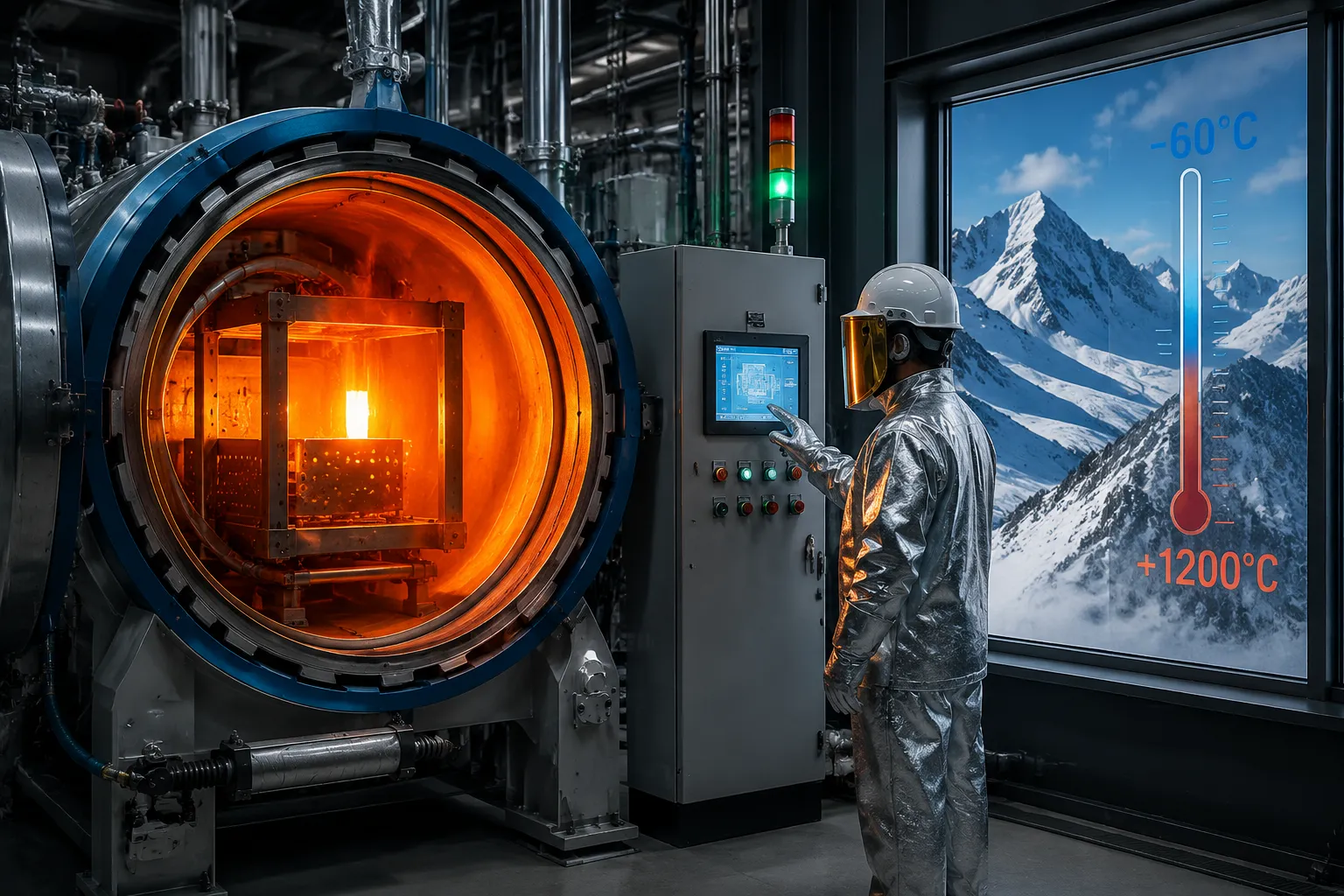
High-temperature vacuum chamber configuration engineered for specialized ceramic and refractory metal synthesis.
Process Parameter Reference Matrix
Standard operating thermal conditions across key emerging material processing categories.
| Material Category | Primary Process | Temperature Range | Atmosphere / Vacuum | Key Performance Goal |
|---|---|---|---|---|
| C/C & C/SiC Composites | Graphitization / CVI | 1800°C – 2400°C | High Vacuum / Argon | Interfacial bond strength & maximum density |
| Silicon Nitride (Si₃N₄) | Gas Pressure Sintering | 1700°C – 1950°C | 1–10 MPa N₂ Overpressure | Defect elimination & flexural strength |
| Refractory Metals (Nb, Mo, Ta) | Annealing & Degassing | 1200°C – 1800°C | 10⁻⁵ Pa Ultra-High Vacuum | Interstitial oxygen & gas removal |
| 3rd Gen Semiconductors (SiC/GaN) | Substrate Annealing | 1400°C – 2200°C | Ultra-Pure Ar / H₂ Mix | Lattice defect reduction & surface purity |
High-Performance Vacuum & Atmosphere Thermal Systems
Explore our advanced thermal equipment lineup designed for precision sintering, oxidation-free annealing, and controlled atmosphere material processing. Discover our comprehensive range of products engineered to meet demanding industrial and research applications.
High Vacuum Sintering Furnace Series
Designed for high-density sintering of ceramics, tungsten carbide, and specialty alloys under high vacuum conditions.
Compact High Vacuum Sintering System
Ultra-High Temperature Vacuum Sintering Furnace
Specialty Alloy Vacuum Sintering System
Require Custom Chamber Dimensions or Thermal Profiles?
Haitem Furnace engineers deliver tailored vacuum sintering and controlled atmosphere systems to exact material specifications.
Core Technical Capabilities Built for Advanced Materials
Processing next-generation materials requires specialized thermal equipment engineered to maintain tight process stability under extreme operational demands. Haitem Furnace relies on self-developed precise temperature control, ultra-clean vacuum design, and precise atmosphere control technology to ensure maximum repeatability and high yield rates across research institutions and high-volume industrial facilities.
Multi-Zone Ultra-High Temperature Control and Thermal Field Uniformity
Advanced material sintering—such as carbon-carbon (C/C) composites, silicon carbide (SiC), and technical ceramics—demands rigid thermal uniformity across the entire furnace hot zone. Inadequate heat distribution causes localized thermal stresses, micro-cracking, irregular grain growth, and high batch rejection rates in complex workpieces.
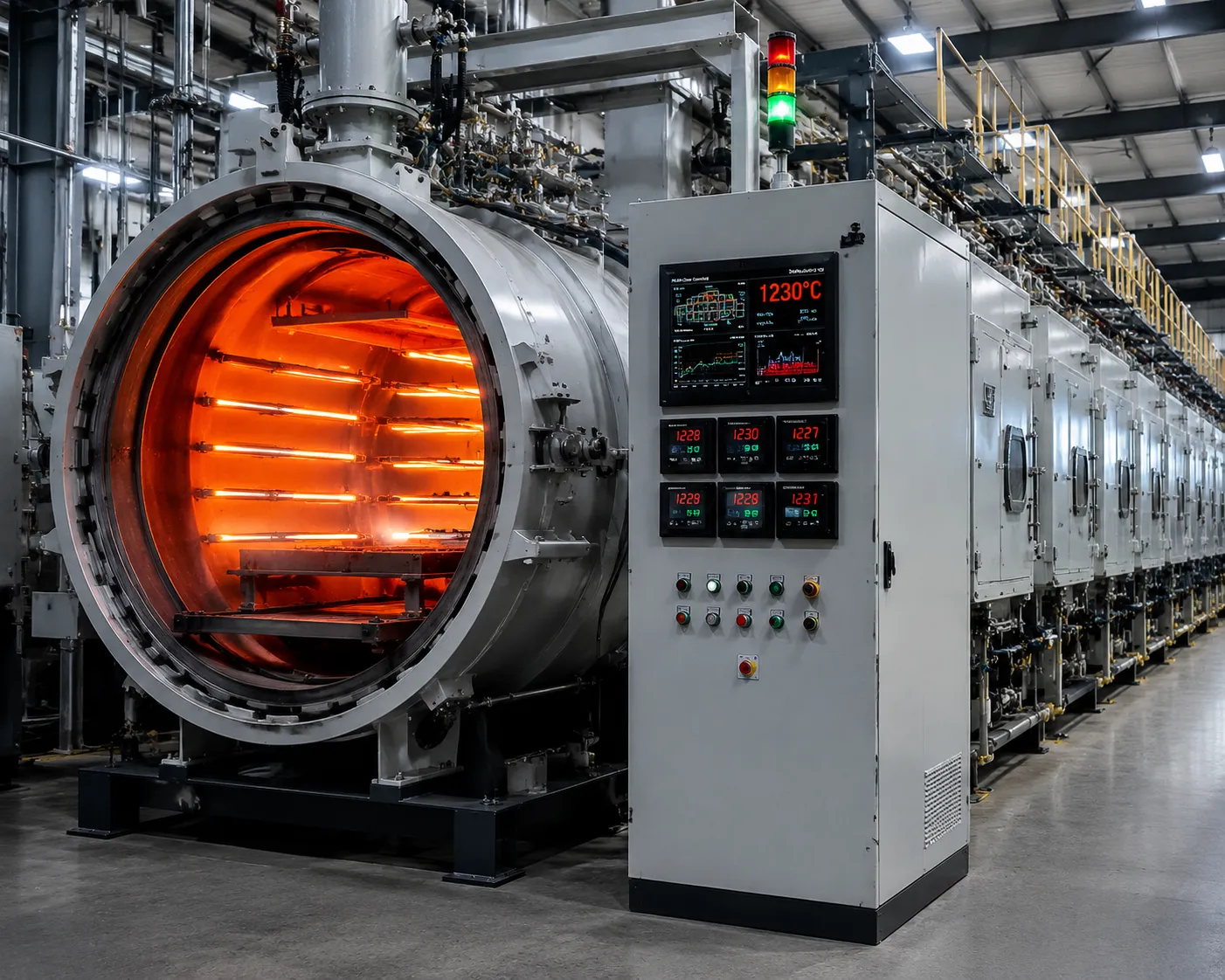
To eliminate thermal variance, Haitem equipment integrates multi-zone independent temperature control powered by high-precision PID auto-tuning algorithms and SCR power regulators. Each heating zone adjusts thermal output dynamically using multi-point thermocouple arrays and optical pyrometers. Our specialized focus on advanced thermal field engineering ensures precise temperature control architecture maintains thermal field uniformity within ±3°C across effective heating zones operating at temperatures reaching up to 2400°C. Learn more about our technical expertise on our about-us focus page.
- Independent Zone Balancing: Multi-zone heating element power allocation actively neutralizes thermal losses at chamber boundaries.
- Dual-Spectrum Monitoring: High-accuracy thermocouples paired with non-contact optical pyrometers track rapid thermal ramps.
- Programmable Thermal Ramping: Ultra-high temperature control ensures precise heating curves that prevent thermal shock during phase transitions.
Ultra-Clean Vacuum Architecture and Contamination Mitigation
High-entropy alloys, third-generation semiconductor substrates, and refractory metals such as niobium, molybdenum, and tantalum are highly sensitive to trace atmospheric gases at elevated temperatures. Microscopic oxidation, nitridation, or carbon absorption rapidly embrittles metal structures and compromises crystal purity.
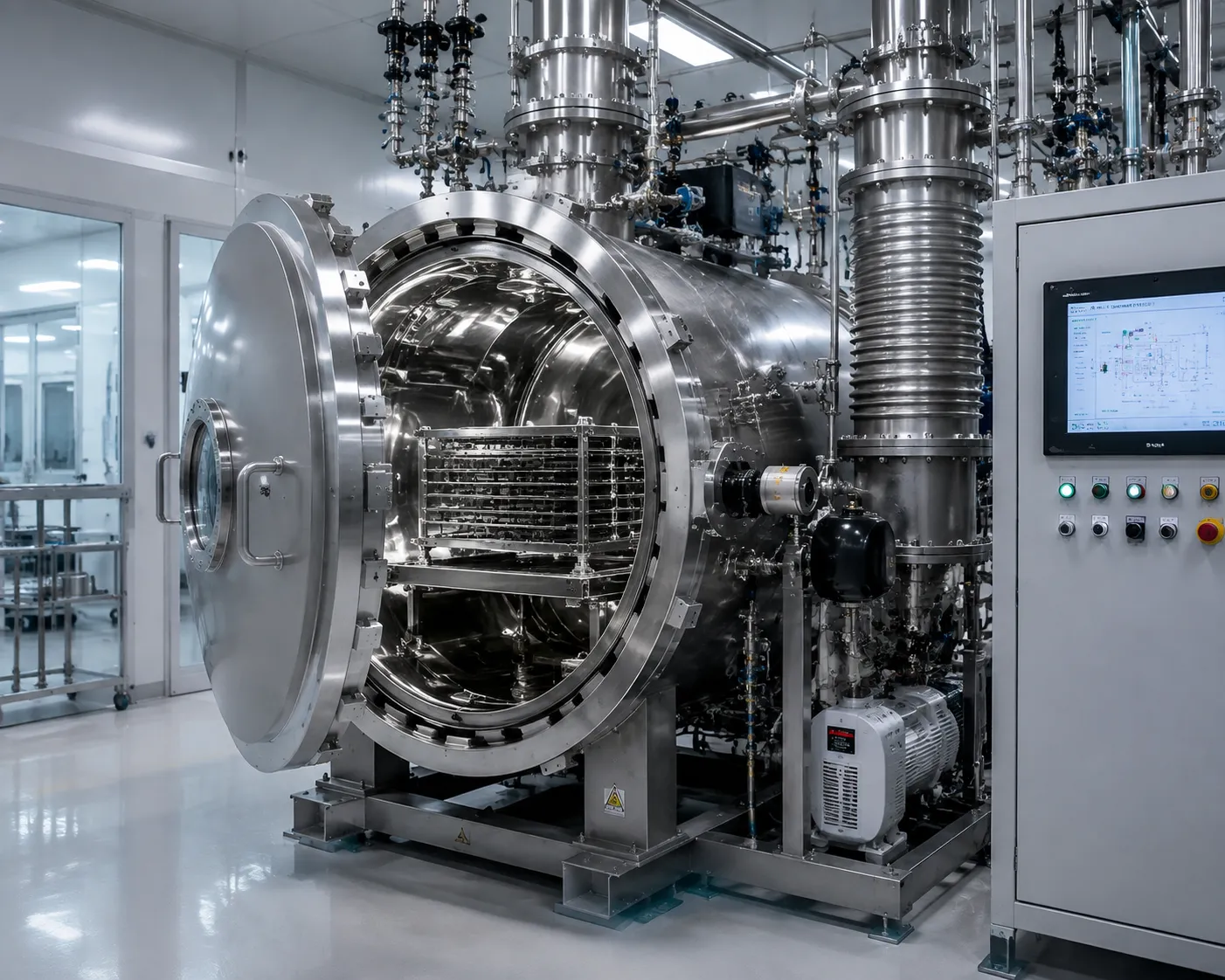
Haitem Furnace engineers ultra-clean vacuum environments using double-walled stainless steel 316L chambers paired with specialized insulation shielding. Depending on process dynamics, we deploy metallic radiation shields (molybdenum or tungsten) or ultra-high-purity rigid graphite insulation. Driven by multi-stage turbomolecular pumping systems, our vacuum furnaces for sintering and annealing reach ultimate vacuum levels down to 10⁻⁵ Pa, preserving ultra-pure specimen surfaces.
- Electro-Polished SS316L Vessel: Double-walled water-cooled construction minimizes outgassing and prevents volatile molecular absorption.
- Non-Contaminating Insulation: Material-specific heat shields prevent elemental migration during extreme thermal cycles.
- Oil-Free Pumping Stacks: Integrated dry backing pumps and turbomolecular stages ensure hydrocarbon-free heat treating environments.
Flexible Multi-Gas Atmosphere Control and Safety Systems
Specialty thermal treatment often relies on active chemical atmospheres for oxide reduction, surface nitridation, or controlled passivation. Handling volatile reactive gases alongside inert purging media requires precise gas blending, dynamic pressure regulation, and failsafe operational engineering.
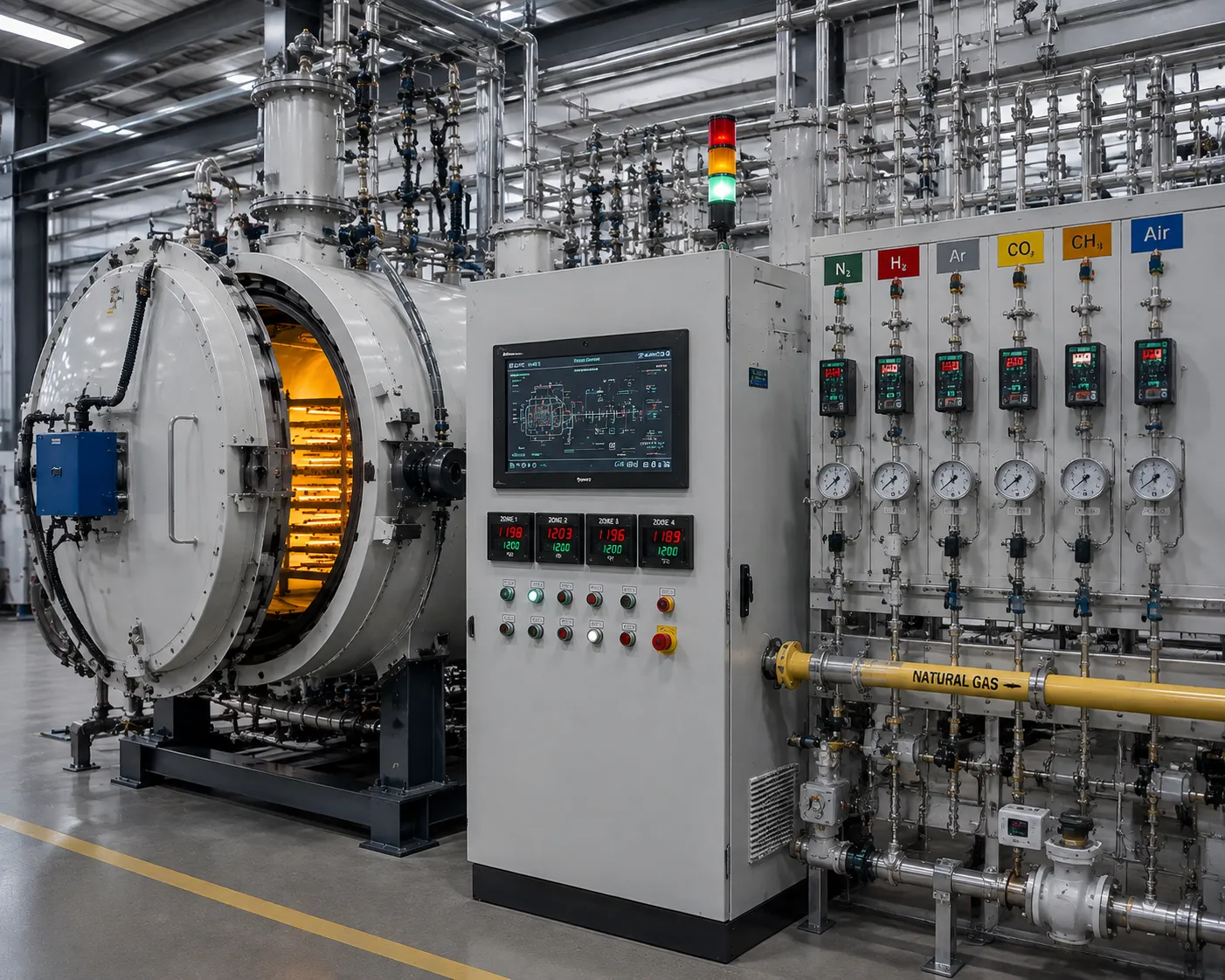
Our controlled atmosphere furnaces feature digital Mass Flow Controllers (MFCs) and closed-loop pressure management. The precise atmosphere delivery unit manages multi-channel gas ratios and dynamic pressure states from deep vacuum up to micro-positive pressures. For combustible gases such as pure hydrogen, Haitem Furnace incorporates SIL-2 certified explosion-proof interlocks, automated nitrogen purge routines, and burn-off exhaust stacks.
- Digital MFC Precision: Multi-channel mass flow controllers deliver consistent gas mixing accuracy within ±1% of setpoint.
- SIL-2 Safety Engineering: Integrated gas sensors, automatic emergency purges, and flame arrestors protect operator and plant assets.
- Dynamic Pressure Regulation: Seamlessly automates transitions between high vacuum, partial pressure gas flows, and positive pressure modes.
Engineering Performance and Technical Capability Matrix
A side-by-side technical specification matrix demonstrating how Haitem Furnace thermal systems directly address critical processing challenges in advanced material manufacturing.
| Capability Domain | Target Specification | Core Engineering Advantage | Target Material Application |
|---|---|---|---|
| Ultra-High Temperature Control | ±3°C uniformity up to 2400°C | Multi-zone independent power regulation and SCR tuning | Specialty ceramics, C/C & C/SiC composite sintering |
| Ultra-Clean Vacuum | Ultimate vacuum down to 10⁻⁵ Pa | 316L polished vessel with molybdenum/tungsten radiation shields | Refractory metal degassing, high-entropy alloy annealing |
| Precise Atmosphere Control | Digital MFC flow accuracy within ±1% | Multi-gas blending with closed-loop pressure management | Semiconductor substrate annealing, oxide reduction |
| Operational Safety | SIL-2 certified system design | Explosion-proof interlocks, auto nitrogen purge, burn-off stack | Hydrogen atmosphere processing, volatile gas treatment |
Engineering Assurance: Every high-temperature vacuum furnace and custom thermal processing system undergoes rigorous Factory Acceptance Testing (FAT) prior to site delivery.
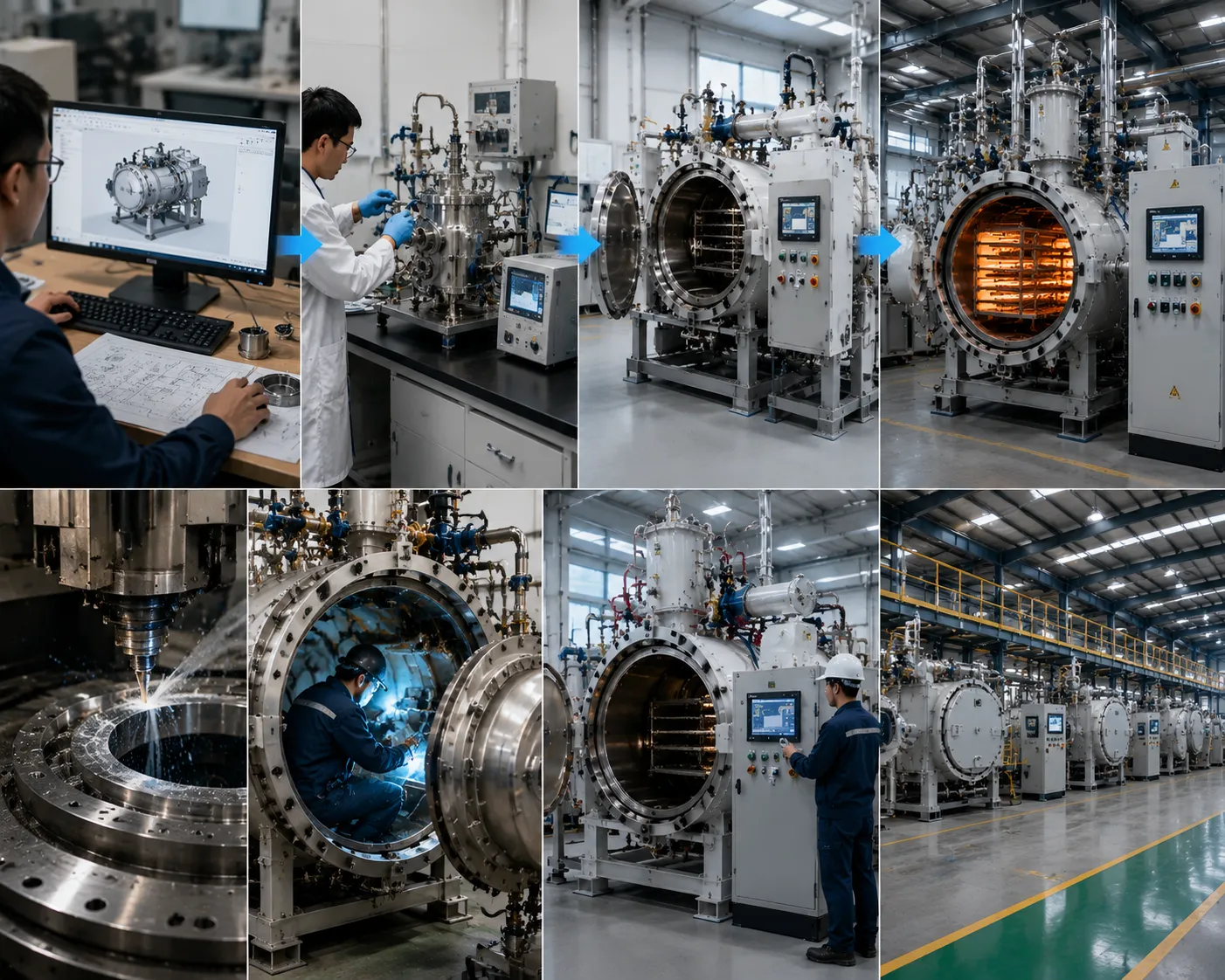
Custom Engineering Workflow From Lab-Scale R&D to Industrial Production
Process Requirement Evaluation & Material Thermal Characterization
We start by thoroughly evaluating your material’s thermal behavior—including outgassing points, phase transitions, and sintering kinetics for C/C composites, technical ceramics, or refractory metals. Our specialty furnace engineering team defines exact vacuum levels, gas atmospheres, and heating ramp limits to lay a reliable foundation for custom thermal processing.
Laboratory Pilot Trials & Thermal Processing Design
Before full-scale equipment fabrication, we conduct empirical pilot runs on lab-scale tube or vacuum furnaces to validate temperature profiles and atmosphere purity. This data-driven phase refines your overall thermal workflow, ensuring heating element layouts and insulation systems yield consistent, repeatable material density and microstructures.
Custom Manufacturing of Thermal Structure & Control Systems
Upon parameter verification, Haitem engineers custom-fabricate ultra-clean vacuum chambers, high-purity heating elements (graphite, molybdenum, or SiC), and multi-zone PLC control architectures. Leveraging our advanced manufacturing capabilities, we integrate automated atmosphere control and explosion-proof safety systems tailored to your proprietary thermal processing demands.
On-Site Commissioning & Secondary Parameter Optimization
Our engineering specialists oversee complete on-site assembly, helium mass spectrometer leak testing, and temperature uniformity surveys (TUS). We perform secondary process tuning during real-world trial runs to ensure a seamless transition from initial laboratory R&D to high-yield industrial scale production.
Need a Customized Thermal Processing Solution?
Have unique material requirements or non-standard process parameters? Submit your specifications and let Haitem Furnace engineers evaluate the optimal thermal solution for your application.
Haitem Furnace’s dedicated engineering team provides one-stop custom thermal processing solutions, taking advanced materials from initial laboratory R&D through to full-capacity industrial production lines.
Frequently Asked Questions: Advanced Material Processing & Furnace Selection
Engineered thermal processing for advanced materials requires balancing extreme temperatures, atmosphere purity, and strict safety protocols. Below, the engineering team at Haitem Furnace addresses key technical challenges in high-vacuum sintering, gas atmosphere control, custom hot zone selection, and seamless R&D scaling. Learn more about-us and our history as an industrial thermal equipment leader.
01 Advanced materials are easy to oxidize at high temperatures. How does a Haitem vacuum furnace guarantee chamber purity?
Thermal degradation and surface oxidation during high-temperature thermal treatment can destroy microstructures and impair mechanical properties. As an experienced high-temperature furnace manufacturer offering high-performance vacuum-furnaces, Haitem Furnace employs a multi-tiered engineering approach to maintain absolute atmosphere purity throughout the entire heating profile:
- Ultra-Clean Stainless Steel Chambers: Double-walled, water-cooled 304 or 316L stainless steel vacuum chambers feature electropolished inner surfaces to eliminate micro-porosity and minimize outgassing under extreme vacuum conditions.
- High-Vacuum Pumping Assemblies: Integrated turbomolecular or oil-diffusion pumping systems paired with dry scroll backing pumps achieve high vacuum levels down to 10⁻⁵ Pa, effectively stripping trace oxygen and moisture prior to heating.
- Helium Mass Spectrometer Leak Testing: Every custom vacuum sintering furnace undergoes total vacuum containment testing, guaranteeing helium leak rates lower than 1 × 10⁻⁹ Pa·m³/s.
- Purified Inert Atmosphere Backfilling: Automated multi-stage gas purging with ultra-high-purity (99.999%) Argon or Nitrogen ensures oxygen levels stay below 1 ppm during controlled atmosphere thermal treatment cycles.
Key takeaway: Combining ultra-clean chamber construction with deep vacuum pumping and sealed gas loops enables consistent processing of reactive alloys, specialty technical ceramics, and delicate optical substrates without oxidation.
02 For carbon-based or ceramic materials requiring sintering above 2000°C, which heating element and insulation shield are recommended?
Selecting hot zone materials for extreme temperatures above 2000°C requires matching heating element chemistry and thermal insulation with the chemical compatibility of the target material:
High-Purity Graphite Hot Zones
Ideal for carbon-carbon (C/C) composites, silicon carbide (SiC), graphitization processes, and structural non-oxide ceramics.
- • Heating Elements: Isostatically pressed high-purity graphite elements.
- • Insulation: Multi-layer rigid carbon felt and graphite foil shielding.
- • Operating Limit: Up to 2200°C in inert or vacuum atmospheres.
- • Advantage: Exceptional thermal shock resistance and lower life-cycle operational costs.
Refractory Metal Hot Zones
Essential for carbon-sensitive applications, refractory metals (Niobium, Tantalum, Molybdenum), high-entropy alloys, and oxide ceramics.
- • Heating Elements: Tungsten (W) or Molybdenum (Mo) mesh/sheet elements.
- • Insulation: All-metal multi-layer Tungsten/Molybdenum radiation shields.
- • Operating Limit: Up to 2200°C under ultra-high vacuum conditions.
- • Advantage: Eliminates carbon vapor contamination to preserve exact material stoichiometry.
Haitem Furnace evaluates your specific material composition, target ramp rates, and atmosphere requirements to recommend the optimal hot zone design, ensuring long component lifespans and zero cross-contamination.
03 Does Haitem support non-standard gas circuits and explosion-proof modifications for laboratory-scale equipment?
Yes. Modern material research frequently involves specialized gas reaction chemistry, requiring custom engineering solutions beyond standard furnace configurations. Haitem Furnace provides tailored gas distribution and safety integration for lab and pilot units:
- Multi-Channel Gas Mixing Systems: Precision mass flow controllers (MFCs) enable digital control over complex gas mixtures, supporting Hydrogen (H₂), Argon (Ar), Nitrogen (N₂), Carbon Monoxide (CO), and hydrocarbon process gases.
- Combustible Gas Safety Controls: Full compliance for flammable gas operation, featuring positive-pressure purging cabinets, automatic emergency N₂ flush valves, gas leak detection sensors, and automated burn-off exhaust stacks.
- Custom Flange & Diagnostic Feedthroughs: Laboratory tube and muffle furnaces can be outfitted with water-cooled quick-release flanges, optical windows for pyrometry, and multi-point thermocouple feedthroughs for real-time sample monitoring.
Whether modifying a small benchtop tube furnace or building a fully automated controlled atmosphere furnace, Haitem adheres to strict international safety standards to protect research personnel and facilities.
04 How to ensure the smooth transition of small-batch R&D results to large-scale industrial production furnaces?
Transitioning a thermal process from small lab samples to high-volume commercial production often introduces challenges such as non-uniform heating, thermal lag, and atmosphere gradients. Haitem Furnace bridges this gap through custom thermal engineering solutions:
We utilize 3D Finite Element Analysis (FEA) and Computational Fluid Dynamics (CFD) to model heat flux and gas distribution, ensuring uniform heat transfer across expanded effective work zones.
Industrial scale-up models incorporate multi-zone PID power controllers to compensate for end-loss thermal radiation, holding temperature field uniformity within ±3°C throughout large hot zones.
Haitem utilizes standardized PLC control hardware and software logic across research and production units. Heating rates, dwell times, vacuum sequences, and gas flows transition directly without recipe re-engineering.
Our application center allows customers to perform scale-up testing on pilot equipment before committing to full-scale manufacturing plant installations.
Didn't find your specific material or thermal process parameter?
The Haitem Furnace engineering team has accumulated empirical thermal treatment data for hundreds of frontier materials. Contact our thermal specialists today for real-time technical guidance and tailored furnace configurations.
Strict Data Confidentiality • 24-Hour Fast Engineering Response