Precision MIM Debinding & Sintering Thermal Processing Solutions
From precise atmosphere control during debinding to high-temperature, high-density sintering, Haitem Furnace provides global manufacturers with customized debinding and sintering furnace systems tailored for high-volume production of complex MIM parts.
±1°C Precision
Tight temperature uniformity for consistent shrinkage.
Binder Trapping
High-efficiency vapor condensate recovery.
Zero Distortion
Eliminates component warping and micro-cracking.
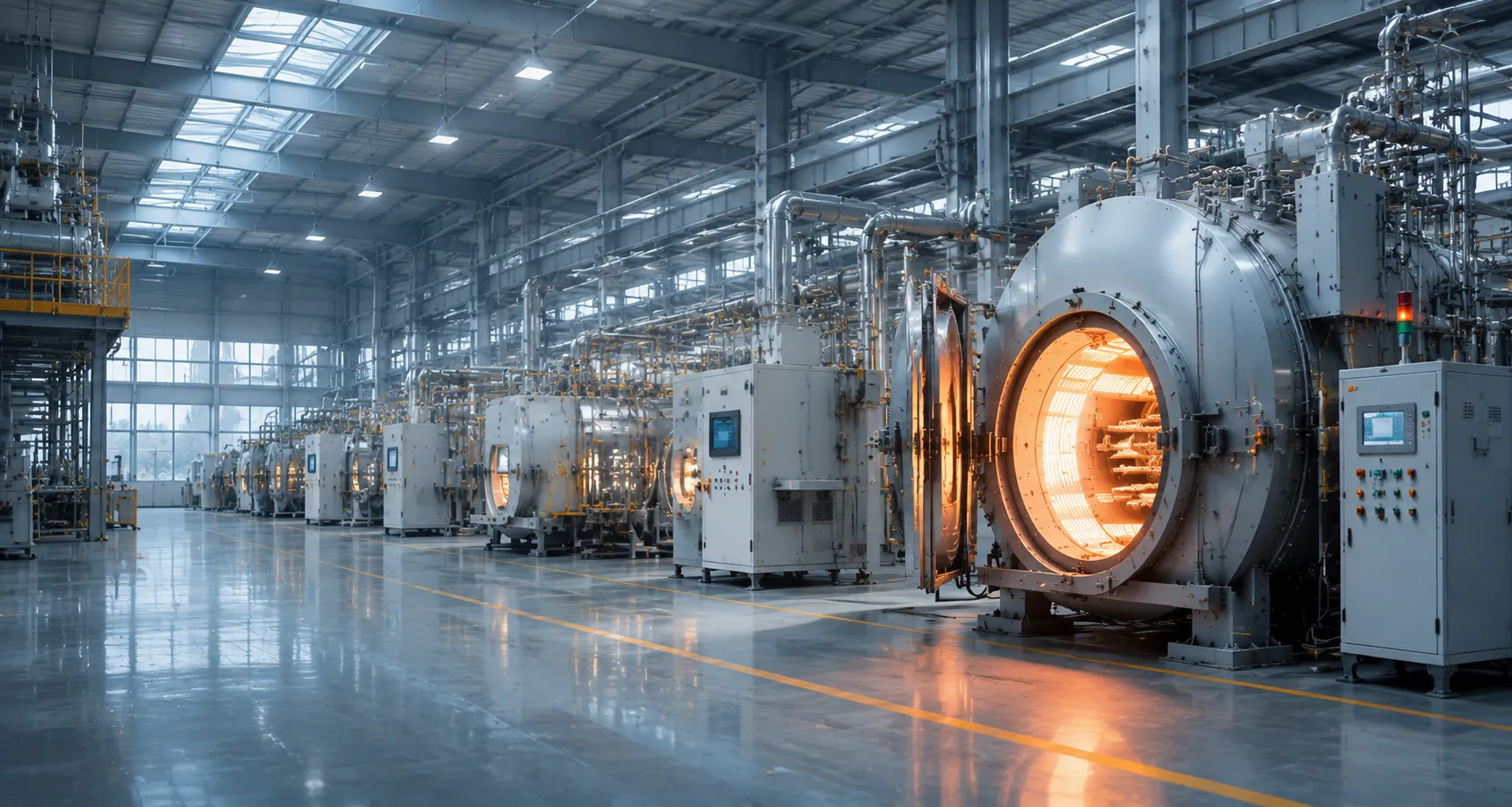
Atmosphere Precision
Catalytic & Solvent Debinding Integration
MIM Sintering Precision & Furnace Temperature Uniformity
Haitem Furnace delivers exceptional dimensional shrinkage consistency and component density for MIM production through precise multi-zone temperature regulation and pure atmosphere management, utilizing advanced vacuum furnaces technology.
Furnace Temperature Uniformity
Maintains tight thermal distribution throughout the heating chamber to ensure repeatable volumetric shrinkage.
Theoretical Densification Rate
Maximizes structural integrity, tensile strength, and surface finish for demanding metallic components.
Debinding Exhaust Trapping
Integrated binder removal and condensate trapping safeguard vacuum pumps, furnace walls, and green parts.
Global MIM Deployments
Trusted by industrial MIM manufacturers worldwide through our global-service network for automotive, medical, and consumer electronics applications.
Mastering Atmosphere & Thermal Control for Complex Geometries
Haitem Furnace integrates advanced multi-zone heating and micro-atmosphere regulation into every MIM debinding and sintering platform. By leveraging our state-of-the-art manufacturing-capabilities, our equipment eliminates internal thermal gradients and manages binder burn-off to deliver precise linear shrinkage and pristine surface finishes across production batches.
Shrinkage Rate Control
Maintains tight dimensional tolerances across complex geometries.
Atmosphere Management
Custom gas flow and vacuum control eliminate oxidation risks.
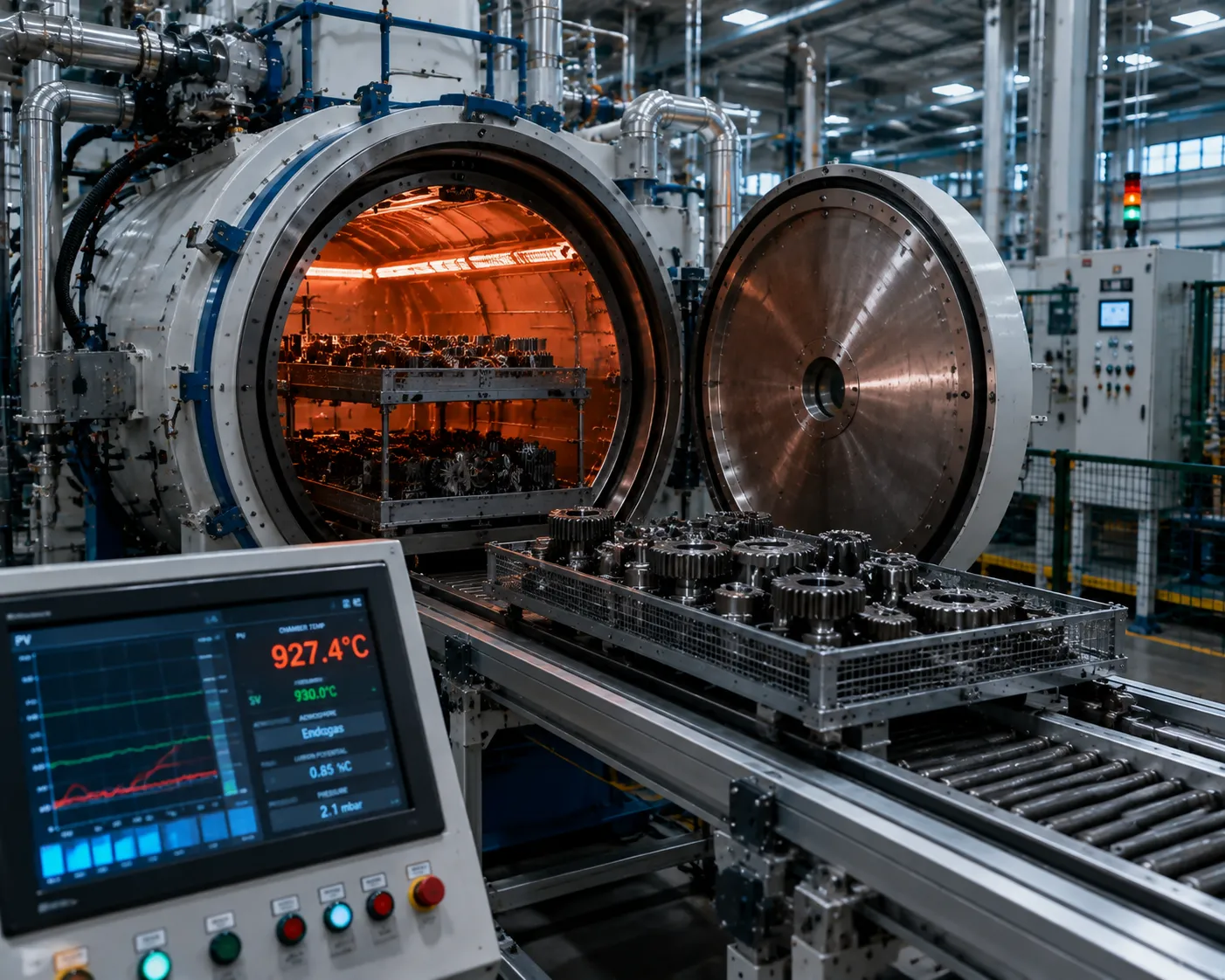
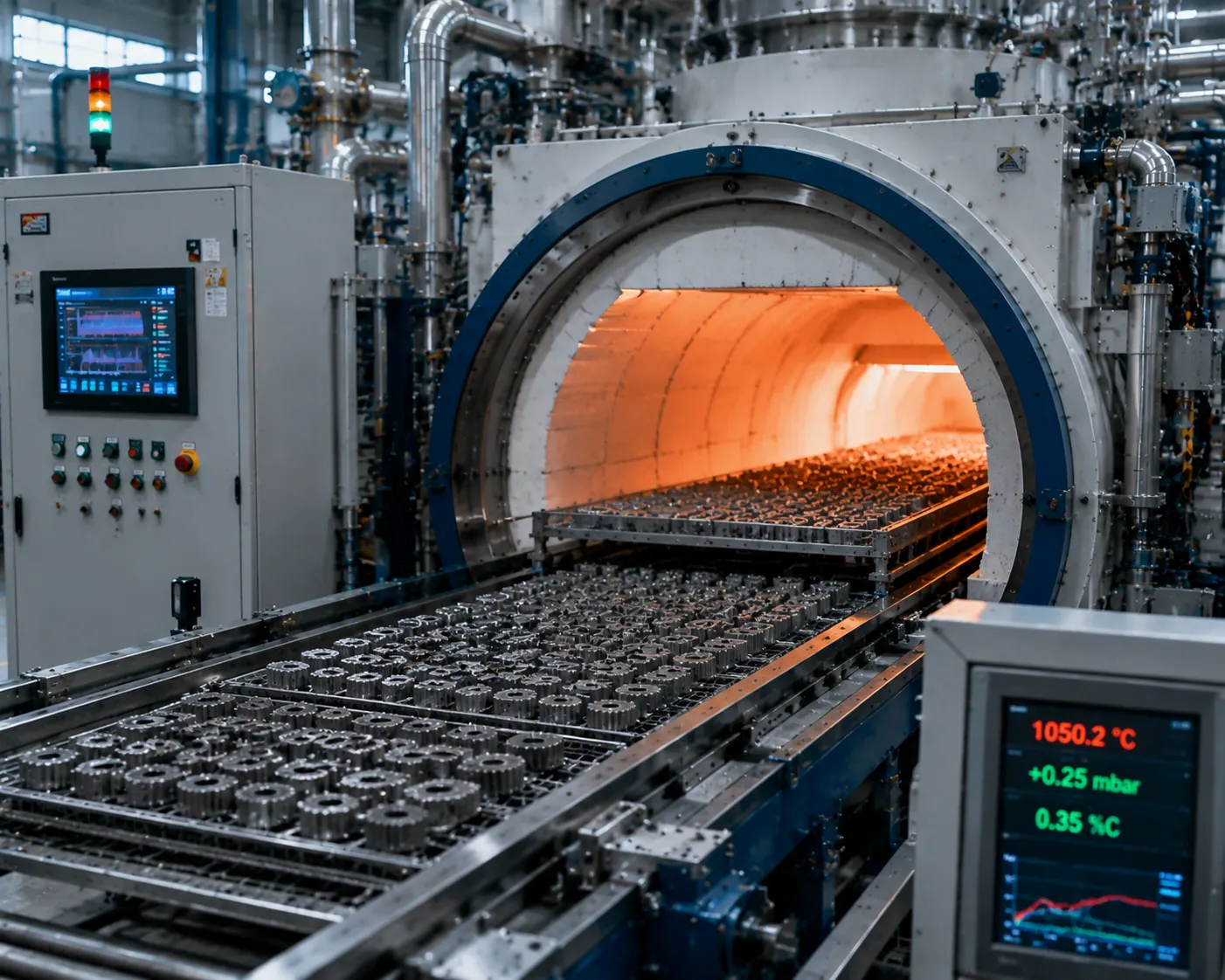
Solvent, Thermal, & Catalytic Debinding Management
The primary MIM debinding process extracts up to 85% of soluble wax and primary binders while safeguarding delicate part geometry. Haitem debinding vacuum furnaces feature multi-mode atmosphere regulation tailored for solvent dissolution, nitric acid catalytic extraction, and low-temperature thermal volatilization.
- Ramp Rate Precision: Multi-zone heating regulates temperature ramps below 0.5°C/min to control internal vapor pressure build-up.
- Defect Prevention: Completely eliminates green compact swelling, surface blistering, micro-cracking, and slump distortion.
- Exhaust Vapor Trapping: Heavy-duty condensation traps and catalytic scrubbers capture binder residues to keep exhaust lines and vacuum pumps running clean.
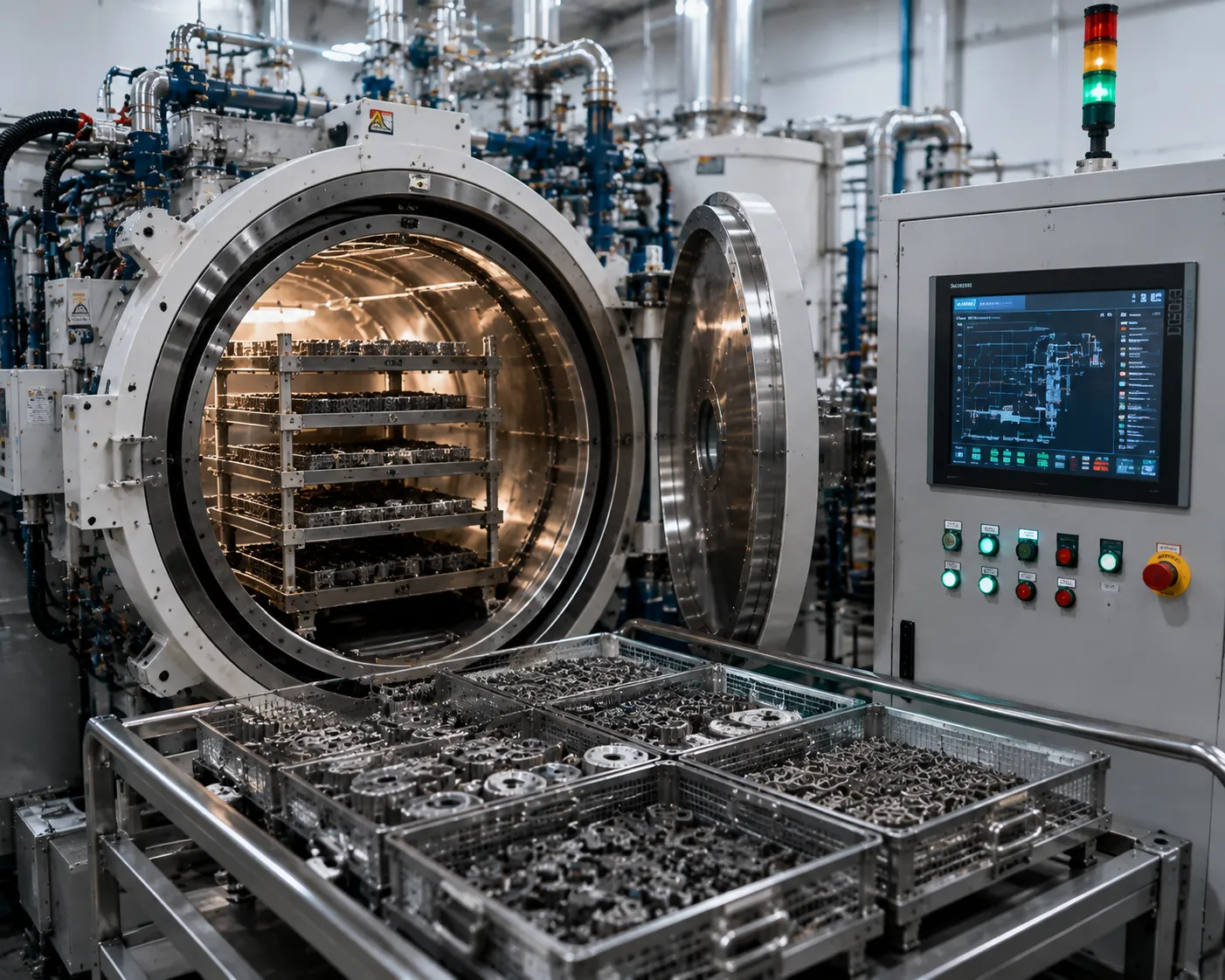
System Hardware
Catalytic Off-Gas Trapping & Condensation Unit
Overcoming Thermal Processing Challenges in MIM Manufacturing
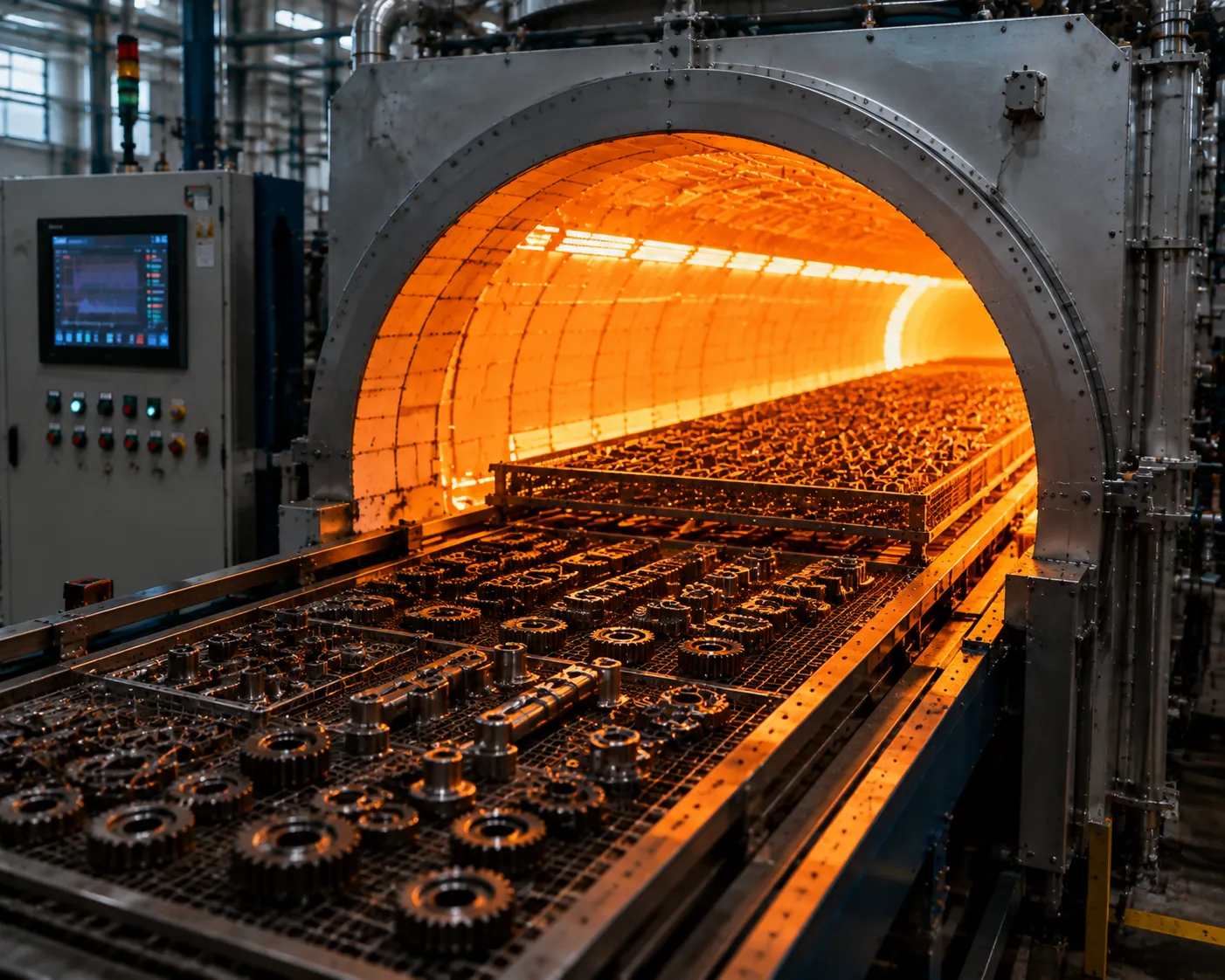
Metal Injection Molding combines the geometric freedom of plastic injection molding with the high strength of powder metallurgy. Leveraging advanced manufacturing capabilities, converting a fragile green compact into a dense metal part requires mastering complex physical and chemical transitions. Throughout the MIM debinding process, binder extraction must occur cleanly without leaving micro-voids or cracking thin walls. During the subsequent sintering thermal profile, strict temperature uniformity is mandatory to prevent part sagging, warping, or non-uniform shrinkage across complex component geometries.
Micro-Atmosphere & Dew Point Regulation
Haitem Furnace systems incorporate continuous dew point sensing and automated atmosphere management. Maintaining oxygen concentrations below 5 ppm during high-temperature hold periods protects titanium alloys, tungsten heavy alloys, and soft magnetic materials from intergranular oxidation.
Multi-Zone Independent Temperature Balancing
Individually controlled heating zones powered by multi-loop PID controllers offset thermal radiation losses at chamber doors and corners. This guarantees ±1°C furnace temperature uniformity across the hot zone, eliminating batch-to-batch dimensional variations.
Full-Stage MIM Thermal Processing Parameter Matrix
Technical parameter comparison across debinding, pre-sintering, high-density sintering, and gas quenching stages.
| Processing Stage | Temperature Range | Atmosphere Medium | Primary Objective | Haitem Furnace Feature |
|---|---|---|---|---|
| 1. Debinding Stage | 40°C – 250°C | Solvent / Acid Vapor / N2 | Extract 70–85% primary wax binder | Cold-trap condensation & off-gas scrubbers |
| 2. Pre-Sintering Cleanout | 300°C – 800°C | Partial Vacuum / H2 / N2 | Decompose backbone organic polymers | Micro-positive pressure sweep gas balance |
| 3. High-Temp Sintering | 1350°C – 1600°C | High Vacuum / Pure H2 / Argon | Pore closure & 99.5% theoretical density | Multi-zone PID control (±1°C uniformity) |
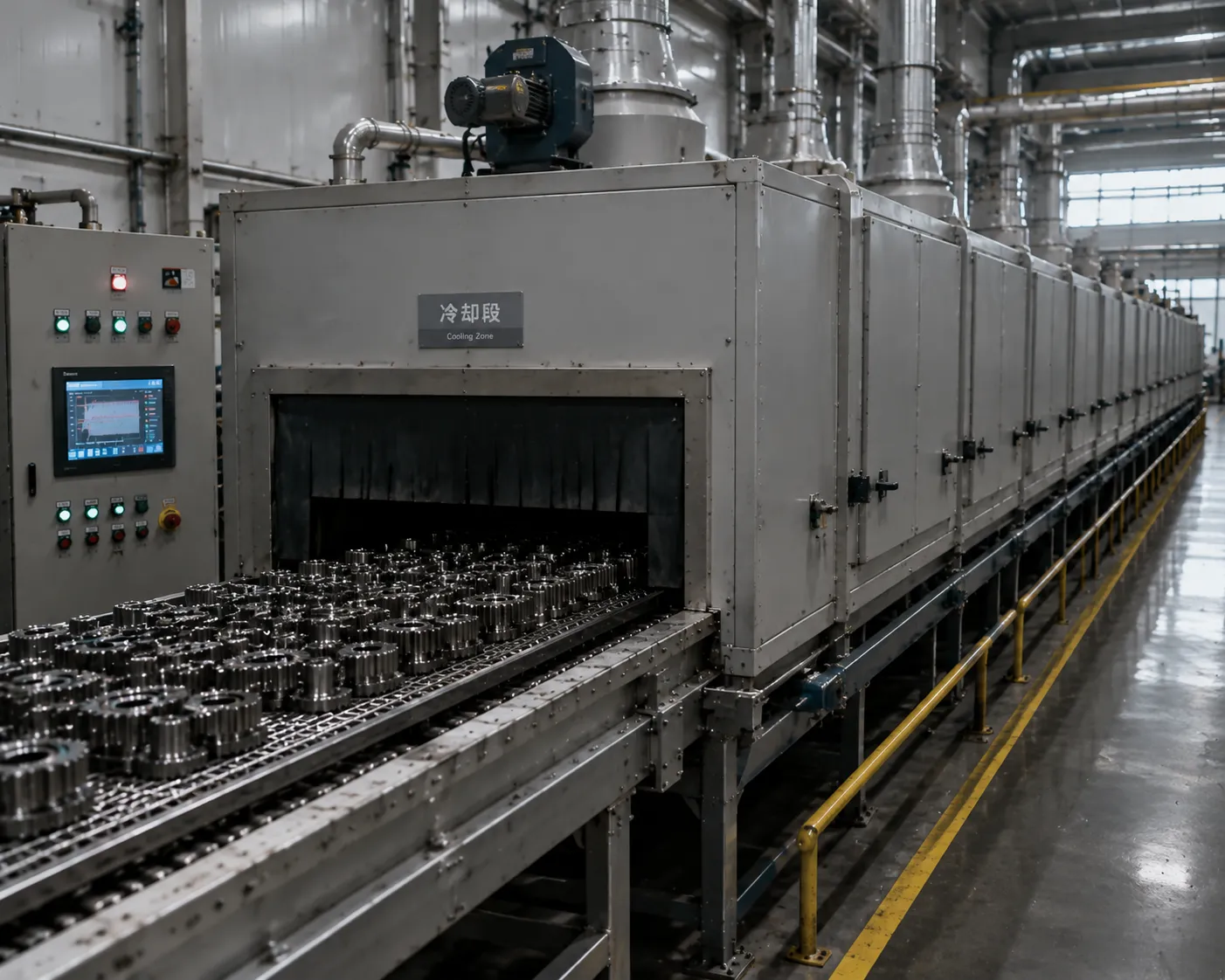
| 4. Rapid Cooling | 1600°C to 100°C | Pressurized N2 / Argon | Control grain growth & target hardness | Directional 360-degree inert gas quench |
Integrated Debinding & Sintering Reduces Cycle Times by up to 35%
Combining debinding and high-temperature sintering into a single integrated thermal cycle eliminates intermediate part handling, lowers overall energy consumption, and significantly reduces scrap rates on high-volume MIM component production lines.
Recommended MIM Furnaces for Industrial Processing
Haitem Furnace delivers tailored thermal processing solutions with our advanced MIM furnace matrix, leveraging our specialized manufacturing capabilities to provide high-performance thermal products for industrial processing, supporting various vacuum and atmosphere configurations for R&D to full-scale mass production.
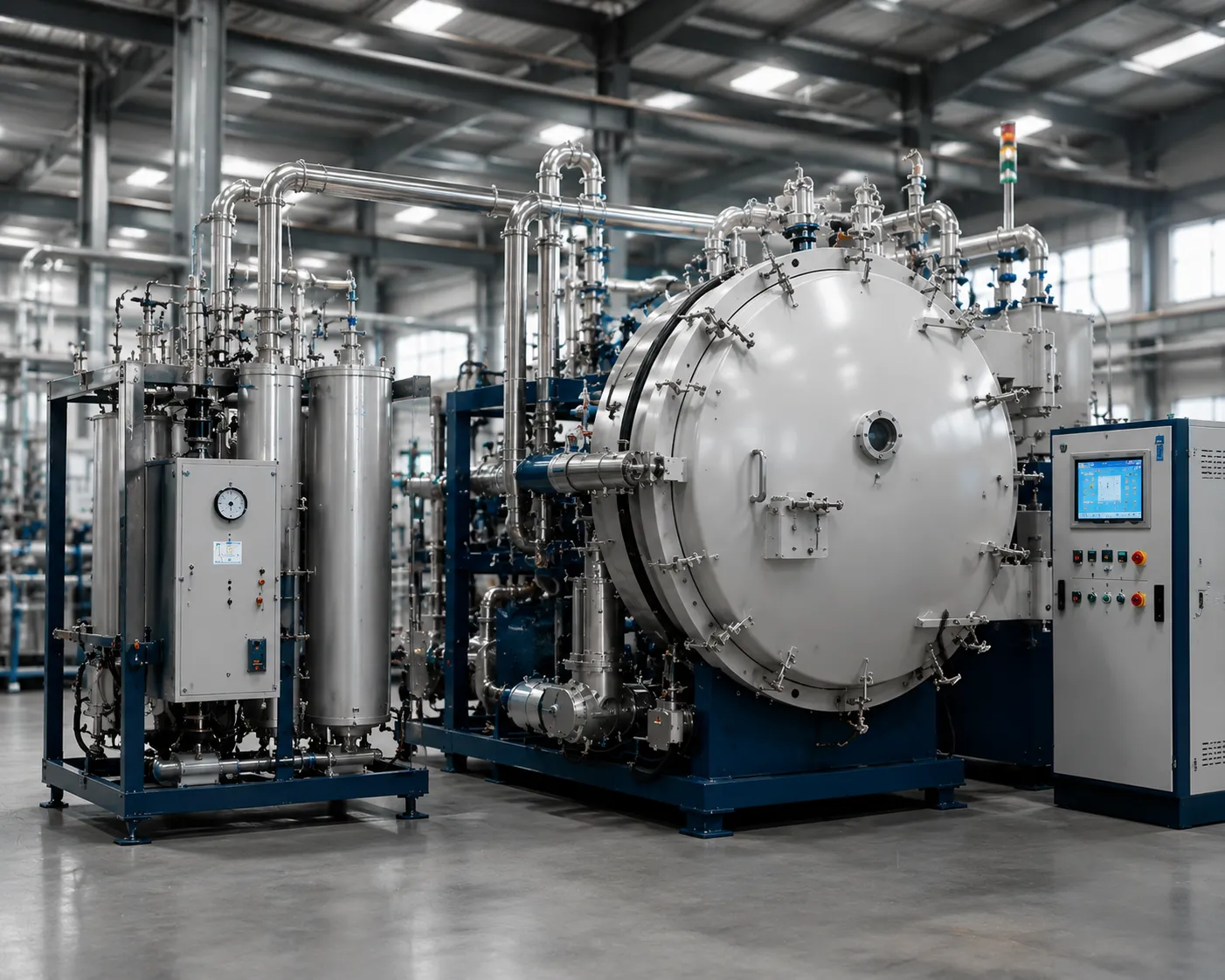
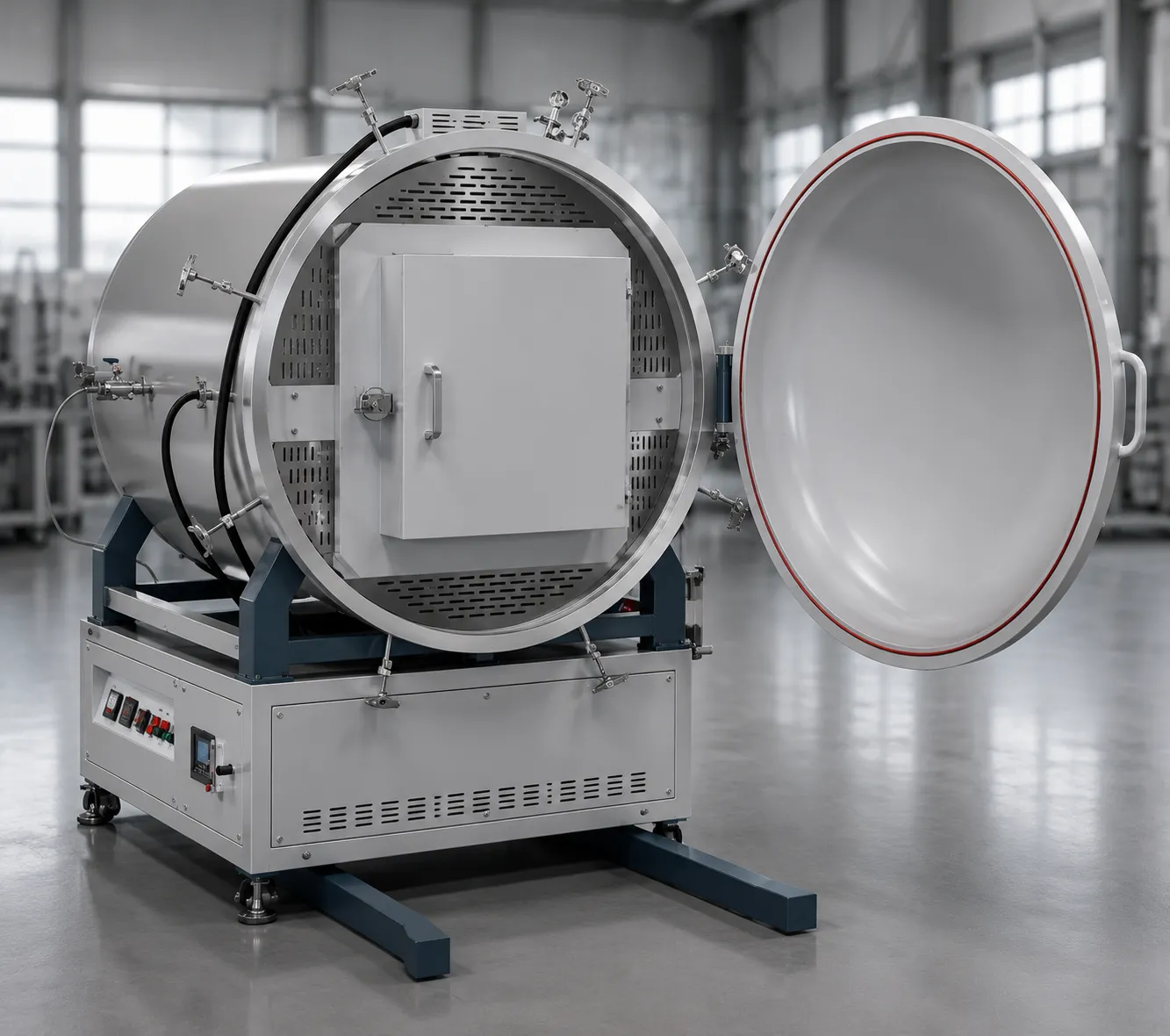 High Vacuum Batch
 Vacuum Debinding & Sintering Furnace
Integrated MIM vacuum sintering furnace designed for debinding and high-density consolidation of stainless steel and titanium components.
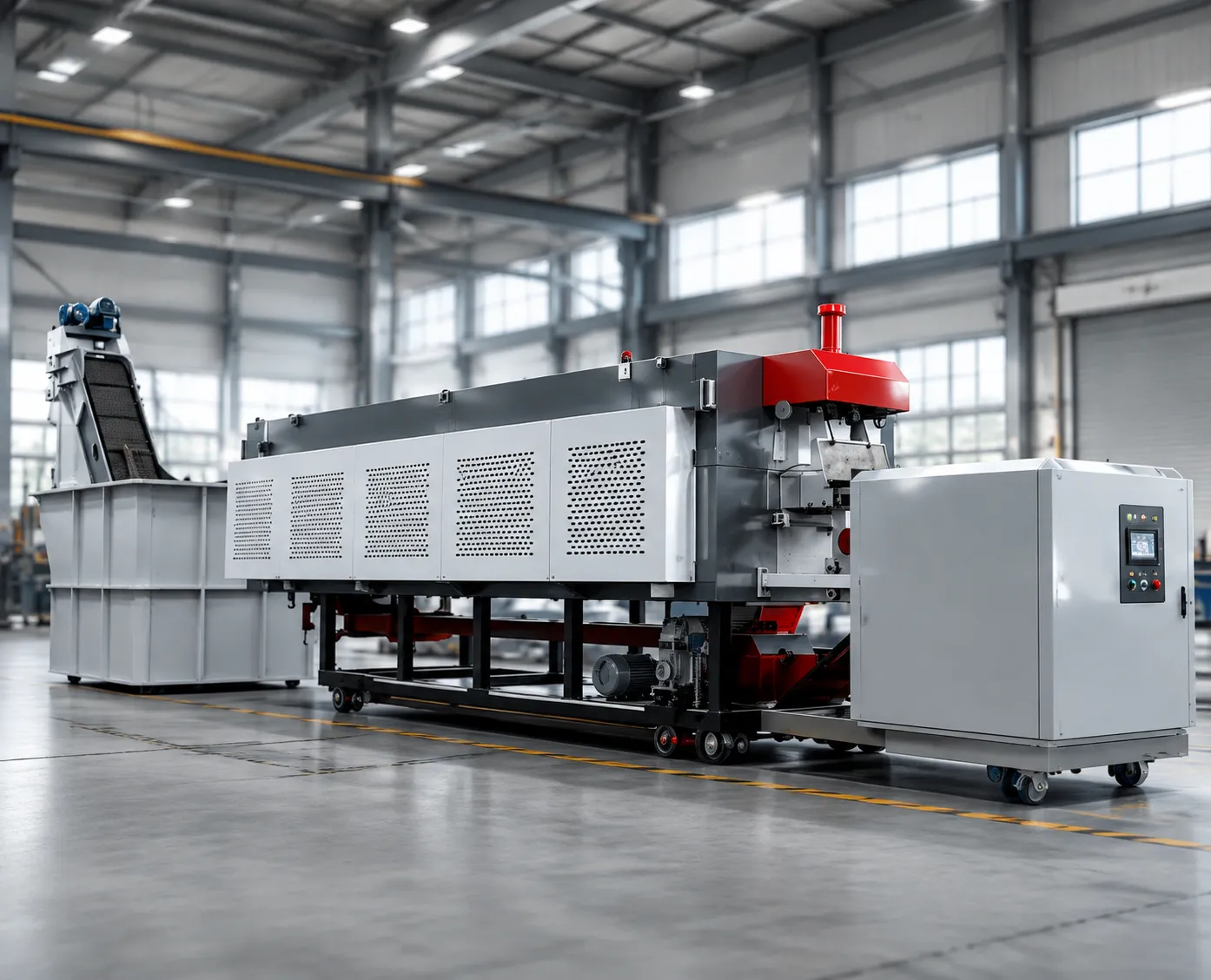 Continuous Production
 Mesh Belt Continuous Sintering Furnace
High-throughput continuous MIM furnace engineered for automated, cost-effective mass production of small to medium precision metal components.
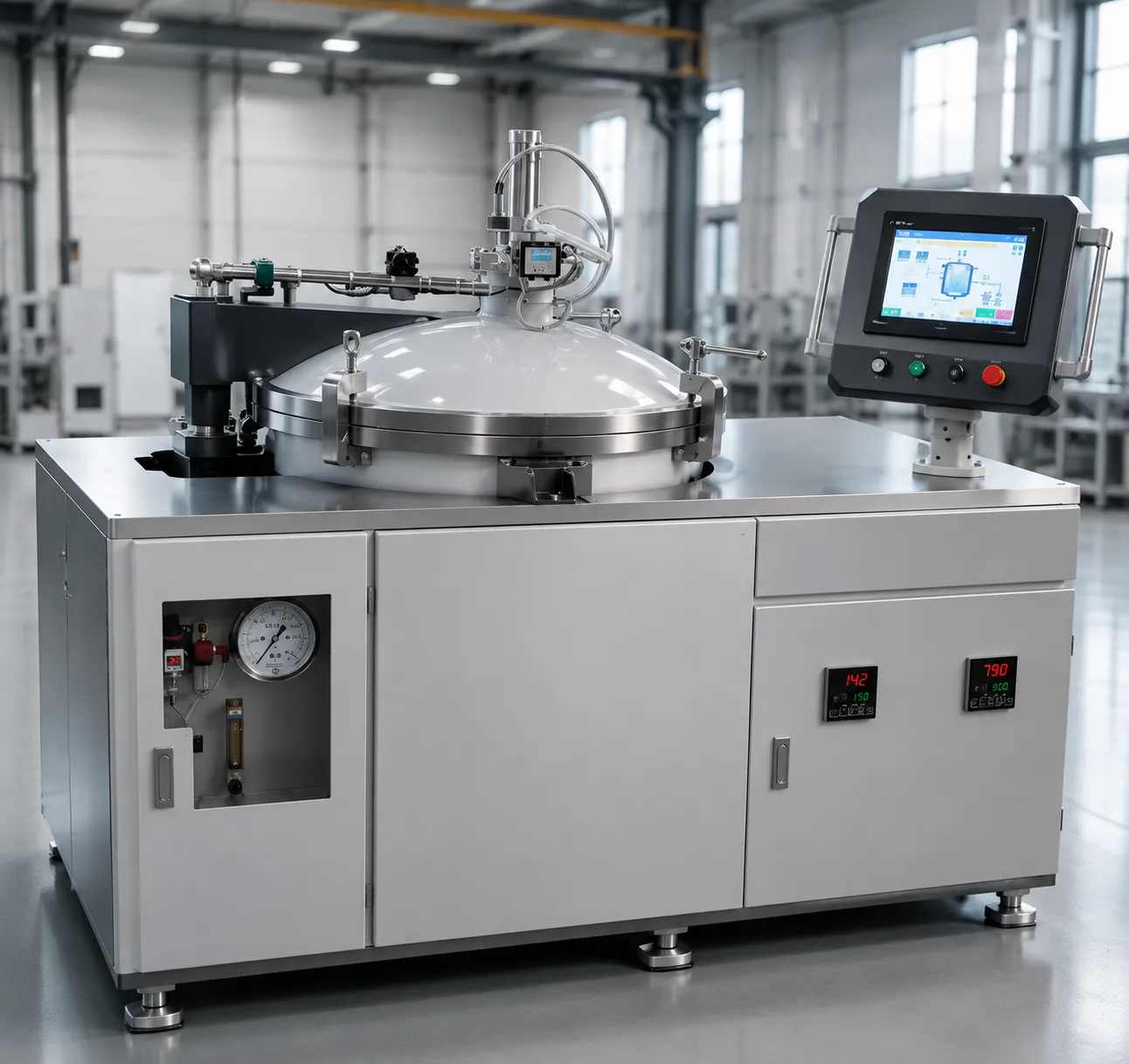 Flexible R&D Batch
 Controlled Atmosphere Batch Furnace
Precision thermal system designed for advanced MIM material R&D, alloy development, and pilot-scale trial production runs.
Technical Differentiators in MIM Thermal Processing
Advanced Debinding Off-Gas Condensation System
Haitem’s multi-stage off-gas trapping system effectively captures vaporized waxes and synthetic polymers before exhaust gases reach vacuum pumps or exhaust piping. By preventing organic residue accumulation and pump oil contamination, this innovation maximizes binder removal efficiency, protects vacuum equipment, and extends routine maintenance intervals significantly.
Multi-Zone Temperature Control & Micro-Atmosphere Adjustment
Independent heating zone control paired with precision gas distribution manifolds delivers dynamic MIM atmosphere control across the entire heating chamber. This balanced micro-environment eliminates thermal gradients through precise dynamic adjustment, ensuring consistent linear shrinkage and preventing part distortion in large or complex MIM components.
High Vacuum & Explosion-Proof Multi-Gas Safeguards (H₂/Ar/N₂)
Designed for reactive metals and specialized alloys—including titanium and soft magnetic materials—our furnaces support seamless transitions between high vacuum and positive-pressure gas atmospheres. Automated flame arrestors, continuous pressure monitoring, and interlocking gas purge systems ensure total operational safety during hydrogen-assisted thermal debinding and sintering.
Intelligent PLC Architecture & Process Curve Management
An intuitive industrial PLC interface allows operators to store, manage, and recall hundreds of multi-segment thermal profiles with one-touch execution. Automatic recipe management coordinates heating rates, binder burnout holds, partial pressure sweeps, and forced gas cooling—reducing reliance on skilled labor while guaranteeing batch-to-batch repeatability backed by our robust manufacturing capabilities.
By combining proprietary off-gas condensation traps with real-time MIM atmosphere control, Haitem Furnace provides high-yield equipment tailored to global manufacturing standards. Our integrated furnace engineering enhances overall binder removal efficiency, preserves vacuum cleanliness, and eliminates structural defects—ensuring long-term reliability and lower cost-per-part for demanding MIM operations.
Metal Injection Molding (MIM) Thermal Solutions
Explore high-performance sintering and debinding furnace configurations engineered for demanding metallurgy across diverse industrial, medical, and aerospace applications.
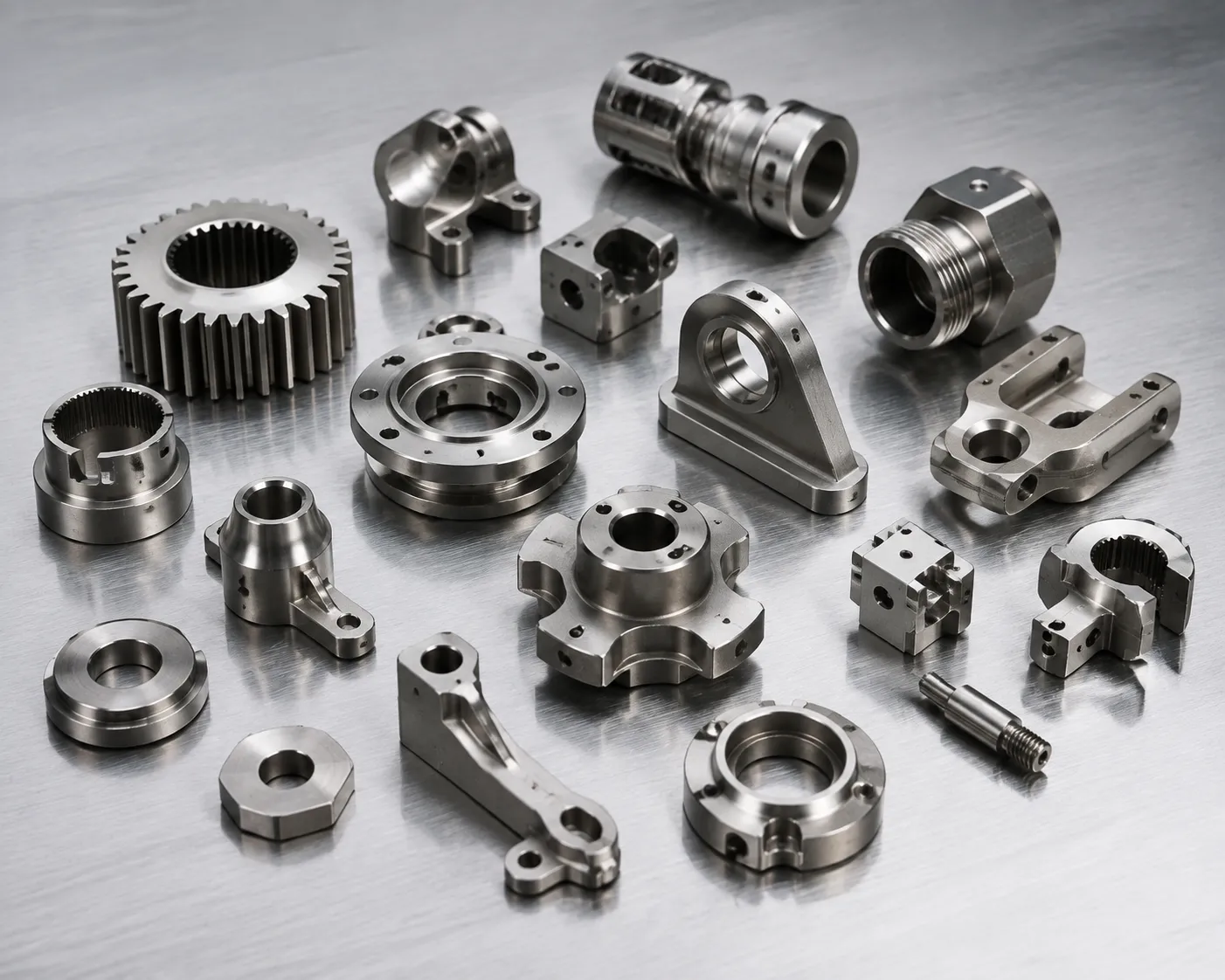
Stainless Steel MIM Parts (316L, 17-4PH, 420)
Focus Keyword: Stainless Steel MIM Sintering
Stainless steel alloys represent the core volume of commercial metal injection molding applications. Reaching full theoretical density, corrosion resistance, and structural strength requires strict atmosphere regulation during debinding and high-temperature sintering to protect carbon balance and prevent surface oxidation.
Key Component Applications
- Consumer Electronics: Smartphone buttons, foldable screen hinges, camera bezels, smartwatch housings.
- Medical Devices: Surgical scalpels, endoscopic clamps, laparoscopic graspers, orthodontic brackets.
- Automotive & Hardware: High-security lock cylinders, hydraulic valve spools, fuel injection nozzles.
Sintering & Thermal Profile
- Sintering Range: 1320°C – 1380°C
- Atmosphere Control: Pure hydrogen (H₂), nitrogen/hydrogen mix, or vacuum partial pressure.
- Haitem System Match: Continuous Mesh Belt Sintering Furnace or Vacuum Debinding & Sintering Furnace with rapid gas quenching.
 Precision Steel Sintering System
 Titanium & Titanium Alloy MIM Parts (Ti-6Al-4V)
Focus Keyword: Titanium Injection Molding
Titanium injection molding provides an optimal strength-to-weight ratio and superior biocompatibility for mission-critical parts. Because titanium reacts rapidly with oxygen, nitrogen, and carbon at elevated temperatures, successful thermal processing requires ultra-clean high-vacuum furnace environments built with specialized metallic hot zones.
Key Component Applications
- Aerospace & Defense: Lightweight structural brackets, sensor housings, fluid connectors, aerospace fasteners.
- Medical Implants: Orthopedic bone plates, spinal fixation cages, dental implant abutments.
- Consumer Goods: Premium watch cases, eyeglass hinges, high-performance sports components.
Sintering & Thermal Profile
- Sintering Range: 1250°C – 1350°C
- Atmosphere Control: High vacuum with partial pressure ultra-pure argon (>99.999%).
- Haitem System Match: All-Metal Hot Zone High-Vacuum Sintering Furnace with integrated gas-quench capability.
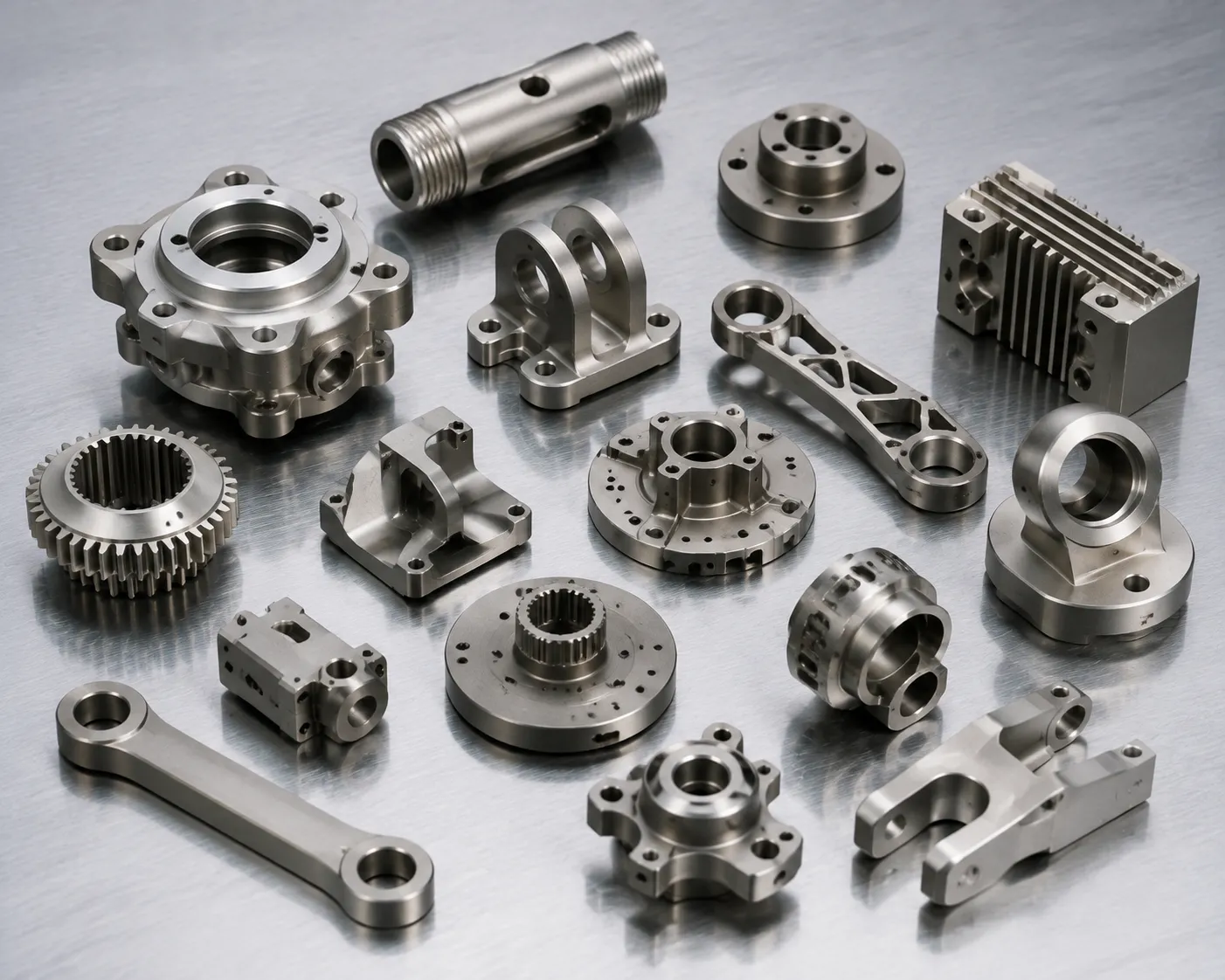 High-Vacuum Metallic Hot Zone
 Tungsten & Molybdenum Refractory Metal MIM Parts
Focus Keyword: Refractory Metal MIM Sintering
Refractory metals like tungsten heavy alloys (W-Ni-Fe, W-Ni-Cu) and pure molybdenum require ultra-high sintering temperatures to achieve full densification. Haitem Furnace manufactures heavy-duty atmosphere furnaces engineered for continuous structural support, extreme temperature stability, and uniform thermal transfer above 1500°C.
Key Component Applications
- Medical Radiation Shielding: X-ray collimator leaves, CT scanner shield blocks, radioactive isotope containers.
- Industrial & Energy: High-density balance weights, thermal heat sinks, electrical contact tips.
- Aerospace: Kinetic energy penetrators, rocket nozzle inserts, vibration damping masses.
Sintering & Thermal Profile
- Sintering Range: 1500°C – 1750°C
- Atmosphere Control: Pure dry hydrogen (H₂) with dew point monitoring below -60°C.
- Haitem System Match: High-Temperature Molybdenum/Tungsten Element Atmosphere Batch Furnace.
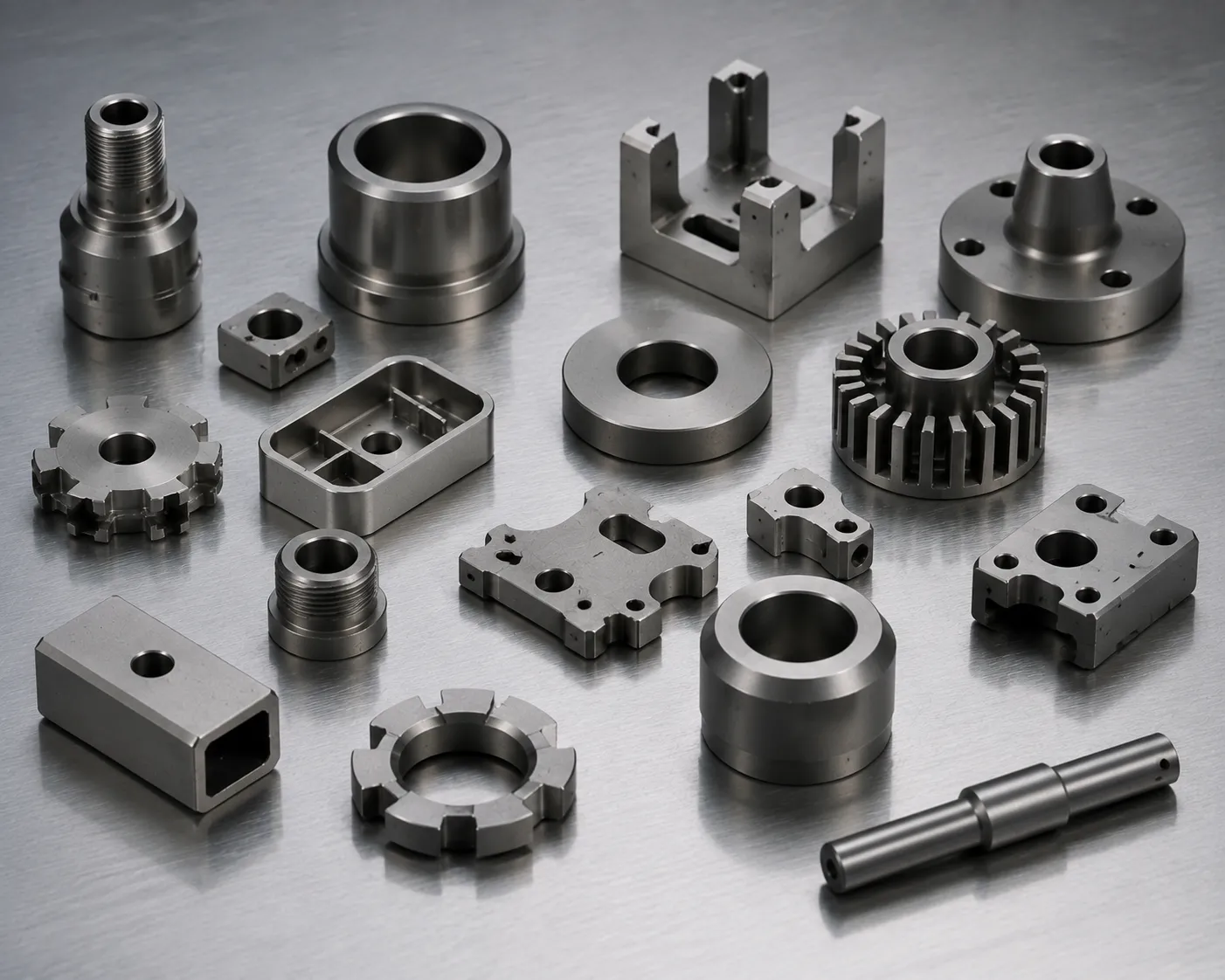 Ultra-High Temp Hydrogen Processing
 Iron-Based & Soft Magnetic Material MIM Parts
Focus Keyword: Iron-Based MIM Thermal Processing
Iron-nickel (Fe-Ni) and iron-silicon (Fe-Si) soft magnetic alloys produced through MIM allow complex 3D magnetic flux geometries without costly secondary machining. Controlling grain growth and microstructural purity during sintering is vital to lowering coercivity and maximizing magnetic permeability.
Key Component Applications
- Automotive Motors: Electric drive actuator cores, solenoid valve armatures, electronic throttle bodies.
- Precision Sensors: Magnetic relays, flux collectors, position sensor stators, magnetic switches.
- Power Tools: High-torque planetary ring gears, ratchet pawls, clutch engagement jaws.
Sintering & Thermal Profile
- Sintering Range: 1250°C – 1380°C
- Atmosphere Control: Pure hydrogen or hydrogen-nitrogen mix with controlled slow-cooling cycle.
- Haitem System Match: Continuous Pusher Sintering Line with magnetic annealing zone integration.
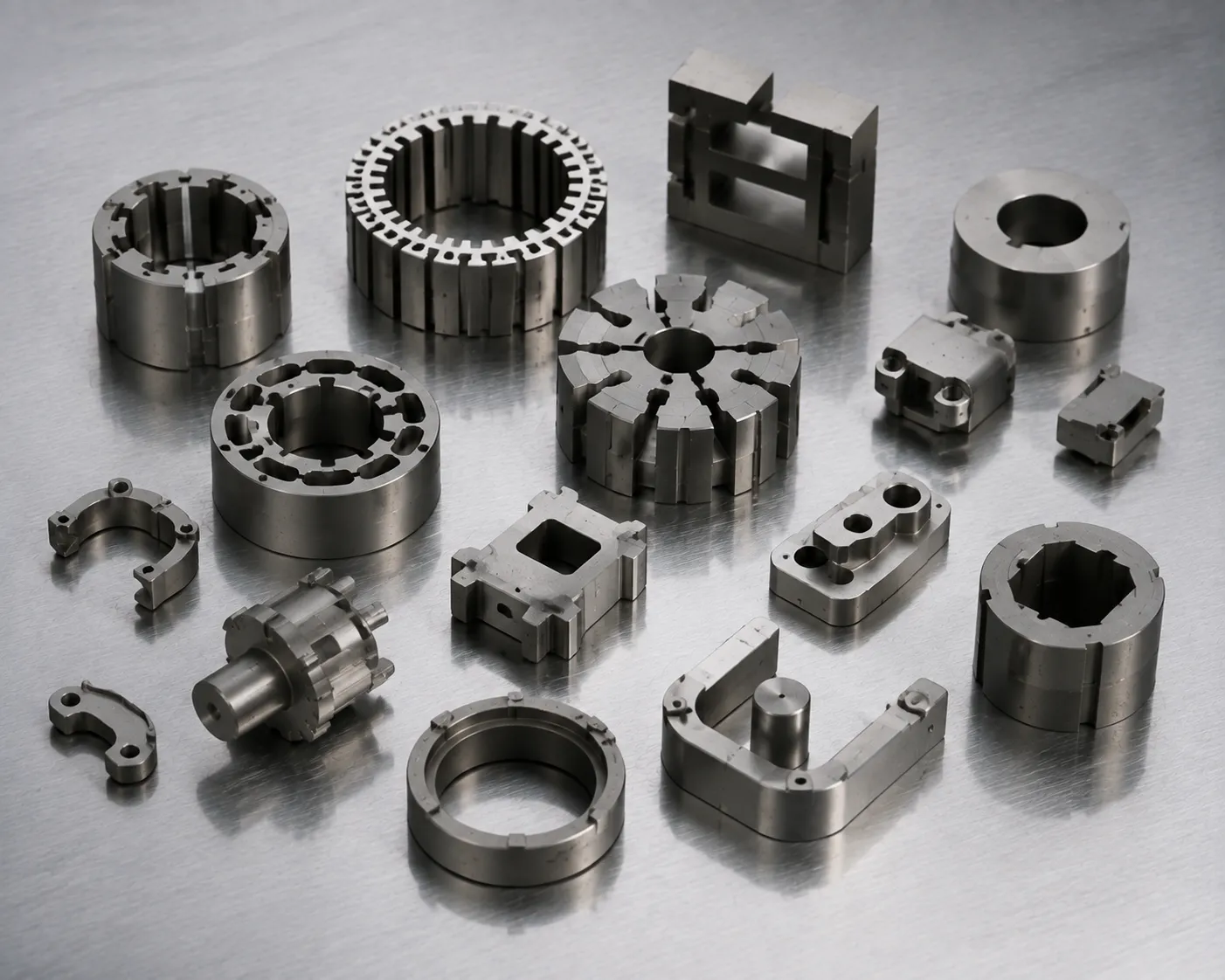 Magnetic Annealing Integrated Furnace
 Mastering Thermal Dynamics Across Diverse Injection Molding Alloys
The metal injection molding process requires tight shrinkage control across complex part geometries—ranging from sub-gram surgical components to multi-hundred-gram structural automotive gears. Because organic binder removal and solid-state atomic diffusion occur within precise thermal windows, furnace performance directly dictates part density, grain growth, carbon stability, and final dimensional tolerances. Discover our full line of advanced industrial products tailored for precise powder metallurgy processes.
Haitem Furnace thermal processing solutions incorporate multi-zone temperature control, dedicated solvent or catalytic off-gas condensation traps, and automated atmosphere switching. Whether executing stainless steel MIM sintering or ultra-high vacuum titanium processing, Haitem systems ensure stable mass production while significantly reducing scrap rates for every customer worldwide. Built with advanced manufacturing capabilities, our thermal equipment delivers unmatched reliability and operational efficiency.
MIM Material Sintering Specifications and Operating Parameters
| Material Category | Common Grades | Sintering Temperature | Primary Atmosphere | Target Density | Primary Industry Focus |
|---|---|---|---|---|---|
| Austenitic Stainless Steel | 316L, 304L | 1330°C – 1380°C | 100% H₂ or Partial N₂/H₂ | ≥ 98.0% | Surgical instruments, consumer electronics |
| Martensitic & PH Steel | 17-4PH, 420, 440C | 1300°C – 1350°C | Vacuum / Argon / H₂ | ≥ 98.5% | Aerospace hardware, power tools, gears |
| Titanium Alloys | Ti-6Al-4V, CP-Ti | 1250°C – 1330°C | High Vacuum (<10⁻⁴ mbar) | ≥ 97.5% | Biomedical implants, aerospace structural |
| Refractory Alloys | W-Ni-Fe, Pure Mo | 1500°C – 1700°C | Pure Dry H₂ (Dew point <-60°C) | ≥ 99.0% | Radiation shielding, balance counterweights |
| Soft Magnetic Alloys | Fe-50Ni, Fe-3Si | 1280°C – 1360°C | Dry H₂ / Vacuum Anneal | ≥ 98.5% | Electric vehicle actuators, precision sensors |
Precise Debinding Atmosphere Integration
Organic binder removal is the most delicate stage in MIM manufacturing. Inadequate gas flow velocity or uneven heat distribution can cause green compact swelling, cracking, or severe furnace chamber contamination.
- • Catalytic Debinding: Controlled nitric acid (HNO₃) or oxalic acid vapor dosing enables rapid polyacetal degradation without green body distortion.
- • Thermal Solvent Debinding: Multi-stage exhaust condensation traps capture up to 99.5% of evaporated paraffin wax and polyolefin binders.
High-Densification Sintering Uniformity
Volumetric shrinkage during MIM sintering averages 15% to 22%. Maintaining tight dimensional repeatability across high-volume production loads requires thermal uniformity within ±1°C across all active heating zones.
- • Micro-Atmosphere Tuning: Independent mass flow controllers regulate localized gas velocity to prevent cooling gradients or decarburization.
- • Advanced Hot Zone Insulation: Choice of high-purity graphite insulation or all-metal molybdenum reflective shielding based on material purity requirements.
MIM Thermal Processing Frequently Asked Questions
Explore technical insights on catalytic debinding, vacuum furnaces precision sintering, off-gas management, and MIM furnace maintenance to ensure optimal part density and strict dimensional control.
What is the difference in furnace body selection between MIM catalytic debinding and thermal debinding?
Furnace construction differs fundamentally based on the chemical mechanisms used to strip primary organic binders from green Metal Injection Molding (MIM) compacts. Catalytic debinding and thermal debinding subject furnace chambers to drastically distinct operating environments and chemical stresses.
Catalytic Debinding Furnaces
- • Process Agent: Vaporized nitric acid or oxalic acid catalyst.
- • Operating Temp: 110°C to 140°C under positive nitrogen purge.
- • Chamber Material: Acid-resistant Hastelloy or 316L stainless steel linings.
- • Safety Systems: Integrated acid neutralizers and burn-off flares.
Thermal Debinding Furnaces
- • Process Agent: Thermal decomposition in inert or reducing atmospheres.
- • Operating Temp: 300°C to 600°C controlled ramping.
- • Chamber Material: High-temperature alloy retorts with condensation traps.
- • Safety Systems: Multi-stage wax collection and gas scrubbers.
Haitem Furnace configures dedicated catalytic debinding units with gas-tight seal integrity and automated acid metering. For thermal debinding, heating element placement and hot-zone insulation are optimized to maintain uniform vapor extraction without thermal shock.
How can engineering teams avoid deformation and part adhesion during high-temperature sintering?
Distortion, sagging, and tray sticking occur when MIM compacts undergo linear volumetric shrinkage up to 20% during high-temperature densification. Controlling furnace temperature uniformity and thermal profiles is critical to maintaining strict geometrical tolerances.
- • Setter Plate Selection: Utilize high-purity alumina, zirconia-coated graphite, or molybdenum setters with engineered thermal expansion rates that match the MIM alloy shrinkage profile.
- • Multi-Zone Heating Controls: Haitem MIM sintering furnaces utilize multi-zone independent PID temperature controllers to maintain exceptional hot-zone uniformity within ±1°C.
- • Optimized Sintering Thermal Profiles: Implement precise intermediate soak steps near the liquidus transition to eliminate internal stresses before high-temperature pore closure.
- • Ceramic Separation Powders: Apply micro-fine alumina ceramic release agents to setter surfaces to prevent chemical diffusion bonding at elevated temperatures.
How does the Haitem MIM sintering furnace handle organic exhaust gas generated during debinding?
Proper debinding safety control and off-gas management are essential to prevent wax condensation, pipeline blockages, vacuum pump contamination, and environmental compliance hazards.
Exhaust gas passes through water-cooled baffle traps that condense heavy paraffin waxes and backbone polymers into collection reservoirs before reaching downstream ductwork.
Non-condensable organic vapors are routed to an integrated thermal oxidizer operating above 800°C, converting volatiles into harmless carbon dioxide and water vapor.
All interconnecting gas lines between the furnace chamber and off-gas trap are trace-heated above 180°C to prevent localized binder condensation and clogging.
This integrated off-gas processing architecture guarantees continuous operation, extends vacuum pump maintenance intervals, and ensures full environmental compliance for industrial MIM operations.
Does the equipment support completing debinding and sintering integrated within a single furnace?
Yes, Haitem Furnace manufactures integrated debinding and sintering combo furnaces specifically designed for continuous, single-cycle thermal processing.
| Processing Stage | Atmosphere Condition | Key Thermal Function |
|---|---|---|
| 1. Solvent/Thermal Debinding | Micro-positive nitrogen or argon flow | Controlled extraction of residual organic binders without green compact distortion. |
| 2. Vacuum Evacuation | High vacuum purge down to 10-3 Pa | Complete removal of gaseous byproducts and chamber cleaning prior to ramping. |
| 3. High-Temp Sintering | Partial pressure hydrogen, argon, or vacuum | Achieves 99.5%+ theoretical density for stainless steel, titanium, and magnetic alloys. |
Combining both operations eliminates secondary part handling, minimizes contamination risk, reduces overall cycle time by up to 30%, and lowers energy consumption per batch. Backed by our advanced manufacturing-capabilities, each equipment line is built to strict standards.
What essential routine MIM furnace maintenance protocols ensure long-term operational reliability?
Rigorous MIM furnace maintenance prevents unexpected downtime, maintains strict MIM sintering precision, and safeguards delicate heating elements and vacuum seals against binder residue build-up.
Weekly Inspection Protocol
Clean condensed binder traps, inspect door O-ring seals, verify burn-off pilot flame igniters, and check gas pressure interlocks.
Monthly Calibration Protocol
Calibrate control thermocouples, perform vacuum leak-rate tests, inspect molybdenum heating element tension, and test emergency shutdown systems.
The Haitem engineering team provides clients with standardized maintenance schedules, remote PLC diagnostics, and complete spare parts support through our dedicated global-service to ensure uninterrupted production cycles.
Have specific MIM thermal processing requirements?
Consult with Haitem Furnace engineers for customized debinding profiles, atmosphere selection, and thermal equipment sizing.
Ready to Elevate Your MIM Part Sintering Quality and Production Capacity?
Consult directly with Haitem engineering experts to refine your debinding atmospheres, enhance temperature uniformity, and eliminate component distortion. Learn more about us and how our team supports global users.
Haitem Furnace delivers engineered-to-order industrial vacuum furnaces and thermal systems designed to meet the strict densification and dimensional tolerances of your MIM production line.
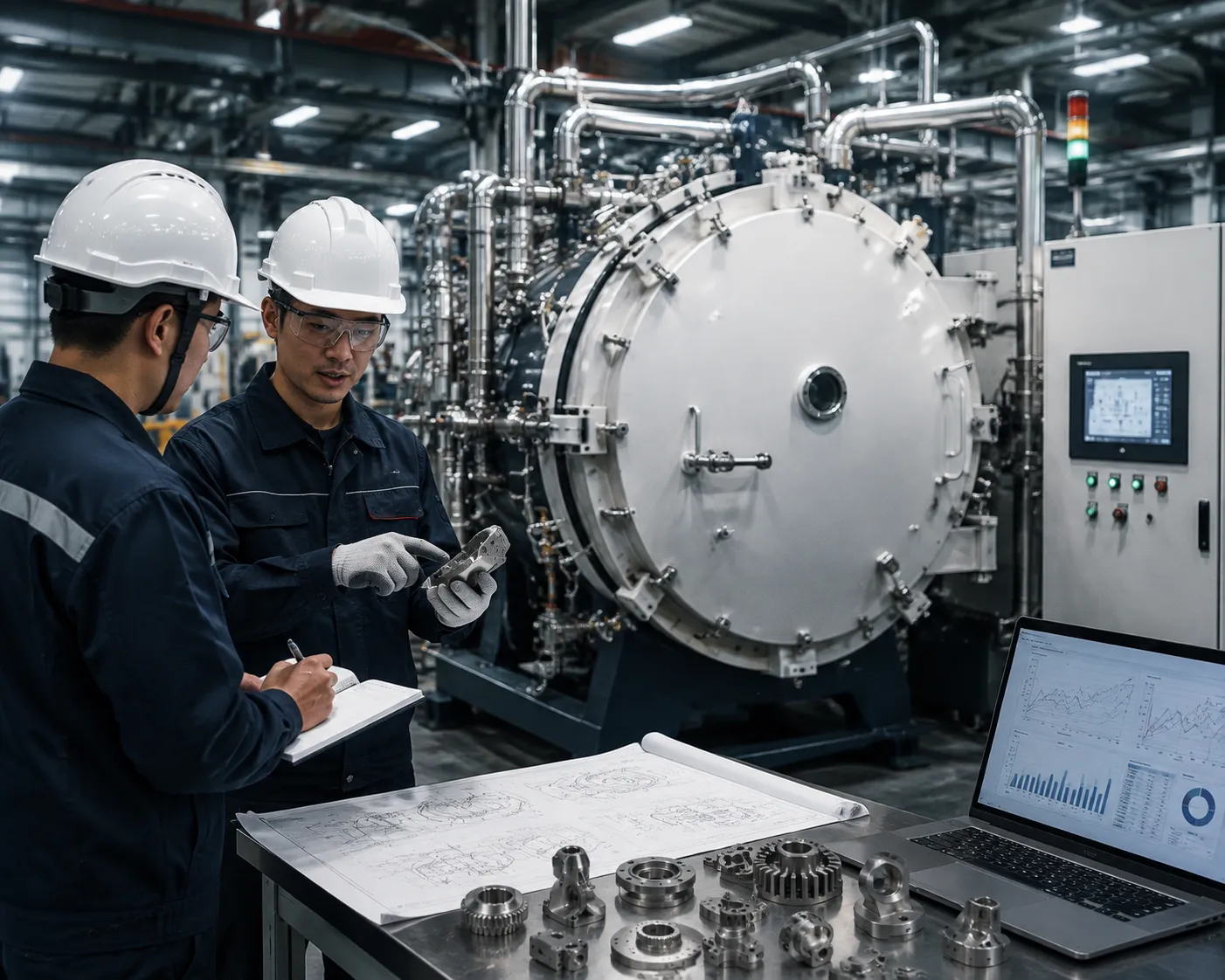
Precision thermal processing profiles tailored for stainless steel, titanium, and specialty alloys, backed by advanced manufacturing capabilities
Request a fast custom MIM furnace quote backed by specialized thermal processing support
Request a Custom MIM Furnace Quote
Submit your technical requirements to receive a comprehensive furnace specification and engineered proposal.