Industrial Furnace Selection & Thermal Processing Knowledge Center
Access engineering documentation, technical guides, and process specifications for vacuum sintering, controlled atmosphere, annealing, and advanced heat treatment from our industrial thermal team .
Core Industrial Thermal Processing Guides
From initial equipment selection to advanced process optimization, Haitem Furnace delivers complete engineering support, backed by our advanced manufacturing-capabilities. Explore our technical guides designed to assist engineering teams and procurement specialists.
Furnace Buying Guide
Compare industrial furnace specifications, evaluate custom engineering options, and streamline pre-RFQ planning for maximum ROI. Learn more about-us and our engineering commitment.
- Detailed specification comparisons
- Custom parameter planning
- Pre-RFQ technical checklists
Vacuum Furnace Guide
Master vacuum thermal processing fundamentals using our specialized vacuum-furnaces, covering high-vacuum debinding, sintering, and precision brazing applications.
- Vacuum operating principles
- Debinding & sintering stages
- High-precision vacuum brazing
Sintering Process Guide
In-depth analysis of thermal profiles and controlled atmospheres for powder metallurgy, MIM, and technical ceramics.
- Powder metallurgy processes
- Metal injection molding (MIM)
- Temperature control curve design
Furnace FAQ
Resolve critical buyer questions regarding production lead times, site commissioning, protective gas safety, and ongoing service.
- Delivery & installation timelines
- Atmosphere & safety controls
- Post-sales technical support
Technical Articles
Stay informed with expert insights on energy-efficient furnace designs, process innovations, and advanced material processing.
- Thermal efficiency innovations
- Energy-saving furnace design
- Advanced material applications
High-Vacuum Sintering, Bright Annealing, and Brazing Furnaces
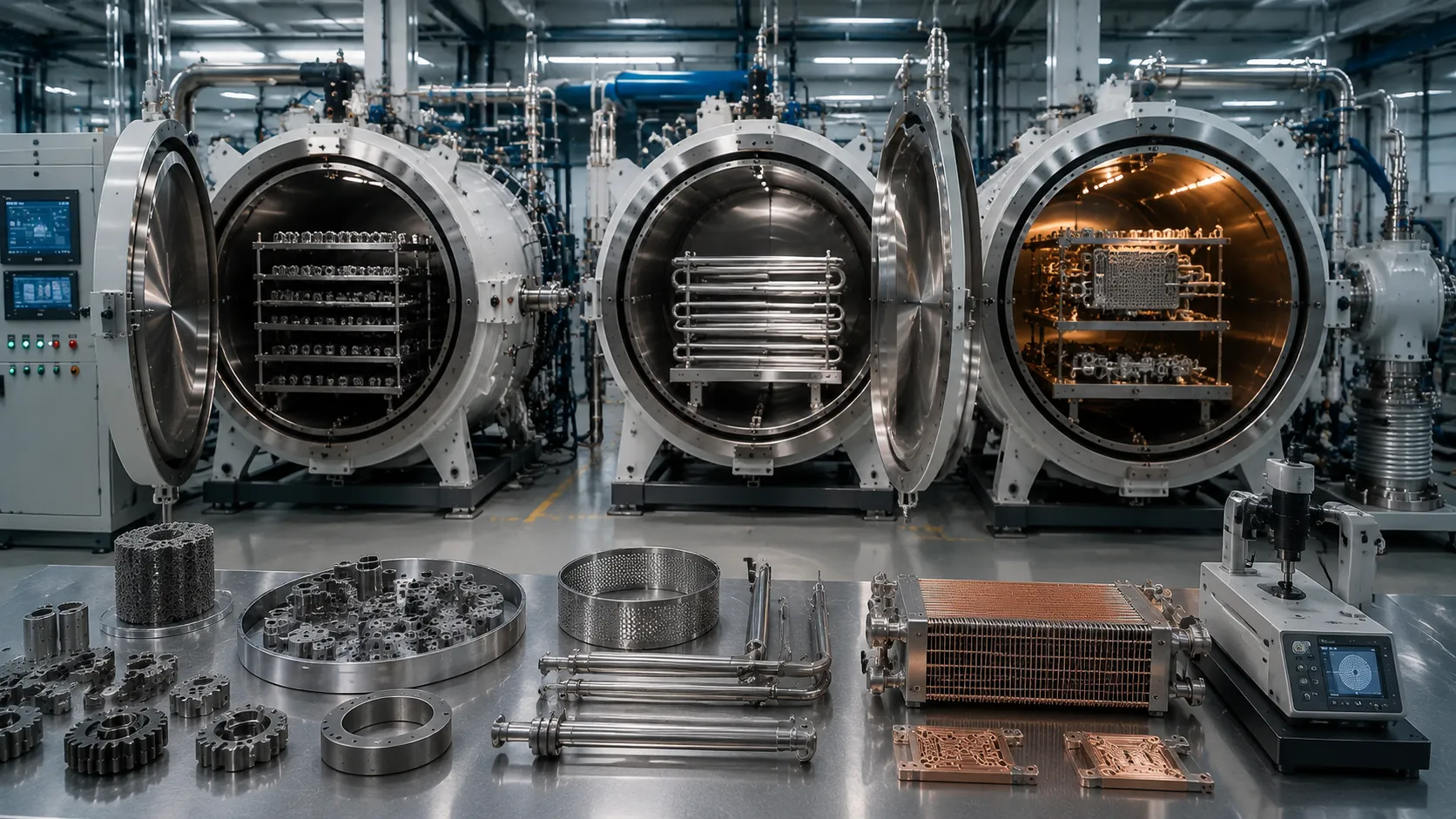
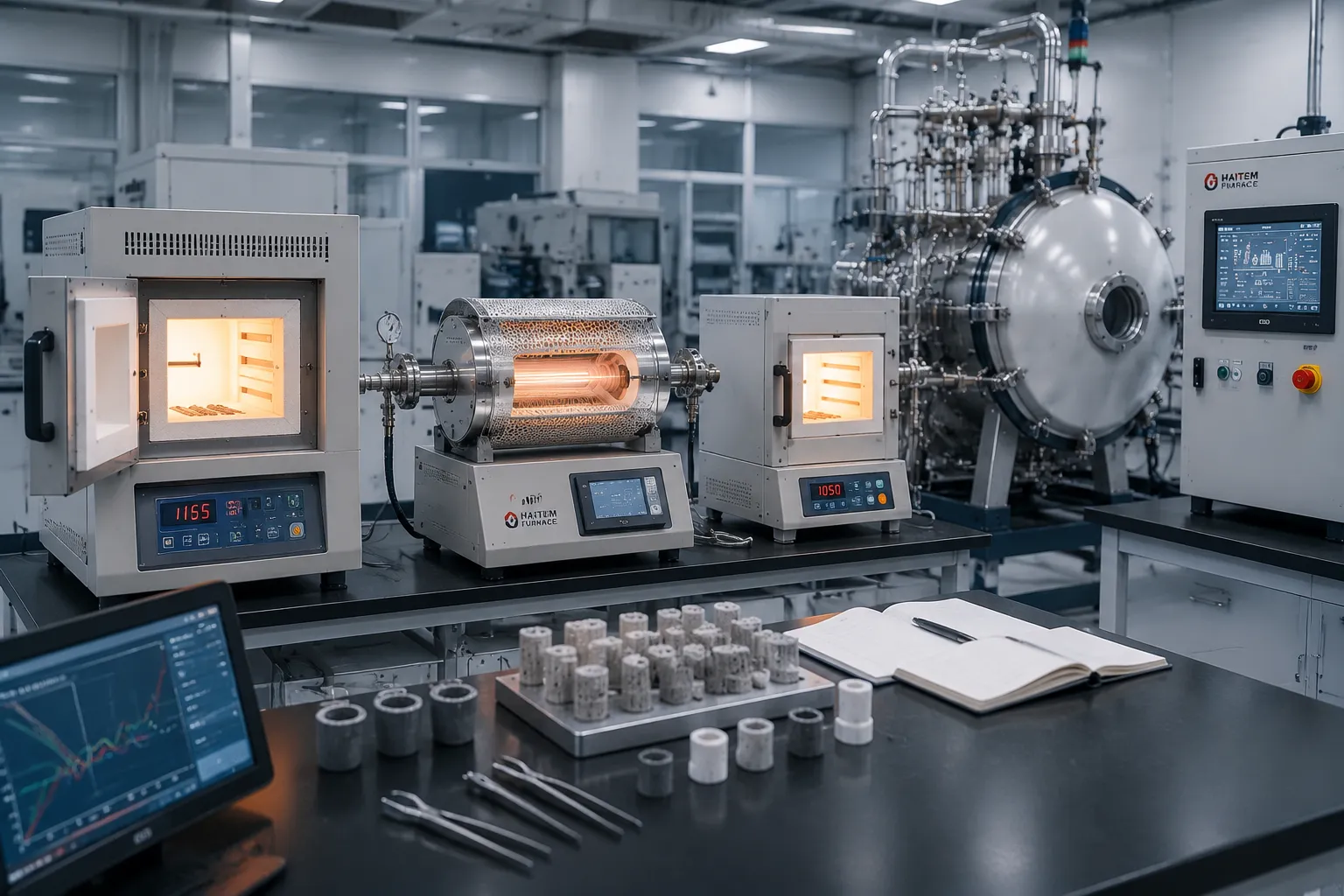
Advanced vacuum technology creates an oxygen-free, clean processing chamber crucial for high-purity metallurgy. Haitem Furnace engineers industrial vacuum sintering, vacuum annealing, and high-vacuum brazing systems using high-purity graphite or metallic hot zones to eliminate surface oxidation, decarburization, and volatile contamination during thermal processing across our entire thermal processing products line.
Core Technical Specifications & Capabilities
- ✓ High-Vacuum Baselines: Multi-stage pumping systems achieving ultimate operating pressures down to 10⁻⁵ mbar.
- ✓ Precision Thermal Uniformity: Multi-zone PID control delivering temperature distribution accuracy within ±1°C.
- ✓ High-Pressure Gas Quenching: Integrated argon and nitrogen forced-gas cooling up to 10 bar for microstructural tuning.
- ✓ Cleanroom-Compliant Design: Stainless steel vacuum chambers optimized for aerospace, medical, and semiconductor parts.
| Process Category | Vacuum Pressure Range | Max Operating Temp | Primary Industrial Application Scenarios |
|---|---|---|---|
| Vacuum Sintering Furnaces | 10⁻² mbar to 10⁻⁵ mbar | 2400°C | Titanium alloys, hardmetals, magnetic materials, technical ceramics |
| Vacuum Annealing Furnaces | 10⁻¹ mbar to 10⁻⁴ mbar | 1300°C | Bright annealing of stainless steel tubing, precision strip wire, electronic parts |
| High-Vacuum Brazing Furnaces | 10⁻³ mbar to 10⁻⁶ mbar | 1400°C | Aerospace heat exchangers, turbine blades, copper and nickel active alloy joining |
Industrial Furnace Buyer & Technical FAQ
Navigating the complexities of industrial thermal processing equipment requires rigorous evaluation of vacuum performance, temperature uniformity, gas atmosphere control, and operational safety. As a global industrial furnace knowledge authority, Haitem Furnace consolidates decades of heat treatment engineering expertise to assist procurement officers and plant engineers in selecting optimal equipment configurations.
Review our technical FAQ guide below to resolve essential questions regarding custom engineering, production lead times, atmosphere containment, and vacuum heating element selection prior to Request for Quotation (RFQ) submission.
01 How do I select appropriate vacuum levels and heating elements based on material process requirements?
Selecting the correct vacuum furnace specification relies heavily on the oxidation sensitivity of your workpieces, peak operating temperatures, and outgassing characteristics during debinding or sintering. Standard industrial vacuum levels are broadly categorized into three primary operating regimes:
- Rough / Medium Vacuum (100 to 10-2 mbar): Designed for basic stress relieving, low-alloy tool steel hardening, and bright annealing where minor residual oxygen traces do not compromise metallurgy.
- High Vacuum (10-3 to 10-5 mbar): Essential for titanium alloys, tantalum, aerospace nickel superalloys, high-purity vacuum brazing, and medical implant sintering to prevent interstitial oxidation and embrittlement.
- Ultra-High Vacuum (< 10-6 mbar): Deployed for specialized semiconductor manufacturing, electronic ceramic metallization, and advanced research laboratory applications.
Heating Element & Thermal Insulation Matrix
| Element Material | Max Temperature | Best Application Environment | Key Advantage |
|---|---|---|---|
| Graphite (CFC / Isostatic) | Up to 2,200°C | Powder metallurgy, MIM, vacuum carburizing, silicon carbide sintering | Cost-effective, exceptional thermal shock resistance, minimal thermal deformation |
| Molybdenum (Moly) | Up to 1,600°C | Ultra-clean vacuum brazing, medical components, stainless steel sintering | Zero carbon outgassing, high radiation reflectivity, ultra-clean operating conditions |
| Tungsten (W) | Up to 2,800°C | Refractory metal processing, sapphire crystal growth, high-temp tungsten carbide | Extreme temperature tolerance, structural integrity under high heat loads |
| Silicon Carbide (SiC) / MoSi2 | 1,400°C – 1,800°C | Air & controlled atmosphere furnaces, technical ceramics, glass processing | Superior oxidation resistance in oxygen-rich and continuous thermal environments |
Haitem Furnace application engineers assist in specifying the optimal hot zone configuration—combining multi-zone PID temperature control with high-density ceramic fiber or metallic radiation shields—to guarantee temperature uniformity within ±1°C to ±5°C according to AMS 2750G pyrometry standards.
02 Does Haitem Furnace support non-standard custom engineering (OEM/ODM) for specialized workpieces?
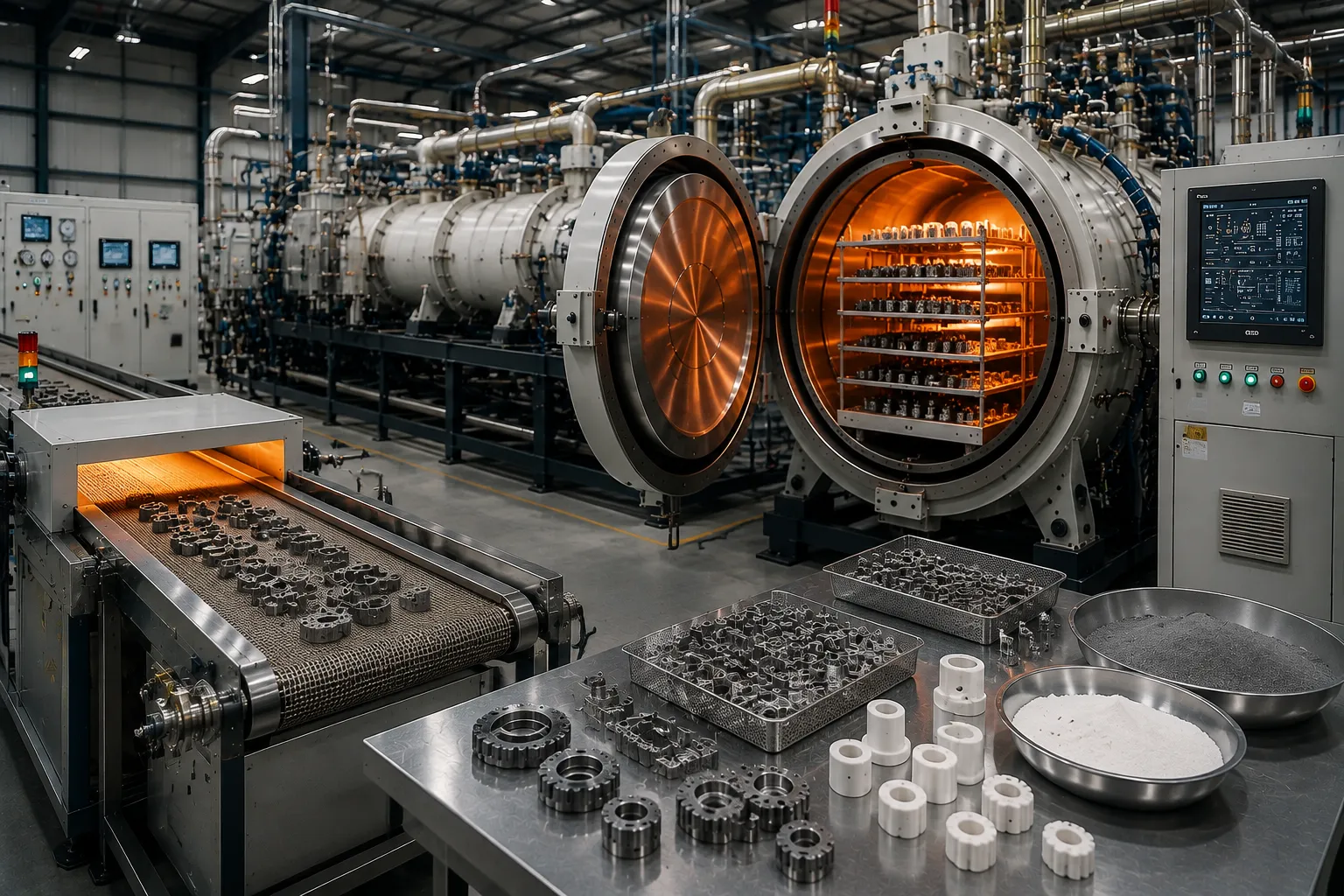
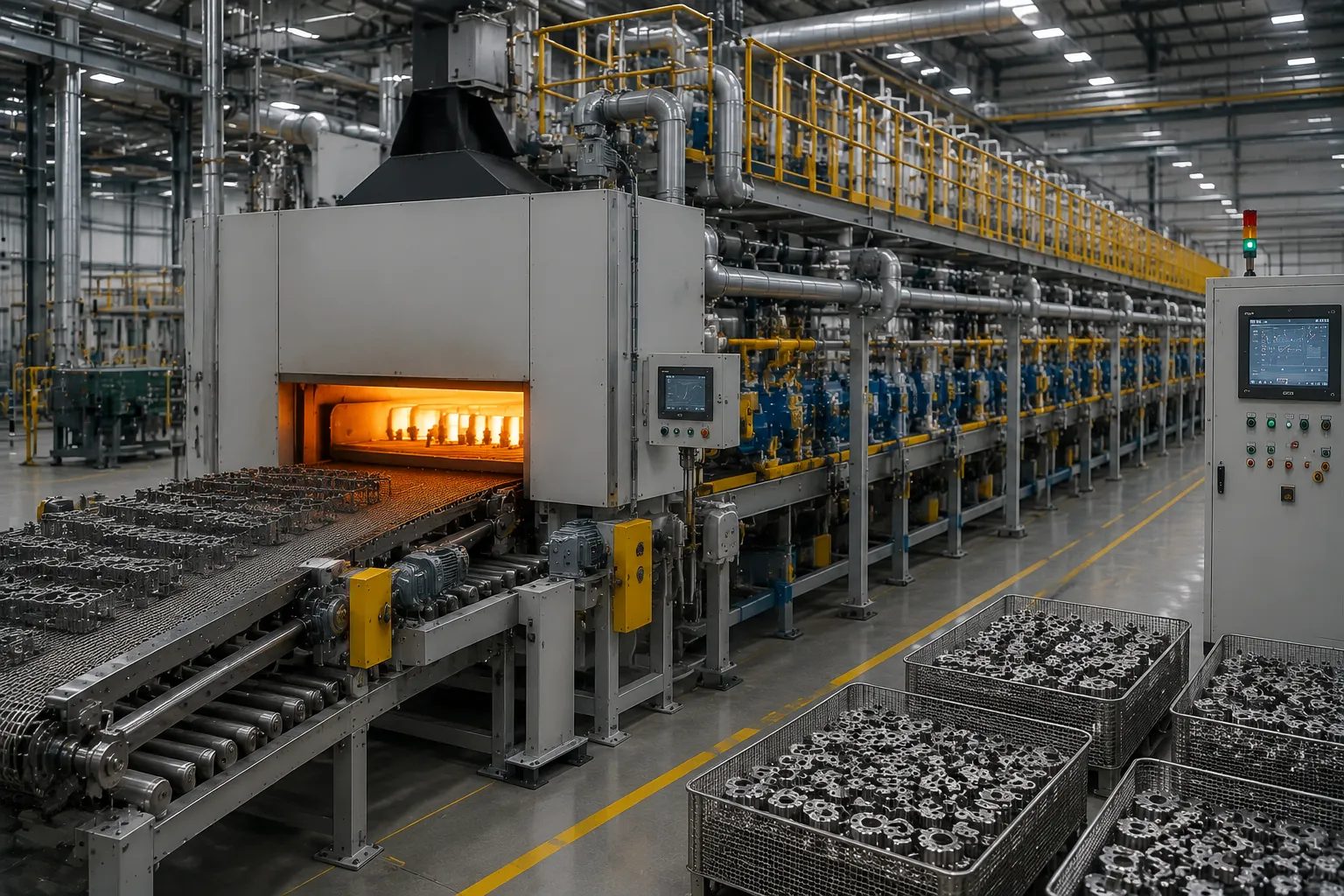
Yes. While standard batch vacuum furnaces and mesh belt units fulfill general industrial needs, specialized components—such as large aerospace structural forgings, heavy drive shafts, or micro-electronic ceramic substrates—require custom thermal engineering support. Haitem Furnace provides complete original equipment manufacturing (OEM) and custom original design manufacturing capabilities.
Custom Geometry & Hot Zones
Vertical bottom-loading, pit-type top-loading, dual-chamber horizontal systems with integrated oil/gas quenching, or custom-length continuous pusher furnaces engineered for tight floor plan restrictions.
Automated Material Handling
Fully automated elevator loading, robot-assisted tray transfer systems, vacuum lock chambers, and high-speed quenching conveyors designed to reduce cycle times and manual handling.
Advanced PLC & SCADA Systems
Tailored control software featuring Siemens or Allen-Bradley PLCs, multi-segment ramp/soak profiling, real-time data logging, batch reporting, and Industry 4.0 IoT connectivity.
Specialized Gas & Pressure Profiles
High-pressure gas quenching up to 15 bar with directional cooling nozzles, multi-gas atmosphere mixing manifolds, and integrated binder burnout traps for powder metallurgy.
Our project engineering workflow begins with a comprehensive review of your thermal cycle parameters, workpiece dimensions, and throughput targets. We then provide complimentary 3D CAD arrangement drawings and thermal simulation data alongside our detailed technical proposal.
03 What are the equipment lead times, onsite installation steps, and post-sales support workflows?
Haitem Furnace operates a structured project execution model designed to ensure equipment performance and minimize factory downtime. Standard production lead times typically range from 8 to 12 weeks for standard lab and batch vacuum furnaces, and 14 to 20 weeks for continuous controlled atmosphere lines or custom engineering solutions.
- Engineering Design & Approval (Weeks 1–3): izing process specifications, utility interconnect drawings, structural load plans, and electrical schematics with your project engineering team.
- Precision Fabrication & Chamber Assembly (Weeks 4–10): CNC laser cutting, heavy pressure vessel welding, vacuum helium leak detection, hot zone installation, and control cabinet wiring.
- Factory Acceptance Testing (FAT) (Week 11): Conducting full-power thermal testing, vacuum pump-down verification, helium mass spectrometer leak testing, and multi-zone Temperature Uniformity Surveys (TUS) at our manufacturing plant prior to dispatch.
- Shipping & Onsite Rigging (Weeks 12–14): Heavy equipment transport, positioning supervision, mechanical utility hookup, power connection, gas line integration, and exhaust ducting setup.
- Site Acceptance Testing (SAT) & Operator Training: Field commissioning under actual production conditions, final pyrometry calibration, safety interlock validation, and hands-on maintenance team training.
Post-sales support includes a 12-to-24-month comprehensive warranty, 24/7 remote diagnostic assistance via secure PLC connection, rapid spare parts dispatch (heating elements, thermocouples, vacuum seals, ceramic tubes), and scheduled preventive maintenance service contracts through our global service network.
04 How do continuous sintering furnaces maintain safety and dew-point stability when handling hydrogen or flammable atmospheres?
Continuous sintering and bright annealing operations utilizing pure Hydrogen (H2), Dissociated Ammonia (NH3), or Endothermic atmosphere gas demand strict purity monitoring and fail-safe hardware control. Flammable gas environments pose operational risks if ambient oxygen ingress occurs or if internal furnace temperatures drop below safety thresholds (typically 750°C / 1382°F).
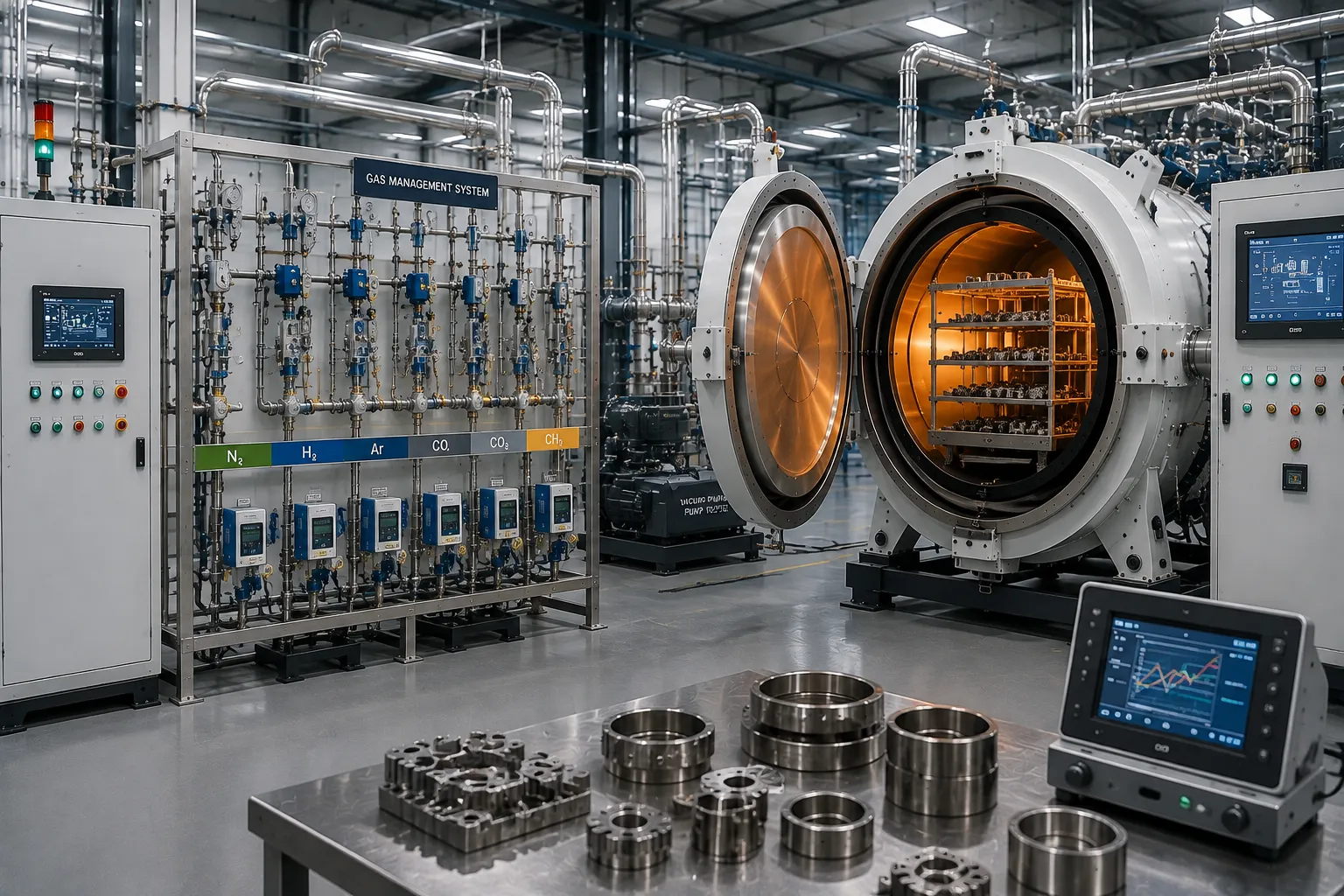
Haitem Furnace controlled atmosphere equipment integrates multi-tiered safety systems and automated gas management panels:
- Automated Nitrogen Emergency Purge: Dual-reserve nitrogen tank manifolds paired with pneumatic fail-open valves. In the event of power interruption, pressure drop, or gas detection alert, high-volume N2 immediately purges the heating chamber to neutralize flammable gas volumes.
- Inlet & Outlet Flame Curtains: Continuous gas burn-off pilot burners and high-voltage igniters at entrance and exit vestibules maintain positive pressure flame seals, preventing ambient air ingress during workpiece transfer.
- Precision Mass Flow Control & Dew-Point Management: Digital Mass Flow Controllers (MFCs) precisely regulate H2 / N2 mixing ratios. Inline ceramic moisture sensors continuously monitor dew-point down to -60°C (-76°F), guaranteeing bright, oxide-free surface finishes on sintered parts.
- Triple-Redundant Safety Interlocks: Independent over-temperature controllers, chamber pressure switches, water cooling flow sensors, and combustible gas detectors linked directly to hardwired safety relays.
Need Detailed Technical Specs or CAD Layouts?
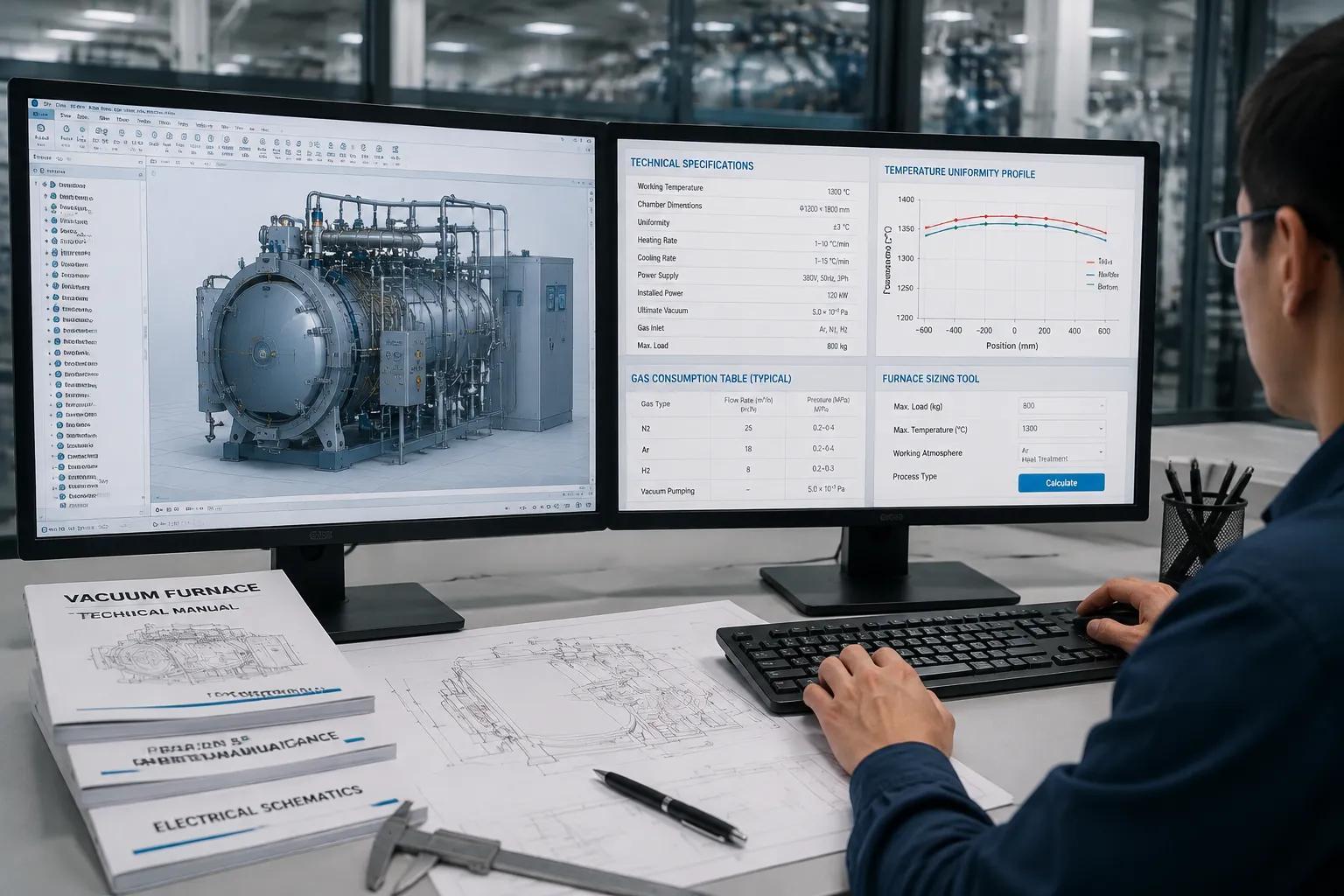
Our thermal processing resource library houses detailed equipment manuals, gas consumption tables, temperature uniformity profiles, and furnace sizing tools tailored for enterprise procurement officers and metallurgical engineers.
Have Specific Thermal Processing Requirements?
Connect directly with Haitem Furnace application engineers for custom furnace design, process optimization, or immediate RFQ support.