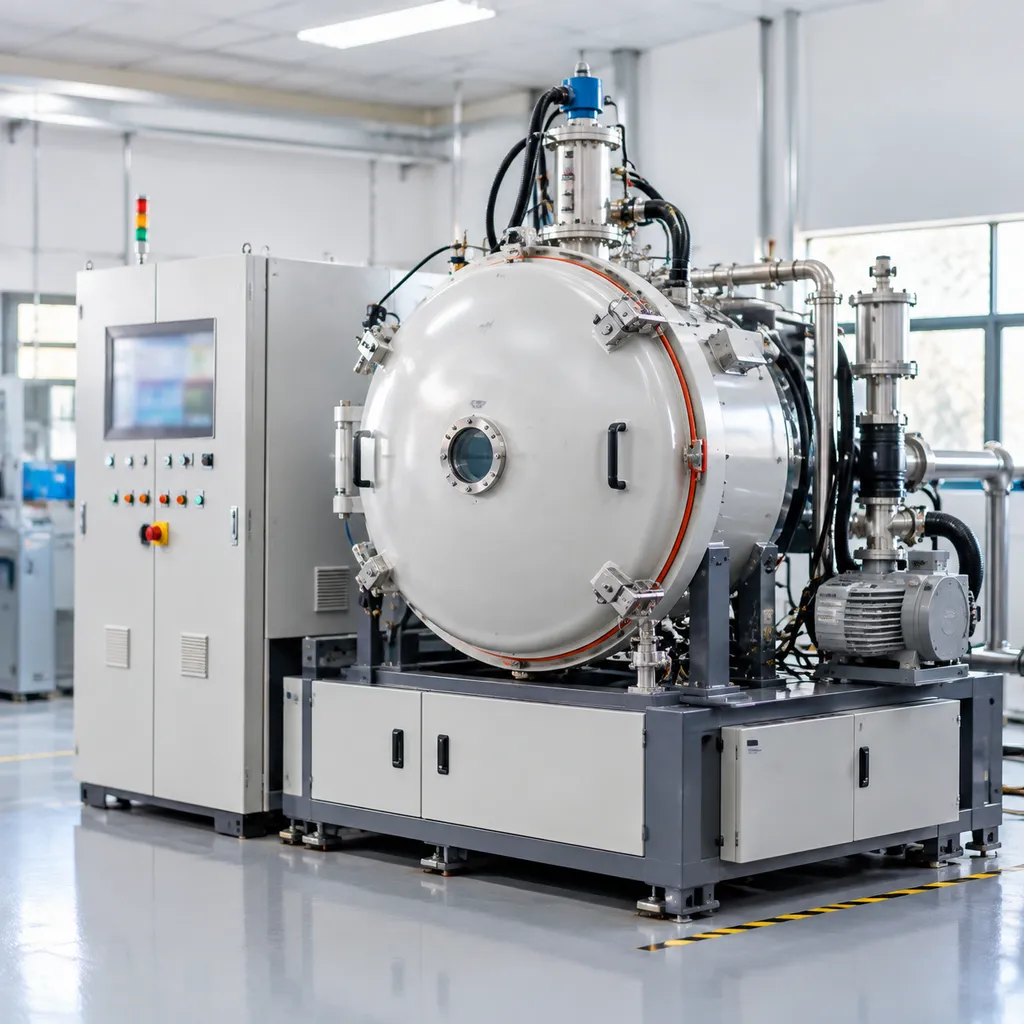
Formula details
Product Details
Overview
Core Capabilities of Our High-Quality Vacuum Induction Melting Sintering Furnace
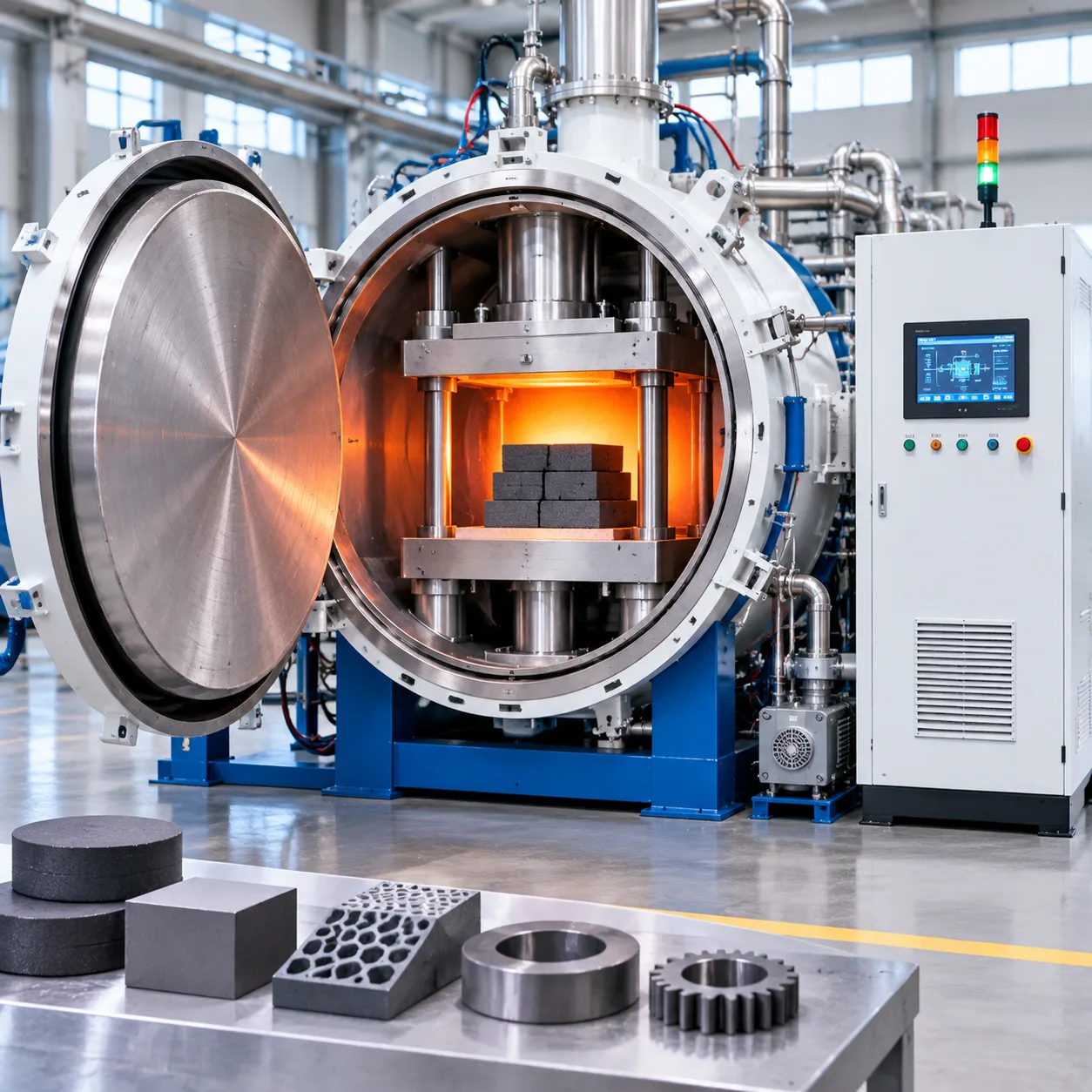
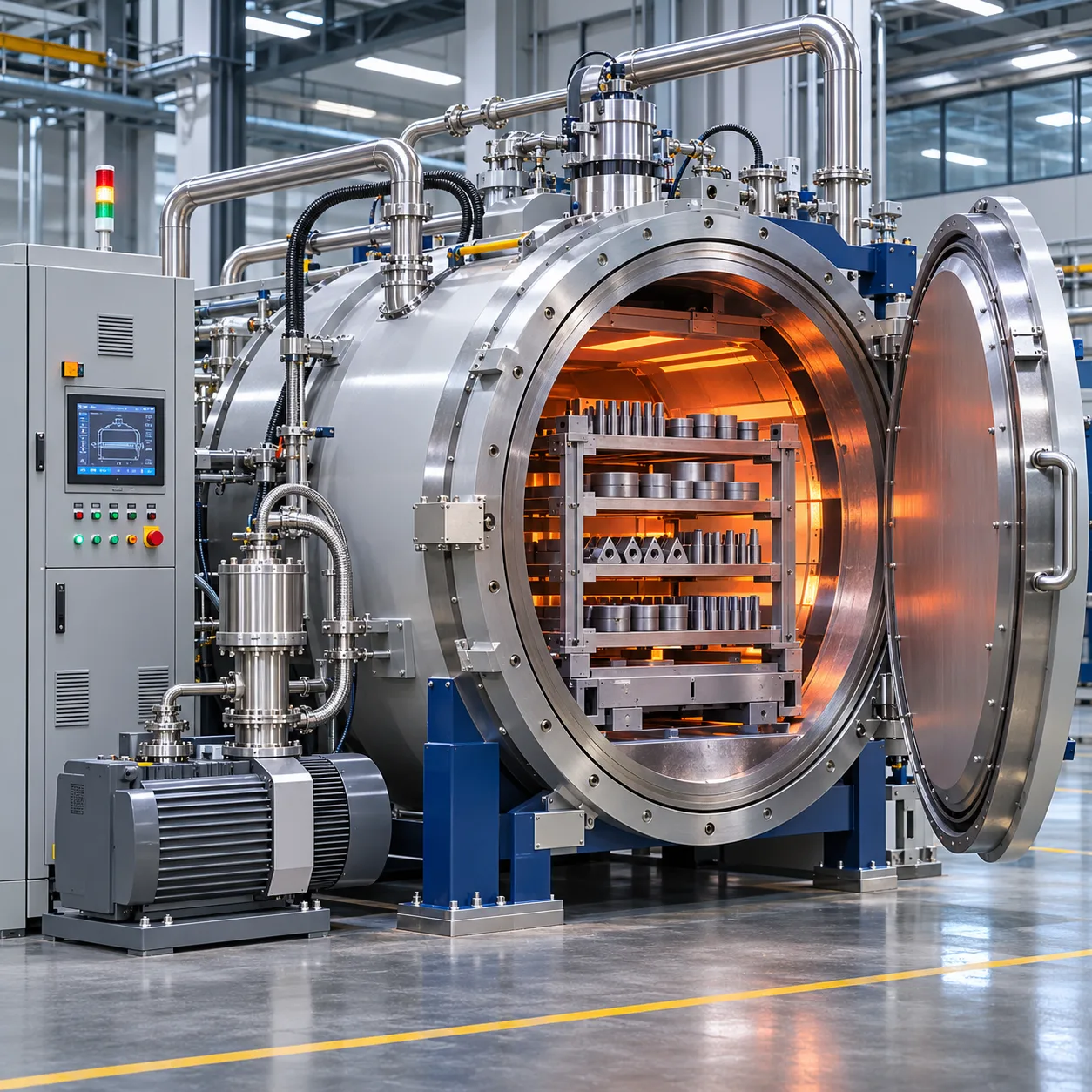
Industrial metallurgy and advanced materials production demand rapid thermal response, zero-contamination environments, and precise phase transformation control. Our high-quality vacuum induction melting sintering furnace integrates both liquid-phase melting and solid-state sintering into a single operational platform. This dual-function configuration reduces capital investment, eliminates multi-step handling risks, and prevents atmospheric contamination between thermal cycles.
Dual-Function Vacuum Induction Melting and Sintering Performance
We engineer each unit to execute complete metallurgical profiles without breaking vacuum integrity:
-
- Vacuum Induction Melting (VIM): Electromagnetic stirring ensures rapid compositional homogenization, precise alloying, and thorough inclusion removal.
- High-Temperature Sintering: Controlled heating profiles maintain structural stability, driving diffusion-driven densification with uniform grain growth across complex parts.
- Unified Thermal Processing: Enables consecutive melting, casting, degassing, and solid-state consolidation within one sealed thermal environment.
Target Materials and Processing Capabilities
Our high-quality vacuum melting sintering furnace equipment processes demanding engineering compositions across aerospace, defense, semiconductor, and energy sectors:
| Material Class | Processing Mode | Operational Focus |
|---|---|---|
| Nickel- & Cobalt-Based Superalloys | Vacuum Induction Melting (VIM) | Deep degassing, trace-element control, clean melt refining |
| Advanced Technical Ceramics | High-Vacuum Sintering | Pore elimination, sub-micron grain retention, maximum density |
| Rare-Earth Magnetic Materials | Vacuum Melting & Sintering | Low oxygen uptake, magnetic domain alignment, phase stabilization |
| Refractory & Reactive Alloys | Controlled Atmosphere Sintering | Carbon/oxygen reduction, carbide minimization, ductile phase control |
Corrosion-Resistant Chamber Design for Reactive Melts
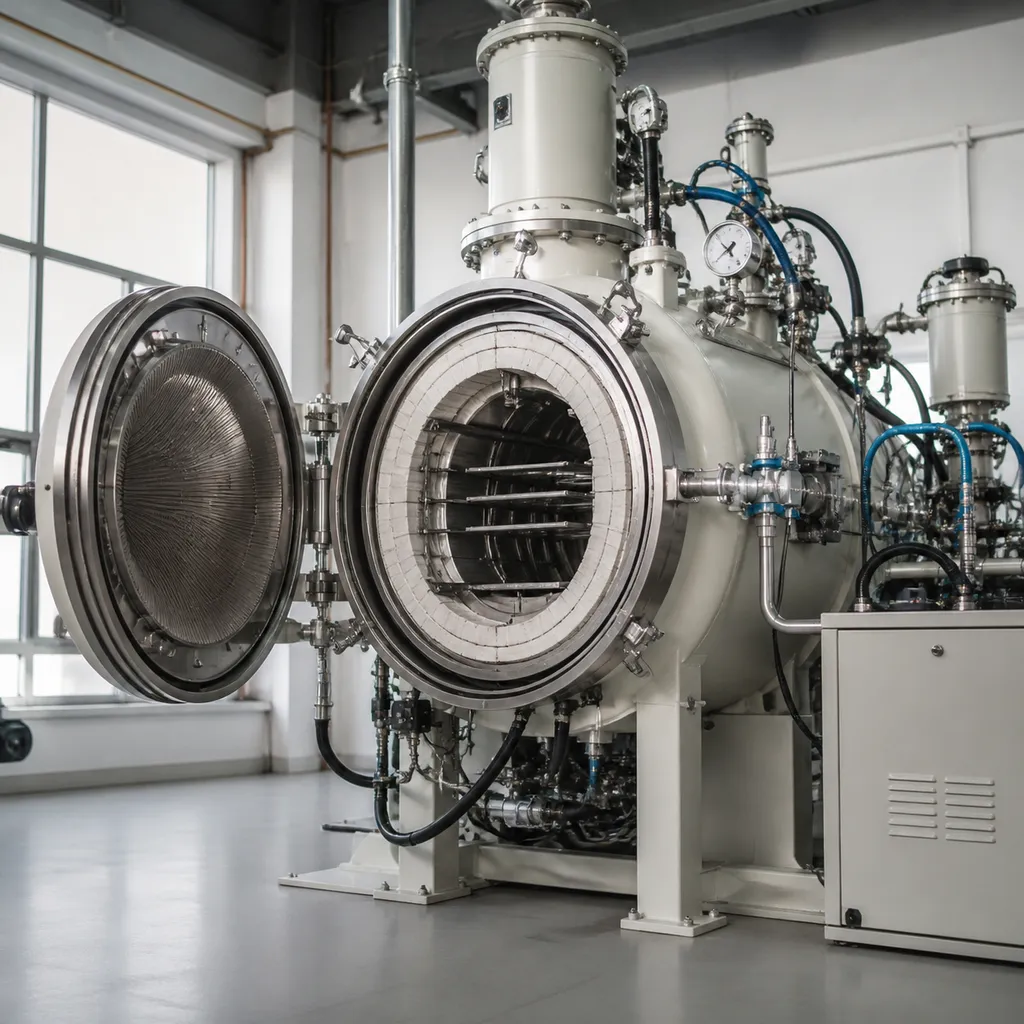
Processing reactive metals and high-vapor-pressure elements requires specialized physical containment. Our high-quality vacuum induction melting sintering furnace factory manufactures double-walled, water-cooled chambers built from heavy-gauge stainless steel (SUS304/SUS316L).
-
- Corrosion Protection: Electropolished interior walls resist reactive slag vapor, halides, and chemical off-gassing.
- Thermal Protection: Full water jackets prevent shell deformation and maintain low exterior surface temperatures during prolonged melts exceeding 1800°C.
- Chamber Longevity: Engineered seals and localized thermal barriers prevent metal vapor deposition along door gaskets, sight glasses, and electrode feedthroughs.
Precision Atmospheric Control and Degassing Cycles
Controlling melt-gas reactions is essential for low-porosity, high-purity ingots and sintered components. Our quality vacuum melting sintering furnace equipment integrates dynamic gas-handling technology to support automated degassing and multi-gas backfilling profiles:
-
- Deep Degassing Sequences: Programmable ramp-and-soak cycles pull residual hydrogen, oxygen, and nitrogen out of the melt before solidification.
- Multi-Stage Inert Backfilling: Automated proportional valves deliver argon (Ar) or nitrogen (N₂) up to partial-pressure or positive-pressure levels to suppress alloy element volatilization.
- Active Pressure Stabilization: PLC-monitored mass flow controllers stabilize partial-pressure environments to avoid electrical arc discharge during high-power induction runs.
Technical Specifications of Vacuum Induction Melting Sintering Furnace Equipment
| Parameter | Standard Range | Heavy-Duty / High-Vacuum Option |
|---|---|---|
| Ultimate Vacuum Level | 5.0 × 10⁻³ Pa (Diffusion system) | 1.0 × 10⁻⁴ Pa (Turbomolecular package) |
| Pumping Systems | Multi-stage rotary vane + Roots blower + oil diffusion pump | Dry scroll/screw backing pump + magnetic levitation turbomolecular pump |
| Power Supply Rating | 50 kW – 160 kW IGBT solid-state | 200 kW – 400 kW high-output inverter |
| Operating Frequency | 2.5 kHz – 10 kHz (automatic tracking) | 1 kHz – 4 kHz (for deep magnetic penetration in dense melts) |
| Crucible / Work Volume | 1 L to 15 L | 20 L to 60 L (custom scalable) |
| Maximum Batch Weight | 5 kg – 50 kg (steel equivalent) | Up to 300 kg single charge |
| Cooling Method | Closed-loop plate heat exchanger | Dual-circuit emergency backup cooling skid |
Vacuum Pumping and Pressure Dynamics
Our quality vacuum induction melting sintering furnace equipment utilizes high-throughput, multi-stage evacuation chains. Backing lines feature electro-pneumatic isolation valves and digital Pirani-Penning gauge configurations for uninterrupted pressure monitoring across the entire cycle:
Roughing and Roots Stage: High-capacity rotary or dry screw pumps paired with Roots boosters to bring the main chamber from atmospheric pressure down to 1 Pa in minutes.
Fine Vacuum Stage: High-speed diffusion pumps for cost-effective deep vacuum, or turbomolecular units when zero hydrocarbon backstreaming is critical for processing sensitive alloys.
Leak Rates: All chambers undergo helium mass spectrometer testing to confirm a leak rate lower than 5.0 × 10⁻⁹ Pa·m³/s.
Power Delivery and Thermal Efficiency
We equip our quality vacuum melting sintering furnace equipment with IGBT induction generators that convert energy with greater than 90% electrical efficiency. Automated resonance frequency tracking compensates for changing magnetic characteristics as the charge transitions through its Curie temperature. This design minimizes grid losses, shortens cycle ramp rates, and guarantees uniform power input into susceptors or direct conductive melts.
Chamber Sizing and Charge Capacities
We manufacture chambers from double-walled 304 or 316L stainless steel, fully water-jacketed to keep outer skin temperatures below 50°C during sustained high-temperature runs. When evaluating sizing options against our vacuum furnace cost and price guide by capacity, chamber interiors can be configured with:
Direct-melt crucibles utilizing zirconia, alumina, or magnesia liners for reactive superalloys.
High-density graphite, molybdenum, or tungsten hot zones for high-temperature solid-state sintering.
Ergonomic top-loading or front-loading configurations engineered to streamline material loading and furnace turnaround.
Accelerated Closed-Loop Cooling System
Thermal control depends directly on reliable heat extraction. Our closed-loop cooling circuits protect induction coils, power feedthroughs, and vacuum seals through dedicated stainless steel manifolds. Each line includes individual digital flow meters, temperature switches, and automated safety interlocks that immediately trip the induction power supply if water pressure drops below 0.25 MPa, preventing thermal stress or coil damage.
Key Engineering Advantages of Our High-Quality Vacuum Induction Melting Sintering Furnace Equipment Factory
As a specialized vacuum furnace manufacturer, we prioritize precision engineering to solve complex metallurgical challenges. Our high-quality vacuum induction melting sintering furnace equipment is built on a foundation of rigorous design standards and reliable technical performance:
-
- Optimized Induction Heating: We utilize custom-engineered induction coil geometry to ensure uniform magnetic flux and superior heat dispersion, essential for consistent melt quality and sintering density.
- High-Vacuum Integrity: Every unit undergoes stringent testing, including helium mass spectrometer leak detection, to guarantee the high-vacuum sealing integrity required for sensitive material processing.
- Advanced PLC Automation: Our systems feature intuitive PLC-based control with industrial touchscreen HMIs. Users can easily manage recipe storage, data logging, and automated safety interlocks to ensure process repeatability.
- Precision Thermal Management: To achieve precise control, we implement multi-zone temperature tracking using integrated optical pyrometers and retractable thermocouples.
By focusing on these core mechanical and software advantages, our high-quality vacuum induction melting sintering furnace factory provides robust equipment designed for the most demanding production environments. Understanding the core vacuum furnace applications, uses, and benefits allows our engineering team to better tailor these features to your specific metallurgical requirements.
Custom Engineering Solutions from Our Sintering Furnace Factory
Standard setups rarely cover every metallurgical challenge. As a dedicated high-quality vacuum induction melting sintering furnace factory, we adapt every system to match your exact process requirements, production footprint, and thermal processing targets. Through our specialized design and engineering services, our team builds non-standard systems designed around specific alloy compositions, atmosphere cycles, and operational workflows.
Tailored Hot-Zone Configurations
We engineer the thermal core of each furnace to handle target processing temperatures, prevent vapor phase reactions, and reduce maintenance frequency:
-
- Graphite Hot Zones: Ideal for high-temperature sintering, carburization-resistant operations, and rapid thermal cycling up to 2200°C.
- Molybdenum Shielding & Elements: Built for clean-vacuum metallurgy requiring zero carbon contamination, operating reliably up to 1600°C–1750°C.
- Tungsten Heating Arrays: Configured for ultra-high-temperature requirements reaching above 2000°C without metal embrittlement or structural sag.
| Hot-Zone Element | Maximum Working Temp | Best Suited Atmosphere | Primary Benefit |
|---|---|---|---|
| High-Purity Graphite | Up to 2200°C | High Vacuum / Inert Gas | High thermal shock resistance and lower operating cost |
| Molybdenum (Mo) | Up to 1750°C | Ultra-High Vacuum / Hydrogen | Carbon-free processing for aerospace superalloys |
| Tungsten (W) | Up to 2400°C | Ultra-High Vacuum / Reducing | Extreme thermal stability for refractory metal melts |
Scalable Chambers and Process Hardware
Whether you need a compact chamber for laboratory R&D or large-scale batch equipment, our quality vacuum induction melting sintering furnace equipment factory manufactures vessels to your exact scale.
-
- Chamber Sizing: Cylindrical, horizontal, or top-loading configurations scaled from 5 kg research batches up to multi-hundred-kilogram industrial production runs.
- Auxiliary Process Ports: Integrated feedthroughs for bottom-pouring melt valves, optical observation windows with protective shutters, pneumatic sampling spoons, and mold preheating stages.
- Integrated Turnkey Services: Every customized system built at our vacuum sintering furnace factory includes complete plant layout integration, utility routing schematics, on-site mechanical assembly, and full operational commissioning.
Factory Quality Control and Compliance Standards

Verification and Factory Acceptance Testing (FAT)
To ensure zero field failures, every quality vacuum induction melting sintering furnace equipment build undergoes a rigorous multi-stage Factory Acceptance Testing protocol prior to dispatch:
-
- Helium Mass Spectrometer Leak Detection: We test all vacuum chambers, flanged joints, and feedthroughs using fine-spray helium mass spectrometry to verify seal integrity and eliminate micro-leaks.
- Ultimate Vacuum and Pump-Down Rate Tests: Pumping systems are benchmarked against factory targets to confirm vacuum level stability and recovery times under clean, cold conditions.
- Thermal Uniformity Surveys (TUS): Multi-point thermocouple arrays verify heat distribution across the hot zone, complying with strict metallurgical process tolerances.
- Full-Power Hot Testing: Induction coils, power supplies, and closed-loop cooling circuits are tested at full load to confirm coil insulation resistance and cooling efficiency.
Direct Factory Support and Lifecycle Services
As a premier China vacuum furnace solutions factory direct provider, we stand behind our builds with end-to-end technical backup. Our after-sales program minimizes operational downtime:
| Service Area | Factory Standard Provision |
|---|---|
| Warranty Protection | Comprehensive warranty covering core mechanical and electrical systems |
| Spare Parts Availability | Direct factory stock of precision seals, hot-zone liners, and induction components |
| Coil Refurbishment | In-house coil potting, repair, and geometric recalibration services |
| Field Engineering | On-site installation guidance, operator training, and calibration routines |
By maintaining complete manufacturing control as a dedicated quality vacuum induction melting sintering furnace factory, we deliver durable systems that provide repeatable metallurgy year after year.
Primary Industrial Applications for Quality Vacuum Melting Sintering Furnaces
Key Processing Capabilities and Target Sectors
-
- Aerospace Superalloys and Precision Casting: Production of critical nickel-, cobalt-, and iron-based superalloys used in turbine blades and jet engine components. Our industrial induction vacuum furnace for high-purity alloys isolates volatile elements, eliminates melt inclusions, and controls trace gas levels like oxygen and nitrogen.
- High-Density Cemented Carbides and Tooling: Solid-state sintering for tungsten carbide (WC-Co), cutting inserts, and structural wear parts. Delivering high vacuum levels and rapid inert gas quenching prevents binder evaporation and decarburization, while our vacuum furnace for ceramic sintering ensures pore-free structural densification.
- Additive Manufacturing Feedstock and Powders: Melting high-cleanliness master alloys for gas atomization. Our systems deliver the chemical homogeneity and low oxygen pick-up required for plasma atomization feedstocks and metal 3D printing applications.
- High-Entropy Alloys and Refractory Metallurgy: Liquid-phase melting and subsequent sintering of refractory elements including tungsten, molybdenum, niobium, and complex multi-component high-entropy alloys (HEAs).
- Semiconductor and Electronic Substrates: High-vacuum processing of high-purity metallization targets, conductive ceramics, and rare-earth magnetic alloys under strict low-leak thermal profiles.
| Sector | Target Materials | Critical Processing Requirement |
|---|---|---|
| Aerospace & Defense | Ni/Co Superalloys, Intermetallics | Tight gas degassing, low inclusion counts |
| Tooling & Machining | Cemented Carbides, Borides | High density, controlled binder phase distribution |
| Powder Metallurgy | Spherical 3D Printing Precursors | Accurate alloy stoichiometry, low oxygen content |
| Advanced Electronics | Refractory Metals, Sputtering Targets | Ultra-clean vacuum environment, uniform grain size |
By directly engineering each high-quality vacuum melting sintering furnace, we provide exact heating control and robust chamber designs that handle aggressive thermal demands without degrading hot-zone tooling or compromising batch chemistry.
Frequently Asked Questions About Vacuum Induction Melting Sintering Systems
What ultimate vacuum degree can this furnace maintain during high-temperature sintering?
Our high-quality vacuum induction melting sintering furnace uses multi-stage pumping packages, pairing dry or rotary backing pumps with high-speed diffusion or turbomolecular systems. In a clean, outgassed chamber at ambient temperature, the system achieves an ultimate vacuum down to 5 × 10⁻⁴ Pa. Under active high-temperature sintering cycles, our dynamic vacuum control keeps working pressures within optimal ranges to avoid vapor loss or material contamination.
How does the equipment prevent cross-contamination and oxidation when melting reactive metals?
We eliminate atmospheric contamination by focusing on chamber integrity and controlled gas cycling:
-
- Helium Mass Spectrometer Tested: Vacuum vessels feature certified low leak rates to block oxygen ingress.
- Inert Gas Purging: Automated high-purity argon or nitrogen backfilling flushes volatiles during heating.
- Targeted Gas Degassing: Multi-stage pressure management captures outgassed binders before they settle on the melt.
If your processes require specialized thermal cycles alongside melting, explore our high-temperature vacuum sintering furnace systems designed for clean, contamination-free processing.
Can the induction heating system accommodate different crucible materials for custom alloys?
Yes. As an experienced quality vacuum induction melting sintering furnace equipment factory, we design our induction power supplies and coil geometries to match varied crucible susceptors and liners:
-
- Conductive Crucibles: High-purity graphite for standard non-reactive melts and high-temperature sintering.
- Non-Conductive Liners: Alumina, zirconia, or magnesia crucibles paired with direct metal induction coupling.
- Cold Crucible Options: Water-cooled copper hearth configurations for melting highly reactive titanium and refractory alloys without crucible pick-up.
What are the routine maintenance requirements for the vacuum pumps and induction coils?
Keeping your quality vacuum melting sintering furnace equipment running at peak performance involves standard preventive schedules:
| Component | Maintenance Action | Recommended Frequency |
|---|---|---|
| Coil Insulation | Inspect ceramic/dielectric coatings for cracks or arcing signs | Weekly |
| Elastomer Seals | Clean and regrease door and port O-rings; check for thermal set | Monthly |
| Mechanical Pumps | Monitor vacuum oil color, level, and exhaust filters | Every 500 operating hours |
| Cooling Channels | Inspect water circuit flow switches, conductivity, and strainers | Quarterly |
| Chamber Walls | Clean interior spatter and condensates to prevent outgassing drag | Per batch or weekly |
How does our factory support custom sizing and site-specific utility integrations?
As a direct high-quality vacuum induction melting sintering furnace factory, we adapt every system to your physical floor plan and process demands. We engineer tailored hot-zone sizes, specific charge capacities, and auxiliary loading ports. For specialized footprints and cleanroom orientations, we also supply vertical configurations like our bell jar vacuum furnace custom design. Our engineering team delivers comprehensive layout schematics, matching power hookups, closed-loop cooling towers, and gas delivery systems before site commissioning.