Formula details
Product Details
Overview
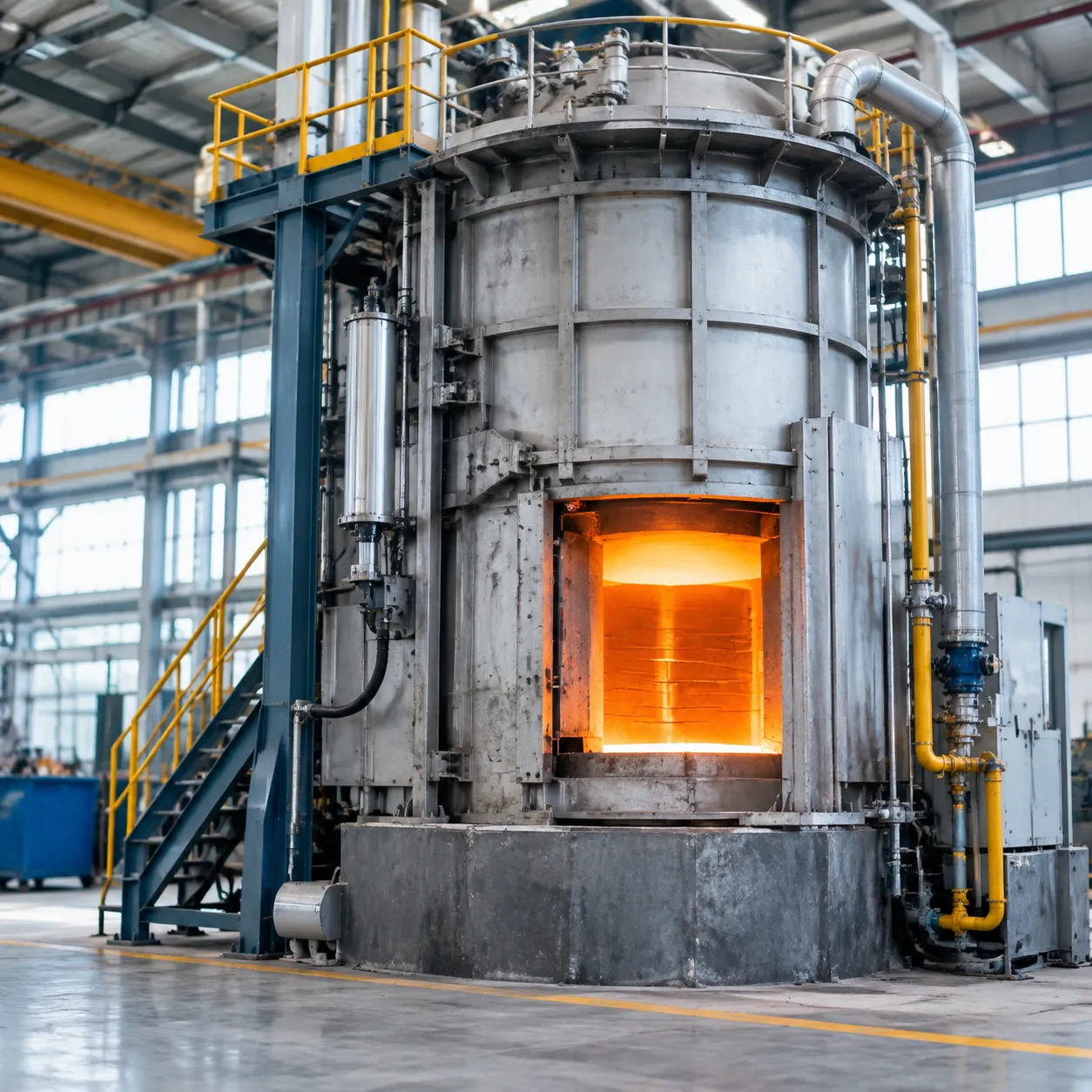
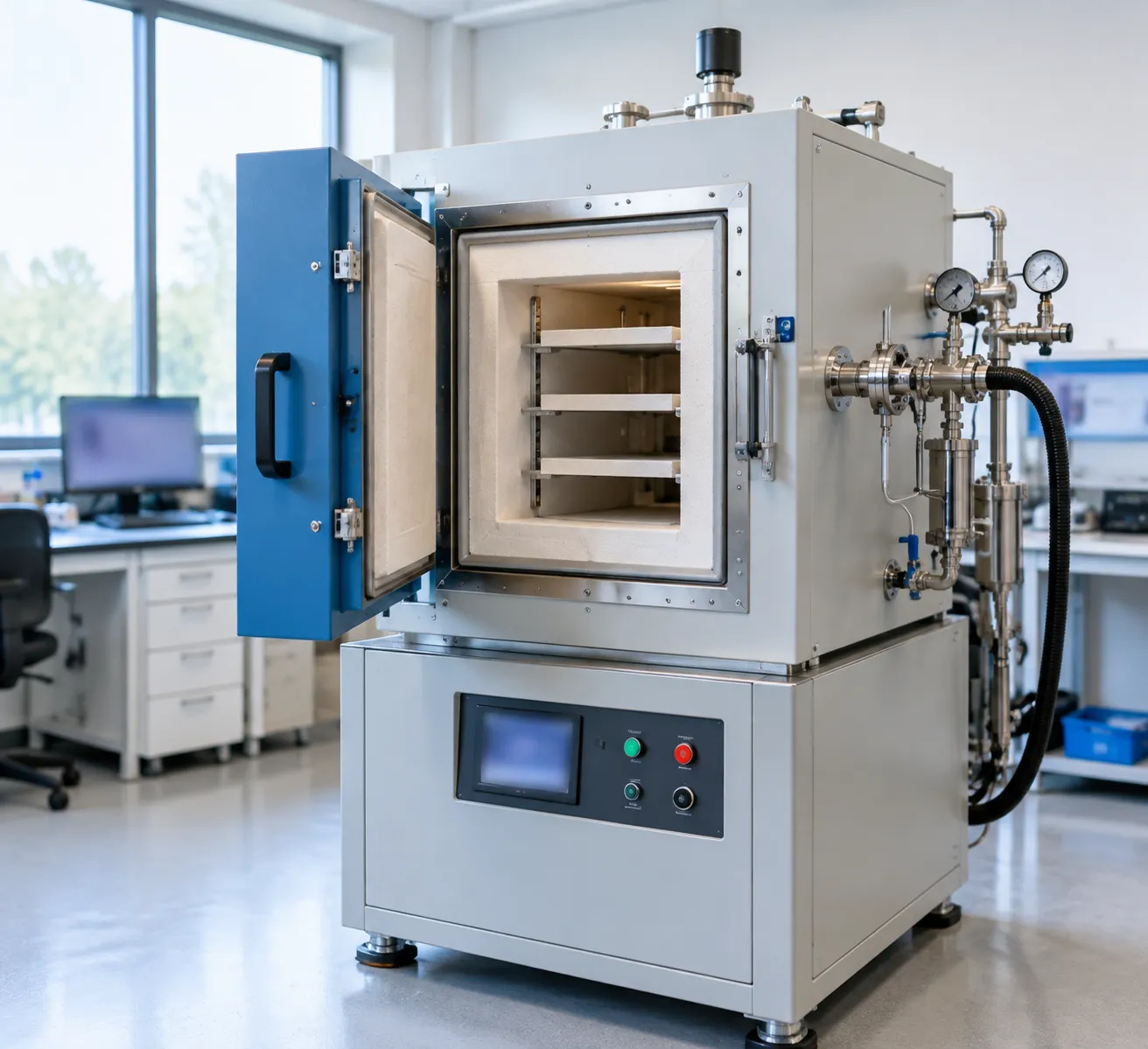
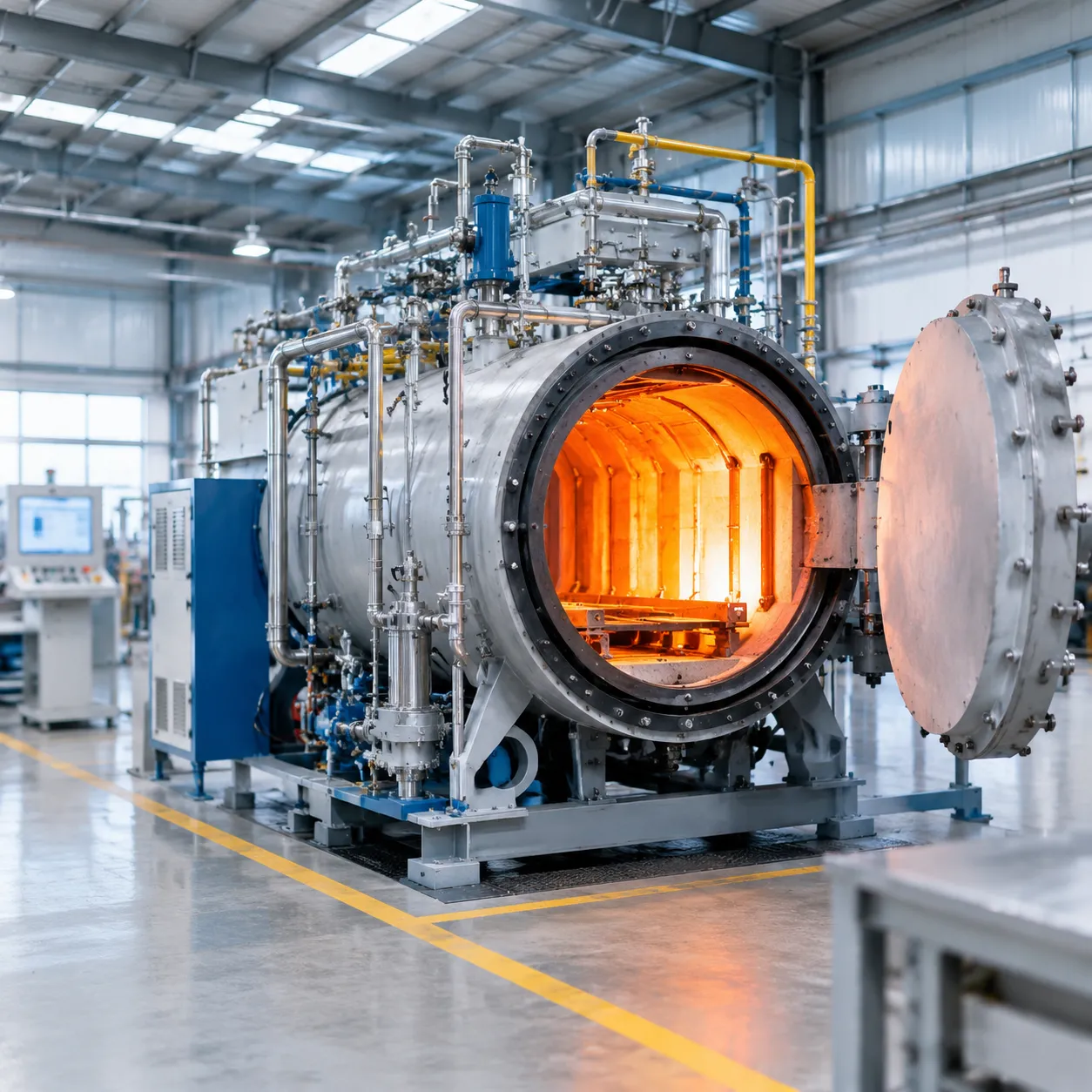
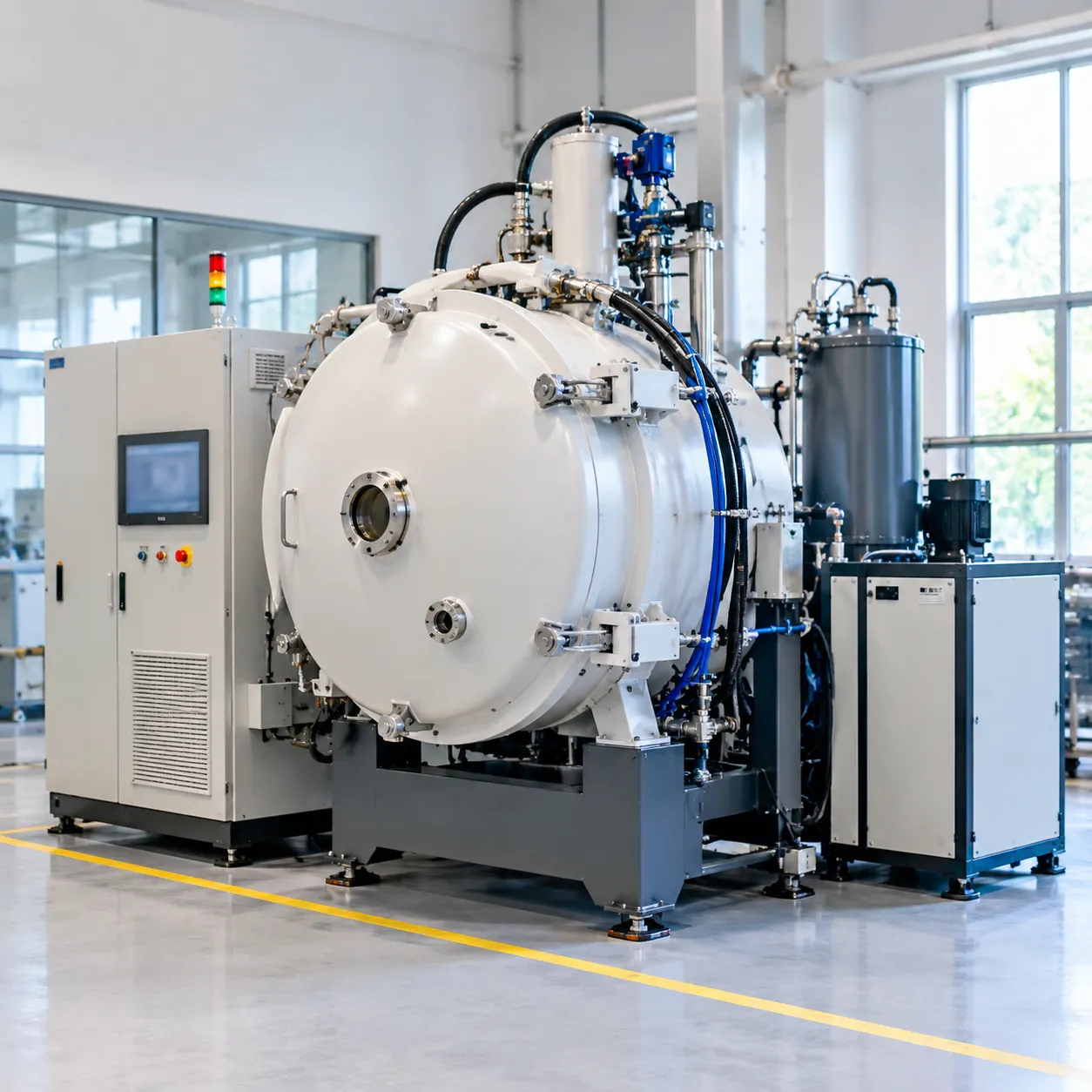
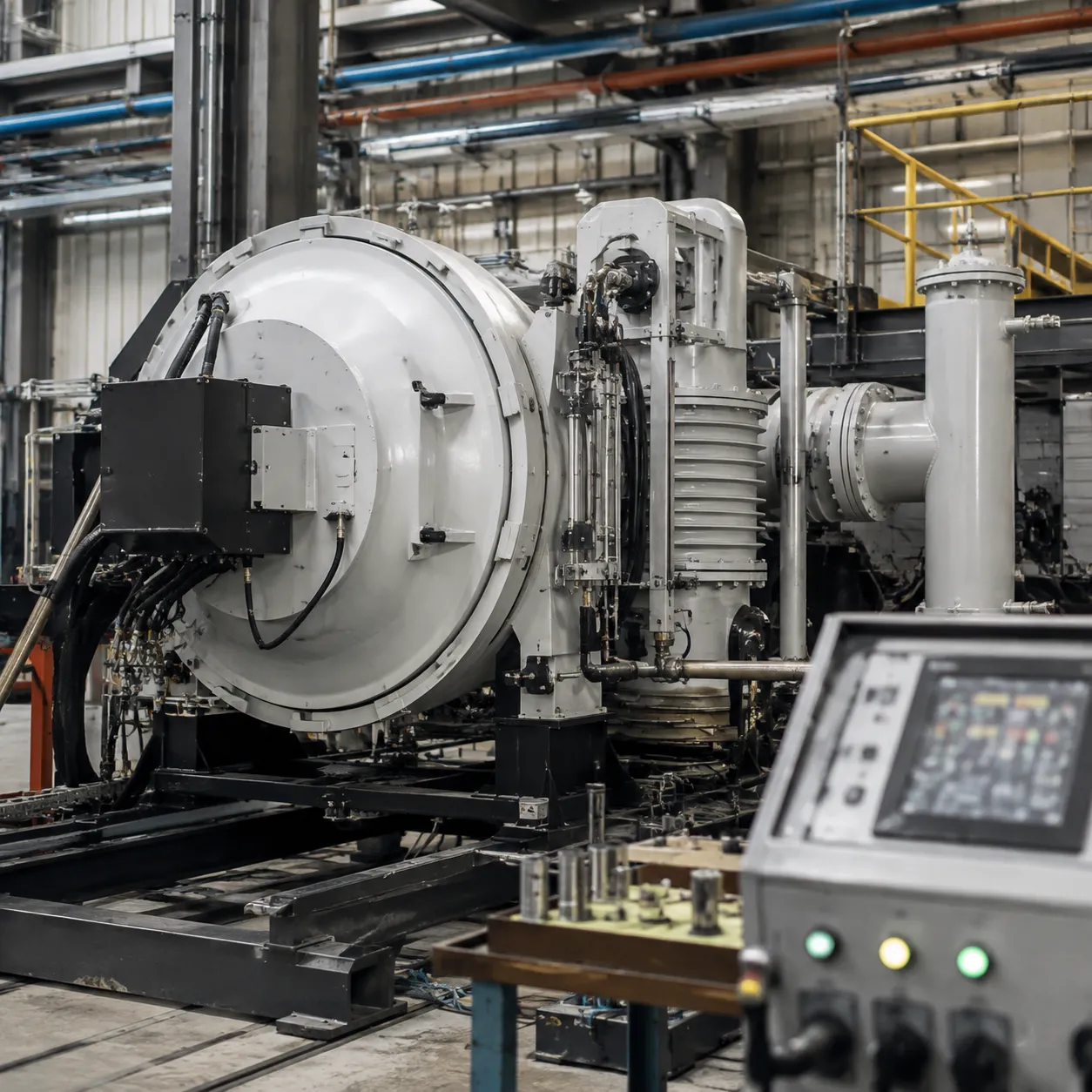
Induction Vacuum Furnace: System Overview
Core Processing Capabilities
Our system integrates a high-efficiency high-frequency induction heating system within a sealed vacuum chamber to support high-purity metallurgy and critical thermal treatments:
-
- Vacuum Induction Melting (VIM): Clean melting and alloy refining without atmospheric exposure.
- Induction Vacuum Sintering: Superior density and purity for advanced powder metallurgy and non-oxide ceramics.
- Reactive Alloy & Degassing Treatment: Complete removal of trapped gases during high-purity metal refining.
Key Performance Metrics
-
- Maximum Temperature: Up to 2400°C for high-temperature refractory processing.
- Ultimate Vacuum Depth: Reaches down to 10⁻⁵ Pa for an ultra-clean processing environment.
- Thermal Uniformity: Exceptional ±1°C precision across the entire hot zone.
- Uptime Reliability: Proven 99.8% uptime rating built for high-throughput industrial manufacturing.
Engineering Architecture & Core Components of an Induction Vacuum Furnace
We engineer every induction vacuum furnace with a modular, heavy-duty architecture built for extreme precision and long-term operating reliability. From robust power delivery to clean process environments, our components deliver thermal efficiency across demanding vacuum furnace applications. To explore budget planning across different equipment sizes, consult our vacuum furnace cost guide.
High-Efficiency Induction Coil & Power Architecture
Our high-frequency induction heating system delivers rapid energy transfer directly into your workpiece with minimal thermal loss.
-
- Custom Copper Coils: Heavy-walled, water-cooled oxygen-free copper coils shaped specifically to match your vessel and crucible geometry.
- Solid-State Power Supplies: Advanced IGBT/SCR power supplies featuring dynamic frequency tracking and tight power regulation.
- Electromagnetic Optimization: Precision coil spacing prevents flux leakage and protects chamber walls while maximizing heating efficiency.
Multi-Stage Vacuum Pumping Stack
Maintaining deep vacuum environments demands a responsive multi-stage vacuum pumping stack capable of high throughput and rapid pump-down times.
-
- Primary Mechanical Backing: Heavy-duty dry screw or rotary vane pumps handle initial evacuation and pump-down cycles.
- Roots Blower Integration: Accelerates crossover speed in mid-vacuum pressure ranges to shorten cycle times.
- Ultra-High Vacuum Units: High-throughput diffusion pumps or turbomolecular pumps bring operating vacuum levels down to 10⁻⁵ Pa for zero-oxidation material processing.
Hot Zone Insulation & Crucible Configurations
We design versatile hot zone layouts to accommodate specific process chemistries and extreme operating temperatures up to 2400°C.
-
- Graphite Hot Zones: Rigid graphite felt insulation paired with a high-density graphite crucible for robust vacuum sintering and melting.
- All-Metal Radiation Shielding: Multi-layer molybdenum or tungsten shielding designed for carbon-sensitive superalloys and reactive metals.
- Flexible Liner Integration: Support for alumina, zirconia, and custom ceramic crucibles tailored to high-purity alloy synthesis.
Core Component Specification Matrix
| Component Architecture | Standard Features | Primary Operational Benefit |
|---|---|---|
| Induction Coil | Water-cooled OFHC copper with custom geometry | Direct electromagnetic coupling & rapid heating rates |
| Vacuum System | Mechanical + Roots + Turbomolecular / Diffusion | Clean pump-down down to 10⁻⁵ Pa ultimate vacuum |
| Hot Zone Shielding | Graphite felt or pure Moly/Tungsten shields | Superior thermal uniformity with minimal heat loss |
Induction Vacuum Furnace Technical Specifications
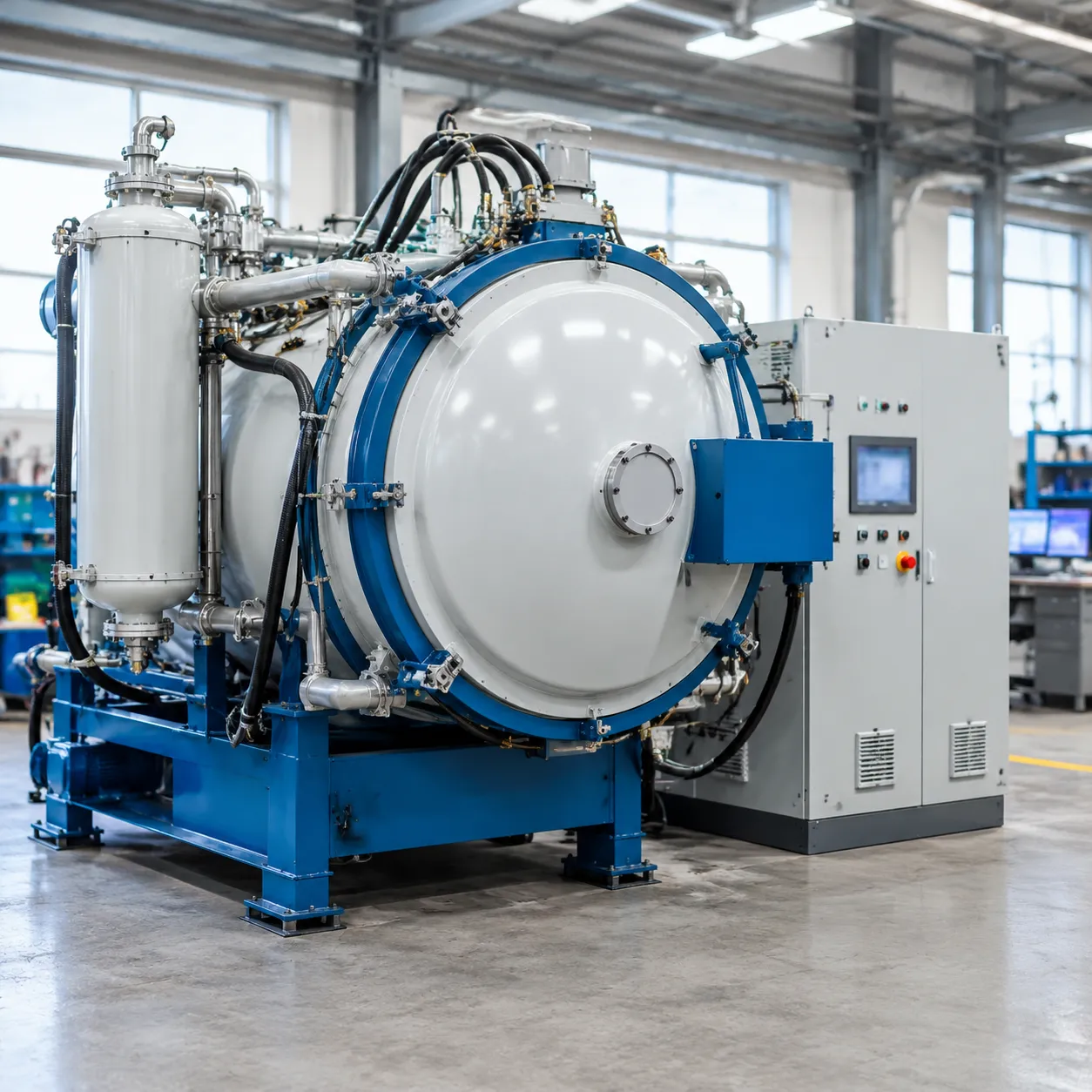
We design every induction vacuum furnace with modular configurations tailored for specialized metallurgy, sintering, and degassing operations.
| Feature | Standard Configuration | High-Temp Configuration | Ultra-High Vacuum Configuration |
|---|---|---|---|
| Max Temperature | 1600°C | 2400°C | 2000°C |
| Thermal Field Uniformity | ±5°C | ±1°C | ±2°C |
| Ultimate Vacuum Depth | 10⁻² Pa | 10⁻³ Pa | 10⁻⁵ Pa |
| Atmosphere Options | Vacuum, Argon, Nitrogen | Vacuum, Argon, Nitrogen, Hydrogen | Ultra-Pure Vacuum, Argon, Hydrogen |
| Control System | Integrated PLC + Touchscreen HMI | Advanced PLC + SCADA Integration | Multi-Zone PLC + SCADA + Real-Time Logging |
Precision Engineering Capabilities
-
- Extreme Thermal Performance: Advanced high-frequency induction heating systems deliver rapid ramp rates with up to 2400°C operating limits. For specialized vertical thermal treatment, consider our custom top-loading vacuum furnace for high-temperature processing.
- Deep Vacuum Capabilities: Multi-stage pumping configurations maintain clean, zero-oxidation environments across vacuum levels from 10⁻² Pa rough vacuum down to 10⁻⁵ Pa ultra-high vacuum.
- Controlled Atmosphere Flexibility: Integrated mass flow controllers offer exact partial pressure and positive pressure control for Argon (Ar), Nitrogen (N2), and Hydrogen (H2) gas mixtures.
- Smart Automation: Fully integrated PLC and SCADA architectures feature multi-zone PID temperature control, automated safety interlocks, and real-time process parameter logging. We integrate these same high-precision controls into our single-chamber vacuum furnace with high-pressure gas quenching to optimize cooling cycles and metallurgical structure.
Advanced Control for Induction Vacuum Furnaces
Automated Gas Management
-
- Mass Flow Controllers (MFCs): Precise gas metering for Argon (Ar), Nitrogen (N2), and Hydrogen (H2) guarantees exact atmosphere composition. Combining these controls with technology found in our controlled atmosphere furnace designs allows seamless transitions between deep vacuum and active gas backfilling.
- Precision Dew Point Control: Integrated sensors monitor atmospheric purity, maintaining dew points down to -60°C for oxide-free processing.
- Automated Burn-Off Systems: Engineered ignition circuits safely exhaust reactive and flammable gases like hydrogen during cycle purges.
Intelligent PLC & SCADA System Integration
-
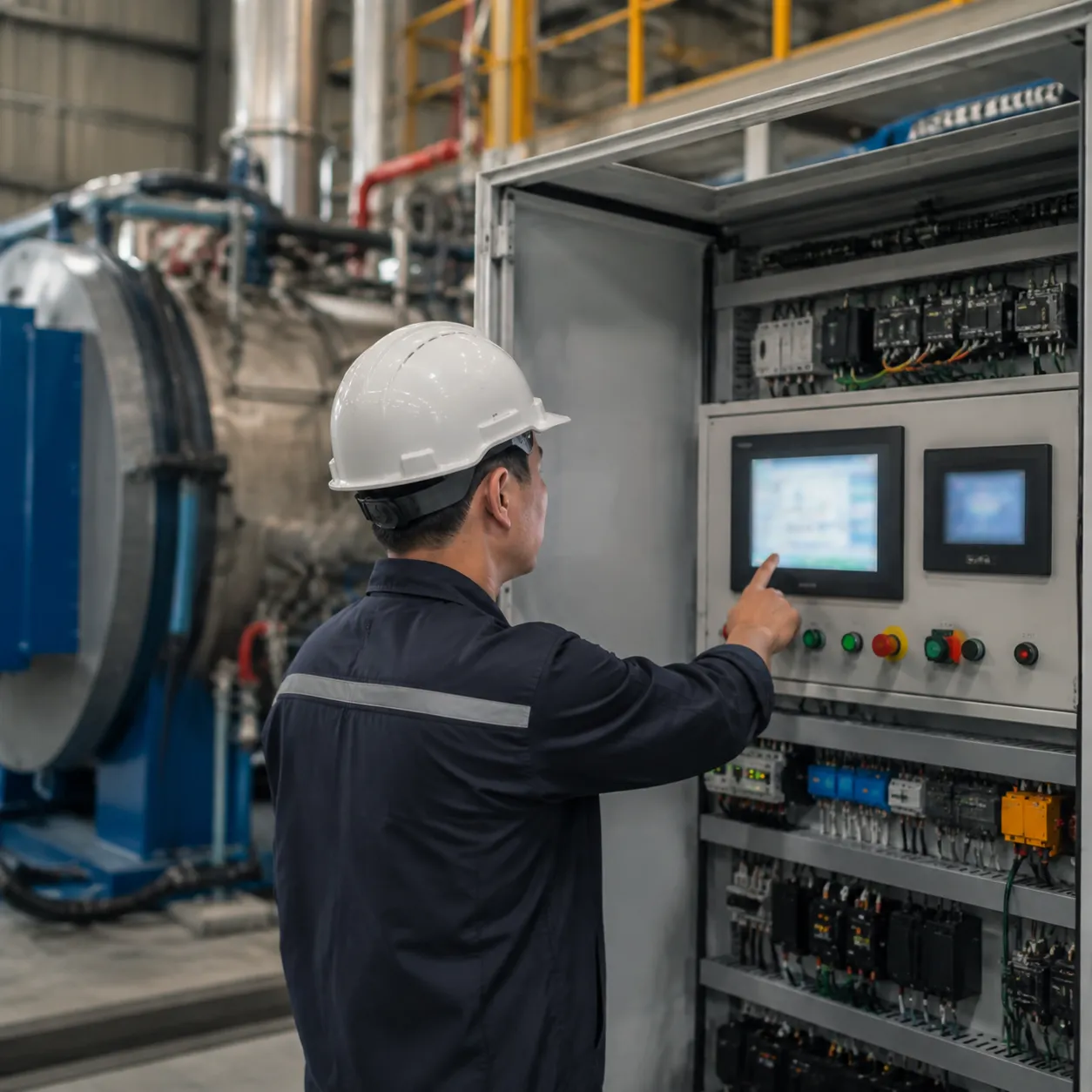
- Touchscreen HMI: Intuitive graphics allow quick recipe programming, live process visualization, and manual system control.
- Multi-Zone PID Control: Automatically adjusts high-frequency power input to eliminate thermal gradients and maintain pinpoint temperature stability.
- Real-Time Data Logging: Continuous digital tracking of pressure level, thermal curves, power consumption, and gas flow rates for complete batch traceability.
Comprehensive Safety Interlocks
-
- Cooling Water Protection: Real-time flow and temperature sensors immediately alert operators and trigger backup cooling if water supply drops.
- Vacuum Loss Safeguards: Automatic isolation valves activate instantly upon pressure loss to preserve chamber vacuum and protect hot zones.
- Thermal Runaway Limits: Independent over-temperature safety controllers cut power instantly if thermal thresholds are breached.
Primary Applications of the Induction Vacuum Furnace
Our induction vacuum furnace systems deliver the exact thermal control and contamination-free processing required across the world's most demanding high-tech industries.
Aerospace & Defense Superalloys
-
- Vacuum Induction Melting (VIM): We build high-yield melting systems tailored for nickel, cobalt, and titanium-based superalloys.
- Vacuum Degassing: Eliminates trapped hydrogen, oxygen, and nitrogen inclusions to ensure maximum structural integrity for jet engine turbine blades and aerospace structural parts.
Powder Metallurgy & MIM
-
- Debinding & Vacuum Sintering: Combines low-temperature binder removal with high-temperature vacuum consolidation in a single automated cycle.
- Clean Component Sintering: Optimizes modern powder metallurgy workflows to achieve full theoretical density with zero surface oxidation.
Advanced Ceramics & Semiconductor Materials
-
- Non-Oxide Ceramic Processing: Provides consistent high-temperature processing for silicon carbide (Si3N4), boron carbide, and aluminum nitride materials.
- Crystal Growth & Synthesis: Offers precise multi-zone temperature control necessary for semiconductor substrate development and single-crystal growth.
Precious & Refractory Metals
-
- High-Purity Melting & Casting: Prevents precious metal loss while refining and casting platinum, gold, and palladium alloys under high vacuum.
- Refractory Processing: Reaches extreme thermal thresholds required for sintering and refining molybdenum, tantalum, and tungsten via customized vacuum sintering furnace hot zones.
Why Choose Haitem Furnace: Custom Thermal Engineering
We engineer every induction vacuum furnace to meet your exact metallurgical requirements rather than forcing standard, off-the-shelf limitations onto your production line. From customized chamber layouts to heavy-duty load capabilities up to 20 metric tons, we deliver robust industrial systems designed for maximum reliability and zero-oxidation material processing.
Tailored Induction Vacuum Furnace Solutions
Through our advanced custom thermal design and engineering, we match furnace hot zones, coil geometries, and vacuum stacks precisely to your operational targets.
-
- Tailored Engineering: Chamber geometry and loading mechanisms customized for batches up to 20 metric tons.
- Certified Quality: Manufactured under strict ISO 9001 and CE compliance standards.
- Turnkey Support: Complete seamless process integration, rigorous Factory Acceptance Testing (FAT), full on-site installation, and 24/7 technical backup.
| Operational Feature | Standard Market Setup | Haitem Custom Solution |
|---|---|---|
| Load Capacity | Fixed small-to-mid batches | Up to 20 metric tons |
| System Architecture | Rigid factory configurations | 100% customized chamber & coil geometry |
| Compliance Standard | Basic regional specs | ISO 9001 & CE Certified |
| Lifecycle Services | Standard warranty coverage | FAT, installation & 24/7 global support |
Our complete thermal solutions guarantee that your induction vacuum furnace delivers long-term productivity, exact temperature control, and consistent atmosphere purity.
Frequently Asked Questions About Induction Vacuum Furnaces
What is the maximum operating temperature of an induction vacuum furnace?
Standard configurations operate up to 1600°C to 2000°C. For specialized high-purity metallurgy and refractory metal treatment, we engineer specialized systems with graphite or tungsten hot zones that reach operating temperatures up to 2400°C with thermal field uniformity within ±1°C.
How does induction heating compare to resistance heating in vacuum furnaces?
An induction vacuum furnace directly couples high-frequency electromagnetic energy into the charge or crucible. This delivers faster thermal ramp rates, higher energy efficiency, and superior temperature capabilities compared to traditional resistance heating elements.
| Feature | Induction Vacuum Furnace | Resistance Vacuum Furnace |
|---|---|---|
| Heating Mechanism | Direct electromagnetic coupling | Thermal radiation from heating elements |
| Heating Speed | Rapid, high-density energy transfer | Gradual, radiation-limited ramp rates |
| Max Temperature | Up to 2400°C | Typically limited to 1300°C–1800°C |
| Primary Process | High-purity melting (VIM), degassing, sintering | Standard vacuum heat treatment processing |
To better understand these core system mechanics, review our comprehensive vacuum furnace working guide.
What maintenance is required for ultra-high vacuum pumping systems?
Maintaining ultimate vacuum levels down to 10⁻⁵ Pa requires routine servicing across the multi-stage pumping stack:
Backing & Mechanical Pumps: Change mechanical pump oil every 500 to 1,000 operational hours and check drive belts.
Diffusion or Turbomolecular Pumps: Inspect pump fluid levels or high-speed bearing wear every 6 to 12 months.
Chambers & Vacuum Seals: Inspect and clean Viton or fluorocarbon O-rings during routine loading cycles to prevent atmospheric micro-leaks.
Can induction vacuum furnaces handle both inert gas and hydrogen atmospheres safely?
Yes. We equip our controlled atmosphere induction furnaces with automated gas management hardware, including Mass Flow Controllers (MFCs) calibrated for Argon, Nitrogen, and Hydrogen. Safety is managed through:
Automated Burn-Off Systems: Safely ignites and combusts exhaust gases during active hydrogen cycles.
Fail-Safe Safety Interlocks: Triggers automated nitrogen or argon purges instantly if a loss of vacuum, over-pressure, or cooling failure is detected.
Precision Gas Monitoring: Integrated dew point control maintains safe process atmosphere purity down to -60°C.