Formula details
Product Details
Overview
How a Hydrogen Atmosphere Furnace Works
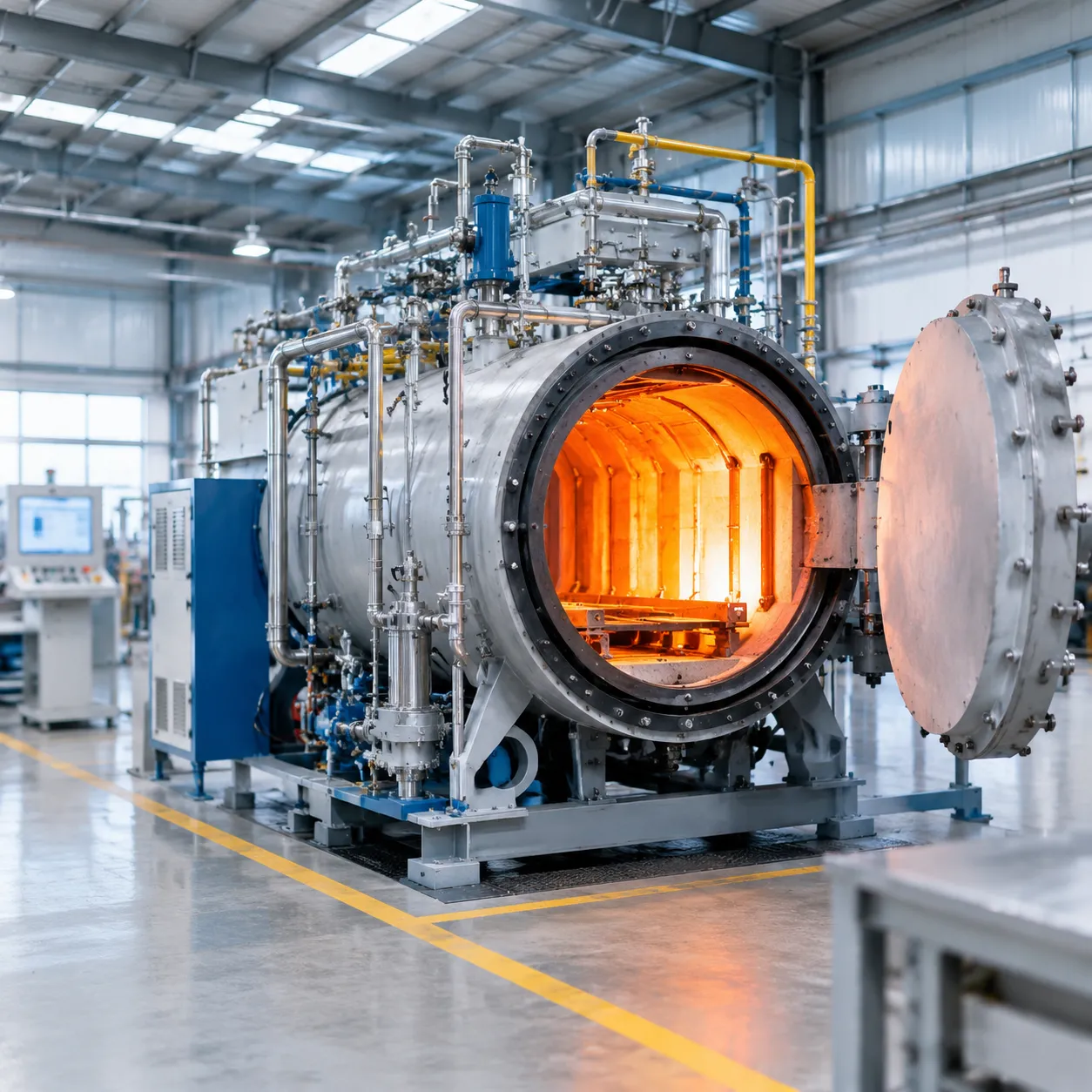
A hydrogen atmosphere furnace provides a chemically active, oxygen-free thermal environment designed for critical metallurgical processes. Unlike inert atmospheres that merely shield parts from surrounding air, hydrogen actively participates in the chemical reactions inside the hot zone during heat treatment.
Hydrogen Atmosphere Process Cycle
Inflow: High-Purity H₂ / Forming Gas
↓
Hot-Zone Reduction
Metal Oxide + H₂ → Metal + H₂O
→ Active oxygen removal
→ Clean, oxide-reduced metal surfaces
↓
Constant Positive Pressure
→ Prevents air / oxygen ingress
↓
Real-Time Dew Point Monitoring
→ Monitors H₂O concentration and atmosphere reduction potential
↓
Outflow to Burn-Off Flare
→ Controlled combustion and safe exhaust handling
Role of Hydrogen as an Active Reducing Agent
In reducing atmosphere heat treatment, pure hydrogen or hydrogen-nitrogen mixtures act as powerful chemical scavengers. At elevated temperatures, hydrogen molecules dissociate and react directly with metal oxides on the workpiece surface:
-
- Direct Reduction: Hydrogen bonds with existing oxygen atoms bound to the metal lattice, converting solid metal oxides into clean base metal and water vapor.
- Thermal Activation: The thermodynamic reduction potential increases with temperature, enabling clean processing of difficult alloys containing chromium, nickel, molybdenum, and tungsten.
Eliminating Surface Oxides and Preventing Oxidation
Standard inert gas environments (such as argon or nitrogen) only prevent new oxides from forming. An H2 atmosphere furnace takes processing a step further:
-
- Oxide Stripping: It removes pre-existing surface scale, tarnish, and microscopic oxide films without requiring chemical pickling or mechanical blasting.
- Bright Surface Finish: By eliminating oxygen partial pressure inside the retort, parts exit the cooling zone with a pristine, bright metallic appearance.
- Enhanced Wetting: Surface oxide removal is critical for brazing and sintering, allowing molten filler metals and powder particles to coalesce cleanly.
Controlling Dew Point for Clean Thermal Reactions
The balance between oxidation and reduction is governed by the ratio of moisture to hydrogen, measured directly as the dew point:
| Parameter | Target Operating Range | Process Impact |
|---|---|---|
| Standard Dew Point | -40°C to -60°C (-40°F to -76°F) | Prevents oxidation in standard stainless steels and nickel alloys |
| Ultra-Dry Dew Point | Below -65°C (-85°F) | Critical for reducing sensitive elements like titanium, aluminum, and chromium oxides |
| Moisture Purging | Continuous monitoring | Prevents water vapor accumulation generated by the reduction reaction itself |
Maintaining a consistently low dew point ensures that the reaction equilibrium favors continuous oxide reduction rather than re-oxidation during the cooling phase.
Atmosphere Circulation and Positive Chamber Pressure Management
We engineer hydrogen atmosphere furnaces to maintain precise flow dynamics and strict pressure control throughout the cycle:
-
- Positive Chamber Pressure: The furnace chamber operates under constant positive pressure (typically 1.5 to 5 mbar above ambient). This creates an outward pressure barrier that prevents external oxygen and atmospheric moisture from infiltrating seals and gaskets.
- Dynamic Gas Circulation: High-velocity atmosphere circulation ensures rapid gas turnover across dense workloads, stripping away reaction-formed moisture and eliminating stagnant thermal pockets.
- Directional Gas Sweeping: Fresh, dry hydrogen sweeps continuously across the charge toward the exhaust burn-off port, maintaining uniform reduction potential from the center of the workload to the outer edges.
Common Types of Hydrogen Atmosphere Furnaces
We configure each hydrogen atmosphere furnace design to match specific workload geometries, throughput targets, and thermal process profiles.
Hydrogen Bell Furnaces for Large-Scale Coil and Wire Annealing
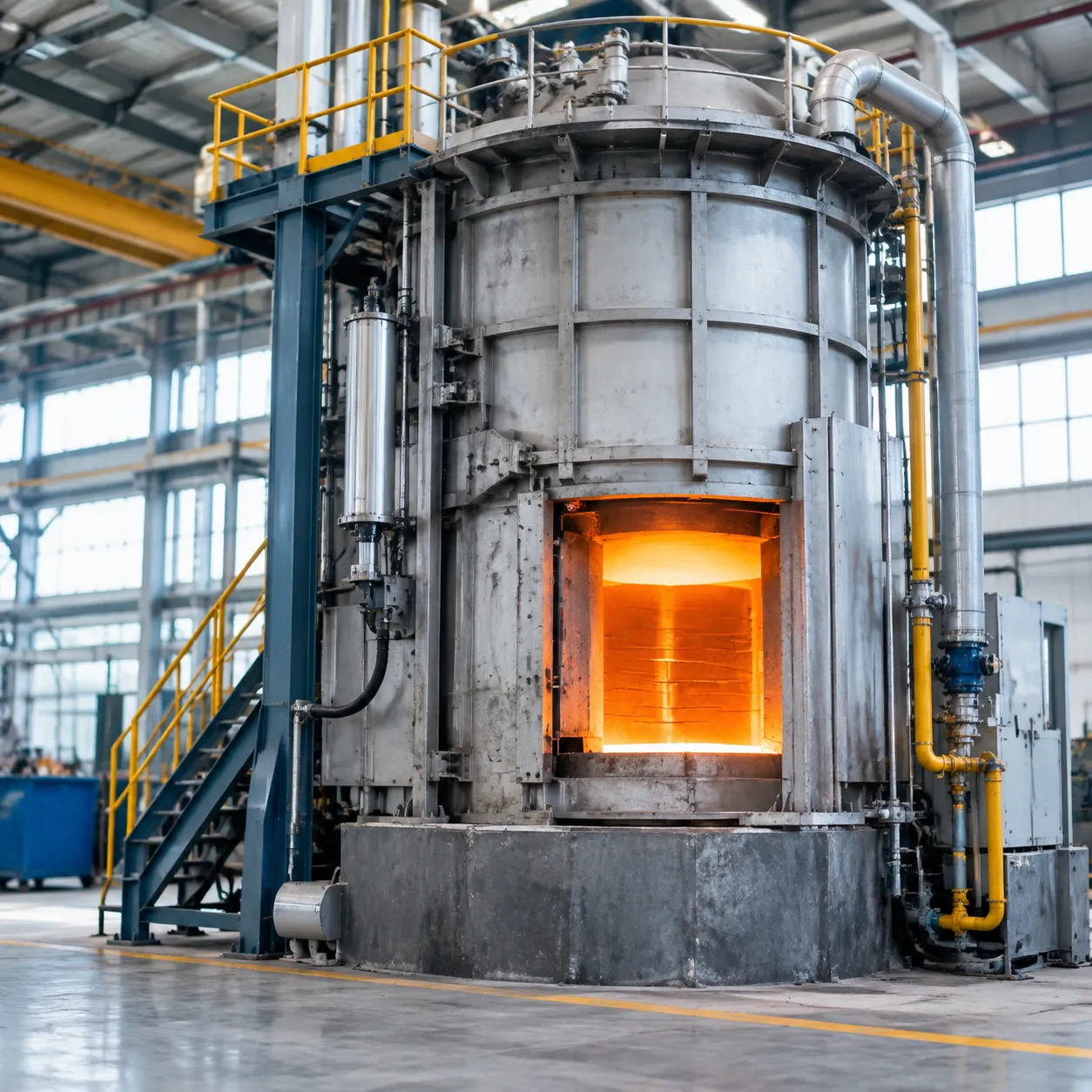
Hydrogen bell furnaces are built for heavy batch processing of coiled and stacked stock. The system uses a fixed base with an inner protective retort and a movable heating bell.
Core Applications: High-tonnage wire coils, strip steel coils, and bulk rod annealing.
Operational Strengths: Convection fans circulate pure hydrogen through dense loads, delivering fast heat transfer, uniform core-to-surface temperatures, and clean, oxide-free surfaces.
Continuous Mesh Belt Hydrogen Furnaces for Automated Production
For inline, hands-off processing, a continuous mesh belt furnace transports parts seamlessly through preheat, hot reduction, and cooling chambers.
Core Applications: High-volume brazing, automotive component annealing, and small sintered parts.
Operational Strengths: Gas curtains and directional atmosphere flow maintain a stable low dew point along the entire belt length, eliminating batch turnaround downtime.
High-Temperature Pusher Furnaces for Heavy Sintering Cycles
Pusher furnaces index loaded refractory trays or boats through sequential heating zones using an external mechanical drive.
Core Applications: Heavy powder metallurgy components, tungsten/molybdenum processing, and carbide sintering.
Operational Strengths: Capable of sustaining temperatures up to 1750°C in 100% reducing atmospheres while supporting dense charge weights that exceed belt limits.
Hydrogen Tube and Box Furnaces for Laboratory Testing and R&D
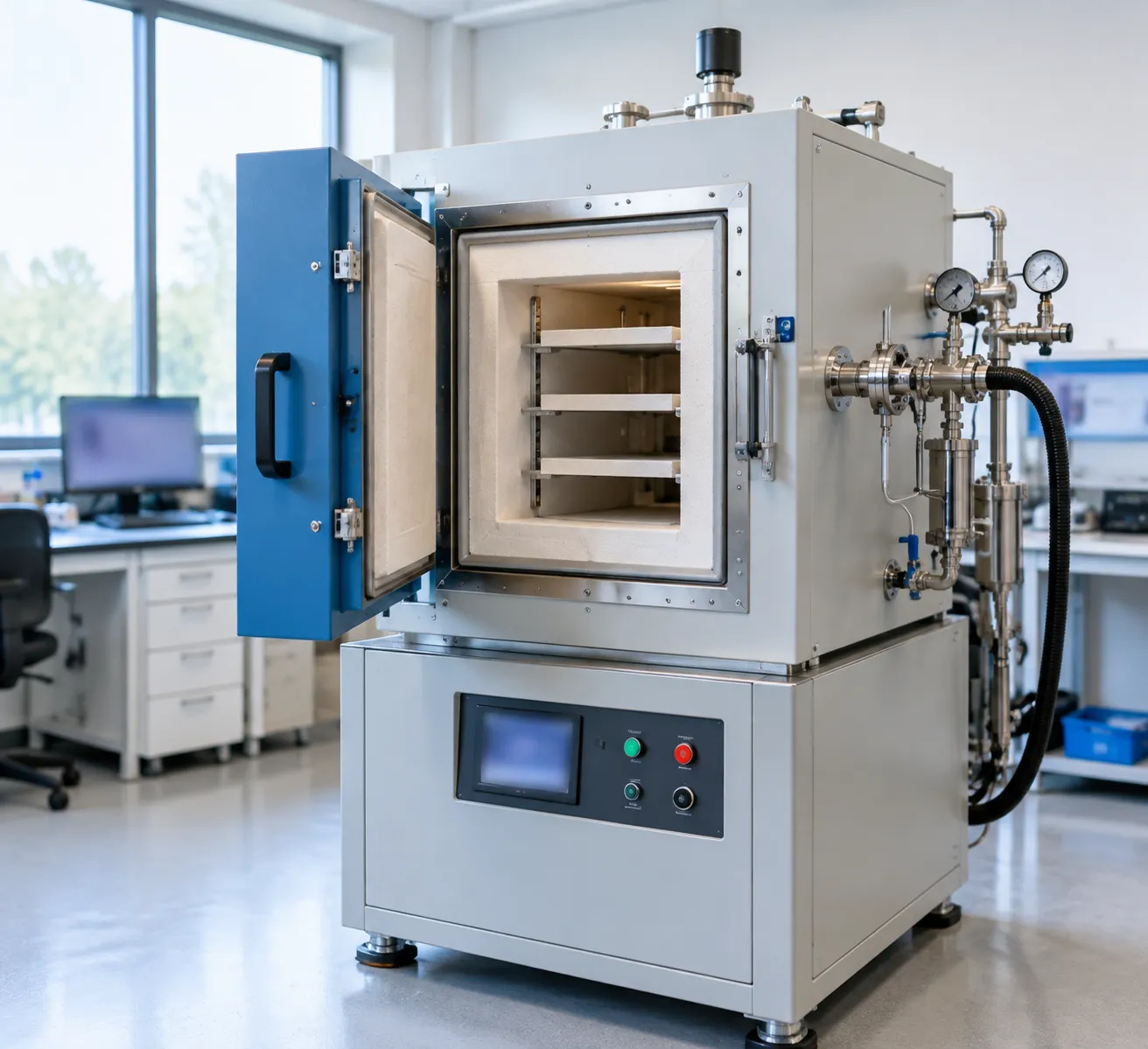
When developing new alloy recipes or running low-volume specialty runs, benchtop and floor-standing units offer precise atmosphere control. A sealed tube furnace or modified box furnace provides rapid cycle turnarounds with minimal hydrogen consumption.
Core Applications: Materials characterization, electronic metallization testing, catalyst reduction, and university research.
Operational Strengths: High vacuum purge capability prior to gas introduction, fast ramp rates, and tight multi-zone temperature uniformity.
Key Industrial Applications of a Hydrogen Atmosphere Furnace
Bright Annealing of Stainless Steels and Specialty Alloys
Processing austenitic and martensitic stainless steels, nickel-based superalloys, and refractory metals requires an oxygen-free, low-dew-point environment. Using a dedicated bright annealing hydrogen furnace, we eliminate surface scale and restore material ductility without the need for post-process acid pickling:
-
- Surface Finish Retention: Parts emerge with a mirror-like, oxide-free finish.
- Stress Relief & Softening: Uniform heating restores grain structure after cold working, stamping, or wire drawing.
- Decarburization Control: Precise gas mixing maintains core carbon levels in sensitive specialty grades.
High-Integrity Ceramic-to-Metal and Flux-Free Brazing
In joining applications, surface cleanliness dictates joint strength and leak tightness. A hydrogen brazing furnace strips baseline surface oxides at elevated temperatures, allowing filler metals to wet and flow evenly across joint interfaces without chemical fluxes.
-
- Ceramic-to-Metal Seals: Creates hermetic bonds for feedthroughs, vacuum tubes, and power grid components.
- Flux-Free Operation: Eliminates corrosive flux residue, reducing clean-up cycles and component failure rates.
- High-Reliability Joints: Ideal for critical aerospace and medical assemblies that follow strict thermal profiles outlined in our vacuum furnace brazing cycle guide.
Powder Metallurgy Sintering and MIM Thermal Debinding
In metal injection molding (MIM) and powder metallurgy, green components carry high surface areas vulnerable to entrapment of oxygen and binder residues. A high temperature hydrogen sintering furnace actively cleans the matrix during high-heat consolidation:
-
- Oxide Reduction: Pure $H_2$ breaks down metallic oxides on fine powder particles to improve particle-to-particle necking.
- Thermal Debinding Assistance: Sweeps away decomposed polymer binders during early heating phases.
- High Sintered Density: Produces near-theoretical density and structural strength in titanium, tungsten, and stainless steel compacts.
Semiconductor Wafer Processing and Electronic Metallization
Microelectronic packages and wafer-level substrates demand extreme atmosphere purity to prevent contact resistance and structural micro-voids. Processing these components alongside standard vacuum furnace applications gives manufacturers consistent control over electronic interfaces:
-
- Ohmic Contact Annealing: Forms low-resistance electrical interfaces on silicon and wide-bandgap semiconductors.
- Electronic Packaging: Purges trapped oxygen during die-attach and thick-film firing.
- Lead Frame Reduction: Cleans copper and alloy lead frames prior to encapsulation, preventing delamination.
Essential Safety Features and Atmosphere Management
Operating a hydrogen atmosphere furnace requires strict safety engineering. Because hydrogen is flammable across a wide range (4% to 75% concentration in air), we design our atmosphere handling systems with multiple automated fail-safes to protect equipment and operators.
Automated Nitrogen Pre-Purge and Post-Purge Safety Interlocks
A reliable nitrogen purge safety system is the first line of defense against explosive air-gas mixtures:
-
- Pre-Purge Cycle: Before heating or introducing pure $H_2$, the system flushes the retort with high-purity inert nitrogen for at least 5 chamber volume changes until oxygen levels drop safely below 1%.
- Process Interlocks: The PLC monitors chamber temperature, pressure, and gas flow. It physically blocks hydrogen injection until the hot zone reaches the minimum safe ignition temperature (typically >750 °C or 1382 °F) or completes an oxygen-free evacuation cycle.
- Post-Purge Cycle: At the end of the cooling cycle, automated valves purge the remaining hydrogen with nitrogen before the chamber doors unlock.
Exhaust Burn-Off Flare Stacks with Automatic Flame Detection
Safe effluent gas disposal prevents dangerous room accumulation:
-
- Continuous Pilot Ignition: An electric spark igniter and natural gas or propane pilot ensure constant ignition at the hydrogen burn off flare stack.
- Optical Flame Sensors: Ultraviolet (UV) sensors and thermocouples monitor the exhaust flame continuously.
- Flameout Response: If the flame extinguishes, the system attempts immediate re-ignition while alerting operators; if ignition fails within seconds, it triggers an emergency nitrogen purge.
Multi-Zone Hydrogen Leak Sensors and Emergency Shutoff Valves
We position dedicated sensor arrays around gas manifolds, furnace doors, and electrical feedthroughs to detect leaks instantly:
-
- Two-Stage Alarms: Low-level detection (e.g., 20% LEL) triggers audible warnings and boosts ventilation; high-level detection (e.g., 40% LEL) triggers an immediate emergency shutdown.
- Pneumatic Fail-Safe Valves: Spring-loaded, normally closed emergency isolation valves cut the main hydrogen supply line instantly upon power loss or alarm activation.
NFPA 86 Compliance Standards and Overpressure Relief Systems
Every system complies with NFPA 86 atmosphere safety standards for Class C and Class D industrial furnaces, ensuring reliable operation across our controlled atmosphere furnace product lines.
| Safety Subsystem | Primary Function | Failsafe Action / Response |
|---|---|---|
| Pressure Relief Ports | Spring-loaded relief valves and burst discs | Safely vents overpressure surges away from operators |
| Atmosphere Flow Controllers | Digital mass flow meters with backpressure check valves | Prevents back-siphoning and air ingress into supply lines |
| UPS Battery Backup | Maintains power to PLC, valves, and purge systems | Keeps purge cycles fully functional during facility power outages |
| Burn-off Stack Igniter | Thermocouple-monitored pilot burner | Flushes chamber with inert $N_2$ if exhaust flame fails |
Critical Construction and Engineering Specifications for Hydrogen Atmosphere Furnaces
We build every hydrogen atmosphere furnace to withstand extreme thermal stresses, eliminate atmosphere contamination, and handle combustible gases reliably. The engineering architecture centers on robust hot zones, impermeable muffle assemblies, precise gas delivery, and closed-loop process monitoring.
| Component | Standard Material / Configuration | Key Functional Benefit |
|---|---|---|
| Heating Elements | Molybdenum, tungsten, Kanthal APM | High-temperature stability in reducing H₂ atmospheres |
| Muffle Chamber | Inconel 601/600, 310S, or alumina | Gas-tight atmosphere containment |
| Insulation System | Ultra-pure Al₂O₃ fiber / Mo shields | Low silica content to minimize reduction-related contamination |
| Gas Panel Control | Dual MFCs with pneumatic shutoffs | Precise H₂/N₂ ratio control |
| Dew Point Monitoring | In-line chilled mirror / ceramic sensor | Continuous moisture detection |
| Temperature Uniformity | Multi-zone independent PID loops | Tight temperature gradient control (±3°C) |
Refractory Hot Zones and Heating Elements
A dedicated H2 atmosphere furnace requires element materials that resist hydrogen embrittlement and surface degradation at elevated temperatures. We configure heating elements based on your operational thermal envelope:
-
- Molybdenum (Mo) Elements: Best for operating ranges from 1,100°C to 1,750°C. A molybdenum heating element furnace thrives in dry hydrogen atmospheres where Mo oxide reduction keeps the element clean and conductive.
- Tungsten (W) Elements: Specified for ultra-high-temperature runs up to 2,000°C+, commonly used in heavy sintering cycles.
- Kanthal / FeCrAl Alloys: Used for lower-temperature operations (up to 1,150°C), particularly when processing with forming gas mixtures.
High-Purity Muffle Design and Thermal Insulation Materials
Atmosphere purity depends heavily on the retort or muffle construction. We isolate the heating zone from outside air using sealed metallic or ceramic retorts:
-
- Metallic Retorts: Fabricated from thick-wall Inconel, nickel-based superalloys, or 310S stainless steel. Designed with thermal expansion bellows to eliminate thermal fatigue during rapid heating and cooling cycles.
- High-Purity Alumina Muffles: Used for extreme temperatures where metallic alloys soften or risk contaminating ultra-clean workpieces.
- Silica-Free Insulation: Standard refractory ceramic fibers containing SiO2 easily reduce in a pure hydrogen environment, producing silicon contamination and water vapor. We utilize ultra-high-purity alumina (Al2O3 > 99%) fibrous boards and all-metal molybdenum radiation shields developed through our specialized furnace design and engineering capabilities.
Precision Gas Blending Panels for Pure H2 and Forming Gas
Controlling process gas requires automated, highly accurate delivery systems. Our integrated gas mixing panel for heat treating provides stable atmosphere ratios:
-
- Digital Mass Flow Controllers (MFCs): Deliver automated, repeatable gas proportioning between 100% pure H2 and inert N2 or Ar to create precise forming gas mixes (such as 5% H2 / 95% N2).
- Pneumatic Safety Manifolds: Automatically divert hydrogen supply to inert nitrogen purging if chamber pressure drops or line pressure fluctuates.
- Double-Block and Bleed Valves: Prevent cross-contamination between gas supply lines during purge sequences.
In-Line Dew Point Sensors and Multi-Zone Temperature Uniformity
Real-time atmosphere monitoring is mandatory for maintaining a high-purity reducing environment and consistent metallurgy:
-
- In-Line Dew Point Analyzers: Measure moisture levels in both inlet supply lines and exhaust streams, enabling exact dew point control in heat treating down to -60°C (-76°F) to prevent unexpected oxidation.
- Multi-Zone PID Temperature Control: Independent heating zones driven by digital SCR/thyristor power controllers compensate for end-zone heat losses, providing tight thermal uniformity across the entire work zone.
- Type S/B/C Thermocouples: Protected inside gas-tight alumina sheaths to prevent hydrogen degradation of the sensing wires.
How to Choose the Right Hydrogen Atmosphere Furnace
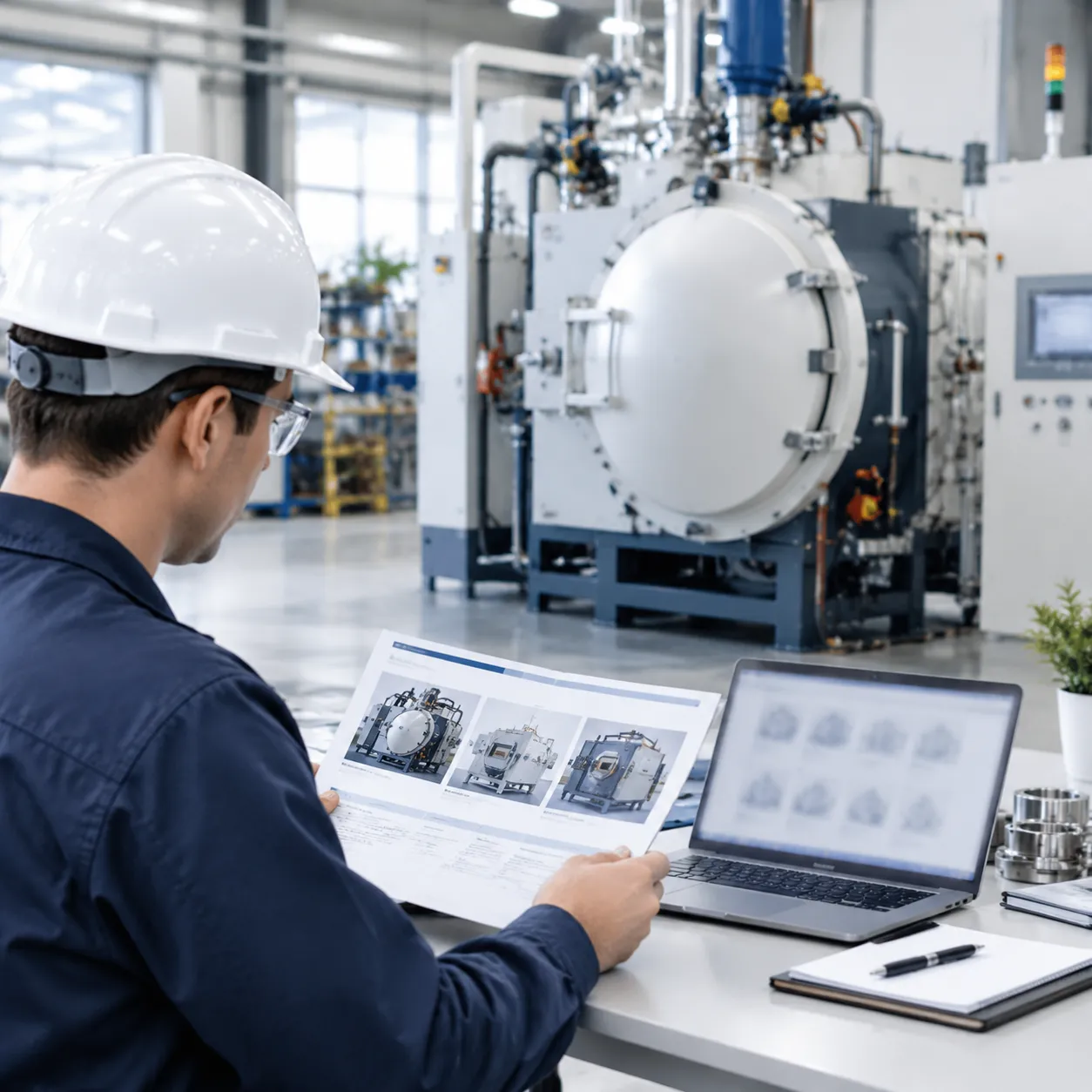
Evaluating Required Operating Temperatures and Heating Zones
Your target material determines the hot-zone construction and heating element type:
-
- Up to 1150°C (2100°F): Metallic alloy elements (Ni-Cr or Kanthal) paired with high-grade alloy muffles. Ideal for standard bright annealing and stainless steel stress relief.
- 1200°C to 1750°C (2190°F to 3180°F): Molybdenum or tungsten heating elements with high-purity alumina or refractory metal shielding. Essential for powder metallurgy, MIM debinding, and tungsten reduction.
- Multi-Zone Control: For long hot zones, independent multi-zone PID controllers eliminate end-loss variations, holding tight thermal uniformity across the entire work zone.
Assessing Throughput Needs: Batch Capacity vs. Continuous Line
Production volume dictates whether a batch setup or an automated continuous line delivers the lowest cost per part.
| Furnace Configuration | Best Suited For | Key Advantages | Typical Production Pace |
|---|---|---|---|
| Batch / Retort / Bell Type | Heavy loads, varied recipes, specialty alloys | Flexible cycles, lower gas use for low-volume runs | Low to medium batch runs |
| Continuous Mesh Belt | Small to medium parts, consistent geometries | Automated loading, uniform part-to-part consistency | High-volume continuous |
| Pusher Furnace | Heavy trays, high-temperature sintering | High load density at extreme temperatures | Continuous high-throughput |
| Tube / Laboratory Box | R&D, pilot production, material testing | Fast heating/cooling, minimal gas consumption | Small batch / Lab testing |
Calculating Gas Consumption, Cooling Rates, and Utility Costs
Operating a reducing atmosphere heat treatment line requires balancing gas usage with production cycle speed:
-
- Atmosphere Selection: Pure H₂ provides maximum oxide reduction, while forming gas (typically 3% to 5% H₂ in N₂) lowers operational expenses and simplifies safety requirements for less demanding runs.
- Cooling Systems: Water-jacketed cooling chambers or integrated gas-quench sections accelerate cycle turnaround without exposing hot parts to oxygen.
- Flow Optimization: Mass flow controllers (MFCs) and atmosphere recycling systems prevent excess gas consumption, keeping daily operating expenses under control.
Customization Requirements for Specialty Gas Mixtures and Vacuum Integration
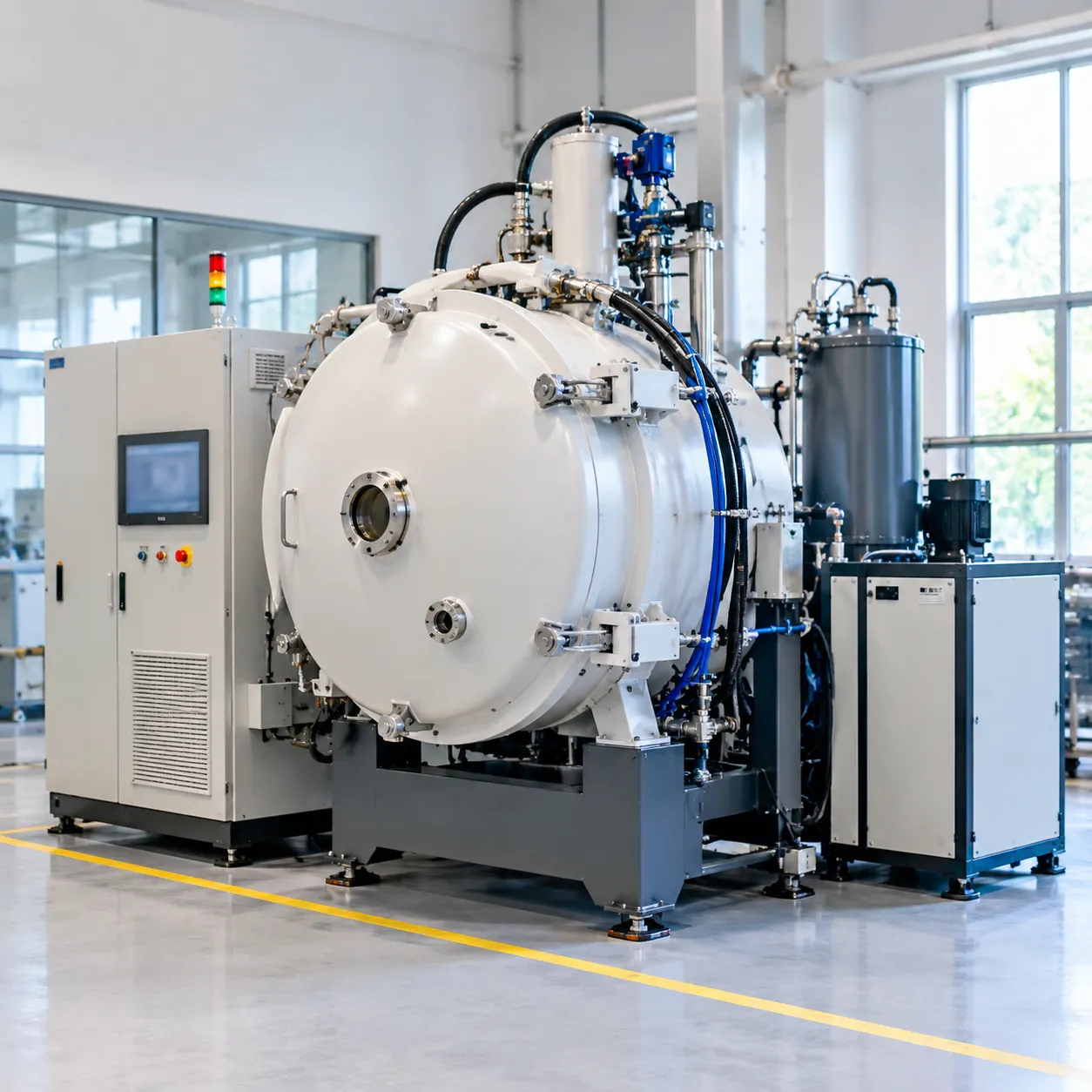
Certain processes require combining high-vacuum evacuation with hydrogen processing. Integrating a pre-vacuum cycle removes trapped air from dense workloads before introducing process gases. If your team is evaluating whether an atmospheric system or an evacuated design matches your workflow, reviewing how a vacuum furnace works helps clarify the cycle differences between pure vacuum heating and positive-pressure gas processing.
We customize gas blending manifolds to handle multi-gas routines (H₂, N₂, Ar, dissociated ammonia) with automated switching, in-line dew point tracking, and fail-safe safety interlocks tailored to your facility's local utility supply.
Maintenance Tips and Troubleshooting for a Hydrogen Atmosphere Furnace
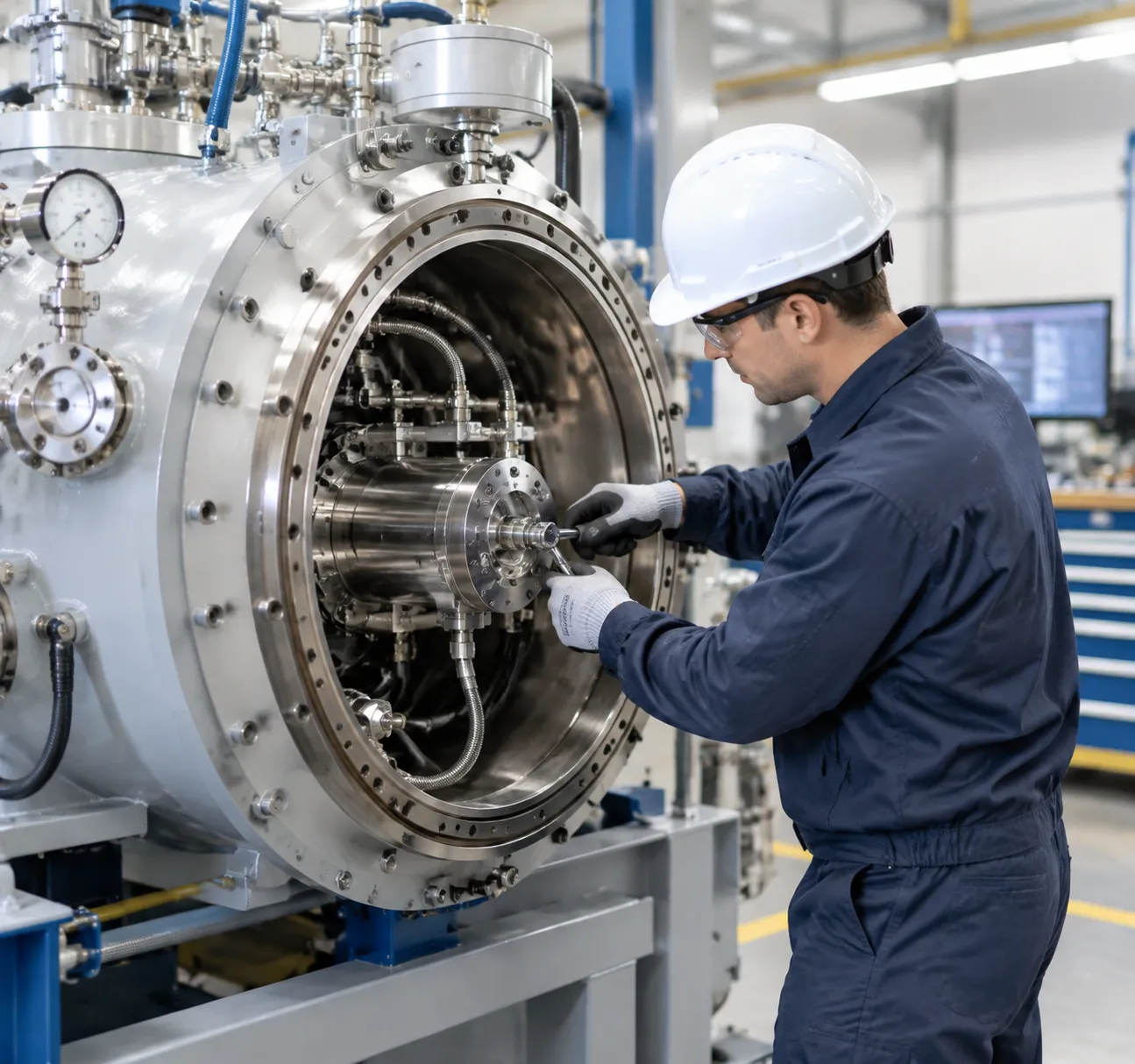
Keeping a hydrogen atmosphere furnace running safely and consistently comes down to strict preventative maintenance. In our experience, minor seal leaks or instrument drift can quickly ruin product finishes, waste expensive process gases, or create severe safety hazards. Here is how we maintain peak performance and troubleshoot common thermal processing issues.
Inspecting and Replacing Door Gaskets, O-Rings, and Seals
Maintaining absolute gas tightness is critical in any reducing atmosphere heat treatment system to prevent air ingress and dangerous hydrogen leaks:
Visual and tactile checks: We inspect elastomer door gaskets, shaft seals, and sight glass O-rings weekly for hardening, cracking, or thermal degradation.
Routine seal replacement: Replace high-temperature Viton or silicone O-rings at scheduled intervals rather than waiting for vacuum or pressure drop failures.
Flange cleaning: Clean mating flange surfaces thoroughly before resealing. Wipe away all particulates, old grease, and scale to ensure a clean metal-to-elastomer seal.
Positive-pressure leak checks: Perform regular helium sniff tests or nitrogen pressure-decay checks whenever the hot zone or chamber doors are serviced.
Calibrating Mass Flow Controllers and Dew Point Analyzers
Process repeatability depends entirely on precise gas delivery and moisture control:
MFC recalibration: Mass flow controllers for hydrogen, nitrogen, and forming gas can drift over time. Recalibrate gas mixing panels annually to ensure accurate volumetric flow and atmosphere ratios.
Dew point sensor maintenance: Continuous dew point monitoring protects sensitive parts from oxidation. Clean optical mirrors and calibrate ceramic moisture sensors every six months to catch dew point shifts early.
Systematic calibration protocols: Following a detailed vacuum and atmosphere furnace calibration guide ensures your instrumentation meets operational standards and prevents out-of-spec batches.
Detecting and Resolving Thermal Uniformity Drifts
Temperature variations across your hot zone lead to uneven grain growth, improper brazing, or incomplete sintering:
Thermocouple degradation: Control and over-temperature thermocouples degrade in high-temperature hydrogen environments. Check them regularly against certified reference standards.
Temperature Uniformity Surveys (TUS): Run multi-point survey racks across all heating zones to map thermal gradients and locate hot or cold spots.
Insulation and element inspection: Check for damaged ceramic fiber, cracked radiation shields, or sagged elements that cause local heat loss.
Preventing Carbon Soot Buildup and Heating Element Degradation
Binder burnout and high-temperature thermal cycles place heavy demands on your heating hardware:
Managing debinding residues: When processing metal injection molding (MIM) or powder metallurgy components, volatile binders can deposit carbon soot on hot zone surfaces. Ensure burnout exhaust traps and purge flows carry vaporized organics out of the chamber.
Protecting molybdenum heating elements: In a molybdenum heating element furnace, operating with insufficient hydrogen purity or high dew points causes rapid element oxidation and brittleness. Keep the atmosphere strictly reducing during high-heat phases.
Atmospheric burnouts: Run periodic controlled cleanout cycles with high-purity dry hydrogen to strip away light carbon residues and restore clean interior surfaces.
Frequently Asked Questions About Hydrogen Atmosphere Furnaces
What is the difference between pure hydrogen and forming gas atmospheres?
We configure furnaces for both pure hydrogen (100% H₂) and forming gas (typically 3% to 25% H₂ balanced in N₂ or Ar) based on process chemistry and risk profiles.
| Feature | 100% Pure Hydrogen Atmosphere | Forming Gas Mixture (H₂ / N₂) |
|---|---|---|
| Reduction Capacity | Maximum; reduces stable oxides (Cr, Si, Ti) rapidly | Moderate; handles light surface oxides on Cu, Fe, Ni |
| Combustion Hazard | High; requires strict NFPA 86 purge protocols | Low; mixtures below 5% H₂ in N₂ are non-flammable |
| Operating Cost | Higher gas and infrastructure investment | Lower operational and gas consumption costs |
| Common Uses | Sintering tungsten/moly, MIM debinding, high-temp brazing | SMT soldering, stress relieving, basic bright annealing |
Why is dew point monitoring so important in hydrogen heat treating?
Dew point measures the precise amount of water vapor inside the furnace chamber. In a hydrogen atmosphere furnace, the ratio of moisture to hydrogen ($P_{H_2O} / P_{H_2}$) determines whether a metal oxidizes or reduces at a specific temperature.
-
- Oxidation Prevention: If the dew point rises above critical thresholds (typically -40 °C to -60 °C), the atmosphere shifts from reducing to oxidizing, discoloring workpieces.
- Surface Purity: Continuous in-line dew point control ensures active reduction of stubborn surface oxides during critical heating zones.
- Leak Indication: A sudden spike in dew point alerts operators to atmosphere contamination, cooling jacket leaks, or seal failure before parts are damaged.
What safety precautions are required when installing a hydrogen furnace?
Installing a safe H2 atmosphere heat treatment furnace requires multi-layered mechanical and electrical failsafes:
Automated Nitrogen Purge Systems: Fast-acting N₂ valves automatically purge the chamber to drop oxygen levels below combustible limits before introducing H₂ and prior to opening doors.
Hydrogen Burn-Off Stacks: Continuous pilot flares with optical flame sensors safely combust exhaust hydrogen at the discharge point.
Room and Chamber Gas Detection: Ambient hydrogen sensors tied directly to emergency gas shutoff valves isolate the main supply line if a leak occurs.
Explosion-Relief Architecture: Integrated burst discs and overpressure mechanical relief valves protect the hot zone and shell structure against abnormal pressure spikes.
Which metals benefit most from processing in a hydrogen atmosphere?
Any material requiring a scale-free finish, decarburization resistance, or extreme surface purity benefits from reducing atmosphere processing:
Stainless Steels & Superalloys: Eliminates chromium oxide scaling during high-temperature cycles in our standard annealing furnace systems.
Refractory Metals (Molybdenum, Tungsten): Enables high-density sintering without embrittlement or oxidation.
Electronic & Magnetic Alloys: Restores maximum magnetic permeability in nickel-iron alloys and prevents oxidation during metallization.
Powdered Metals & MIM Parts: Cleans oxide films completely across custom industrial heat treatment furnaces to maximize sinter neck formation and mechanical density.