Formula details
Product Details
Overview
What Is a 200kW Vacuum Sintering Furnace?
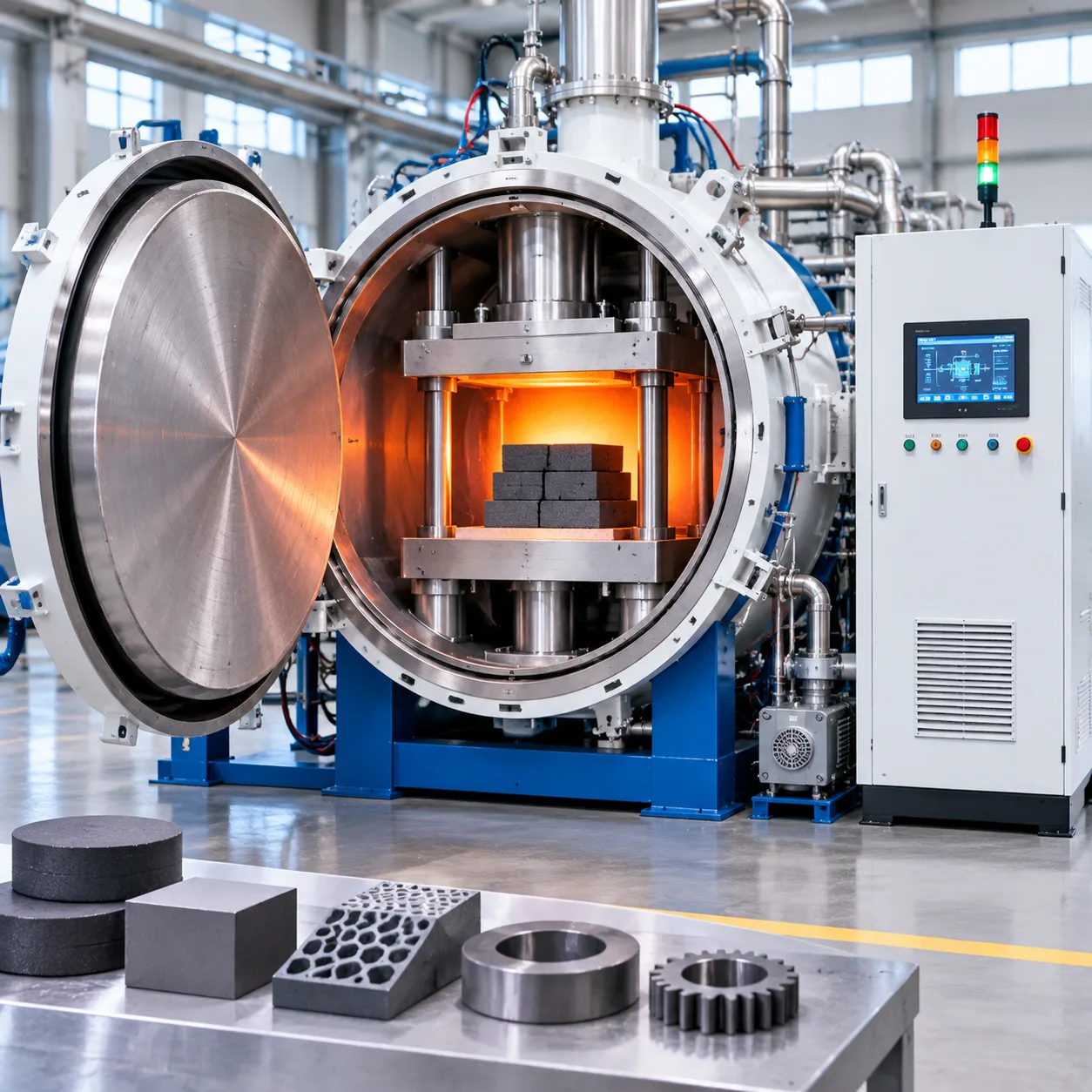
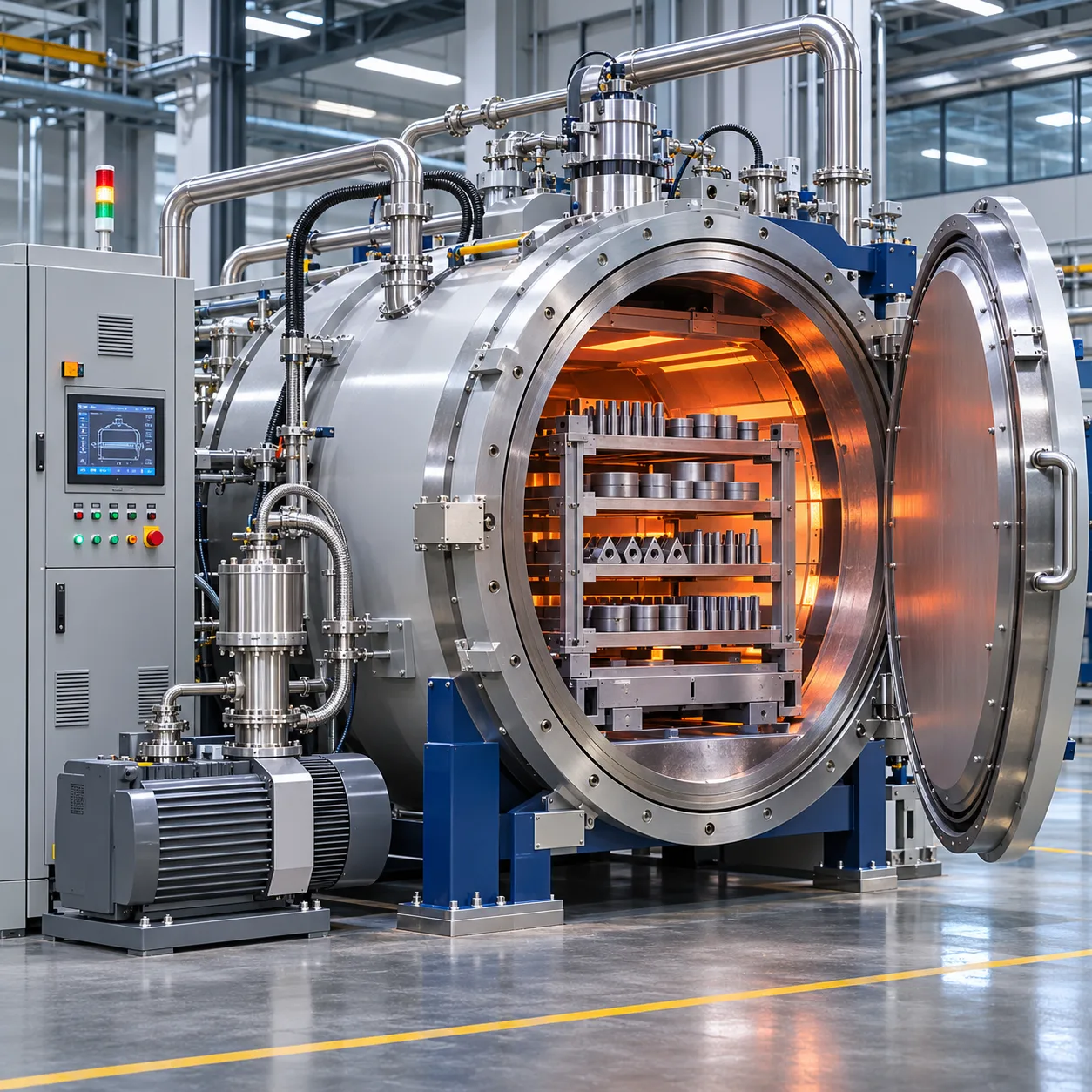
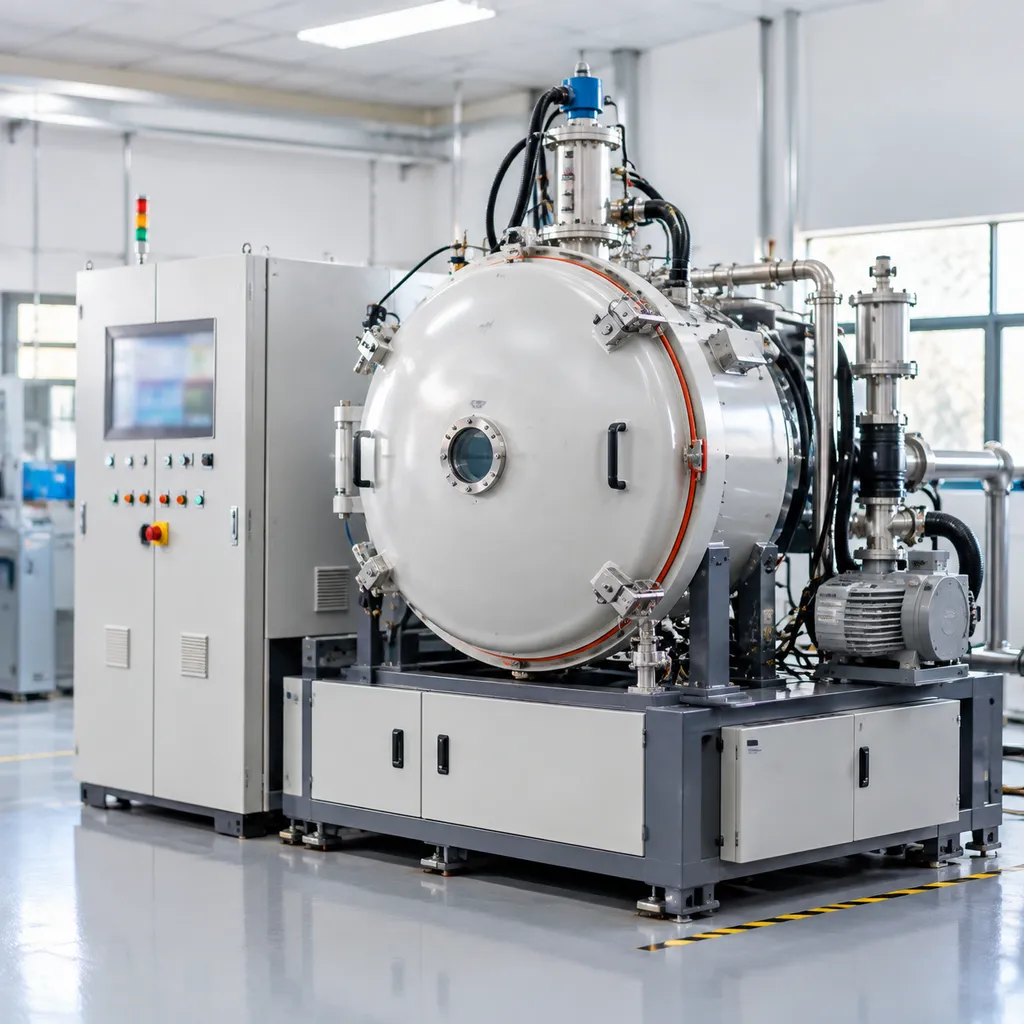
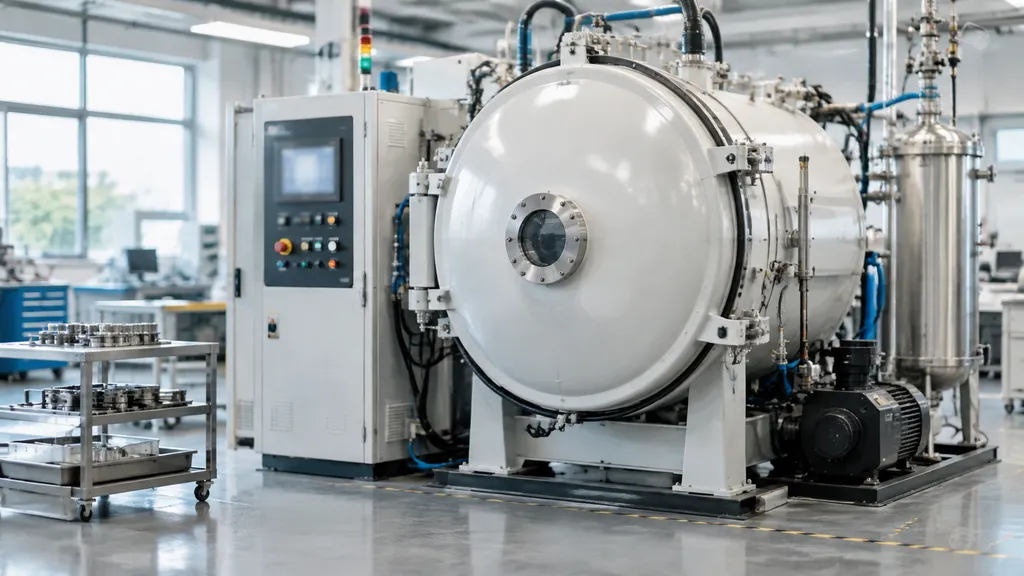
A 200kW vacuum sintering furnace is an industrial-grade thermal processing system engineered for densifying powdered metals, technical ceramics, and cemented carbides under controlled thermal and atmospheric conditions.
Core Technical Specifications and 200kW Power Footprint
The 200kW power rating represents the sweet spot for medium-to-large batch manufacturing. It provides the sustained thermal energy required to drive rapid ramp rates without destabilizing localized temperature uniformity.
-
- Rated Power: 200 kW (3-phase, 380V–480V, 50/60 Hz)
- Heating Control: Multi-zone thyristor (SCR) power regulation with digital trim
- Heating Rates: Controlled ramping from 5°C/min up to 15°C/min
- Temperature Uniformity: Within ±5°C across the entire hot zone at soaking temperatures
| Parameter | Standard Specification | Heavy-Duty Option |
|---|---|---|
| Usable Chamber Size (W×H×L) | 600 × 600 × 900 mm | 750 × 750 × 1200 mm |
| Max Loading Capacity | 500 kg – 800 kg | Up to 1,200 kg |
| Max Design Temperature | 1600°C / 1800°C | Up to 2200°C |
| Ultimate Cold Vacuum | 5.0 × 10⁻¹ Pa (Mechanical) | 5.0 × 10⁻⁴ Pa (Diffusion / Turbo) |
| Operating Atmosphere | High vacuum, Ar, N_2, H_2 | Partial pressure (10–500 Pa) |
Working Chamber Dimensions and Batch Capacity Standards
Standard configurations feature horizontal front-loading or dual-door chambers. A usable volume between 324 and 675 liters accommodates standard stacking graphite or molybdenum fixtures. This volume handles substantial batch runs for:
-
- Cemented carbide inserts and wear parts
- Metal Injection Molding (MIM) structural components
- Dense structural ceramic plates and rings
Reinforced hearth rails distribute weight evenly across the furnace vessel, preventing hearth deflection during maximum-temperature soaks.
Operating Temperature Thresholds: 1400°C to 2200°C
Our 200kW platform operates across defined thermal bands to meet distinct metallurgical requirements:
-
- 1400°C – 1450°C: Ideal for stainless steels, low-alloy powder metallurgy, and standard MIM processing.
- 1450°C – 1600°C: The primary window for tungsten carbide (WC-Co) tool sintering and liquid-phase compaction.
- 1600°C – 2200°C: High-temperature processing for refractory metals (tungsten, molybdenum, tantalum) and technical ceramics (silicon nitride, aluminum nitride).
Ultimate Vacuum Levels and Partial Pressure Operating Modes
Achieving metallurgical purity requires strict control over the furnace atmosphere:
-
- Ultimate Vacuum Modes: Pumping architectures range from rotary vane and roots blower packages for rough vacuum (10⁻¹ Pa) to high-vacuum systems equipped with oil diffusion or turbomolecular pumps reaching 10⁻⁴ to 10⁻⁵ Pa.
- Active Partial Pressure Control: Sintering volatile elements—such as cobalt binders in cemented carbides or chromium in alloy steels—requires controlled inert gas suppression. The system injects high-purity argon or nitrogen between 10 Pa and 500 Pa, arresting metal evaporation while maintaining maximum thermal transfer and carbon equilibrium.
Key Engineering Features and Chamber Construction
Double-Wall Water-Cooled Vessel Design
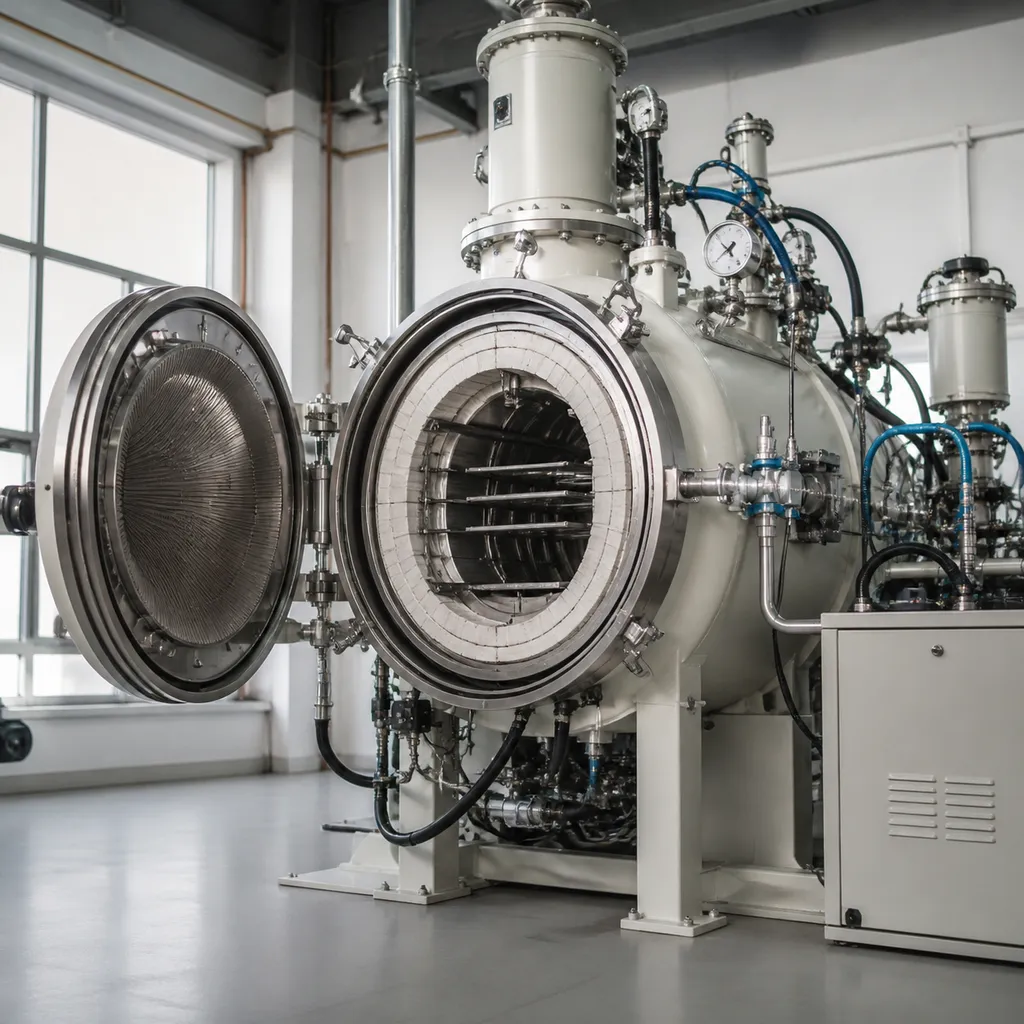
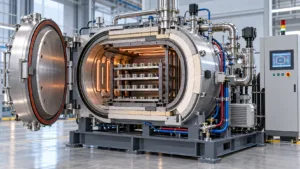
We build our cylindrical chambers using a double-wall water-jacketed configuration. The inner shell utilizes corrosion-resistant SUS304 or SUS316L stainless steel, polished to an ultra-clean finish to minimize outgassing and speed up pump-down cycles.
-
- Cold-wall safety: High-velocity water jackets keep the outer shell below 50°C during peak 2200°C sintering runs.
- Leak prevention: Full-penetration automatic longitudinal and circumferential welds are 100% X-ray inspected to eliminate microscopic porosity.
- Flange design: Precision-machined, water-cooled O-ring sealing channels prevent elastomeric breakdown under sustained operations.
Hot Zone Configuration: Graphite vs. Molybdenum
Selecting the right heating element directly dictates thermal efficiency, process cleanliness, and consumable costs. In our factory, we customize the hot zone configuration to match your exact metallurgical requirements:
| Hot Zone Type | Max Operating Temp | Ideal Materials & Processes | Key Advantages |
|---|---|---|---|
| Graphite Hot Zone | Up to 2200°C | Cemented carbides, tungsten carbide tools, non-oxide ceramics | Low initial cost, exceptional thermal shock resistance, high energy efficiency |
| All-Metal (Molybdenum) | Up to 1750°C | Titanium alloys, medical implants, refractory metals | Zero carbon contamination, clean-room compatibility, ultra-high vacuum stability |
Multi-Layer Thermal Insulation and Radiation Shielding
To maximize the 200kW power footprint, our vacuum furnace hot zone insulation is built to eliminate thermal bridging:
-
- For graphite systems: We use high-purity rigid carbon felt faced with graphite foil or CFC (carbon-carbon composite) sheets to prevent fiber erosion from high-velocity gas cooling.
- For all-metal systems: We configure multi-layer radiation shields using pure molybdenum inner shields backed by high-grade stainless steel outer layers.
Understanding thermal dynamics is critical when choosing between open air and sealed processing; analyzing the vacuum furnace vs atmosphere furnace key differences highlights why engineered vacuum shielding drastically reduces overall kilowatt-hour consumption.
Gas Distribution Systems for Uniform Thermal Atmosphere
Precise pressure and atmosphere management prevent premature binder condensation and uneven material shrinkage. Our chambers integrate a 360-degree radial gas distribution manifold with directional nozzles. Whether introducing high-purity argon for partial-pressure sintering or nitrogen for rapid quenching, the system delivers uniform gas flow across every part tier, maintaining chamber temperature uniformity within ±3°C to ±5°C.
Target Materials and Industrial Applications
We build our 200kW industrial sintering furnace lines to process demanding materials that require zero porosity, extreme cleanliness, and high density. Sintering under controlled vacuum or partial inert gas atmospheres prevents oxidation and decarburization across several industrial sectors. To see how these systems fit broader thermal processing strategies, review our breakdown of vacuum furnace applications, uses, and benefits.
Cemented Carbides and Tungsten Carbide Tool Manufacturing
Cemented carbide tooling requires near-theoretical density and precise grain growth control. Our furnaces handle:
Indexable Inserts and End Mills: Sinter-HIP and vacuum cycles eliminate micro-voids, increasing edge toughness.
Mining and Wear Parts: High-volume processing of WC-Co buttons, drill bits, and dies with uniform carbon-potential management to prevent eta-phase formation.
Metal Injection Molding (MIM) Components
Processing MIM parts requires combining thermal debinding with final densification inside a single chamber.
Automotive and Firearms Components: High-throughput runs of 17-4PH, 316L, and low-alloy steels.
Medical and Consumer Electronics: Clean debinding cycles eliminate binder residue, preventing surface blistering and carbon contamination.
Advanced Technical Ceramics
Non-oxide technical ceramics require extreme thermal stability and inert atmospheres.
Silicon Nitride (Si₃N₄): Sintered under positive-pressure nitrogen to prevent material decomposition at temperatures above 1750°C.
Aluminum Nitride (AlN): High thermal conductivity substrates processed with precise temperature uniformity to ensure optimal electrical insulation.
Titanium Alloys and Refractory Metals
Reactive metals demand high-vacuum integrity and clean, contamination-free hot zones.
Titanium (Ti-6Al-4V) PM Parts: Sintered in metallic or clean-graphite hot zones to prevent interstitial oxygen and nitrogen pickup.
Refractory Metals (Mo, W, Ta): High-temperature processing of pure powders, heavy alloys, and sputtering targets up to 2200°C.
Material Processing Overview
| Material Class | Typical Sintering Range | Atmosphere Mode | Target Products |
|---|---|---|---|
| Tungsten Carbide (WC-Co) | 1380°C–1500°C | Fine Vacuum / Argon Partial Pressure | Cutting tools, wear rings, mining inserts |
| MIM Stainless Steels | 1250°C–1380°C | Hydrogen / Vacuum / Argon | Medical tools, watch cases, auto gears |
| Silicon Nitride (Si₃N₄) | 1700°C–1850°C | Pressurized Nitrogen (N₂) | Ceramic bearings, glow plugs, valves |
| Titanium Alloys | 1200°C–1350°C | High Vacuum (< 10⁻³ Pa) | Aerospace brackets, biomedical implants |
| Refractory Metals | 1600°C–2200°C | Ultra-High Vacuum / Hydrogen | Heat shields, contacts, crucible targets |
Debinding and Sintering Process Control
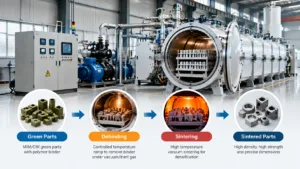
Integrated Thermal Debinding and Wax Collection Traps
Organic binders such as PEG, paraffin wax, and stearic acid will quickly ruin vacuum pumps and foul chamber walls if mismanaged.
Multi-Stage Condensation: Effluent gases pass through heated exhaust lines into multi-stage, water-cooled wax collection traps.
High Collection Efficiency: Heavy binder vapors condense into removable collection sumps, capturing over 98% of volatile binders before they hit the vacuum pump set.
Positive-Flow Sweeping: Controlled carrier gas flows continually carry evaporated binders away from the hot zone, leaving the insulation pack clean.
Pressure-Controlled Sintering and Gas Backfill
Preventing alloy depletion at peak temperatures requires precise gas management. Our high-temperature sintering furnace platforms incorporate high-precision mass flow controllers (MFCs) for dynamic partial pressure control:
Argon and Nitrogen Partial Pressure: Operating in the range of 10 Pa to 5 kPa suppresses the evaporation of volatile metals like cobalt and chromium during liquid-phase sintering.
Micro-Positive Pressure Processing: The chamber supports slight overpressure cycles to improve thermal uniformity during low-temperature soaking.
Process Gas Intake (Ar/H2/N2 via MFC)
↳ Vacuum Hot Zone (Uniform Convection / Radiant Heat)
↳ Heated Exhaust Lines (Prevents Clogging)
↳ Multi-Stage Chilled Wax Condenser
↳ Mechanical Backing Pump
Automation, Multi-Zone PID, and Safety Interlocks
Modern powder metallurgy runs demand repeatability. Our PLC-controlled vacuum furnace systems rely on Siemens or Omron architectures paired with industrial touchscreen HMIs.
-
- Multi-Zone PID Regulation: Dedicated control zones compensate for end-loss radiant heat, holding temperature uniformity to ±3°C across the entire load.
- Automated Recipes: Operators can store hundreds of 64-step heating, debinding, soaking, and fast-cooling curves.
- Hardware Interlocks: Independent over-temperature controllers, differential water pressure switches, and gas pressure sensors guard against line failures. If cooling water flow drops or a thermocouple shorts, the PLC initiates a controlled shutoff to protect your workpieces and the hot zone.
Evaluating a China 200kW Vacuum Sintering Furnace Factory
Selecting the right industrial partner requires looking past slick sales brochures to verify real workshop capabilities. When vetting a china 200kw vacuum sintering furnace factory, I focus on hard engineering metrics, build discipline, and testing protocols rather than marketing promises.
Factory Engineering and OEM/ODM Flexibility
A tier-one builder does not rely on off-the-shelf, one-size-fits-all designs. Sintering debound MIM parts, hard metals, or advanced technical ceramics requires tailored chamber geometry and specialized gas flow dynamics.
-
- Hot Zone Customization: Ability to switch between all-metal molybdenum assemblies and high-purity isostatic graphite zones based on carbon contamination thresholds.
- Chamber Layouts: Horizontal front-loading formats for heavy carbide dies, or bottom-loading bell designs for uniform batch loading.
- System Integration: Engineering vacuum pumps (Roots, diffusion, and screw pumps) matched precisely to your cycle outgassing volumes.
For specialized industrial projects, working directly with an established china large high temperature vacuum furnace factory gives you direct access to mechanical design engineers who can modify dimensions, add auxiliary gas circuits, and tailor loading mechanisms to your plant floor.
Rigorous Quality Assurance and FAT Procedures
A reliable high temperature vacuum furnace manufacturer must validate every unit before it ships. We never clear equipment for packaging without completing a comprehensive Factory Acceptance Test (FAT) on the shop floor:
| Verification Phase | Test Standard | Pass Criteria |
|---|---|---|
| Chamber Integrity | Helium mass spectrometer leak detection | Leak rate le 5 × 10⁻⁴ Pa·m³/s |
| Ultimate Vacuum | Cold-state high-vacuum pumpdown | Reaching le 5 × 10⁻³ Pa in under 30 minutes |
| Leak-Back Rate | Vacuum holding test (12-hour duration) | Rate of pressure rise < 0.1 Pa/hour |
| Thermal Uniformity | 9-point thermocouple survey (AMS 2750G) | ± 5 °C throughout the hot zone |
Compliance with International Standards
Export-grade machinery must integrate seamlessly into global industrial plants without electrical modifications or safety compromises:
-
- CE Conformity: Full compliance with the Machinery Directive (2006/42/EC) and Low Voltage Directive, backed by certified Schneider or Siemens electrical architectures.
- ISO 9001:2015: Documented manufacturing tracking from raw 304/316L stainless steel plate procurement to final weld seam radiography.
- Pressure Vessel Integrity: Certified welding inspection for double-walled water jackets, rated and tested for positive-pressure inert gas quenching.
Export Packing, Logistics, and Commissioning
Moving a 200kW vacuum furnace across oceans requires robust logistics planning:
-
- Seaworthy Crating: Internal hot zones are braced to absorb shock loads. The vessel is vacuum-sealed in barrier foil with heavy-grade desiccants to stop saltwater corrosion, then secured inside steel-reinforced timber crates.
- On-Site Commissioning: Dispatching factory service engineers to handle mechanical leveling, utility hookups, and process trial runs at your site.
- Remote PLC Diagnostics: Integrated industrial routers allow engineers to troubleshoot automation parameters and guide maintenance teams via secure, encrypted links.
Total Cost of Ownership for a 200kW Vacuum Sintering Furnace
Investing in a high-capacity furnace goes beyond the purchase invoice. Calculating your total cost of ownership (TCO) demands a realistic look at initial capital, daily electrical draw, consumable wear, and preventative maintenance. Sourcing from our china vacuum furnace solutions factory direct cuts initial capital expense significantly while keeping operational reliability on par with global benchmarks.
Factory-Direct Pricing vs. Western Builds
Western brands typically carry heavy markups for brand premiums and localized labor overhead. By partnering directly with a china 200kw vacuum sintering furnace factory, you eliminate broker tiers and capture heavy savings on structural build, piping, and controls integration.
| Expense Category | Western Alternative | China Factory-Direct | Realized Cost Impact |
|---|---|---|---|
| Initial CAPEX | Baseline ($$$$) | 40% to 60% lower | Drastically shortens payback period |
| Hot Zone Spares | High replacement markup | Component-level pricing | Lowers routine rebuilding overhead |
| PLC & Software | Proprietary lockouts | Open architecture (Siemens/Omron) | Eliminates vendor subscription fees |
| Freight & Install | Regional transport | Port-to-door crated logistics | Comparable total landing costs |
200kW Power Consumption Management
Running a 200kW rated thermal unit does not mean you pull continuous peak power. After initial ramp-up, modern solid-state thyristor power controllers and dynamic multi-zone PID loops balance the load:
-
- Ramp-up stage: High draw (160–190 kW) during active heating to target temperatures.
- Soak stage: Power throttles down to 60–85 kW to maintain steady-state equilibrium.
- Insulation efficiency: Multi-layer rigid graphite board backed by carbon felt reduces heat loss to the water-cooled outer jacket, saving up to 22% in utility costs per cycle.
Wear Parts and Consumables Budget
Maintaining steady vacuum levels requires routine replacement of wear items:
-
- Heating elements: Graphite rods or molybdenum strips average 18 to 36 months of service life depending on furnace cleanliness and thermal cycling frequency.
- Thermal felt: Replace hot zone insulation every 2 to 3 years to prevent thermal leakage and localized hot spots.
- Vacuum seals and gaskets: Fluoroelastomer (Viton) door O-rings and dynamic shaft seals require inspection monthly and replacement annually.
Maintenance Intervals and Downtime Prevention
Unplanned downtime ruins productivity. Adhering to strict upkeep intervals safeguards your batches and maintains target vacuum levels:
-
- Weekly: Check water cooling flow rates, inspect filter screens, and clean debinding condenser traps.
- Monthly: Check mechanical pump oil clarity; perform vacuum leak-back tests to monitor chamber sealing integrity.
- Every 3–6 Months: Change rotary vane and roots pump oil. High debinding volumes contaminate pump oils faster, requiring regular fluid swaps to protect pump stages.
- Annually: Calibrate vacuum gauges, replace pneumatic valve seals, and perform comprehensive thermal uniformity surveys (TUS).
Frequently Asked Questions: Sourcing from a China 200kW Vacuum Sintering Furnace Factory
What is the typical production lead time for a 200kW vacuum furnace?
Building a heavy-duty 200kW vacuum furnace typically takes 90 to 120 calendar days from engineering freeze and down payment confirmation. If the system requires specialized debinding traps, customized multi-zone hot zones, or ultra-high-vacuum pumping skids, lead times range between 120 and 150 days.
Here is our standard milestone schedule:
-
- Vessel Fabrication & Machining: Days 1 to 45 (Double-wall water-jacket rolling, flange welding, and X-ray weld inspection)
- Hot Zone & Mechanical Assembly: Days 46 to 75 (Insulation packaging, heating element integration, and vacuum manifold piping)
- Electrical & Control Cabinet Integration: Days 76 to 90 (PLC wiring, multi-zone PID configuration, and safety interlock loop testing)
- Factory Acceptance Testing (FAT): Days 91 to 105 (Ultimate vacuum leak-down tests, helium mass spectrometry, and full-power thermal burn-in)
- Export Packaging & Crating: Days 106 to 115 (Desiccant sealing, vacuum foil packaging, and seaworthy steel-reinforced wood crating)
How do graphite and metal hot zones compare for sintering applications?
Choosing between a graphite and an all-metal (molybdenum/tungsten) hot zone dictates operating cost, cleanliness, and process compatibility. We configure our vacuum sintering furnace lines according to your target chemistry:
| Feature / Metric | Graphite Hot Zone | Molybdenum / Tungsten Hot Zone |
|---|---|---|
| Max Operating Temp | Up to 2200°C | 1350°C to 1800°C (Mo) / 2200°C (W) |
| Capital & Replacement Cost | Moderate to low | 2.5x to 4x higher than graphite |
| Thermal Shock Resistance | Excellent; zero warping | Moderate; brittle after recrystallization |
| Carbon Contamination Risk | Present (requires caution with low-carbon steels) | Zero; clean-room vacuum quality |
| Typical Target Materials | Cemented carbides, MIM components, Si3N4, AlN | Titanium alloys, medical implants, superalloys |
| Insulation Media | Rigid graphite felt + CFC foil | Multi-layer molybdenum and stainless radiation shields |
What are the utility requirements for cooling water and electrical supply?
Proper facility preparation prevents commissioning delays. For our 200kW horizontal vacuum furnace platforms, site utilities must meet these thresholds:
- Electrical Grid Connection: 3-Phase, 380V / 440V / 480V (±5%), 50/60 Hz. Total connected load is sized at 260 kVA to 280 kVA to handle the 200kW heating circuit, mechanical pumps, roots blowers, and high-pressure gas quench motors.
- Recirculating Cooling Water: Closed-loop industrial chiller or cooling tower delivering 18 to 25 m³/h at a line pressure of 0.25 to 0.40 MPa. Water inlet temperature must stay below 30°C with a pH between 7.0 and 8.5 to prevent calcium scaling on inner vessel walls.
- Emergency Backup Water: Gravity-fed reservoir or diesel generator bypass capable of running cooling loops for at least 30 minutes in a sudden grid blackout.
- Process & Pneumatic Gases:
- Instrument Air: Clean, dry air at 0.5 to 0.7 MPa for vacuum gate valves and gas dampers.
- Process Argon/Nitrogen: 99.999% purity at 0.2 to 0.3 MPa for partial pressure sintering and inert chamber backfilling.
How does the factory handle overseas warranty, parts supply, and technical service?
We support international installations through direct factory-backed service protocols designed to eliminate machine downtime:
-
- Comprehensive 12-Month Warranty: Covers all primary structural components, vacuum valves, power supplies, and PLC automation modules. Extended warranties up to 36 months are available.
- Pre-Packaged Spare Kits: We supply a standard 2-year maintenance kit with the furnace crate, including full thermocouple sets, fluoroelastomer O-rings, heating element connectors, and roughing pump rebuild seals.
- Remote Digital Diagnostics: Control cabinets are built with secure industrial VPN gateways. With customer approval, our lead software engineers troubleshoot PID loops, PLC interlocks, and sensor faults in real time.
- Global Field Engineering: We deploy factory mechanical and electrical technicians directly to your site to oversee anchor positioning, hookup verification, SAT testing, and staff training on thermal recipe creation and safety protocols.