Formula details
Product Details
Overview
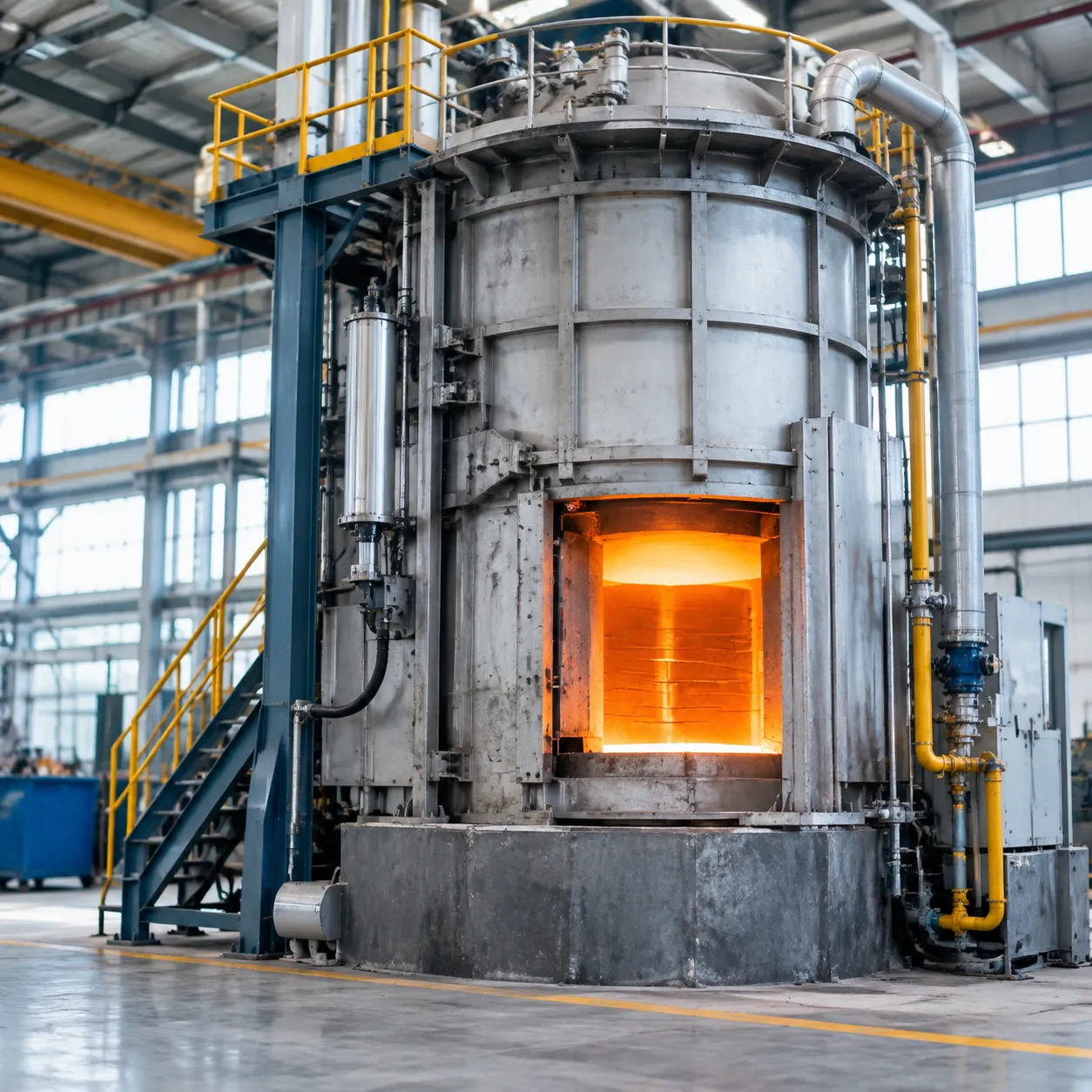
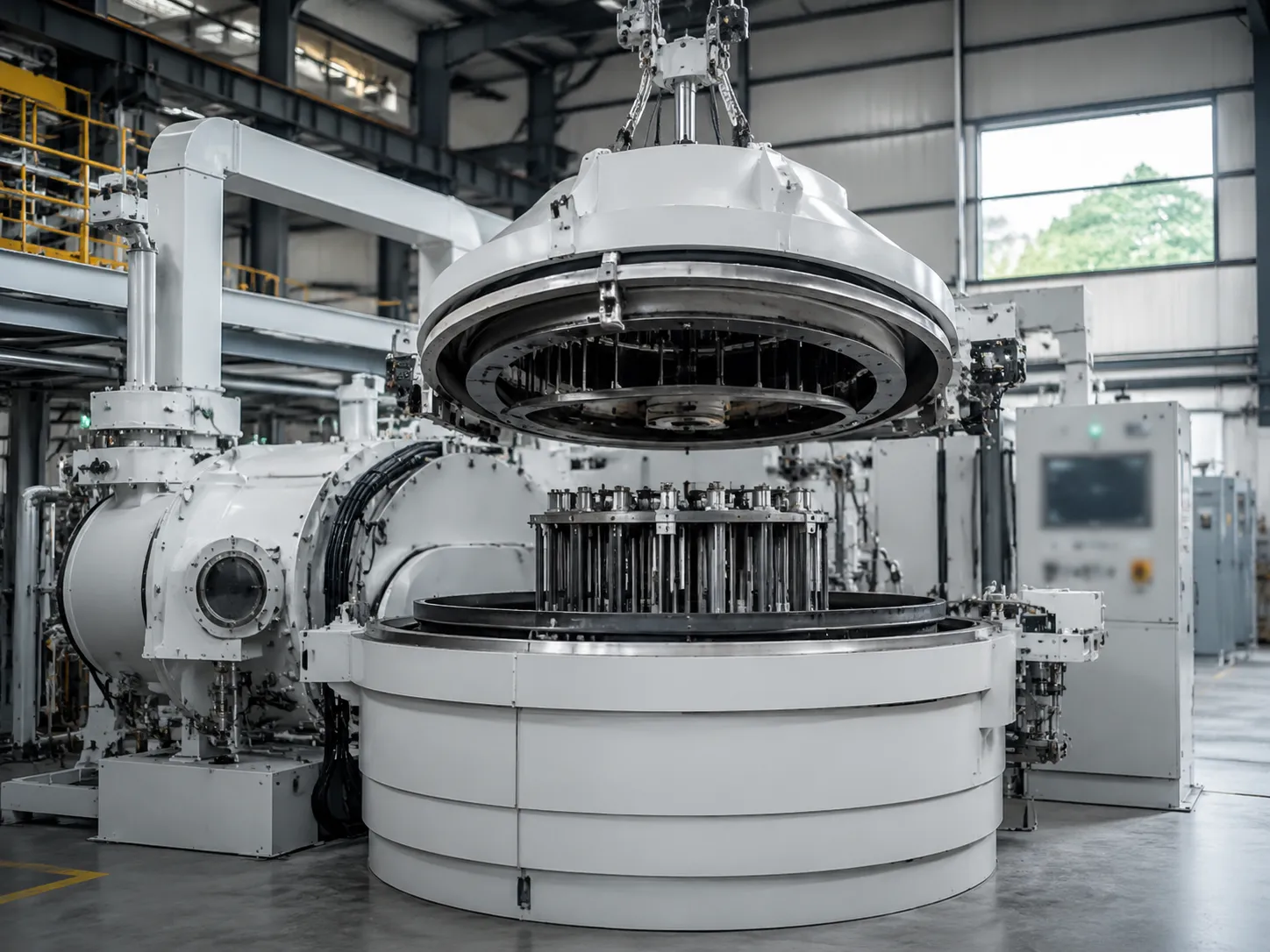
Top Loading Vacuum Furnace: Overview and Design Advantages
By shifting from horizontal to vertical loading, our equipment maximizes operational efficiency while protecting critical part geometries under extreme thermal stress.
-
- Zero Thermal Sagging: Gravity works in your favor. Hanging or standing components vertically eliminates sag, bending, and thermal distortion in long shafts, tubes, and heavy symmetrical parts.
- Drastically Reduced Footprint: The vertical pit-type vacuum furnace architecture frees up valuable floor space, giving you up to 50% more operational area compared to traditional horizontal equipment.
- Direct Crane Integration: Load and unload heavy charges effortlessly utilizing your facility's existing overhead crane or hoist infrastructure.
Core Processing Capabilities & Mirror-Bright Finish
This versatile platform operates as an advanced vacuum annealer, vacuum brazing furnace, and high-density vacuum sintering furnace—delivering pristine results across every batch.
-
- Comprehensive Heat Treatment: Performs oxygen-free bright annealing, precision vacuum brazing, high-density sintering, deep degassing, and stress relieving.
- Ultra-Clean Vacuum Levels: Engineered to maintain high vacuum conditions down to 10⁻⁵ Pa to completely prevent oxidation and decarburization.
- Zero Post-Processing: Delivers a 100% mirror-bright surface finish directly out of the chamber, eliminating the need for costly acid pickling or secondary grinding.
| Architecture Feature | System Capability | Operational Advantage |
|---|---|---|
| Vertical Loading | Gravity-aligned charge support | Prevents component sag & maximizes shop floor space |
| Overhead Access | Direct crane/hoist loading | Streamlines handling of heavy or long geometries |
| High Vacuum Environment | Ultimate pressure down to 10⁻⁵ Pa | Delivers 100% mirror-bright, scale-free parts |
| Multi-Capability Thermal Chamber | Annealing, brazing, sintering, degassing | Consolidates processing steps into a single machine |
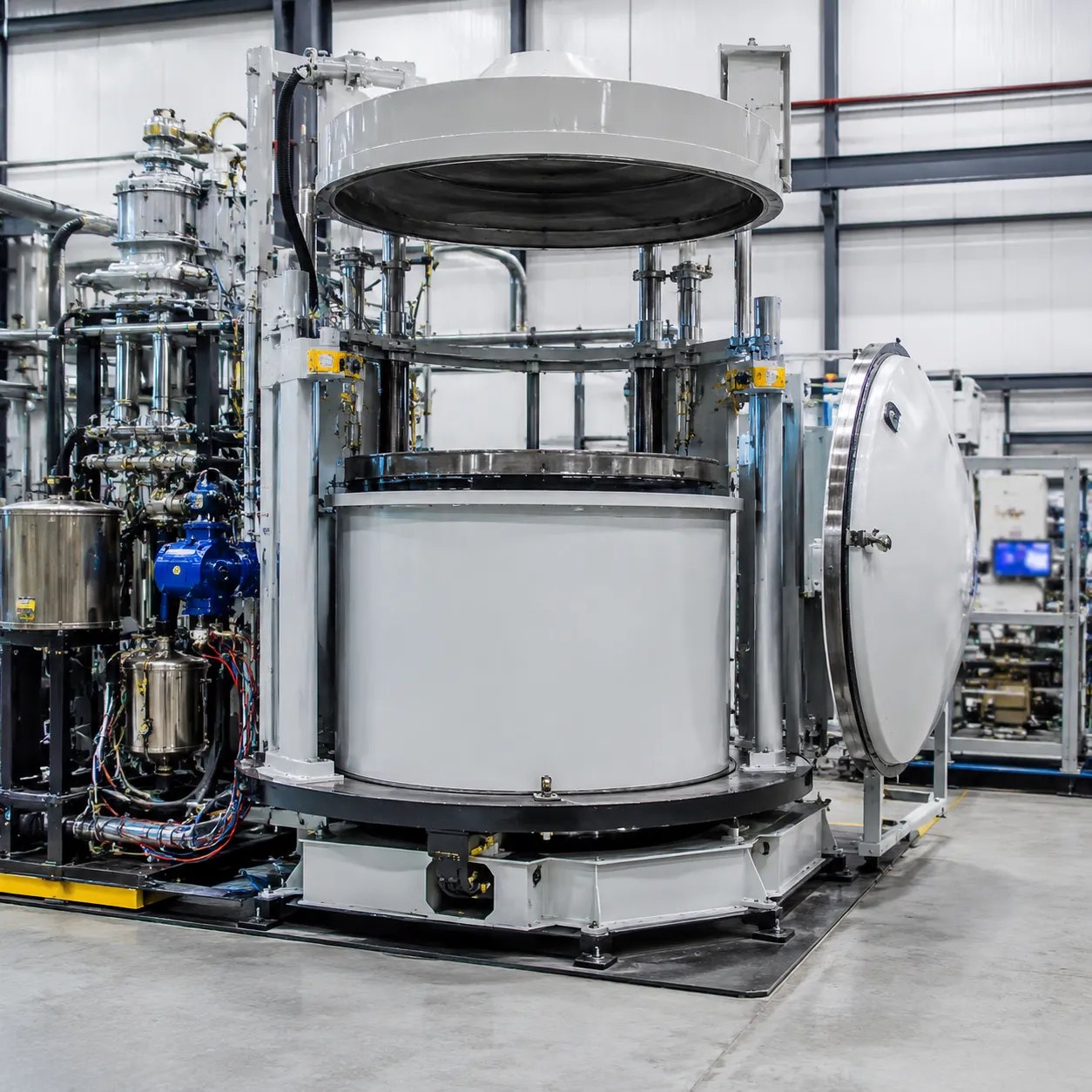
Technical Capabilities & Performance Benchmarks
| Performance Metric | Engineering Specification | Metallurgical Advantage |
|---|---|---|
| Ultimate Vacuum Level | Down to 10^-5 Pa (10^-7 mbar) via diffusion or turbomolecular loops | Eliminates surface oxidation and thoroughly degasses impurities. |
| Thermal Thresholds | Continuous operation up to 2400°C | Supports advanced vacuum sintering and ultra-high-temperature heat treating. |
| Thermal Field Uniformity | ±1°C to ±3°C (AMS 2750 compliant) via multi-zone PID loops | Guarantees tight hardness tolerances and prevents local overheating. |
| Directional Quenching | Integrated 2 to 25 bar forced gas quench (N2, Ar, He) | Delivers fast cooling rates with 360° radial nozzle manifolds to prevent distortion. |
High-Pressure Gas Quenching & Thermal Uniformity
We integrate advanced forced gas cooling directly into the chamber structure. By combining our specialized vertical layout with a high-performance gas quench vacuum furnace system, we direct high-purity inert gases evenly across the entire load charge.
-
- Precision Multi-Zone Heating: Independent control zones continuously balance power output to maintain accurate thermal field uniformity throughout the entire heating cycle.
- Flexible Vacuum Pumping Options: Configure low-vacuum mechanical pumps for standard clean heat treatment, or select high-vacuum turbomolecular loops when processing contamination-sensitive alloys.
- Distortion-Free Quenching: High-velocity 360° radial nozzles ensure uniform heat extraction, eliminating thermal stress and part warping in complex cylindrical parts.
Hot Zone Engineering for Top Loading Vacuum Furnace
We engineer our top loading vacuum furnace hot zones to match your specific metallurgical requirements. Choosing between an all-metallic or graphite configuration dictates process purity, maximum operating temperature, and overall thermal efficiency.
All-Metallic Moly Hot Zone
When process purity is paramount, our all-metallic shielding systems eliminate outgassing and carbon contamination risks completely.
-
- Vacuum Performance: Achieves ultra-clean processing down to 10^-5 Pa.
- Zero Carbon Pickup: Eliminates carbon contamination risk, making it mandatory for processing titanium alloys, medical implants, critical aerospace structural parts, and nuclear materials.
- Heating Elements: High-purity molybdenum heating element or tungsten arrays provide uniform, clean radiant heat.
Graphite Hot Zone Furnace
For high-temperature industrial heat treatment, our graphite hot zone designs offer unmatched thermal shock resistance and operational durability.
-
- Extreme Thermal Limits: Operates reliably up to 2400°C using durable C-C composites and rigid graphite felt insulation.
- Energy Efficiency: Exceptional thermal insulation reduces overall power consumption during high-temperature cycles.
- Target Applications: Optimized for tool steel heat treating and advanced ceramic sintering furnace processes across standard vacuum furnace applications.
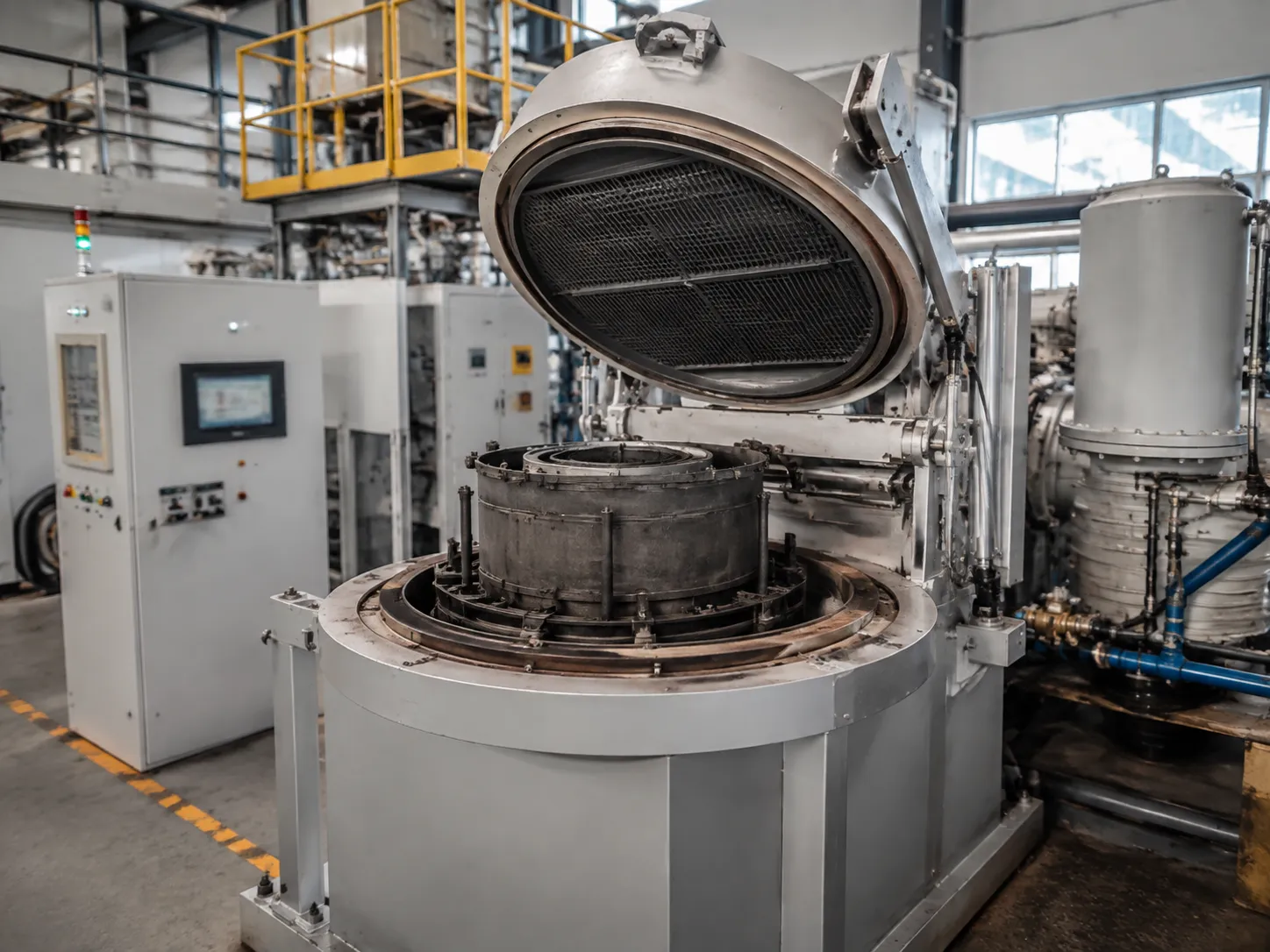
Top Loading Vacuum Furnace Specifications
| Performance Parameter | Metallic Hot Zone Series | Graphite Hot Zone Series |
|---|---|---|
| Max Operating Temperature | Up to 1600°C – 2400°C | Up to 2400°C |
| Ultimate Vacuum Level | Down to 10^-5 Pa | 10^-1 Pa to 10^-3 Pa |
| Temperature Uniformity | ±1°C to ±3°C | ±3°C to ±5°C |
| Quenching System | Integrated 2–25 bar directional gas quench | Integrated 2–25 bar directional gas quench |
| Control Architecture | Siemens / Eurotherm PLC + SCADA | Siemens / Eurotherm PLC + SCADA |
System Integration Benchmarks
-
- Precision Thermal Control: Multi-zone independent PID loops ensure exceptional temperature uniformity compliant with AMS 2750 standards. We validate thermal accuracy on every vertical vacuum furnace build following strict procedures aligned with our vacuum furnace calibration guide.
- High-Speed Gas Quenching: Integrated 2–25 bar forced gas quench system (N2, Ar, He) uses 360° radial nozzle manifolds to control cooling curves precisely and prevent part distortion.
- Automated SCADA Architecture: Industry-grade Siemens or Eurotherm PLC systems deliver full recipe automation, fault monitoring, and data logging required for mission-critical heat treatment operations.
Industrial Target Applications for Top Loading Vacuum Furnace Systems
We engineer our top loading vacuum furnace systems to meet strict metallurgy standards across high-stakes industrial sectors. By leveraging vertical chamber geometry, long and heavy components remain perfectly straight during high-temperature thermal cycles.
Key Industry Applications
-
- Aerospace & Defense: Precision heat treating of long turbine shafts, structural landing gear assemblies, and heavy-wall titanium tubing. Vertical orientation prevents thermal sagging and eliminates dimensional distortion.
- Medical Devices & Implants: Contamination-free processing for orthopedic implants and critical surgical alloys. Utilizing ultra-clean heating environments in our high-purity vacuum annealing furnace equipment ensures zero carbon pickup and pristine surface chemistry.
- Additive Manufacturing: High-temperature thermal stress relief and density optimization for 3D-printed metal components and advanced powder metallurgy parts, delivering maximum structural integrity and fatigue resistance.
- Tool & Die Manufacturing: Bright hardening and tempering of massive cylindrical dies and heavy tool steel blocks without surface decarburization, completely bypassing post-process acid pickling or grinding.
Custom Top Loading Vacuum Furnace Engineering
We build every top loading vacuum furnace to match your exact production footprint, weight capacities, and batch geometries. Through our specialized custom design and engineering process, we optimize each system to integrate seamlessly into your facility's material handling setup.
-
- Custom Chamber Dimensions: Tailored hot zones and heavy-duty load support handle high-tonnage batches and oversized cylindrical components without structural deflection.
- Lifting Mechanisms: Select from pneumatic, heavy-duty hydraulic, or fully automated top-hat lifting drives for safe and efficient overhead loading.
- Atmosphere Purge Control: Integrated multi-channel Mass Flow Controllers (MFC) deliver accurate gas dosing for advanced, multi-stage purge cycles.
- Certifications & Compliance: Engineered and manufactured in full compliance with ISO 9001:2015 quality standards and CE industrial safety certifications.
Technical Frequently Asked Questions
We address the most critical operational and structural questions regarding top loading vacuum furnace selection, hot zone configurations, and quenching protocols.
Top Loading Vacuum Furnace FAQs
| Technical Question | Engineering Solution | Key Operational Benefit |
|---|---|---|
| Why select a top loading vacuum furnace over a horizontal design? | Uses vertical overhead crane loading to suspend long shafts, tubes, and heavy symmetrical parts. | Eliminates thermal sagging and warping under extreme heat while optimizing shop floor footprint. |
| Which hot zone configuration is required for medical titanium implants? | An all-metallic molybdenum or tungsten hot zone engineered with zero carbon elements. | Prevents carbon pickup to ensure medical-grade biocompatibility and 100% clean surface integrity. |
| What gas media are utilized in high-pressure gas quenching? | High-purity Nitrogen (N2), Argon (Ar), or Helium (He) delivered via 360° radial nozzle manifolds. | Controls cooling rates and eliminates part distortion based on specific alloy reactivity. |
Core Engineering Takeaways
-
- Vertical Load Integrity: Standard horizontal chambers suffer from gravity-induced bending on long components during high-temperature cycles. Operating a vertical top loading vacuum furnace ensures gravity works with workpiece geometry rather than against it.
- Material-Specific Hot Zones: Titanium alloys, medical implants, and nuclear components require a pristine moly hot zone to avoid micro-carburization. For standard tool steels and ceramics, high-density graphite hot zones offer maximum energy efficiency.
- Gas Quenching Dynamics: Selecting the correct media for high pressure gas quenching depends on cooling rate targets and material chemistry. Nitrogen delivers fast, cost-effective cooling for standard steels, while inert Argon or fast-cooling Helium protect reactive superalloys. When evaluating a high-performance vacuum heat treatment furnace, matching gas velocity and nozzle architecture directly controls batch hardness and dimensional stability.