Formula details
Product Details
Overview
What Is a Vacuum Brazing Furnace for Aluminum Coolers?
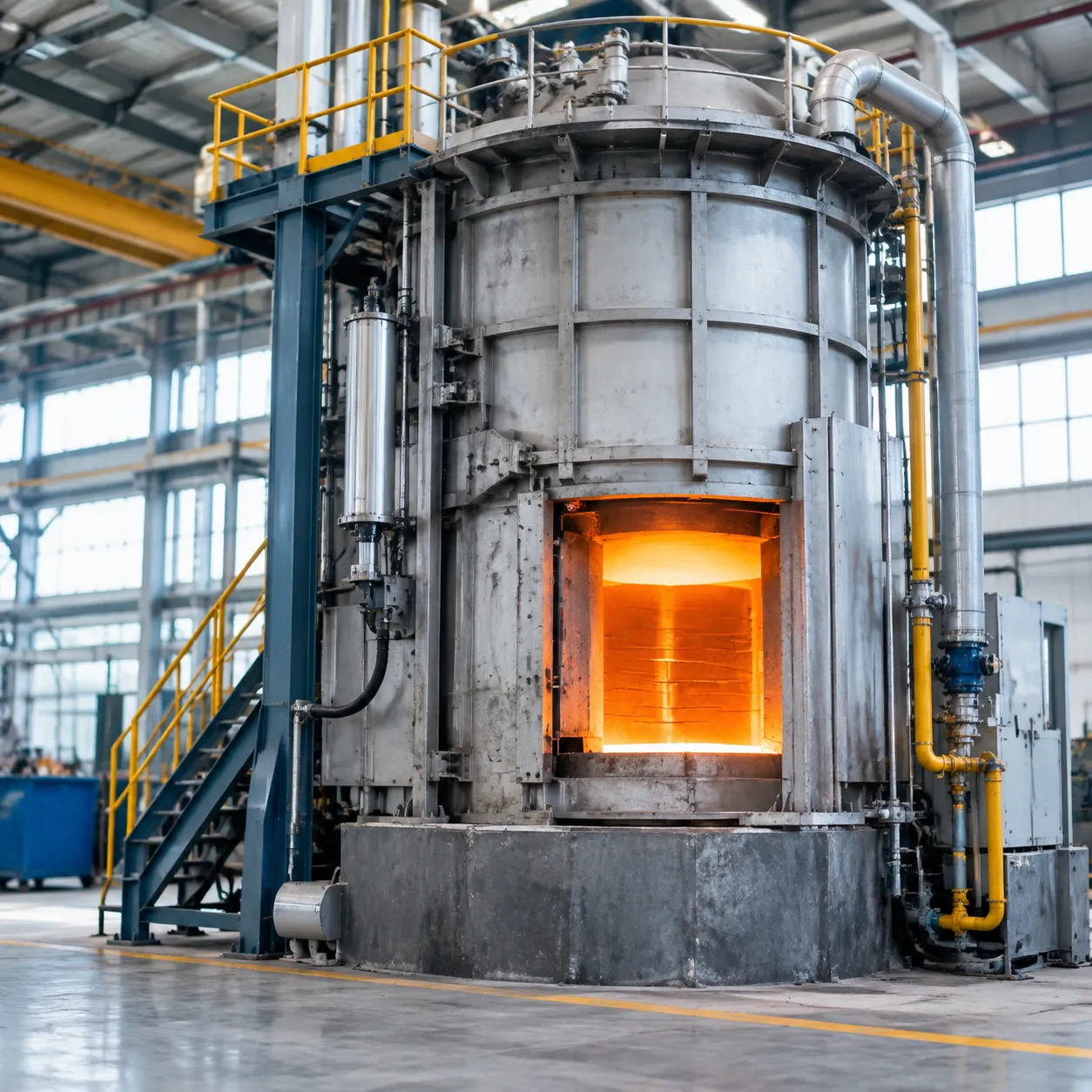
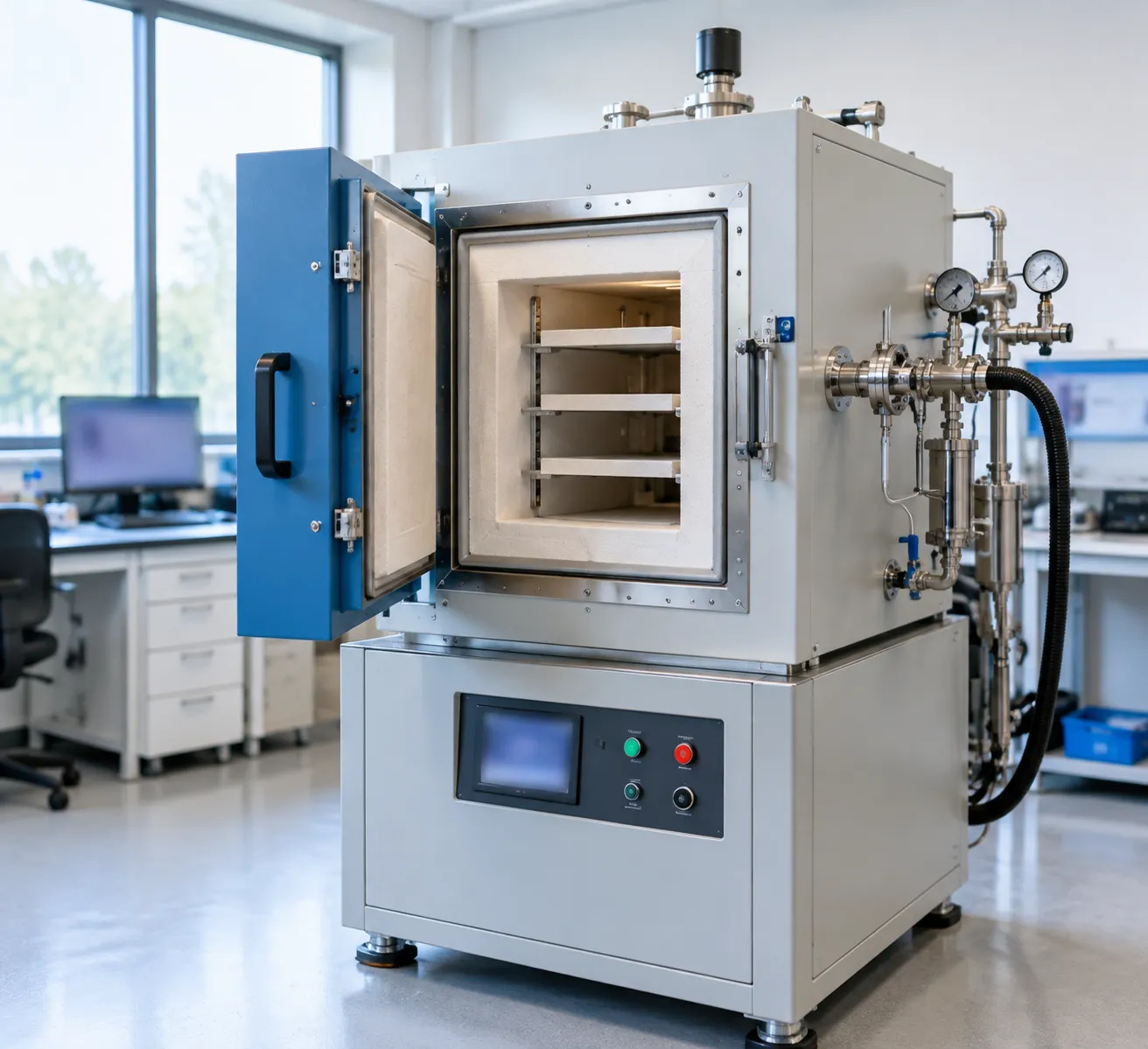
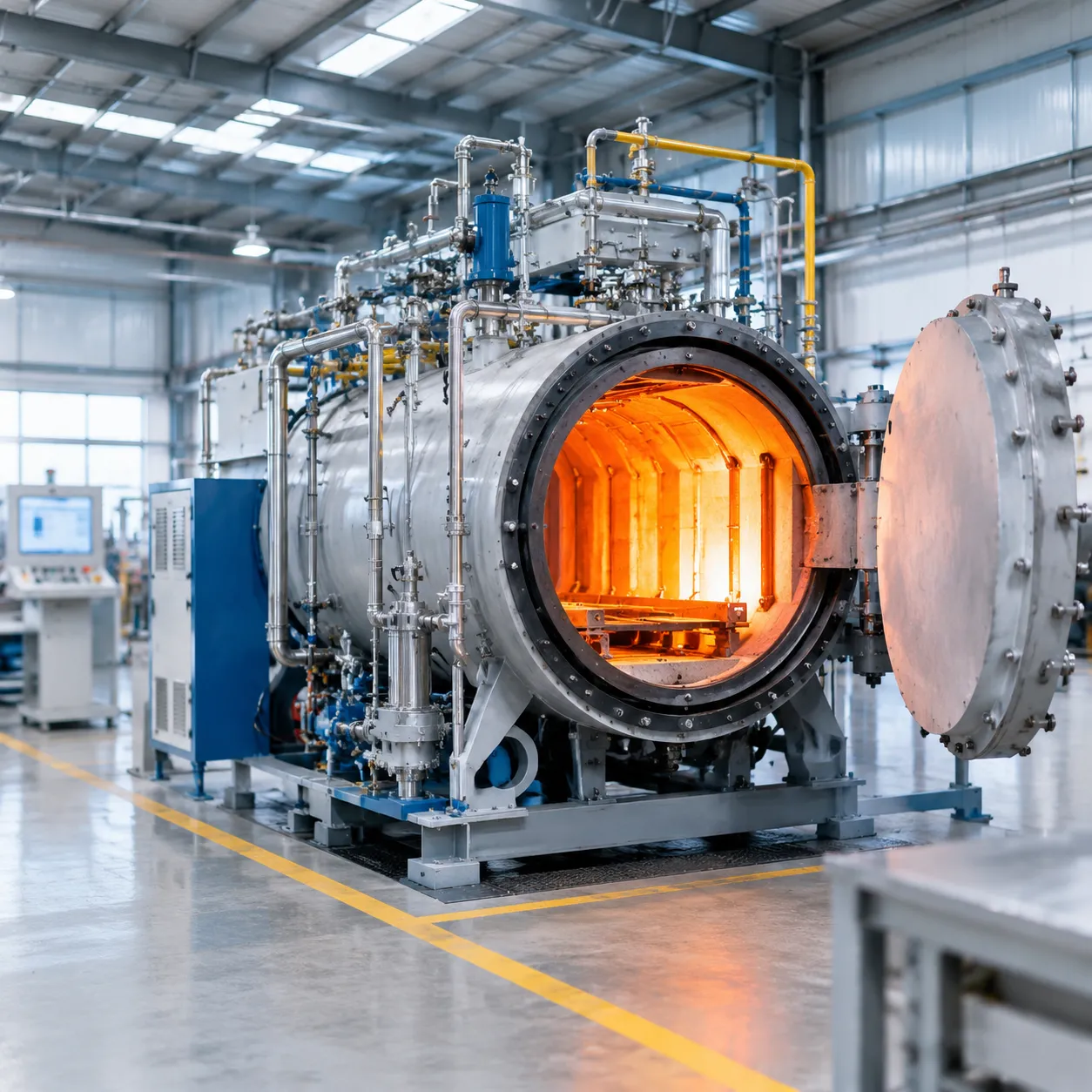
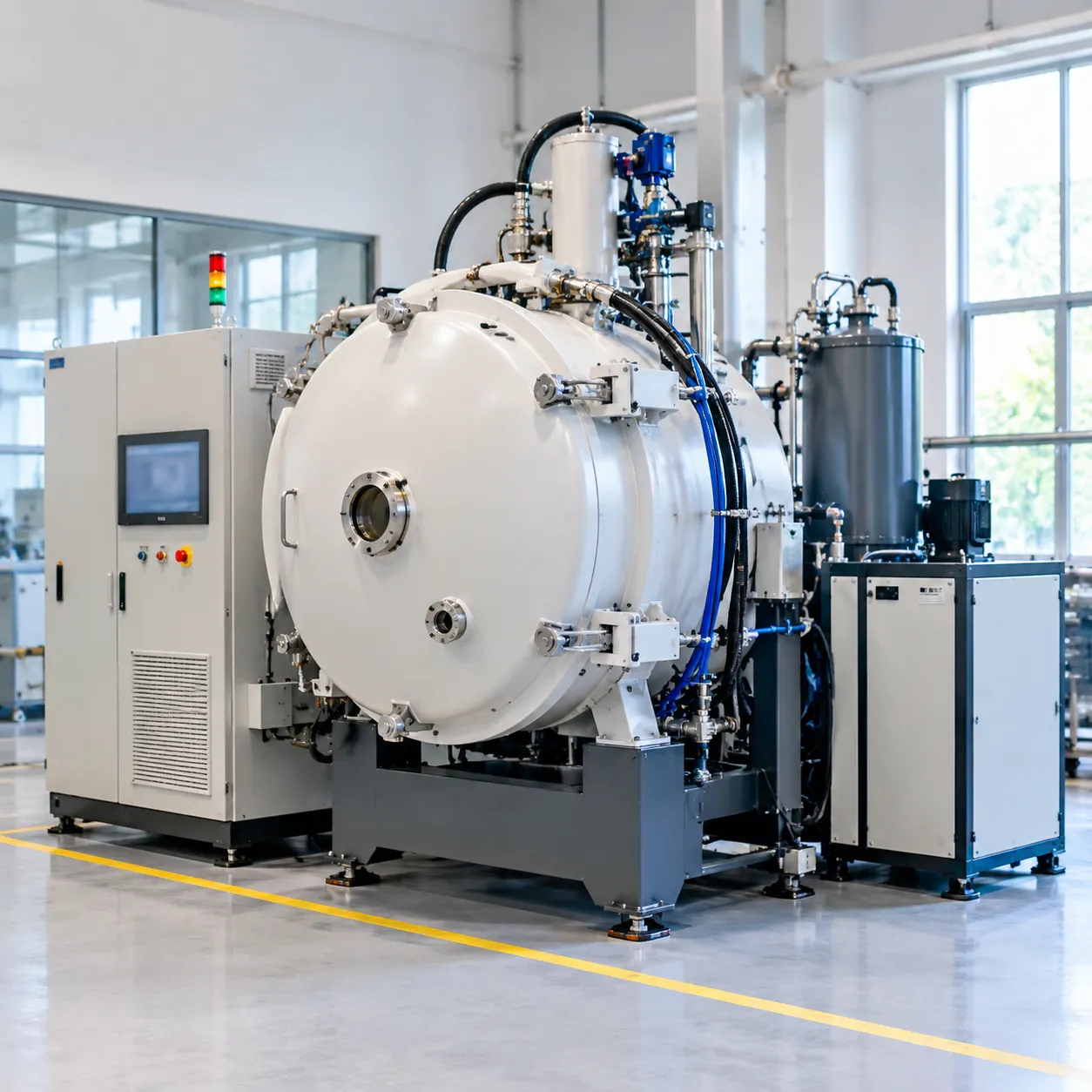
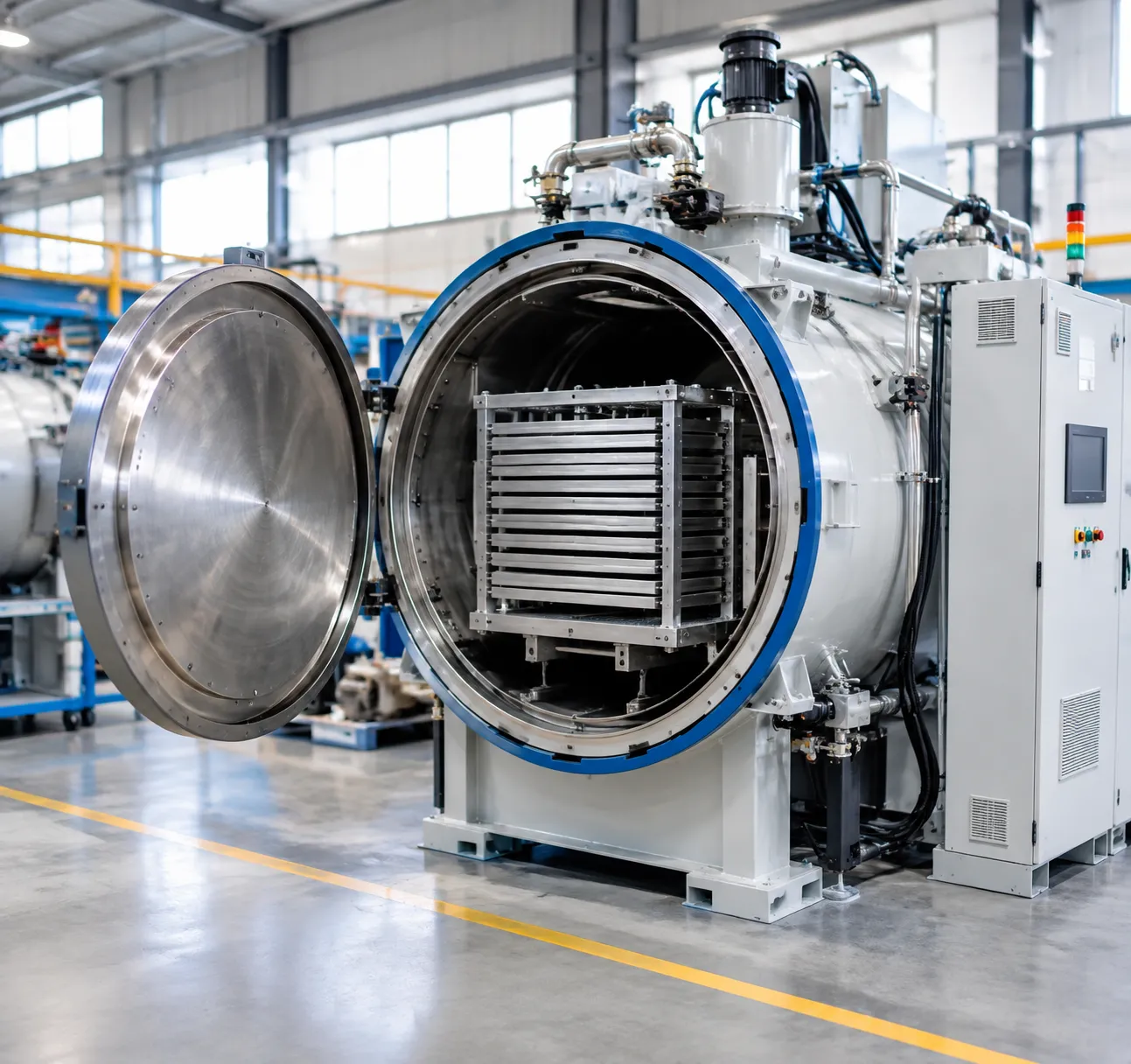
A vacuum brazing furnace for aluminum coolers is an advanced industrial heating system engineered to join complex aluminum assemblies under high-vacuum, oxygen-free conditions.
Core Working Principles of Fluxless Vacuum Brazing
The fluxless vacuum brazing process relies on a tightly controlled vacuum environment and radiant heating to form high-strength metallurgical bonds:
-
- Atmosphere Evacuation: High-vacuum pumping systems strip away atmospheric oxygen and water vapor, driving chamber pressure down to levels where aluminum cannot re-oxidize.
- Magnesium Getter Disruption: Aluminum clad alloys (typically Al-Si-Mg systems) contain trace amounts of magnesium. At operating temperatures between 580°C and 610°C (1076°F to 1130°F), magnesium sublimates into vapor, breaks through the tough aluminum oxide film ($Al_2O_3$), and acts as a localized "getter" to capture residual oxygen molecules.
- Capillary Flow: Once the oxide film breaks down, the molten aluminum-silicon filler metal wets the joint surfaces effortlessly, flowing into tight gaps across complex fin and plate matrices through capillary action.
Vacuum Brazing vs. Controlled Atmosphere Brazing (CAB)
Selecting between vacuum brazing and controlled atmosphere brazing (NOCOLOK CAB) directly impacts manufacturing costs, product cleanliness, and joint strength.
| Feature | Vacuum Brazing Furnace | Controlled Atmosphere Brazing (CAB) |
|---|---|---|
| Flux Requirement | 100% Fluxless | Requires chemical flux slurry |
| Post-Braze Cleaning | None (Parts exit bright and ready) | Often requires acid/water washing |
| Internal Cleanliness | Ultra-pure; zero channel clogging | Risk of residual flux powder washouts |
| Atmosphere Medium | High vacuum | Inert Nitrogen ($N_2$) gas blanket |
| Cooler Geometry | Thick bar-and-plate, microchannel, closed vessels | Open tube-and-fin automotive radiators |
| Environmental Impact | Eco-friendly; zero chemical waste runoff | Generates chemical wash effluent |
Primary Industrial Applications
We build our vacuum brazing systems to produce mission-critical heat transfer components across demanding sectors:
-
- Heavy Industrial Oil Coolers: Essential for construction machinery, compressors, and high-pressure hydraulic equipment requiring heavy bar-and-plate designs.
- Charge Air Coolers (CAC) & Intercoolers: Provides leak-free seams capable of withstanding extreme cyclic pressure loads in turbocharged diesel and gas engines.
- Aviation & Defense Heat Exchangers: Delivers strict metallurgical bonding and void-free joints for critical fuel coolers and cabin environmental control systems.
Role in Modern EV Cold Plates and Battery Chillers
The rapid expansion of electric vehicles (EVs) has turned vacuum brazing into the industry standard for battery thermal management:
-
- Zero Glycol Contamination: Because no flux is introduced, there is zero risk of residual chemistry reacting with dielectric fluids or glycol-water coolants.
- Microchannel Precision: Keeps micro-cooling passages fully open without flux damming, ensuring uniform heat dissipation across battery cells and power electronics.
- High Burst Resistance: Forms clean, deep brazed seams that easily handle the internal operating pressures and vibration stresses demanded by automotive-grade battery chillers.
Main Types of Aluminum Coolers Made in Vacuum Furnaces
When we run an industrial vacuum brazing furnace for aluminum coolers, our primary goal is producing clean, high-strength joints that handle extreme thermal and mechanical loads. Because vacuum brazing operates without corrosive fluxes, it is the standard manufacturing method for complex geometries across several critical industries. Explore our comprehensive breakdown of vacuum furnace applications, uses, and benefits to see how this technology serves demanding sectors.
Bar and Plate Heat Exchangers for Heavy Machinery and Aerospace
Bar and plate designs require maximum structural integrity to survive continuous vibration and high working pressures. We use aluminum plate-fin heat exchanger brazing to fuse heavy parting sheets, side bars, and corrugated internal fins into a solid, monolithic core.
-
- Typical Uses: Construction equipment, off-highway haulers, locomotive cooling systems, and aircraft environmental control systems (ECS).
- Key Advantage: Superior burst pressure resistance and fatigue life compared to mechanically expanded or CAB-brazed units.
Automotive Radiator Cores and Charge Air Coolers (CAC)
High-performance vehicles, commercial trucks, and motorsport platforms depend on lightweight, high-efficiency cores to shed heat rapidly.
-
- Intercooler Core Brazing: Delivers ultra-clean internal passages free of flux debris that could otherwise break loose and damage turbochargers or engine intakes.
- Radiator Assemblies: Ensures uniform bonding across ultra-thin Al-Si clad fins, optimizing heat rejection while cutting overall front-end vehicle weight.
High-Pressure Hydraulic and Engine Oil Coolers
Hydraulic circuits and engine lubrication loops cannot tolerate chemical residues. A single trace of flux in an oil line can cause valve sticking or pump failure.
-
- Fluxless Cleanliness: The vacuum process prevents internal contamination, eliminating costly post-braze acid washing.
- Leak-Tight Performance: High-vacuum processing creates deep, defect-free fillets capable of withstanding severe oil pressure pulsation cycles.
Serpentine Tube and Microchannel Cooling Plates for Electronics
Modern power electronics, data centers, and EV battery packs require precise liquid cooling solutions with intricate, narrow internal channels.
-
- Aluminum Microchannel Cold Plate Brazing: Joins multi-port extruded (MPE) tubes and stamped liquid cold plates without clogging microscopic fluid channels.
- Dimensional Precision: Vacuum chambers deliver uniform heat distribution, preventing the thermal warpage that often ruins flat-surface contact required for mounting semiconductor modules.
Critical Technical Specifications of a Vacuum Brazing Furnace for Aluminum Coolers
High-Vacuum Pumping Systems
Aluminum vacuum brazing requires a clean, hydrocarbon-free vacuum in the 10^-5 mbar range to break down surface oxides effectively. We configure our pumping packages with a multi-stage layout:
-
- Roots Blowers & Rotary Vane Pumps: Deliver rapid roughing and high-volume pump-down from atmospheric pressure.
- Diffusion Pumps: Provide continuous high-speed evacuation to handle outgassing during the critical alloy melting phase.
- Integrated Magnesium Condensation Traps: Capture volatile magnesium vapors before they enter and degrade the pump oil.
Multi-Zone Temperature Uniformity
Aluminum melts close to its brazing filler alloy (often within a 20°C to 30°C window). To prevent fin erosion or cold joints, our furnaces feature independent multi-zone temperature control delivering thermal uniformity within ±3°C (±5°F). Each heating zone uses strategically placed, fast-response thermocouples to balance heat transfer across thick header plates and razor-thin cooling fins simultaneously.
| Component | Technical Specification | Functional Benefit |
|---|---|---|
| Ultimate Vacuum | ≤ 5.0 × 10^-5 mbar (clean, dry, empty) | Eliminates oxidation without chemical fluxes |
| Temperature Uniformity | ±3°C (±5°F) across all zones | Prevents fin melting and incomplete joints |
| Heating Elements | Molybdenum ribbon / strip elements | Clean, non-contaminating, long service life |
| Cooling Pressure | 2 to 6 bar absolute (N2 / Ar) | Rapid turnaround and optimized core hardness |
Heating Chamber Design: All-Metal Molybdenum vs. Graphite
For aluminum heat exchanger vacuum brazing, all-metal molybdenum hot zones are the industry standard:
-
- Molybdenum and Stainless Steel Shielding: Delivers superior cleanliness, zero carbon contamination risks, and low outgassing rates.
- Why Not Graphite? Graphite hot zones can absorb moisture and release carbon dust, which interferes with aluminum fluxless wetting and causes surface discoloration.
Forced Gas Cooling and Nitrogen Quenching Systems
To shorten cycle times and lock in the mechanical strength of the brazed core, our units integrate rapid forced gas cooling. Utilizing an external heat exchanger and a high-velocity blower, the system circulates high-purity nitrogen back into the chamber once brazing completes. For specialized high-volume lines, pairing the system with a single-chamber vacuum furnace with high-pressure gas quenching provides rapid turnaround times without thermal shock.
PLC Touch-Screen Automation and Process Recording
Our furnaces utilize industrial PLC systems paired with intuitive SCADA touch-screen interfaces. Operators can store multi-step heating recipes, manage automated vacuum sequences, and export real-time vacuum-temperature curves for full batch traceability and aerospace/automotive quality compliance.
Why Manufacturers Choose Vacuum Brazing for Aluminum Assemblies
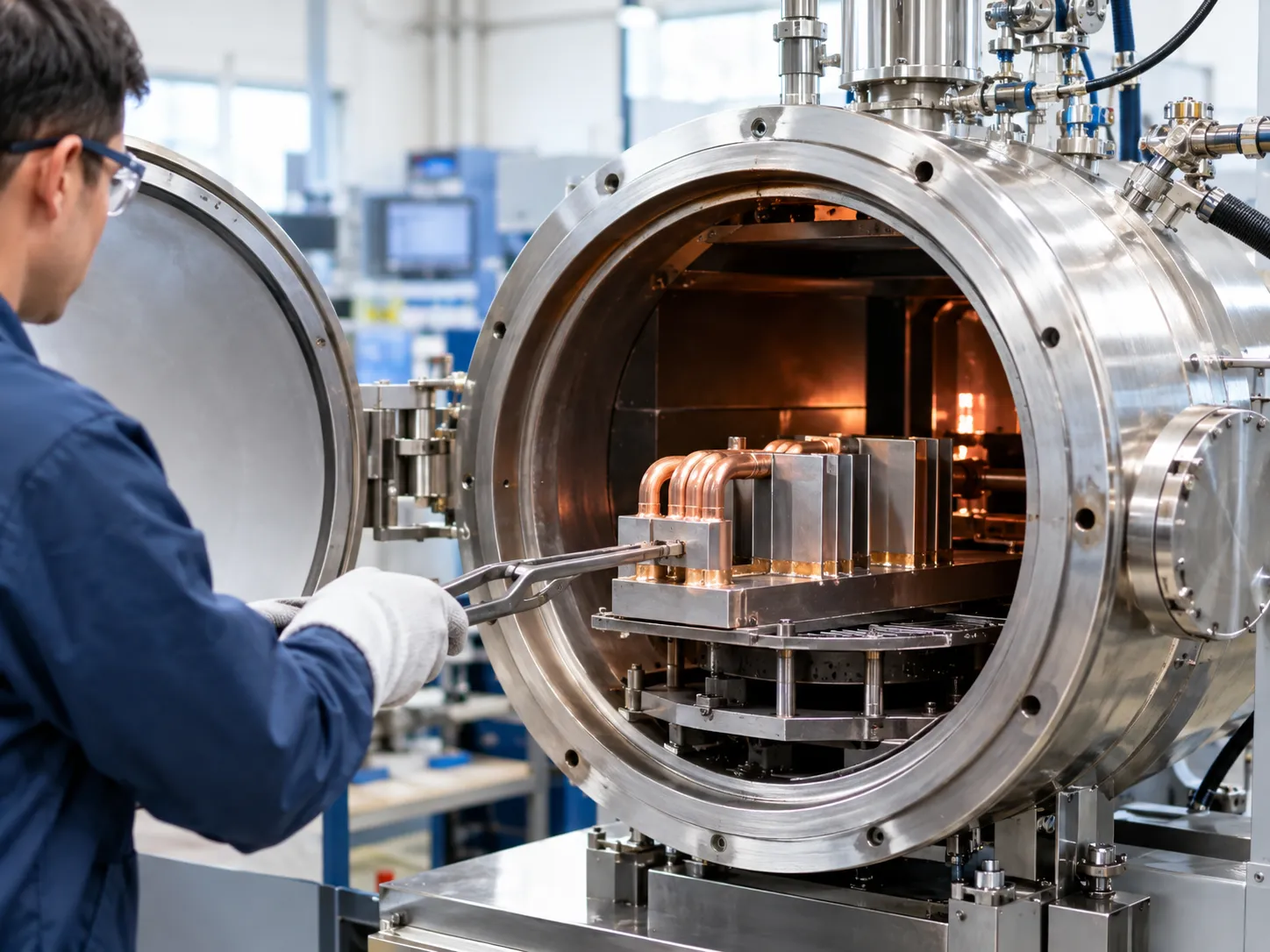
When manufacturing high-performance heat exchangers, switching to a dedicated vacuum brazing furnace for aluminum coolers delivers clear operational and structural advantages over conventional salt-bath or open-air brazing lines. We design our vacuum brazing furnace systems to meet tight automotive, aerospace, and energy-sector standards while cutting secondary processing costs.
Zero Flux Residue and Cleaner Operations
-
- No Corrosive Flux: The fluxless vacuum brazing process eliminates chemical binders and corrosive potassium-fluoroaluminate salts completely.
- No Post-Braze Washing: Components leave the chamber dry and neutral, removing the need for costly ultrasonic pickling lines, hot-water rinses, and wastewater treatment systems.
- Internal Purity: Closed-loop hydraulic and microchannel cooling plates stay free of entrapped salts that cause internal channel blockages and coolant contamination.
Superior Leak-Tight Joints and High Burst Pressure Resistance
Uniform radiant heating inside a high-vacuum chamber melts clad alloy fillers evenly along every joint line. This creates 100% metallurgical bonding with deep filleting along every fin, header, and parting plate:
High Joint Integrity: Consistent joint formation prevents pinholes, micro-voids, and cold-braze zones.
Extreme Pressure Durability: Assemblies withstand severe pressure cycling, thermal shock, and burst pressures exceeding 40 to 60 bar in heavy-duty oil coolers and high-pressure charge air coolers.
| Performance Metric | Fluxless Vacuum Brazing | Atmospheric / Flux Brazing (CAB) |
|---|---|---|
| Post-Braze Cleaning | Not required (0 chemical waste) | Mandatory chemical/water washing |
| Internal Cleanliness | Ultra-pure, zero flux entrapment | Risk of salt residue in channels |
| Surface Appearance | Bright, metallic, oxide-free | Matte, often discolored or coated |
| Fin Distortion Risk | Ultra-low (even radiant heating) | Moderate to high (localized hot spots) |
| Leak-Tight Yield Rate | Exceeds 98.5% on complex assemblies | Variable with flux application uniformity |
Bright, Oxidation-Free Surface Finish Right Out of the Furnace
Operating at vacuum levels of 10⁻⁵ mbar ensures complete oxygen evacuation before heating. Active magnesium in the clad alloy acts as an in-situ getter, breaking down remaining aluminum surface oxides. The finished assemblies exit the batch chamber vacuum aluminum brazing furnace with a mirror-bright, clean metallic finish that needs no blasting, acid etching, or surface polishing before final painting, anodizing, or assembly.
Minimal Distortion Across Delicate Microchannel Fins
Delicate cooling fins (down to 0.05 mm foil thickness) distort easily under uneven thermal loads. Our multi-zone heating controls deliver tight thermal uniformity across the entire furnace volume:
Eliminates Hot Spots: Prevents fin core melting, clad erosion, and localized sagging.
Maintains Core Geometry: Retains precise pitch tolerances across complex bar-and-plate cores, EV liquid cold plates, and multi-louvered radiator banks.
Flat Mounting Surfaces: Guarantees parallel flatness on heavy structural manifolds, ensuring seamless bolt-on assembly without expensive post-machining.
Key Process Parameters for Aluminum Vacuum Brazing
Operating a vacuum brazing furnace for aluminum coolers demands strict control over temperature, chamber atmosphere, and thermal ramps. Because aluminum core alloys melt very close to their braze filler metals, maintaining a narrow operational window ensures leak-free joints without melting delicate core fins.
Crucial Temperature Ranges for Al-Si Clad Alloy Systems
We match the base core material (typically 3003 series) with specific Al-Si clad filler alloys (4004, 4343, or 4047). The braze filler must melt and flow smoothly while the base core maintains structural integrity:
-
- 3003 Base Alloy Solidus: ~643°C (1190°F)
- 4004 / 4343 Filler Cladding (Al-Si-Mg / Al-Si): Melts between 577°C and 600°C (1070°F – 1112°F)
- 4047 Filler (High Silicon): Melts between 577°C and 582°C (1070°F – 1080°F)
- Target Brazing Window: 595°C to 605°C (±3°C across all zones)
Vacuum Levels and the Magnesium Getter Effect
Our fluxless vacuum brazing process eliminates chemical pastes by using high vacuum and elemental magnesium.
-
- Vacuum Pressure Requirements: We maintain an ultimate base vacuum between 10⁻⁵ mbar and 10⁻⁴ mbar before heating. Working pressure stays below 10⁻³ mbar during the active braze cycle.
- Magnesium Getter Action: Magnesium (found in 4004 filler or added via getter strips) begins vaporizing around 550°C. This vapor binds with residual oxygen and moisture in the furnace chamber, acting as a dynamic getter while chemically disrupting the tough aluminum oxide layer ($Al_2O_3$) so the molten filler can wet the joint.
Thermal Cycle: Ramps, Soaks, and Cooling
Proper thermal profiling in a specialized horizontal vacuum furnace prevents thermal distortion across dense radiator and intercooler cores.
| Process Step | Temperature Range | Target Vacuum Level | Purpose |
|---|---|---|---|
| Initial Pumpdown | Ambient | < 5.0 × 10⁻⁵ mbar | Removes ambient air, residual moisture, and shop volatiles. |
| Preheating & Degas Soak | 200°C – 450°C | 10⁻⁴ mbar range | Eliminates thermal gradient between core center and outer frame. |
| Magnesium Sublimation | 530°C – 560°C | Dynamic 10⁻⁴ mbar | Magnesium volatilizes to strip surface oxides and getter residual $O_2$. |
| Braze Dwell | 595°C – 605°C | 10⁻⁵ to 10⁻⁴ mbar | Filler metal melts, wets joints, and creates high-strength fillets (3–8 min). |
| Solidification & Quench | 570°C down to 100°C | Forced N₂ gas (1.5–2.0 bar) | Locks joint geometry quickly, minimizing grain growth and cycle time. |
Buying Guide: How to Select the Right Aluminum Vacuum Brazing Furnace
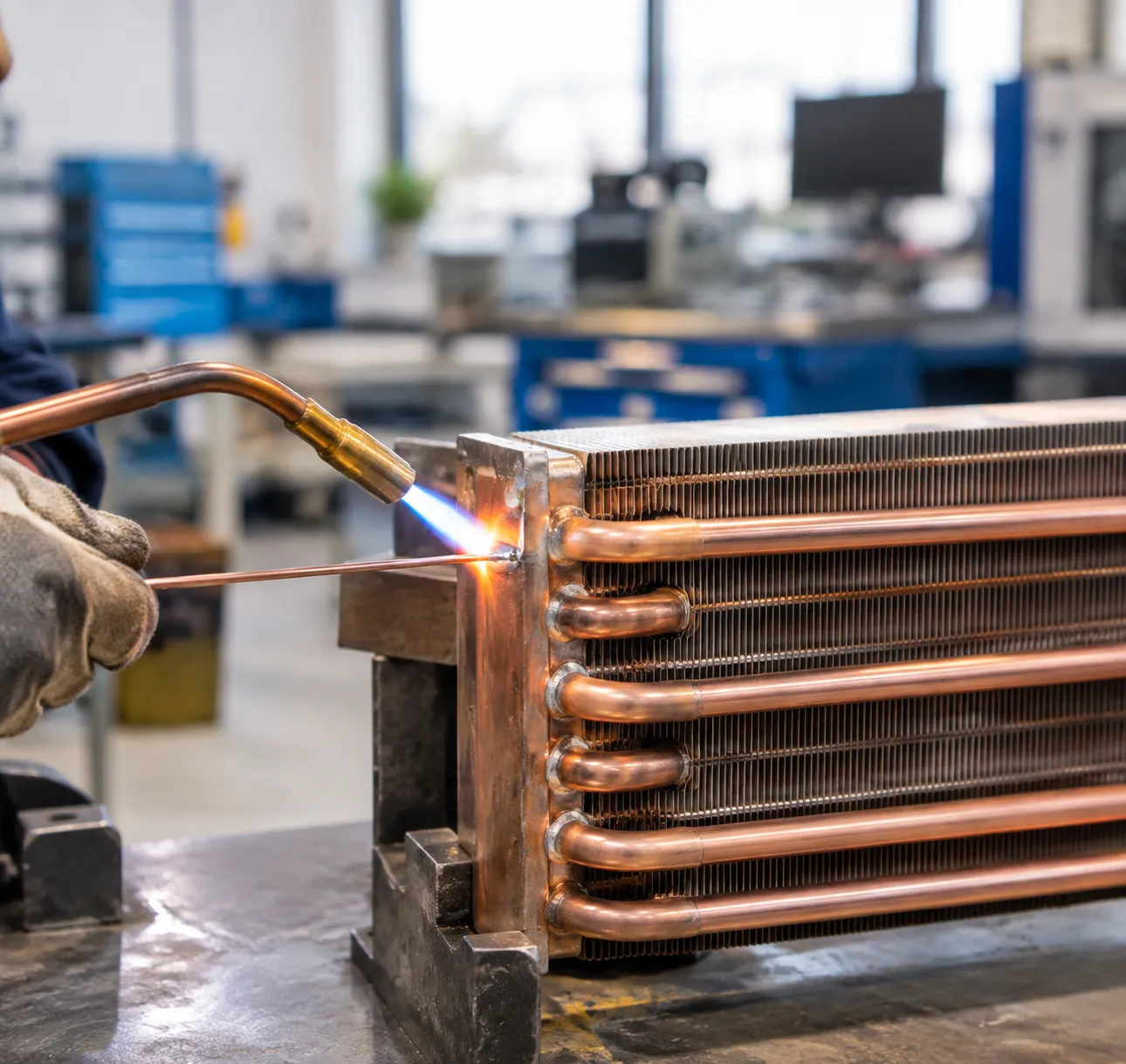
Matching Chamber Dimensions and Batch Capacity to Production Throughput
Chamber size must match both your largest single heat exchanger core and your daily output targets:
-
- Usable Hot Zone Dimensions: Ensure at least 50 mm to 75 mm of clearance between the outer edges of your fixtures and the molybdenum heating elements to prevent localized overheating.
- Payload Weight Limits: Large aluminum plate-fin heat exchangers require heavy-duty hearth rails and loading carts engineered to prevent sagging during maximum temperature soaks.
- Cycle Output Matching: Calculate your daily production volume. A typical cycle takes 3 to 5 hours, meaning a standard batch furnace completes 4 to 6 cycles per day under continuous operation.
Batch Vacuum Furnaces vs. Continuous Semi-Automatic Brazing Lines
Choosing between a single-chamber batch furnace and a multi-chamber semi-continuous line depends entirely on your product variety and volume.
| Feature / Metric | Single-Chamber Batch Furnace | Continuous / Semi-Automatic Line |
|---|---|---|
| Best For | High-mix, low-to-medium volume; custom & aerospace coolers | High-volume single SKU production (automotive radiators, EV chillers) |
| Throughput | 1 batch every 3 to 5 hours | 1 indexed load every 20 to 45 minutes |
| Footprint & Capital Cost | Compact footprint; lower initial investment | Large footprint; higher capital investment |
| Process Flexibility | Easy recipe changes between different cooler sizes | Best for consistent core sizes and dedicated tooling |
Evaluating Energy Consumption, Power Ratings, and Utility Requirements
Operating an efficient aluminum brazing system requires balanced utility planning:
-
- Heating Power: Typical connected heating power ranges from 90 kW to over 350 kW depending on chamber volume. Multi-zone PID control trims power to maintain tight thermal uniformity without excessive grid draw.
- Cooling Water Requirements: High-vacuum diffusion pumps and chamber jackets demand clean, closed-loop cooling water at 3 to 4 bar pressure.
- Quenching Gas Supply: High-purity nitrogen (99.999% purity) with dedicated surge tanks is mandatory for rapid gas cooling systems.
Understanding how a vacuum furnace operates under full load helps determine your facility's exact electrical, pneumatic, and cooling infrastructure needs before installation.
Verifying Safety Interlocks, Over-Temperature Protection, and Vacuum Leak Rate Standards
Consistent brazing results rely on rigorous vacuum integrity and process safety controls:
-
- Chamber Leak-Up Rate: Specify a maximum leak-up rate of less than 0.5 Pa/hour (under clean, cold, dry, and outgassed conditions).
- Thermal Uniformity Standards: The hot zone must deliver temperature uniformity of ±3°C (±5°F) across the entire load area. Routine vacuum furnace calibration ensures multi-zone thermocouples stay compliant with international aerospace and automotive standards.
- Safety Interlocks: Your system must include independent over-temperature controllers, water flow/pressure sensors, emergency nitrogen backfill systems, and fail-safe vacuum valves to protect core assemblies during power fluctuations.
Routine Maintenance and Troubleshooting for Aluminum Vacuum Brazing Furnaces
Keeping a vacuum brazing furnace for aluminum coolers running at peak performance requires proactive upkeep. Aluminum vacuum brazing relies on precise thermal control and deep vacuum levels, meaning even minor contamination or air leaks can disrupt core brazing quality.
Controlling Magnesium Buildup and Hot-Zone Cleanout
Magnesium added to filler alloys acts as a vital oxygen getter, but its vapor inevitably condenses on colder chamber walls, radiation shields, and heating elements.
-
- Routine Vacuum Bake-Out: We run scheduled high-temperature bake-out cycles under high vacuum to vaporize volatile deposits before they accumulate.
- Mechanical Clean-Out: Periodically vacuum or scrape loose magnesium powder from cold trap surfaces and bottom shields during planned downtime.
- Condenser Trap Checks: Ensure water-cooled magnesium vapor traps operate efficiently to prevent deposits from migrating downstream into sensitive pumping lines.
Routine Leak Detection via Helium Mass Spectrometry
Even microscopic air leaks introduce oxygen and moisture, ruining the fluxless brazing process and causing aluminum surface discoloration.
-
- Helium Spray Testing: Use a portable helium mass spectrometer leak detector to test door O-rings, pneumatic valve seals, water-cooling feedthroughs, and thermocouple ports.
- Target Leak Rate: Maintain furnace leak-up rates below standard thresholds (typically less than 0.5 Pa/h or 5× 10⁻³ mbar·l/s).
- Seal Inspection: Clean and lubricate Viton O-rings with high-vacuum grease during every routine inspection; replace hardened or flattened gaskets immediately.
Vacuum Pump Oil Monitoring, Filter Changes, and Valve Maintenance
Reliable deep vacuum depends on the health of your multi-stage pumping system.
| Component | Maintenance Task | Frequency |
|---|---|---|
| Diffusion Pump | Check silicone/synthetic fluid level; inspect for thermal cracking and oxidation | Monthly |
| Roots Blower & Rotary Pumps | Check mechanical oil color and viscosity; drain condensed water | Weekly / Bi-weekly |
| Inlet Mist & Dust Filters | Clean or swap filter cartridges to prevent particulate carryover | Every 200–300 hours |
| Pneumatic Vacuum Valves | Inspect cylinder actuation, valve seat O-rings, and limit switches | Quarterly |
For critical system overhauls and technical field support, our engineers provide global service and maintenance assistance to keep your production runs continuous and compliant.
Preventing Common Aluminum Cooler Brazing Defects
Understanding how process parameters influence heat transfer in a vacuum furnace helps you eliminate common assembly defects before they scrap valuable batches:
-
- Incomplete Braze Joints: Usually caused by insufficient vacuum levels, localized cold spots across large core stacks, or poor surface degreasing prior to assembly. Ensure multi-zone heating offsets are calibrated and parts are thoroughly cleaned.
- Fin Erosion and Melt-Through: Caused by excessive soak times at the brazing plateau or operating above the eutectic melting point of the core alloy. Tighten temperature soak limits within ± 2 °C to ± 3 °C.
- Surface Blistering and Discoloration: Triggered by residual moisture on parts, air leaks during the cooling ramp, or hydrogen gas trapped in the core material. Pre-dry assemblies thoroughly and confirm absolute chamber tightness before heating.
Frequently Asked Questions About Vacuum Brazing Furnaces for Aluminum Coolers
Why is vacuum brazing preferred over NOCOLOK flux brazing for hydraulic coolers?
Hydraulic systems operate under extreme working pressures and demand zero fluid contamination. Standard NOCOLOK controlled atmosphere brazing leaves behind microscopic chemical flux residues. In hydraulic oil systems, these residues act as abrasives that quickly clog micro-orifices, damage servo valves, and trigger oil breakdown.
Choosing a vacuum brazing furnace for aluminum coolers guarantees a completely fluxless join. It delivers clean, pore-free internal passages, eliminates post-weld acid washing, and reliably achieves the high burst-pressure ratings required for heavy industrial and aerospace fluid power circuits.
What is the typical cycle time for an aluminum cooler vacuum brazing run?
A standard production cycle runs between 4 to 7 hours door-to-door, depending on the total thermal mass of your fixtures and core density:
Roughing & High-Vacuum Pumping: 30 to 45 minutes to reach the required high-vacuum baseline.
Staged Preheating & Degassing: 1.5 to 2.5 hours to equalize thermal gradients and burn off volatile stamping oils.
Brazing Dwell: 8 to 15 minutes within the precise eutectic window (595°C to 605°C).
Forced Gas Quenching: 1 to 2 hours using high-pressure nitrogen recirculation to cool the load below handling temperatures.
How do you prevent magnesium vapor from damaging the vacuum pump system?
Magnesium additions (typically in 4004 cladding) serve as a natural oxygen getter during the fluxless vacuum brazing process, but volatile vaporized magnesium can condense inside pumps and foul diffusion fluid.
We combat this by outfitting the vacuum line with:
Multi-stage mechanical vapor traps: Placed directly ahead of the primary pumping manifold to catch airborne magnesium particulates.
Chilled optical baffles: Actively condensing metal vapors before they touch critical pump seals or valve faces.
Scheduled trap maintenance: Quick-clean collection zones make scraping and reconditioning simple. You can review best-practice pump care in our detailed vacuum furnace guide.
Can a single vacuum brazing furnace handle both micro-channel coolers and large industrial plate-fin units?
Yes. Modern multi-zone heating setups allow you to process delicate thin-wall electronics cooling plates as well as heavy industrial bar-and-plate units in the same chamber:
For thin micro-channel EV battery plates: The furnace utilizes precise PID temperature loops with ±3°C uniformity to prevent thin fin erosion and skin melting.
For massive bar-and-plate coolers: Operators simply switch to a thermal recipe with extended soak cycles, allowing heavy core sections to reach equilibrium before reaching the braze melt point.
Our flexible line of industrial vacuum furnaces provides the dynamic recipe storage, gas-quenching flexibility, and multi-zone heating needed to transition smoothly between completely different cooler designs.