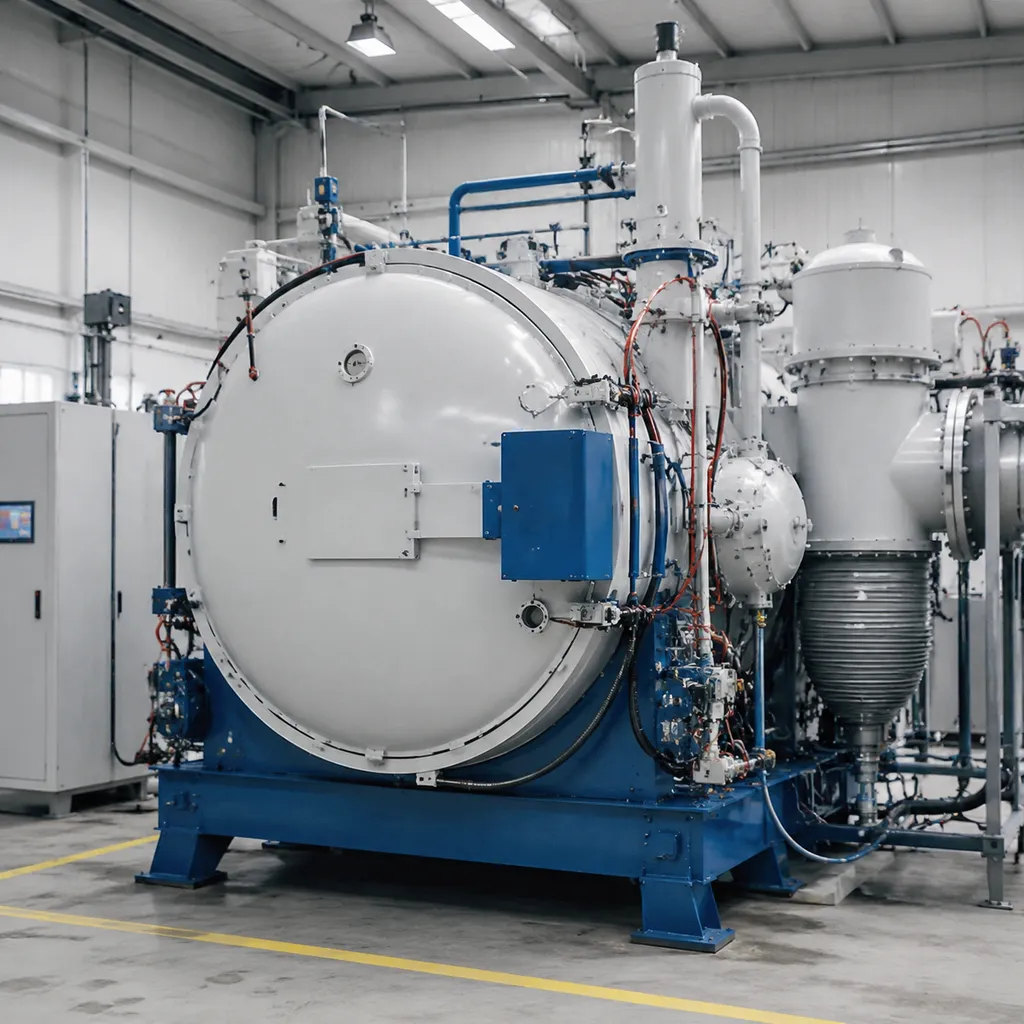
Formula details
Product Details
Overview
Technical Specifications for Batch Chamber Vacuum Aluminum Brazing Furnaces
Parameter Comparison Matrix
| Technical Parameter | Horizontal Batch Configuration | Vertical Universal Chamber Format |
|---|---|---|
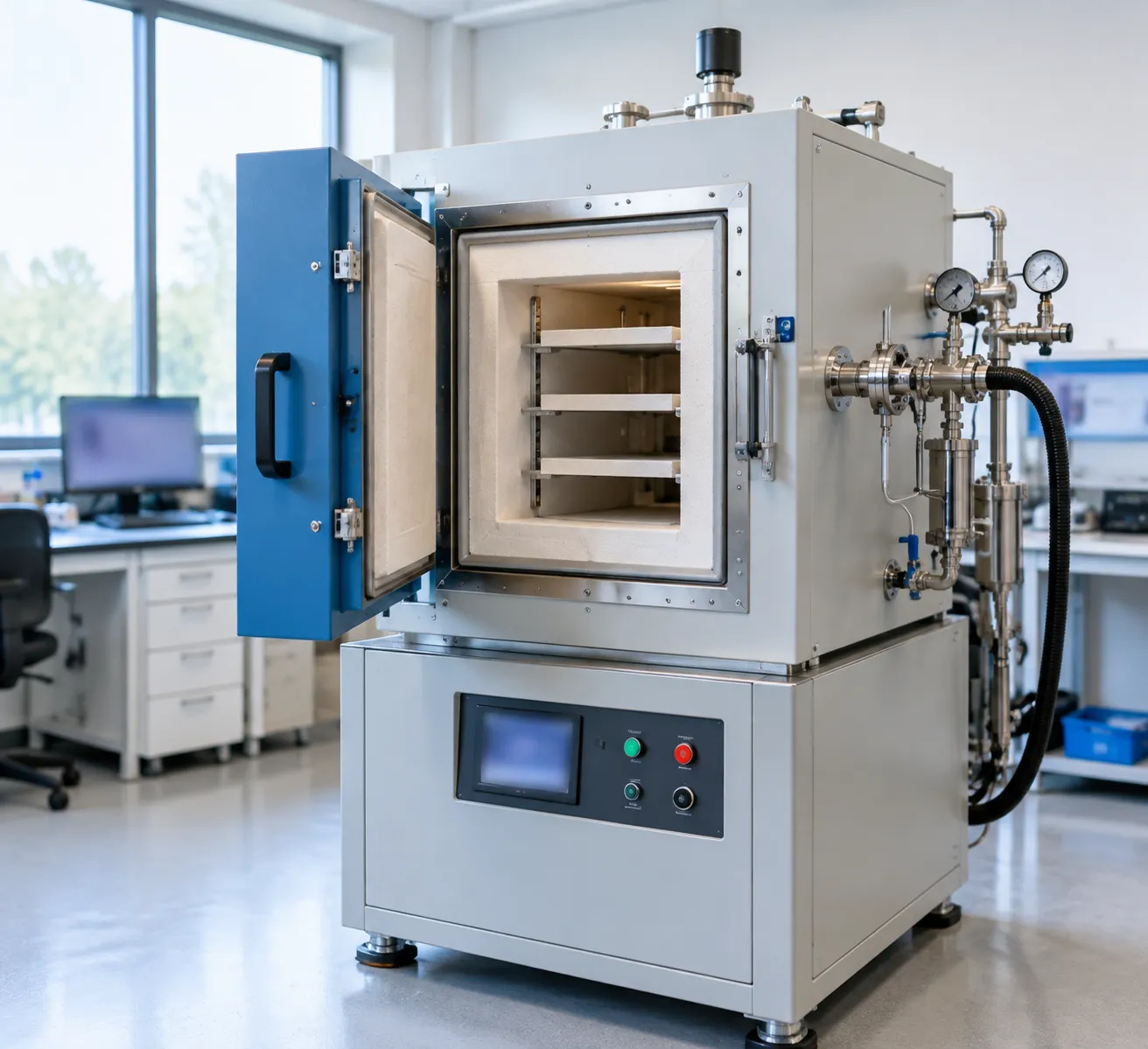
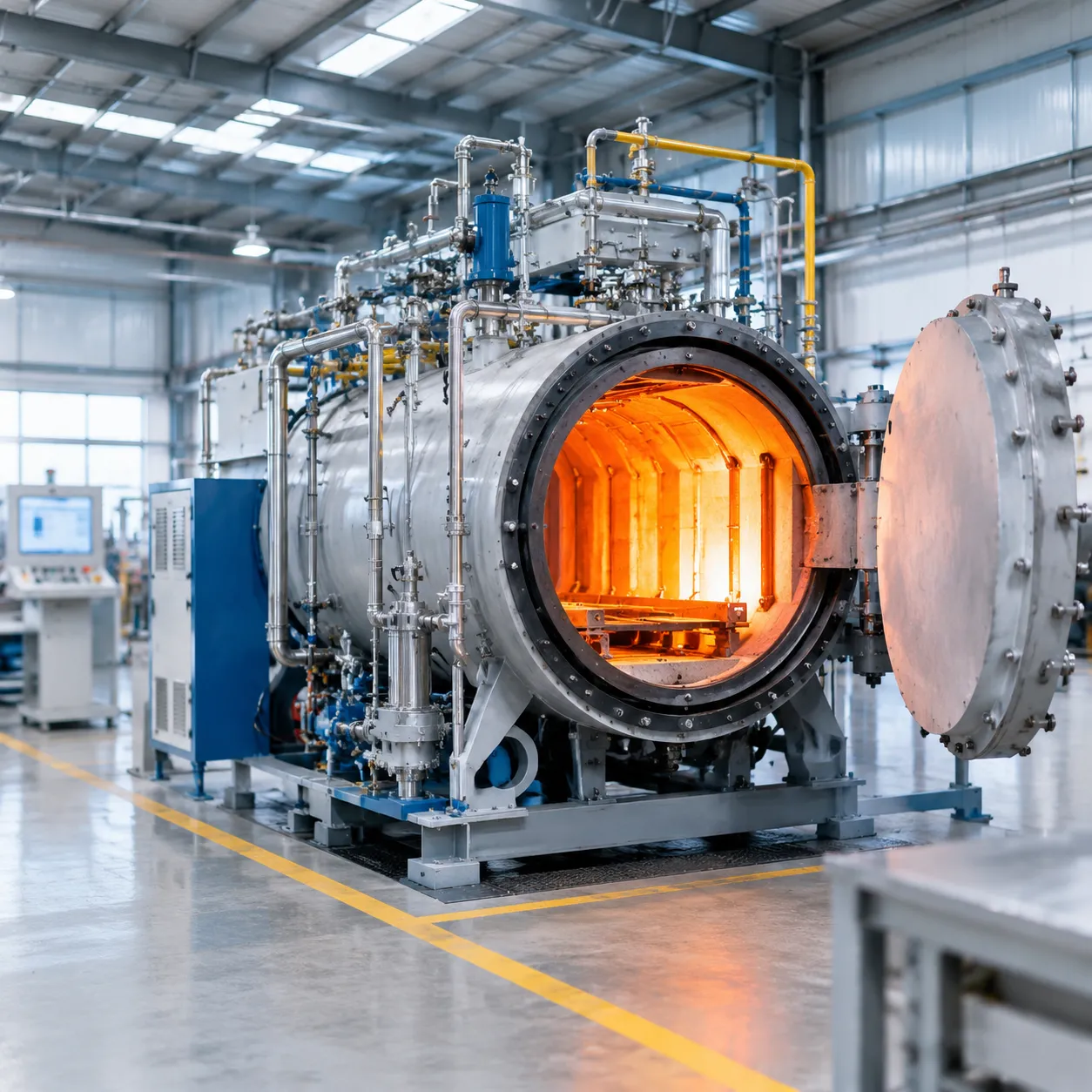
| Configuration | Front-loading batch chamber | Top-loading / Bottom-drop vertical chamber |
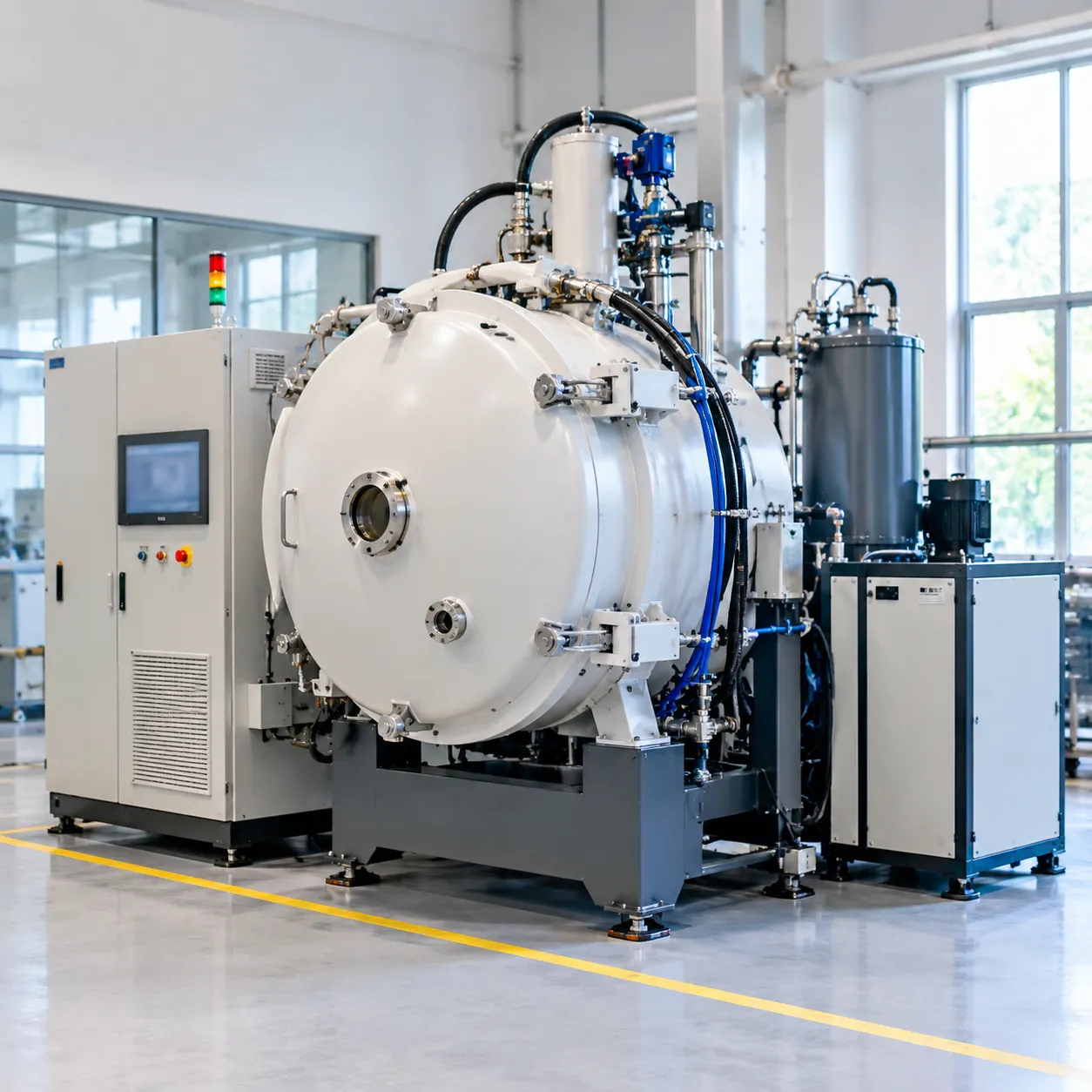
| Ultimate Vacuum Level | 10^-5 Pa (Diffusion pump stack) | 10^-5 Pa (Turbomolecular pumping stack) |
| Thermal Uniformity | ±1°C (Multi-zone PID control) | ±1°C (360-degree radiant heating) |
| Max Design Temperature | Up to 2400°C (Specialized alloy processing) | Up to 2400°C (Specialized alloy processing) |
| Hot Zone Material | All-Metallic, Molybdenum, Graphite | All-Metallic, Molybdenum, Tungsten |
| Atmosphere Control | UHV, Argon/Nitrogen purge (-60°C dew point) | UHV, Argon/Nitrogen purge (-60°C dew point) |
| Automation & Compliance | PLC + SCADA, HMI, ISO 9001, CE certified | PLC + SCADA, HMI, ISO 9001, CE certified |
Core Engineering Capabilities
-
- Fluxless Oxide Removal: Reaching an ultimate vacuum level of 10^-5 Pa breaks down surface oxides on aluminum alloys naturally, completely eliminating chemical fluxes and post-braze acid washing.
- Tight Thermal Field Control: Multi-zone PID heating loops maintain active temperature uniformity within ±1°C, eliminating thermal gradients across complex assemblies during critical eutectic phase transitions.
- Controlled Atmosphere Purging: Integrated mass flow controllers handle Ultra-High Vacuum (UHV), high-purity Argon, and Nitrogen gas purges down to a -60°C dew point for ultra-clean processing and rapid convection cooling.
- Full Batch Traceability: Industrial PLC and SCADA automation with touchscreen HMI platforms deliver real-time data logging, recipe management, and process verification certified to ISO 9001 and CE standards.
Thermal Engineering in Our Batch Chamber Vacuum Aluminum Brazing Furnace
We engineer our batch chamber vacuum aluminum brazing furnace systems to eliminate thermal gradients and deliver repeatable, leak-free braze joints across dense cold plates and complex aerospace assemblies.
| Engineering Feature | System Configuration | Process Benefit |
|---|---|---|
| Multi-Zone Heating | Independent multi-zone PID control with 360-degree radiant elements | Eliminates thermal gradients; ensures exact temperature uniformity during eutectic phase transitions |
| High-Vacuum Pumping Stack | Turbomolecular or diffusion pumps backed by mechanical roughing | Reaches vacuum levels down to 10^-5 Pa for oxide removal without flux |
| Magnesium Outgassing Control | Specialized condenser traps and vapor management systems | Prevents furnace fouling and pump contamination during 5xxx and 7xxx alloy processing |
| Atmosphere & Partial Pressure | Mass Flow Controllers (MFCs) with high-purity Argon/Nitrogen purge | Suppresses element volatilization and maintains clean chamber conditions down to a -60°C dew point |
| Rapid Convection Cooling | High-purity gas-to-water heat exchangers with directional cooling nozzles | Drastically reduces total cycle times via controlled rapid cooling |
Core Performance Capabilities
-
- Precision Thermal Distribution: We optimize heat transfer in a vacuum furnace using multi-zone heating architecture, preventing distortion across delicate aluminum heat exchangers.
- Fluxless Oxide Breakdown: High-vacuum pumping stacks remove residual oxygen, breaking down aluminum oxide films natively to eliminate post-braze chemical cleaning.
- Magnesium Trap Integration: Dedicated outgassing management traps metallic vapors generated when brazing magnesium-bearing aluminum alloys.
- Automated SCADA Control: Our universal chamber vacuum aluminum brazing furnace platform features industrial PLC automation with customizable multi-stage heating curves, real-time data logging, and remote diagnostic capabilities.
Industrial Applications & Compatible Aluminum Alloys
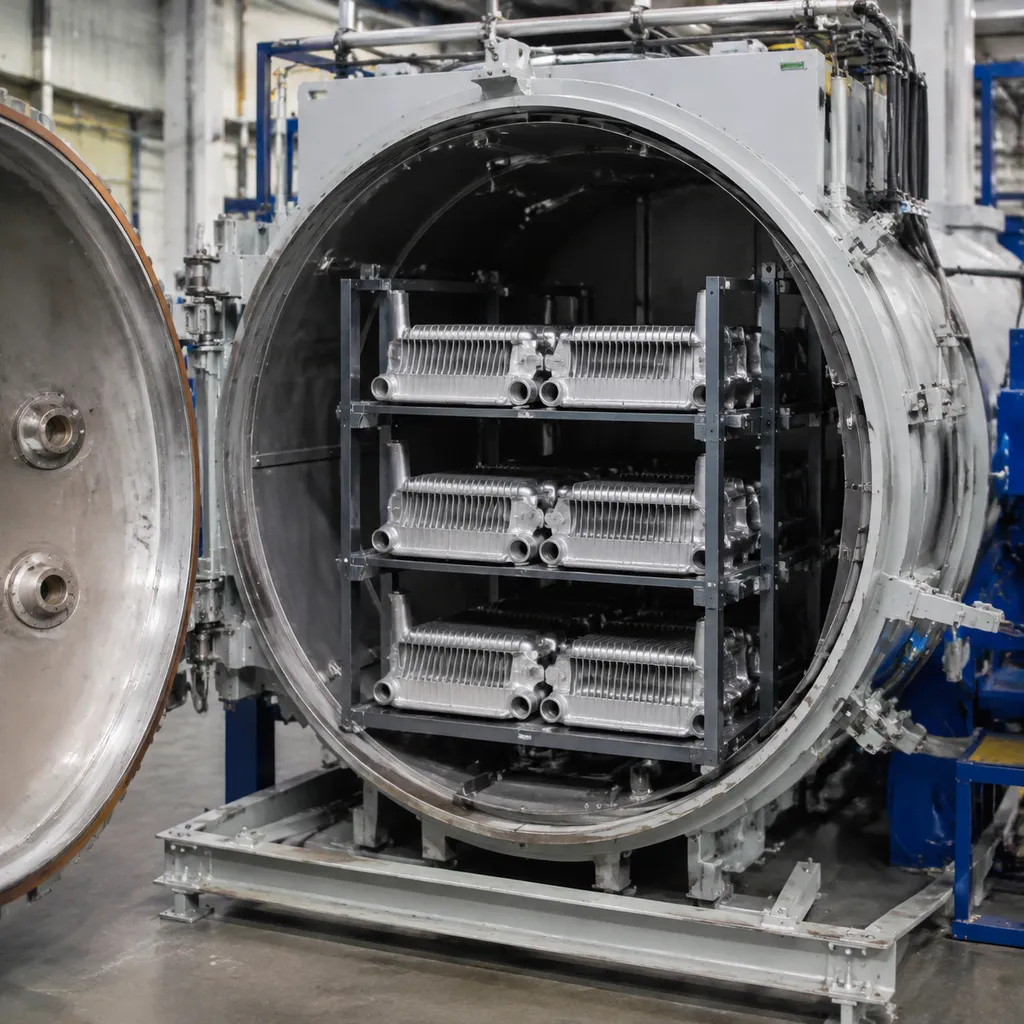
Core Industrial Applications
-
- Automotive & Electric Vehicles (EV): Precision thermal management units requiring 100% leak-tight integrity.
- EV battery cooling plates and cold plate units
- Power electronics heat sinks
- High-efficiency charge air coolers
- Aerospace & Defense: High-reliability structural and electronic cooling assemblies.
- High-frequency radar waveguides
- Hermetically sealed avionics chassis
- Environmental control system (ECS) heat exchangers
- Industrial HVAC & Energy Systems: Heavy-duty thermal transfer hardware.
- Compact aluminum plate-fin heat exchangers
- Industrial oil coolers and hydraulic chillers
Our equipment delivers repeatable thermal cycles suited for advanced industrial heat treatment applications, ensuring maximum joint strength across complex multi-layer assemblies.
Alloy Compatibility Matrix
We optimize heating profiles and vacuum levels for standard wrought alloys and clad brazing sheets:
| Alloy Series | Core Function | Primary Application Highlights |
|---|---|---|
| 3xxx Series (e.g., AA3003) | Core structural material for clad sheets | Heat exchanger fins, radiator tubes |
| 5xxx Series (e.g., AA5052) | High-strength corrosion-resistant structural alloy | Aerospace frames, marine oil coolers |
| 6xxx Series (e.g., AA6061, AA6063) | Heat-treatable structural alloy | EV cold plate assemblies, radar chassis |
Our industrial batch vacuum furnace controls keep tight thermal margins across the entire charge volume, protecting narrow melting ranges during eutectic phase transitions.
Bespoke Engineering & Capacity Customization Options
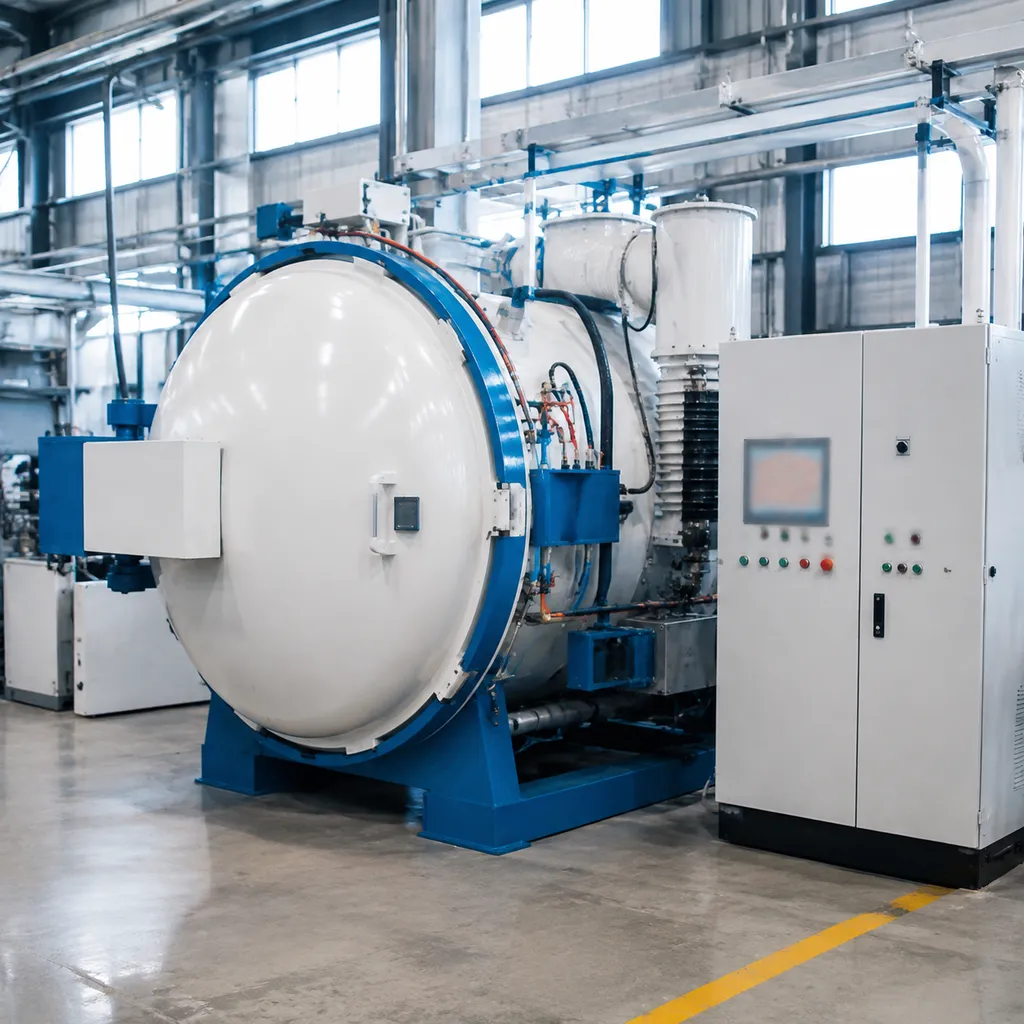
We engineer every batch chamber vacuum aluminum brazing furnace and universal chamber vacuum aluminum brazing furnace to match your facility footprint, part geometry, and target throughput.
Chamber Configurations: Horizontal vs. Vertical
| Feature | Horizontal Batch Chamber | Vertical Top/Bottom Loading |
|---|---|---|
| Primary Application | Standard heat exchangers, EV cold plates, flat assemblies | Tall aerospace components, cylindrical vessels, long structures |
| Loading Mechanism | Front-loading via motorized load tables or charge cars | Crane-assisted top loading or bottom-lifting hydraulic hearth |
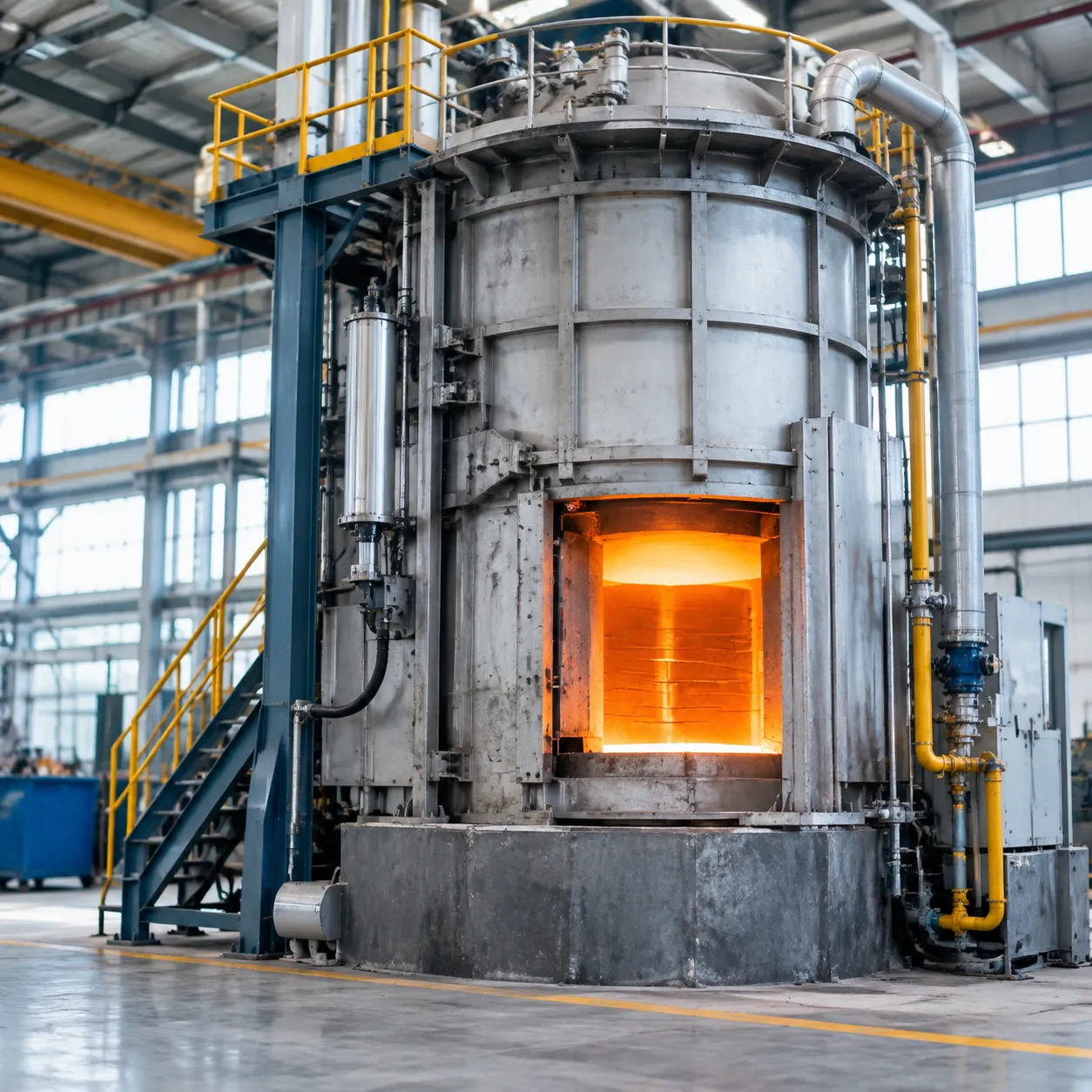
| Space Utilization | Standard factory layouts with open front aisle access | High-bay facilities maximizing vertical overhead clearance |
| Part Integrity | Balanced multi-zone heating for flat profile parts | Minimal gravity-induced distortion for suspended, vertical loads |
Material Handling & Custom Hot Zone Sizing
To streamline production flow and maintain high throughput, we customize the material handling and chamber dimensions for your process requirements:
-
- Automated Charge Systems: Implement semi-automated charge cars, motorized loading tables, or multi-furnace rail transfer networks for continuous loading cycles.
- Tailored Hot Zone Dimensions: We build usable hot zone volumes tailored to your specific part dimensions, thermal mass requirements, and daily production quotas.
- Modular Integration: Whether configuring a vertical unit or our heavy-duty china horizontal vacuum furnace footprint, our structural frames allow rapid site installation and straightforward future capacity expansions.
Quality Control & Global Support for Vacuum Brazing Equipment
We test and validate every batch chamber vacuum aluminum brazing furnace and universal chamber vacuum aluminum brazing furnace under simulated production conditions before dispatch. Our factory testing protocols and lifecycle support systems protect your investment and ensure rapid production ramp-up.
Validation & Operational Service Matrix
| Phase | Core Testing & Support Protocols | Execution Objective |
|---|---|---|
| Factory Acceptance Testing (FAT) | Multi-zone thermal profiling and high-sensitivity helium leak detection | Verifies temperature uniformity within ±1°C and vacuum integrity down to 10^-5 Pa |
| Turnkey Deployment | On-site assembly, utility hookups, and system integration | Delivers rapid site commissioning and seamless facility integration |
| Operator Training | Hands-on instruction for HMI programming, batch tracking, and maintenance | Ensures staff proficiency in process safety and custom recipe management |
| Lifecycle Management | Preventive maintenance programs, spare parts inventory, and 24/7 hotline | Minimizes unplanned downtime and extends hot zone service life |
Technical Assurance & Global Service Infrastructure
-
- Rigorous Factory Acceptance Testing (FAT): Before shipment, we conduct multi-point thermal field mapping and helium leak detector testing to verify strict atmosphere purity and thermal performance.
- Turnkey Installation & Integration: Our engineering teams oversee complete site commissioning, equipment calibration, and operator training through our global service network.
- 24/7 Technical Support: We provide continuous remote diagnostics, routine preventive maintenance schedules, and global spare parts dispatch via our after-sales support program.
Universal & Batch Chamber Vacuum Aluminum Brazing Furnace FAQs
What is the main operational difference between a batch chamber and a continuous vacuum aluminum brazing furnace?
A batch chamber vacuum aluminum brazing furnace processes discrete workloads within a single sealed vessel through customized heating, soaking, and cooling cycles. This makes it ideal for complex, high-precision assemblies, frequent profile changes, and variable load sizes. Continuous furnaces pass components through multi-zone vacuum chambers on a conveyor, making them better suited for high-volume, single-product manufacturing.
| Feature | Batch Chamber Furnace | Continuous Vacuum Furnace |
|---|---|---|
| Workload Flexibility | High (handles complex, varied part sizes) | Low (fixed throughput and geometry) |
| Cycle Customization | Complete recipe control per batch | Fixed thermal profile along line |
| Floor Footprint | Compact horizontal or vertical layout | Extended linear footprint |
| Maintenance | Single hot zone servicing | Complex multi-chamber servicing |
How does reaching a 10^-5 Pa vacuum level eliminate the need for flux and post-braze cleaning?
Operating at an ultra-high vacuum level down to 10^-5 Pa drastically reduces oxygen partial pressure inside our universal chamber vacuum aluminum brazing furnace. At this pressure, aluminum's native surface oxide layer ruptures during thermal expansion without re-oxidizing. The aluminum filler metal flows cleanly into joints via capillary action without chemical fluxes, eliminating post-braze flux residue, acid washing, and environmental wastewater treatment.
Which aluminum alloy series (3xxx, 5xxx, 6xxx) are compatible with fluxless vacuum brazing?
Our high vacuum chamber furnaces reliably process a wide spectrum of wrought aluminum alloys:
-
- 3xxx Series: Excellent core material compatibility for heat exchanger fins and fluid channels.
- 6xxx Series: Ideal for high-strength structural components like EV liquid cooling plates and aerospace manifolds, typically combined with 4xxx cladding.
- 5xxx Series: Fully compatible when equipped with our active magnesium outgassing management. Because magnesium volatilizes at high thermal levels, our systems utilize controlled partial-pressure inert gas purging to manage vapor deposits while maintaining joint integrity.
What thermal uniformity (±1°C) is required for high-integrity EV cold plate manufacturing?
EV cooling plates feature ultra-thin fluid channels with strict dimensional tolerances. Because aluminum core alloys melt just slightly above the Al-Si eutectic cladding melting point (~577°C), a tight thermal uniformity of ±1°C across multi-zone heating elements prevents local overheating, core burn-through, and unbrazed joints. This uniform temperature distribution ensures 100% leak-tight joint reliability.
How can buyers submit an RFQ with custom chamber dimensions and production targets?
We build every batch chamber vacuum aluminum brazing furnace to match your specific production capacity and facility footprint. Submit your request directly to our engineering team with the following parameters:
-
- Working Zone Dimensions: Required width, height, and depth (or diameter for vertical units).
- Workload Requirements: Gross load weight per batch and target cycles per day.
- Alloy Specifications: Base metal series, cladding types, and cooling speed requirements.