Formula details
Product Details
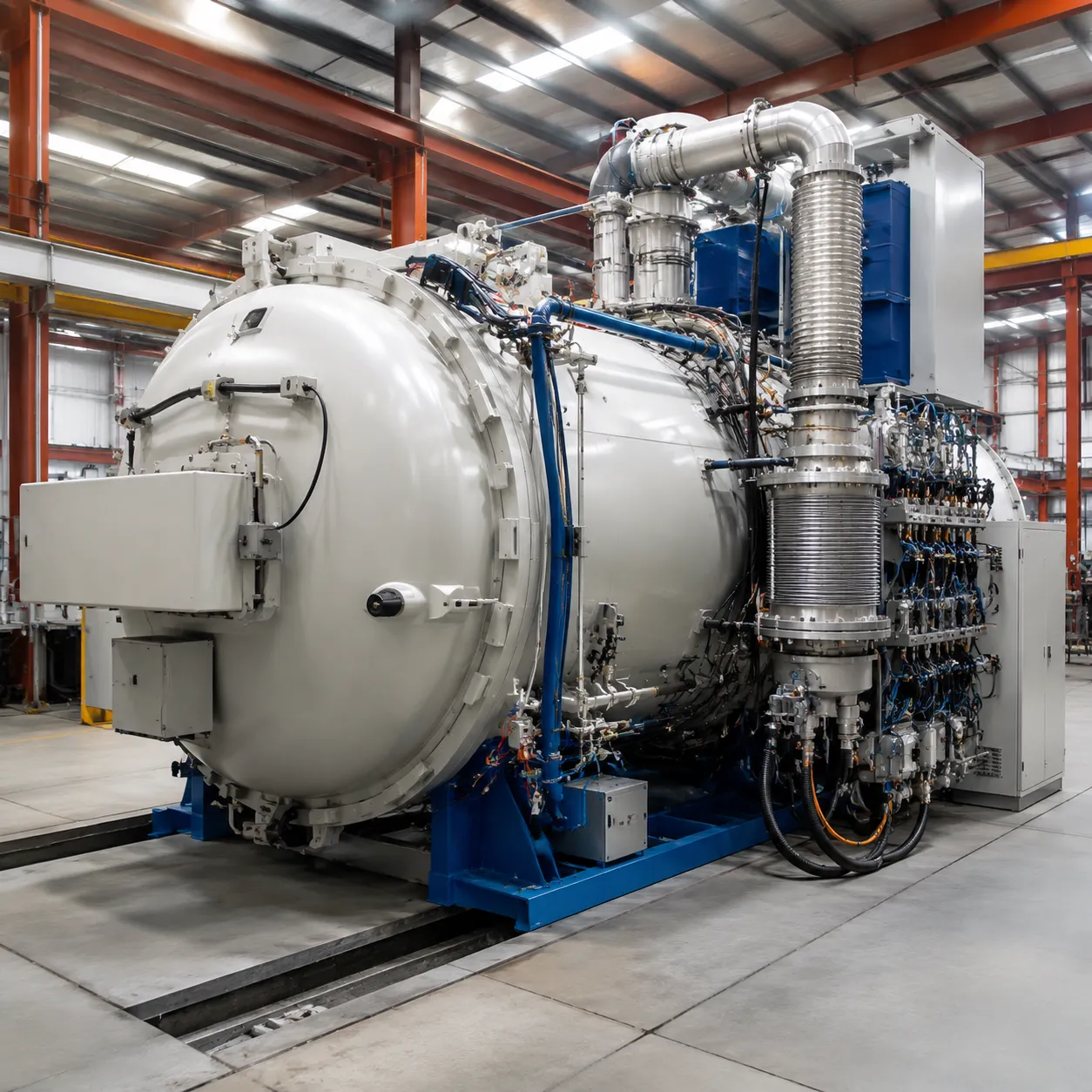
Overview
Thermal Processing Capabilities & Engineering Advantages
Core Engineering Advantages
-
- Zero-Oxidation High-Vacuum Environment: Complete elimination of surface contamination during high-temperature processing of solar absorber layers, silicon wafers, and high-purity structural alloys.
- Precision PID Thermal Field Control: Multi-zone heating element arrangements powered by Siemens and Eurotherm PLC architectures ensure tight temperature uniformity and repeatable thermal cycles.
- Optimized Thermal Insulation: High-efficiency multi-layer refractory ceramic fiber or all-metal thermal shielding options minimize heat loss and maximize energy savings.
Technical Performance Overview
| System Capability | Technical Feature | Operational Benefit |
|---|---|---|
| Atmospheric Purity | Ultra-clean high-vacuum chamber | Prevents oxidation and contamination on delicate solar substrates |
| Thermal Field Control | Independent multi-zone PID regulation | Maintains strict thermal uniformity across complex workpieces |
| Thermal Shielding | Refractory fiber or all-metal hot zone | Delivers fast thermal cycling and superior energy efficiency |
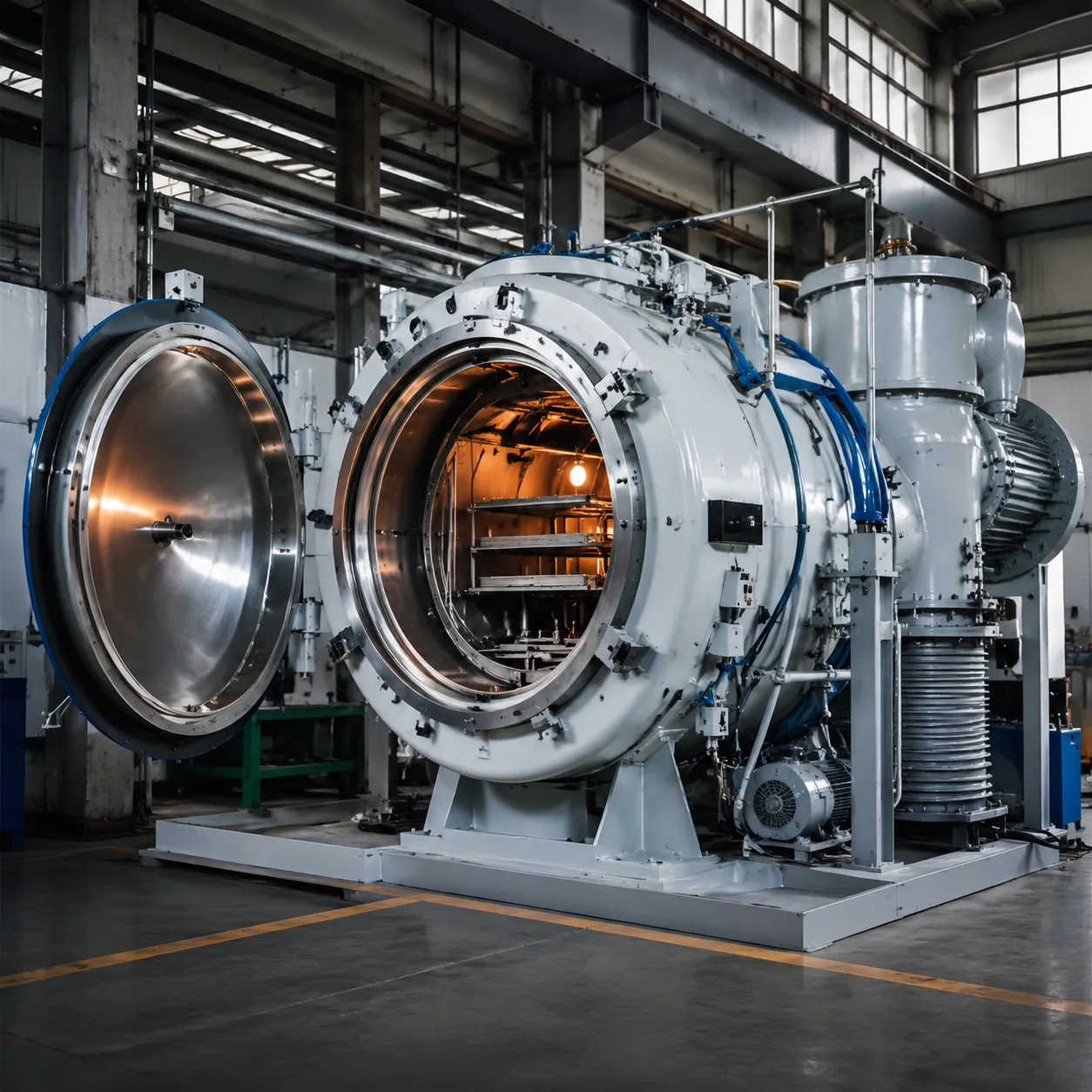
Solar Vacuum Furnace Technical Specifications
| Parameter | Specification & Capability |
|---|---|
| Max Operating Temperature | Up to 2400°C with scalable custom engineering |
| Ultimate Vacuum Pressure | Down to 10^-5 Pa via turbomolecular or diffusion pump systems |
| Thermal Uniformity | Within ±1°C via multi-zone independent PID calibration |
| Dew Point Control | Down to -60°C using integrated atmospheric purification systems |
| Load Capacity | 250 kg to 20 metric tons supported by heavy-duty hearth structures |
| Atmosphere Compatibility | Vacuum, Argon, Nitrogen, Hydrogen, and Forming Gas via automated MFC loops |
| Hot Zone Materials | High-purity Molybdenum, Tungsten, or Graphite options |
| Control System Architecture | Siemens / Eurotherm PLC HMI Touchscreen with full SCADA and real-time logging |
Core System Highlights
-
- Precision Thermal Field: Multi-zone independent PID calibration maintains tight thermal stability throughout the entire hot zone.
- Purity Control: Integrated purification systems maintain dew point levels down to -60°C for sensitive atmosphere processing.
- Heavy-Duty Hearth Sizing: Engineered to support heavy payloads from 250 kg up to 20 metric tons. Review our vacuum furnace cost and price guide by capacity to align load requirements with operational budget parameters.
- Advanced Automation: Integrated SCADA controls, real-time curve logging, and remote diagnostic capabilities ensure peak operational uptime for every high vacuum thermal chamber. Discover how these parameters enhance productivity in our guide to vacuum furnace applications uses and benefits explained.
Advanced Hot Zone & Heating Configuration Options
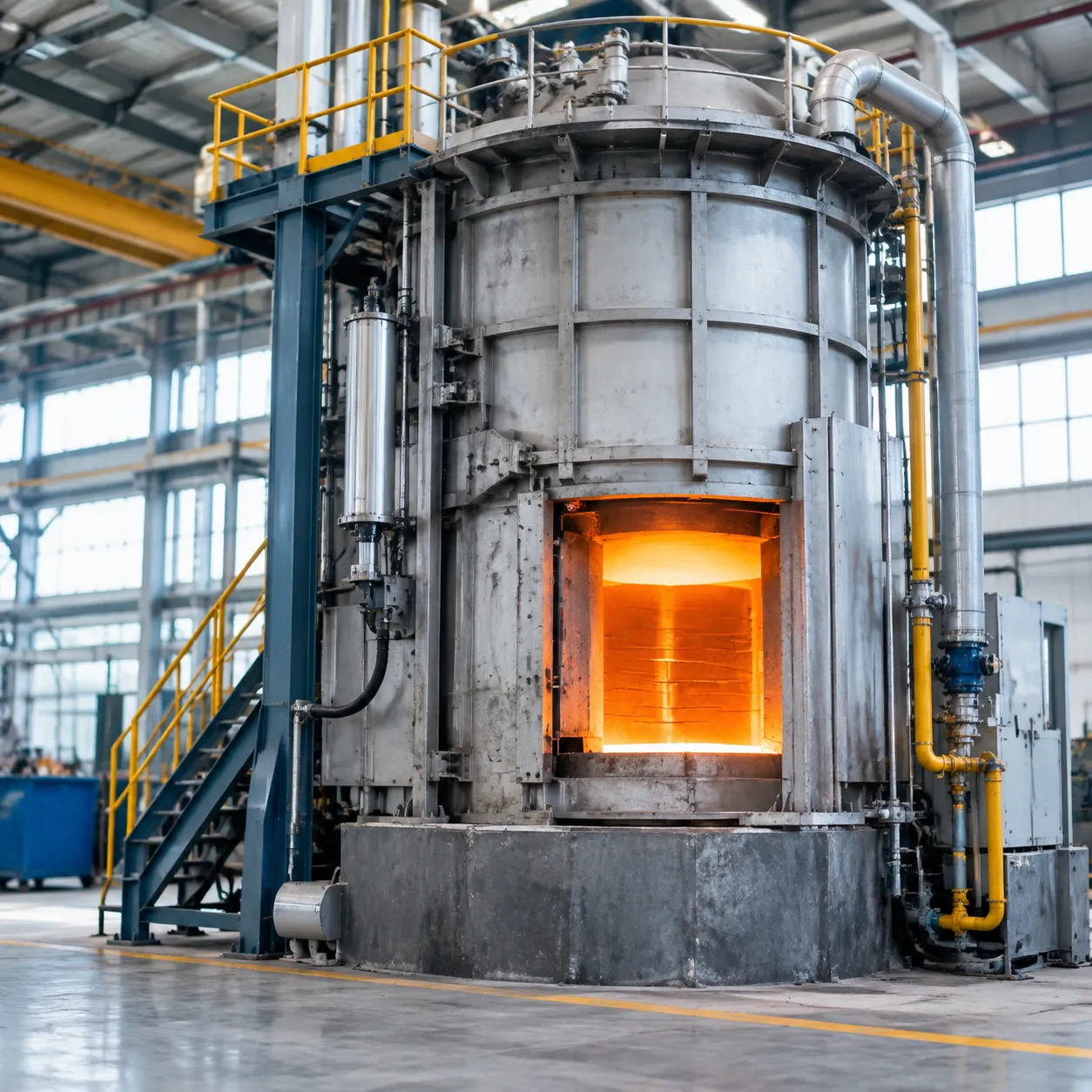
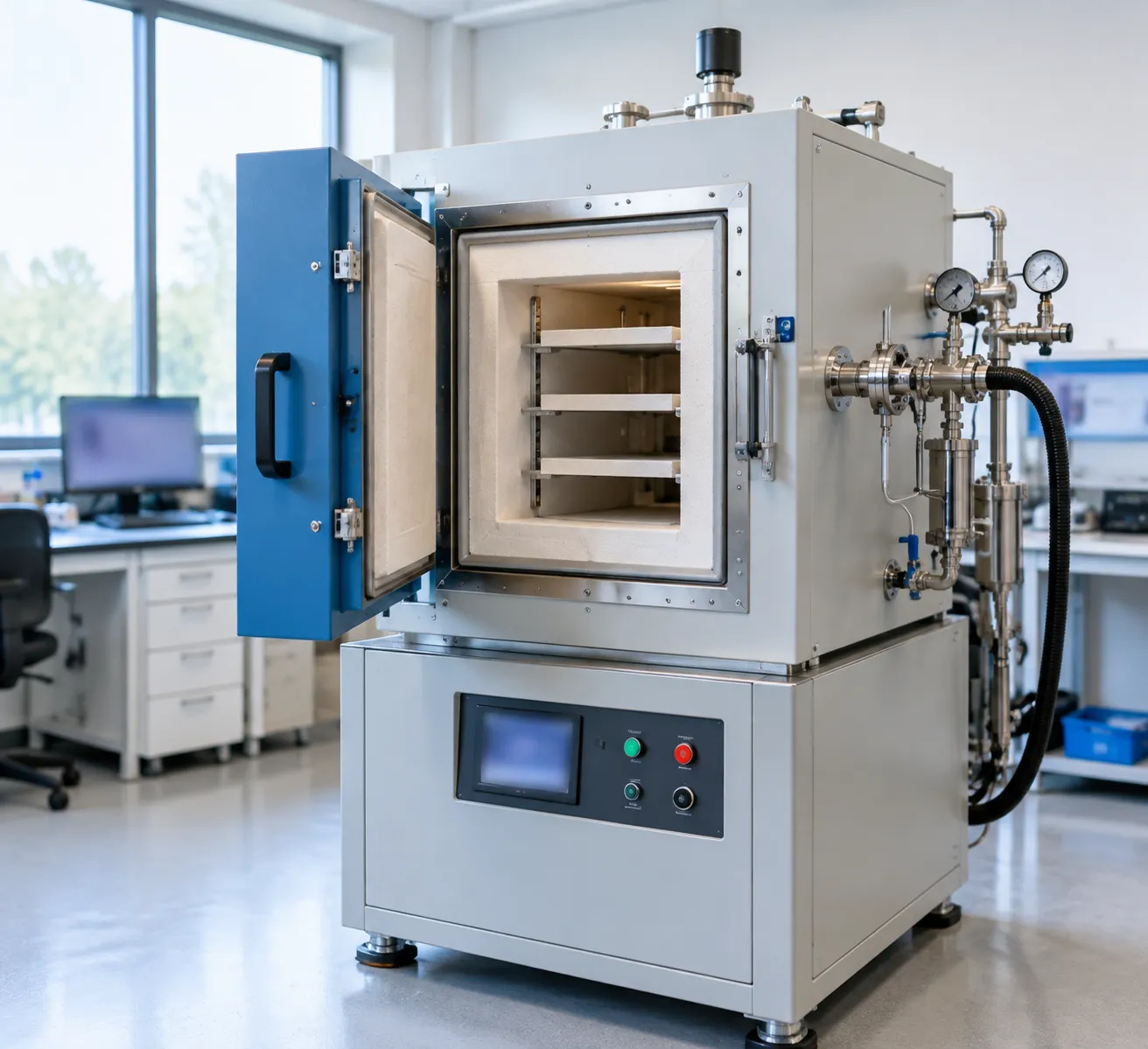
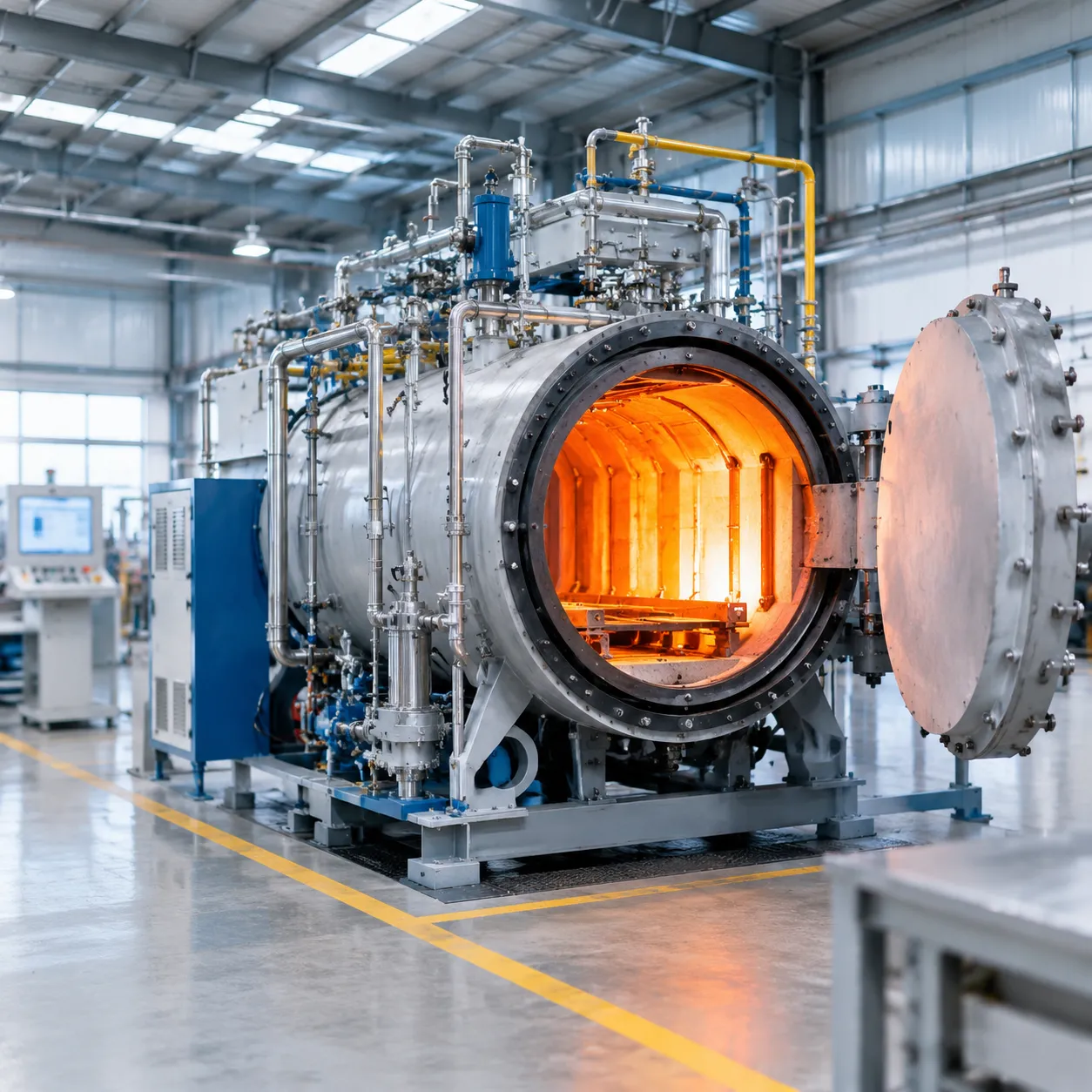
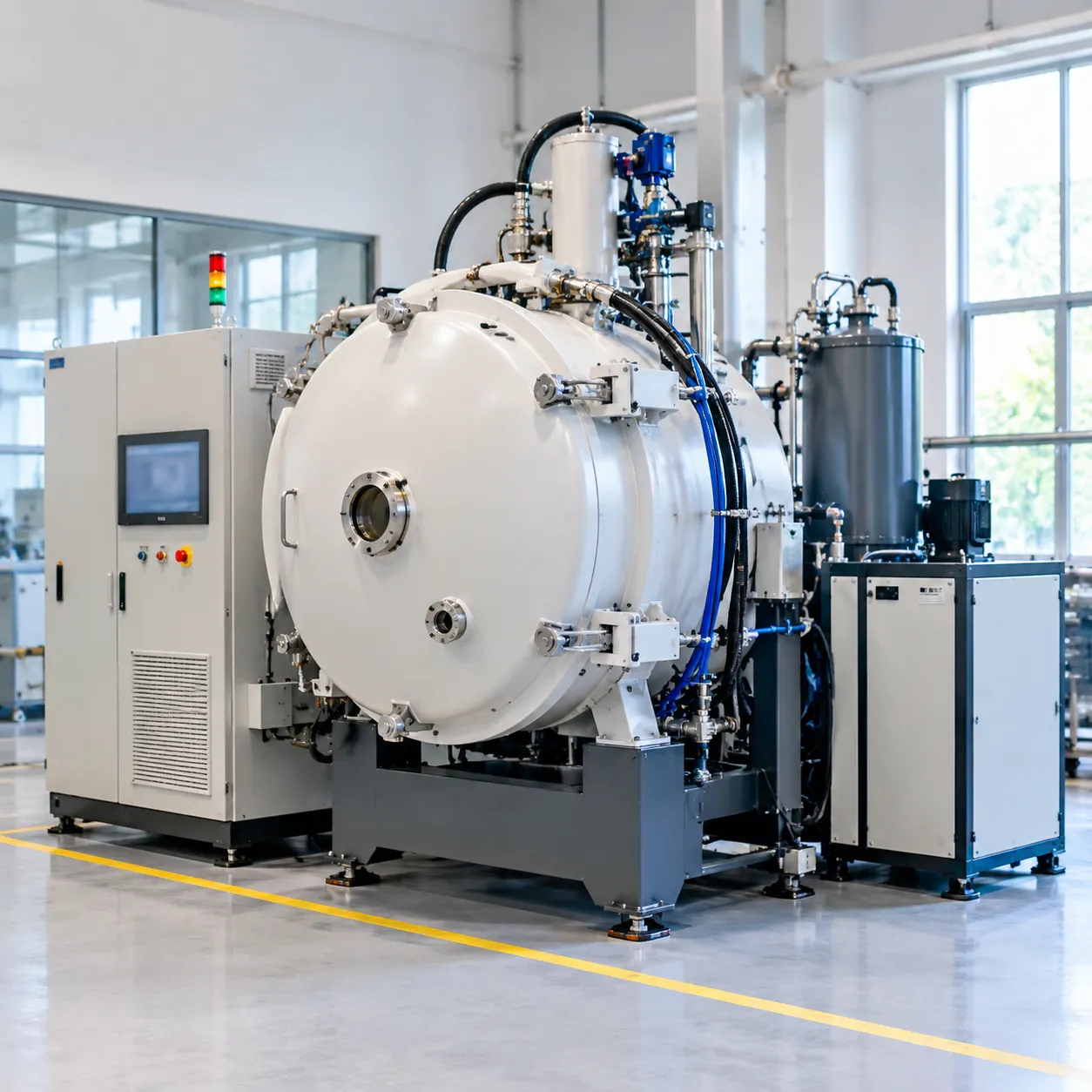
We design every solar vacuum furnace with modular hot zone configurations to match your specific purity requirements, heating rates, and target cycle times.
Hot Zone Comparison
| Feature | Graphite Hot Zone | All-Metal Hot Zone |
|---|---|---|
| Core Materials | High-density curved graphite elements | Molybdenum or Tungsten with refractory metal shielding |
| Key Advantage | Ultra-fast thermal cycles & high cost-efficiency | Completely carbon-free, non-contaminating processing environment |
| Target Application | General high-temperature processing & industrial batching | Photovoltaic silicon substrates & solar-grade advanced materials |
High-Pressure Inert Gas Quenching
Our forced gas quenching systems accelerate turnaround times while locking in precise material properties:
-
- High-Pressure Performance: Rapid cooling loops operate up to 20 Bar using high-purity Argon or Nitrogen.
- Uniform Heat Extraction: 360-degree nozzle arrays deliver targeted gas flow to eliminate thermal distortion across complex geometries.
- Cycle Optimization: Incorporates our specialized quick quench vacuum furnace cooling architecture to maximize daily throughput.
Specialized Applications & Material Compatibility
We build our solar vacuum furnace systems to deliver clean, repeatable thermal processing across demanding photovoltaic and metallurgy workflows.
Solar & Photovoltaic Thermal Processing
-
- Solar Absorber Coatings: Uniform thermal processing for high-efficiency solar thermal collectors and selective absorber layers.
- Silicon Substrates: Controlled heating cycles for high-purity silicon wafer preparation and crystal growth.
- Solar Collectors: Precision bonding and degassing for long-term outdoor durability.
Vacuum Metallurgy Operations
Our systems handle complex metallurgical cycles, integrating high-performance vacuum annealing furnace capabilities directly into your production line.
| Process | Core Function | Key Advantage |
|---|---|---|
| Vacuum Brazing | Flux-free joining of complex metal and ceramic assemblies | Clean, leak-tight joints with zero residue |
| Diffusion Bonding | Solid-state atom diffusion between similar or dissimilar metals | Full structural integrity at interface |
| Vacuum Sintering | High-density compacting via advanced vacuum sintering furnace routines | Superior microstructural purity |
| Stress Relieving | Thermal strain release for precision-machined parts | Prevents deformation during final assembly |
| Low Pressure Carburizing (LPC) | Precision surface hardening using targeted gas injection | Uniform case depth with minimal distortion |
Target Materials
-
- Titanium Alloys & Superalloys: High-strength structural parts for extreme environments.
- Refractory Metals: Tungsten, Molybdenum, and Tantalum processing.
- Technical Ceramics & Magnetic Alloys: Advanced technical ceramics and high-permeability magnetic shielding materials.
Compliance, Quality Assurance & Safety Features
We build every solar vacuum furnace to comply with the world’s strictest thermal accuracy, safety, and quality benchmarks. From photovoltaic substrate processing to advanced alloy thermal cycles, our equipment provides absolute process repeatability and total operator protection.
Thermal Accuracy & Quality Certification
Our units fully support AMS 2750 compliant furnace operations, maintaining tight pyrometry and temperature uniformity tolerances across all heating zones. Every build aligns with international quality certifications to ensure long-term reliability in demanding industrial environments.
| Standard / Compliance | Feature & Capability |
|---|---|
| AMS 2750 Standard | Precision pyrometry and calibrated sensor arrays for demanding industrial heat treatment |
| ISO 9001 Controls | Full manufacturing traceability and rigorous factory acceptance testing (FAT) |
| CE Compliance | Complete alignment with global electrical, mechanical, and safety regulations |
Integrated Safety Systems
To protect your facility and secure uptime, each high vacuum heat treating furnace incorporates automated, multi-tiered safety interlocks:
-
- Over-Temperature Protection: Automated dual-channel sensors trigger immediate thermal shutdown during high-temperature anomalies.
- Vacuum Loss Interlocks: Automated fast-acting isolation valves activate instantly upon pressure loss.
- Cooling Water Monitoring: Continuous real-time tracking of water flow, temperature, and pressure across all cooling jacket loops.
- Explosion-Proof Purge Loops: Automated inert gas purging systems engineered for safe handling during hydrogen and forming gas runs.
Custom OEM/ODM Solar Vacuum Furnace Solutions & RFQ
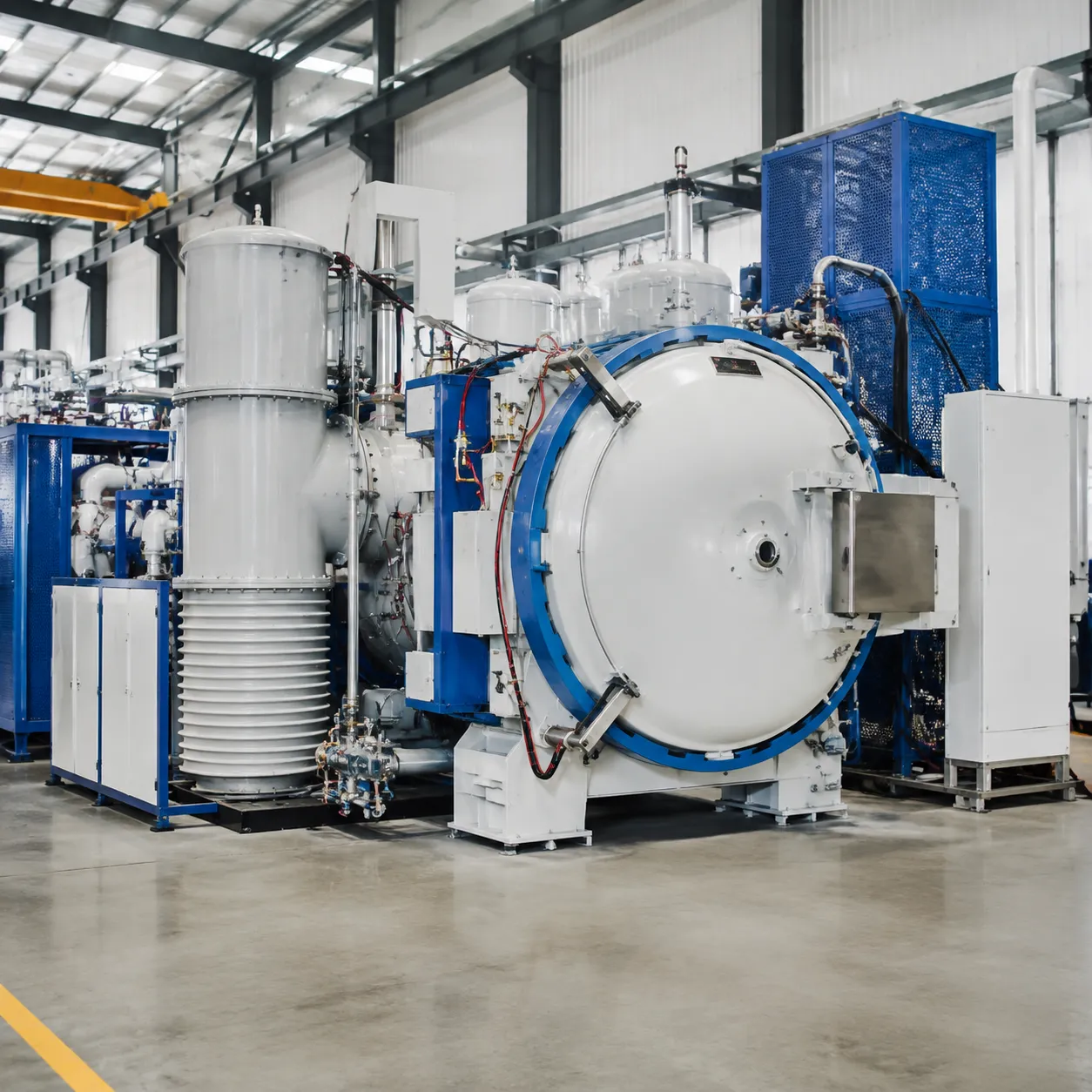
We supply complete turnkey solar vacuum furnace systems built around your specific thermal processing needs. Through our advanced design and engineering services, we deliver fully tailored high vacuum thermal chamber setups that integrate directly into your production flow.
Bespoke System Specifications
| Engineering Element | Customization Options |
|---|---|
| Chamber Dimensions | Custom work zones with horizontal or vertical top/bottom loading configurations |
| Pumping Systems | Integrated dual-stage mechanical, Roots, diffusion, or turbomolecular pump skids |
| Material Handling | Automated loading mechanisms and reinforced heavy-duty hearth structures |
| Atmosphere Control | Multi-channel automated MFC loops for high-purity argon, nitrogen, and hydrogen |
Global Field Service & Support
We support every industrial batch vacuum furnace with comprehensive worldwide field services to ensure high availability and long-term reliability:
-
- 24/7 Technical Support: Direct access to experienced engineers for rapid remote diagnostics.
- On-Site Commissioning: Full turn-key installation, thermal field calibration, and staff training.
- Spare Parts & Maintenance: Lifetime maintenance guidance paired with fast international spare parts delivery.
- System Integration: End-to-end setup backed by turnkey process integration to streamline site installation.
Direct Engineering RFQ & Technical Consultation
Get a detailed custom proposal designed specifically for your facility. Our engineering team prepares precise technical offers based on your target chamber size, maximum operating temperature ceiling, target vacuum levels, and required process atmospheres.
Solar Vacuum Furnace FAQs
What is a solar vacuum furnace and how does it support photovoltaic material processing?
A solar vacuum furnace is a high-vacuum thermal processing system engineered to eliminate oxidation and atmospheric contamination during the manufacturing of photovoltaic absorber layers, silicon wafers, and solar thermal collectors. By maintaining an ultra-clean environment, we ensure superior material purity, precise crystalline growth, and maximum energy conversion efficiency for solar-grade substrates.
What temperature limits and ultimate vacuum thresholds can standard and custom units achieve?
Our high-vacuum thermal chambers deliver exact environmental control tailored to your production demands:
| Performance Parameter | Standard Specification | Custom OEM Engineering |
|---|---|---|
| Max Operating Temperature | Up to 1800°C | Up to 2400°C |
| Ultimate Vacuum Level | 10⁻² Pa (Mechanical Pump) | 10⁻⁵ Pa (Turbomolecular/Diffusion) |
| Thermal Uniformity | ±3°C | ±1°C |
| Purified Dew Point | -40°C | Down to -60°C |
How do I choose between a graphite hot zone and an all-metal molybdenum/tungsten hot zone?
Choosing the right heating element and insulation package depends directly on process purity requirements:
-
- Graphite Hot Zone: Excellent thermal shock resistance, rapid heating rates, and lower initial costs. Best for general vacuum sintering, low-pressure carburizing, and robust industrial heat treating.
- All-Metal Hot Zone (Molybdenum/Tungsten): Delivers a completely clean, carbon-free vacuum environment. Essential for high-purity solar absorber coatings, semiconductor substrates, and reactive metals. Review our detailed vacuum furnace guide for help matching hot zones to specific material chemistries.
How does high-pressure gas quenching work during vacuum heat treatment?
High-pressure gas quenching uses high-purity inert gases (Argon or Nitrogen) pressurized up to 20 Bar to rapidly cool workpieces after the heating phase. Automated directional nozzles force gas uniformly across the charge, achieving desired metallurgical hardness and grain refinement without the distortion, residue, or oil disposal issues of liquid quenching. For a deeper breakdown of thermal dynamics, explore how heat transfer in a vacuum furnace explained affects cooling efficiency.
What standards govern pyrometry compliance and thermal accuracy in industrial vacuum furnaces?
Our systems align with AMS 2750 pyrometry specifications, governing System Accuracy Tests (SAT), Temperature Uniformity Surveys (TUS), and instrument calibration. This guarantees total process repeatability and full traceability for aerospace, solar metallurgy, and advanced ceramic production.