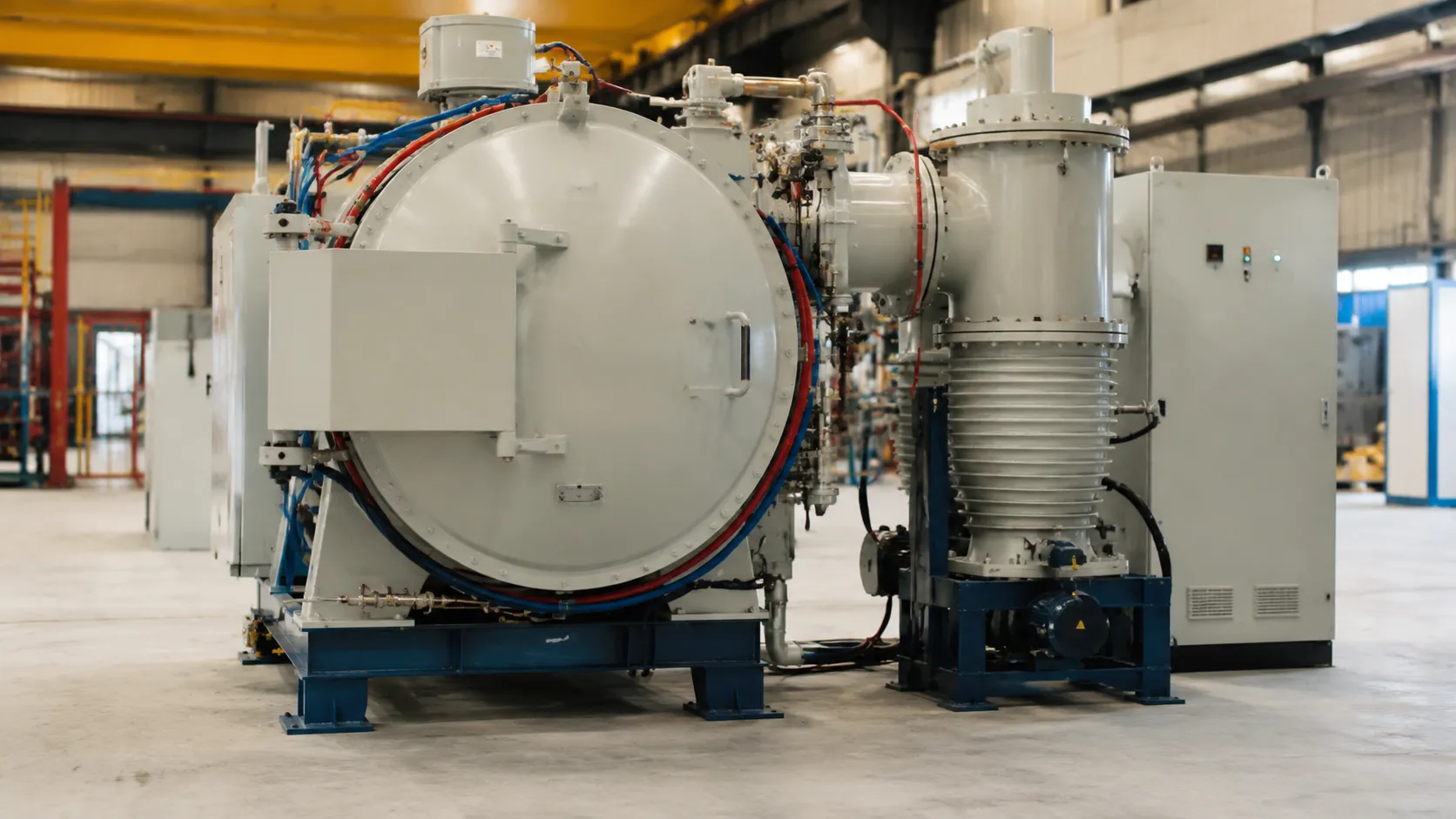
Formula details
Product Details
Overview
Technical Performance Capabilities & Operating Parameters
Key Operational Specifications
| Parameter | Standard Range / Specification | Maximum Capability | System Architecture & Compliance |
|---|---|---|---|
| Operating Temperature | Up to 1350°C (Hardening & Heat Treatment) | Up to 2400°C (Ultra-High Temp) | Multi-zone PID control system |
| Thermal Field Uniformity | ±1°C across active workzones | Exceeds strict AMS 2750 specs | Multi-zone thermal field tuning |
| Ultimate Vacuum Level | 6.6 x 10^-3 Pa (10^-5 Pa class) | Deep high-vacuum baseline | Diffusion or turbomolecular pump skids |
| Roughing Vacuum Pressure | 6.6 x 10^-1 Pa | Rapid evacuation cycle | Rotary vane & Roots blower systems |
| Gas Quenching Pressure | Variable 2 to 10 bar | Up to 20 bar (HPGQ) | 360-degree high-velocity gas nozzles |
Core Engineering Capabilities
Our high-performance single chamber vacuum furnace designs integrate advanced subsystem controls to optimize every processing batch:
-
- Extreme Thermal Capabilities: Standard operation covers up to 1350°C for bright hardening, annealing, and brazing. Custom high-temperature designs reach 2400°C for specialized sintering and refractory material processing.
- AMS 2750 Pyrometry Compliance: Multi-zone PID loops continuously balance heating elements to maintain tight ±1°C thermal field uniformity, ensuring repeatable metallurgical results across the entire load.
- Deep Vacuum Performance: Integrated multi-stage diffusion or turbomolecular pumping skids pull ultimate vacuum levels down to 10^-5 Pa (6.6 x 10^-3 Pa), effectively eliminating surface contamination, decarburization, and discoloration.
- 20-Bar High-Pressure Gas Quenching (HPGQ): Pressurized Nitrogen ($N_2$), Argon ($Ar$), or Helium ($He$) delivered through 360-degree surround-nozzles drives rapid, uniform core cooling to achieve target hardness with minimal part distortion.
System Architecture & Subsystem Engineering
We engineer our single chamber vacuum furnace architecture around heavy-duty thermal processing needs, combining rugged mechanical design with precise atmospheric control.
Hot Zone Options & Thermal Insulation
Choosing the right thermal insulation ensures optimum energy efficiency and material compatibility for your workload.
| Feature | Graphite Hot Zone | All-Metal Reflective Shield |
|---|---|---|
| Heating Elements | Isostatic high-purity graphite elements | Molybdenum, tungsten, or tantalum elements |
| Insulation Spec | Rigid graphite felt insulation board | Multi-layer molybdenum and stainless steel radiation shields |
| Primary Benefits | Exceptional durability, low power consumption, cost-effective | Zero carbon pickup, ultra-clean processing environment |
| Best Used For | Tool steels, die steels, general industrial hardening | Aerospace components, medical devices, cleanroom processing |
Multi-Stage Vacuum Pumping Skids
Our integrated pumping systems rapidly achieve deep operating vacuum levels while protecting parts from high-temperature oxidation:
-
- Roughing & Backing Units: Heavy-duty rotary vane pumps paired with Roots blowers for rapid initial pump-down.
- High-Vacuum Systems: High-efficiency oil diffusion or turbomolecular pumps delivering ultimate vacuum pressures down to 10^-5 Pa.
- Automated Isolation Valves: High-speed pneumatic valves ensure seamless stage transitions and prevent oil backstreaming during cooling cycles.
Atmosphere Management & Gas Controls
Maintaining absolute gas purity during partial-pressure operations and backfilling is vital for superior surface finishes in our high-performance heat treating systems.
-
- Digital Mass Flow Controllers (MFCs): Precision gas dosing for stable inert gas backfilling (Argon, Nitrogen) and partial-pressure processing.
- Dew Point Tracking: Continuous gas quality monitoring capable of reading dew points down to -60°C to stop intergranular oxidation.
Industrial Automation & PLC Control
We integrate industry-standard Siemens or Eurotherm PLC systems to provide complete digital control over every thermal batch:
-
- Touchscreen HMI & SCADA: Simple touch interface featuring real-time temperature curve logging and full factory network connectivity.
- Recipe Optimization: Store and execute complex multi-step heating, dwell, and high-pressure gas cooling cycles automatically.
- Smart Diagnostics: Automated fault detection and continuous safety interlocks protect both the operator and the hot zone.
Key Metallurgical Applications
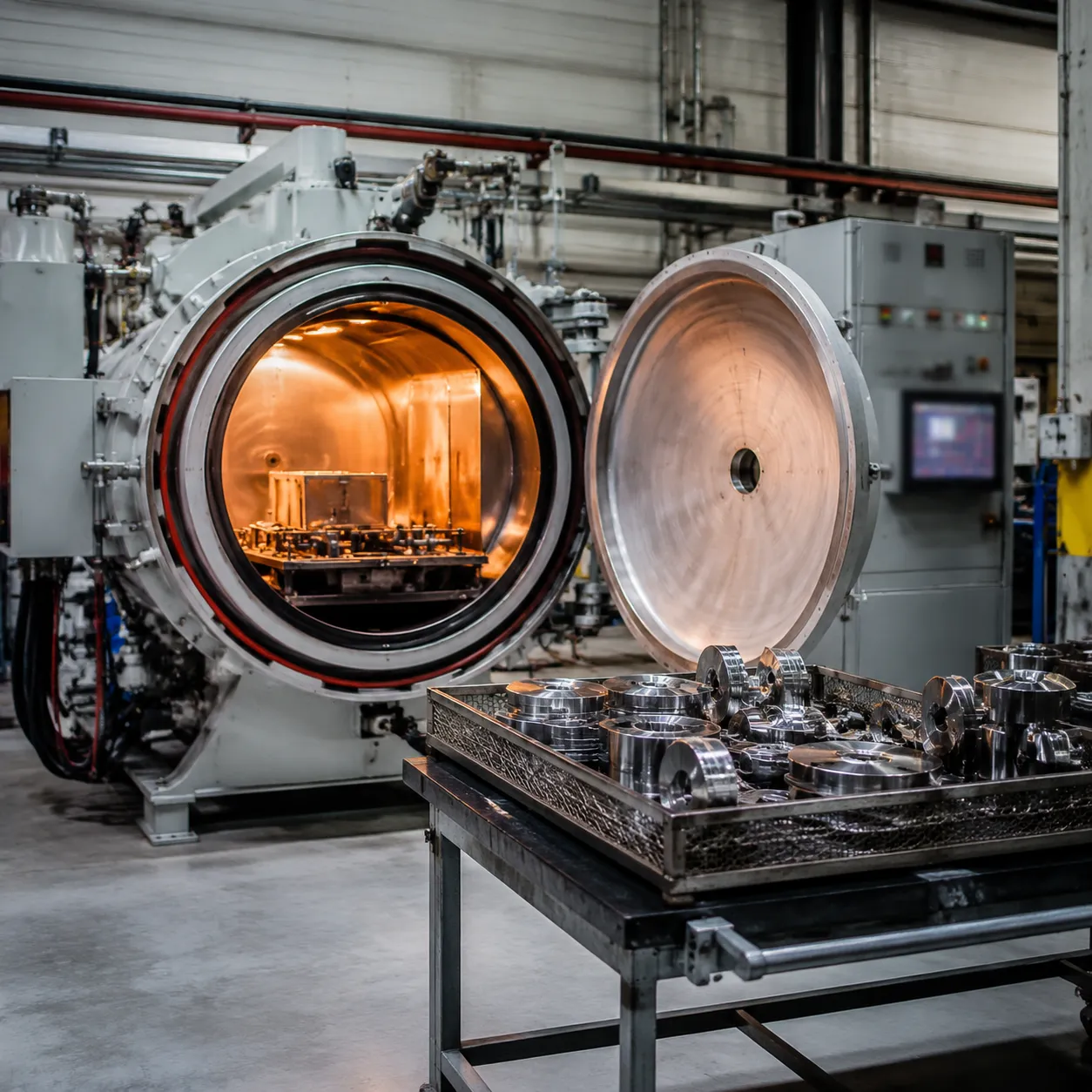
Vacuum Hardening & Tempering
-
- Target Materials: High-speed tool steels (M2, M42), die steels (D2, H13), and structural alloy steels.
- Core Benefit: Delivers bright, scale-free parts with tight dimensional control through uniform heating and high-velocity gas cooling.
Vacuum Brazing
-
- Target Materials: Stainless steels, nickel-based superalloys, and copper-to-steel assemblies.
- Core Benefit: Produces high-strength, fluxless metal joints without chemical post-cleaning. Our setups easily adapt to complex requirements like nickel brazing in vacuum furnaces to secure high-integrity metallurgical bonds.
Powder Metallurgy & MIM Sintering
-
- Target Materials: Metal injection molded (MIM) parts, sintered structural steels, and titanium components.
- Core Benefit: Integrates single-chamber binder burnout and high-density sintering into one continuous cycle, maximizing part density and tensile strength.
Bright Annealing & Stress Relieving
-
- Target Materials: Reactive metals, soft magnetic alloys, and precision electronic parts.
- Core Benefit: Relieves residual stresses and restores material ductility under ultimate vacuum levels down to 6.6 × 10^-3 Pa, leaving components completely clean and bright.
For a broader breakdown of how these thermal processes reduce cycle times and operational costs, see our overview on vacuum furnace applications and benefits.
Operational Advantages: Single-Chamber vs. Multi-Chamber Architecture
When evaluating furnace architecture for industrial production, we look closely at real estate, capital efficiency, and process versatility. While multi-chamber systems fit continuous, fixed-recipe runs, a single chamber vacuum furnace offers superior agility and lower operational risk for high-mix batch processing.
Floor Space & Capital Investment
-
- Lower CapEx: Single-chamber units require a fraction of the initial capital outlay compared to multi-chamber setups, drastically shortening equipment payback periods.
- Compact Footprint: Eliminating intermediate vacuum locks and internal transfer aisles saves critical floor space in modern manufacturing plants.
- Simplified Maintenance: Fewer seals, isolation valves, and drive components mean reduced downtime and lower routine servicing costs.
Process Flexibility
-
- Batch-Specific Recipes: Every workload can run on a unique thermal profile. We can adjust ramp rates, dwell times, vacuum pressure, and cooling velocity from one batch to the next.
- Optimized Thermal Control: Understanding the dynamics of heat transfer in a vacuum furnace allows operators to perform hardening, annealing, or brazing in consecutive cycles without hardware changes.
- Diverse Metallurgical Capability: Handles varying alloy types, geometries, and load weights without compromising thermal uniformity.
Reduced Handling & Contamination Risk
-
- Static Workpiece Processing: Parts stay stationary inside the hot zone from initial evacuation through high-pressure gas quenching, eliminating mechanical transfer failures and part drops.
- Zero Cross-Contamination: Avoids moving hot components through cold intermediate chambers, preventing oil backstreaming and oxidation issues.
- Pristine Surface Quality: Specialized designs like our batch chamber vacuum aluminum brazing furnace leverage this single-zone isolation to yield clean, oxide-free joints without flux.
| Architecture Feature | Single Chamber Vacuum Furnace | Multi-Chamber System |
|---|---|---|
| Capital Investment | Low to Moderate | High |
| Floor Space Required | Compact | Large |
| Recipe Agility | High (Instant batch adjustments) | Low (Fixed for mass production) |
| Mechanical Transfer Risk | Zero (Static workload) | Moderate to High (Internal drives) |
| Maintenance Complexity | Low | High |
Single Chamber Vacuum Furnace Model Specifications
We design every single chamber vacuum furnace to match specific plant throughput and loading requirements, providing standard batch payload capacities from 50 kg lab units up to 4,000 kg heavy industrial systems.
| Model Series | Payload Capacity | Standard Workzone Dimensions | Loading Orientation | Primary Use Case |
|---|---|---|---|---|
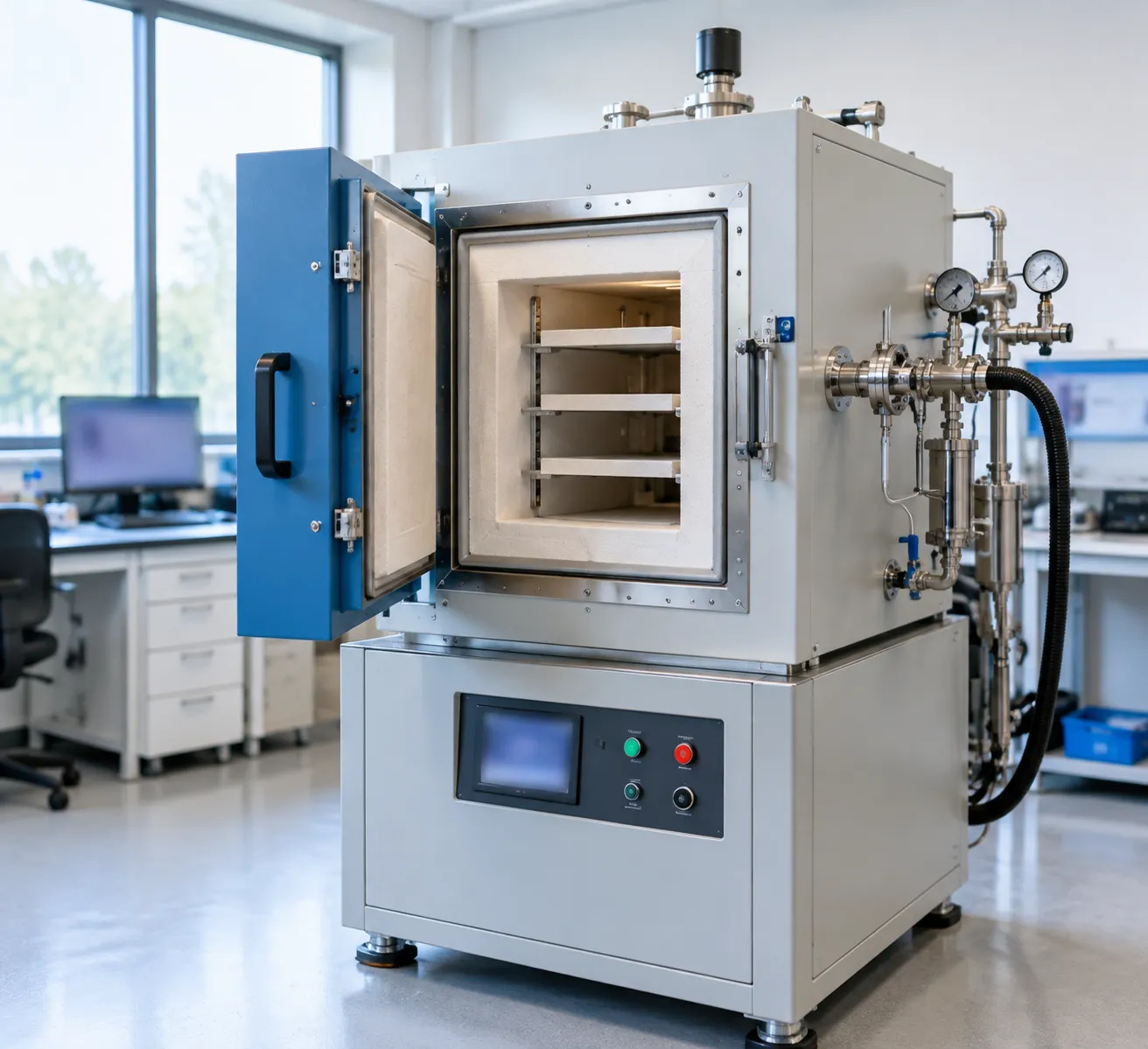
| VF-Lab 50 | 50 kg | 300 × 300 × 450 mm | Horizontal | R&D, prototype batches, medical implants |
| VF-Batch 300 | 300 kg | 450 × 450 × 600 mm | Horizontal | Tool & die hardening, small component batches |
| VF-Batch 600 | 600 kg | 600 × 600 × 900 mm | Horizontal / Vertical | Commercial heat treating, gears, automotive parts |
| VF-Batch 1200 | 1,200 kg | 800 × 800 × 1,200 mm | Horizontal / Vertical | Aerospace components, large mold dies |
| VF-Heavy 4000 | 4,000 kg | 1,200 × 1,200 × 1,800 mm | Horizontal / Vertical | Heavy industrial batch heat treating |
Workzone Loading & Geometry Options
-
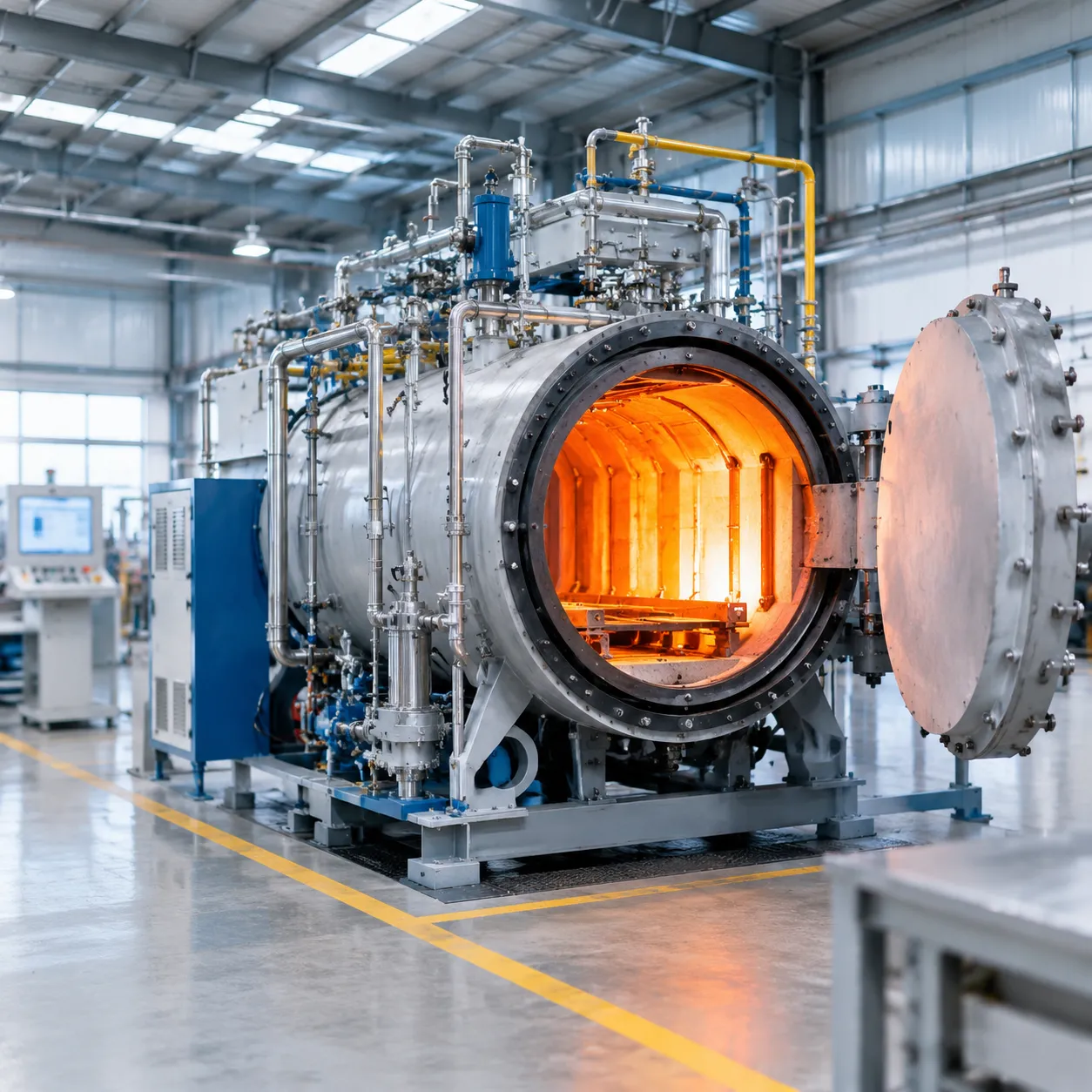
- Horizontal Configurations: Ideal for general batch heat treatment, tool steels, and standard tray loading. For flexible production setups, check our engineering specs for horizontal vacuum furnace models configured for high-volume commercial processing.
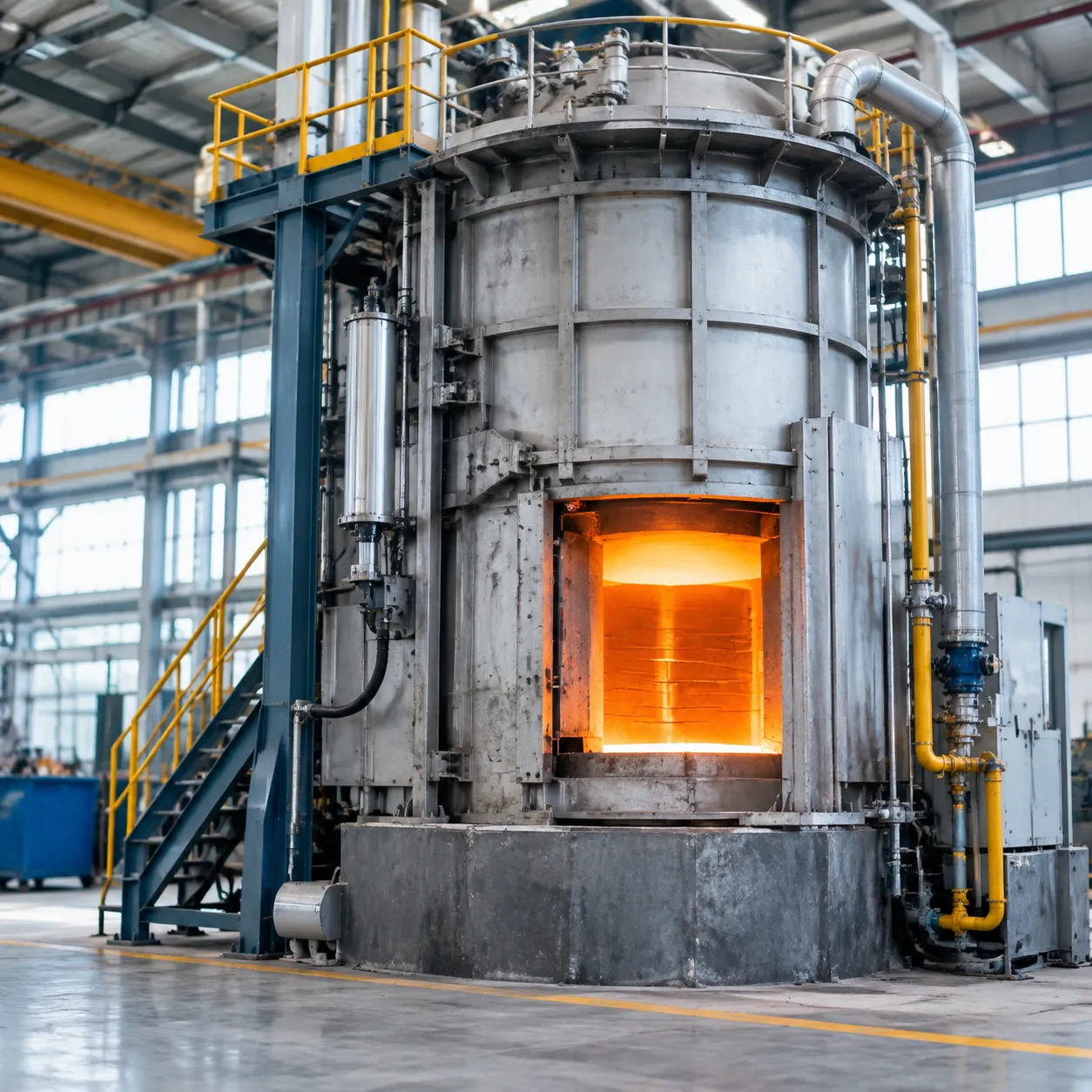
- Vertical Configurations: Designed specifically for long shafts, broaches, landing gear components, and tall cylindrical payloads to eliminate thermal sagging and gravitational distortion during high-temperature cycles.
- Custom Footprints: Modified width-to-depth ratios and custom gas manifold placements available to optimize cycle times for non-standard geometry parts.
Custom Engineering & Turnkey Services
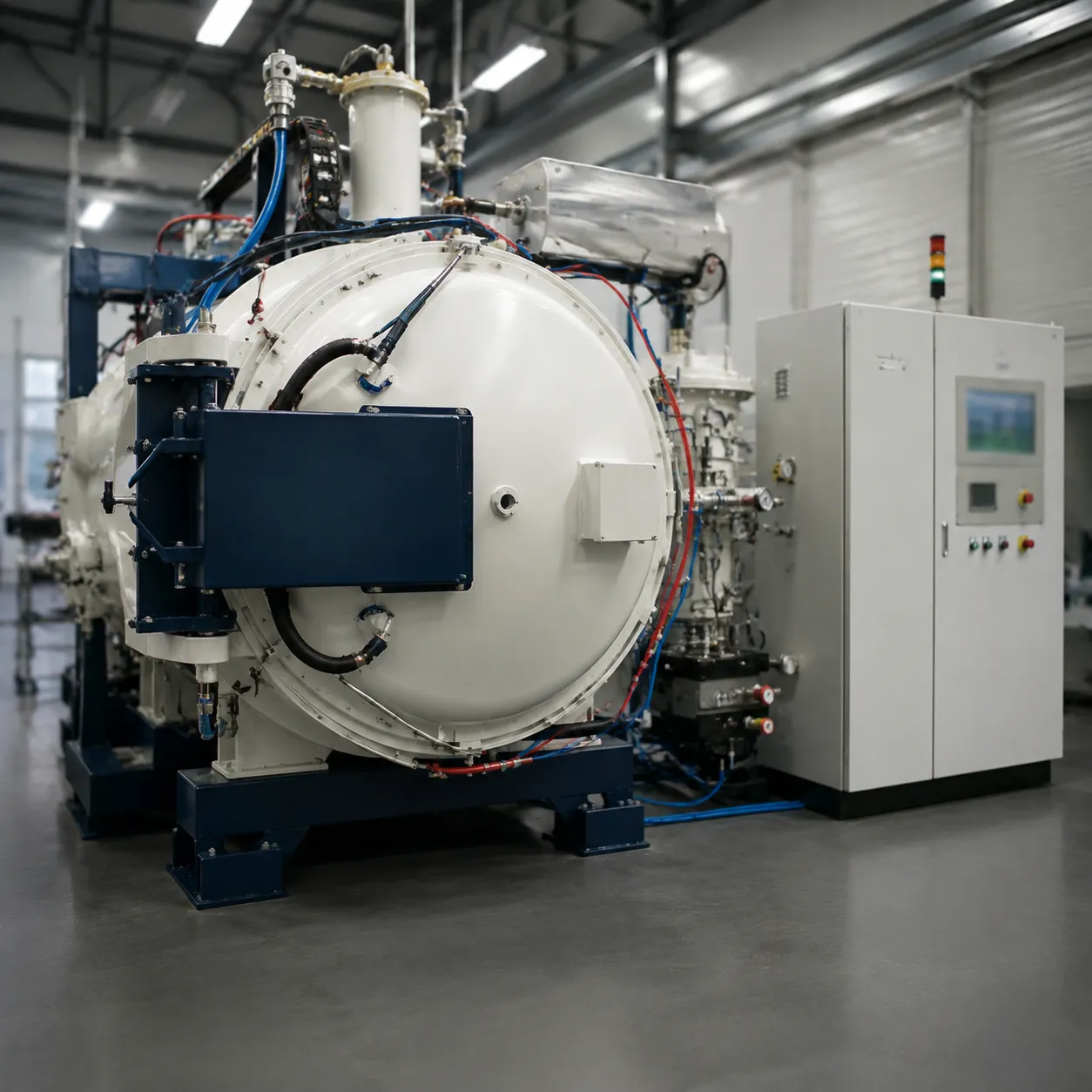
We build every single chamber vacuum furnace around your exact footprint, metallurgy goals, and plant requirements. Through our tailored design and engineering services, we deliver turnkey heat treating systems designed for seamless operational integration.
| Engineering Focus | Tailored Capabilities |
|---|---|
| Chamber Geometry | Custom horizontal and vertical workzones tailored to specific load sizes |
| Gas Injection | Precision-engineered multi-port manifolds for optimized gas quenching |
| Automation & Material Handling | Heavy-duty external loading cars and automated batch transfer mechanisms |
| Thermal & Water Systems | Integrated closed-loop cooling skids with automatic flow control |
Compliance & Global After-Sales Support
Our manufacturing and support framework guarantees long-term reliability and compliance across global markets:
-
- Certifications & Compliance: Fully manufactured under strict ISO 9001 quality management systems and compliant with CE safety directives.
- Turnkey Integration: Complete system setup and process integration for existing factory automation lines.
- Global Support Network: 24/7 remote engineering diagnostics, lifetime technical assistance, and express spare parts dispatch.
Single Chamber Vacuum Furnace FAQs
What is a single chamber vacuum furnace and how does it operate?
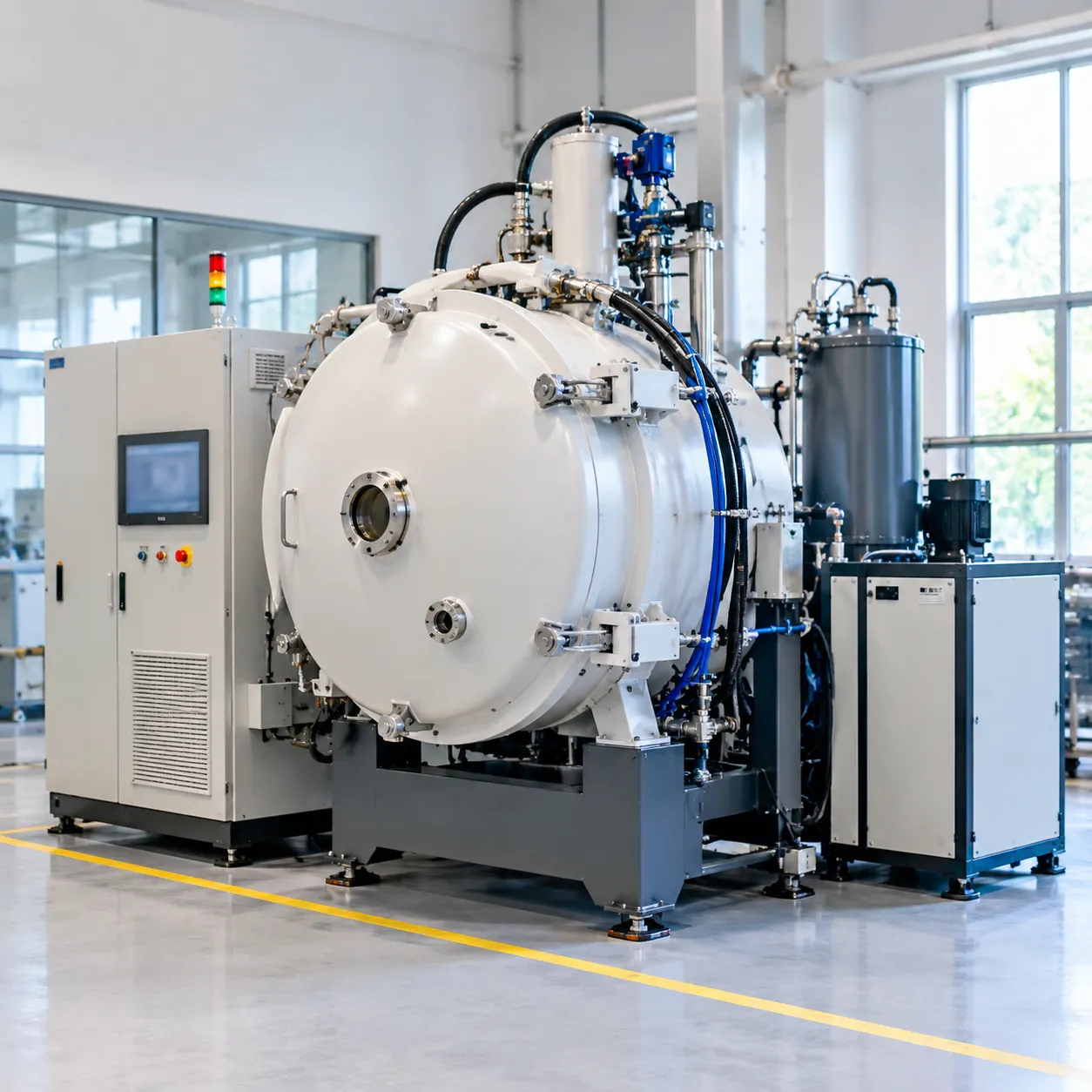
A single chamber vacuum furnace performs the complete heat treatment cycle—heating, holding, and high-pressure gas quenching—inside a single sealed pressure vessel. We design these batch systems so workpieces remain stationary throughout the entire thermal profile, eliminating internal transfer mechanisms and avoiding cold-chamber contamination. This setup delivers superior thermal field uniformity and oxidation-free processing in an easy-to-maintain industrial vacuum heat treatment furnace architecture.
How does a single chamber design compare to multi-chamber setups?
-
- Capital Cost: Requires up to 40% lower initial investment and a significantly smaller floor footprint.
- Process Flexibility: Allows complete recipe modification between batches, giving you the freedom to adjust ramp rates, soak times, and quenching pressures on every cycle.
- Mechanical Simplicity: Avoids complex internal part-transfer systems, which reduces mechanical failure risks, part drops, and maintenance downtime.
When should you choose a graphite hot zone versus an all-metal shield?
-
- Graphite Hot Zone: Best for tool steels, die steels, and standard vacuum brazing. Isostatic graphite elements with rigid felt insulation provide extreme thermal durability and energy efficiency up to 2400°C at a lower cost point.
- All-Metal Radiation Shield: Best for titanium alloys, medical implants, reactive metals, and aerospace components. Molybdenum or tungsten shields prevent carbon contamination and meet ultra-clean vacuum standards.
What maximum gas quenching pressures can a single chamber furnace safely achieve?
Standard single-chamber configurations operate up to 10 bar pressure. For heavy industrial loads or demanding alloy steels that require rapid cooling rates, advanced pressure vessel designs safely support high-pressure gas quenching (HPGQ) up to 20 bar using nitrogen, argon, or helium. For parts prone to distortion, an integrated 12-bar gas quenching system offers fast cooling velocity while keeping component distortion to a minimum.
Which materials and metallurgical processes are best suited for single chamber processing?
-
- Target Materials: High-speed tool steels, stainless steels, nickel-based superalloys, titanium alloys, magnetic materials, and sintered metal injection molding (MIM) parts.
- Core Applications: Vacuum hardening, bright annealing, flux-free vacuum brazing, stress relieving, debinding, and high-density sintering.