Formula details
Product Details
Overview
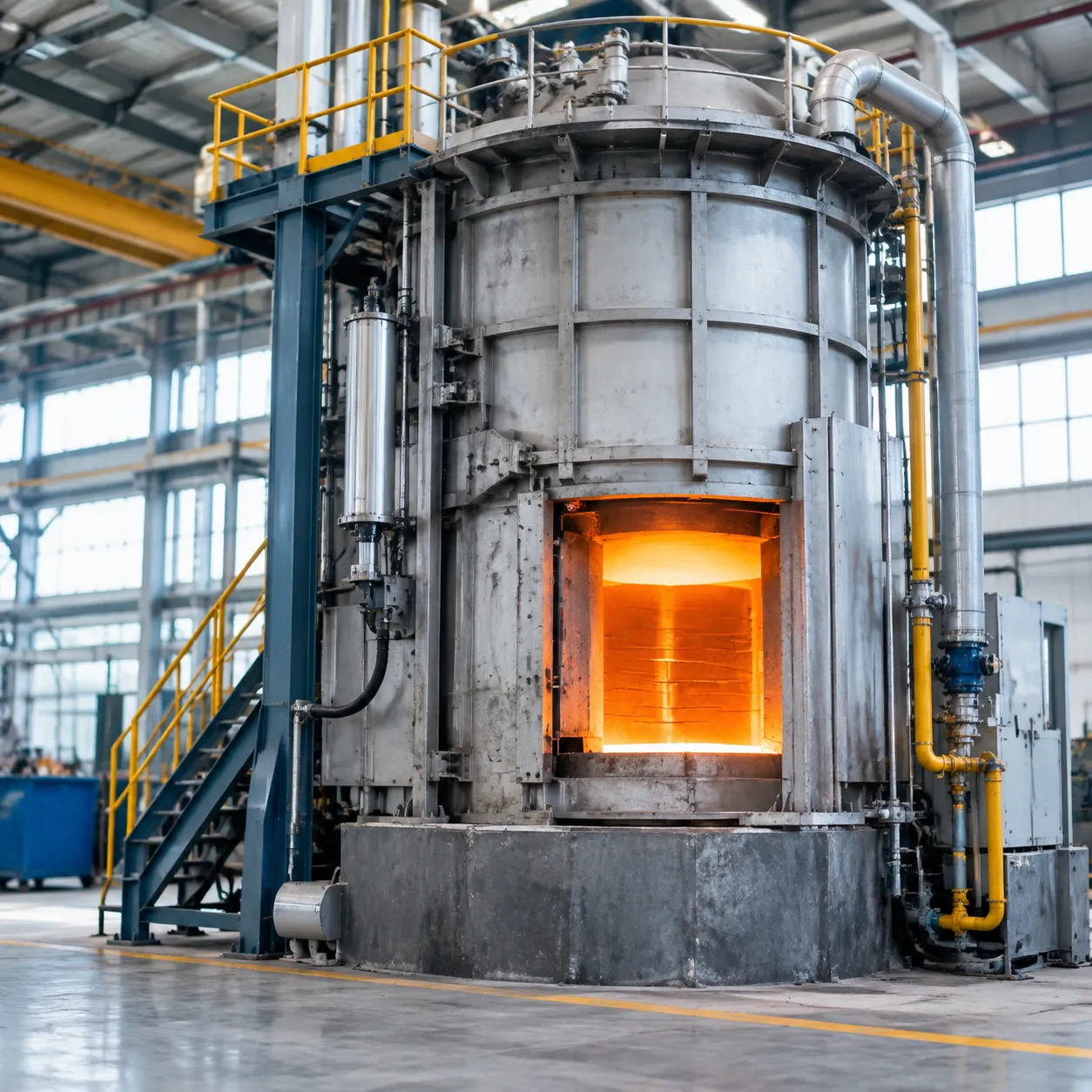
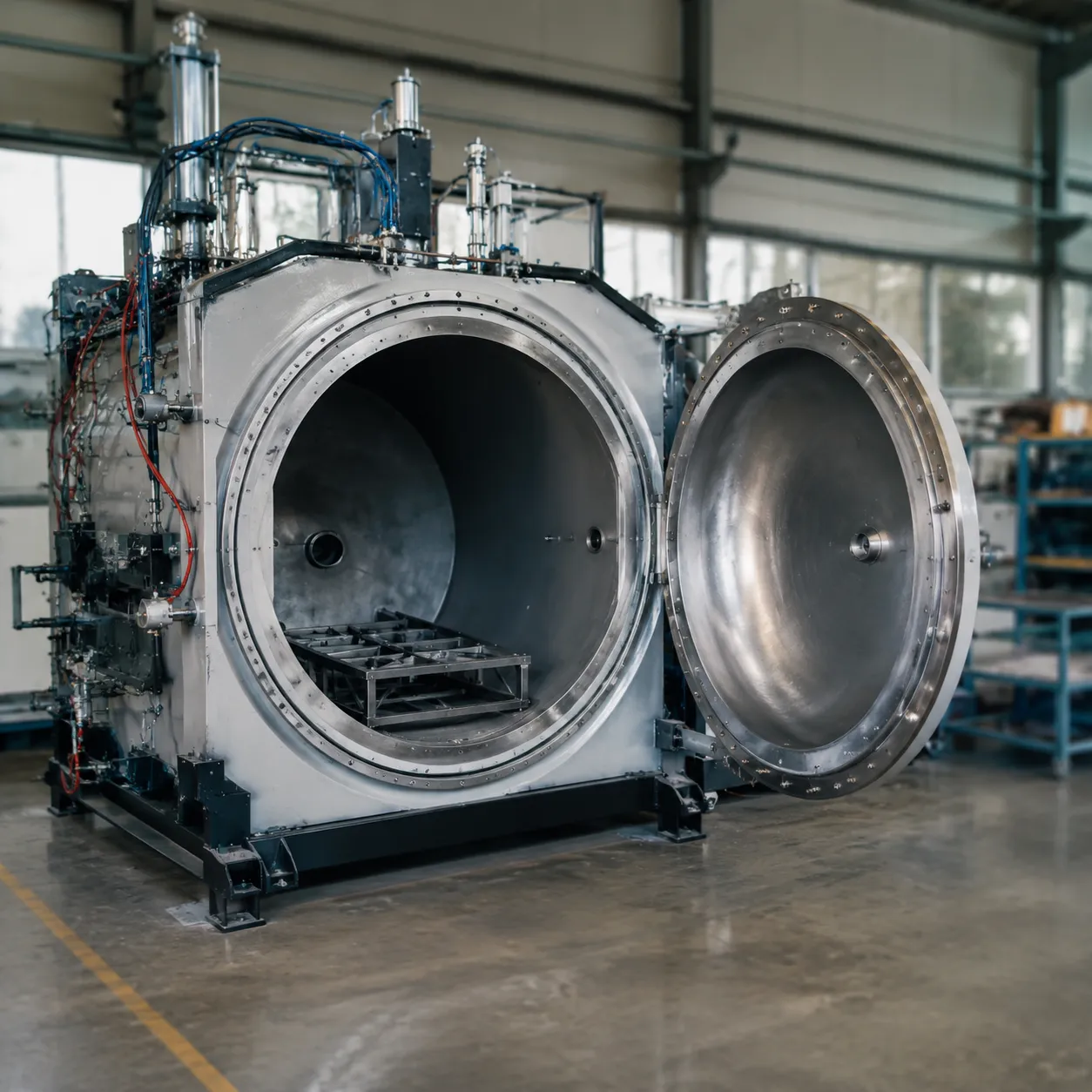
Why Choose Vertical Bell Jar Vacuum Furnace Architecture?
Zero-Vibration Elevator Loading
-
- Precision Elevator Mechanism: Smooth motorized or hydraulic vertical lift motion prevents part displacement during chamber sealing.
- Protection for Fragile Loads: Eliminates vibration to safeguard delicate brazing preforms, stacked components, and sensitive ceramic assemblies.
360-Degree Radial Thermal Field
-
- Symmetrical Element Layout: Cylindrical heating element arrangement surrounds the hot zone for perfectly balanced 360-degree radiant heating.
- Thermal Consistency: Minimizes temperature gradients across the entire working volume, reducing part distortion and ensuring batch-to-batch repeatability.
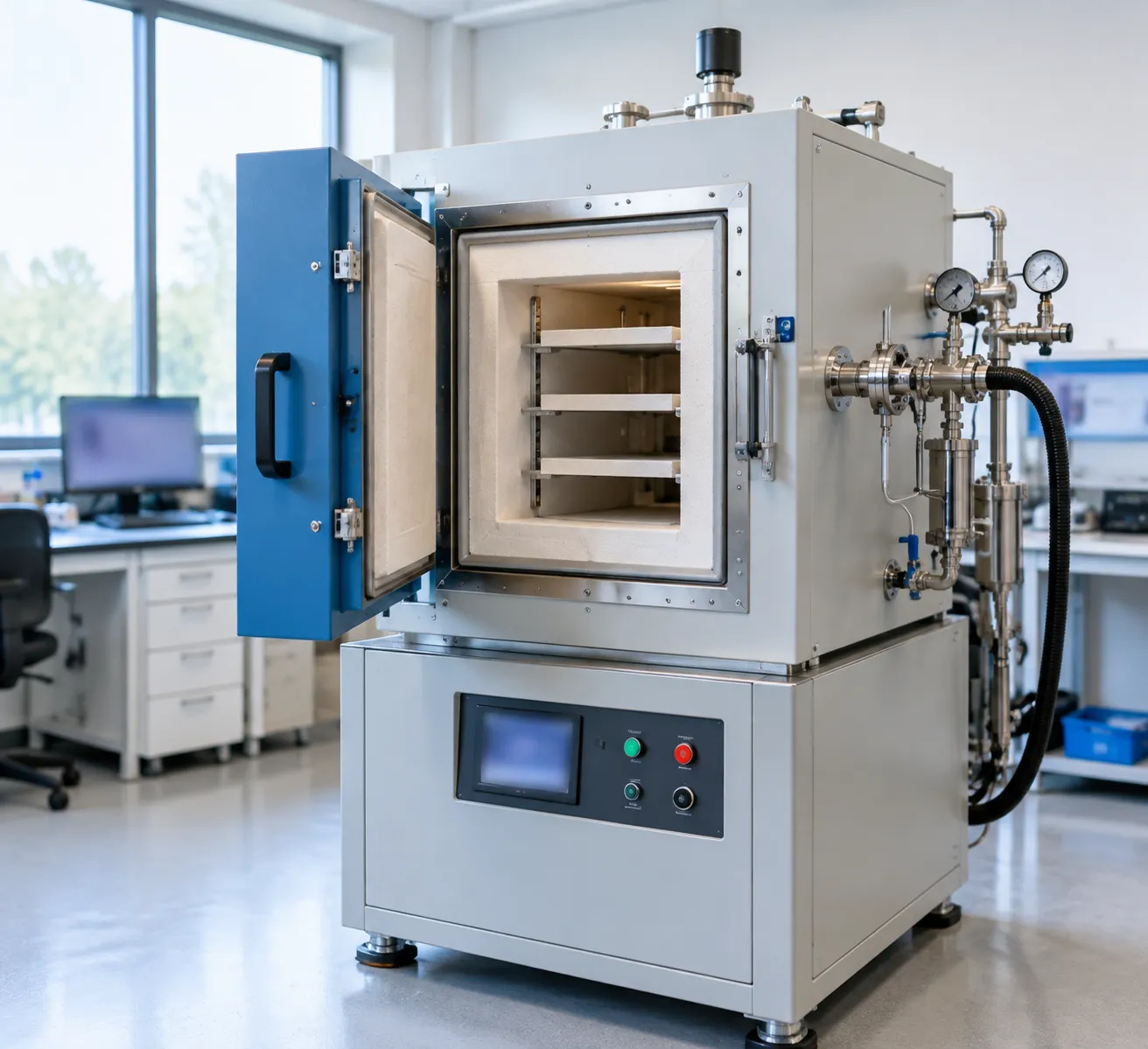
Dual-Chamber Design Options
| Feature | Double-Walled Stainless Steel Chamber | Transparent Quartz Bell Jar |
|---|---|---|
| Construction | Water-cooled jacketed stainless steel | High-purity fused silica quartz |
| Core Advantage | High-temperature capability & rapid water cooling | Full 360-degree real-time visual process monitoring |
| Target Application | High-vacuum industrial sintering, active alloy brazing | R&D testing, optical heat treatment, academic research |
Core Technical Specifications & Performance Matrix
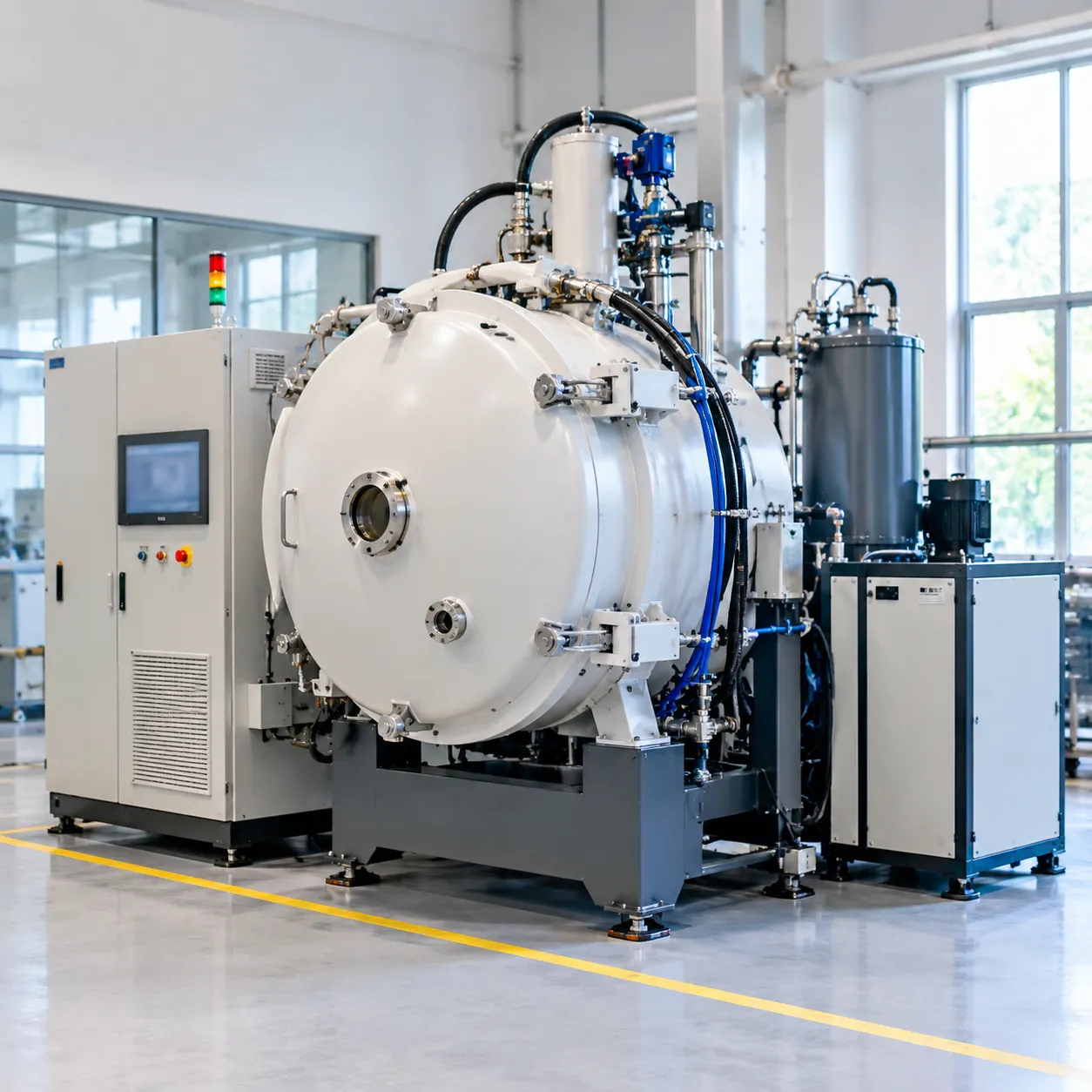
We engineer every bell jar vacuum furnace to deliver tight temperature precision and rapid high-vacuum evacuation. Designed for critical manufacturing, our high-performance vacuum furnace systems combine heavy-duty hardware with intuitive process automation.
| Specification | Operational Parameter |
|---|---|
| Max Operating Temperature | Up to 2400 °C |
| Ultimate Vacuum Level | Down to 10^-5 Pa |
| Vacuum Pump Stack | Diffusion pump or turbomolecular pump stack with dry scroll/Roots backing |
| Thermal Field Uniformity | ±1 °C via multi-zone regulation |
| Hot Zone Materials | Molybdenum, Tungsten, High-Purity Graphite, or Ceramic Fiber |
| Atmosphere Support | High Vacuum, Argon, Nitrogen, Hydrogen, and Forming Gas |
| Control & Automation | Siemens PLC architecture, Eurotherm PID, SCADA, and full data logging |
Key System Capabilities
-
- High-Vacuum Performance: Achieves standard UHV ratings down to 10^-5 Pa for ultra-clean processing free of oxidation.
- Precision Multi-Zone Control: Maintains exceptional thermal field uniformity within ±1 °C using independent multi-zone PID loops, non-contact optical pyrometers, and refractory thermocouples.
- Material Versatility: Match your process requirements with cleanroom-compatible metal hot zones (Moly/Tungsten) or carbon/carbon graphite options for high-temperature sintering.
- Advanced Atmosphere Management: Configured for safe operation under inert gas purging as well as flammable gas environments like clean Hydrogen with full burn-off safety interlocks.
- Industrial PLC Integration: Touchscreen operations powered by Siemens hardware feature customizable ramp/soak curves, automated valve sequencing, and complete batch reporting.
Advanced Hot Zone & Thermal Engineering
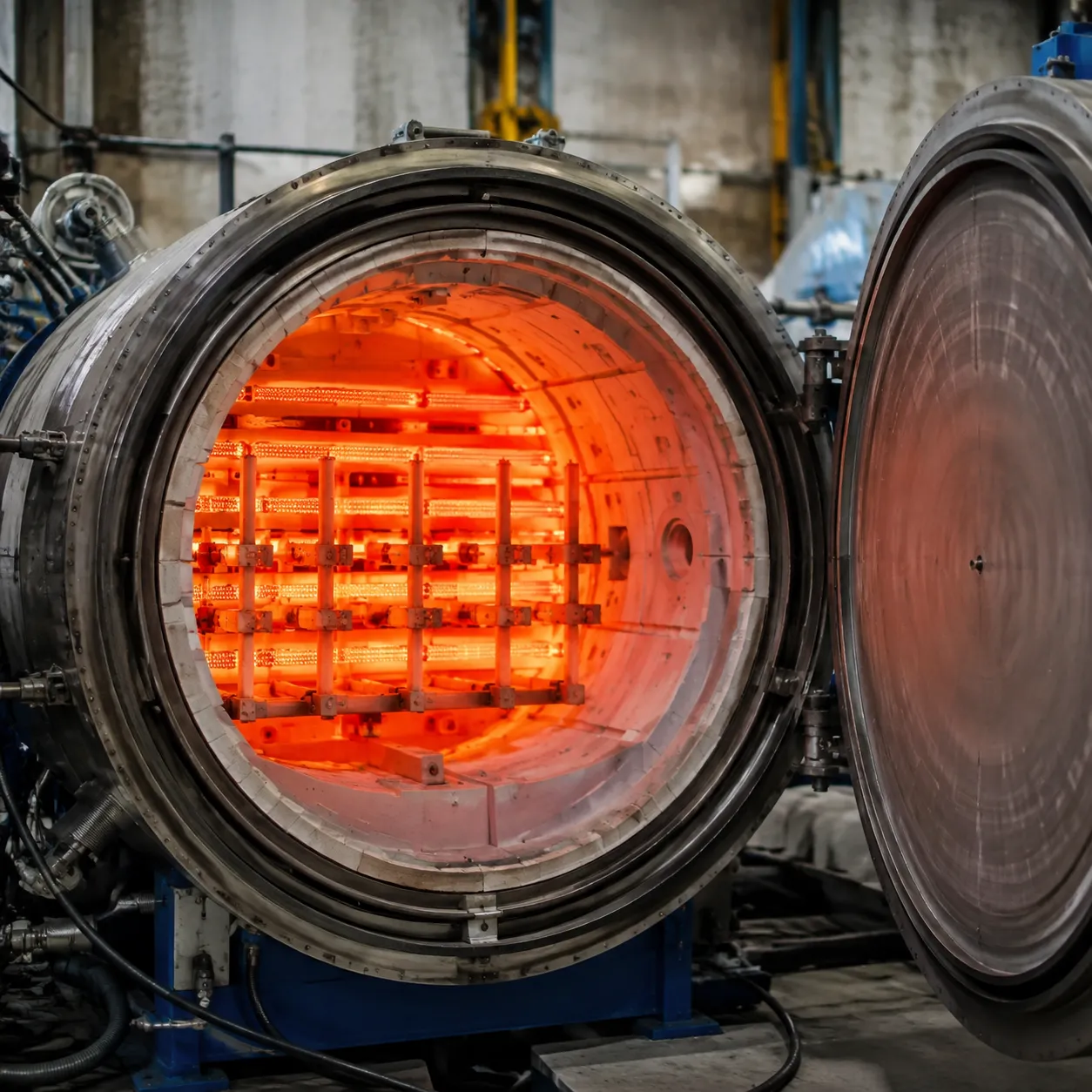
High-Purity Refractory Metal Hot Zones
For cleanroom-compatible and 100% carbon-free processing, we build all-metal molybdenum and tungsten hot zones. These configurations prevent micro-contamination, making them essential for delicate electronic components, titanium alloys, and medical implants.
-
- Molybdenum Hot Zones: Excellent thermal stability for operational temperatures up to 1600°C.
- Tungsten Hot Zones: Heavy-duty performance engineered for ultra-high temperature processing up to 2400°C.
Heavy-Duty Graphite Hot Zones
When thermal processing requires robust, high-capacity carbon environments, we utilize high-density rigid graphite felt insulation combined with carbon/carbon (C/C) heating elements.
-
- High-Thermal Insulation: Rigid graphite felt minimizes power consumption while withstanding severe thermal cycling.
- Process Suitability: Perfect for carburizing-sensitive parts, hard metals, and demanding high-temperature sintering furnace cycles.
Precision Multi-Zone Temperature Control
We integrate multi-zone PID control to eliminate thermal gradients across tall workpieces inside the cylindrical chamber.
-
- Independent Zone Tuning: Adjusts localized power output across vertical heating zones to maintain strict temperature uniformity.
- Dual Sensing Technology: Employs calibrated thermocouples for lower temperature stages and non-contact optical pyrometers for extreme high-temp monitoring.
High-Vacuum & Atmosphere Management Systems
Multi-Stage Vacuum Pumping Configurations
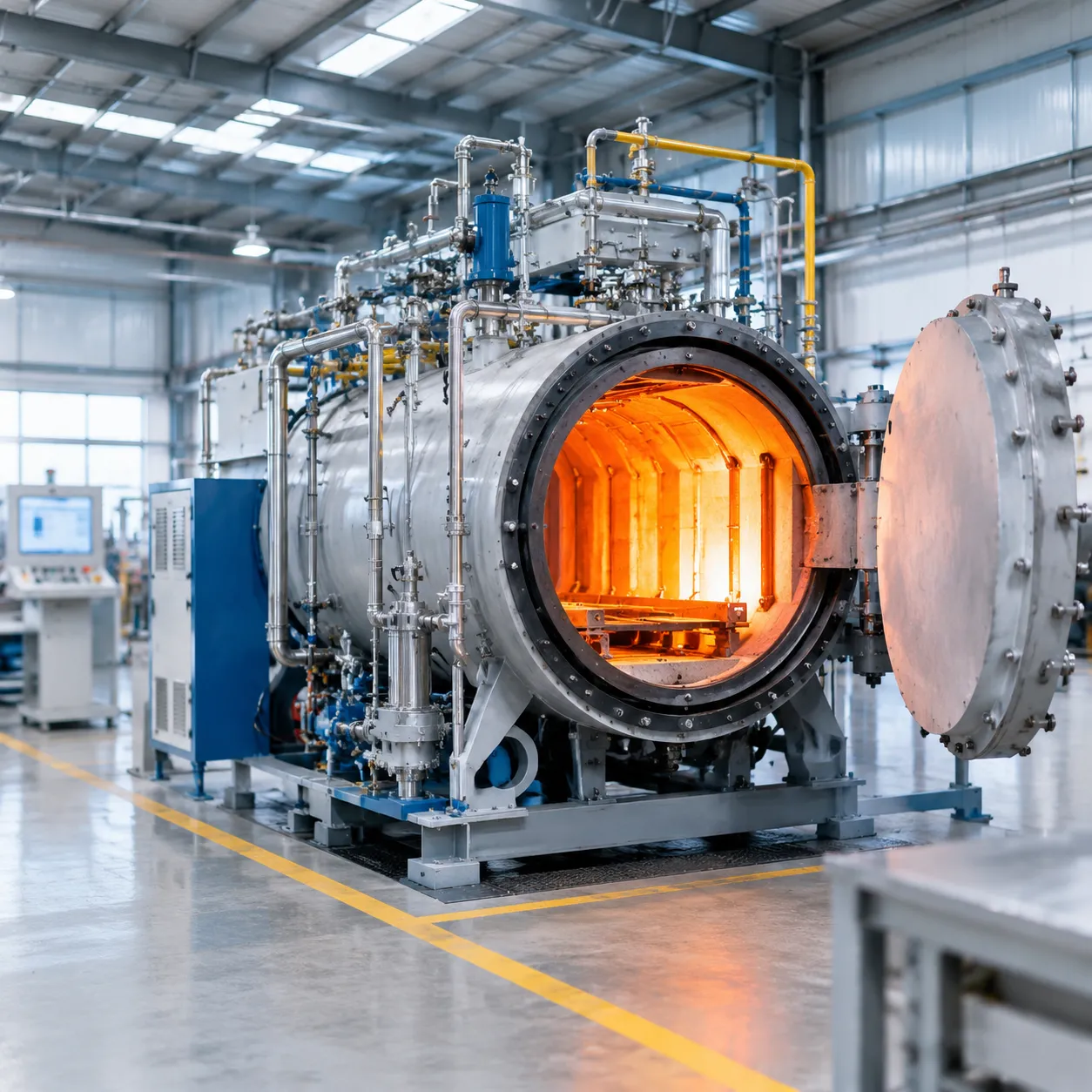
We equip every bell jar vacuum furnace with tailored multi-stage pumping stacks to match your vacuum depth and pump-down speed requirements. Automated electro-pneumatic valve sequencing manages transitions between roughing and high-vacuum phases, protecting workpieces and heating elements from contamination.
| Pumping Stage | Pump Options | Primary Function | Vacuum Range |
|---|---|---|---|
| Roughing & Backing | Dry scroll, rotary vane | Initial chamber pump-down and backing support | $10^1$ Pa to $10^{-1}$ Pa |
| Mechanical Booster | Roots blower | Accelerated evacuation through mid-vacuum range | $10^{-1}$ Pa to $10^{-2}$ Pa |
| High Vacuum (UHV) | Turbomolecular or diffusion pump vacuum stack | Deep vacuum processing for sensitive metals and ceramics | Down to $10^{-5}$ Pa |
Controlled Atmosphere & Reducing Gas Delivery
For processes requiring protective or reactive gas environments, our controlled atmosphere bell furnace engineering delivers gas mixing and absolute pressure control. We build our systems to handle inert processing alongside active reducing gases such as pure Hydrogen and forming gas.
-
- Precision Gas Regulation: Multi-channel Mass Flow Controllers (MFCs) deliver accurate flow rates for Argon, Nitrogen, and Hydrogen atmospheres.
- Automated Thermal Flares: Integrated igniter stacks safely incinerate combustible exhaust gases during process purge cycles.
- Explosion-Proof Safety Interlocks: Multi-point redundant safety systems monitor line pressure, chamber oxygen levels, and exhaust flare ignition status. Automatically trigger inert gas flushes if parameters drift.
Optimizing vacuum levels and atmosphere delivery is essential across diverse vacuum furnace applications and benefits, guaranteeing repeatable metallurgy without surface oxidation or outgassing defects.
Industrial Applications of Our Bell Jar Vacuum Furnace
Process Capability Matrix
| Application | Core Thermal Process | Target Workpieces & Materials |
|---|---|---|
| High-Vacuum Brazing & Joining | Clean, flux-free thermal joining using specialized vacuum brazing furnace tech to ensure leak-tight bonds. | Active alloy ceramic-to-metal joints, stainless steel heat exchangers, titanium aerospace assemblies. |
| Vacuum Annealing & Stress Relieving | Bright annealing in ultra-clean thermal fields using high-performance vacuum annealing furnace setups to restore material ductility. | Refractory metals, magnetic alloys, titanium components, orthopedic medical implants. |
| Advanced PM & Sintering | High-temperature consolidation to achieve full theoretical material density without carbon contamination. | Metal Injection Molding (MIM) parts, technical ceramics, silicon nitride substrates. |
| Degassing & Outgassing | Deep vacuum bakeout to drive off moisture, entrapped gases, and surface volatile organic compounds. | Electronic sub-assemblies, semiconductor hardware, high-precision optics. |
Process Advantages for High-Spec Manufacturing
-
- Zero Workpiece Displacement: Elevator bottom-loading eliminates vibration, keeping complex multi-piece fixtures perfectly aligned.
- Ultra-Clean Processing: All-metal refractory hot zones prevent carbon residue, meeting strict medical and semiconductor standards.
- Atmosphere Flexibility: Run high-vacuum cycles down to 10⁻⁵ Pa or switch to inert argon, nitrogen, or reducing hydrogen atmospheres.
Smart Automation & Control Architecture
We equip every bell jar vacuum furnace with intuitive control systems designed for precise thermal execution and repeatable processing. Powered by Siemens PLC hardware, our touchscreen interfaces eliminate manual guessing, giving you full command over critical vacuum heat treating runs.
-
- Recipe & Profile Management: Easily create, save, and run custom heating profiles with multi-segment ramp and soak curves.
- SCADA & Ethernet Connectivity: Streamline plant operations with remote monitoring, real-time data logging, and complete process traceability via advanced process integration.
- Precision PID Regulation: Integrated Eurotherm temperature modules deliver fast response times and tight temperature control across all zones.
Integrated System Safety & Interlocks
Operating high-vacuum thermal processing equipment requires fail-safe operation. We build multi-layered hardware and software interlocks directly into the furnace control loop to protect your workpieces, furnace components, and operators.
| Safety Interlock System | Operational Function & Protection Mode |
|---|---|
| Cooling Water Flow | Continuous sensors immediately trigger safe shut-off if flow rates or pressure drop. |
| Pressure Limits | Prevents heating elements from energizing until target vacuum levels are reached. |
| Over-Temperature | Independent digital logic cuts power automatically if maximum limits are exceeded. |
| Power Failure Sequence | Automated pneumatic valves isolate pumps and safely maintain chamber vacuum during power loss. |
Custom OEM/ODM Engineering & Global Support
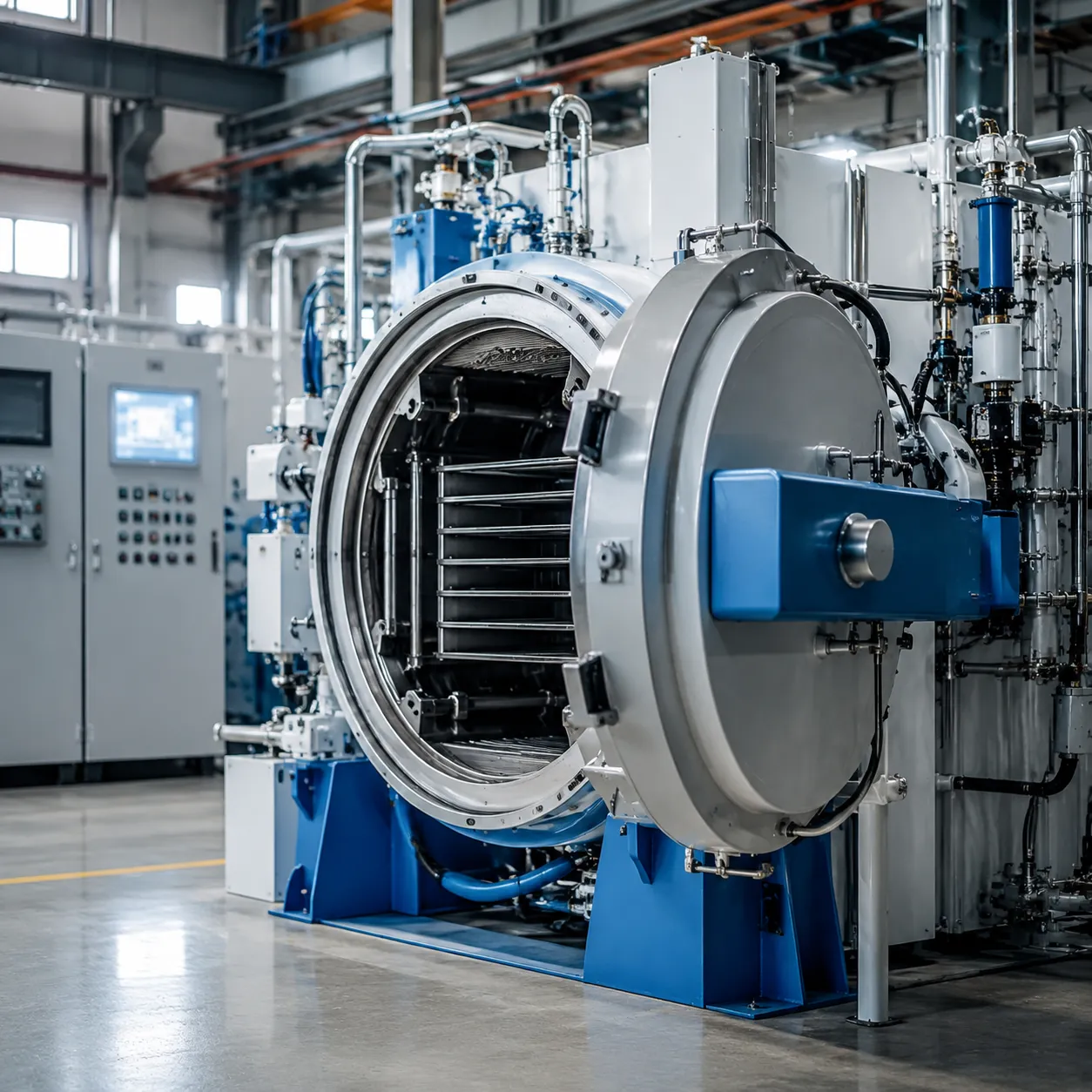
We design every bell jar vacuum furnace around your exact operational needs. Through our custom OEM/ODM engineering solutions, we deliver tailored hardware setups and complete lifecycle assistance for critical thermal processing applications.
Tailored Hardware Configurations
-
- Custom Hearth Capacities: Designed to support heavy, dense, or uniquely shaped payload sizes.
- Multi-Axis Rotary Hearths: Integrated rotating mechanisms to ensure uniform heat distribution on complex parts.
- Process Viewports: Quartz or sapphire observation windows with quartz bell jar furnace options for real-time visual inspection.
- Motorized Bell Lifts: Precision electric or hydraulic elevator hearth furnace systems for smooth, vibration-free loading.
Turnkey Services & Worldwide Support
| Service Phase | Scope & Deliverables |
|---|---|
| Testing & Validation | Full Factory Acceptance Testing (FAT) and Site Acceptance Testing (SAT) protocols |
| Global Deployment | On-site installation, system commissioning, and vacuum calibration |
| Operator Training | Hands-on instruction covering recipe management, safety, and routine maintenance |
| Lifetime Assistance | Rapid spare parts delivery, remote troubleshooting, and ongoing technical service |
Our global service team delivers full turnkey support to keep your vacuum thermal processing equipment operating at peak performance wherever your production facility is located.
Frequently Asked Questions
What is the primary advantage of a bell jar vacuum furnace over a horizontal front-loading furnace?
The main advantage of a vertical bell jar vacuum furnace is its zero-vibration bottom-loading elevator hearth. Sensitive, stacked, or delicate components remain completely undisturbed as the hearth moves vertically into the sealed heating chamber. The cylindrical hot zone design also provides a symmetrical 360-degree radial thermal field for superior temperature uniformity. If your facility requires conventional side-loading setups, check out our horizontal vacuum furnace options.
How high of a vacuum level can a Haitem bell jar furnace achieve?
Equipped with our multi-stage turbomolecular or diffusion pump stacks, our bell jar vacuum furnace systems achieve ultimate vacuum levels down to 10⁻⁵ Pa (10⁻⁷ mbar). This creates an ultra-clean processing environment free from oxidation and trace contamination.
Can Haitem bell jar vacuum furnaces operate under flammable gas atmospheres like Hydrogen?
Yes. We engineer controlled-atmosphere systems built specifically to handle reducing and flammable gases, including pure Hydrogen and forming gas. Each system includes automated Mass Flow Controllers (MFCs), safety interlocks, automatic nitrogen purging routines, and explosion-proof burn-off flares.
What hot zone materials should I select for my application?
Material selection depends on your peak operating temperature, vacuum environment, and workpiece purity requirements:
-
- All-Metal (Molybdenum / Tungsten): Essential for carbon-free, cleanroom-compatible thermal processing, medical implants, and aerospace alloys.
- High-Purity Graphite: Optimal for high-temperature sintering up to 2400 °C where carbon exposure is acceptable.
- Quartz / Ceramic Fiber: Suited for lower-temperature applications, fast thermal cycling, or real-time visual monitoring.
Selecting the correct hot zone insulation directly impacts energy efficiency and heating dynamics; review our guide on heat transfer in a vacuum furnace explained to learn more.