What Is a Vacuum Furnace Heat Treatment Process?
Definition of Vacuum Heat Treatment
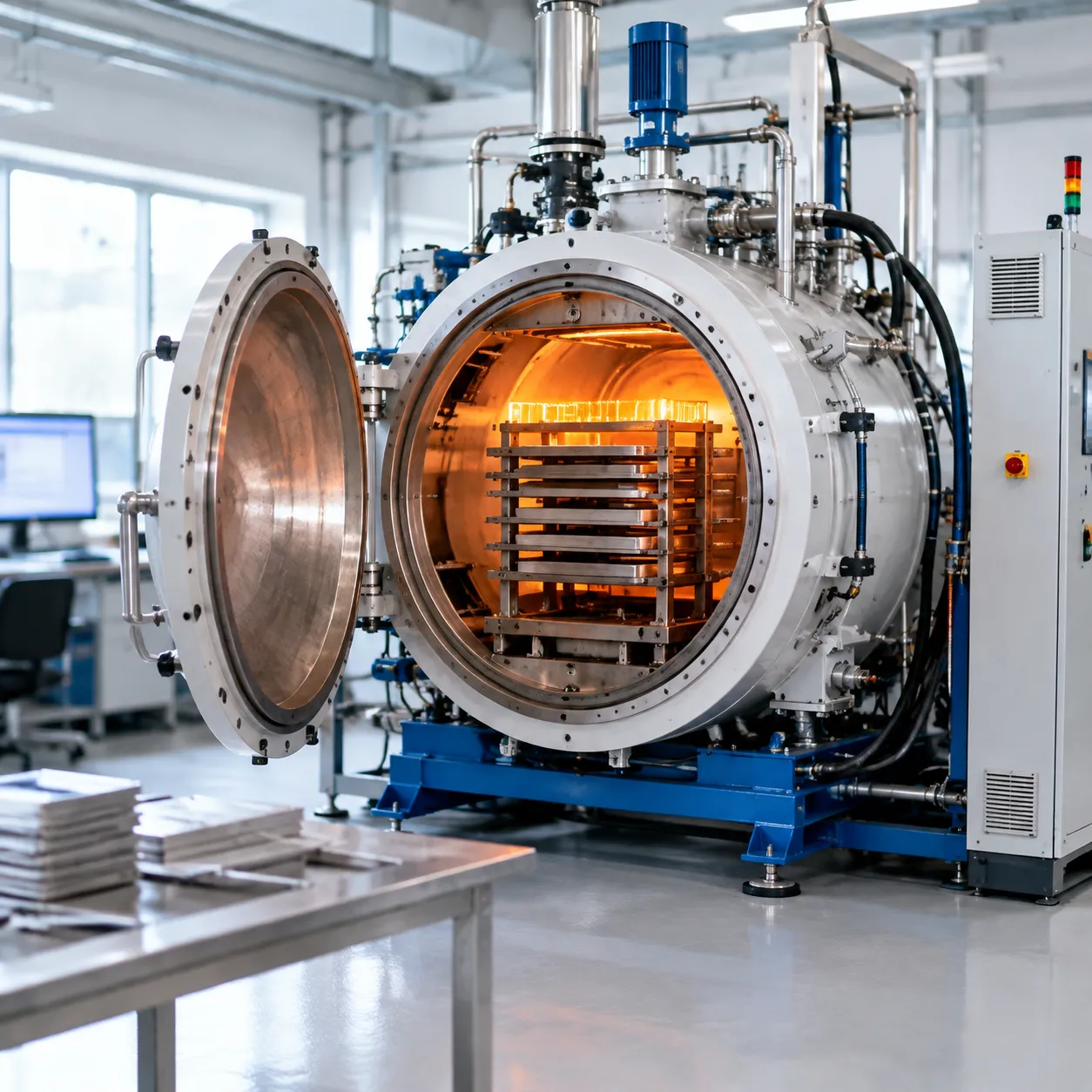
We define the vacuum furnace heat treatment process as heating high-performance metal components inside a sealed thermal chamber evacuated to sub-atmospheric pressure levels (typically 10⁻² to 10⁻⁶ mbar). By evacuating oxygen and reactive atmospheric gases from the chamber during the thermal processing cycle, we bring parts to target temperatures without surface contamination or chemical degradation.
Why Vacuum Conditions Improve Quality
Preventing ambient air exposure at elevated temperatures solves the primary issues plaguing industrial plant floors: oxidation, scaling, and decarburization. Operating under a high vacuum furnace environment guarantees superior metallurgical control:
-
- Zero Surface Oxidation: Eliminates the need for expensive secondary acid pickling, sandblasting, or finish grinding.
- Controlled Hardness and Microstructure: Precise temperature uniformity yields repeatable core-to-surface grain structures.
- Reduced Thermal Distortion: Even heating and gas quenching cycles preserve tight dimensional tolerances on critical geometries.
- Outgassing Cleanliness: Volatile impurities inside the alloy outgas under vacuum, resulting in cleaner grain boundaries.
Vacuum vs. Conventional Heat Treatment
| Performance Metric | Vacuum Heat Treatment Process | Conventional Atmosphere Heat Treatment |
|---|---|---|
| Process Atmosphere | Sub-atmospheric vacuum environment | Ambient air, endothermic gas, or salt bath |
| Surface Result | Bright, clean finish; zero decarburization | Heavy scale, oxidation, and surface depletion |
| Secondary Machining | Completely eliminated in most applications | Required (grinding, washing, or descaling) |
| Environmental Safety | Clean, zero hazardous chemical waste | High carbon footprint, toxic fumes, and oil waste |
| Repeatability | Fully automated pressure and heat control | Dependent on gas flow and atmosphere stability |
How the Vacuum Furnace Heat Treatment Process Works
Step 1 — Loading and Chamber Preparation
Preparing the load properly prevents contamination during high-temperature cycles:
-
- Surface Cleaning: Parts must be completely degreased and dried. Any oils, washing residues, or moisture left on the metal will outgas under vacuum, dirtying the hot zone and staining the workpieces.
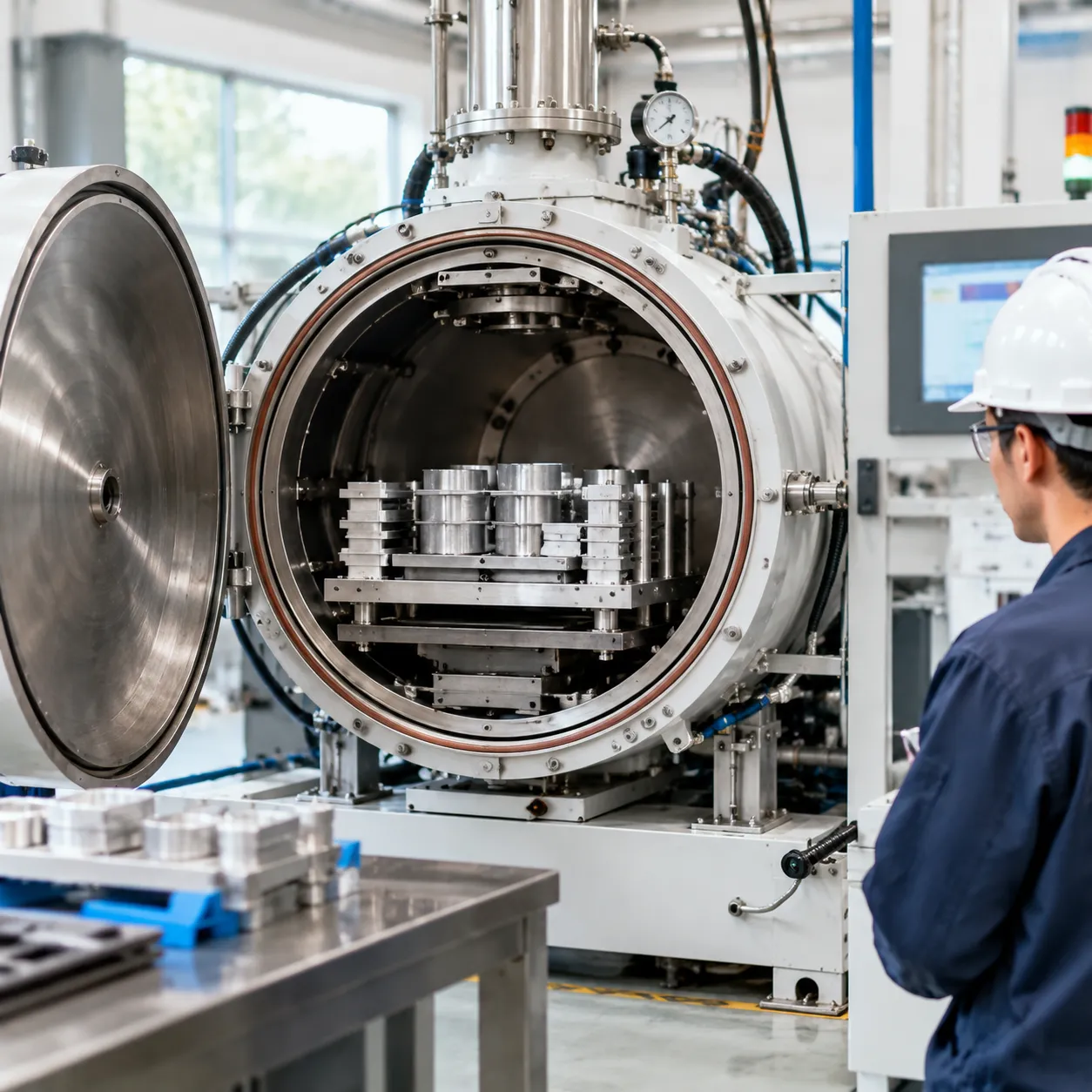
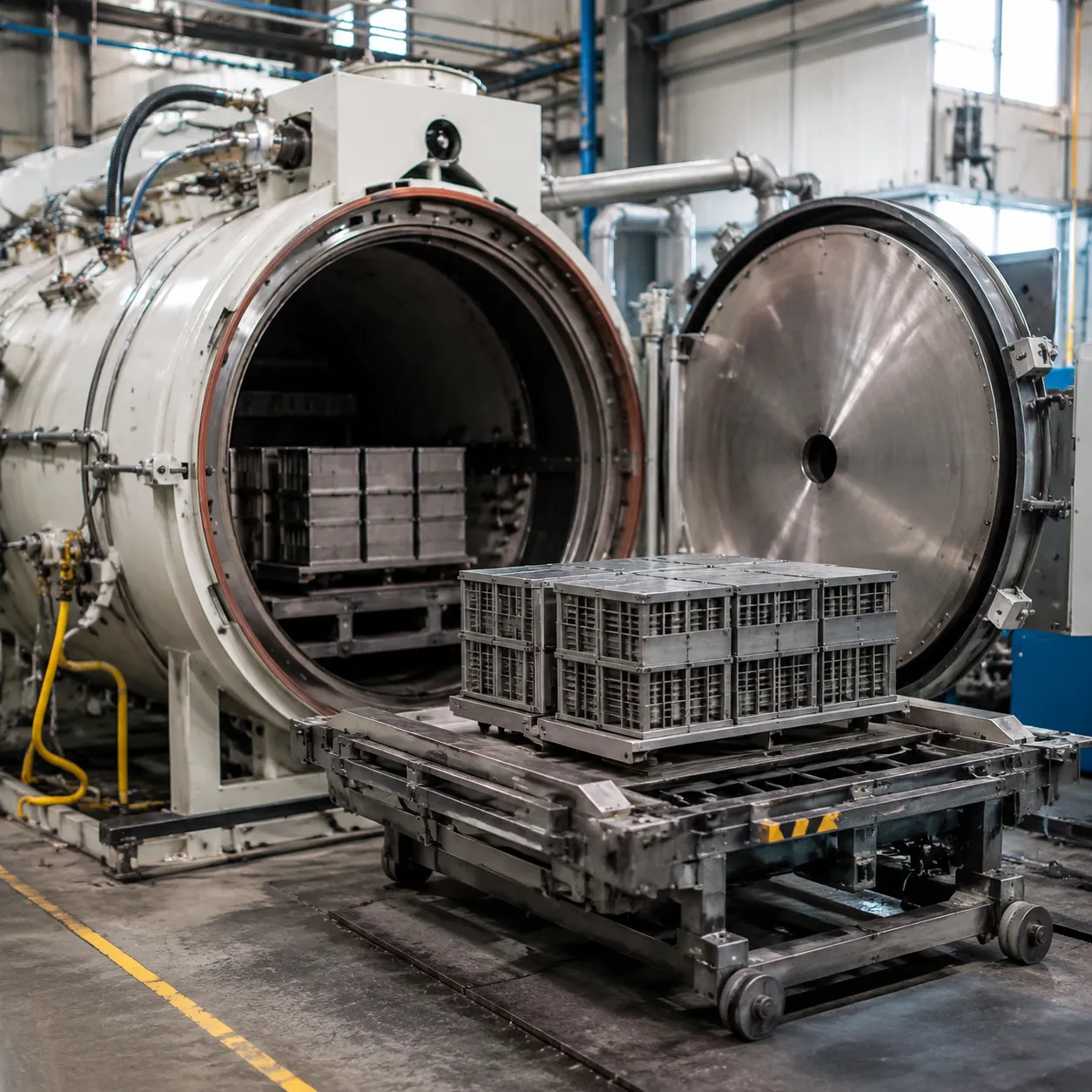
- Fixturing: Components are positioned on graphite or molybdenum alloy racks. We space parts to allow uniform heat radiation during heating and uninhibited gas flow during rapid cooling.
- Sealing: Once loaded, the vacuum chamber door closes and seals against O-rings to create an airtight isolation zone.
Step 2 — Evacuation and Vacuum Pumping
Before powering the heating elements, the pumping system pulls down chamber pressure:
-
- Roughing Phase: Mechanical pumps rapidly pull the chamber pressure down from atmospheric to around 10⁻¹ mbar.
- High Vacuum Phase: Diffusion or turbomolecular pumps engage to drop pressure further into the 10⁻³ to 10⁻⁵ mbar range, depending on the alloy requirements.
- Leak Detection: Automated pressure-rise checks confirm the chamber is tight before thermal cycles begin.
Step 3 — Controlled Heating
Because convective air currents do not exist in an evacuated vessel, understanding heat transfer in a vacuum furnace relies heavily on thermal radiation.
-
- Multi-Stage Ramping: We program multi-step temperature holds (preheats) to equalize core and surface temperatures. This drastically reduces thermal shock and part distortion in complex die steels and aerospace components.
- Precision Control: Multi-zone heating elements modulate power dynamically, maintaining uniform temperature across the entire hot zone.
Step 4 — Soaking at Target Temperature
Once the workload reaches the required transformation temperature (such as the austenitizing point for vacuum hardening):
-
- Microstructure Transformation: The metal is held at temperature long enough to achieve complete phase transformation or chemical diffusion (such as in low-pressure carburizing).
- Thermal Uniformity: Precise vacuum furnace temperature control keeps variance within strict tolerances (typically ±5°C) across the entire hearth load, guaranteeing consistent hardness across all parts.
Step 5 — Cooling or Gas Quenching
To freeze the desired metallurgical structure without liquid quenchant mess or micro-cracking, gas quenching heat treatment is applied:
-
- Inert Gas Injection: High-purity nitrogen, argon, or helium fills the vessel at pressures ranging from 2 bar to 20 bar.
- High-Velocity Circulation: Internal high-volume blowers push cooling gas through directional nozzles around the load.
- Controlled Cooling Rate: By adjusting gas velocity and pressure, we tailor the quench speed to meet the critical cooling curve of the specific alloy.
Step 6 — Tempering or Post-Heat Treatment Cycle
Hardened parts are brittle immediately after quenching and require stress relief:
-
- Stress Relief: The workload is reheated to lower temperatures to increase toughness while dialing in exact target hardness values.
- Integrated vs. Secondary Processing: Tempering can occur directly inside the vacuum chamber or in a specialized, dedicated tempering furnace to optimize shop floor throughput.
- Discharge: Once cooled to safe handling temperatures, parts emerge clean, bright, and ready for assembly or final inspection.
Core Components of a Vacuum Heat Treatment Furnace
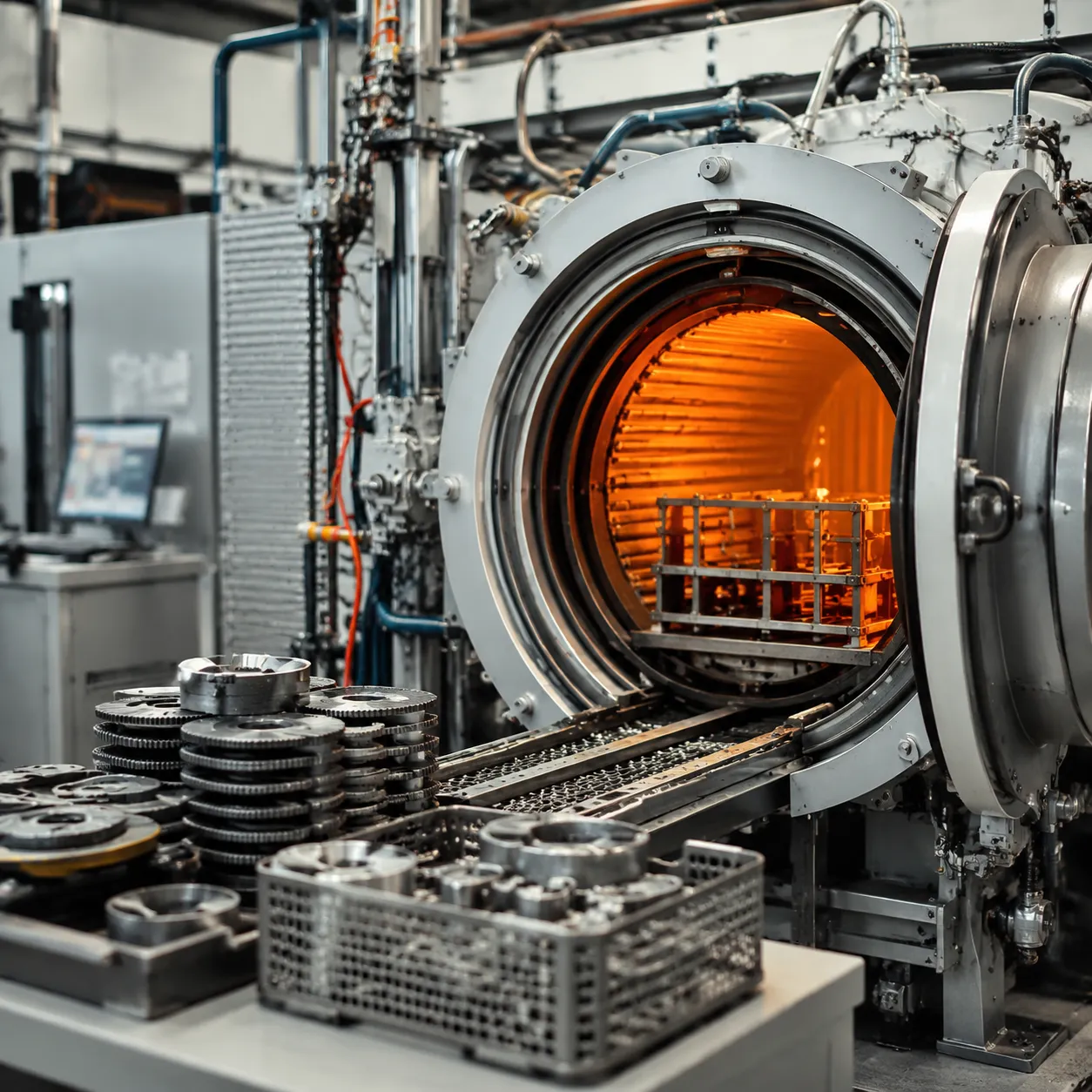
Every high-performance vacuum furnace heat treatment process relies on five core subsystems working in precise sync to guarantee part repeatability, clean surface finishes, and strict metallurgical properties.
Vacuum Pumping System
We engineer our high vacuum furnace units with multi-stage pumping skids that combine mechanical backing pumps, Roots blowers, and high-vacuum diffusion or turbomolecular pumps. This configuration rapidly evacuates the chamber down to 10⁻² to 10⁻⁵ mbar, eliminating oxygen and vapor contaminants before heating begins.
Hot Zone Structure and Materials
The hot zone insulates the chamber and contains the thermal field. Depending on your material processing needs, we build hot zones with:
Graphite Board & Felt: Cost-effective, robust, and ideal for general tool steel processing.
All-Metal Radiation Shields (Molybdenum/Tungsten): Built for ultra-clean processing, titanium alloys, and sensitive medical parts where graphite micro-particles are prohibited.
Heating Elements and Thermal Field Design
Our heating elements utilize wide graphite plates or molybdenum strips positioned 360 degrees around the work charge. This design maximizes heat transfer and maintains tight vacuum furnace temperature control with thermal uniformity within ±5°C across the load zone.
Gas Quenching System
For precise microstructural transformation without liquid quench distortion, we incorporate high-pressure gas quenching heat treatment systems. High-velocity blowers drive inert gas (Nitrogen or Argon) through multi-directional nozzles at pressures up to 15 bar to cool parts rapidly during the thermal processing cycle.
Control System and Automation
We equip every system with a fully automated PLC and HMI interface. This provides multi-zone PID temperature control, automated recipe sequencing, real-time pressure tracking, and complete data logging compliant with AMS 2750 standards.
Key Process Parameters That Determine Heat Treatment Quality
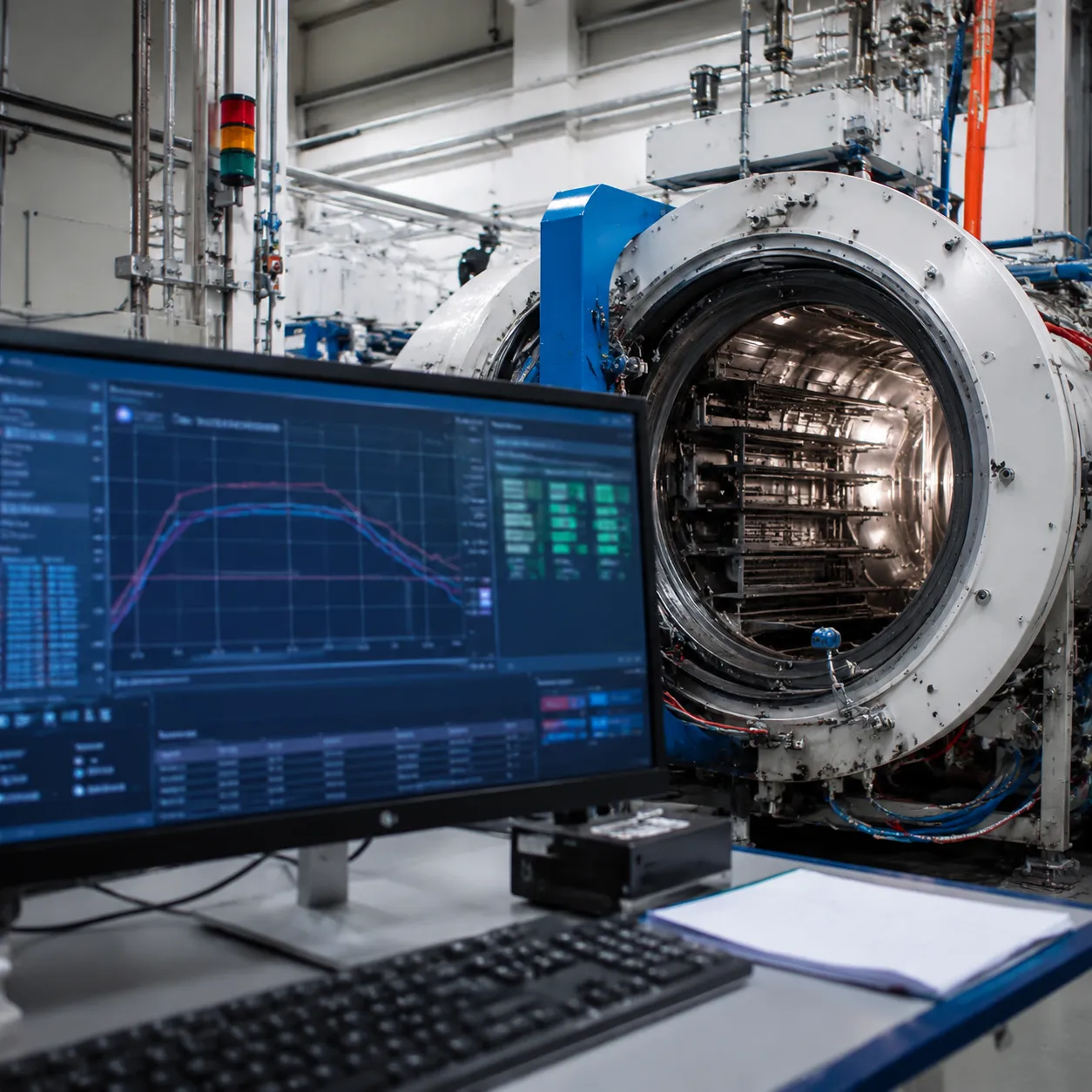
Getting repeatable metallurgical results in a vacuum furnace heat treatment process comes down to controlling five critical parameters. We tune these variables on our shop floor to ensure zero surface oxidation, minimal part distortion, and precise microstructures.
| Parameter | Target Standard | Primary Metallurgical Impact |
|---|---|---|
| Vacuum Level | 10⁻² to 10⁻⁵ mbar | Eliminates surface oxidation, scaling, and alloy depletion. |
| Temperature Uniformity | +/- 5°C (+/- 10°F) | Prevents uneven microstructures, grain growth, and soft spots. |
| Heating Rate & Soak Time | Multi-stage ramp & hold | Eliminates thermal shock and guarantees full phase transformation. |
| Cooling Rate & Quench Pressure | 2 bar to 25 bar inert gas | Controls martensite transformation while minimizing distortion. |
| Gas Atmosphere Selection | High-purity N₂, Ar, or He | Protects surface chemistry and prevents element vaporization. |
Vacuum Level
We maintain precise vacuum levels throughout the thermal processing cycle to purge oxygen, moisture, and impurities. Processing under high vacuum eliminates scaling and surface decarburization, yielding clean, bright parts right out of the chamber.
Temperature Accuracy and Uniformity
Consistent vacuum furnace temperature control guarantees predictable hardness across every load. We engineer hot zones to maintain tight temperature uniformity within +/- 5°C, ensuring equal thermal exposure for thin and thick section geometries alike.
Heating Rate and Soak Time
We use multi-ramp heating profiles to balance thermal stresses before reaching target temperatures. Soak duration is calculated based on load mass and cross-sectional thickness, giving the microstructure adequate time to fully homogenize without grain coarsening.
Cooling Rate and Quench Pressure
Cooling speed directly governs final mechanical strength. By integrating automated gas quenching heat treatment with adjustable quench pressures up to 25 bar, we achieve rapid cooling curves tailored to specific steel grades without the distortion associated with liquid oil quenches.
Atmosphere and Gas Selection
We introduce partial-pressure gas backfills during heating to prevent high-vapor-pressure elements, such as chromium or manganese, from evaporating off alloy surfaces. Selecting the correct inert gas within our high-performance heat treatment furnaces ensures pristine surface metallurgy for critical components.
Main Types of Vacuum Heat Treatment Processes
Vacuum Annealing
We use oxygen-free processing to soften metals, relieve residual stress, and refine grain structures. Running your cycle in a dedicated vacuum annealing furnace eliminates oxidation and decarburization, producing bright, scale-free parts that skip secondary pickling or grinding.
Vacuum Hardening
This process heats tool steels and high-alloy materials above critical transformation temperatures before executing controlled gas quenching. High-pressure gas quenching achieves target hardness while preventing the severe distortion typical of liquid quench media.
Vacuum Tempering
Directly following hardening, vacuum tempering adjusts material toughness and relieves quenching stresses. Operating under vacuum or partial pressure prevents discoloration and preserves microstructural consistency.
Vacuum Brazing
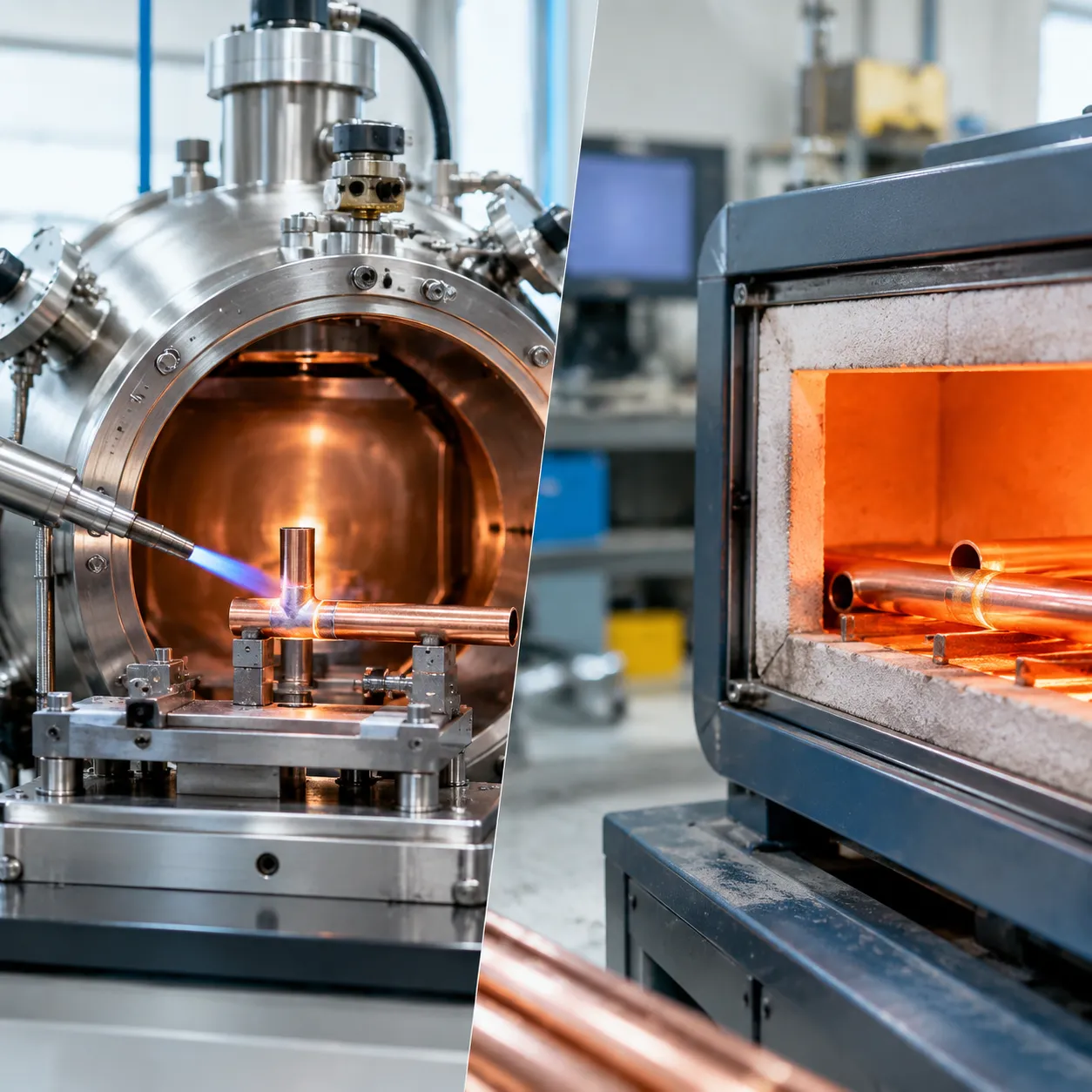
Joining complex, high-precision assemblies requires fluxless filler metal flow. Processing components in a high-performance vacuum brazing furnace creates leak-tight, high-strength joints across stainless steels, superalloys, and ceramic-to-metal combinations without post-braze cleaning.
Vacuum Sintering
Powder metallurgy parts, metal injection molding (MIM) components, and 3D-printed metals achieve maximum structural density during vacuum sintering. The vacuum pulls out binder residues and eliminates pore-trapped gases.
Vacuum Carburizing / Low-Pressure Carburizing (LPC)
Low-pressure carburizing injects precise pulses of hydrocarbon gas at elevated temperatures under vacuum. This drives uniform carbon diffusion into tight radii and blind holes without intergranular oxidation.
Stress Relieving in Vacuum
To prevent distortion during downstream machining, we use vacuum stress relieving on critical parts. Removing internal stresses in an inert environment maintains tight dimensional tolerances without altering surface chemistry.
Advantages of the Vacuum Furnace Heat Treatment Process
Switching to a vacuum furnace heat treatment process eliminates post-processing bottlenecks and quality variations common in conventional atmospheric processing. By isolating workpieces in an oxygen-free chamber, we achieve precise thermal cycles while maintaining complete surface protection.
| Performance Metric | Conventional Treatment | Vacuum Heat Treatment Process |
|---|---|---|
| Surface Finish | Heavy scaling, oxidation, decarburization | Bright, scale-free, pristine surface |
| Part Distortion | High risk from uneven thermal gradients | Minimal warping via uniform gas quenching |
| Secondary Finishing | Mandatory sandblasting or acid washing | Eliminates or drastically reduces post-machining |
| Environment & Safety | Toxic fumes, open flames, chemical waste | Clean shop floor, zero hazardous effluents |
Core Process Benefits
-
- Surface Quality Improvement: Heating under vacuum prevents oxidation, scaling, and carbon depletion. Parts come out bright and clean without altering exact surface chemistry.
- Better Dimensional Stability: Controlled heating rates paired with high-pressure gas quenching heat treatment minimize thermal shock, keeping tight tolerances intact.
- Higher Process Repeatability: Fully automated control systems store precise thermal cycles and vacuum levels, ensuring identical metallurgical results batch after batch. You can review how these thermal cycles are managed in our detailed vacuum furnace working guide.
- Lower Contamination Risk: Vacuum operation removes ambient air, moisture, and residue, protecting sensitive stainless steels, titanium, and superalloys from embrittlement.
- Reduced Secondary Finishing: Pristine surface quality eliminates the need for expensive post-heat-treatment operations like acid pickling, mechanical grinding, or shot blasting.
- Environmental and Workplace Benefits: Our industrial vacuum furnaces create a quiet, cool, safe plant environment with zero toxic liquid waste, smoke, or harmful gas emissions.
Typical Materials and Applications in Vacuum Heat Treatment
Tool Steels and Die Steels
Cold-work, hot-work, and high-speed tool steels (such as D2, H13, and M2) require strict temperature control during hardening and tempering. We heat-treat these alloys under vacuum to prevent surface decarburization, preserve sharp cutting edges, and eliminate the need for secondary scale removal or heavy grinding.
Stainless Steels
Martensitic, precipitation-hardening, and austenitic stainless steels (including 17-4 PH, 316L, and 440C) benefit from high-purity vacuum furnace processing. This keeps the surface bright, maintains corrosion resistance, and ensures consistent core hardness without chemical pickling.
Titanium and Reactive Alloys
Titanium and reactive metals pick up oxygen, hydrogen, and nitrogen rapidly at elevated temperatures. Vacuum furnace processing eliminates atmospheric exposure to prevent alpha-case formation and hydrogen embrittlement in advanced materials applications.
Superalloys and Aerospace Components
Nickel- and cobalt-based superalloys like Inconel and Hastelloy depend on tight vacuum furnace temperature control for stress relieving, solution treating, and aging. This delivers maximum creep resistance and structural reliability for critical turbine and jet engine parts.
Powder Metallurgy Parts
Sintering and post-sintering heat treatment for high-density powder metallurgy parts demand absolute atmosphere purity. Vacuum processing burns off residual binders cleanly, seals micro-porosity, and enhances overall mechanical strength.
Automotive Parts
High-stress gears, transmission shafts, fuel injection components, and drive system parts utilize low-pressure vacuum carburizing and gas quenching heat treatment. This combination delivers uniform case depth with minimal distortion, reducing post-heat treatment finishing costs.
Medical and Electronics Components
Surgical instruments, orthopedic implants, micro-electronic frames, and vacuum interrupters require pure, uncalaminated surfaces. A customized vacuum annealing process delivers pristine cleanliness, biocompatibility, and optimal magnetic or mechanical properties.
Vacuum Furnace Heat Treatment Process vs. Conventional Heat Treatment
| Feature | Vacuum Furnace | Atmospheric Furnace | Salt Bath Furnace | Continuous Furnace |
|---|---|---|---|---|
| Atmosphere Control | Oxygen-free vacuum | Shielding gas / Endothermic | Molten salt bath | Gas blanket |
| Surface Finish | Bright, oxidation-free | Scaling & decarburization risk | Salt residue / Staining | Minor scaling possible |
| Environmental Impact | Clean, zero toxic emissions | Carbon & gas exhaust | Hazardous waste disposal | Exhaust emissions |
| Part Distortion | Very low (controlled gas quench) | Moderate to high | Low to moderate | High |
Vacuum Furnace vs. Atmospheric Furnace
Atmospheric furnaces rely on protective gas blankets (like endothermic gas or nitrogen) to displace ambient air. However, trace oxygen and moisture always remain, causing surface scaling, intergranular oxidation, or decarburization.
In contrast, a vacuum heat treatment furnace evacuates air entirely down to vacuum levels of 10⁻² to 10⁻⁵ mbar. Eliminating oxygen allows parts to exit the chamber bright, clean, and free of oxidation. This removes the need for expensive secondary cleaning, sandblasting, or acid washing. For a complete overview of system options, review our comprehensive vacuum furnace guide.
Vacuum Furnace vs. Salt Bath Heat Treatment
Salt baths deliver rapid heat transfer and reasonable temperature uniformity, but they introduce severe operational hazards:
-
- Hazardous Waste: Disposal of toxic salt sludge faces strict global environmental regulations and high costs.
- Post-Cleaning Burden: Salt clings to internal channels and blind holes, requiring intensive hot-water washing cycles.
- Operator Safety Risks: Open liquid salt baths carry splash hazards, corrosion threats, and harsh workplace fumes.
Our vacuum systems replace liquid salt with clean gas quenching heat treatment using high-purity inert gas. Parts cool dry and eco-friendly without post-wash steps.
Vacuum Furnace vs. Continuous Furnace Systems
Continuous furnaces excel at high-volume, mass production of simple carbon steel parts. However, they lack thermal cycle flexibility:
-
- Recipe Rigidity: Changing thermal profiles on continuous lines requires hours of transition time and wasted energy.
- Atmosphere Creep: Open entry and exit doors make air isolation difficult.
- Batch Isolation: Vacuum furnaces let us tailor precise heating rates, soak times, and quench pressures for every specific alloy load.
When Vacuum Heat Treatment Is the Better Choice
We recommend using a vacuum furnace setup when production demands:
-
- Zero Surface Defects: Critical aerospace, medical, or tool steel parts where scaling or decarburization causes immediate part failure.
- Tight Dimensional Tolerances: High-value components prone to warping under harsh liquid oil quenches.
- Complex Internal Geometries: Parts with deep blind holes, cooling channels, or fine threads that trap salts or oils.
- Reactive Metals: Alloys like titanium, tantalum, and stainless steel that react instantly with atmospheric oxygen.
Vacuum Furnace Heat Treatment Process Problems and Prevention
Even in a high-precision vacuum furnace heat treatment process, minor operational oversights can degrade metallurgical results. We focus on identifying root causes quickly on the shop floor to prevent scrap, rework, and downtime.
Distortion and Warping
Thermal shock and unbalanced gas flow during cooling cause dimensional movement in complex components.
Root Cause: Excessive quench pressure or poor part spacing on fixtures.
Prevention: Optimize loading arrangements to allow uniform gas circulation, apply stepped preheating steps during the thermal processing cycle, and adjust quench pressure to match section thickness.
Incomplete Hardness Development
Parts coming out of the chamber softer than specified waste time and energy.
Root Cause: Insufficient soaking time, low peak temperatures, or inadequate cooling velocity.
Prevention: Verify calibration for vacuum furnace temperature control sensors, ensure proper gas quenching heat treatment parameters, and avoid overloading the hot zone beyond rated capacity.
Vacuum Leakage and Pressure Spikes
Air leaks introduce oxygen and moisture into the chamber, causing surface discoloration and loss of brightness. Unlike a standard controlled atmosphere furnace, vacuum systems demand absolute airtight integrity to preserve surface quality.
Root Cause: Worn door gaskets, dirty O-rings, or failing vacuum valves.
Prevention: Conduct routine leak-rate tests, clean seal faces before every run, and service vacuum pump oil according to schedule.
Uneven Heating
Discrepancies in heating rates across a load yield inconsistent microstructures.
Root Cause: Degraded heating elements or poor temperature uniformity within the hot zone.
Prevention: Perform regular Temperature Uniformity Surveys (TUS), replace aging graphite or metal heating elements, and maintain adequate spacing between workload items.
Quench Failure and Insufficient Cooling
Slow cooling speeds prevent metals from transforming into the desired martensitic structure.
Root Cause: Low gas pressure, clogged nozzles, or heat exchanger fouling.
Prevention: Maintain high-purity quench gas supply (nitrogen or argon), verify blower motor performance, and clean gas quenching heat exchanger tubes regularly.
How to Choose the Right Vacuum Furnace for Heat Treatment
Key Factors for Selecting a Vacuum Heat Treatment Furnace
| Evaluation Area | Key Criteria to Inspect | Operational Impact |
|---|---|---|
| Furnace Type | Horizontal vs. vertical batch, chamber size, loading method | Workflow efficiency, plant footprint, and part handling ease |
| Thermal Performance | Temperature range (up to 1300°C+), uniformity standard | Consistent hardness, minimal distortion, precise temperature control |
| Vacuum System | Ultimate vacuum level, pump-down time, leak rate | Surface oxidation prevention, clean finish, process repeatability |
| Quenching System | Gas pressure (2 to 20 bar), multi-directional flow | Fast cooling rate, target core hardness, distortion control |
| Control & Data | PLC automation, recipe management, SCADA tracking | Process traceability, lower labor requirements, repeatable cycles |
Critical Selection Steps
-
- Match Furnace Type to Your Process: Determine whether your parts need standard bright hardening, low-pressure carburizing, or specialized joining. For standard shop processing, a versatile horizontal vacuum furnace provides optimal loading accessibility and dependable thermal processing cycle control.
- Check Temperature Range and Uniformity: Verify that the furnace easily covers your required heating ranges while maintaining tight vacuum furnace temperature control throughout the hot zone.
- Evaluate Vacuum Performance: Select a high vacuum furnace equipped with appropriate diffusion or turbomolecular pumps if your alloys require ultra-clean conditions to avoid oxidation.
- Review Hot Zone Materials and Service Life: Choose graphite hot zones for rugged, high-volume production, or all-metal hot zones (molybdenum/stainless steel) for sensitive aerospace and medical materials.
- Confirm Quenching Capability: Ensure the gas quenching heat treatment system offers sufficient pressure and gas velocity to achieve full hardness in your heaviest part cross-sections.
- Look at Automation and Traceability: Modern PLC systems allow automated recipe execution, real-time data logging, and complete batch traceability.
- Consider Supplier Engineering Support: Work with manufacturers who offer custom modifications, prompt spare parts delivery, and ongoing technical service. Investing in comprehensive vacuum furnace solutions guarantees long-term process reliability and minimized downtime.
Why Choose Haitem Furnace for Vacuum Heat Treatment Solutions
We design and manufacture industrial thermal equipment built to optimize your entire vacuum furnace heat treatment process. We combine heavy-duty chamber construction with precise control automation to minimize distortion, prevent surface contamination, and deliver consistent metallurgical results across high-volume production runs.
Custom Engineering for Process Needs
Every component geometry and alloy family requires a specific thermal profile. We adapt hot zone materials, heating element configurations, and chamber dimensions to fit your exact metallurgical heat treating workflows. If your operation demands non-standard chamber designs or specialized thermal processing cycles, explore our custom design and engineering solutions engineered specifically for high-spec industrial environments.
Precision Control and Reliable Performance
-
- Advanced Vacuum Furnace Temperature Control: Multi-zone heating element layouts deliver tight temperature uniformity across complex, dense workloads.
- Rapid Vacuum Evacuation: High-capacity pumping systems achieve clean vacuum levels quickly, protecting sensitive alloys from oxidation.
- Efficient Gas Quenching: Configurable gas quenching heat treatment systems provide controlled cooling rates necessary for precise vacuum hardening and stress relieving.
| Capability | Haitem Vacuum Furnace Solutions | Conventional Market Systems |
|---|---|---|
| System Flexibility | Tailored hot zone design for your specific alloy requirements | Fixed chamber dimensions and standardized options |
| Control Precision | Multi-zone thermal monitoring for tight temperature tolerances | Basic loop control prone to thermal gradients |
| Service Integration | Turnkey manufacturing, installation, and global field support | Basic equipment supply without process optimization |
Turnkey Manufacturing and Global Support
We manage the entire equipment lifecycle in-house—from structural fabrication and vacuum testing to site installation and operator training. Our global support network ensures your high vacuum furnace maintains maximum uptime, providing rapid spare parts delivery, process calibration, and technical service wherever your plant operates.
Frequently Asked Questions About Vacuum Furnace Heat Treatment Process
What is the main purpose of vacuum heat treatment?
We use vacuum heat treatment to heat metal parts in an oxygen-free chamber. Removing air prevents oxidation, scaling, and decarburization, giving you bright, clean surfaces and precise mechanical properties without requiring extra mechanical cleaning.
Which materials benefit most from vacuum furnace processing?
High-value alloys and precision parts gain the biggest boost in performance and surface quality:
Tool and die steels: D2, H13, A2, and M2 high-speed steels
Stainless steels: 300/400 series and precipitation-hardening grades like 17-4PH
Titanium and reactive alloys: Grade 5 Ti-6Al-4V and zirconium alloys
Superalloys: Inconel, Hastelloy, and René aerospace materials
Powder metallurgy components: High-density sintered gears and structural parts
Is vacuum heat treatment better than gas furnace heat treatment?
For high-precision parts, yes. Standard atmospheric gas furnaces expose hot metal to oxygen and carbon gases, which causes surface scaling, micro-cracking, and soft skin. Vacuum heat treatment eliminates contamination, delivers repeatable hardness, and drastically lowers post-treatment machining costs.
How does gas quenching work in a vacuum furnace?
Once parts finish soaking at target temperatures, high-purity inert gas—typically nitrogen, argon, or helium—is injected into the chamber. Heavy-duty blowers circulate this gas under high pressure (2 to 20 bar) through directionally targeted nozzles to cool parts uniformly and achieve desired hardness.
What vacuum level is needed for quality heat treatment?
The required pressure depends on your material sensitivity and process specs:
Rough vacuum ($10^0$ to $10^{-1}$ mbar): Basic stress relieving and low-alloy processing
Medium vacuum ($10^{-2}$ to $10^{-3}$ mbar): Standard tool steel hardening, tempering, and low-pressure carburizing
High vacuum ($10^{-4}$ to $10^{-6}$ mbar): Aerospace superalloys, titanium components, and critical brazing cycles
Can vacuum furnaces be used for brazing and sintering?
Yes. Vacuum environments eliminate surface oxide layers on metallic joints without requiring flux, producing clean, high-strength brazed assemblies. For powder metallurgy and advanced manufacturing, specialized sintering furnaces consolidate metal powders into solid, high-density parts with minimal porosity.
What factors affect the final hardness and distortion?
-
- Thermal uniformity: Uneven hot zones create temperature differences across parts, triggering stress and warping.
- Quench pressure and gas velocity: Cooling rates must match the material's TTT (time-temperature-transformation) curve to get full hardness without thermal shock.
- Part racking and spacing: Overpacked workloads block gas circulation, leading to soft spots and uneven cooling.
- Soak time accuracy: Precise dwell times at target temperatures ensure complete phase transformation throughout the cross-section.