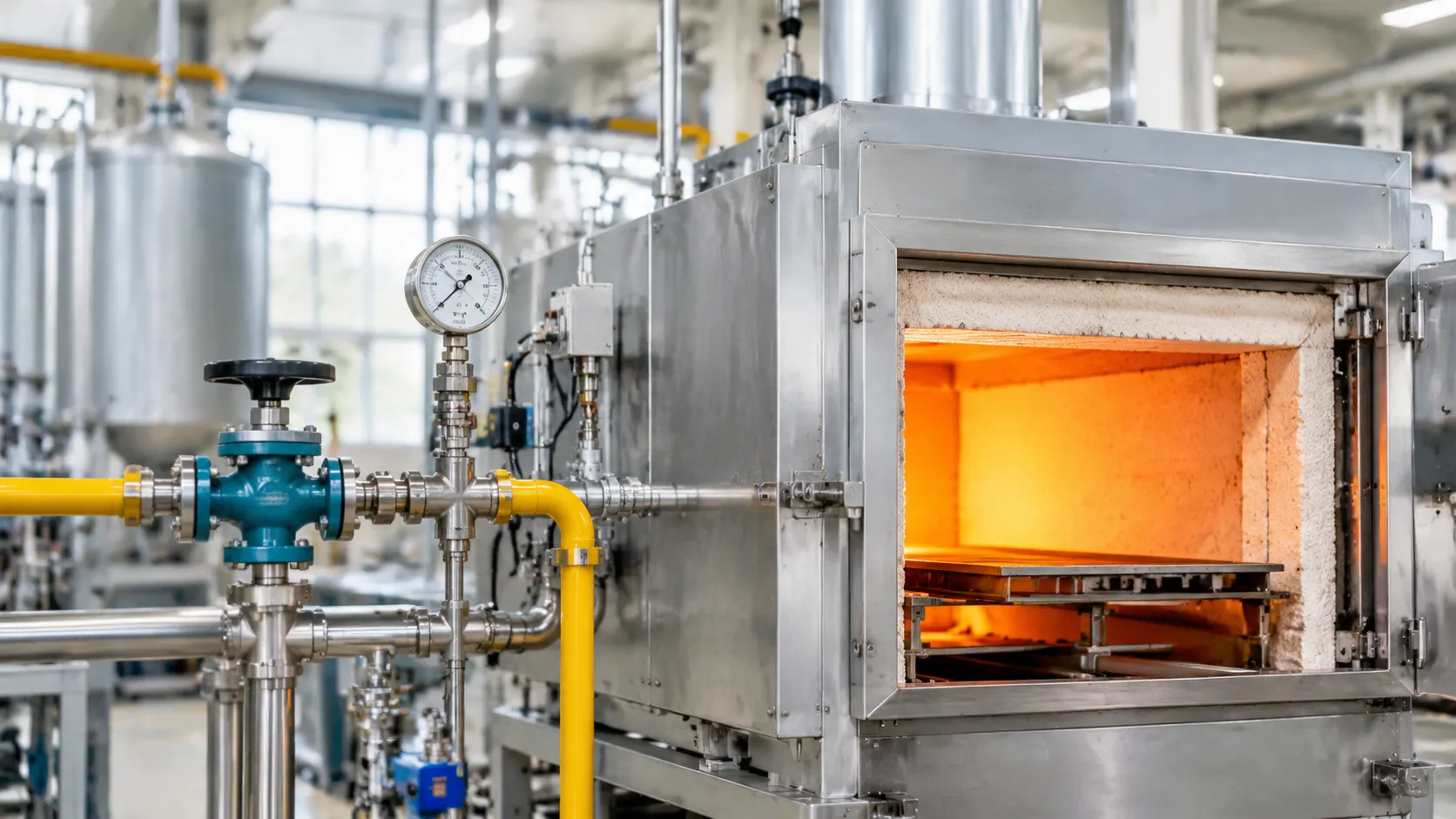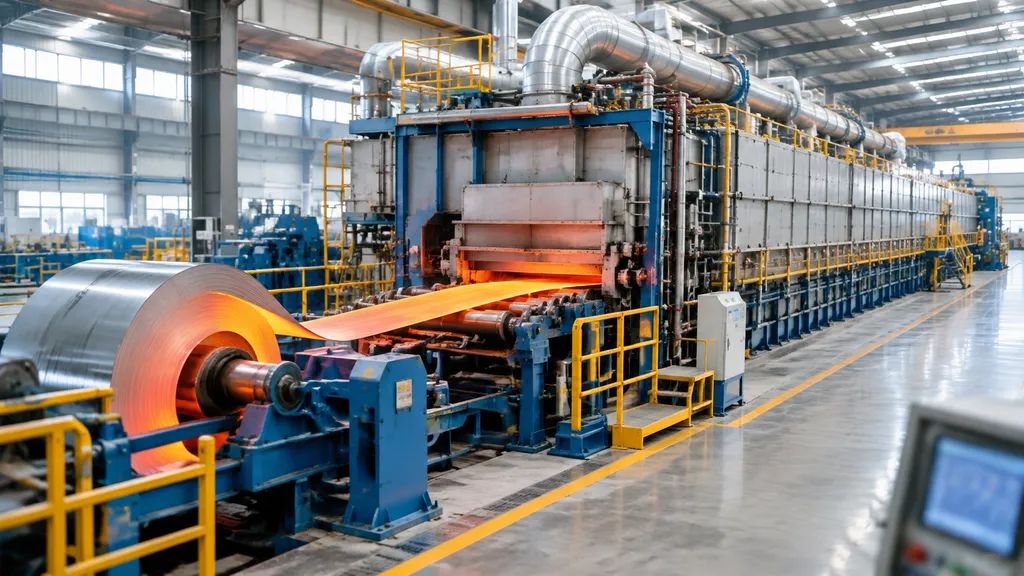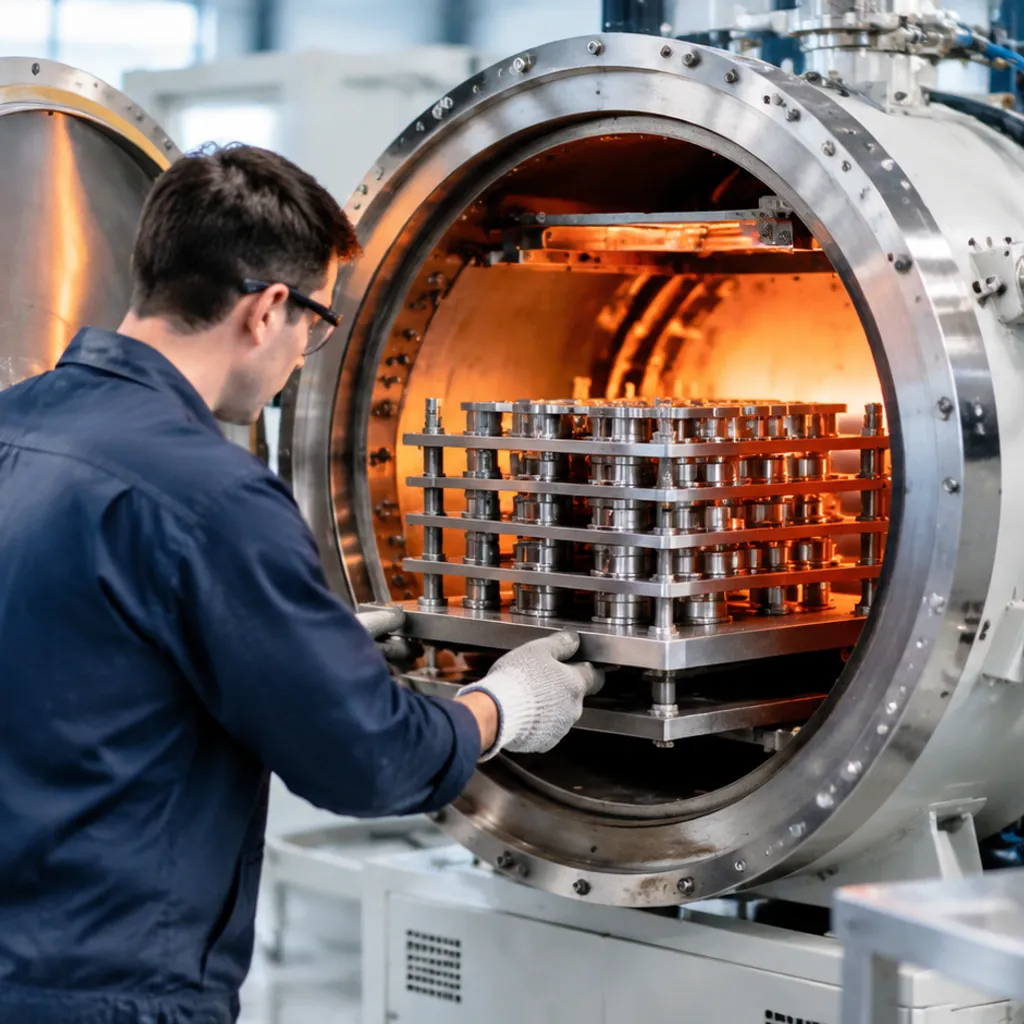
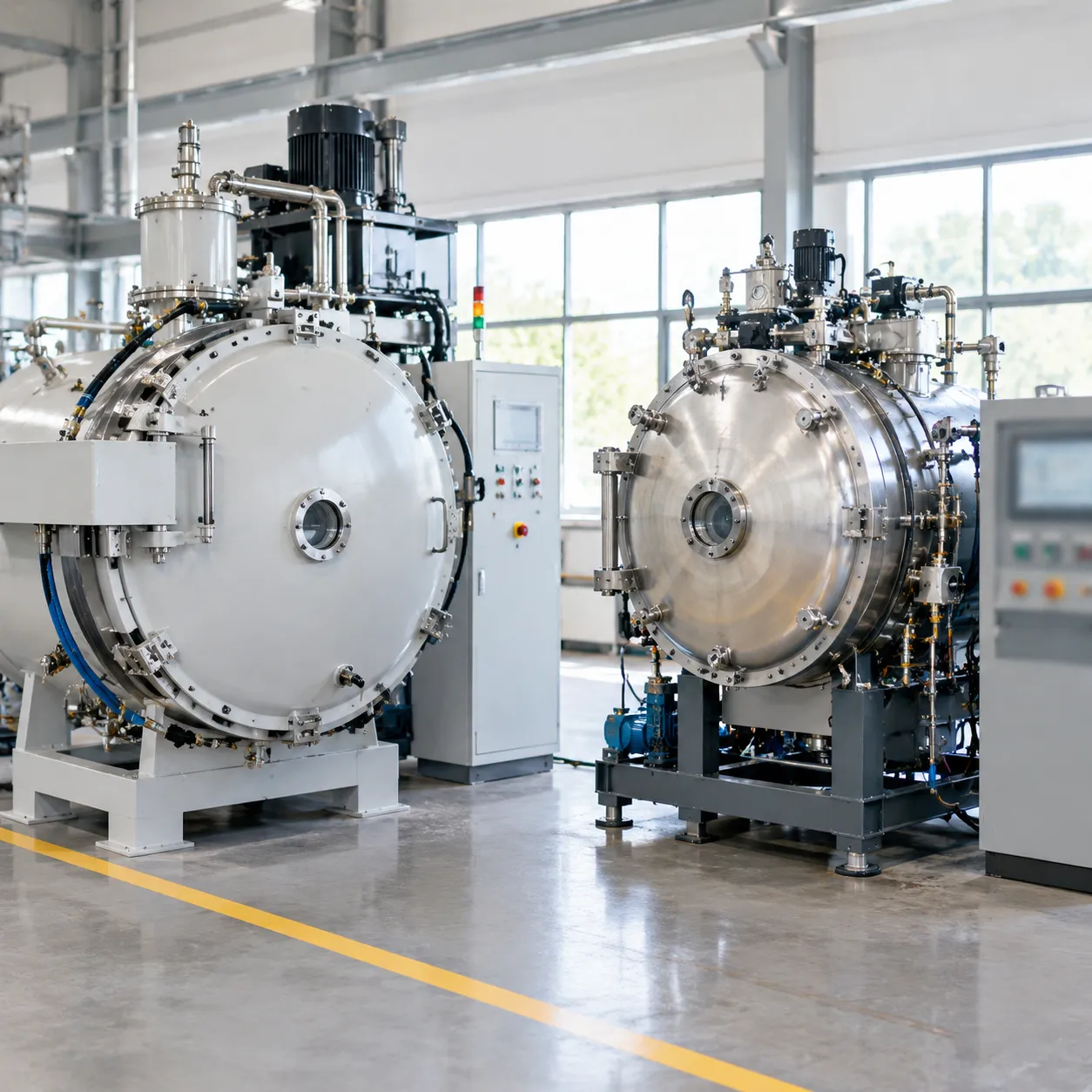
Understanding Vacuum Furnace Chamber Configurations
Choosing the right furnace architecture directly impacts thermal efficiency, cycle times, and operating costs. In industrial heat treatment, vacuum furnace systems are categorized by how they segregate heating, soaking, and quenching stages.
Single-Chamber Design and Working Principles
A single chamber vacuum furnace handles the complete thermal cycle inside one enclosed vessel. The workload is loaded, pumped down to vacuum, heated, soaked, and cooled within the same hot zone.
-
- Heating & Cooling in One Zone: The hot zone insulation and heating elements must endure continuous thermal cycling from room temperature to process heat and back down.
- Quench Method: Typically utilizes high-pressure gas quenching (HPGQ) directly inside the main chamber.
- Best Suited For: Low-volume production, tool-and-die shops, R&D labs, and processes with extended soak times.
Double-Chamber Architecture: Heating and Quench Separation
A double chamber vacuum furnace divides the process by isolating the heating zone from the cooling zone using an internal vacuum-tight door.
-
- Dedicated Hot Zone: The heating chamber remains hot between cycles, drastically reducing power consumption and thermal shock on heating elements.
- Separated Quench Zone: Parts transfer rapidly into a dedicated chamber for either high-pressure gas quench or vacuum oil quenching without contaminating the hot zone.
- Throughput Benefit: While one batch is cooling or quenching, the hot zone can immediately take in the next load.
Triple-Chamber Layout: Purge, Heat, and Cooling Zones
A triple-chamber vacuum furnace creates a streamlined, semi-continuous processing line inside an integrated vacuum shell. It splits the workflow across three dedicated modules:
-
- Vestibule / Pre-Chamber: Used for entry, initial pump-down, atmosphere purging, and optional low-temperature preheating or dewaxing.
- Central Heating Zone: Maintained continuously at target processing temperature under high vacuum or partial pressure.
- Quench / Exit Chamber: Dedicated high-speed gas or vacuum oil quench module with direct unload capability.
This setup eliminates idle ramp-up delays and isolates atmospheric changes completely.
Atmospheric Isolation and Transfer Mechanisms
| Configuration | Chamber Separation | Quench Capability | Internal Transfer Mechanism | Thermal Retention |
|---|---|---|---|---|
| Single Chamber | None (All-in-one vessel) | Gas quench only | None required | Low (Hot zone cools down every cycle) |
| Double Chamber | 1 Internal vacuum/pressure door | Gas or Oil quench | Pneumatic / mechanical drive to quench tank | High (Heating zone stays at temperature) |
| Triple Chamber | 2 Vacuum-tight isolation valves | Gas and/or Oil quench | Automated internal transfer chain/roller hearth | Maximum (Near-continuous batch flow) |
The primary technical differentiator lies in the isolation valves and automated material transfer. Multi-chamber systems rely on heavy-duty, fast-acting internal vacuum gates. These seal each zone completely, preventing oil vapor backstreaming into the hot zone and stopping thermal loss during load transfers.
Single-Chamber Vacuum Furnaces: Features, Pros, and Cons
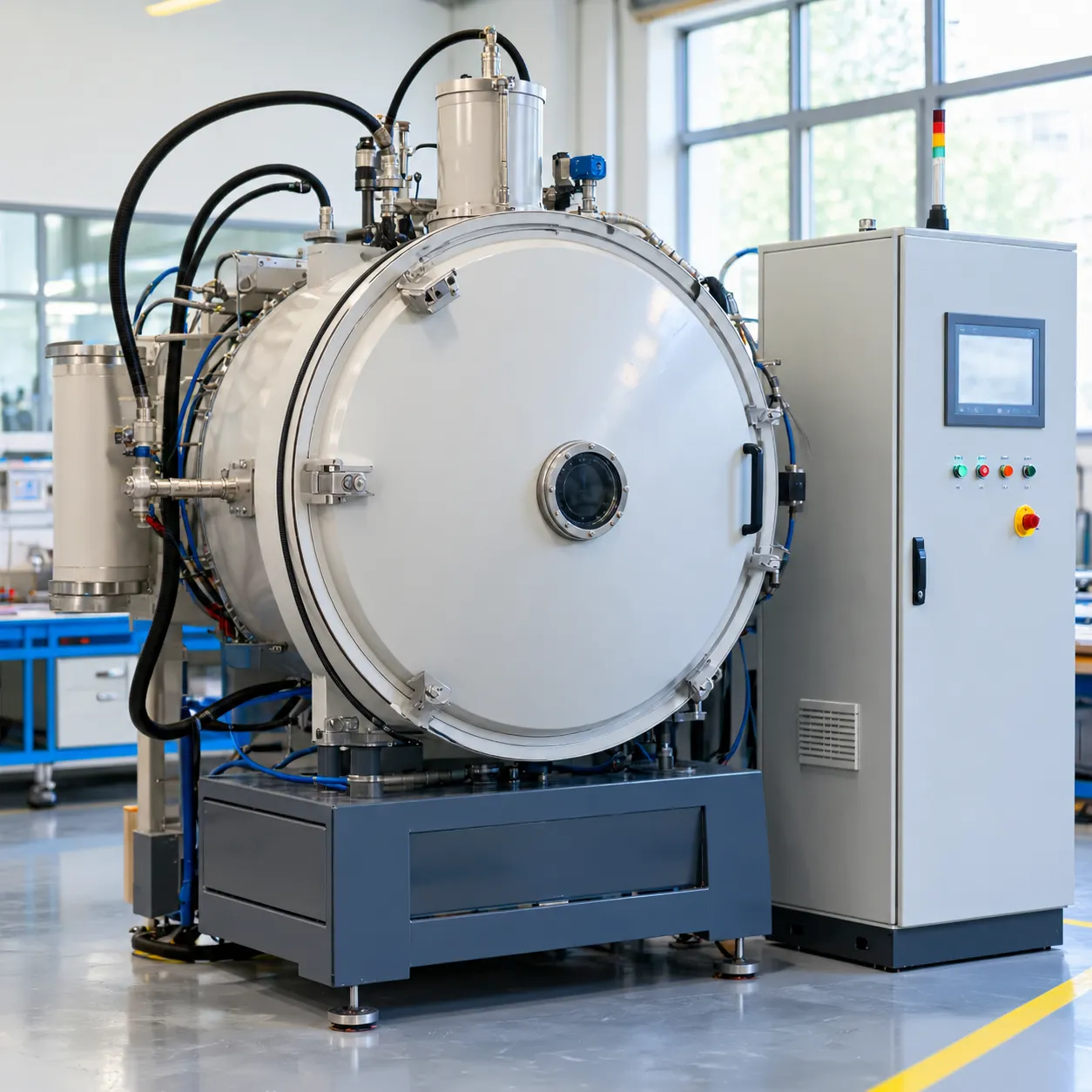
In a single-chamber vacuum furnace, every phase of the thermal cycle takes place in one sealed vessel. We load the parts into the cold hot zone, pull vacuum, ramp up to temperature, soak, and introduce high-pressure inert gas to quench the load before opening the door.
While simple, this all-in-one approach shapes operational throughput and equipment wear.
Batch Processing and Thermal Limits
Because heating and cooling happen in the exact same chamber, the system must undergo full thermal cycling with every load:
-
- Longer Turnaround Cycles: The entire hot zone—including heating elements, insulation, and hearth rails—must cool down with the workload before unloading, then heat back up for the next batch.
- Thermal Stress: Continual heating and rapid cooling cycles accelerate the fatigue of graphite or metallic hot zone components.
- Process Interruption: You cannot stage or preheat the next batch while the current one cools.
Pros, Cons, and Key Specifications
| Feature | Single-Chamber Characteristic | Operational Impact |
|---|---|---|
| Footprint | Compact, standalone footprint | Fits easily into tight shop floors with minimal floor space requirements. |
| Capital Cost (CAPEX) | Lowest initial investment | Fast procurement and lower barrier to entry for in-house heat treatment. |
| Cycle Flexibility | Highly versatile parameter control | Excellent for diverse alloy batches and varied vacuum furnace applications. |
| Throughput | 1 batch per full cycle time | Bottlenecks arise when production volume scales up. |
| Energy Efficiency | Low to moderate | Energy is spent repeatedly reheating the furnace structure itself. |
Best-Fit Applications
Single-chamber units serve specific production profiles where flexibility outweighs continuous volume output:
-
- Tool and Die Shops: Ideal for hardening mixed, small-batch tool steels where turnaround flexibility matters more than continuous tonnage.
- R&D and Pilot Laboratories: Perfect for developing recipes, testing new materials, and validating heat treatment parameters.
- Low-Volume Manufacturing: Reliable workhorse for specialized components requiring precise vacuum integrity without continuous multi-shift production runs.
Double-Chamber Vacuum Furnaces: Balancing Speed and Quench Options
When batch turnaround bottlenecks start hurting production schedules, moving to a double-chamber architecture is the standard upgrade. We separate the thermal cycle into two dedicated sections: a vacuum heating chamber and an isolated quench chamber. This layout delivers faster cycle times and much greater quenching versatility without cooling down the main hot zone.
Dedicated Zones for Heating and Quenching
In a two-chamber layout, the workload moves swiftly through an internal vacuum-tight door from the heating zone into the cooling zone. This lets us use specialized quenching media without contaminating the hot zone:
-
- Vacuum Oil Quenching: Fast transfer into an integrated oil bath for deep-hardening alloy steels without surface oxidation.
- High-Pressure Gas Quenching: High-velocity cooling using inert gases in a specialized chamber, similar to dedicated gas quench vacuum furnace systems.
- Atmosphere Isolation: The hot zone stays under vacuum while the quench chamber handles the high-pressure gas or oil agitation.
Reduced Thermal Shock and Extended Element Life
Cooling parts in a separate chamber protects your internal hot zone components. Because cold gas or oil vapor never enters the heating section, the heating elements and graphite or metallic insulation stay at or near operating temperatures.
| Operational Factor | Single Chamber Setup | Double Chamber Setup | Shop Floor Impact |
|---|---|---|---|
| Hot Zone Thermal Shock | High (Cooled every cycle) | Low (Maintains base heat) | Up to 2x longer heating element life |
| Quench Media Options | Gas only (typically) | Oil or High-Pressure Gas | Expanded metallurgical flexibility |
| Cycle Turnaround | Full ramp-down required | Immediate reload capability | 30% to 50% higher batch throughput |
| Insulation Wear | Rapid degradation from cycling | Stable thermal conditions | Lower scheduled maintenance costs |
Throughput Gains and Process Versatility
By eliminating the need to cool and reheat the entire hot zone mass between loads, double-chamber systems drastically cut furnace cycle times. While one batch cools in the quench vestibule, the heating chamber is already prepared for the next basket.
This configuration is the workhorse for:
Tool and Die Hardening: Fast, uniform oil or gas cooling for high-alloy tool steels.
Case Hardening and Carburizing: Rapid quench transfer directly following high-temperature diffusion cycles.
Industrial Vacuum Brazing and Sintering: Clean heating followed by controlled, rapid cooling without element oxidation.
Triple-Chamber Vacuum Furnaces: High-Throughput Continuous Batch Operation
When you hit a production wall where single and double chambers create a bottleneck, the triple-chamber vacuum furnace becomes the real game-changer. We design these systems to run near-continuous vacuum heat treatment by keeping every core phase in its own dedicated, vacuum-isolated environment.
The Three-Zone Workflow
Instead of making one chamber do everything, a three-chamber vacuum furnace moves workpieces through three synchronized modules:
-
- Zone 1: Load, Purge, and Preheat: Parts enter the front vestibule where air is evacuated and loads can be safely preheated without contaminating the main hot zone.
- Zone 2: Main Heating Chamber: This central hot zone stays at process temperature continuously. Because it never cools down between batches, you eliminate the massive thermal ramp-up delays that eat up standard cycle times.
- Zone 3: Quench and Cooling Chamber: Once the soak is complete, an internal transfer mechanism moves the load into a dedicated cooling module.
[Load / Purge / Preheat] ──> [Main High-Heat Zone] ──> [Quench / Cooling Chamber]
Flexible Quench Integration and Unmatched Throughput
A triple-chamber setup allows you to tailor your cooling method directly to the metallurgy of your parts:
-
- Vacuum Oil Quenching: Rapid transfer into an internal agitated oil bath for deep hardening of alloy steels without vapor blanket stalls.
- Multi-Bar Gas Quenching: High-velocity cooling using a quick quench vacuum furnace with 12 bar gas quenching setup to handle tight-tolerance aerospace and tool steel requirements with minimal distortion.
Maximum Thermal Efficiency and Lowest Cost Per Part
Because the central heating zone remains hot 24/7, you cut electricity usage per run dramatically. You avoid the thermal shock cycles that degrade graphite elements and insulation in batch setups. For commercial heat treaters and high-volume automotive plants, the triple-chamber vacuum furnace delivers the lowest energy cost per part and the highest repeatable tonnage you can get out of a single footprint.
Performance and Spec Comparison: Single vs Double vs Triple Chamber

| Performance Metric | Single-Chamber Vacuum Furnace | Double-Chamber Vacuum Furnace | Triple-Chamber Vacuum Furnace |
|---|---|---|---|
| Cycle Throughput | Lowest (1 batch at a time) | Moderate (2 overlapping stages) | Highest (Continuous 3-stage sequencing) |
| Hot Zone Thermal Retention | Cools down with every batch | Retains heat between runs | Continuous steady-state temperature |
| Energy Consumption per Part | Highest at scale | Moderate | Lowest at high production volumes |
| Mechanical Complexity | Simple (No internal transfer) | Moderate (1 internal door/transfer) | High (Multiple isolation valves & drives) |
| Initial CAPEX | Lowest | Moderate | Highest |
| OPEX per Kilogram | High for continuous runs | Balanced for medium volume | Lowest under 24/7 continuous operation |
Cycle Time and Processing Capacity Benchmarks
When evaluating throughput, the primary bottleneck is how long parts occupy the hot zone.
-
- Single Chamber: Heating, soaking, and gas cooling all happen in the exact same vessel. You must wait for the entire chamber to cool down before opening the door, making it the slowest option.
- Double Chamber: The heating zone transfers parts directly into a dedicated quench chamber (gas or oil). The heating chamber can immediately take the next batch, reducing cycle times by 30% to 50%.
- Triple Chamber: By splitting the workload across load/preheat, high-heat, and quench stations, parts move in a synchronized rhythm. This continuous batch flow delivers maximum parts-per-hour output when optimizing your vacuum furnace heat treatment process.
Energy Consumption and Thermal Retention
Thermal efficiency directly impacts your utility bills.
-
- Single-Chamber Systems: Every cycle forces the hot zone insulation and heating elements to cool down to safe unloading temperatures and ramp back up. This constant thermal cycling consumes substantial kilowatt-hours per kilogram processed.
- Multi-Chamber Systems: In double and triple chamber units, the main hot zone stays at or near process temperature around the clock. By avoiding complete thermal ramp-downs between loads, you save significant electrical power on every single run.
Maintenance Requirements and Downtime Risks
-
- Single Chamber: Minimal moving parts inside the shell. Routine maintenance focuses primarily on vacuum pump servicing, door seals, and replacing heating elements worn down by regular thermal expansion and contraction cycles.
- Double and Triple Chamber: Heating elements and graphite insulation last significantly longer because they avoid severe thermal shock. However, internal transfer mechanisms, vacuum isolation gates, and inter-chamber drive systems introduce more mechanical wear points that require disciplined inspection schedules.
CAPEX vs. OPEX Trade-Offs
-
- Single Chamber: Lowest initial capital outlay. It provides the best path to profitability for job shops, tool-and-die makers, and low-volume aerospace batches where furnace flexibility outweighs raw speed.
- Double Chamber: A balanced mid-tier investment that pairs fast turnaround with flexible oil or high-pressure gas quenching options.
- Triple Chamber: High initial capital investment with the lowest cost-per-part over the lifecycle of the equipment. For high-volume automotive, fastener, or precision component manufacturing running multi-shift operations, the rapid cycle rate quickly offsets the upfront equipment cost.
Choosing the Right Chamber Configuration for Your Heat Treatment Needs
Selecting between a single, double, or triple chamber design comes down to balancing your metallurgy, production volume, floor space, and operating budget. We look at four core criteria to determine the best fit for any shop floor.
Part Volume, Geometry, and Repeatability
Your annual production volume and part mix dictate whether a batch or semi-continuous layout makes sense:
High-Mix, Low-Volume: A single chamber unit handles varying part sizes, recipes, and alloy grades without complex scheduling.
Mid-to-High Volume: A double chamber system doubles output for standard gears, shafts, and tooling by isolating quenching.
Mass Production: A triple-chamber vacuum furnace delivers non-stop part sequencing for high-volume automotive and aerospace components requiring continuous repeatability.
When post-quench processing is needed, pairing your main system with a dedicated tempering furnace ensures a streamlined workflow without tying up primary vacuum chambers.
Metallurgical Constraints and Distortion Control
Cooling rate sensitivity and distortion limits determine the required chamber separation:
Distortion-Sensitive Parts: Multi-directional high-pressure gas quenching in a dedicated chamber minimizes thermal shock and uneven movement across thin cross-sections.
High-Hardenability Alloys: Oil quenching requires an isolated chamber to avoid vaporizing quench oil onto hot heating elements.
Clean Surface Requirements: True vacuum transfer between heating and cooling zones in multi-chamber units eliminates atmospheric contamination during phase transformation.
Facility Footprint, Utilities, and Automation
Before choosing a platform, evaluate your plant infrastructure:
Floor Space: Single-chamber units fit compact toolrooms, while triple-chamber units require a long linear footprint and dedicated loading tables.
Utility Demands: Multi-chamber furnaces maintain hot zone temperatures continuously, which flattens peak electrical demand compared to the repeated high-draw heating ramps of single-chamber units.
Automation Readiness: Double and triple chamber systems integrate directly into automated guided vehicle (AGV) lines and robotic cell loaders.
ROI Framework by Annual Production Tonnage
To evaluate capital expenditure against long-term operational cost, use this decision framework:
| Annual Tonnage / Demand | Recommended Configuration | Primary ROI Driver | Equipment Match |
|---|---|---|---|
| < 150 Tons/Year Variable recipes, low throughput |
Single Chamber | Low initial CAPEX, minimal floor space, zero idle energy waste | Standard batch vacuum heat treatment furnace |
| 150 – 600 Tons/Year Consistent hardening runs |
Double Chamber | 40–50% faster cycles, reduced element wear, versatile oil/gas quench | Two-chamber vacuum hardening cell |
| > 600 Tons/Year 24/7 continuous operations |
Triple-Chamber Vacuum Furnace | Lowest cost per part, continuous hot-zone utilization, zero cycle ramp lag | Three-chamber semi-continuous vacuum line |
Frequently Asked Questions (FAQs)
Can a single chamber furnace perform oil quenching?
No. Standard single chamber systems are engineered for vacuum gas cooling rather than liquid oil immersion. Placing an oil quench tank inside a single hot zone would vaporize the quench oil upon contact with hot elements, immediately contaminating the insulation, degrading heating components, and blinding the pumping system. When oil quenching is essential for thick-section alloys, we use double or triple-chamber vacuum furnace designs with vacuum-sealed isolation doors separating the hot zone from the quench vestibule. Understanding how a vacuum furnace works makes it clear why volatile media and clean heating chambers must stay physically isolated.
How does a triple chamber furnace maintain vacuum integrity between zones?
A triple chamber vacuum furnace relies on heavy-duty, water-cooled vacuum isolation gate valves between each processing cell.
Independent Pumping Groups: The load/purge vestibule, main heating chamber, and quench zone each feature dedicated roughing and high-vacuum pumps.
Pressure Equalization: Internal pneumatic doors open only when pressure levels between adjacent zones are fully equalized.
Rapid Transfer Modules: High-speed internal transfer mechanisms move the workload between stations in seconds, allowing the isolation doors to seal instantly without exposing the hot zone to atmospheric oxygen or ambient humidity.
Which configuration provides the lowest distortion in critical aerospace parts?
Multi-chamber configurations—specifically double or triple chamber systems fitted with multi-bar high pressure gas quench (HPGQ)—deliver the most consistent distortion control. Because the heating zone stays continuously at target temperature, thermal profiles remain strictly uniform from batch to batch. Combining isolated thermal zones with 360-degree directional gas nozzles and adjustable blower speeds allows precise control over cooling rates, eliminating the thermal gradients that warp thin-walled aerospace turbines, landing gear pins, and structural components.
Is it possible to retrofit or upgrade a double chamber furnace to a triple chamber?
Field upgrades from a double to a triple chamber layout are rarely practical. A three chamber vacuum furnace requires continuous straight-through part transport mechanisms, synchronized multi-station PLC programming, additional utility drops, and significant floor space. Unless the original equipment manufacturer built the chassis on an expandable, modular frame with pre-engineered ports for an entry vestibule, installing a dedicated triple-chamber system offers far better reliability, vacuum integrity, and return on investment.