Formula details
Product Details
Overview
Magnetic Material Vacuum Annealing Furnace Basics
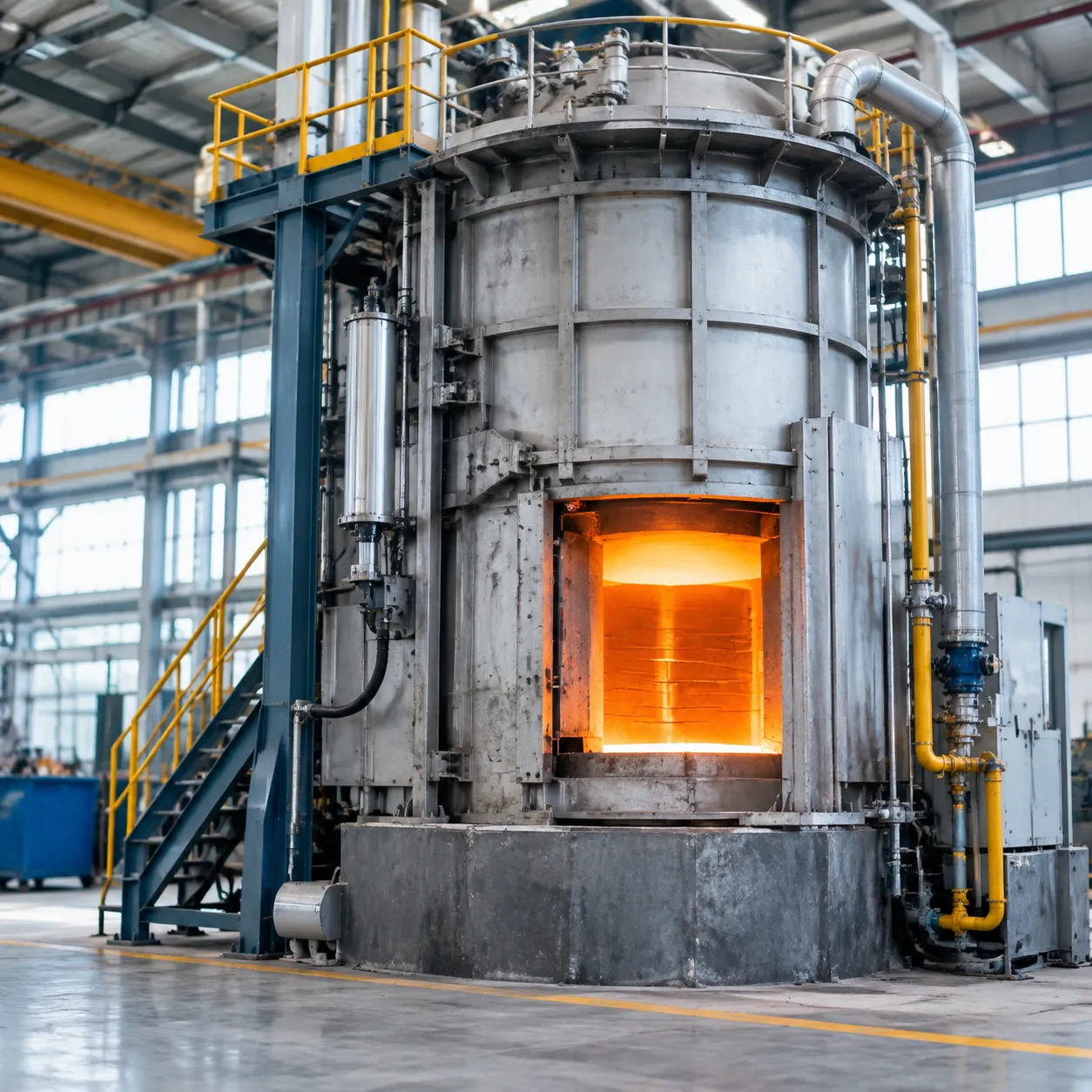
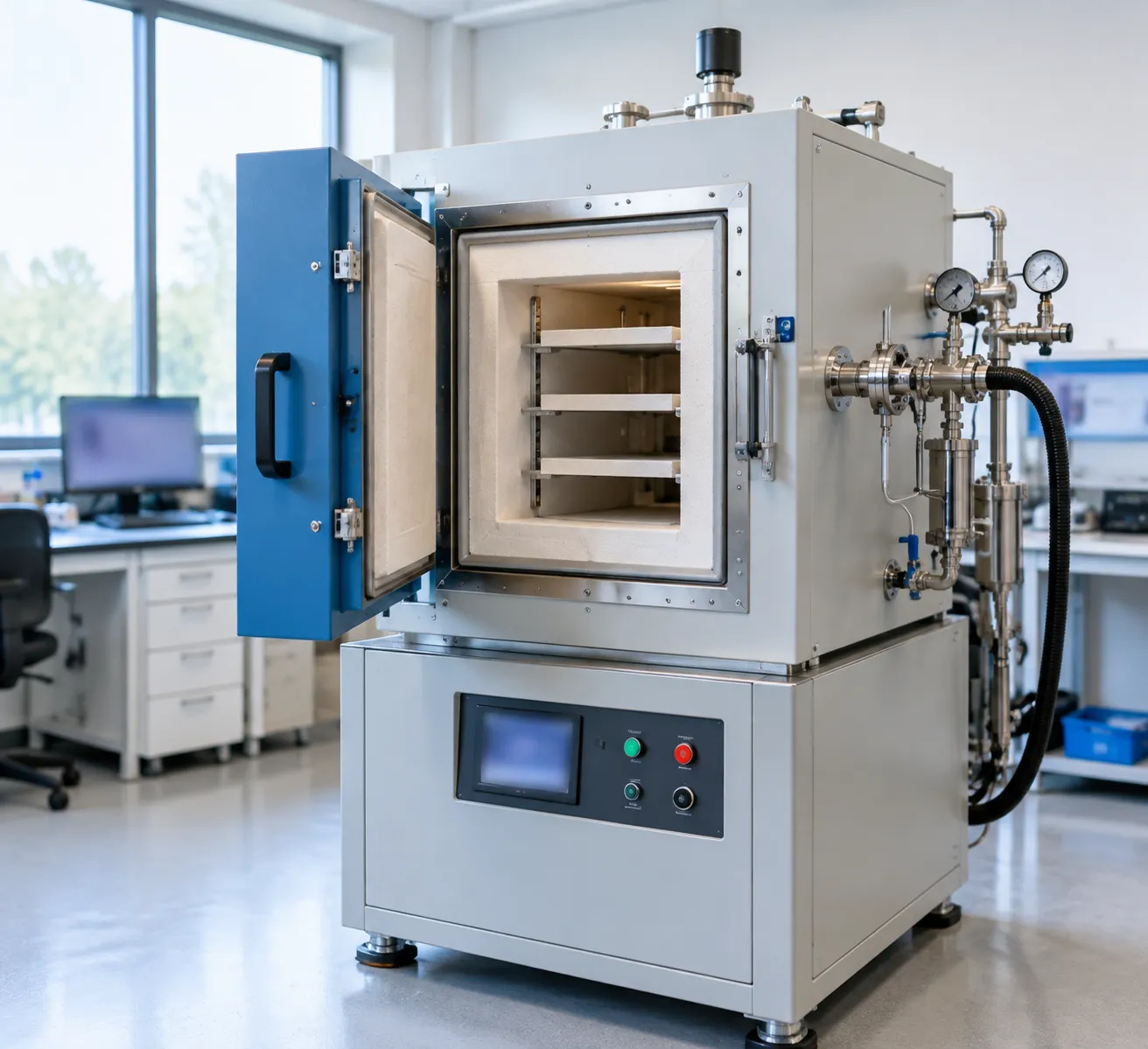
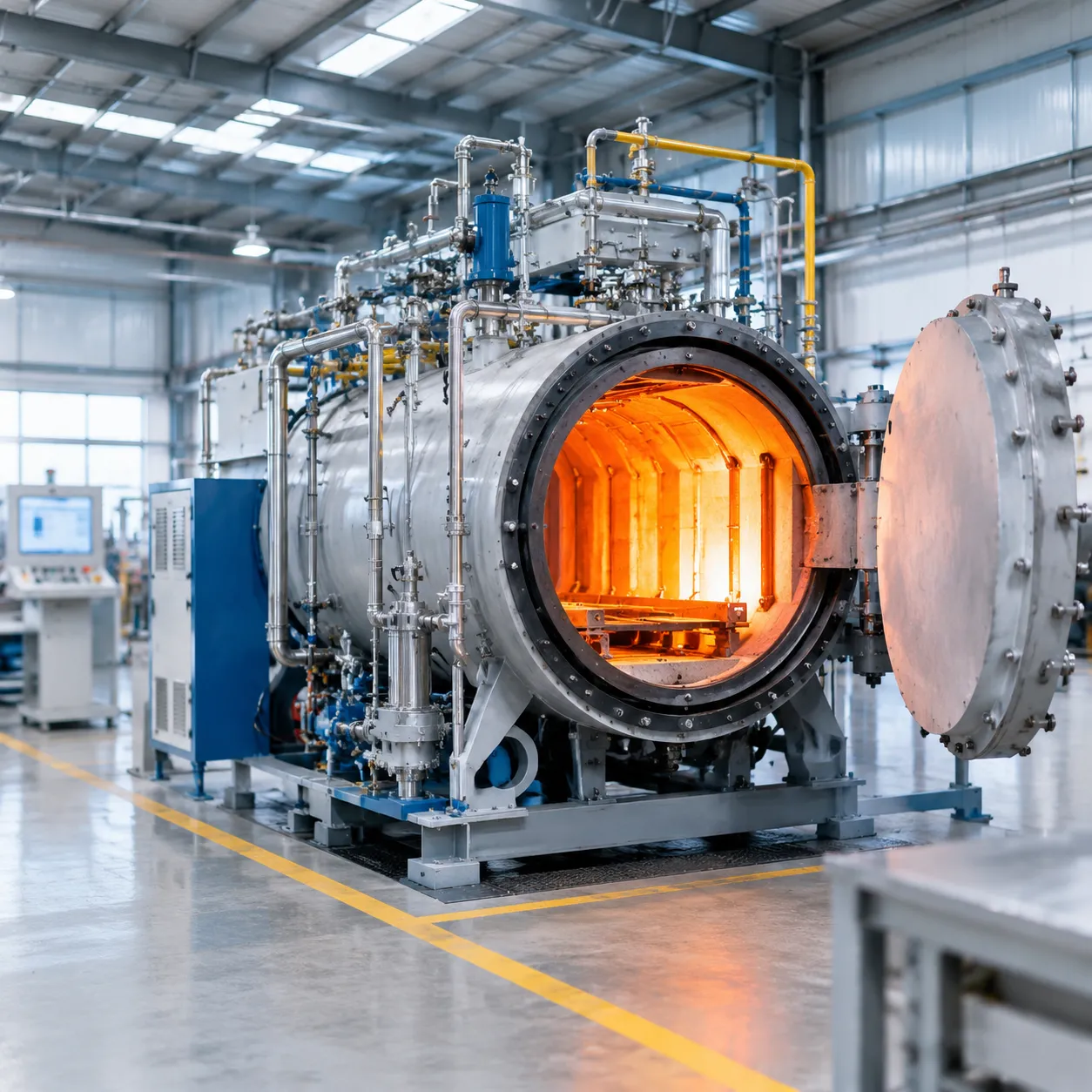
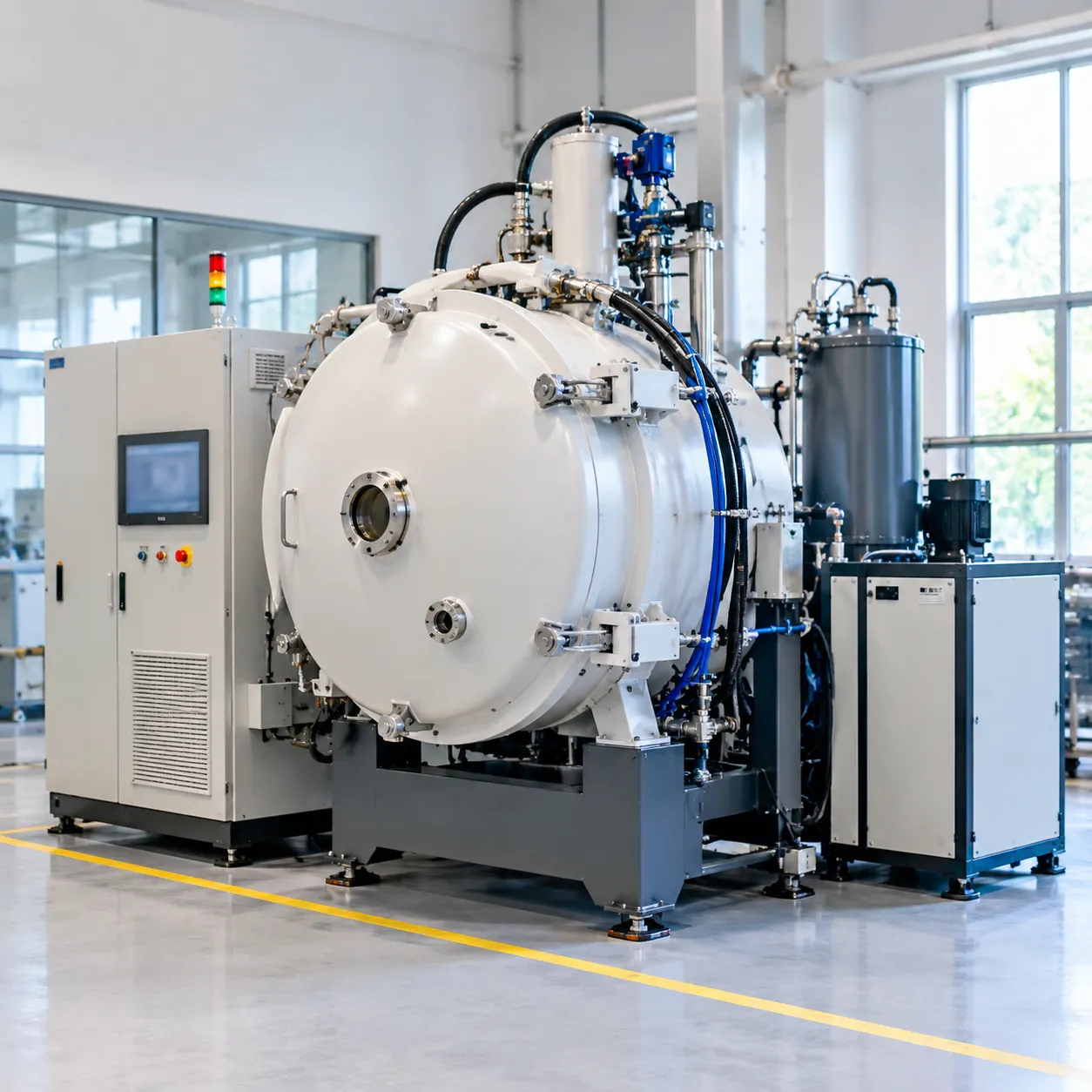
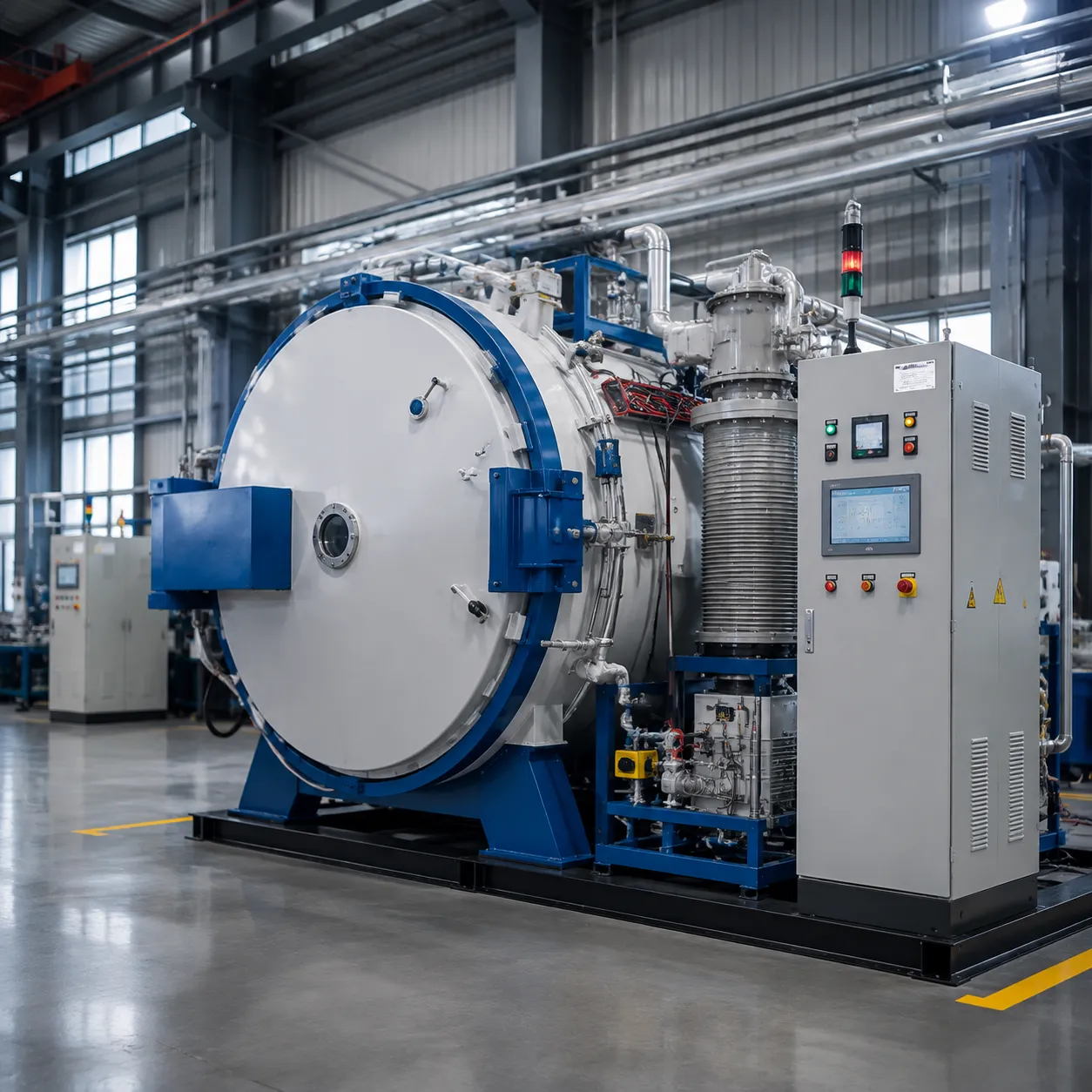
A magnetic material vacuum annealing furnace is essential for high-end thermal processing of magnetic components. By heating alloys in a high-vacuum, oxygen-free environment, this equipment removes residual stress, prevents surface oxidation, and purifies the alloy matrix.
Magnetic Permeability Optimization and Coercivity Reduction
The primary objective of vacuum heat treatment is optimizing the domain structure within magnetic alloys. During processing, controlled heating and cooling deliver two critical electrical performance gains:
-
- Magnetic Permeability Optimization: Thermal stress relief aligns crystal grains and removes lattice defects, allowing magnetic domains to shift freely under weak magnetic fields.
- Coercivity Reduction Process: Vacuum degassing eliminates interstitial impurities like carbon, nitrogen, and oxygen. This significantly lowers coercivity, minimizes hysteresis losses, and reduces operating energy consumption in core applications.
Core Components of Vacuum Heat Treatment Systems
Our vacuum annealing furnaces combine high-vacuum pumps with strict thermal field uniformity to deliver consistent processing batch after batch:
-
- Heating Elements: High-purity molybdenum, graphite, or nickel-chromium resistance elements tailored to specific process temperature ranges and atmospheric cleanliness needs.
- Vacuum Chamber: Double-walled, water-cooled stainless steel vessel designed to sustain ultra-high vacuum levels down to $10^{-3}$ Pa or better.
- Precision Temperature Control: Multi-zone PID controllers integrated with high-accuracy thermocouples to keep thermal variations within ±3°C across the working zone.
Magnetic Materials Treated
| Material Class | Typical Applications | Heat Treatment Benefits |
|---|---|---|
| Silicon Steel | Transformer cores, motor stators, inductors | Relieves stamping stress, lowers core losses |
| Permalloy (Ni-Fe Alloys) | Shielding enclosures, precision current transformers | Maximize initial permeability, lower coercivity |
| Soft Magnetic Alloys | Relay armatures, solenoid valves, sensors | Enhances magnetic response speed and flux density |
| Amorphous & Nanocrystalline Metals | High-frequency choke cores, power electronics | Relieves ribbon strain, optimizes high-frequency response |
Core Technical Features & High Vacuum Furnace Specifications
Our magnetic material vacuum annealing furnace lineup delivers precise thermal processing designed to optimize magnetic properties.
| Feature Category | Technical Specifications | Operational Advantage |
|---|---|---|
| Vacuum Capability | Ultimate vacuum down to 10⁻⁵ mbar (diffusion or turbomolecular pump systems) | Eliminates oxidation and ensures deep outgassing for soft magnetic alloys |
| Thermal Field Uniformity | Temperature uniformity within ±3°C to ±5°C across the hot zone | Guarantees uniform magnetic permeability throughout the entire load |
| Cooling System | Fast cooling with inert gas quenching (argon or nitrogen up to 10 bar) | Prevents unwanted phase transitions and magnetic performance degradation |
| Automation & Control | Fully automated PLC system with touchscreen HMI and process data logging | Delivers full batch traceability and precise, repeatable heat cycles |
Heating Element & Hot Zone Options
We configure each industrial vacuum heat treatment furnace with hot zone materials tailored to your specific processing temperatures and material purity demands:
-
- Molybdenum Heating Elements: Pure metal hot zones engineered for ultra-clean processing where carbon contamination cannot be tolerated.
- Graphite Hot Zones: High-durability choice for processing temperatures up to 1300°C, offering lower operating costs and exceptional thermal stability.
- Metallic Resistance Wires (Ni-Cr / Fe-Cr-Al): Practical, cost-efficient option for standard, lower-temperature stress relief cycles.
Optimizing energy efficiency and thermal distribution relies heavily on effective chamber design. Understanding heat transfer in a vacuum furnace helps us customize the heating geometry to match your specific magnetic component dimensions and production throughput goals.
Key Applications in Magnetic Material Processing
Our magnetic material heat treatment equipment drives performance across high-precision electronic, automotive, and power generation sectors.
Transformer Core & Inductor Stress Relief
Stamping and winding produce deep mechanical stress in electrical steel and amorphous cores, driving up core losses.
-
- Silicon steel magnetic annealing: Eliminates strain-induced lattice defects to restore low core loss and reduce magnetostriction.
- Surface protection: Vacuum heating prevents inter-laminar oxidation, keeping insulation coatings intact across complex core geometry.
Shielding Material Enhancement
Soft magnetic alloys like Permalloy and Mu-Metal require precise thermal profiles to achieve maximum permeability for critical shielding applications.
-
- Deep thermal processing during industrial heat treatment ensures high magnetic shielding attenuation against stray interference.
- Removes interstitial carbon and oxygen impurities to maximize magnetic permeability and drop coercivity.
Sintered Magnet Post-Processing
Permanent magnets like NdFeB and SmCo depend on targeted post-sintering heat treatment to align microstructures and lock in magnetic properties.
-
- Coercivity tuning: Controlled cooling phases in our specialized vacuum heat treatment furnace eliminate phase-boundary defects.
- Thermal stability: Stabilizes grain boundary phases to ensure consistent performance under high operational temperatures.
Precision Electronic Component Pre-Treatment
Relays, solenoids, and sensor cores require uniform grain growth and consistent magnetic properties before final magnetization.
-
- Delivers ultra-clean, fully decarburized microstructures across large production batches.
- Prevents magnetic hysteresis variation and electromagnetic drift in high-reliability electronic devices.
Choosing the Right Magnetic Material Vacuum Annealing Furnace Manufacturers
Technical Capabilities and Custom Chamber Designs
Off-the-shelf heat treatment systems rarely meet specialized production requirements. We design tailored chamber configurations, hot-zone geometries, and targeted gas quenching manifolds to handle unique material loading profiles. Partnering with a dedicated manufacturer for vacuum annealing furnace solutions guarantees optimal vacuum integrity and smooth process integration for your facility.
Quality Certifications & Thermal Field Simulations
A reliable manufacturer uses computer-aided thermal field simulations (CFD and FEA) to eliminate cold spots before production begins. Key benchmarks to verify include:
-
- International Quality Standards: ISO 9001 certification to ensure strict manufacturing quality control.
- Pyrometry Compliance: Alignment with AMS 2750 or CQI-9 thermal processing standards for accurate instrumentation and testing.
- Thermal Modeling Data: Proven 3D thermal field simulations ensuring tight temperature uniformity across full production loads.
After-Sales Support, Installation, and Maintenance
Furnace downtime cuts into your output and profit margins. We provide global clients with complete on-site installation, system commissioning, technical training, and preventive maintenance packages. Rapid access to replacement heating elements, thermocouples, and vacuum pump seal kits keeps your line running smoothly.
Factory-Direct Pricing vs. Long-Term Operational Costs
Upfront equipment cost is only one piece of the puzzle. Working directly with factory-direct vacuum furnace suppliers cuts middleman markups while ensuring high-spec components that reduce energy draw and maintenance costs over time.
| Evaluation Factor | Factory-Direct Acquisition Focus | Long-Term Operational Impact |
|---|---|---|
| Purchase Price | Competitive initial capital expenditure (CAPEX) | Faster payback period and maximum ROI |
| Hot Zone Efficiency | Premium molybdenum or graphite insulation choices | Reduced power consumption per annealing cycle |
| Vacuum System Design | High-efficiency mechanical and diffusion pumping stacks | Faster pump-down times and minimal seal wear |
Operating & Maintenance Best Practices
Keeping a magnetic material vacuum annealing furnace operating at peak performance requires disciplined maintenance and precise calibration. Proper upkeep preserves hot zone thermal uniformity and prevents surface oxidation during critical heat treatment cycles.
Preventive Maintenance Schedules
Regular inspection prevents unexpected downtime and extends component lifespan:
-
- Daily: Check mechanical and diffusion pump oil levels, monitor cooling water flow and temperature, and log ultimate vacuum baseline pressure.
- Monthly: Inspect main door O-rings for wear, check heating elements for sagging or hot spots, and clean vacuum line dust filters.
- Quarterly: Change mechanical pump oil, clean diffusion pump jet assemblies, and inspect thermal insulation shields for structural degradation.
Thermal Calibration and Temperature Uniformity
Consistent heat distribution is essential to optimize magnetic permeability and reduce coercivity in soft magnetic alloys.
-
- Temperature Uniformity Surveys (TUS): We perform multi-point thermocouple testing regularly to ensure the active hot zone maintains tight tolerances (typically within ±5°C).
- System Accuracy Tests (SAT): We conduct monthly checks comparing control thermocouples against a master reference instrument to detect and correct sensor drift. Review our comprehensive vacuum furnace guide for detailed calibration procedures.
Vacuum Leak Sources and Troubleshooting
Vacuum leaks introduce trace oxygen at elevated temperatures, leading to surface discoloration and magnetic property loss.
-
- Door and Flange Seals: Contamination or micro-cracks on elastomer O-rings cause the majority of vacuum loss issues. Clean sealing surfaces thoroughly and apply a thin layer of high-vacuum grease.
- Power Feedthroughs: Inspect ceramic insulators surrounding high-current heating element connections for heat-induced cracking or carbon buildup.
- Helium Leak Detection: We recommend routine helium mass spectrometer testing to pinpoint micro-leaks around pneumatic valves, pipe connections, and chamber welds across our vacuum furnace equipment.
Frequently Asked Questions (FAQs)
Why is vacuum annealing essential for soft magnetic alloys?
Soft magnetic alloys like permalloy and silicon steel are extremely sensitive to atmospheric contamination at elevated temperatures. Heating them in ambient air or low-purity atmosphere causes surface oxidation and interstitial carbon or nitrogen absorption, which physically blocks magnetic domain movement. Processing parts in a high-performance magnetic material vacuum annealing furnace eliminates oxidation, relieves internal mechanical stress, and drives optimal magnetic permeability optimization alongside effective coercivity reduction.
What temperature range is typically required for magnetic annealing?
The required thermal profile depends directly on your material composition and target magnetic properties:
Silicon steel: Relieves stress effectively between 800°C and 900°C.
Permalloy (Ni-Fe alloys): Requires higher heat, typically 1100°C to 1180°C, followed by strict thermal regulation.
Amorphous and nanocrystalline alloys: Processed at lower ranges (300°C to 550°C), frequently under applied magnetic fields.
How do manufacturers ensure low outgassing during the heating cycle?
As experienced magnetic material vacuum annealing furnace manufacturers, we minimize outgassing by outfitting chamber hot zones with high-purity molybdenum, graphite, or metallic shields and robust vacuum pumping systems. We also engineer custom thermal equipment solutions featuring automated pre-degassing bake-out cycles. This removes volatile surface contaminants cleanly before the charge reaches its peak soaking temperature.
What is the typical cooling rate required to prevent magnetic degradation?
Cooling rates must be strictly matched to the material's magnetic transition points. High-permeability alloys like permalloy require slow, controlled cooling—often 2°C to 5°C per minute through their Curie temperature zone—to avoid crystal lattice stress and domain pin-down. For alloys that demand rapid thermal transitions, an integrated inert gas cooling system using high-purity argon or nitrogen quenches the workload uniformly without degrading core magnetic performance.