Formula details
Product Details
Overview
High-Yield Continuous Sintering Solutions for Automated Production
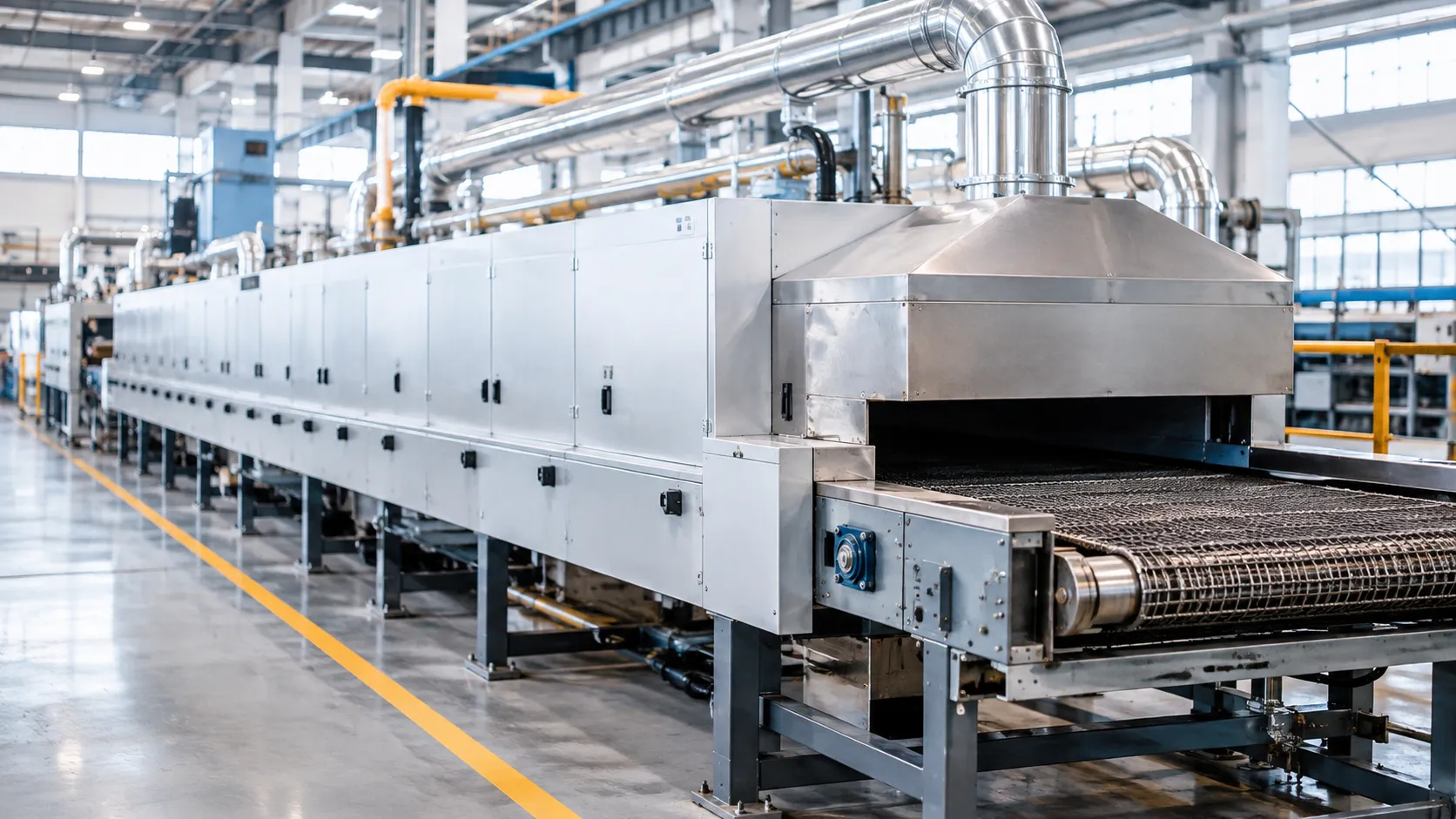
Plant managers running high-volume powder metallurgy or metal injection molding lines face the same recurring bottlenecks: batch turnaround delays, high energy spikes from repeatedly reheating cold chambers, and piece-to-piece dimensional variance. When your plant requires nonstop part flow and rigid metallurgical consistency, a continuous sintering furnace provides the baseline process stability required for modern manufacturing.
Operational Concept and Thermal Progression
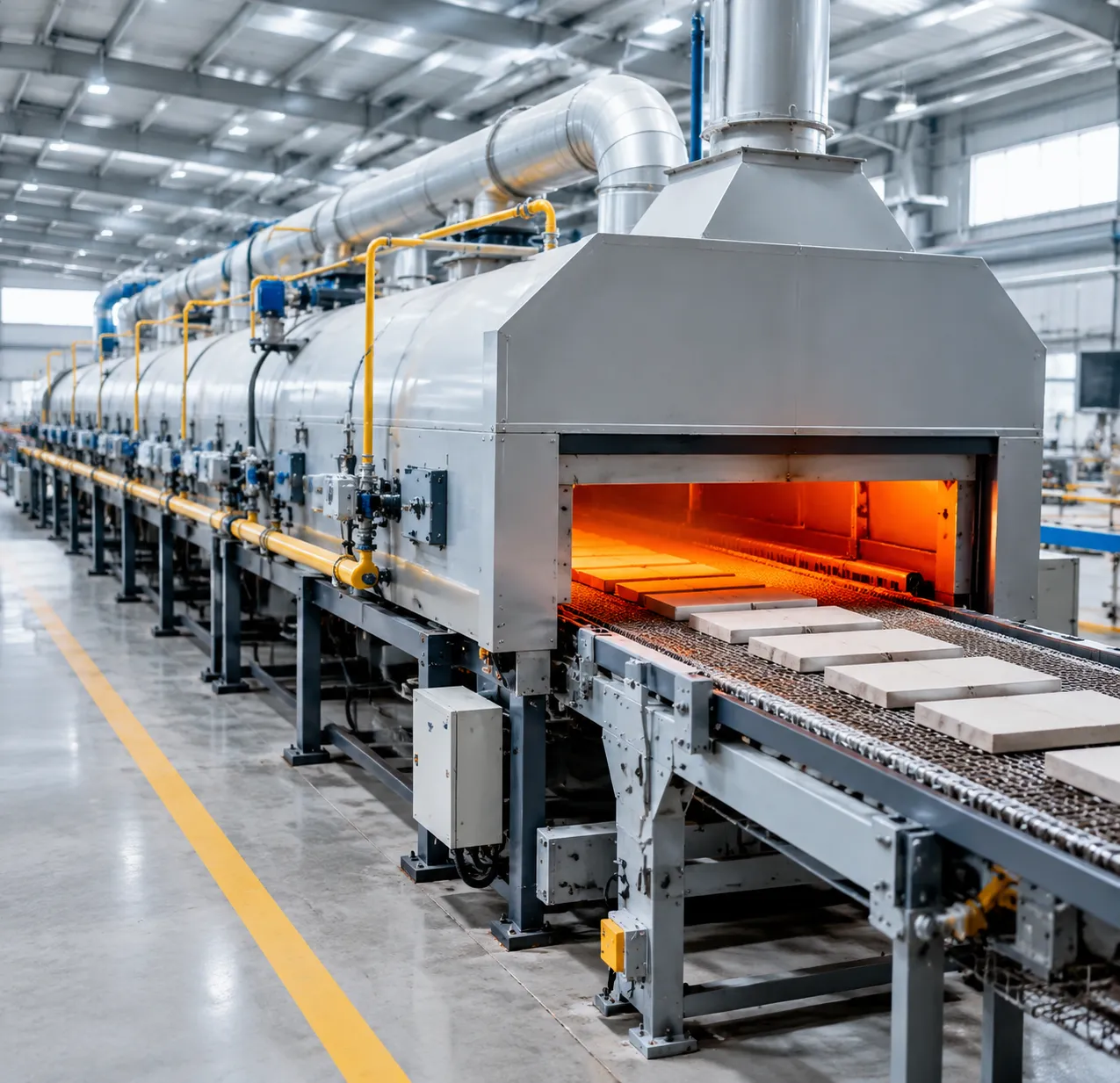
A continuous line operates as a synchronized thermal conveyor, moving workloads through three critical stages:
-
- Preheat & Delubrication (Debinding): Green compacts first enter an isolated low-to-medium heat zone. Binder systems, stearates, and lubricants vaporize and vent cleanly before reaching high heat, eliminating carbon soot deposits downstream.
- High-Heat Sintering: Parts enter the soaking zone, where heating elements deliver steady radiant heat. Atomic diffusion takes place at near-melting temperatures, bonding metal particles, densifying components, and setting final mechanical properties.
- Controlled Cooling: The sintered compacts travel into multi-stage cooling jackets. Controlled water-cooled or gas-cooled chambers lower part temperatures gradually to lock in microstructure and prevent thermal shock, distortion, or surface microcracking.
Batch vs. Continuous Processing Advantages
Switching from conventional batch furnaces to an automated continuous system changes plant unit economics entirely:
| Metric | Batch Furnaces | Continuous Sintering Furnace |
|---|---|---|
| Throughput | Limited to chamber volume; idle during loading | Constant uninterrupted flow; 24/7 run capability |
| Energy Consumption | High (furnace chamber heated and cooled each cycle) | Low (thermal mass remains at steady-state equilibrium) |
| Part Uniformity | Temperature gradients vary between edge and core loads | Every single part follows the identical time-temperature curve |
| Labor Requirement | High manual handling per run | Low operator intervention; compatible with automated loading |
Atmosphere Management and Oxidation Prevention
High-temperature sintering demands total isolation from ambient oxygen. In our continuous sintering furnace china manufacturing facility, we design directional atmosphere management directly into the furnace architecture:
-
- Positive Pressure Seals: Inert or reducing process gas—such as pure hydrogen, dissociated ammonia, nitrogen-hydrogen mixes, or nitrogen—maintains positive pressure to block ambient air infiltration at entry and exit vestibules.
- Directional Gas Sweeps: Counter-flow gas dynamics sweep binder vapors toward exhaust flues, preventing lubricant condensation from contaminating the high-heat soaking muffle.
- Dew Point Monitoring: Multi-point gas sampling ports allow operators to monitor oxygen content and moisture levels, ensuring zero surface oxidation, clean carbon control, and bright metallic finishes on finished components.
Whether you run an automotive component plant or an industrial tooling line, choosing a factory-direct continuous sintering furnace for sale gives you absolute control over cycle stability, thermal consumption, and production yield.
Continuous Sintering Furnace Configurations Engineered by Haitem Furnace
Different product geometries, thermal profiles, and part weights demand dedicated mechanical handling. As an established continuous sintering furnace factory, we build four primary line architectures to match specific metallurgy and throughput requirements. Every industrial line is customized directly on our shop floor to ensure process reliability and tight atmosphere control.
Mesh Belt Continuous Sintering Furnaces
Our mesh belt lines are the workhorse for high-volume, automated production of small-to-medium structural parts.
-
- Best for: Powder metallurgy gears, self-lubricating bearings, and automotive pressings.
- Mechanism: Heat-resistant nickel-chromium alloy woven belts carry parts continuously through debinding, heating, and cooling zones.
- Operational benefit: Eliminates manual tray handling and provides consistent part separation for uniform atmosphere exposure. We configure these systems with variable-speed drives to fine-tune production cycles for each workload. For standard automated runs, our continuous sintering furnace designs deliver stable, repeatable throughput with minimal operator intervention.
Pusher Plate and Tray Sintering Systems
When thermal processing requirements exceed standard belt weight or temperature limits, pusher plate systems take over.
-
- Best for: Heavy compacts, metal injection molding (MIM) parts, and advanced technical ceramics.
- Mechanism: High-purity ceramic or molybdenum pusher plates carry parts over precision guide rails, moved forward by hydraulic or mechanical indexing cylinders.
- Operational benefit: Supports continuous operating profiles above traditional wire mesh limits while managing heavy stacking loads without belt deformation or elongation issues.
Roller Hearth Continuous Kilns
For heavy workloads requiring continuous conveyance across long thermal zones, our roller hearth furnace systems deliver low-friction performance.
-
- Best for: Sintering large ceramic components, heavy powder metal plates, and high-capacity carrier boxes.
- Mechanism: Individually driven, heat-resistant ceramic or alloy rollers transport trays smoothly through the heating envelope.
- Operational benefit: Rollers distribute mechanical stresses evenly, eliminating carrier friction and reducing the energy needed to drive long processing lines.
Walking Beam Sintering Systems
Built for extreme structural loads and continuous high-temperature service, our walking beam designs offer zero-drag movement.
-
- Best for: Heavy-duty metallurgical billets, dense refractory components, and high-mass alloy compacts.
- Mechanism: Alternate stationary and moving beams lift, advance, and deposit product trays through the hot zone step by step.
- Operational benefit: Zero sliding friction between carriers and hearth plates prevents mechanical wear, eliminates tray jamming, and extends heating element life in rigorous industrial environments.
| Configuration | Primary Application | Workload Capability | Key Operational Advantage |
|---|---|---|---|
| Mesh Belt | Automotive PM, fasteners, bronze bearings | Light to medium | Continuous flow, zero carrier overhead |
| Pusher Plate | MIM components, hard metals, ceramics | Medium to heavy | High-temperature structural integrity |
| Roller Hearth | Heavy parts, high-volume ceramic tiles/blocks | Heavy, wide hearth | Low line drag, long furnace length support |
| Walking Beam | Ultra-dense metals, refractory billets | Extreme heavy-duty | No tray-on-hearth friction, robust uptime |
Every continuous sintering furnace china line manufactured in our facility is fully pre-assembled, pressure-checked, and thermally audited before shipment. Whether updating an active PM cell or evaluating a turnkey continuous sintering furnace for sale, our engineering team builds each unit around your exact part geometry and production speed.
Technical Parameters & Engineering Specifications
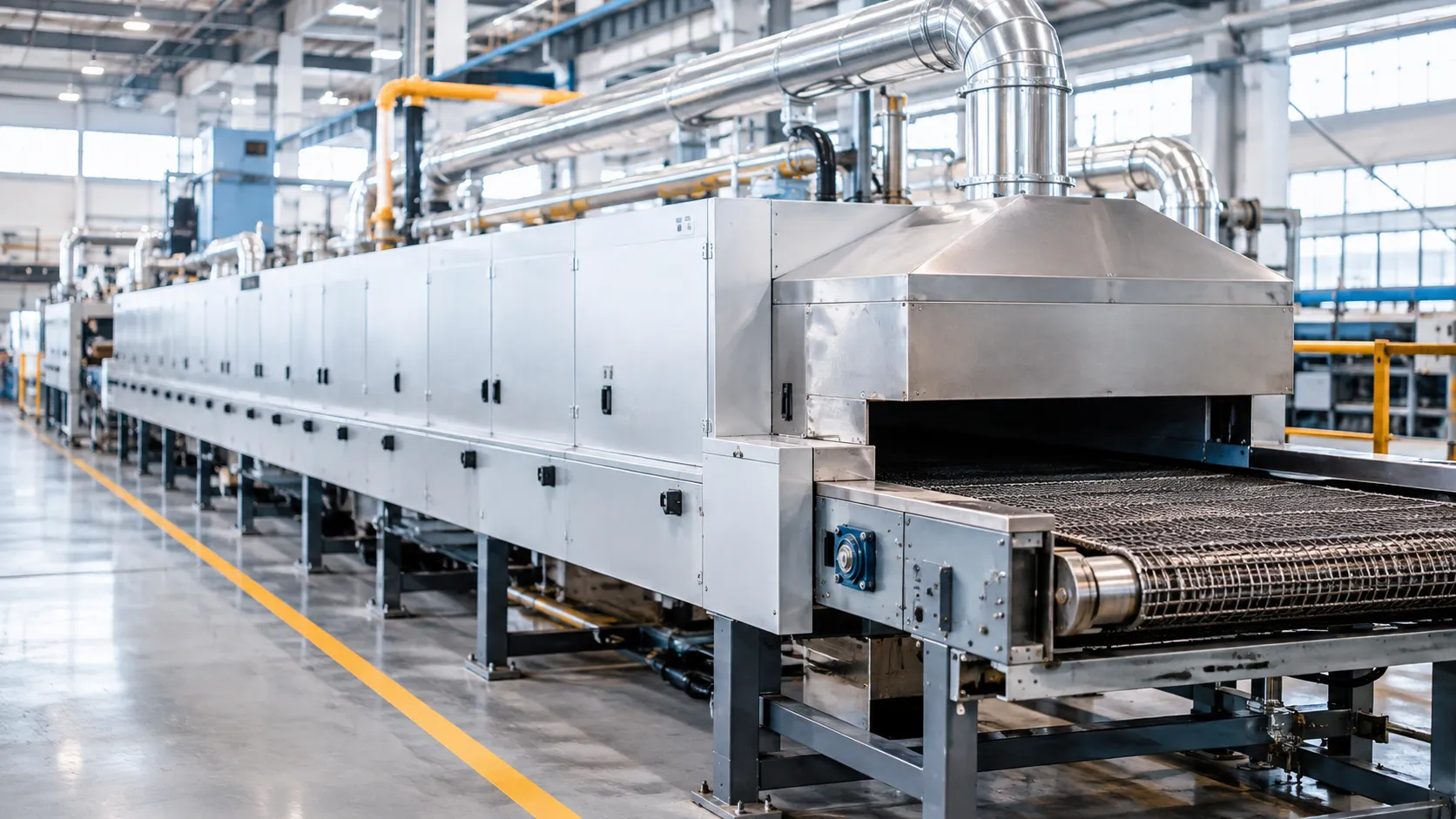
Operating Temperature Thresholds and Element Selection
We configure heating elements based on your alloy chemistry and peak sintering thresholds:
-
- Medium-Temperature Sintering (Up to 1150°C): High-grade Fe-Cr-Al (Kanthal APM) metallic alloy elements. Ideal for conventional iron-copper powder metallurgy, bronze bushings, and standard automotive components.
- High-Temperature Sintering (1150°C to 1350°C): Heavy-duty Silicon Carbide (SiC) or Molybdenum Disilicide (MoSi2) elements. Built for stainless steel MIM parts, refractory metals, and technical ceramics.
- Thermal Accuracy: Multi-zone closed-loop SCR thyristor control keeps cross-belt temperature uniformity within ±2°C to ±3°C throughout the soaking zones.
| Model Series | Max Operating Temp | Usable Belt Width | Work Tunnel Height | Heating Zones | Atmosphere Compatibility |
|---|---|---|---|---|---|
| CF-600M | 1150°C | 600 mm (24") | 150 mm | 4–6 Zones | N2, H2, Endogas, Cracked NH3 |
| CF-800H | 1250°C | 800 mm (32") | 200 mm | 6–8 Zones | 100% Pure H2, N2/H2 Blends |
| CF-1000HT | 1350°C | 1000 mm (40") | 250 mm | 8–12 Zones | Ultra-Dry H2, Inert Ar/N2 |
Belt Dimensions, Clearance, and Heating Zones
Every continuous sintering furnace for sale in our lineup uses balanced-weave, high-nickel alloy mesh belts or heavy pusher trays sized to prevent part sag and thermal fatigue.
-
- Tunnel Clearance: Standard active tunnel heights range from 100 mm to 250 mm, customized around your largest part profiles and carrier trays.
- Modular Heated Lengths: Split into independent preheating, rapid debinding, high-heat sintering, and cooling segments. Multi-point thermocouples directly monitor the workload travel path.
- Drive Mechanics: Inverter-driven mechanical drive heads ensure smooth, pulsation-free movement down to millimeters per minute.
Atmosphere Capabilities and Cooling Chamber Architecture
Oxidation ruins sintered mechanical properties. We seal every line to maintain low dew point atmospheres down to -60°C.
-
- Gas Delivery Controls: Digital mass flow controllers (MFCs) meter hydrogen, nitrogen, or dissociated ammonia safely across active zones and gas curtains.
- Multi-Stage Cooling: Dual-stage water-jacketed cooling tunnels drop part temperatures below oxidation levels before final atmospheric discharge.
- Accelerated Convection: Optional high-velocity convection blowers freeze grain boundaries and optimize mechanical hardness right after the high-soak zone.
PLC Control Platform and SCADA Integration
We standardize on Siemens or Allen-Bradley PLC control packages paired with industrial touchscreens for full process visibility.
-
- Closed-Loop Recipe Management: Instant storage and recall of line speeds, multi-zone temperature profiles, and gas mix ratios. For thermal profiling benchmarks comparable to advanced processing protocols, review our vacuum furnace temperature guide and settings to see how tight thermal windows translate into production quality.
- Process Traceability: Real-time logging of zone temperatures, atmosphere pressures, and motor loads directly exported to plant SCADA and MES systems via Ethernet/IP or Profinet.
- Failsafe Alarms: Automated safety burn-off flares, flame-curtain ignition controls, and inert gas purge cycles trigger instantly if atmosphere pressures drop or flue gases drift outside safety limits.
Heavy-Duty Construction & Advanced Thermal Controls
We build every continuous sintering furnace to handle non-stop thermal stress without cracking, warping, or dropping line speed. Industrial sintering is tough on machinery, especially when dealing with aggressive lubricants and high thermal cycles. Here is how our engineering eliminates common production bottlenecks right on the plant floor:
Integrated Debinding & Rapid Burn-Off (RBO) Systems
Binder buildup inside the heating zone ruins workpieces and clogs gas ports. We prevent that through dedicated delubing and rapid burn-off (RBO) zones positioned ahead of the high-heat section.
Targeted thermal profiling: Stepped pre-heating strips organic binders before parts enter final sinter.
Positive-pressure exhaust: Dedicated exhaust hoods and condensation traps pull volatile vapors clear out of the line, keeping heating elements clean and soot-free.
Zero part contamination: Clean pre-sintering ensures uniform density, eliminating carbon contamination and surface blistering on critical parts.
Gas-Tight Nickel-Alloy Muffle Engineering
Maintaining atmosphere purity requires an impenetrable core. Our continuous sintering furnace factory fabricates heavy-gauge muffles using high-grade nickel alloys (Inconel and high-temp stainless grades) to isolate process atmospheres:
Fully seam-welded construction: Continuous robotic and TIG welding guarantees ultra-low leak rates under protective gas blankets.
Thermal expansion compensation: Built-in bellows and expansion joints absorb thermal movement during heating and cooling cycles, preventing structural cracking.
Optimal thermal transfer: Corrugated and smooth muffle profiles maximize heat conductance while maintaining structural rigidity at peak operating temperatures.
Precision Continuous Drive & Auto-Tensioning Mechanisms
Belt creep, surging, and slippage cause uneven heating and part collisions. We engineer active drive systems designed for smooth, continuous flow:
Pneumatic / mechanical auto-tensioning: Constant tension adjustments compensate for belt stretch as the furnace heats up, prolonging the lifespan of expensive mesh belts.
Variable-frequency drives (VFD): Closed-loop servo and motor configurations give you millimeter-exact speed control for accurate thermal dwell times.
Low-friction tracking rollers: Precision guide rollers keep heavy product loads centered through each heat zone without jamming.
Multi-Layer Ceramic Fiber Insulation & Energy Recovery
Thermal efficiency directly impacts operating overhead. Rather than letting heat escape into your facility, our furnace shells stay cool through smart heat containment:
Multi-stage insulation: High-density ceramic fiber blankets backed by microporous insulation boards reduce thermal bridging and shell surface temperatures.
Flue and atmosphere energy recovery: Integrated heat exchangers tap into exhaust gases to preheat incoming combustion air or atmosphere lines.
Flexible kiln formats: For applications requiring direct-fired continuous thermal processing rather than muffle-encased belts, we also engineer continuous lines via our roller kiln manufacturer and supplier for ceramic production division to maximize large-volume energy savings.
| Construction Feature | Standard Industry Build | Haitem Heavy-Duty Engineering |
|---|---|---|
| Muffle Shell | Standard 304/316 Stainless | High-temp Inconel / specialized Ni-alloys |
| Belt Tensioning | Manual screw tensioners | Automated pneumatic/counterweight dynamic tension |
| Binder Removal | Passive exhaust port | Active multi-port RBO system with heated traps |
| Insulation Lining | Standard refractory brick | Layered high-purity ceramic fiber + board backing |
Industrial Applications for Continuous Sintering Furnaces
| Industry Sector | Primary Materials Processed | Common Furnace Atmosphere | Typical Heating Setup |
|---|---|---|---|
| Powder Metallurgy (PM) | Iron, carbon steel, bronze, copper alloys | Nitrogen-hydrogen, cracked ammonia | Mesh belt with rapid burn-off zone |
| Metal Injection Molding | Stainless steels (316L, 17-4PH), tool steels | Pure hydrogen, partial vacuum | Continuous pusher or walking beam |
| Technical Ceramics | Alumina, zirconia, silicon carbide | Air, inert gas, controlled reducing | High-temperature roller hearth |
| Porous & Tooling Metals | Bronze, stainless wire mesh, diamond bonds | Dissociated ammonia, hydrogen | Multi-zone belt conveyor |
Powder Metallurgy (PM) Automotive and Mechanical Parts
In automotive and heavy machinery manufacturing, downtime kills profitability. Our continuous lines sinter millions of structural PM components each year, including:
Transmission gears and sprockets: Achieving core density, strict dimensional stability, and zero decarburization.
Engine valve guides and flanges: Precise carbon control through multi-stage atmosphere gas curtains.
Oil-pump rotors and shock absorber pistons: Clean surface finish without post-sinter pickling or excessive machining.
Metal Injection Molding (MIM) Precision Components
Complex shapes demand thorough binder extraction before final consolidation. In our dedicated metal injection molding processing systems, integrated thermal debinding and sintering occur in a single continuous line.
Prevents part slump and micro-cracking in medical surgical devices, firearm mechanisms, and smartphone hinge brackets.
Delivers continuous high-density results above 96% to 99% theoretical limits under tightly balanced protective atmospheres.
Keeps operating costs low compared to running multiple standalone batch units.
Technical and Electronic Ceramic Sintering
Electronic substrates, wear rings, and insulating parts require exact thermal profiling to stop thermal shock. Our roller hearth and tunnel systems maintain zone-by-zone accuracy for advanced oxide and non-oxide ceramics:
Substrates and insulators: Clean electrical properties with uniform grain growth across the entire belt width.
Wear components and valves: Reliable mechanical strength through synchronized multi-zone ramp and soak profiles.
Diamond Tooling and Porous Sintered Metal Filters
Producing filtration elements and abrasive tools requires balanced heat distribution to avoid liquid-phase puddling or closed pores. Our systems provide steady, vibration-free transport for:
Bronze and stainless steel filter cups: Uniform permeability and precise pore size distribution.
Diamond cutting saw segments: Controlled sintering temperatures that protect synthetic diamond crystals from thermal degradation during matrix bonding.
Factory-Direct Continuous Sintering Furnace Manufacturing in China
We control every step of production on our own shop floor. Cutting out middlemen gives you full visibility into materials, build quality, and delivery schedules. When you work with our continuous sintering furnace factory, you deal directly with the engineers designing your line, ensuring lower capital investment and equipment built exactly to your operational specs.
In-House Structural Fabrication and CNC Machining
Every furnace starts with heavy-duty structural engineering built to withstand decades of continuous high-temperature cycling:
-
- Heavy-Gauge Frame Welding: High-yield structural steel bases welded in-house to prevent thermal distortion and bed sagging over long spans.
- Precision CNC Machining: Drive shafts, roller journals, and pusher tracks are machined to tight tolerances for smooth mechanical transport and zero product jamming.
- Muffle and Shell Assembly: Gas-tight nickel-alloy and stainless steel muffle sections are formed and certified by our internal fabrication teams.
Alongside our continuous processing systems, our facility also builds China vacuum furnace solutions factory direct to support specialized high-purity thermal facilities worldwide.
Helium Mass-Spectrometer Leak Testing and Thermal Profiling
We run strict pre-shipment validation protocols before any continuous sintering furnace in China leaves our production bays:
-
- Helium Mass-Spectrometer Testing: Every atmosphere muffle, gas injection manifold, and water-cooling jacket undergoes helium leak checks to verify absolute gas tightness under pressure.
- Multi-Point Thermal Profiling: We insert calibrated thermocouple arrays through the preheat, high-heat, and cooling zones to document real-time temperature uniformity before final sign-off.
- Continuous Dry-Run Cycling: Mechanical conveyors run under unloaded test cycles for 48 to 72 continuous hours to verify tensioning stability and drive-motor thermals.
Direct Factory Pricing and Turnkey Layout Engineering
Working directly with a dedicated sintering furnace manufacturer in China eliminates dealer markups and simplifies facility integration.
| Production Factor | Trading Middlemen | Our Factory Direct |
|---|---|---|
| Pricing Baseline | Marked up 20% to 40% | Transparent, direct-from-manufacturer costs |
| Shop-Floor Customization | Relies on third-party responses | Direct engineering team adaptations |
| Plant Floor Planning | Standard catalog drops | Custom 2D/3D CAD integration matching your floor footprint |
| Atmosphere & Exhaust Piping | Sourced separately on-site | Integrated pre-plumbed supply and burn-off manifolds |
Whether your facility requires a customized pusher line or a high-output mesh belt setup, our turnkey engineering ensures every continuous sintering furnace for sale delivers verified performance straight from our manufacturing bays to your plant floor.
Global Delivery, Turnkey Installation, and Lifecycle Support
Export-Grade Vacuum and Steel-Crate Packaging
Overseas transit exposes industrial equipment to salt air, severe moisture, and transit vibration. We safeguard every continuous sintering furnace with export-grade protective measures:
-
- Hermetic barrier sealing: Heating sections, muffle tubes, and drive units are wrapped in heavy-duty foil vacuum bags with industrial desiccant charges to prevent surface oxidation.
- Structural steel skidding: Main furnace bodies are welded onto structural steel bases to prevent frame distortion during crane rigging and container loading.
- Reinforced wooden framing: Sensitive components—including PLC touchscreens, flow meters, and cooling water manifolds—are packed in reinforced timber crates with shock-dampening foam cushions.
- Modular sub-assemblies: Large lines are systematically divided into clearly marked segments to fit standard 40-foot flat-rack or high-cube shipping containers without field cutting.
On-Site Field Commissioning and Operator Training
Buying a continuous sintering furnace china unit directly from our facility includes real-world installation support. Our factory field engineers travel directly to your facility to oversee line placement, utility tie-ins, and live production startups.
-
- Mechanical and electrical leveling: Aligning multi-zone muffle sections, tensioning conveyor systems, and wiring heating zones.
- Gas-tight validation: Purging gas lines, checking cooling jacket flows, and running safety interlocks for hydrogen, nitrogen, or dissociated ammonia.
- Baseline profile tuning: Validating heating curves, belt speeds, and zone temperatures using calibrated multi-channel thermal data loggers.
- Hands-on personnel training: Training your maintenance crew on drive calibration, atmosphere monitoring, heater replacement, and standard emergency stop routines.
Critical Spare Parts Availability and Direct Dispatch
Unplanned line stoppages ruin production schedules. For every continuous sintering furnace for sale, we stock full replacement modules at our primary warehouse to enable direct, same-day international dispatch:
| Spare Part Category | Stocked Components | Target Dispatch Time |
|---|---|---|
| Heating Elements & Hardware | Silicon carbide (SiC), MoSi2, Ni-Cr coils, ceramic support tubes | Within 24 hours |
| Conveyor & Drive Systems | High-nickel woven mesh belts, drive sprockets, tensioner bearings | Within 24–48 hours |
| Atmosphere & Flow Control | Mass flow controllers, solenoid valves, flame curtain igniters | Within 24 hours |
| Thermal Sensing & Control | Type B/S/K thermocouples, SCR trigger boards, digital temp modules | Same-day dispatch |
Continuous Sintering Furnace for Sale: How to Inquire & Order
Essential RFQ Data Points and Workload Metrics
To provide an accurate technical proposal and direct quotation for an industrial continuous sintering furnace for sale, we evaluate your operational metrics upfront. Sharing your part profiles and throughput targets ensures we size the conveyor width, heating zones, and cooling rates properly.
| Specification Metric | Data Needed for RFQ | Impact on Furnace Design |
|---|---|---|
| Material Composition | Fe-Cu-C, stainless steel, MIM feedstock, technical ceramics | Determines required heating elements, muffle alloy, and max temperature |
| Target Throughput | Kilograms or parts per hour (kg/h) | Dictates belt width, effective heated tunnel length, and drive speed |
| Part Dimensions & Weight | Max height, width, and weight distribution | Establishes tunnel clearance height and conveyor drive load capacity |
| Protective Atmosphere | Dissociated ammonia, pure hydrogen, nitrogen, or endogas | Sets gas introduction manifolds, burn-off stacks, and safety interlocks |
| Debinding Requirements | Binder percentage, lubricant type (e.g., zinc stearate) | Defines rapid burn-off (RBO) chamber length and exhaust layout |
For operations requiring low-volume specialized runs or alternate processing alongside continuous lines, we also manufacture batch units such as our horizontal vacuum furnace for sale to support diverse heat-treatment strategies.
Step-by-Step Technical Consultation and Procurement Process
We keep our procurement pathway transparent, structured, and fast. Partnering with a dedicated continuous sintering furnace china manufacturer gives you full engineering transparency from initial blueprint review to final plant installation.
-
- Step 1: Application Review and Thermal Sizing
Our thermal engineering team reviews your parts, required ramp rates, soak times, and cooling profiles to determine optimal zone division and drive specs. - Step 2: Engineering Proposal and Layout Confirmation
We deliver a full technical drawing detailing footprint, utility requirements (power, gas, water), and an itemized factory-direct quote. - Step 3: Manufacturing and Assembly
Upon design sign-off, fabrication begins at our manufacturing facility, utilizing precision CNC frame machining, gas-tight muffle welding, and standard electrical component integration. - Step 4: In-House Factory Acceptance Testing (FAT)
Before crating, we run full heating zone checks, atmosphere seal verifications, and mechanical conveyor test cycles under real operational parameters. - Step 5: Export Packing and Commissioning
Equipment is packed in heavy-duty export crates with moisture barriers. Our engineers provide on-site installation oversight, line calibration, and hands-on maintenance training for your floor crew.
- Step 1: Application Review and Thermal Sizing
Frequently Asked Questions About Continuous Sintering Furnaces
Plant managers and engineers regularly ask us practical questions regarding equipment selection, atmosphere safety, and delivery timelines before purchasing a continuous sintering furnace for sale. Here are direct answers to the most common inquiries.
What is the main difference between mesh belt and pusher continuous furnaces?
The choice comes down to part weight, temperature requirements, and production volume.
| Feature | Mesh Belt Sintering Line | Pusher Plate Sintering System |
|---|---|---|
| Material Conveyance | Continuous woven wire mesh belt | Hydraulic/mechanical pusher moving rigid trays |
| Typical Temperature | Up to 1150°C (standard alloys) | Exceeds 1300°C–1600°C (moly/refractory elements) |
| Component Weight | Light to medium density parts | Heavy parts and dense multi-layer stacks |
| Throughput Style | Continuous smooth movement | Incremental index pushing |
For high-volume, automated powder metallurgy components, an advanced mesh belt continuous sintering furnace delivers consistent part-to-part uniformity with minimal labor overhead. When process temperatures exceed the physical limits of metal alloy belts, pusher systems take over.
Which protective atmospheres can run safely in these lines?
Our equipment operates with various industrial process atmospheres depending on your metallurgical requirements:
-
- Pure Nitrogen (N2): Baseline inert blanket for oxidation prevention during heating and cooling.
- Hydrogen (H2) and Nitrogen/Hydrogen Blends: Active reducing atmospheres that break down surface oxides on ferrous and non-ferrous alloys.
- Dissociated Ammonia (75% H2 / 25% N2): Cost-effective reducing atmosphere for stainless steel and powder metal sintering.
- Endothermic Gas: Standard carbon-potential-controlled gas for structural automotive parts.
Every controlled atmosphere continuous sintering furnace we build includes physical gas curtains, nitrogen purge locks, and automated burn-off torches at entry and exit vestibules to ensure operator safety and gas purity.
How do integrated burn-off zones prevent furnace contamination?
Lubricants and binders (such as zinc stearate or polymer binders) vaporize during the initial preheating phase. If left uncontrolled, these volatiles re-condense inside the high-temperature zone, fouling heating elements and discoloring finished parts.
We isolate the debinding phase using an integrated rapid burn-off (RBO) chamber:
Counter-Flow Gas Routing: Clean process gas sweeps from the cooling chamber forward through the high-heat section, forcing volatile gases toward the front entry.
Dedicated Thermal Exhausts: Heated exhaust stacks vent binder vapors out of the muffle before parts cross into the final sintering zone.
Clean Heating Chambers: Keeps heating elements, insulation, and the downstream conveyor free of soot and carbon build-up.
What lead time and factory acceptance testing procedures apply to custom orders?
Building custom industrial thermal systems requires disciplined project scheduling and rigorous validation. As an experienced continuous sintering furnace factory, our standard manufacturing cycle runs between 12 to 18 weeks depending on muffle dimensions and auxiliary automation specs.
Before any unit ships from our continuous sintering furnace china manufacturing facility, every system undergoes strict Factory Acceptance Testing (FAT):
Atmosphere Shell Leak Testing: Helium mass spectrometer checks on all welded seams and flanges.
Multi-Zone Temperature Profiling: Calibrated multi-point thermocouple logging to guarantee thermal uniformity.
Drive & Conveyor Run-In: Continuous mechanical endurance runs under simulated production loads.
Control System Verification: Full dry-run testing of PLC interlocks, emergency stop loops, and over-temperature safety cutoffs.