Formula details
Product Details
Overview
What Is a Gear Vacuum Annealing Furnace?
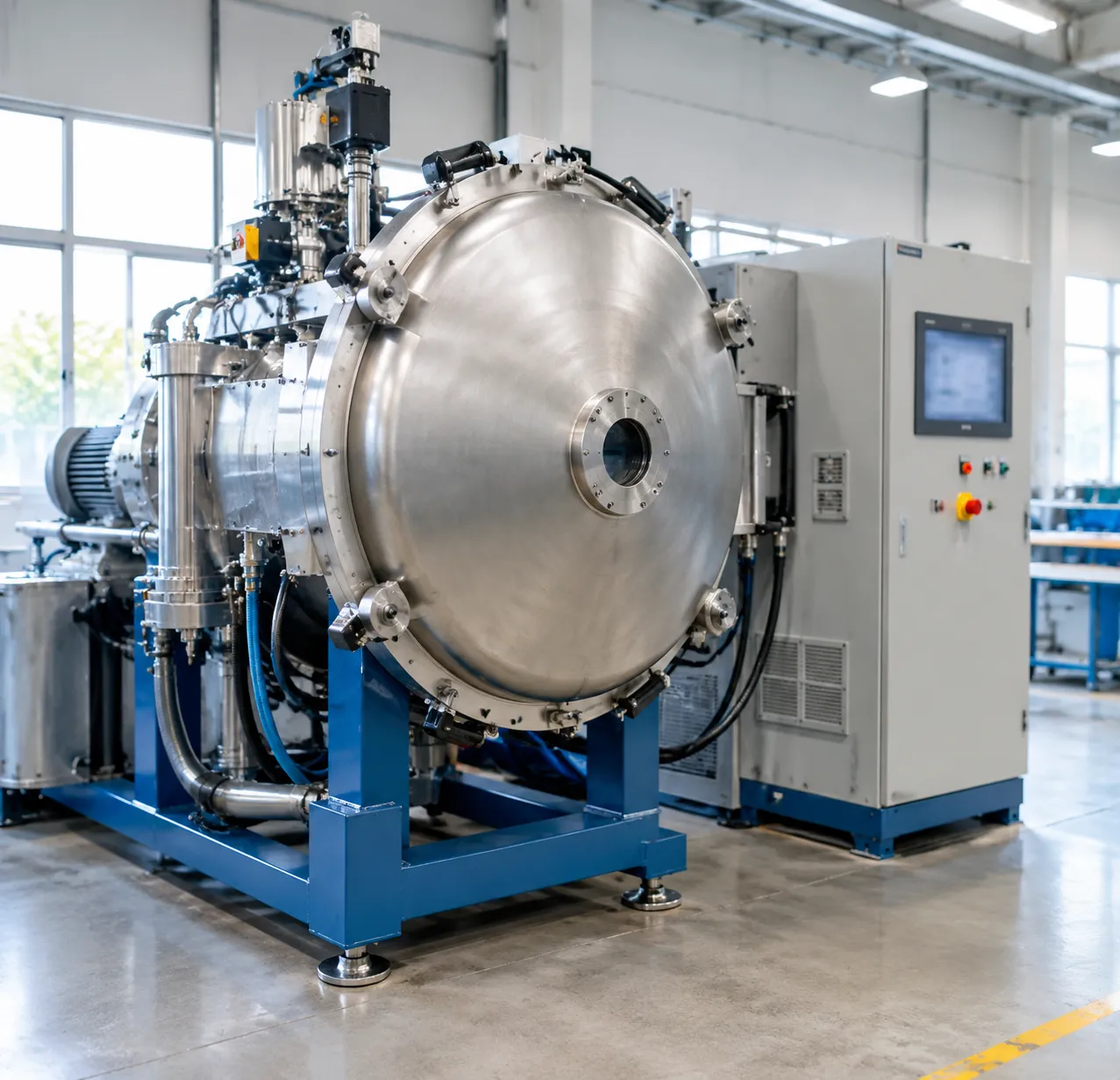
A gear vacuum annealing furnace is an advanced thermal processing system engineered to heat-treat precision gears, pinions, and transmission shafts under sub-atmospheric pressure.
Core Working Principles of Vacuum Thermal Processing for Gears
The vacuum annealing cycle replaces ambient air with a controlled low-pressure environment, typically operating between 10⁻² mbar and 10⁻⁵ mbar.
-
- Controlled Evacuation: Mechanical pumps and roots blowers evacuate the chamber to strip out oxygen, moisture, and reactive gases before heating begins.
- Radiant Thermal Soaking: Electrical heating elements transfer heat evenly across the load via radiation, ensuring uniform core-to-surface temperatures across complex gear profiles.
- Microstructural Transformation: Gear blanks or finished gears undergo phase transformation, recrystallization, or stress relaxation at specified soaking temperatures without alloy depletion.
- Inert Gas Convection Cooling: Once the thermal cycle completes, high-purity inert gas (nitrogen or argon) rapidly cools the workload uniformly to prevent thermal distortion.
[Load & Seal Chamber] ➔ [Vacuum Evacuation (< 10⁻² mbar)] ➔ [Uniform Radiant Heating] ➔ [Isothermal Soak] ➔ [Inert Gas Quench/Cool]
Key Structural Components of an Industrial Vacuum Furnace
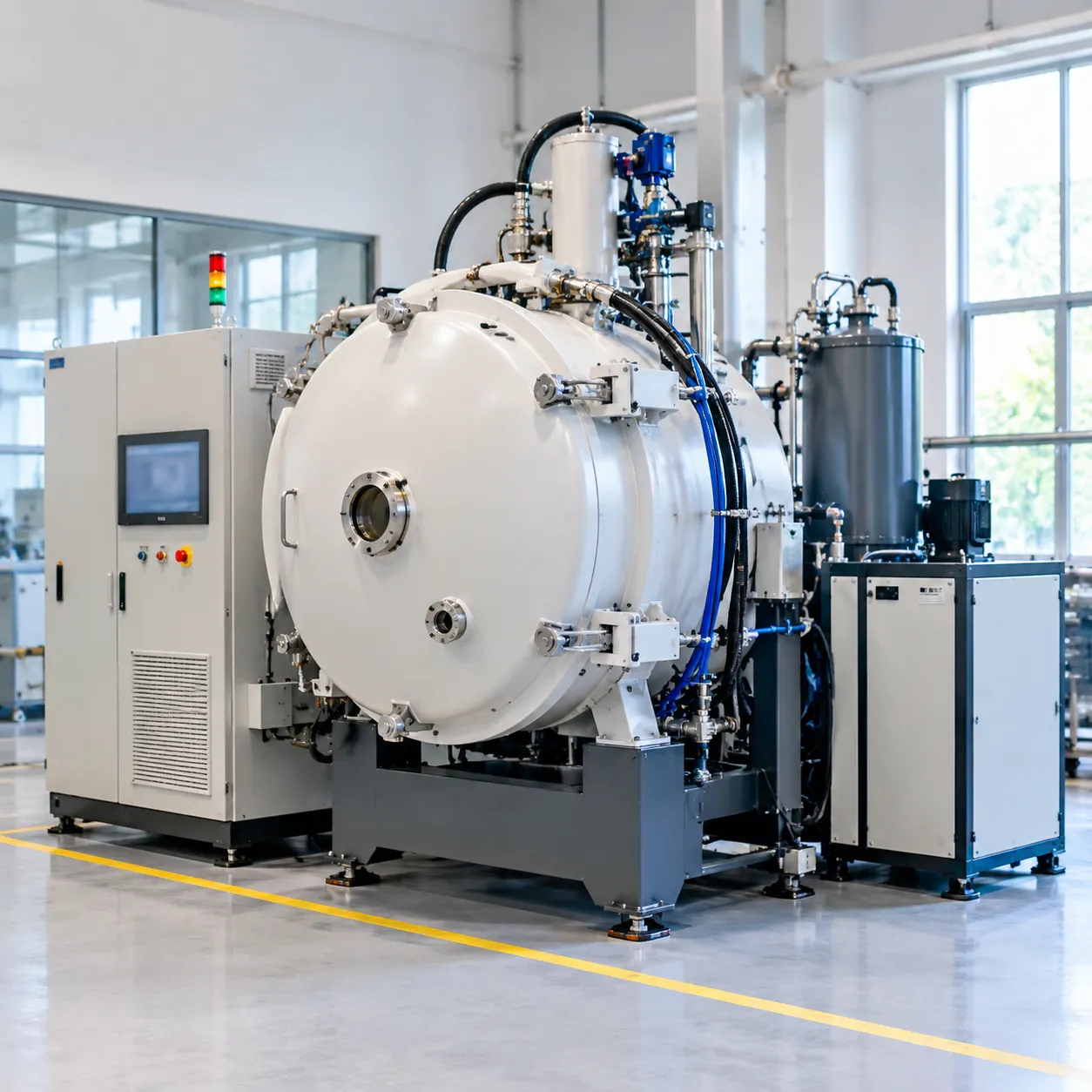
Our gear vacuum annealing systems are built with four high-integrity functional modules:
| Subsystem | Construction & Features | Operational Role |
|---|---|---|
| Vacuum Vessel | Double-walled, water-cooled 304/316 stainless or carbon steel | Maintains structural integrity, prevents outer shell overheating, and ensures zero ambient air ingress. |
| Thermal Hot Zone | Low-mass graphite felt or all-metal molybdenum shields with 360° curved heating elements | Delivers optimal thermal uniformity (compliant with AMS 2750G Class 2 standards) and rapid ramp-up rates. |
| Vacuum Pumping System | Rotary vane/screw roughing pump coupled with high-capacity Roots blowers | Achieves fast pump-down cycles, reduces cycle overhead, and maintains target vacuum levels. |
| Internal Cooling Loop | High-velocity centrifugal blower, copper-tube heat exchanger, and directional gas nozzles | Directs pressurized gas directly into gear root zones for uniform, repeatable cooling cycles. |
Elimination of Oxidation, Decarburization, and Surface Discoloration
Conventional atmospheric annealing exposes red-hot gear surfaces to oxygen and water vapor, resulting in severe scale formation and surface carbon depletion. In contrast, our vacuum environment provides critical surface protection:
-
- Zero Surface Oxidation: Eliminating free oxygen prevents iron oxide formation, producing pristine, bright-annealed gears directly out of the chamber.
- Complete Decarburization Prevention: Operating without oxidizing partial pressures prevents carbon diffusion out of the gear tooth surface, protecting surface hardness and bending fatigue limits.
- Elimination of Post-Heat Treatment Cleaning: Because parts emerge free of scale, oxides, and discoloration, downstream acid pickling, sandblasting, and aggressive secondary grinding operations are completely eliminated.
Types of Vacuum Annealing Furnaces for Gear Manufacturing
As specialized gear vacuum annealing furnace manufacturers, we design furnace architectures around specific gear geometries, metallurgical recipes, and production volumes. Selecting the right furnace configuration directly determines your throughput, energy consumption, and dimensional stability.
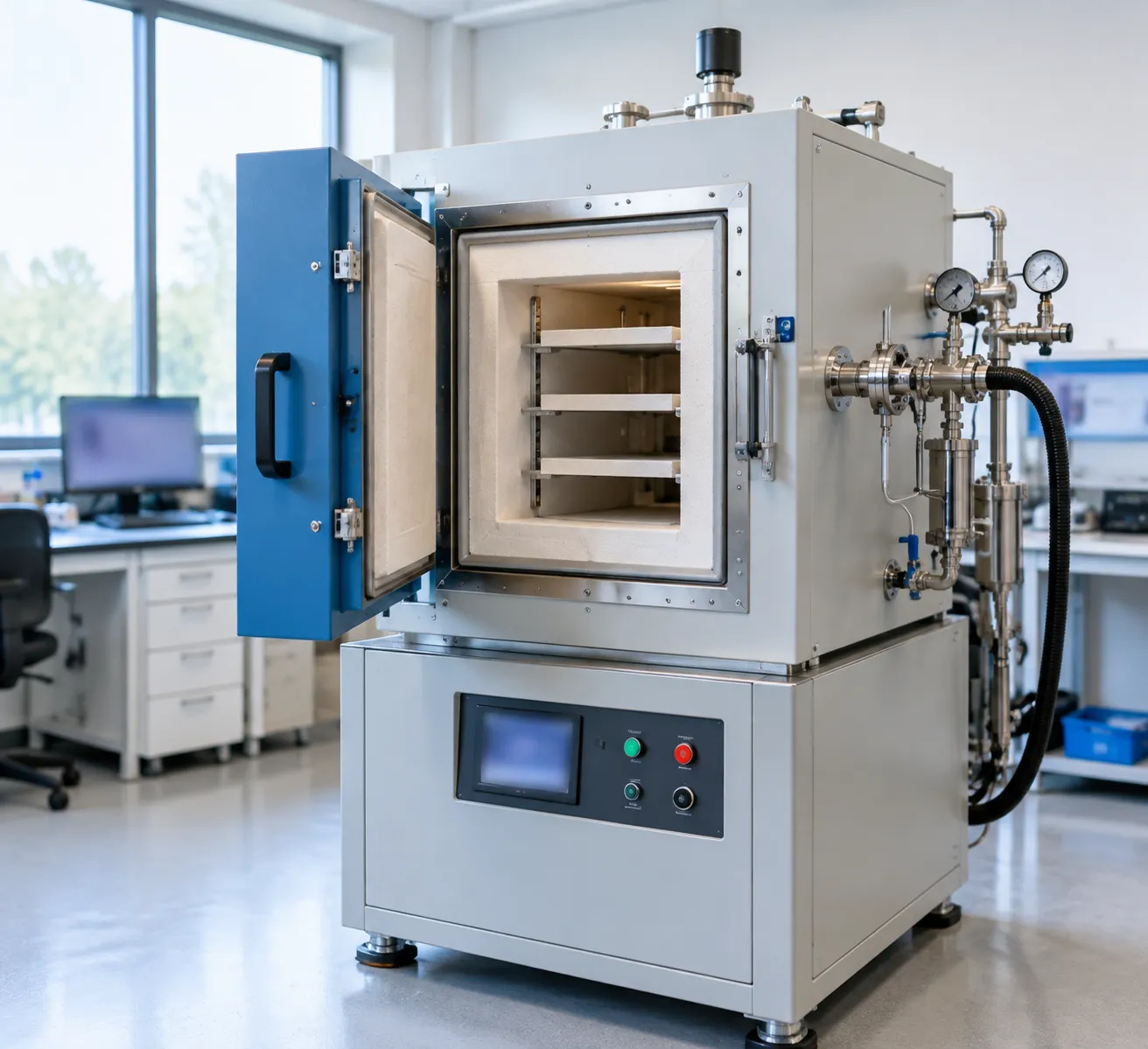
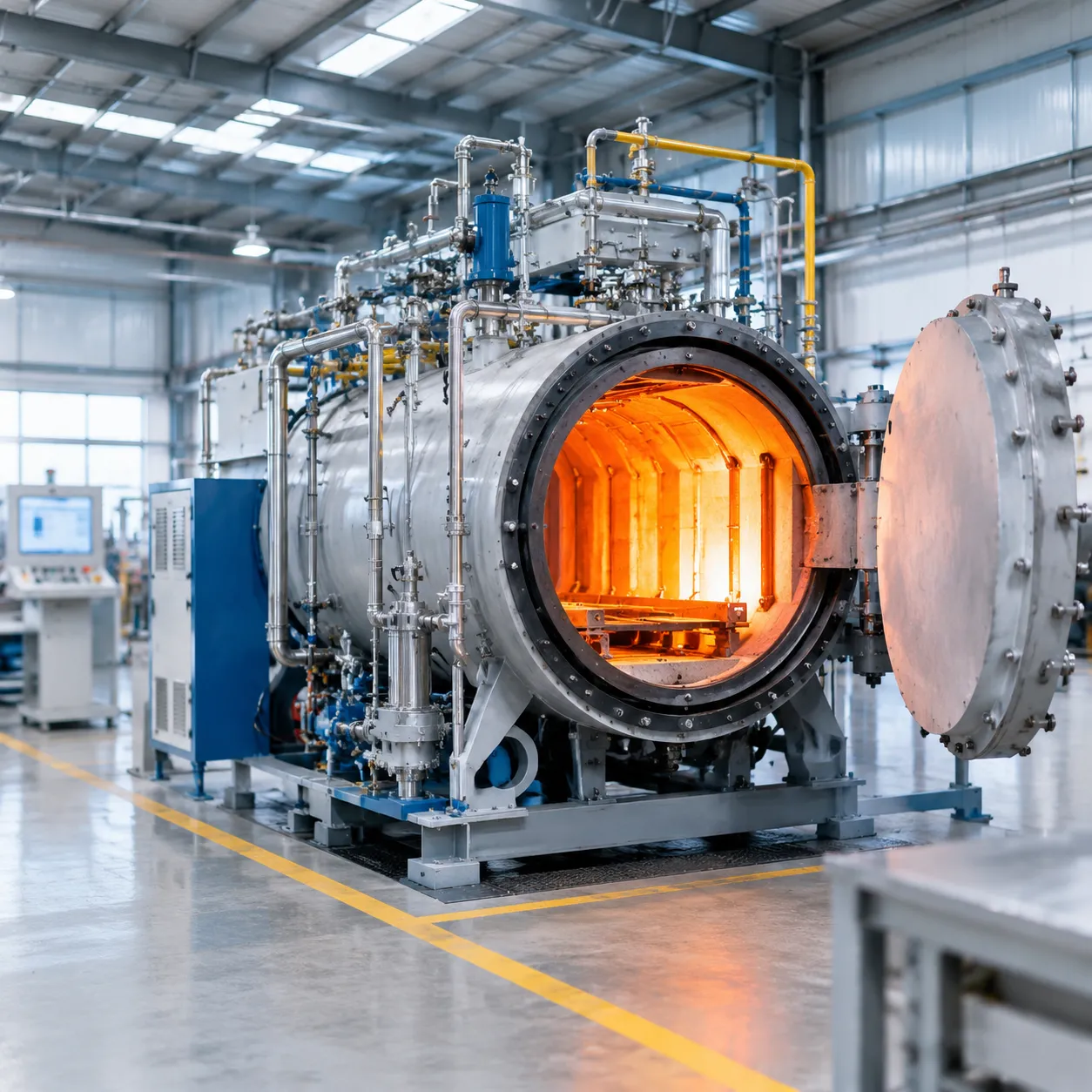
Horizontal Single-Chamber Vacuum Annealing Furnaces
The horizontal single-chamber system is the industry workhorse for standard batch production. It features front-loading access that pairs seamlessly with automated forklift and roller-hearth loading tables.
-
- Best Suited For: Small to medium batches of spur gears, helical gears, and pinions.
- Key Advantages: Compact operational footprint, lower initial capital investment, and straightforward maintenance access to the heating chamber and pumping skid.
- Operational Flexibility: Accommodates variable load sizes with rapid recipe switchovers between stress relief, bright annealing, and sub-critical cycles.
Multi-Chamber Semi-Continuous Vacuum Systems
For high-volume automotive transmission gear manufacturing, single-chamber batch furnaces can create process bottlenecks. Multi-chamber systems separate heating, soaking, and cooling into dedicated vacuum modules connected by internal isolation gate valves.
-
- Best Suited For: High-throughput automotive powertrain gears running 24/7 continuous operations.
- Key Advantages: Cold-to-cold cycle times drop significantly because the heating chamber stays hot under vacuum. This architecture cuts energy consumption per ton and eliminates thermal cycling fatigue on internal elements.
- Process Flow: Parts enter an entry vacuum purge lock, advance through isolated heating zones, and exit through a dedicated cooling module without breaking the vacuum in adjacent chambers.
Vertical Vacuum Bottom-Loading Furnaces
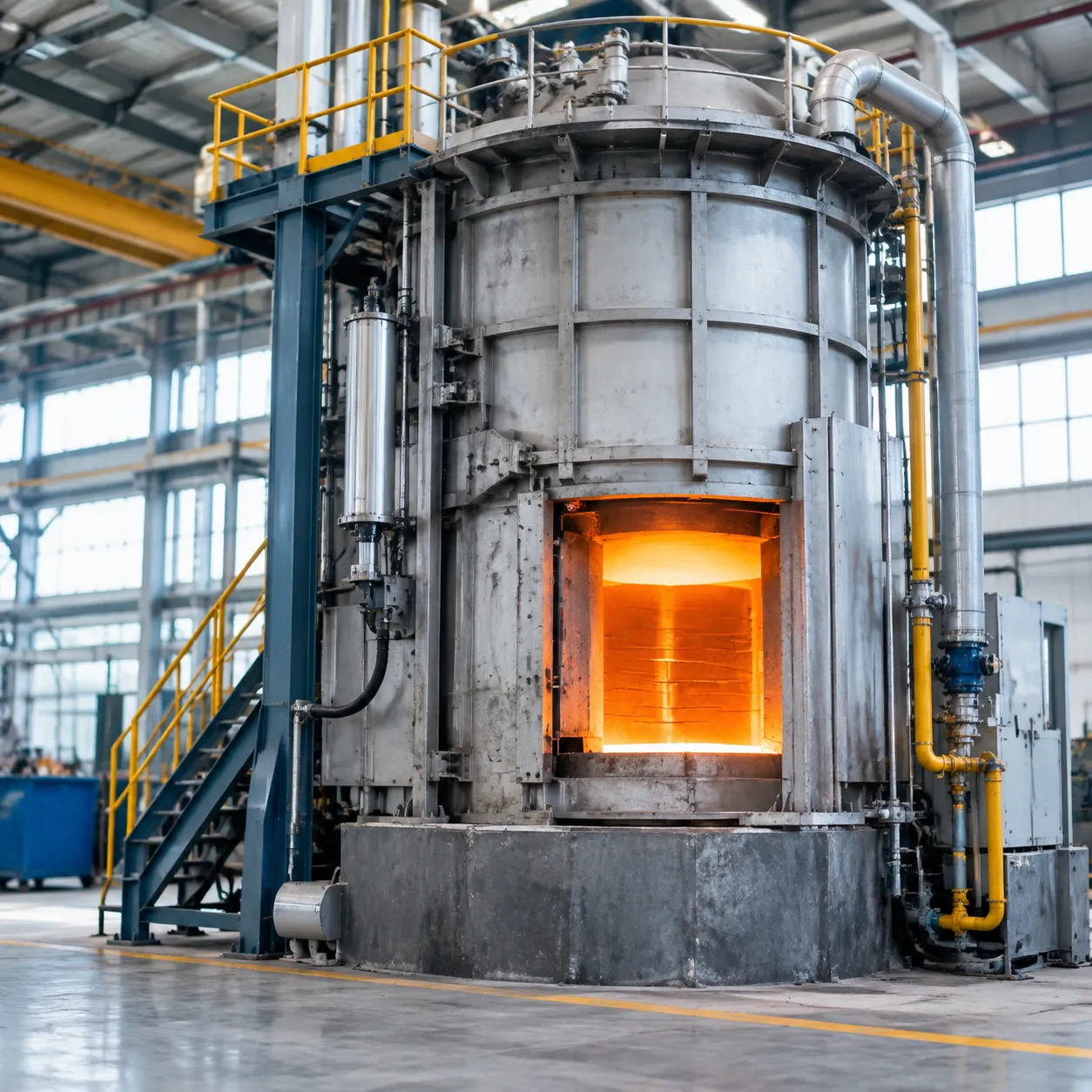
Long transmission shafts, bull gears, and large wind-turbine ring gears are exceptionally vulnerable to gravity-induced sagging and distortion when heated horizontally. Vertical bottom-loading (and pit-type) configurations eliminate this risk.
-
- Best Suited For: Extended drive shafts, splines, and heavy industrial ring gears up to 3 meters in diameter.
- Distortion Prevention: Gears and shafts hang vertically from specialized carbon-carbon or molybdenum fixturing, allowing gravity to work with the part geometry rather than bending it.
- Loading Mechanism: An automated bottom elevator lowers the hearth for 360-degree crane loading, then lifts and hermetically seals the load into the vertical hot zone.
Combined Vacuum Annealing and High-Pressure Gas Quenching (HPGQ) Units
Modern gear shops often require multi-step thermal processing within a single automated platform. Our advanced single-chamber vacuum furnace with high-pressure gas quenching allows heat treaters to run intermediate stress relief, bright annealing, and final hardening without ever exposing parts to open air.
-
- Integrated Processing: Seamlessly switches from vacuum soaking to controlled inert gas cooling (using nitrogen or argon at pressures up to 20 bar).
- Microstructural Control: Variable-speed gas blowers and dynamic 360-degree cooling nozzles deliver uniform thermal extraction, locking in tight grain structures while suppressing gear tooth distortion.
| Furnace Type | Primary Gear Applications | Key Advantages | Production Fit |
|---|---|---|---|
| Horizontal Single-Chamber | Spur gears, planetary sets, small pinions | Low footprint, cost-effective, versatile recipes | Low-to-medium batch |
| Multi-Chamber Continuous | Automotive transmission gears | High throughput, lowest energy cost per part | High-volume 24/7 lines |
| Vertical Bottom-Loading | Long output shafts, large-diameter ring gears | Hang-fixturing eliminates warpage and bending | Heavy transmission & wind power |
| Combined Annealing & HPGQ | Carburized and alloy gear steels | Annealing and hardening in a single footprint | Flexible precision job shops |
Key Technical Specifications to Evaluate from Manufacturers

When vetting gear vacuum annealing furnace manufacturers, looking past marketing brochures and evaluating raw engineering specifications is critical. A high-performance furnace must deliver tight process repeatability, zero atmospheric contamination, and predictable cycle times. Reviewing core parameters alongside your vacuum furnace cost and capacity requirements ensures the equipment meets your shop floor throughput and metallurgical standards.
Vacuum Pumping Systems and Leak-Up Rates
The vacuum pumping system defines how clean and reactive the heating environment will be:
-
- Roughing Systems: Mechanical rotary vane or dry screw pumps paired with a high-displacement vacuum pumping system roots blower typically pull vacuum down to 10⁻² mbar for standard low-alloy gear stress relief.
- High-Vacuum Systems: For bright annealing stainless, titanium, or aerospace-grade gears, secondary diffusion pumps or turbomolecular packages reach ultimate vacuum levels of 10⁻⁵ to 10⁻⁶ mbar.
- Leak-Up Rate Thresholds: We mandate an operational leak-up rate below 0.001 mbar·L/s (<5 microns/hour) to guarantee no atmospheric oxygen or moisture infiltrates the chamber during critical soak phases.
Hot Zone Engineering: Graphite vs. Molybdenum
Selecting hot zone materials impacts both operational longevity and clean-part performance:
-
- Graphite Hot Zone Vacuum Furnaces: Built with rigid carbon-composite (CFC) heating elements and multi-layer graphite felt insulation. These offer exceptional durability, lower thermal mass, fast heat-up rates, and cost-effective maintenance for standard automotive carburizing and structural gear steels.
- Molybdenum Heat Shield Furnaces: Utilize all-metal moly/tungsten elements and reflective radiation shields. Essential for aerospace gears and superalloys where carbon pickup or graphite dusting cannot be tolerated.
| Feature | All-Graphite Hot Zone | All-Metal Molybdenum Hot Zone |
|---|---|---|
| Max Working Temp | Up to 1,350°C (2,462°F) | Up to 1,315°C (2,400°F) standard |
| Thermal Mass | Very low, rapid thermal response | Moderate, excellent radiation efficiency |
| Carbon Pickup Risk | Minor risk on sensitive stainless steels | Zero risk (clean-room grade) |
| Maintenance Cost | Lower replacement and patch costs | Higher upfront and replacement costs |
| Best Application | Automotive transmission & drive gears | Aerospace, medical, and reactive alloy gearing |
Thermal Uniformity and Pyrometry Compliance
Precise distortion control requires dead-flat temperature profiles across the entire workload:
-
- Compliance Standards: Demanding gear programs require full adherence to AMS 2750G pyrometry compliance (Class 2 instrumentation) and automotive CQI-9 heat treat assessment mandates.
- Temperature Uniformity Surveys (TUS): Top-tier vacuum systems hold ±3 °C to ±5 °C (±5 °F to ±10 °F) across the entire designated hot zone volume during prolonged soaking phases.
Cooling Systems and Gas Quenching Capabilities
Annealing is only half the cycle—controlled cooling dictates final core hardness and grain size:
-
- Inert Gas Cooling (Nitrogen/Argon): Closed-loop heat exchangers backed by high-output blowers rapidly circulate high-purity inert gas.
- Variable Pressure Ranges: Systems configured with 2-bar to 20-bar gas cooling allow precise rate selection. Lower pressures yield gentle, uniform cooling to eliminate tooth distortion, while higher pressures allow dual-purpose hardening straight from the annealing heat.
- 360° Directional Nozzles: Dynamic gas injection rings direct gas flow evenly over complex gear profiles and splines to prevent asymmetric warping.
Automation, SCADA, and Intelligent Recipe Management
Modern gear heat treatment equipment requires full digital trace architecture:
-
- PLC Automatic Furnace Control System: Industrial Siemens or Allen-Bradley PLCs govern pumping, ramping, soaking, and gas management cycles without manual intervention.
- Integrated SCADA Systems: Direct connection to MES/ERP networks logs furnace cycle curves, vacuum setpoints, mass flow data, and real-time alarms.
- Intelligent Recipe Libraries: Operators store and run validated recipes for specific gear alloys (e.g., 20CrMnTi, 8620, or 18CrNiMo7-6), locking out manual overrides to guarantee lot-to-lot consistency.
Common Gear Materials and Vacuum Annealing Processes
Low-Alloy Carburizing Steels: Sub-Critical and Full Annealing
Carburizing grades require strict microstructural control prior to case hardening to ensure uniform carbon diffusion and predictable core strength.
Common Alloys: 20CrMnTi, AISI 8620, 18CrNiMo7-6, 16MnCr5, and SAE 4320.
Process Goal: Full annealing (850°C–920°C) refines coarse as-forged grains into homogeneous ferrite-pearlite structures. Sub-critical cycles (650°C–700°C) soften work-hardened blanks for easier machining while preventing grain growth.
Result: Uniform grain boundaries that prevent uneven case depth during subsequent vacuum carburizing.
Post-Machining and Hobbing Stress Relief
Machining, gear hobbing, shaping, and broaching introduce residual stresses within the gear web and teeth. If left unaddressed, these stresses release during final quenching, causing severe pitch and lead runout.
Process Parameters: Heating parts under high vacuum to 550°C–650°C with controlled, uniform soaking, followed by slow inert gas cooling.
Distortion Control: Eliminates internal residual stresses without oxidizing delicate tooth profiles, maintaining critical DIN/AGMA gear tolerances before final hardening.
| Gear Material Category | Typical Alloys | Annealing Cycle | Primary Metallurgical Outcome |
|---|---|---|---|
| Low-Alloy Carburizing Steel | 20CrMnTi, 8620, 18CrNiMo7-6 | Full / Sub-Critical | Ferrite-pearlite refinement, soft core |
| High-Carbon / Bearing Steel | SAE 52100, 100Cr6, 4140 | Spheroidizing | Globular carbide matrix, low tool wear |
| Precision Aerospace & Planetary | 300M, Nitralloy 135M, 9310 | Vacuum Bright Annealing | Zero surface oxide, pristine surface finish |
Vacuum Bright Annealing for Precision & Aerospace Gears
High-precision planetary gear sets, harmonic drives, and aerospace spur gears require completely clean surfaces with zero scale formation, eliminating the need for post-anneal pickling or abrasive blasting.
Materials: SAE 9310, Nitralloy 135M, 17-4PH, and 300M high-strength steels.
Performance: Utilizing a dedicated vacuum annealing furnace with vacuum levels down to $10^{-5}$ mbar maintains the pristine metallic luster of ground gear teeth.
Surface Integrity: Prevents micro-pitting sites and preserves exact involute tooth profiles.
Spheroidizing Annealing for High-Carbon Gear Steels
High-carbon gear steels and bearing-grade pinions (such as 100Cr6, SAE 52100, and AISI 4140/4340) exhibit high hardness after rough forging, leading to excessive tool wear and poor surface finish during gear cutting.
Thermal Cycle: Prolonged holding just below the $Ac_1$ critical temperature (740°C–780°C), followed by controlled slow cooling at rates of 10°C–20°C per hour.
Microstructure Transformation: Lamellar pearlite transforms into finely dispersed globular (spheroidal) cementite within a ferrite matrix.
Machinability Gains: Lowers raw blank hardness below 200 HBW, maximizing feed rates during hobbing and extending cutting tool life by up to 40%.
How to Select the Right Gear Vacuum Annealing Furnace Manufacturers
Assessing Manufacturing Credentials and Pyrometry Standards
A reliable builder must prove their equipment meets the most rigorous thermal processing benchmarks in the industry. We always verify:
-
- ISO 9001 Certification: Demonstrates consistent quality management throughout vessel fabrication, assembly, and testing.
- AMS 2750G Pyrometry Compliance: Essential for aerospace gear manufacturing. The OEM must guarantee Instrumentation Type standards and sensor calibration protocols.
- CQI-9 Heat Treat Assessment: Critical for automotive transmission gear lines. The furnace must support automated data logging, routine fail-safe checks, and uniform batch tracking.
Custom Chamber Sizing and Hot Zone Engineering
Standard, off-the-shelf chambers rarely deliver peak efficiency for diverse gear geometries. Top-tier vacuum annealing furnace suppliers design around your specific throughput, part dimensions, and rack configurations.
-
- Chamber Layout: Tailored horizontal or vertical loading configurations to prevent gear distortion during heating and cooling.
- Hot Zone Optimization: Choosing between high-purity graphite insulation or all-metal molybdenum shields based on your clean-room and metallurgical limits.
- Engineered Gas Quenching: Variable-speed blower motors and directional nozzles placed to eliminate thermal lag in dense, stacked gear loads.
Understanding how design impacts operational results is essential; review proven vacuum furnace applications and benefits to see how custom hot zone engineering translates into lower cycle times and zero surface oxidation.
Manufacturer Evaluation Matrix
| Evaluation Pillar | Critical Requirements | Operational Impact |
|---|---|---|
| Engineering & Customization | 3D thermal modeling, custom rack design, modular hot zones | Prevents dimensional distortion on pitch lines and thin gear webs. |
| Standards Compliance | Native AMS 2750G and CQI-9 data acquisition software | Pass customer audits without external patch software or add-ons. |
| Pumping & Vacuum Integrity | Helium leak testing (<1x10⁻³ Pa·L/s), high-capacity roots blowers | Shortens evacuation times; ensures zero decarburization. |
| Field Service & Lifecycle | Local spare parts depots, 24/7 technical hotline, pump rebuilds | Eliminates multi-week outages during unplanned maintenance. |
Spare Parts Availability and Field Support Services
A furnace is only as profitable as its uptime. We inspect an OEM’s lifecycle support infrastructure before committing capital:
-
- Pump Rebuild Programs: Guaranteed turnaround windows for mechanical booster pumps, rotary vane units, and diffusion pumps.
- Consumables Stock: Rapid dispatch for heating elements, molybdenum hangers, ceramic feedthroughs, and elastomer O-rings.
- Field Engineering: Access to experienced technicians capable of executing on-site leak detection, hot zone repairs, and SAT (Site Acceptance Testing).
Reviewing Industrial Case Studies
Examine the builder's track record across demanding markets. Leading custom heat treat furnace OEM partners readily share data-backed case studies:
-
- Automotive Powertrains: High-volume throughput of low-alloy transmission pinions with sub-micron distortion limits.
- Aerospace & Defense: Bright stress-relief annealing of high-hardness carburizing steels without surface micro-cracking.
- Heavy Industrial Transmissions: Annealing massive ring gears and bull gears in vertical systems to keep runout well within gear-grinding allowances.
Cost Factors, Energy Efficiency, and ROI Analysis
Capital Equipment Cost vs. Long-Term OpEx
While a vacuum system carries a higher upfront tag than standard atmosphere box furnaces, the total cost of ownership shifts rapidly in your favor during production.
| Cost Component | Conventional Atmosphere Furnace | Modern Gear Vacuum Annealing Furnace | Operational Impact |
|---|---|---|---|
| Protective Gas Consumption | Continuous high-volume endogas/nitrogen flush | Static low-pressure fill or deep vacuum | Up to 70% reduction in process gas costs |
| Thermal Idle Losses | High standby power to prevent soot buildup | Instant cold-wall startup and rapid shutdown | Zero standby power waste between batches |
| Post-Heat Treatment Cleaning | Mandatory acid pickling or shot blasting | Zero cleaning needed (parts exit bright and dry) | Eliminates secondary wash lines and chemical disposal |
| Fixture Wear | Rapid oxidation of heavy cast iron fixtures | Lightweight CFC fixtures with extended service life | Lower fixture replacement CapEx over 5 years |
Energy-Saving Insulation and Low-Mass Fixturing
We engineer our hot zones with high-purity rigid graphite board backed by layered graphite felt to deliver exceptional thermal retention.
-
- Rigid Graphite Hot Zones: Minimize thermal radiation losses to the water-cooled outer vessel, cutting overall kilowatt-hour consumption per cycle by up to 25%.
- Carbon-Carbon Composite (CFC) Fixturing: Swapping heavy alloy baskets for lightweight CFC grids reduces thermal mass by over 60%. Your furnace spends power heating actual gear stock rather than deadweight fixtures.
Cycle Time Reduction and Automated Load Handling
Modern production lines cannot afford bottlenecked batch furnaces. We incorporate high-convection heating gas blowers for rapid ramp-up below 750°C, significantly optimizing the overall vacuum furnace heat treatment process. Paired with automated rail-guided loading cars and programmable PLC cycle recipes, downtime between furnace unloading and reloading drops to minutes.
Scrap Rate Reduction and Downstream Machining Savings
The fastest return on investment comes from upstream precision:
-
- Eliminated Decarburization: Gears leave the hot zone with pristine surface chemistry, preventing early tooth fatigue failure.
- Superior Gear Distortion Control: Uniform 360-degree radiant heating eliminates thermal shock and localized warping.
- Reduced Hard-Grinding Allowances: Because parts retain dimensional stability without scale buildup, shops can reduce final grinding stock by 0.2 mm to 0.4 mm per flank, extending grinding wheel life and slashing CNC machining hours.
Maintenance and Operational Best Practices for Gear Vacuum Annealing Furnaces
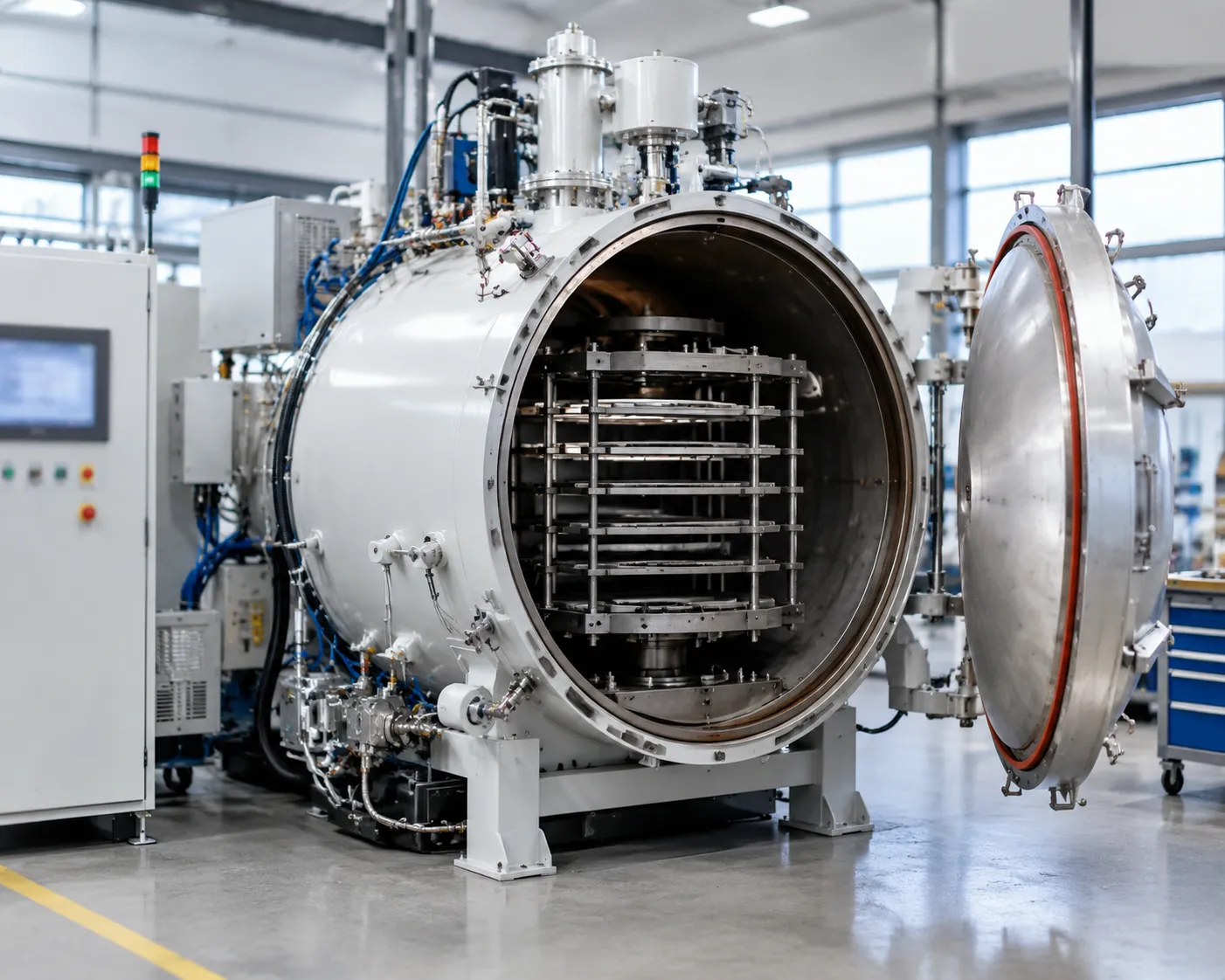
Keeping your vacuum heat treatment equipment operating at peak efficiency requires disciplined preventative maintenance.
Routine Helium Mass Spectrometer Leak Testing
A clean vacuum environment is critical for bright annealing precision gears without oxidation or decarburization.
-
- Quantitative Leak Checks: Perform automated leak-up rate tests before critical production runs. If the leak rate exceeds 5 microns per hour, isolate the vessel.
- Pinpoint Detection: Use a helium mass spectrometer leak test along door seals, feedthroughs, valve manifolds, and sight glasses to locate micro-leaks immediately.
- O-Ring Care: Regularly clean, inspect, and lightly lubricate Viton and silicone seals with high-vacuum grease; replace O-rings at the first sign of cracking or flattening.
Pumping System and Valve Preventative Maintenance
The heart of your thermal processing system is its vacuum pumping train. Keeping pumps in top condition ensures rapid pump-down cycles and protects the hot zone from oil backstreaming.
| Component | Inspection Frequency | Action Item |
|---|---|---|
| Mechanical Rotary Pump | Weekly / Monthly | Check oil level, clarity, and temperature. Change pump oil every 500–1,000 run hours. |
| Roots Blower | Monthly | Inspect gear lubrication, verify motor drive belt tension, and check for bearing vibration. |
| Pneumatic Isolation Valves | Quarterly | Clean valve seats, test seal integrity, and check pneumatic solenoids and limit switches. |
| Vacuum Filters / Traps | Bi-Weekly | Clean inlet dust traps and particulate filters to prevent abrasive wear inside pump rotors. |
For setups utilizing our standard horizontal vacuum furnace systems, automated diagnostic alerts simplify tracking pump run-times and filter pressure differentials directly from the PLC interface.
Thermocouple Calibration and Temperature Uniformity Survey (TUS)
Maintaining compliance with AMS 2750G pyrometry standards and CQI-9 heat treat assessments is non-negotiable for automotive and aerospace gear manufacturing.
-
- Control and Overtemp Sensors: Calibrate load and control thermocouples (typically Type S or Type N) on strict monthly or quarterly cycles depending on operating temperatures.
- Scheduled TUS Runs: Conduct a multi-point Temperature Uniformity Survey (TUS) every 6 to 12 months, or after any major hot zone rebuild, ensuring temperature uniformity within ±5°C (±10°F) across the working volume.
- Instrument Calibration: Recalibrate digital controllers, recording instruments, and data acquisition channels every 3 months.
Hot Zone Care and Fixture Inspection
Protecting your heating elements and load supports prolongs furnace life and maintains uniform heat transfer across complex gear tooth profiles.
-
- Graphite Hot Zone Maintenance: Inspect graphite heating elements for micro-cracks, bowing, or loose connector hardware. Replace degraded carbon-felt or graphite-rigid board insulation to avoid cold spots.
- Burnout / Clean-Up Cycles: Run a high-temperature empty burn-out cycle (vacuum bake-out) periodically to degas the chamber and strip volatile residues.
- Carbon-Carbon (C/C) Fixtures: Inspect composite grids, stacking trays, and fixture pins for mechanical fatigue, delamination, or warpage. Lightweight, stable C/C fixtures ensure repeatable load geometry and minimize quenching distortion.
Frequently Asked Questions About Gear Vacuum Annealing Furnaces
Why choose vacuum annealing over conventional atmosphere annealing for precision gears?
Vacuum processing completely eliminates surface oxidation, decarburization, and intergranular oxidation (IGO). Conventional endothermic or protective atmosphere furnaces can leave micro-scaling or soot, requiring aggressive sandblasting, acid pickling, or extra finish grinding. Investing in a high-performance vacuum heat treatment furnace produces bright, clean gears straight out of the chamber, protecting tight tolerances on finished gear profiles.
How does vacuum annealing minimize distortion in complex gear tooth geometries?
Distortion occurs when uneven heating or cooling causes localized thermal stresses. We eliminate this through:
Controlled Ramp Rates: Slow, uniform heat absorption across thin tooth tips and thick gear hubs.
360-Degree Radiation: Pure radiation balances core and case temperatures without thermal shock. Understanding how heat transfer in a vacuum furnace operates ensures uniform heat distribution before soaking.
Symmetrical Gas Flow: Multi-directional cooling nozzles inject high-purity inert gas evenly across the entire load to avoid asymmetrical warping.
What is the difference between graphite and metallic hot zones for gear processing?
| Feature | Graphite Hot Zone | All-Metal (Molybdenum) Hot Zone |
|---|---|---|
| Initial Cost | Lower initial capital investment | Higher initial investment |
| Energy Efficiency | Excellent thermal insulation; low power loss | Higher radiant heat loss; requires more power |
| Cleanliness | Standard industrial clean (minimal dust) | Ultra-clean; zero carbon-pickup risk |
| Best Suited For | Automotive transmission gears, standard alloy steels | Aerospace gears, stainless steels, titanium parts |
| Maintenance | Inexpensive element and board replacement | Higher replacement cost for shields and strips |
What gas pressure is required for rapid cooling after gear vacuum annealing?
For standard stress-relief or full annealing cycles, an inert gas backfill of 1.5 to 2 bar (nitrogen or argon) is sufficient to cool the load quickly below oxidation temperatures. However, if your cycle transitions directly into hardening or requires rapid turnaround to boost batch throughput, cooling systems rated between 6 bar and 12 bar with directional cooling nozzles provide fast, uniform heat extraction.
How does a gear vacuum annealing furnace ensure compliance with AMS 2750 and CQI-9?
Compliance relies on tight pyrometry controls and fully traceable digital records:
Thermal Uniformity Surveys (TUS): Engineered hot zones consistently achieve Class 2 (±5°C / ±10°F) or Class 3 (±8°C / ±15°F) uniformity across the entire working volume.
Instrumentation Accuracy: Dedicated multi-channel control, over-temperature, and load monitoring thermocouples calibrated to strict standard intervals.
Automated Data Logging: Integrated SCADA systems generate tamper-proof batch records covering vacuum levels, ramp profiles, soak durations, and quench pressures for seamless aerospace and automotive quality audits.