Formula details
Product Details
Overview
Continuous Roller Hearth Kilns: Engineering Overview
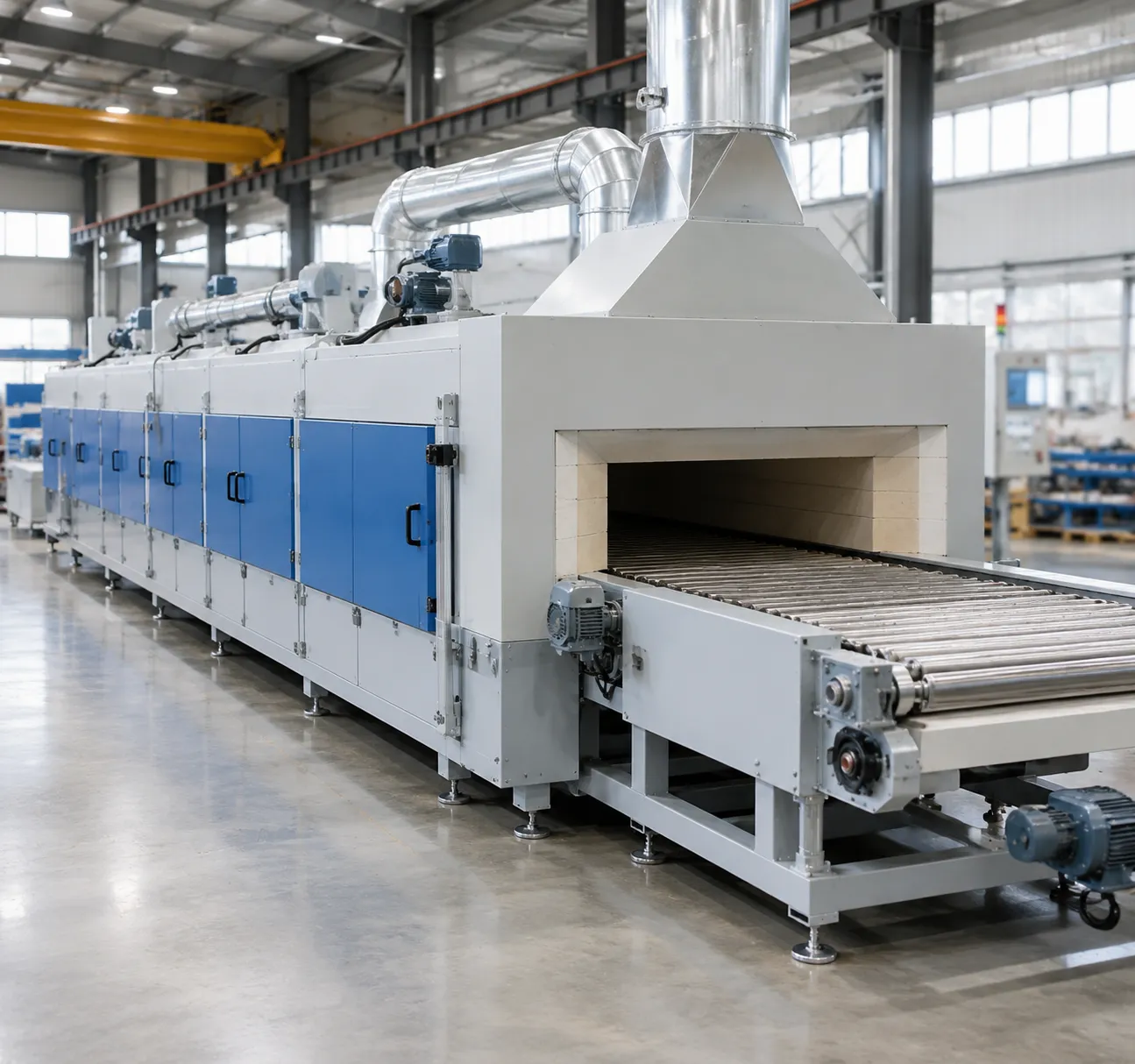
As a specialized industrial roller kiln manufacturer, we design and build continuous thermal processing systems engineered for high-capacity calcination and sintering. Our continuous roller hearth kilns deliver synchronized material transport, precise multi-zone thermal curves, and tight atmospheric control to meet the rigorous standards of advanced material production.
Continuous Sintering and Calcination Mechanisms
Our roller kiln systems use a motorized, continuous roller hearth mechanism to convey materials loaded in saggers, trays, or direct carriers through the heating chamber.
-
- Uniform Product Conveyance: Synchronous gear or sprocket-driven rollers ensure smooth, vibration-free travel, preventing material tipping and reducing mechanical wear.
- Optimized Thermal Exposure: Direct heat transfer across both the top and bottom of the load promotes fast, uniform reaction kinetics and shortens firing cycles compared to batch systems.
- High Production Yield: Continuous loading and unloading sequences maximize throughput for large-scale operations.
Multi-Zone Modular Heating Architecture
To satisfy complex firing curves, our furnaces feature a modular chamber design segmented into independently controlled thermal zones:
-
- Preheating Zone: Rapidly removes residual moisture and binders using controlled heating elements and balanced exhaust ventilation to prevent thermal shock.
- Soaking / Sintering Zone: Utilizes precision heating elements (resistance wire, Silicon Carbide/SiC rods, or MoSi2) to maintain target soak temperatures with minimal cross-sectional thermal deviation.
- Controlled Cooling Zone: Employs multi-stage direct and indirect cooling modules to lock in product microstructures while recovering residual heat for process efficiency.
Precision Atmosphere Management Systems
For processes requiring strict atmosphere integrity—such as battery active materials or specialized technical ceramics—we integrate advanced gas flow and exhaust management systems:
- Atmosphere Options: Engineered for pure nitrogen (N₂), pure oxygen (O₂), compressed dry air, or inert blends.
- Dynamic Sealing: Dynamic mechanical seals at roller entry points combined with pneumatic gas curtains at kiln entry and exit eliminate external ambient air infiltration.
- Flow & Dew-Point Control: Multi-point gas injection headers, continuous exhaust extraction loops, and online oxygen/dew-point monitoring maintain constant reaction chemistry across the entire chamber length.
Technical Specifications and Engineering Parameters
| Parameter | Standard Configuration | High-Temperature / Custom Configuration |
|---|---|---|
| Operating Temperature | Up to 1200°C | Up to 1400°C+ |
| Heating Method | Electric (Resistance Wire / SiC Rods) | Electric (MoSi₂ / SiC) or Gas-Fired Systems |
| Roller Materials | Heat-resistant alloy / Alumina (Al₂O₃) | High-purity Alumina (Al₂O₃ ≥ 99%) / Silicon Carbide (SiC) |
| Atmosphere Support | Air, Oxidizing (O₂) | Inert (N₂), Oxidizing, or Reducing Blends |
| Drive System | Frequency-controlled gear/chain drive | Precision VFD synchronous continuous drive |
| Temperature Uniformity | ±3°C to ±5°C | ±2°C across cross-section |
| Control Architecture | Multi-zone PID with PLC & HMI touchscreen | Central SCADA integration with automated data logging |
Engineered Rollers for Roller Kilns (Ceramic & Alloy Solutions)
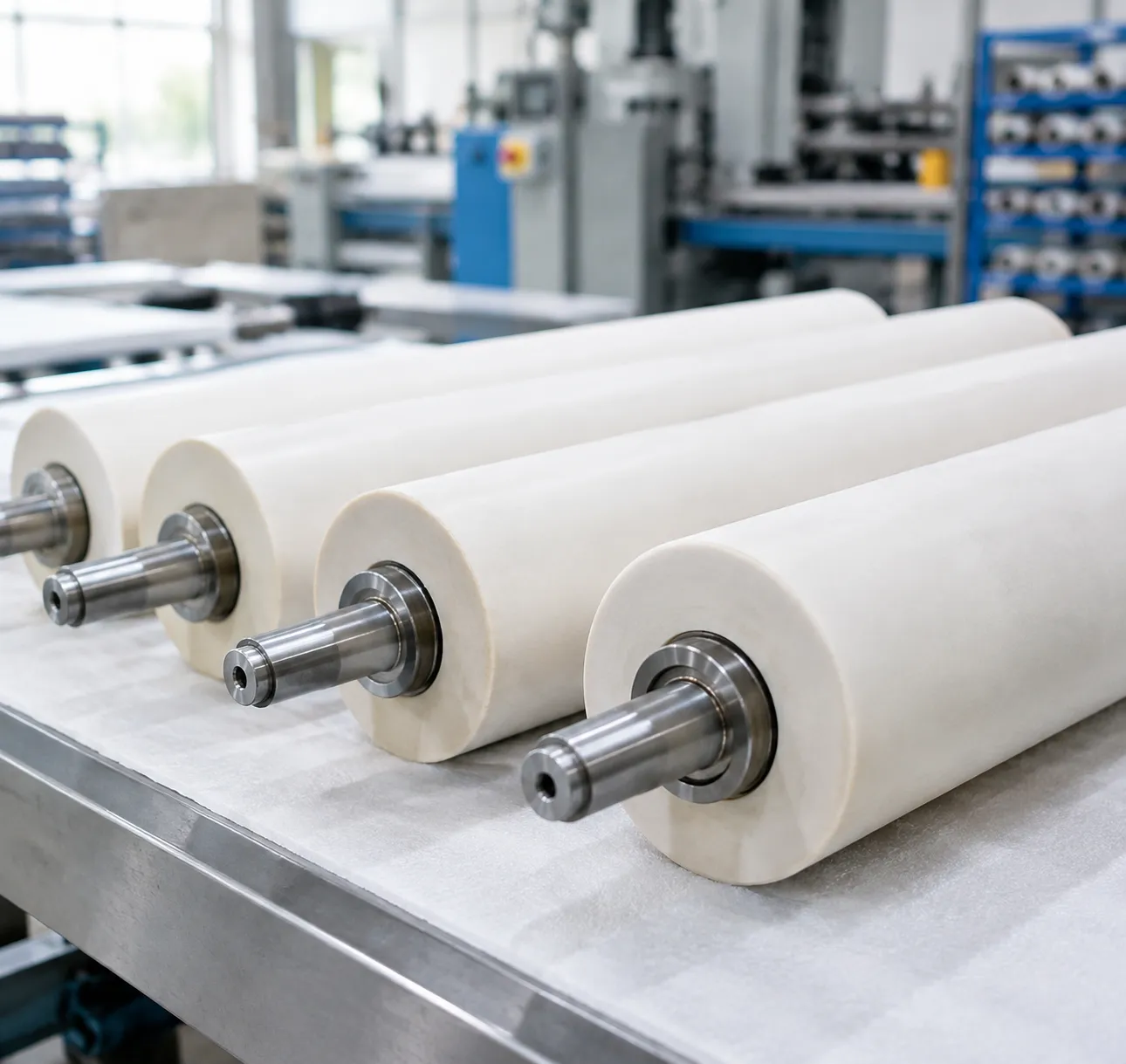
High-Purity Alumina Rollers (Al2O3 ≥ 80% to 99%+)
Our alumina ceramic roller tubes deliver exceptional mechanical rigidity and surface finish for demanding calcination environments.
Corrosion Resistance: Inert to volatile chemical emissions during cathode powder, technical ceramic, and ferrite processing.
High Bending Strength: Resists creep and deformation under continuous rotational stress at elevated temperatures up to 1400°C.
Smooth Surface Quality: Prevents abrasive wear on saggers and kiln furniture, minimizing debris accumulation inside the heating chamber.
Silicon Carbide (SiC / RBSiC / SSiC) Rollers
For ultra-high thermal loads, wide kiln cross-sections, and heavy payloads, we manufacture and supply advanced silicon carbide (SiC) rollers.
High Load Capacity: Maintains extreme structural strength across wide kiln spans without center sagging.
Superior Thermal Shock Resistance: Handles fast-firing cycles and rapid temperature fluctuations without micro-cracking.
Atmospheric Durability: Performs consistently in aggressive oxidizing and inert gas atmospheres.
Heat-Resistant Alloy & Metallic Rollers
For lower-to-medium temperature sections, such as entry preheating and final cooling zones, our heat-resistant alloy rollers provide an economical, impact-resistant solution.
Toughness and Machinability: Eliminates the risk of mechanical shock breakage during automated sagger loading and unloading.
Graded Stainless & Nickel Alloys: Selected specifically to match the thermal expansion and corrosion requirements of non-firing zones.
Roller Selection Matrix
| Roller Material | Max Operating Temp | Load Capability | Atmospheric Compatibility | Primary Applications |
|---|---|---|---|---|
| High-Purity Alumina (Al2O3 ≥ 99%) | Up to 1400°C | Medium to High | Oxidizing, Inert, Corrosive | Electronic ceramics, battery cathodes, MLCCs |
| Standard Alumina (Al2O3 ~80%) | Up to 1250°C | Medium | Air, Light Oxidizing | Traditional ceramics, ferrites, general calcination |
| Silicon Carbide (RBSiC / SSiC) | Up to 1380°C+ | Very High (Wide Spans) | Severe Oxidizing, Inert (N2), Acidic | Heavy sagger loads, powder metallurgy, specialty glass |
| Heat-Resistant Alloys | Up to 850°C | High Impact | Air, Controlled Exhaust | Infeed/discharge zones, fast cooling modules |
As your dedicated roller kiln supplier, we provide exact dimensional tolerances, drive-end machining, and custom protective coatings to optimize your production efficiency and lower your replacement roller kiln price costs over the equipment lifecycle.
Core Industrial Applications for Roller Kiln Systems
Key Application Matrix
| Industry Sector | Process Type | Target Materials | Atmosphere | Typical Temperature |
|---|---|---|---|---|
| Energy Storage | Sintering & Calcination | LFP, NCM, LCO, Synthetic Graphite | Pure O2, N2, or Inert | 650°C – 1200°C |
| Electronic Components | Co-firing & Metallization | MLCCs, LTCC, Alumina Substrates | Air, Reducing, or N2 | 900°C – 1350°C |
| Chemical & Refining | Catalyst Activation | Zeolites, Alumina Beads, Carriers | Clean Air / Exhaust Loops | 450°C – 800°C |
| Magnetics & Ferrites | High-Density Sintering | Soft/Hard Ferrites, NdFeB Cores | Low-O2, N2, or Sealed Air | 1100°C – 1350°C |
Lithium-Ion Battery Materials (LFP, NCM, LCO)
We configure custom continuous roller hearth furnace lines specifically for battery cathode and anode production:
-
- Cathode Calcination (NCM/LCO): Operates under high-purity oxygen environments with gas-tight dynamic seals to prevent leakages and ensure optimal crystalline phase development.
- LFP and Anode Processing: Utilizes high-purity nitrogen envelopes with precise multi-point gas injection to eliminate oxidation during high-throughput carbon coating and sintering.
- Automated Material Handling: Integrates sagger loading, stacking, and closed-loop sagger return systems for uninterrupted high-volume output.
Technical Ceramics, MLCCs, and Substrates
Our continuous industrial sintering furnace systems handle microelectronics and advanced technical ceramics with zero-tolerance for thermal distortion:
-
- Multi-Layer Ceramic Capacitors (MLCC): Clean-burn binder burnout zones paired with micro-zone temperature controls to prevent delamination or micro-cracking.
- Alumina and Zirconia Substrates: Flat firing profiles utilizing high-grade ceramic rollers for roller kiln systems to eliminate warpage and maintain dimensional tolerances.
Catalyst Supports and Chemical Powders
-
- Uniform Gas-Solid Contact: Multi-zone air distribution ensures uniform calcination of extruded pellets, spheres, and honeycomb catalyst carriers.
- Corrosion-Resistant Interiors: Refractory fiber and non-reactive linings prevent chemical attack from volatile off-gases during thermal activation.
Magnetic Materials and Ferrite Production
-
- Strict Atmosphere Curves: Precise oxygen partial pressure control across preheating, firing, and rapid cooling sections.
- Magnetic Property Optimization: Maintains uniform phase purity and grain growth across every sagger row, ensuring high magnetic permeability and low core loss.
Technological Advantages of Modern Roller Kiln Manufacturing
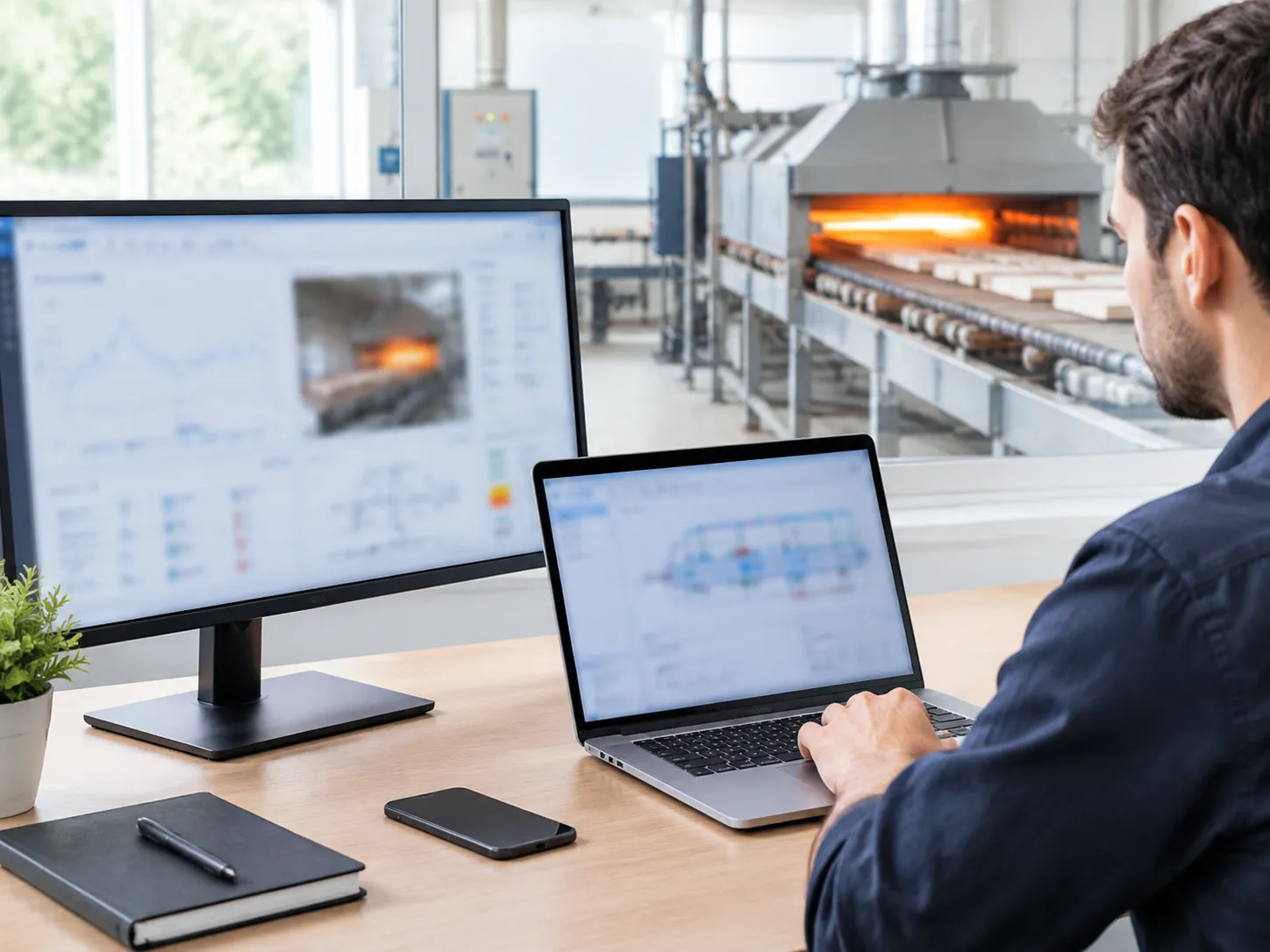
High Thermal Efficiency and Multi-Layer Insulation
Minimizing heat loss across extended heating lengths is essential for keeping operational costs predictable. Our continuous furnace structures feature:
Multi-Layer Composite Lining: We combine high-purity ceramic fiber modules with lightweight refractory backing bricks to lower outer shell temperatures and reduce heat dissipation.
Optimized Heat Recovery: Strategic air-flow management channels preheated air back into combustion or soaking zones, significantly lowering specific energy consumption per ton of throughput.
Low Thermal Mass Construction: Fast heat-up and cooldown responsiveness reduces stabilization time during production batch switchovers.
Engineering Architecture Highlights
| Feature | Operational Benefit |
|---|---|
| Multi-Layer Composite Insulation | Maximum thermal retention & low kW |
| Precision-Machined Drive Train | Anti-breakage & zero-jam operation |
| Dynamic Roller Passage Seals | Low dew point & stable gas purity |
Precision Roller Drive Mechanisms with Anti-Breakage Protection
Roller slippage, torque mismatch, or sudden stops can crack expensive ceramic tubes and disrupt continuous sintering lines. We eliminate these risks through:
Synchronous Drive Transmission: Precision-machined gears, sprockets, and heavy-duty chain assemblies ensure every individual roller for roller kiln operation rotates at an identical tangential speed.
VFD-Controlled Speed Regulation: Smooth, variable frequency drives allow micron-precise throughput speed adjustments to match exact dwell-time curves.
Automatic Torque-Limiting & Jam Protection: If sagger misalignment or mechanical resistance occurs, our drive mechanism instantly disengages the affected segment to prevent catastrophic roller breakage and sagger pile-ups.
Gas-Tight Dynamic and Static Atmosphere Sealing
Maintaining strict nitrogen or oxygen atmospheres requires uncompromising containment engineering. Every high-performance continuous roller hearth furnace we build utilizes:
Dynamic Roller Penetration Seals: Flexible, high-temperature dynamic packing glands seal every roller penetration through the kiln wall, preventing atmospheric leakage and air ingress.
Static Baffle and Curtain Zones: Engineered physical entry/exit purge chambers isolate the interior atmosphere from ambient air during continuous loading and unloading.
Integrated Gas Flow Loops: Working alongside our dedicated controlled atmosphere furnace technologies, multi-point injection and exhaust balancing maintain uniform gas purity and target dew points throughout the entire sintering process.
Roller Kiln Price Factors & Industrial Procurement Guide
Evaluating an industrial roller kiln price requires looking beyond the base equipment cost. As an experienced roller kiln manufacturer, we configure thermal lines around exact production throughput, footprint limitations, and operational budgets. Understanding how specific engineering elements impact capital investment ensures an optimized balance between equipment capability and long-term operating costs.
Key Cost Drivers: Dimensions, Temperatures, and Heating Elements
Chamber geometry and thermal ratings directly dictate structural material requirements and heating technology:
-
- Chamber Dimensions & Effective Width: Wider cross-sections and longer heating lengths increase throughput but require larger drive systems and higher total refractory volume.
- Operating Temperature Thresholds: Operating under 1100°C allows standard refractory and alloy designs. Temperatures reaching 1200°C to 1400°C+ require high-grade alumina or silicon carbide (SiC) rollers for roller kiln systems, paired with heavy-duty fiber insulation.
- Heating Elements: Resistance wires, SiC rods, or MoSi2 elements differ in unit cost and power supply requirements depending on continuous operating zones.
| Cost Variable | Lower Investment Profile | Advanced Industrial Profile |
|---|---|---|
| Max Working Temp | Up to 1050°C (Air Atmosphere) | 1200°C – 1400°C+ (Controlled Atmosphere) |
| Roller Material | Heat-resistant alloy / Alumina | Reaction-bonded or sintered SiC |
| Heating Method | Resistance wire assemblies | SiC / MoSi2 rods or gas-fired combustion |
| Drive Automation | Fixed or manual speed adjust | Variable-frequency continuous synchronous drive |
Atmosphere Automation, Gas Monitoring, and Sagger Return Loops
The required level of automation significantly affects total project costs:
- Atmospheric Integrity: Basic air-firing kilns carry lower fabrication costs, while sealed atmosphere systems designed for pure oxygen (O₂) or inert nitrogen (N₂) require precision gas distribution manifolds, multi-point exhaust control, and continuous oxygen/dew-point analyzers.
- Material Handling Systems: Integrating automated sagger loading, unloading, stacking, and return loops reduces labor and prevents product tipping, directly improving cycle consistency.
Selecting a Reliable Roller Kiln Supplier
When choosing a roller kiln supplier, technical validation must precede delivery to eliminate startup delays:
-
- Factory Acceptance Testing (FAT): We verify drive synchronization, heating loop integrity, and gas sealing prior to shipment.
- On-Site Commissioning: Field engineers calibrate multi-zone PID controllers and establish custom thermal curves directly on production lines.
- Lifecycle Component Availability: Sourcing kiln components and replacement ceramic or alloy rollers from standard production lines ensures fast maintenance turnarounds.
Custom Design-to-Order Manufacturing vs. Standard Configurations
Off-the-shelf continuous kilns offer quick implementation for generic ceramic firing. However, advanced processes—such as lithium battery cathode calcination, electronic substrate firing, and catalyst processing—benefit most from custom design-to-order manufacturing. We engineer heating zone lengths, atmospheric injection rates, and roller drive spacings to match your exact material profile, eliminating excess energy consumption and maximizing operational throughput.
Frequently Asked Questions (FAQ)
What is the average service life of ceramic kiln rollers, and how are they maintained?
The operational lifespan of a roller for roller kiln systems generally ranges between 12 and 36 months, depending heavily on the operating temperature, mechanical load, and chemical atmosphere.
-
- Silicon Carbide (SiC) Rollers: Offer superior resistance to high temperatures and thermal shock, lasting significantly longer under heavy continuous loads.
- High-Purity Alumina Rollers: Provide excellent dimensional stability for neutral and oxidizing atmospheres in technical ceramic production.
- Preventive Maintenance: Keep rollers in continuous synchronous rotation during cool-down cycles to avoid thermal bending. Periodically inspect for surface slag deposition and ensure drive alignment remains within tolerance to prevent premature breakage.
How does a roller kiln manufacturer achieve cross-sectional temperature uniformity?
As an established roller kiln manufacturer, we eliminate thermal gradients across the furnace chamber using a multi-zone engineering approach:
-
- Independent Multi-Zone Heating: Top and bottom heating elements (resistance wire, SiC, or MoSi2) are divided into discrete control zones managed by precision PID controllers.
- Optimized Chamber Geometry: Balanced thermal insulation prevents edge heat loss and guarantees uniform heat transfer to saggers and workpieces in demanding ceramic manufacturing lines.
- Controlled Atmosphere Circulation: Strategic placement of gas injection nozzles and exhaust ports ensures laminar gas flow across the entire conveyor width without localized chilling.
Can a continuous roller kiln be retrofitted for different processing atmospheres?
Yes. We frequently engineer retrofit packages to adapt existing continuous lines to inert ($N_2$), oxidizing ($O_2$), or sealed air operations. Converting atmosphere capabilities involves installing dynamic gas curtains at entry/exit points, upgrading roller hole seal boxes, integrating multi-point mass flow controllers, and installing continuous oxygen and dew-point monitoring systems.
What are the lead times for custom roller kiln manufacturing versus replacement rollers?
Production schedules depend on equipment scale, material choices, and customization requirements:
| Procurement Category | Typical Lead Time | Key Determining Factors |
|---|---|---|
| Standard Ceramic / Alloy Rollers | 1 – 3 Weeks | Raw material availability, standard outer diameter (OD) and length specifications |
| Custom Engineered Kiln Rollers | 3 – 5 Weeks | Non-standard drive ends, specialized machining, high-purity SiC formulations |
| Standard Industrial Roller Kilns | 10 – 14 Weeks | Base chamber size, standard heating element configuration, manual handling |
| Turnkey Custom Roller Kiln Systems | 16 – 24 Weeks | Total kiln length, multi-atmosphere sealing, automated sagger return loops |
Working directly with a specialized roller kiln supplier ensures direct access to replacement parts, transparent roller kiln price structures, and custom-tailored thermal engineering support.