Key Industrial Applications of Vacuum Furnaces
Vacuum Hardening Metals and Thermal Processing
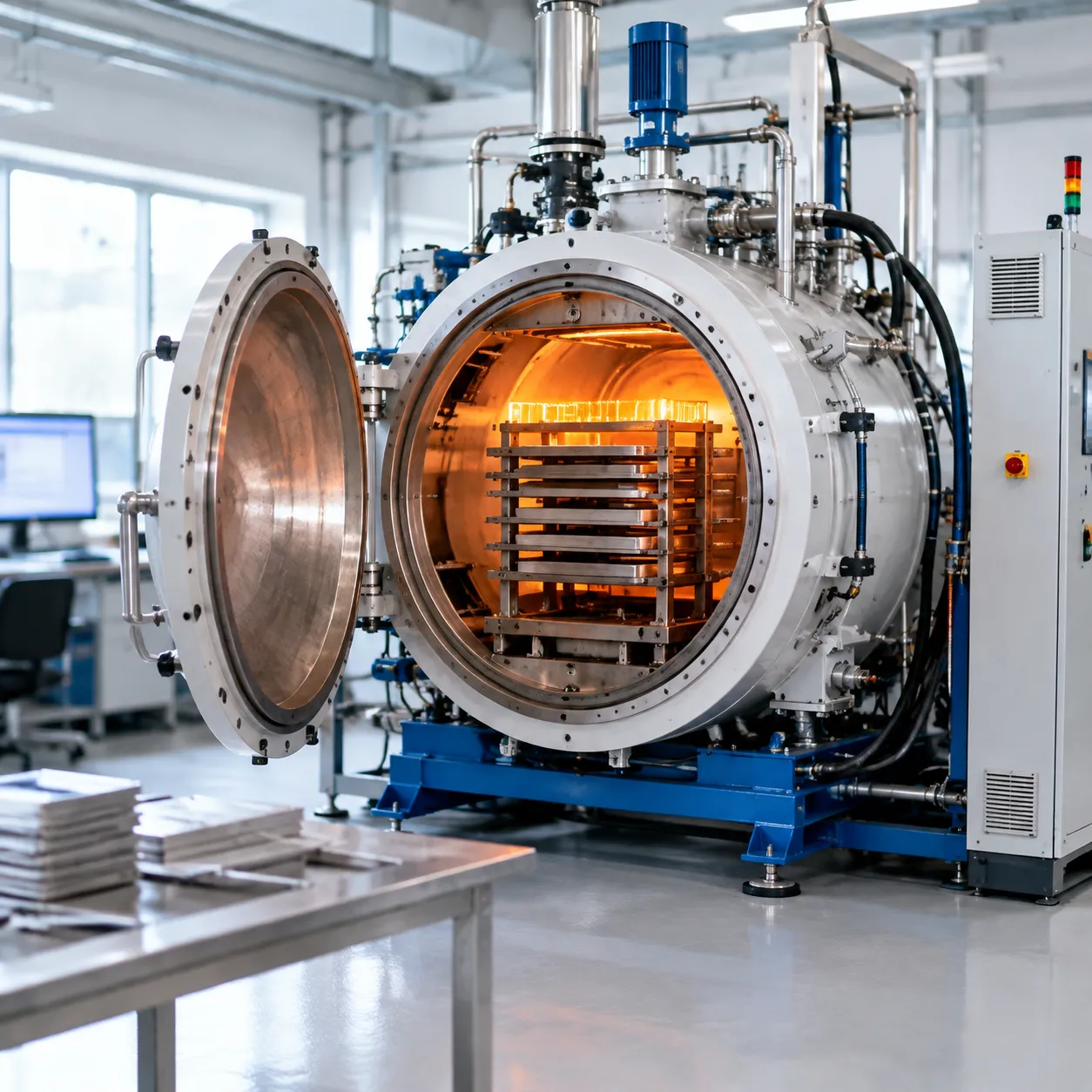
We heat treat and harden critical metal parts under low-pressure vacuum environments to prevent surface decarburization. By integrating vacuum heat treatment with high-pressure inert gas quenching, we achieve deep core hardness, excellent dimensional stability, and zero scale buildup on complex tooling and structural parts.
Vacuum Brazing Process for High-Integrity Joints
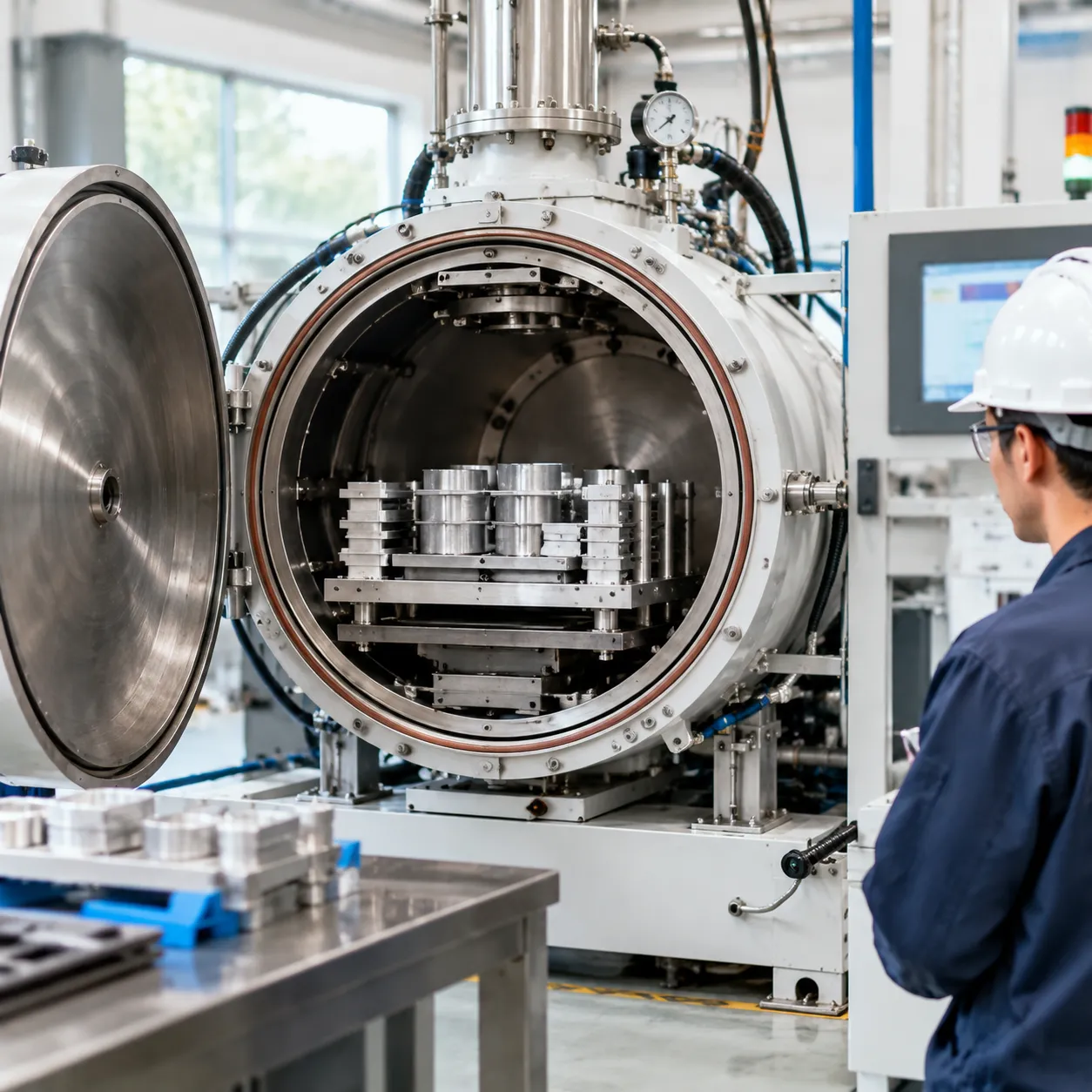
Joining dissimilar metals or complex assemblies demands leak-tight, high-strength bonds without flux residue. Our vacuum brazing process melts filler alloys evenly across tight capillary gaps, delivering superior joint strength and clean aesthetic finishes ideal for heat exchangers and fluid manifolds.
Sintering Powdered Metals and Advanced Ceramics
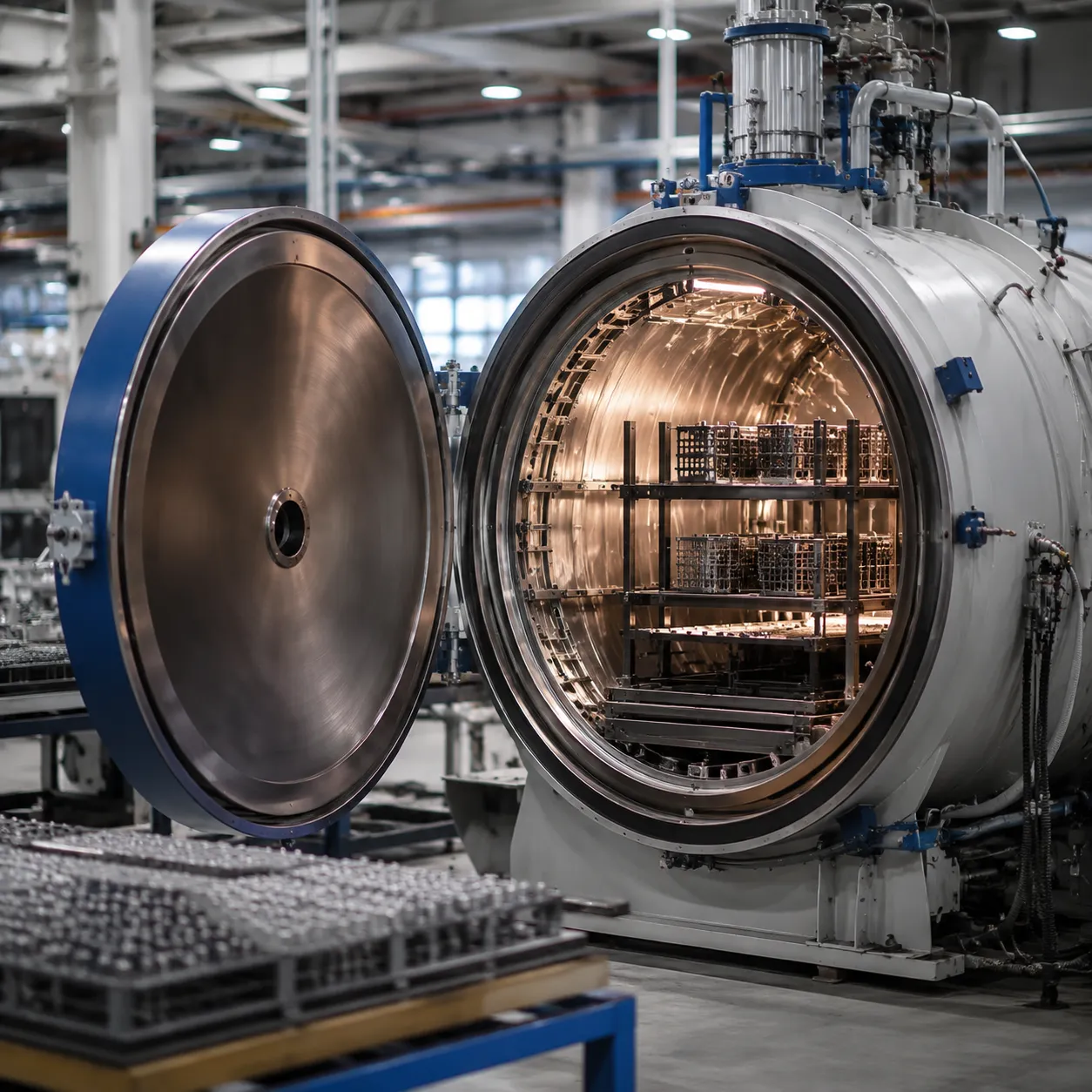
Compacting metal powders and ceramics requires precise atmosphere control to consolidate particles at high temperatures. Utilizing a high-performance vacuum sintering furnace, we eliminate entrapped gases and impurities, producing dense, high-strength sintered compacts with precise geometric tolerances.
Vacuum Annealing Steel and Stress Relieving
Heavy machining and cold working create internal mechanical stresses that lead to warping during final production. We perform vacuum annealing steel and stress-relieving cycles to restore ductility and equalize internal microstructures without surface discoloration, ensuring smooth downstream machining.
Low-Pressure Carburizing (LPC) for Surface Hardening
For high-wear components like gears and shafts, low pressure carburizing LPC injects precise hydrocarbon gases into the vacuum chamber at elevated temperatures. This process delivers:
Uniform case depth across complex geometric features and blind holes
Zero intergranular oxidation (IGO) on critical contact surfaces
Reduced thermal distortion, drastically cutting down post-heat-treat grinding costs
Primary Industries Leveraging Vacuum Processing
Across high-stakes sectors, critical metal components rely on specialized vacuum furnace uses to hit exacting safety and structural performance standards. Processing parts without oxygen exposure eliminates surface contamination, ensuring consistent metallurgy every cycle.
-
- Aerospace and Defense: Jet engine turbine blades, landing gear assemblies, and rocket nozzles demand flawless structural integrity. We utilize high-temperature aerospace heat treating and vacuum brazing to maximize fatigue strength and structural lifespan.
- Automotive Powertrains: High-volume transmission gears, shafts, and fuel injection parts rely on low pressure carburizing (LPC). This process achieves uniform case hardening depths with minimal dimensional distortion.
- Medical Devices and Implants: Orthopedic implants, bone screws, and surgical tools require absolute biocompatibility. Vacuum processing yields pristine, oxide-free surface finishes without toxic residue.
- Electronics and Semiconductors: Microelectronics, power devices, and vacuum tubes demand contamination-free assembly. In high-precision semiconductor manufacturing applications, vacuum processing provides exact thermal control and outgassing for critical joinery.
- Energy, Oil, and Gas: Subsea valve bodies, deep-well drill bits, and heavy-duty turbine parts operate under extreme stress. Vacuum quenching and stress relieving give these components the corrosion resistance and toughness needed for severe field conditions.
Core Vacuum Furnace Uses by Material Type
Different alloys require distinct thermal cycles to reach peak performance. We adapt our vacuum furnace uses to match the specific physical and metallurgical demands of each material family, protecting structural integrity while boosting mechanical properties.
Titanium and Reactive Metal Thermal Processing
Titanium, tantalum, and zirconium readily react with oxygen, nitrogen, and hydrogen at elevated temperatures, leading to severe surface embrittlement.
-
- Oxidation Prevention: High-vacuum environments remove atmospheric gases completely, eliminating the risk of alpha case formation.
- Hydrogen Degassing: High-temperature processing under vacuum draws trapped hydrogen out of titanium parts, restoring ductility.
- Process Types: Stress relieving, annealing, and solution heat treating for critical defense and medical structures.
Stainless Steel and Tool Steel Hardening
Martensitic stainless steels and tool steels (such as D2, A2, and H13) require exact heating and rapid cooling cycles to reach target hardness without cracking or distortion.
-
- Scale-Free Finish: Operating inside a specialized hardening furnace keeps part surfaces completely clean, eliminating expensive post-heat-treatment grinding or pickling.
- Controlled Quenching: High-pressure inert gas quenching (using nitrogen or argon) delivers uniform cooling rates, minimizing distortion across complex tool geometries.
Superalloys and Refractory Metals
Nickel- and cobalt-based superalloys (such as Inconel and Hastelloy), alongside refractory metals like molybdenum and tungsten, operate in extreme heat and high-stress conditions.
-
- Solution Heat Treating: Dissolves microstructural precipitates to restore room-temperature ductility.
- High-Temperature Capability: Safely handles high-temperature thermal processing of advanced materials without grain-boundary oxidation or element depletion.
Magnetic Alloys and Sintered Metal Compacts
Soft magnetic alloys (such as Permalloy and silicon iron) and powder metal compacts require ultra-clean atmospheres to achieve optimal magnetic permeability and density.
-
- Decarburization Control: Maintains precise carbon balances without soot deposition or furnace contamination.
- Clean Sintering: Removes lubricants and binders efficiently while bonding metal powders into high-density components with excellent dimensional repeatability.
Key Operational Advantages in Everyday Vacuum Furnace Applications
Utilizing targeted vacuum furnace uses on the shop floor eliminates atmospheric contamination and delivers consistent, high-yield metallurgy every single batch.
Preventing Oxidation, Contamination, and Decarburization
By evacuating air and moisture before bringing the chamber up to temperature, we achieve total oxidation prevention in metals:
Zero surface scale: Eliminates heavy oxide layers that degrade dimensions.
No decarburization: Keeps carbon locked inside steel outer layers, preserving essential surface hardness.
Gas-free environment: Prevents hydrogen embrittlement and gas absorption in sensitive alloys.
Exact Temperature Control and Uniform Heating
Modern industrial vacuum furnace systems rely on radiant heating and multi-zone thermal management:
Eliminates hot spots: Guarantees complex geometries heat at an even, controlled rate.
Minimizes distortion: Gradual heating ramps drastically reduce internal thermal stresses and part warping.
Repeatable cycles: Precision digital controls ensure exact batch-to-batch consistency.
Bright Surface Finishes with Zero Post-Cleaning
In everyday vacuum heat treatment, parts emerge from the chamber looking pristine:
Ready for assembly: Components maintain a bright, shiny finish with zero oxidation.
Eliminates secondary steps: You completely skip costly acid pickling, sandblasting, and aggressive surface grinding.
Streamlined workflow: Saves direct labor hours and speeds up production turnaround times.
Maximizing Core Mechanical Properties and Fatigue Life
Eliminating surface micro-cracks and core defects directly extends component working life. When specialized backfilling or alternative thermal environments are required alongside vacuum processing, utilizing a controlled atmosphere furnace or a dedicated tempering furnace allows us to fine-tune material toughness and fatigue resistance for extreme working conditions.
| Everyday Operational Factor | Conventional Open-Air Heating | Vacuum Furnace Processing |
|---|---|---|
| Surface Finish | Scaled, discolored, oxidized | Bright, clean, zero post-cleaning |
| Carbon Protection | High risk of decarburization | 100% protected surface integrity |
| Part Distortion | High (uneven thermal shock) | Minimal (uniform radiation heating) |
| Mechanical Strength | Compromised by surface defects | Maximized core & fatigue strength |
Frequently Asked Questions About Vacuum Furnace Uses
What metals can be processed in a vacuum furnace?
We process a wide range of metals that require oxidation-free thermal treatment and precise metallurgy:
-
- Titanium and Reactive Metals: Eliminates hydrogen embrittlement and surface scaling.
- Stainless and Tool Steels: Achieves full hardness with clean, scale-free surface finishes.
- Superalloys and Refractory Metals: Essential for high-stress aerospace and energy components.
- Magnetic Alloys and Sintered Metals: Ensures maximum magnetic permeability and high part density.
Utilizing a high-performance vacuum heat treatment furnace guarantees these critical materials maintain their exact alloy chemistry without atmospheric contamination.
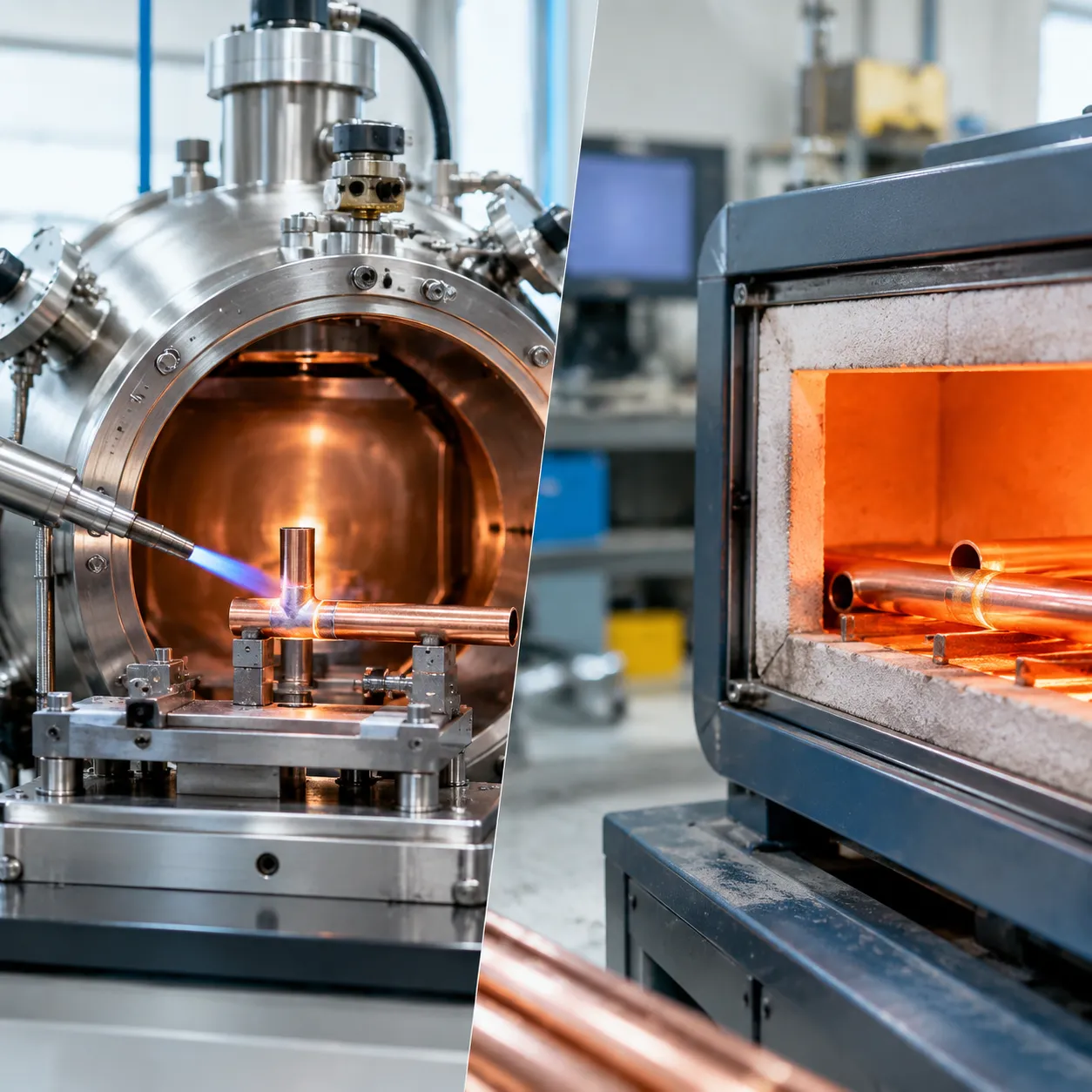
Why is vacuum brazing preferred over torch or induction brazing?
Vacuum brazing provides superior joint integrity and dimensional stability compared to conventional joining methods:
-
- Flux-Free Process: Eliminates corrosive flux residue, avoiding chemical post-cleaning.
- Uniform Heating: Prevents thermal distortion across intricate, multi-joint assemblies.
- High Joint Strength: Produces clean, void-free capillary flow across large surface areas.
For complex heat exchangers and delicate assemblies, using a specialized vacuum brazing furnace delivers repeatable, high-integrity bonds every run.
How does low-pressure carburizing improve component lifespan?
Low-pressure carburizing (LPC) optimizes surface hardening for high-wear power transmission components:
-
- Zero Intergranular Oxidation (IGO): Eliminates micro-cracks on the part surface to boost fatigue resistance.
- Uniform Case Depth: Precise hydrocarbon injection ensures consistent carbon absorption, even in deep blind holes and narrow gear root radii.
- Reduced Distortion: Combined with high-pressure gas quenching, LPC minimizes part warping and post-heat treatment grinding costs.
What temperature ranges do industrial vacuum furnaces operate at?
Operating temperatures vary based on the specific material and process requirements:
| Temperature Range | Primary Applications | Common Materials |
|---|---|---|
| Low Temp (300°C – 750°C) | Stress relieving, tempering, aluminum processing | Spring steels, tool steels, aluminum alloys |
| Mid Temp (750°C – 1200°C) | Hardening, low-pressure carburizing, annealing | Stainless steel, alloy steels, copper alloys |
| High Temp (1200°C – 2200°C+) | High-vacuum sintering, refractory metal processing | Titanium, tungsten, advanced ceramics, superalloys |