Mesh Belt Furnace Specifications Matrix
Compare key operating parameters, belt width options, heating zone capacities, and protective atmosphere configurations across our continuous mesh belt furnace lineup. Learn more about our engineering standards and continuous thermal processing design capabilities.
200°C to 1,150°C
Precision multi-zone temperature control engineered for continuous annealing, brazing, and sintering.
150mm – 1,000mm
Heavy-duty heat-resistant alloy mesh belts designed for smooth, high-volume part conveyance.
< 50 Pa Positive Pressure
Sealed muffle atmosphere control for N₂, H₂, cracked ammonia, or protective gas purges.
25% Power Savings
Composite high-purity ceramic fiber insulation minimizes heat loss during continuous operation.
Mesh Belt Furnace Series Specification Comparison
Standard configurations and quantitative performance specs for Haitem continuous mesh belt models.
| Specification Parameter | HMB-Anneal 750 Light-Duty Annealing | HMB-Brazing 1130 Atmosphere Brazing | HMB-Sinter 1150 Powder Metallurgy & MIM | HMB-Quench 1100 Continuous Heat Treat |
|---|---|---|---|---|
| Operating Temperature Range | 200°C – 750°C (392°F – 1,382°F) | 600°C – 1,130°C (1,112°F – 2,066°F) | 800°C – 1,150°C (1,472°F – 2,102°F) | 750°C – 1,100°C (1,382°F – 2,012°F) |
| Effective Belt Width | 200mm – 800mm | 150mm – 600mm | 200mm – 500mm | 300mm – 1,000mm |
| Heating Elements & Structural Type | Fe-Cr-Al / Open Hearth | Special Alloy Muffle / Ni-Cr Wire | Refractory Muffle / SiC Elements | Heavy Alloy Wire / Radiant Tubes |
| Atmosphere Protection | Air / Nitrogen Purge | Dissociated Ammonia / H₂ | Pure H₂ / Formed Gas | Endothermic / Methanol-N₂ |
| Thermal Uniformity | ±5°C (Class 3 AMS 2750F) | ±3°C (Class 2 AMS 2750F) | ±3°C (Class 2 AMS 2750F) | ±5°C (Class 3 AMS 2750F) |
| Independent Heating Zones | 3 to 5 Independent Zones | 4 to 8 Independent Zones | 5 to 10 Independent Zones | 4 to 8 Independent Zones |
| Cooling & Quench System | Forced Air / Water Jacket | Multi-Stage Water Jacket | Slow Cool + Fast Water Jacket | Integrated Oil / Salt Quench Tank |
| Drive & Speed Control | Stepless VFD + Screw Tension | VFD + Pneumatic Auto-Tension | VFD + Counterweight Tension | Synchronized VFD + Chain Drive |
| Compliance Standards | ISO 9001, CE | ISO 9001, CE, CQI-9 | ISO 9001, CE, AMS 2750F | ISO 9001, CE, CQI-9 |
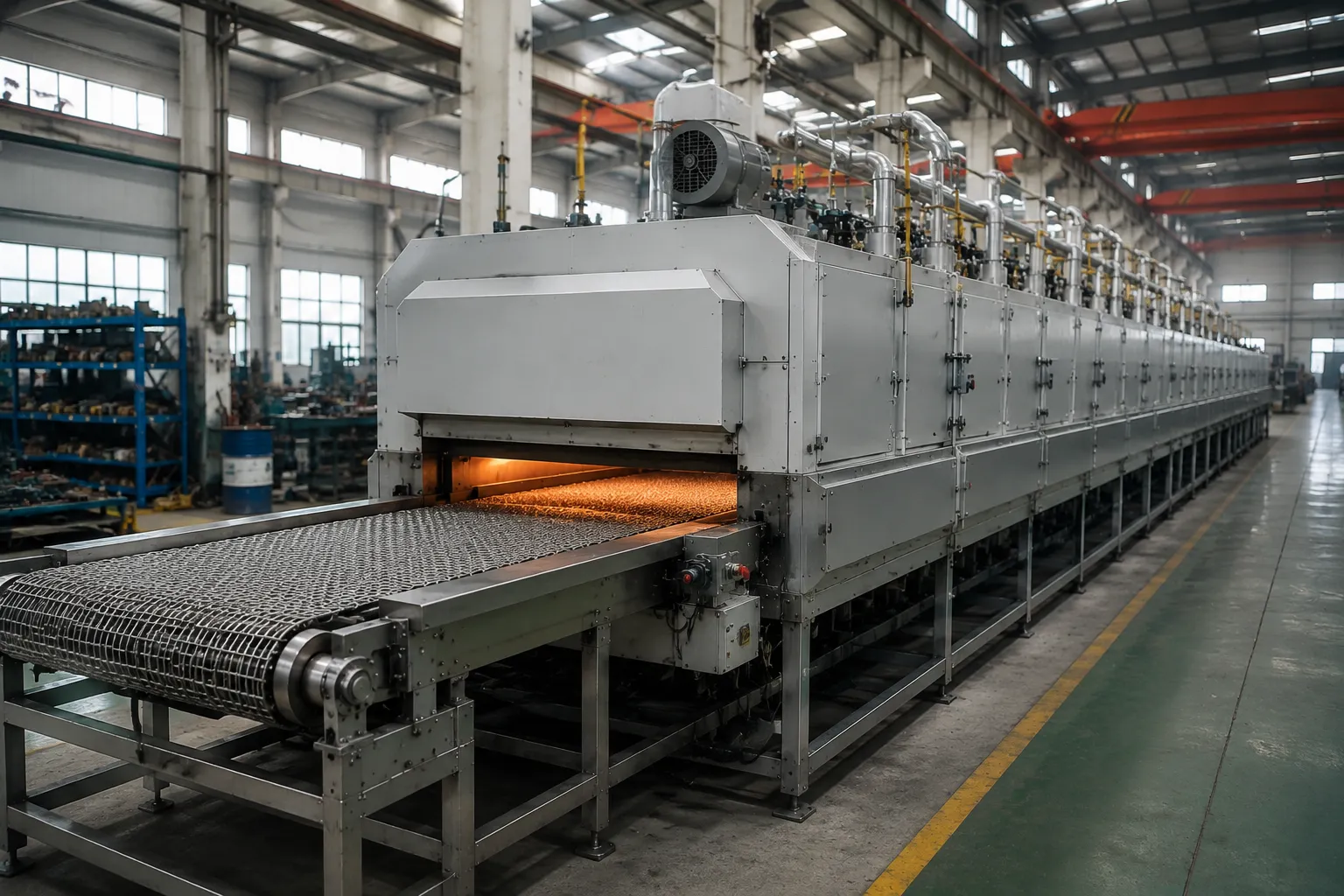
Tailored Continuous Mesh Belt Solutions
Haitem Furnace builds customized continuous thermal processing lines tailored to your target throughput, belt width requirements, heating profiles, and atmosphere purity goals. Feel free to contact our technical team to discuss engineered modifications for your facility.
- Custom Belt Widths up to 1,000 mm
- Automated Stepless VFD Drive Control
- Multi-Zone Independent PID Control
- Gas-Saving Muffle & Seal Design
Can't Find Your Exact Dimensions?
Haitem Furnace offers 100% custom belt widths, extended heating zones, and specialized muffle configurations designed specifically for your factory throughput.
Core Engineering & Advanced Heating System Architecture
At Haitem Furnace, our continuous mesh belt conveyor furnace architecture is engineered for heavy industrial duty, extreme structural durability, pinpoint thermal accuracy, and dependable protective atmosphere containment. Every key mechanical subsystem—from heat-resistant conveyor drives to multi-zone heating modules—is optimized to withstand intensive thermal cycling while maximizing energy efficiency and product consistency. Explore our broader line of industrial heat-treatment-furnaces engineered for continuous operations.
Precision Mesh Belt Drive Mechanism
Smooth conveyor motion is essential for preventing part distortion, work-piece tangling, and inconsistent heat soak times. Our heavy-duty mesh belt drive mechanism integrates stepless variable frequency drives (VFD) coupled with automatic pneumatic or counterweight tensioning systems.
- Anti-Tracking Guidance: Active mechanical alignment prevents belt off-tracking and sidewall friction during high-temperature thermal expansion.
- High-Temperature Alloys: Belts precision-woven from SUS314, Cr20Ni80, or specialized Inconel alloys deliver superior creep resistance up to 1150°C.
- Extended Conveyor Lifespan: Balanced tension control lowers mechanical fatigue, extending belt service life substantially under continuous loads.
High-Performance Mesh Belt Heating Elements
Superior thermal efficiency begins with optimized element metallurgy and balanced radiant heat distribution. Haitem Furnace deploys industrial-grade mesh belt heating elements custom-selected for specific processing temperatures and gas chemistries.
- Zonal Thermal Control: Multi-zone independent PID controllers maintain tight temperature uniformity within ±3°C across the full hearth cross-section.
- Element Versatility: Heavy-gauge FeCrAl alloy spirals, silicon carbide (SiC) rods, or molybdenum disilicide (MoSi2) elements for high-heat durability.
- Rapid Thermal Recovery: Strategic ceramic radiant backing panels maximize heat transfer and rapidly recover target temperatures during heavy part loading.
Precision Mesh Belt Furnace Atmosphere Control
Bright annealing-furnace processes, sintering, and protective brazing demand strict oxygen-free heating zones. Our comprehensive mesh belt furnace atmosphere control system delivers automated gas proportioning, directional flow patterns, and active micro-positive pressure retention.
- Protective Gas Flexibility: Precise regulation of nitrogen (N2), hydrogen (H2), dissociated ammonia (DA), and endothermic process atmospheres.
- Micro-Positive Pressure: Maintains controlled internal chamber pressure (< 50 Pa above ambient) to prevent atmospheric oxygen ingress.
- Inlet/Outlet Gas Curtains: Dual nitrogen curtain vestibules stabilize internal dew points down to -60°C while minimizing gas consumption.
Refractory Lining & Muffle Chambers
Thermal efficiency and long-term mechanical stability guide our internal chamber engineering. For specialized thermal cycles requiring high-vacuum environmental isolation, explore our vacuum-heat-treatment-furnace systems alongside our low-density insulating blocks.
- Energy Conservation: Low-thermal-mass ceramic fiber linings cut electrical power consumption by over 25% compared to traditional refractory brick lines.
- Alloy Muffle Integration: Fully enclosed high-nickel alloy muffles protect heating elements from corrosive vapors and preserve ultraclean gas purity.
- Accessible Maintenance: Top-removable heating roof sections and modular insulation blocks facilitate fast, straightforward routine servicing.
Controlled Thermal Profiling and Multi-Stage Cooling Sequences
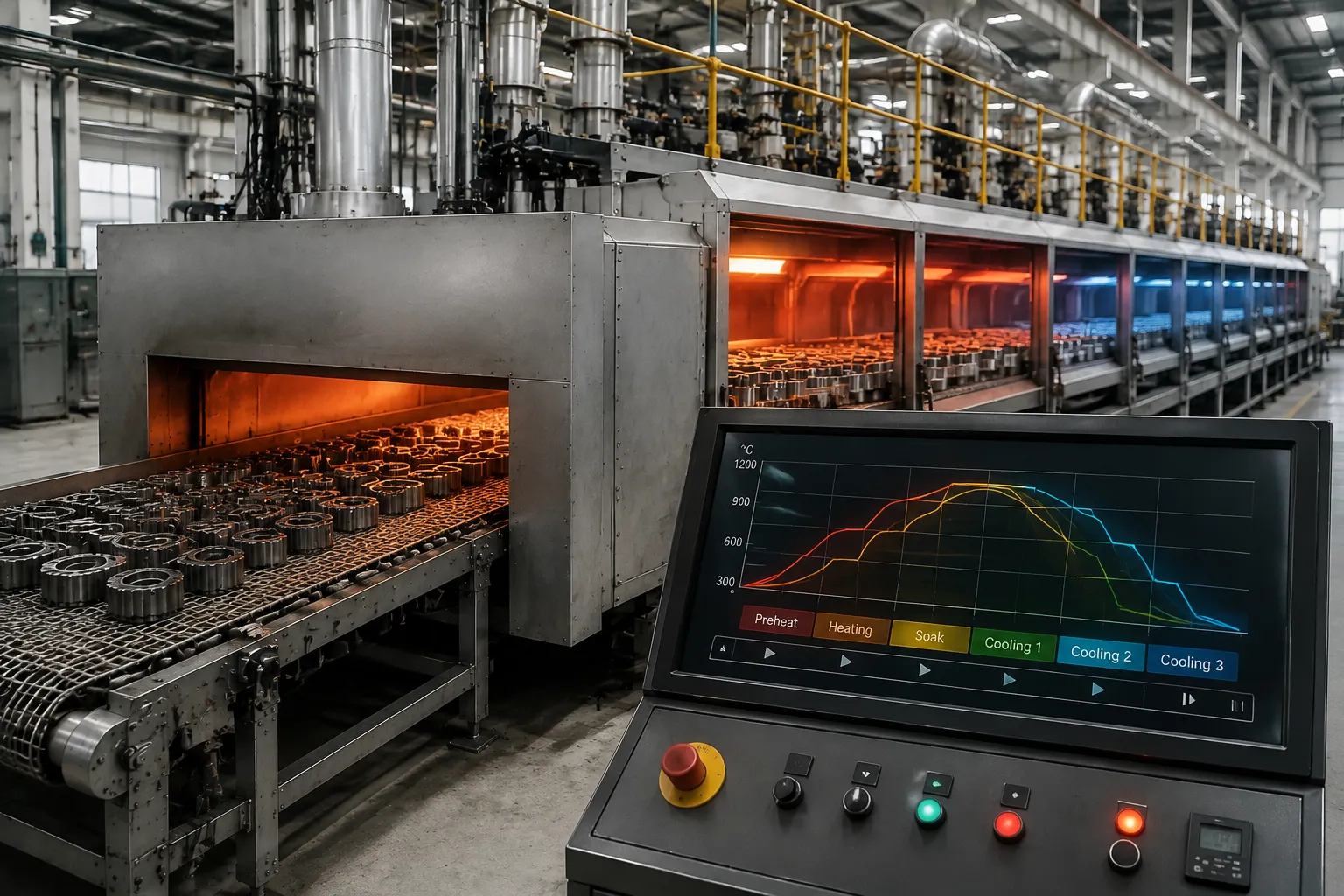
A high-performance continuous furnace relies on precise temperature staging across preheating, soaking, and cooling zones. Haitem Furnace engineers multi-zone heating chambers equipped with physical thermal baffles, dewaxing burn-off sections, and atmosphere isolation locks.
This modular engineering layout allows distinct binder burn-off, high-temperature sintering, and rapid water-jacketed cooling stages to operate in sequence without cross-contamination. As a result, components such as powder metallurgy gears, stainless steel fittings, automotive fasteners, and MIM parts achieve identical metallurgical grain structures and high surface finish quality across high-volume production runs.
Thermal Uniformity Target
Thermal Loss Reduction
Heating and Mechanical Specification Matrix
Review the structural standards, atmosphere subsystems, and operational advantages engineered into Haitem Furnace continuous mesh belt thermal lines.
| Core Subsystem | Engineering Configuration | Technical Advantage | Operational Benefit |
|---|---|---|---|
| Conveyor Drive Assembly | VFD variable speed drive with pneumatic automatic tension compensation | Constant belt stress management and smooth, vibration-free part movement | Eliminates belt distortion and reduces unscheduled maintenance downtime |
| Heating Element System | Heavy-gauge FeCrAl wire spirals, SiC rods, or MoSi2 heating elements | Optimized watt-density distribution with rapid thermal response capability | Ensures extended element life and consistent heat distribution across all zones |
| Atmosphere Management | Multi-zone flow control manifolds with digital pressure & flow sensors | Positive pressure retention with active entrance/exit gas curtain isolation | Delivers oxide-free bright surface finishes with optimized process gas utilization |
| Thermal Insulation Module | Multi-layer ceramic fiber modules backed by low-density insulating block | Low thermal mass lining minimizes heat absorption and thermal radiation loss | Reduces electrical power consumption by over 25% and shortens warm-up cycles |
| Alloy Muffle Assembly | Corrosion-resistant high-nickel alloy continuous muffle tube design | Complete physical separation of process gases from electrical heating elements | Maintains high atmosphere purity required for stainless steel brazing and sintering |
Typical Industrial Applications and Processing Capabilities
Haitem Furnace continuous mesh belt furnace systems deliver high-throughput, uniform thermal processing for high-volume metal components. Engineered for demanding industrial environments, our systems integrate multi-zone temperature regulation, automated conveyor drives, and tight atmosphere controls to ensure repeatable metallurgy and oxide-free surface finishes.
Mesh Belt Furnace Powder Metallurgy & MIM Sintering
Engineered for high-density sintering, continuous dewaxing, and debinding of powder metal structural parts and Metal Injection Molding (MIM) components. A robust mesh belt conveyor furnace delivers the precise thermal profiles required for minimal distortion and tight dimensional stability.
- Key Components: High-density automotive gears, self-lubricating bushings, structural hardware, and MIM parts.
- Atmosphere Control: Dissociated ammonia, nitrogen-hydrogen blends, or endothermic gas setups for accurate carbon control.
- Thermal Performance: Operating temperatures up to 1150°C (2102°F) with independent multi-zone heating control.
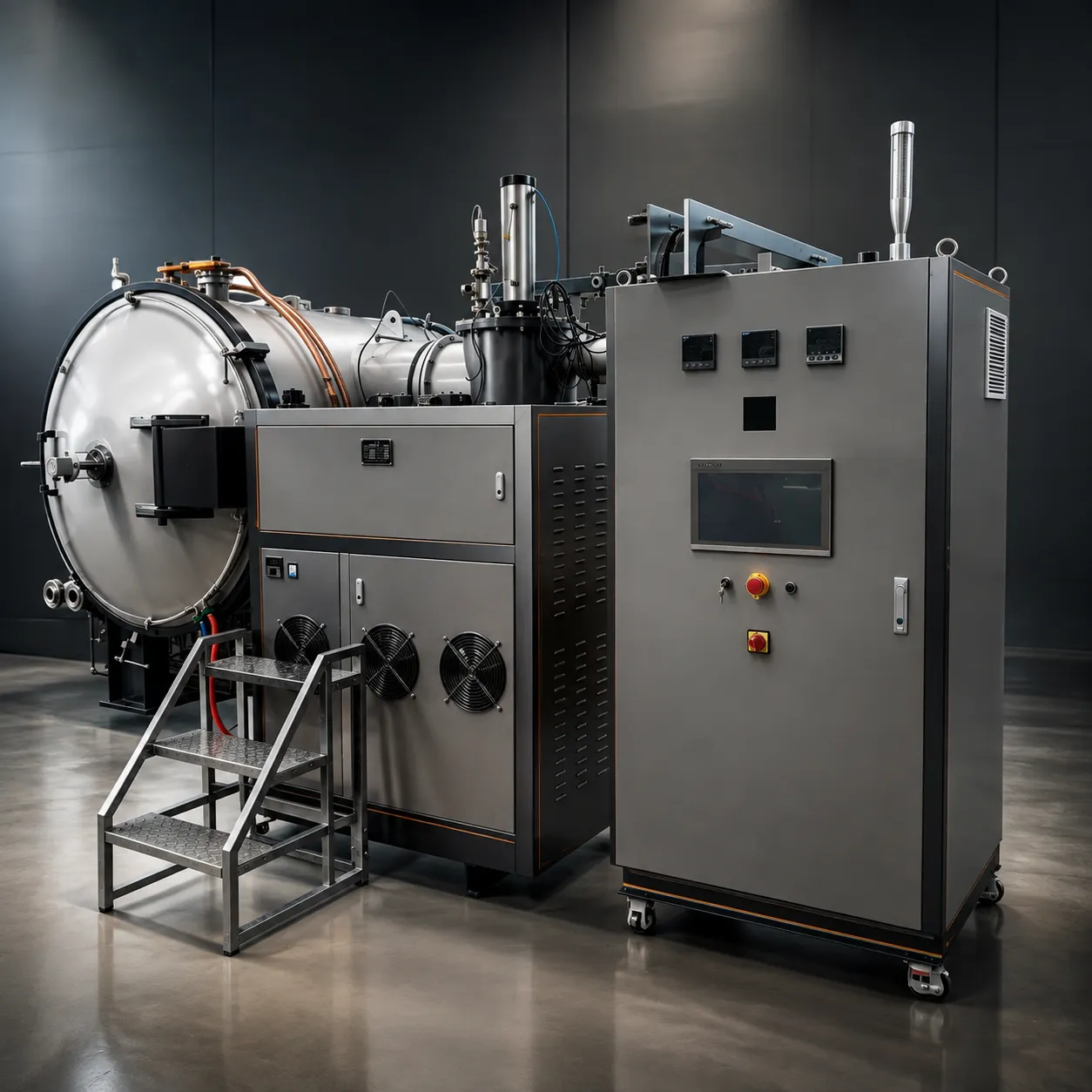
Mesh Belt Brazing & Bright Annealing Lines
Designed for fluxless copper, silver, and nickel continuous mesh belt brazing alongside bright annealing of stainless steel and alloy parts. The sealed chamber maintains ultra-low dew points to eliminate surface oxidation and post-process acid pickling.
- Key Components: Stainless steel plumbing manifolds, automotive heat exchangers, fuel rails, and EGR coolers.
- Process Quality: Superior joint capillary action, robust tensile shear strength, and mirror-bright surface finishes.
- Muffle Integrity: Heat-resistant high-nickel alloy muffle options for stable dew point control (-50°C or lower).
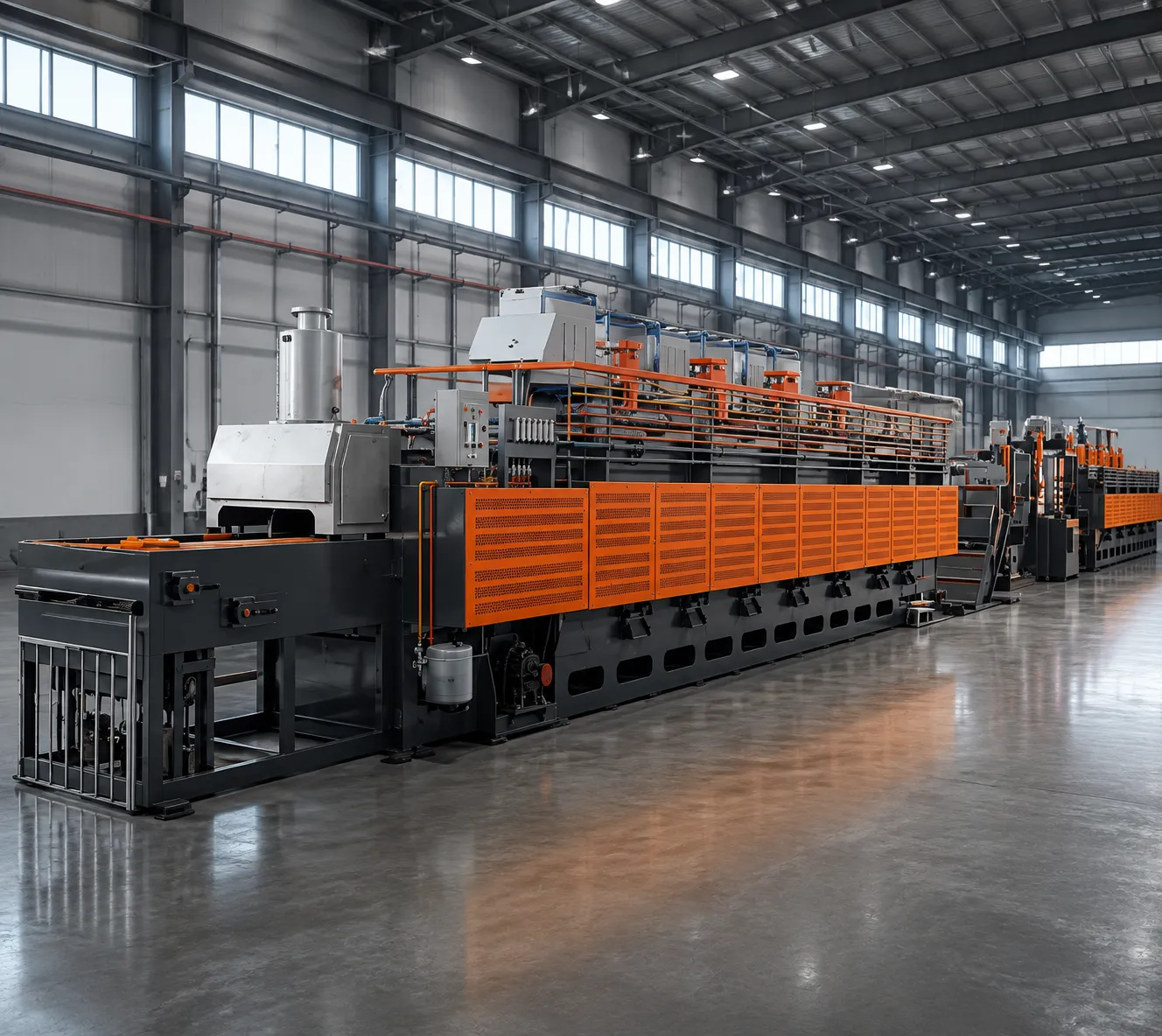
Small Parts Heat Treatment Furnace Solutions
Optimized for continuous small parts heat treatment furnace applications requiring neutral hardening, stress relieving, tempering, or light carburizing. Ensures uniform physical properties and steady throughput without component jamming or drop-off.
- Key Components: Precision fasteners, self-tapping screws, coil springs, retaining rings, and stampings.
- Custom Belt Engineering: Fine weave belts with integrated side guard plates to prevent small part entrapment.
- Thermal Uniformity: Strict ±3°C temperature distribution across the active loading width for metallurgical consistency.
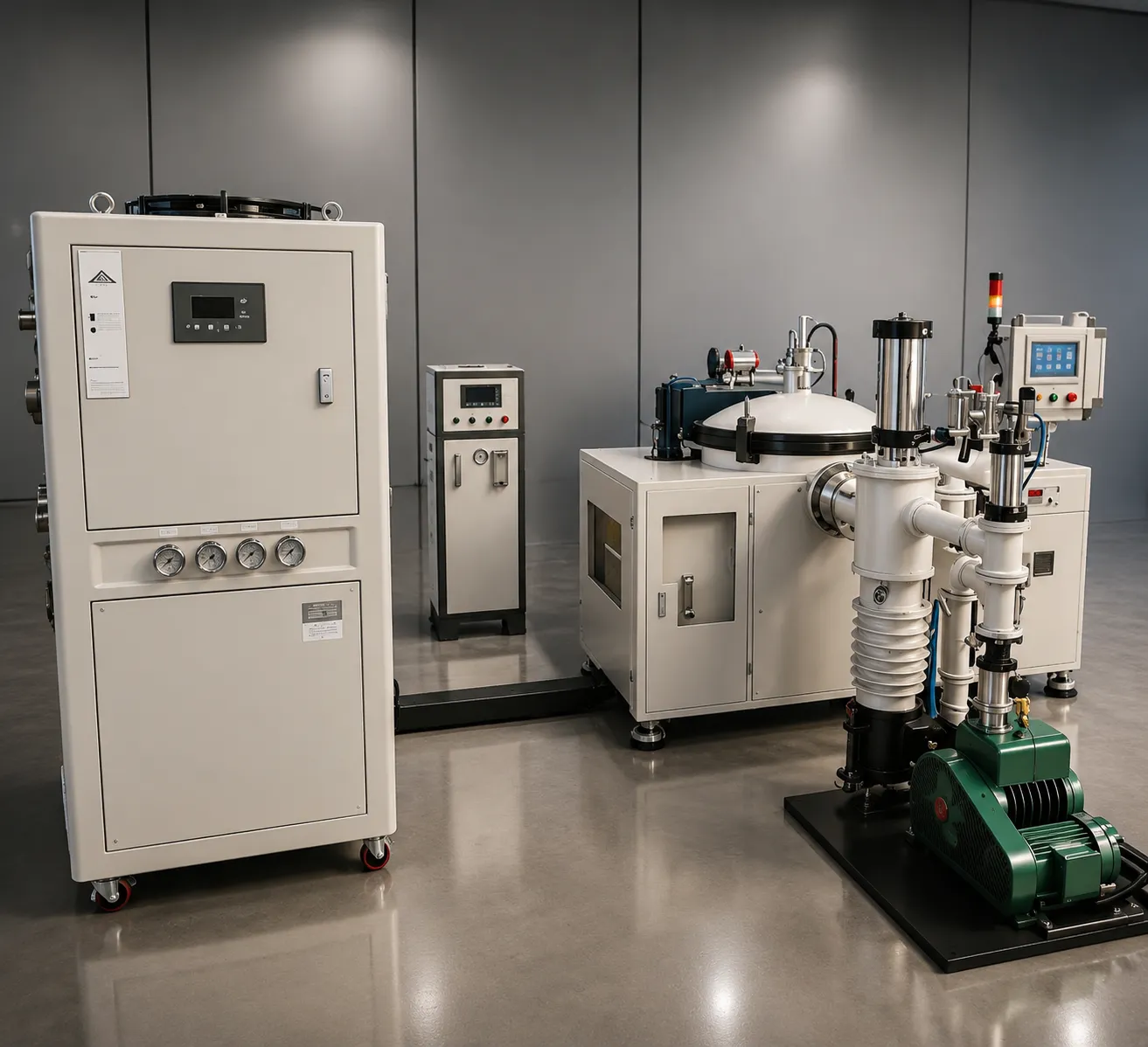
Advanced Electronics & Micro-Assembly Processing
Tailored for high-precision electronics manufacturing, thick-film circuit firing, ceramic substrate baking, LTCC firing, and glass-to-metal sealing. Smooth variable-speed drive mechanics prevent vibration and displacement during delicate processing.
- Key Components: Hybrid micro-circuits, ceramic chip capacitors, LTCC substrates, and sensor housings.
- Vibration-Free Conveyance: Ultra-smooth stepless VFD movement to eliminate component disturbance during binder burnout.
- Control Architecture: Multi-segment ramp and soak thermal profiling managed through integrated PLC controls.
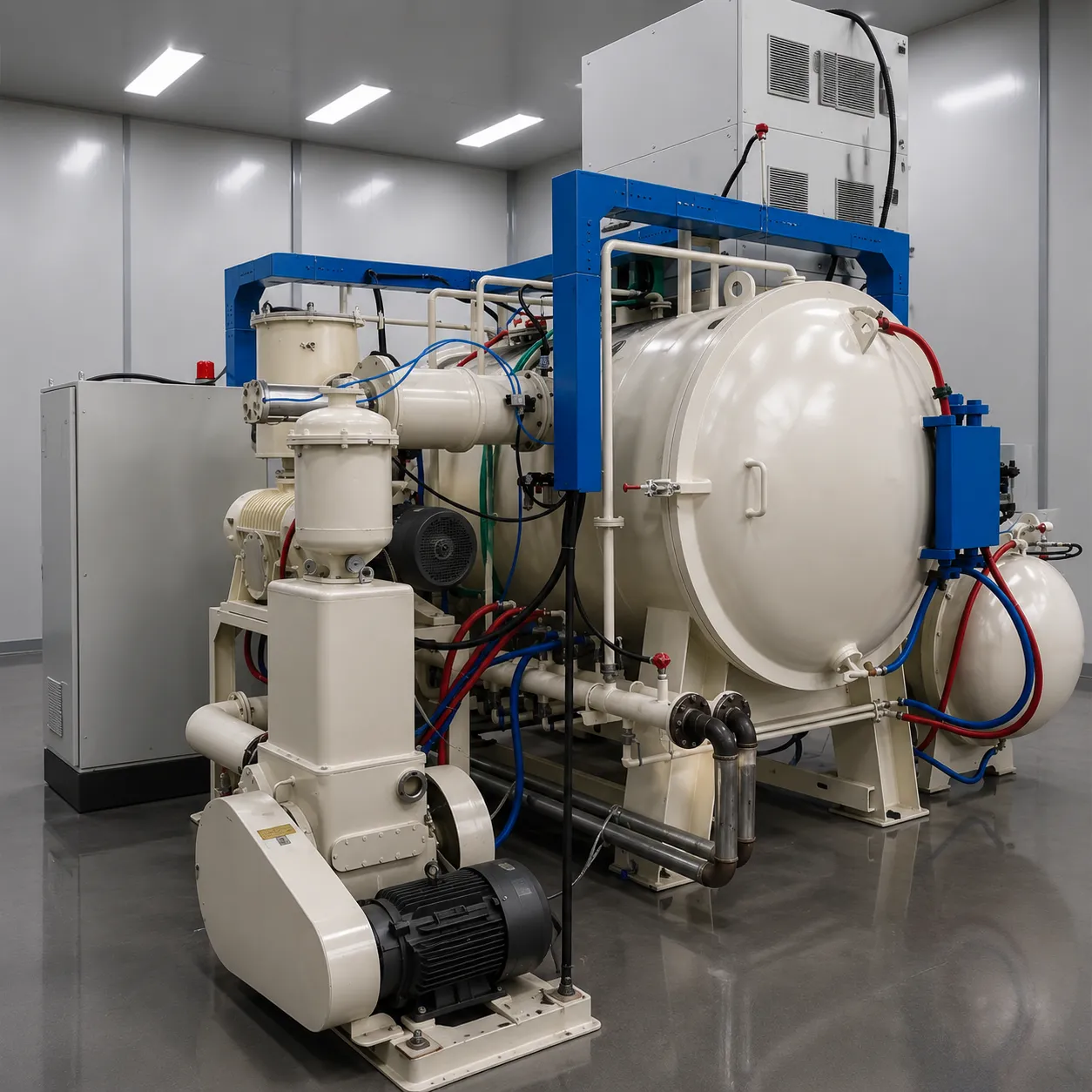
Processing Spectrum and Operating Parameters
Haitem Furnace engineers every continuous mesh belt conveyor furnace system to match exact metallurgical requirements and production targets. Our custom hearth geometries, belt alloy selections, and drive configurations handle diverse part geometries while minimizing energy expenditure.
Why Industry Leaders Choose Haitem Furnace
Achieving uniform thermal processing across thousands of small components requires exact control over atmosphere flow, conveyor speed, and multi-zone heating curves.
- Zero Part Trapping: Specialized side-guard designs and high-tensile alloy mesh belts eliminate component entanglement and loss.
- Energy Efficiency: Multi-layer ceramic fiber lining cuts standby thermal losses by up to 25%.
- Turnkey Production Lines: Complete integrations with pre-wash degreasers, rapid cooling zones, quench tanks, and automatic loaders.
Optimizing Production Throughput for Continuous Heat Treatment
Industrial mesh belt furnace engineering centers on combining continuous material transport with tight atmospheric control. Unlike batch heat treatment furnaces that demand labor-intensive tray loading, furnace cooling cycles, and intermittent stops, a continuous mesh belt conveyor furnace delivers an uninterrupted stream of processed parts directly into quenching or downstream collection systems.
For manufacturers operating a small parts heat treatment furnace, controlling thermal uniformity across the entire active belt width is essential to prevent part-to-part metallurgical variance. Haitem Furnace incorporates individually controlled PID heating zones along the tunnel length, counteracting edge thermal loss and ensuring workpieces at the belt boundaries receive identical soak times and peak temperatures as those in the center.
In demanding applications like mesh belt brazing and continuous mesh belt annealing, preventing oxygen ingress is vital to prevent surface oxidation or joint failure. Our advanced gas curtain barriers, combined with directional protective gas injection, maintain stable micro-positive pressure conditions. This guarantees bright, oxide-free parts straight out of the cooling section without secondary chemical cleaning or pickling steps.
Mesh Belt vs. Roller Hearth Furnace Comparison
Selecting the optimal continuous furnace architecture dictates long-term production efficiency, atmosphere integrity, and maintenance costs. At Haitem Furnace, we engineer high-performance mesh belt and roller hearth thermal systems tailored to specific industrial metallurgical processes. This technical comparison breaks down key performance metrics, part size suitability, load capacities, and operational benefits to guide your equipment investment.
Mesh Belt Furnace Overview
A continuous mesh belt furnace utilizes a driven woven wire belt to convey parts through multiple temperature-controlled heating and cooling zones. Designed primarily for small parts heat treatment, it excels in high-volume, uniform thermal processing without requiring individual charging trays or complex mechanical fixtures.
- • Optimal Workpieces: Fasteners, stampings, automotive brackets, springs, MIM parts, and powder metallurgy components.
- • Conveyance Style: Continuous alloy mesh woven for high thermal strength and minimal part distortion.
- • Atmosphere Fit: Exceptional compatibility with alloy muffles for ultra-pure hydrogen, nitrogen, or endothermic gas protection.
Roller Hearth Furnace Overview
A roller hearth furnace relies on a continuous line of power-driven ceramic or heat-resistant alloy rollers to move heavy charges through the heating chamber. This design eliminates belt tension limits, making it the premier choice for heavy load densities and long structural materials.
- • Optimal Workpieces: Steel tubes, long bars, heavy forgings, large castings, plates, and tray-loaded automotive gears.
- • Conveyance Style: Synchronized driven rollers with external bearing assemblies for high load capacity.
- • Atmosphere Fit: Zone-purged refractory chambers suited for neutral hardening, normalizing, and stress relieving.
Technical Specifications Matrix
Direct engineering comparison between standard mesh belt and roller hearth furnace configurations.
| Performance Criteria | Mesh Belt Furnace | Roller Hearth Furnace |
|---|---|---|
| Primary Material Conveyance | Continuous woven alloy mesh driven by external friction rollers | Synchronized rotating ceramic or alloy hearth rollers |
| Maximum Load Density | Light to moderate (typically up to 50–100 kg/m²) | Heavy to extreme (1,000+ kg/m² or heavy localized point loads) |
| Part Size Capabilities | Small to medium bulk parts; ideal for direct drop loading | Large structural items, long bars, or heavy loaded trays |
| Atmosphere Control & Muffle | High atmosphere purity via full alloy muffle construction | Direct-fired or radiant tube heating with nitrogen/endo curtains |
| Thermal Uniformity | Superior multi-zone precision for thin cross-section parts | Excellent deep heat penetration for thick, massive workpieces |
| Typical Processes | Protective atmosphere brazing, bright annealing, sintering, hardening | Normalizing, tube annealing, spheroidizing, heavy batch hardening |
| Automation Integration | Direct connection to wash stations, vibratory feeders, and quench tanks | Automated tray transfer cars, hydraulic pushers, and roller tables |
| Consumables & Maintenance | Periodic mesh belt tensioning, wear monitoring, and replacement | Roller seal maintenance, bearing lubrication, individual roller care |
Engineering Factors for Continuous Furnace Selection
Evaluating the right system requires balancing production rate targets, dimensional limits, and atmosphere consumption. A mesh belt furnace provides seamless throughput for millions of small workpieces where tray handling would introduce unnecessary labor and thermal mass overhead.
Part Geometry and Distortion Control
Small intricate parts benefit from the continuous flat surface of a fine-weave alloy mesh belt, preventing part falling, overlap, or localized stress points during heating and quenching.
Atmosphere Purity and Gas Consumption
For continuous bright brazing or high-purity sintering, Haitem Furnace mesh belt designs incorporate gas-tight muffles and inclined entry/exit curtains to drastically cut gas usage while maintaining low dew points.
Thermal Efficiency and Fixture Savings
By conveying parts directly on the belt, thermal energy is spent heating product rather than heavy metal trays or fixtures, yielding higher energy efficiency for light-to-medium parts.
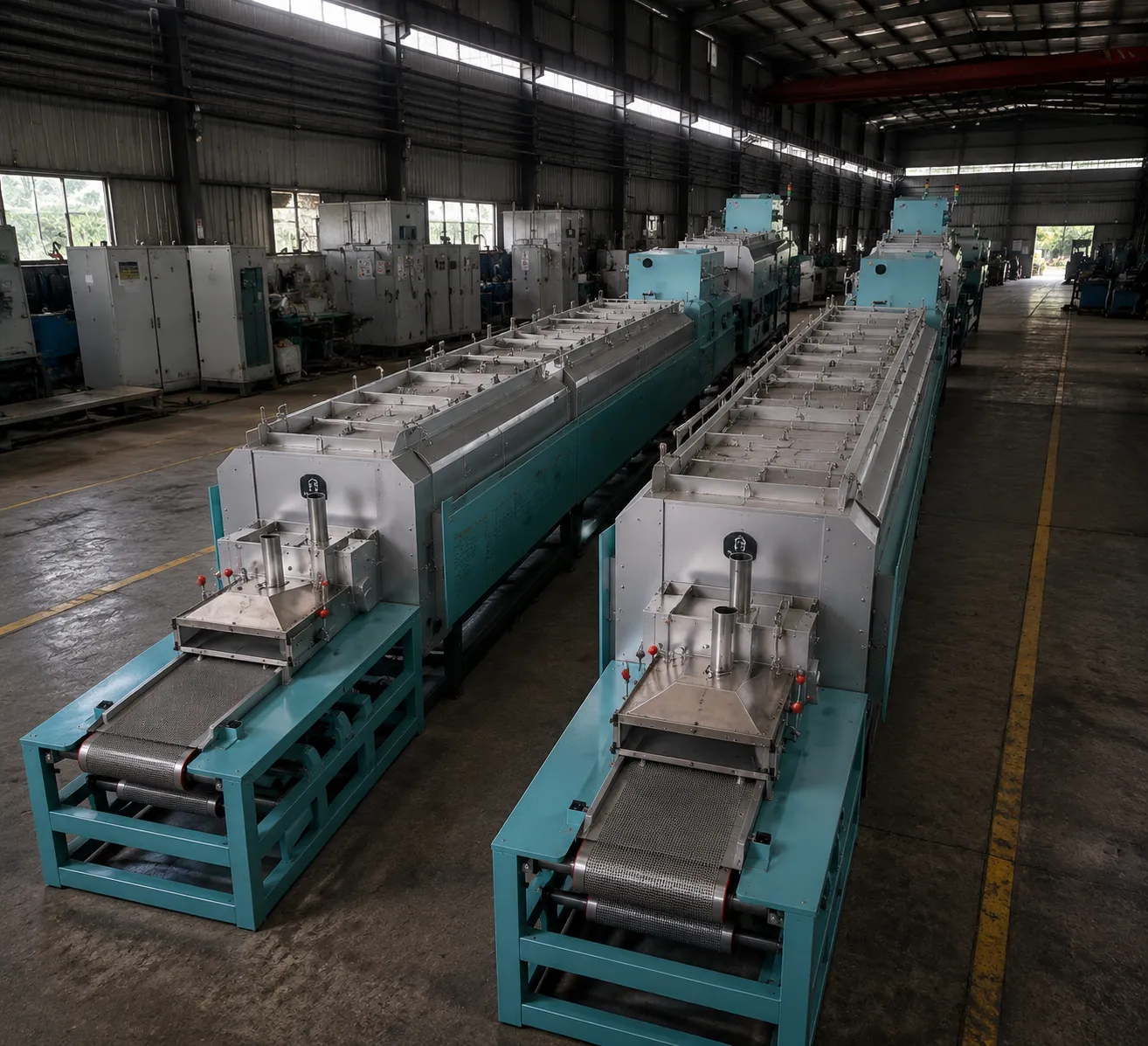
Haitem Furnace multi-zone atmosphere control and continuous belt transport system design.
Need Guidance on Continuous Furnace Selection?
Our thermal engineering team evaluates your exact metallurgical requirements, workpiece geometry, hourly throughput targets, and factory footprint to specify or build a tailored mesh belt or roller hearth furnace line.
Custom Mesh Belt Furnace Configurations & Options
Configure Haitem continuous mesh belt equipment with high-purity muffle tubes, multi-stage cooling sections, pre-treatment modules, and automated process controls.
Pre-Treatment & Degreasing
Integrate inline washing, thermal degreasing, and drying zones to remove residual oils from stamped or sintered parts before high-temperature processing.
- Inline Thermal & Solvent Degreasing
- Integrated Pre-Heating & Drying Modules
Muffle Tube Systems
Equip your continuous furnace with heat-resistant alloy muffle tubes to maintain ultra-pure hydrogen or nitrogen atmospheres for bright, scale-free heat treatment.
- High-Nickel Alloy Muffle Engineering
- Micro-Positive Pressure Gas Seals
Multi-Stage Cooling Sections
Tailor material cooling curves using slow-cooling zones, water-jacketed rapid cooling, or atmosphere convection cooling to meet exact metallurgical specs.
- Water-Jacketed Rapid Cooling Jackets
- Forced Gas Convection Cooling Options
Custom Mesh Belt Designs
Select high-density weave geometries, herringbone patterns, or integrated side-guards designed to transport miniature parts smoothly without jamming.
- High-Density & Side-Flanged Mesh Belts
- Pneumatic Automatic Tension & Tracking
Atmosphere Control Panels
Incorporate automated gas mixing, mass flow controls, and inline dew-point tracking to ensure total oxidation control across all heating zones.
- Mass Flow Controllers (MFC) & Gas Mixers
- Real-time Dew Point & Oxygen Monitoring
PLC Automation & Logging
Control multi-zone temperatures, drive speeds, and gas pressures via touchscreen PLC system interfaces integrated into plant-wide MES networks.
- Multi-Zone PID Controllers & Touchscreen HMI
- SCADA Data Logging & Process Telemetry
Custom Continuous Mesh Belt Lines Engineered for Scale
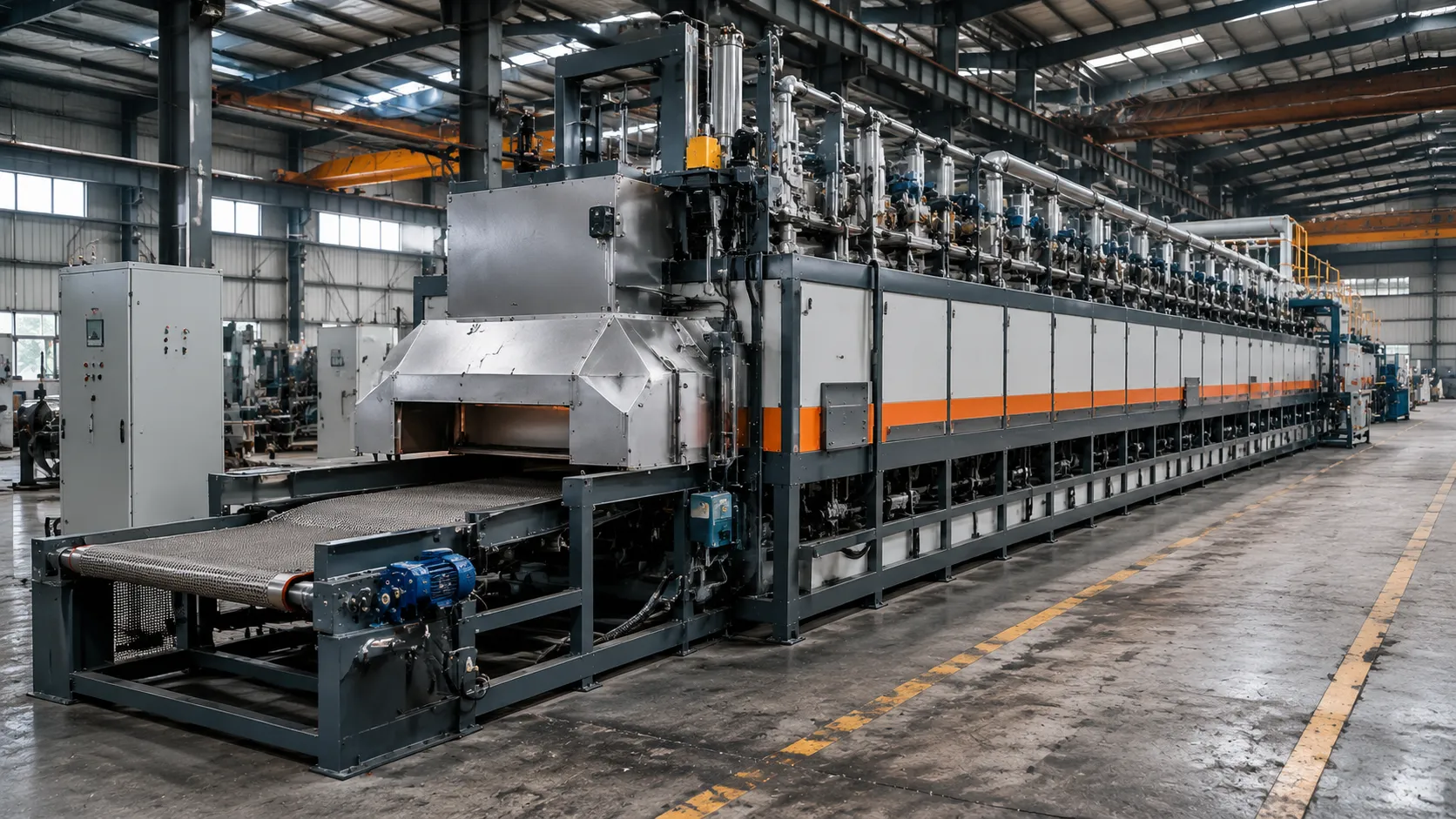
Haitem Furnace combines field-tested modular components with bespoke thermal engineering. From delicate MIM components to high-volume automotive fasteners, we design complete continuous mesh belt production lines optimized for your throughput targets and facility layout. Learn more about our full range of custom solutions for specialized thermal processing needs.
Custom Chamber & Belt Widths
Belt widths available from 150 mm to 1,000 mm with tailored heating lengths and multi-zone thermal partitioning.
Muffle Integrity & Atmosphere Purity
Precision alloy muffles and nitrogen curtain seals maintain stable micro-positive pressure to stop oxygen infiltration.
Modular Line Integration
Seamlessly combine pre-degreasing, thermal processing, cooling zones, and automated feeding into a unified continuous line.
Standard vs. Custom Mesh Belt Furnace Options
Compare standard production specifications with specialized engineering upgrades available for Haitem continuous systems.
| System Subsystem | Standard Base Package | Optional Engineering Modules |
|---|---|---|
| Atmosphere Protection | Manual rotameters with nitrogen purging | Heat-resistant muffle tube, hydrogen mixing & automated MFC flow panels |
| Temperature & Zone Control | 3-zone PID control with digital meters | Multi-zone (up to 8 zones) PLC with touchscreen HMI & SAT/TUS reporting |
| Mesh Belt & Conveyor Drive | Standard stainless steel belt with manual adjustment | High-nickel alloy belt, automatic pneumatic tensioner & anti-deviation drive |
| Cooling & Quenching | Single-stage water-jacketed cooling section | Multi-stage cooling (slow cool, forced gas convection, or accelerated water jacket) |
| Parts Handling & Feeding | Manual loading and unloading platforms | Inline degreasing unit, automated feeder & vibrating discharge chute |
Ready to Build Your Custom Mesh Belt Furnace Line?
Consult with Haitem Furnace thermal engineers to evaluate your process requirements and develop a tailored modular heat treatment line.
Rigorous Quality Assurance for Continuous Mesh Belt Furnaces
Haitem Furnace enforces strict quality control standards at every production stage, delivering high-performance continuous thermal processing equipment built for safety, precision, and extended belt life.
99.8%
First-Pass Acceptance Rate
100%
Pre-Shipment Thermal Testing
ISO 9001
Certified Management
AMS 2750G
Pyrometry Compliance Options
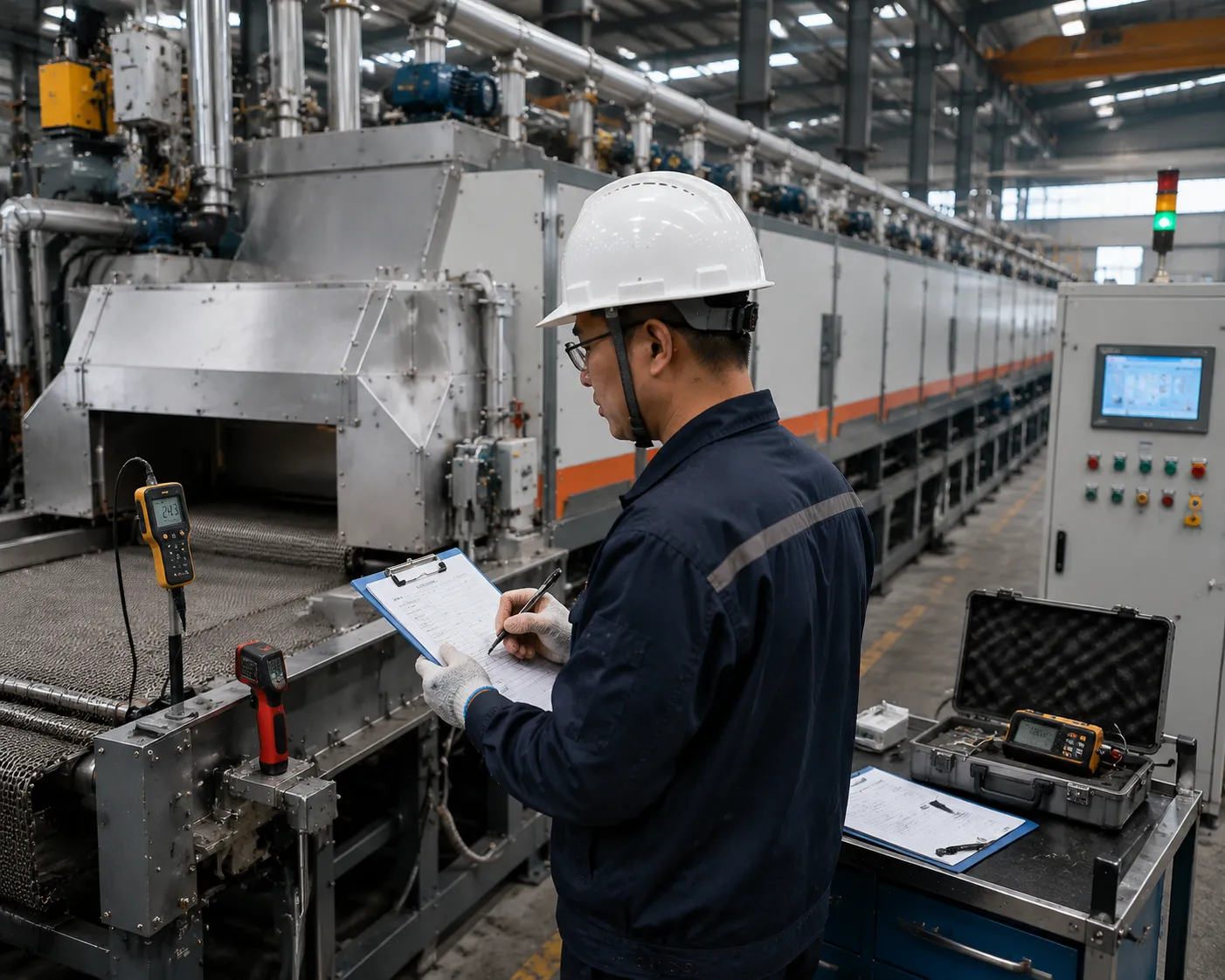
Factory Acceptance Testing
Every mesh belt furnace undergoes full-load thermal uniformity mapping and tracking checks before dispatch.
High-Grade Alloys & Material Inspection
We source heat-resistant alloy mesh belts, high-purity ceramic fiber insulation, and tier-one electrical controls verified through strict incoming material tests.
Full-Load Thermal & Atmosphere Testing
Every furnace undergoes multi-zone temperature uniformity surveys (TUS), anti-deviation belt tracking checks, and protective gas atmosphere seal audits prior to approval.
Complete Traceability & Technical Documentation
Every shipment includes instrument calibration certificates, electrical schematics, user operation manuals, and complete quality compliance documentation.
Global Standards & Technical Certifications
Engineered to conform with strict international industrial directives and safety benchmarks. Learn more about our official quality-certifications and compliance protocols.
Frequently Asked Questions About Mesh Belt Furnaces
Explore technical insights on atmosphere control, alloy belt longevity, temperature uniformity, and continuous thermal processing systems engineered by Haitem Furnace. For more details, visit our comprehensive faq page.
What is the typical service life of a furnace mesh belt, and how can belt stretching be minimized?
In continuous high-temperature production, an industrial conveyor belt typically delivers a service life of 12 to 36 months. Longevity depends heavily on working temperatures, chemical atmosphere exposure, component weight distribution, and mechanical tension regulation.
To extend mesh belt lifespan and mitigate thermal creep or tracking drift, Haitem Furnace integrates proven structural enhancements:
- High-Temperature Heat-Resistant Alloys: Premium wire materials such as SUS314, Inconel 601, and Nichrome are matched precisely to peak furnace temperatures up to 1150°C.
- Automated Tensioning Systems: Pneumatic or counterweight tensioning mechanisms automatically compensate for belt expansion and contraction during heating cycles.
- Precision Variable Frequency Drives: Smooth mesh belt furnace speed control prevents mechanical shock loads during startup and indexing.
- Low-Friction Hearth Plates: High-purity silicon carbide or specialized alloy support plates beneath the belt deck reduce friction coefficients and mechanical wear.
How does a continuous mesh belt conveyor furnace achieve bright, oxidation-free processing?
Achieving clean, oxide-free surface finishes during copper brazing, stainless steel annealing, or sintering requires total oxygen exclusion. A continuous mesh belt conveyor furnace utilizes comprehensive mesh belt furnace atmosphere control to preserve process gas integrity.
- Controlled Protective Gas Chemistry: Systems operate with dissociated ammonia (75% H₂, 25% N₂), pure hydrogen, nitrogen-hydrogen blends, or endothermic atmospheres tailored to your metallurgy.
- Micro-Positive Pressure Sealing: Sustaining an internal positive pressure (< 50 Pa) blocks external air infiltration at the entry and exit vestibules.
- Gas Curtains & Burn-Off Hoods: Nitrogen purge curtains and automated flame curtains seal terminal openings during loading and unloading operations.
- Sealed Alloy Muffle Chambers: Corrosion-resistant alloy muffles isolate the workspace, enabling steady dew points down to -60°C for bright processing of reactive metals.
Which mesh weave style and edge guard configuration is suitable for small parts handling?
Selecting the right mesh weave pattern is critical for a small parts heat treatment furnace to prevent thin stampings, small fasteners, or sintered compacts from tipping, slipping, or falling through the belt.
- Compound Balanced Weave: A dense, flat-surface spiral weave engineered specifically for high-density loading of small hardware, bearing rings, and MIM parts.
- Chain-Driven Belts: Side-mounted precision roller chains eliminate lateral drift and maintain smooth travel under heavy bulk loads.
- Integrated Corrugated Side Guards: Flexible side plates (15 mm to 50 mm high) retain loose parts on the belt deck and prevent jamming against muffle walls.
- Custom Pitch & Wire Sizing: Weave spacing is calculated based on minimum component dimensions to optimize radiant heat transfer while ensuring solid mechanical support.
What are the core differences between muffle and muffleless mesh belt furnace designs?
Deciding between muffle and muffleless furnace architectures depends on process atmosphere purity demands, maximum temperature targets, and energy consumption preferences.
Muffle Mesh Belt Furnaces
Incorporate a continuous alloy inner liner that separates heating elements from workpieces. Ideal for high-purity bright annealing, brazing, and applications requiring low gas consumption and rapid atmosphere changeover.
Muffleless Mesh Belt Furnaces
Position heating elements directly inside ceramic fiber or refractory insulation. Well-suited for high-tonnage powder metallurgy sintering and stress relieving where an attractive mesh belt furnace price, thermal efficiency, and high throughput are primary goals.
How is temperature uniformity controlled across multi-zone continuous heating lines?
Consistent metallurgical properties require precise thermal uniformity across the length and width of the continuous belt deck. Haitem Furnace utilizes advanced multi-zone control systems aligned with rigorous quality standards:
- Independent Multi-Zone Control: Furnaces feature 3 to 8 heating zones, each regulated by dedicated PID controllers and SCR thyristor power modules.
- Symmetrical Heating Layout: Heating elements (silicon carbide rods or alloy coils) are positioned above and below the conveyor path for uniform radiant coverage.
- Low-Thermal-Mass Insulation: Vacuum-formed ceramic fiber lining lowers thermal inertia, enabling quick response to temperature shifts under changing work loads.
- TUS & SAT Compliance: Equipment meets Temperature Uniformity Survey (TUS) and System Accuracy Test (SAT) standards, maintaining cross-belt temperature variance within ±5°C.
What routine maintenance is required to prevent unscheduled conveyor downtime?
A structured mesh belt maintenance schedule ensures uninterrupted production and protects critical alloy components from premature wear.
- Daily Checks: Verify drive sprocket alignment, inspect pneumatic tensioning pressure, and confirm inlet atmosphere gas curtain operation.
- Weekly Tracking Audits: Inspect belt clearance along side guides and calibrate automated tracking sensors to avoid sidewall friction.
- Monthly Terminal & Lube Service: Apply high-temperature synthetic lubricant to drive bearings and check electrical element connection posts for tightness.
- Quarterly Hearth & Atmosphere Inspections: Examine support hearth plates for wear grooves, check muffle integrity, and re-calibrate dew point sensor probes.
Can a mesh belt furnace line be customized with pre-degreasing and controlled cooling modules?
Yes. Every custom mesh belt furnace design by Haitem Furnace can be engineered as a fully integrated, automated production line tailored to your process flow:
- Pre-Treatment Wash & Degrease Modules: In-line spray washing, ultrasonic cleaning, and hot-air drying modules remove stamping oils before parts enter the heating chamber.
- Multi-Stage Cooling Sections: Options include insulated slow-cooling zones, water-jacket rapid cooling chambers, or forced-air convective cooling to achieve target grain structures.
- Automated Material Handling: Electromagnetic vibratory feeders, bucket elevators, and continuous loading belts distribute parts evenly without manual handling.
- PLC & SCADA Automation: System-wide control with recipe management, real-time temperature logging, and remote diagnostic capabilities.
Need Custom Engineering Advice or Project-Specific Sizing?
Our thermal process engineers evaluate part geometry, throughput requirements, protective gas chemistry, and footprint constraints to design the optimal continuous mesh belt furnace line.
Need a Custom Continuous Furnace Solution?
Haitem Furnace engineers customize mesh belt conveyor systems according to your production capacity, material characteristics, temperature profile, and atmosphere requirements.
Custom furnace configuration • Process optimization • Global technical support