
Haitem Furnace Performance Benchmarks
Key Specifications & Vacuum Processing Metrics
Engineered for high vacuum thermal processing and precise stress relief annealing, delivering clean, bright metal surfaces with zero oxidation.
Ultimate Vacuum Level
Diffusion or turbomolecular pump systems eliminate oxygen to guarantee bright, oxide-free surface finishes.
Max Operating Temp
Versatile heating capability using molybdenum, graphite, or tungsten elements for high-purity alloy annealing.
Thermal Uniformity
Multi-zone PID control ensures tight thermal consistency across all heating zones to meet AMS 2750G standards.
Chamber Load Capacity
Customizable batch capacities ranging from 50 kg laboratory units to 5-ton heavy industrial furnaces.
Precision Thermal Dynamics for Bright, Oxide-Free Metallurgical Processing
Haitem Furnace vacuum annealing systems combine advanced chamber design with precise thermal cycle control to achieve stress relief annealing and recrystallization without surface oxidation or decarburization. Designed for sensitive metals, magnetic materials, and titanium alloys, our high vacuum thermal process-integration equipment ensures repeatable, defect-free material properties.
- ✓ Multi-Zone PID Temperature Control: Independent thyristor power regulation provides precise heating ramp rates and eliminates thermal gradients.
- ✓ Integrated Vacuum & Degassing System: Removes entrapped hydrogen, oxygen, and residual stresses to dramatically improve metal ductility and conductivity.
- ✓ Rapid Inert Gas Quenching: Pressurized argon or nitrogen cooling reduces cycle times while preserving bright, acid-wash-free surfaces.
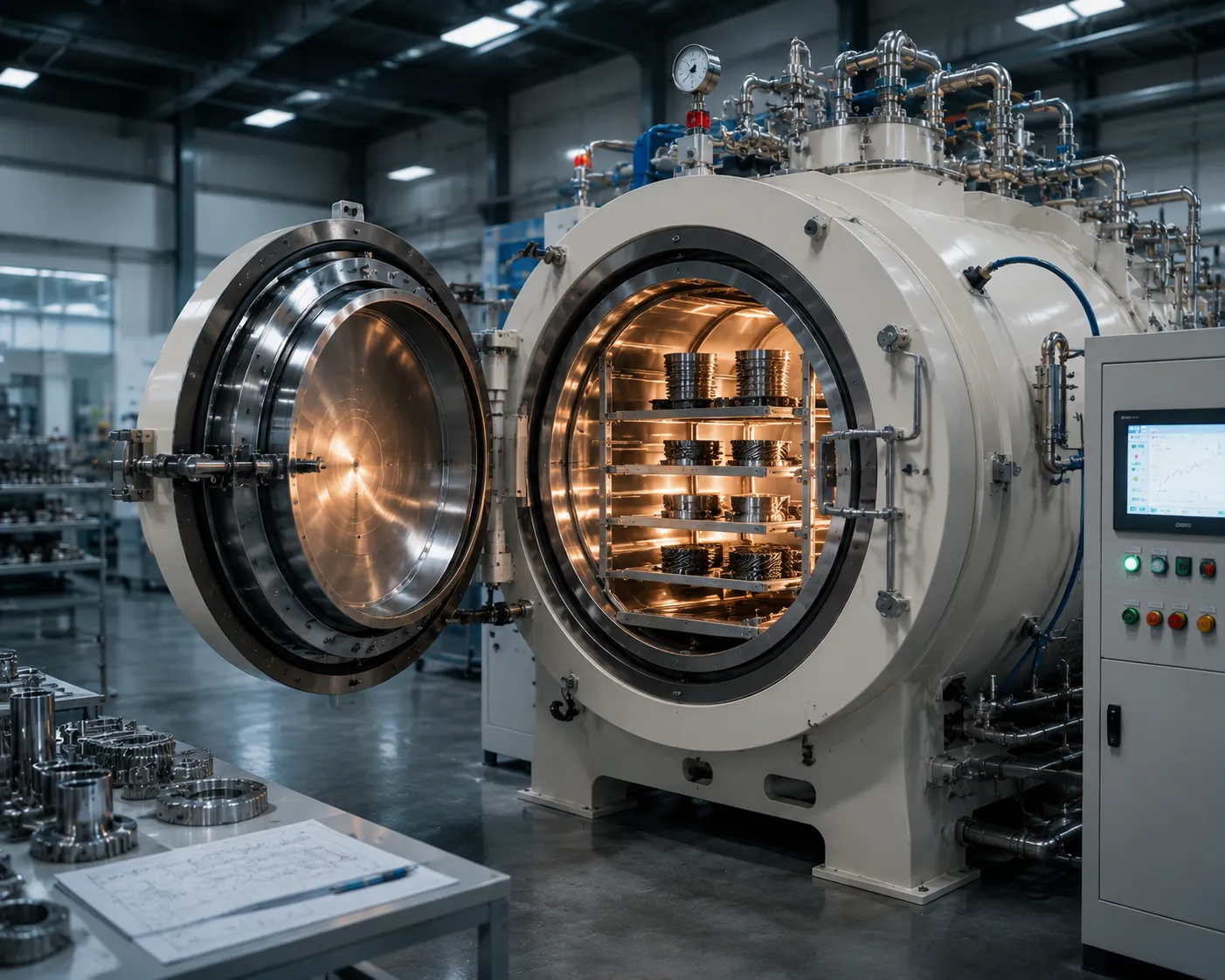
Vacuum Annealing Furnace Technical Specifications
Explore technical parameters and compare operating capabilities across Haitem industrial vacuum furnace configurations.
| Parameter / Specification | Compact Laboratory Series | Standard Batch Vacuum Series | High-Capacity Industrial Series |
|---|---|---|---|
| Ultimate Vacuum Level | ≤ 5×10⁻² Pa (Roughing Pump) | ≤ 5×10⁻⁴ Pa (Diffusion Pump) | ≤ 1×10⁻⁵ Pa (Molecular Pump) |
| Maximum Temperature | 1100°C | 1300°C | 1600°C |
| Temperature Uniformity | ±3°C | ±2°C (AMS 2750 Class 1) | ±2°C (AMS 2750 Class 1) |
| Heating Element Material | FeCrAl / NiCr Alloy | Molybdenum / Graphite Felt | Tungsten / All-Metal Shield |
| Cooling / Quench Pressure | Natural / Low-Pressure Gas | 2-Bar Inert Gas Cooling | 6 to 10-Bar Rapid Gas Quench |
| Target Applications | Small Parts & Stress Relief | Bright Annealing & Titanium | Aerospace & High-Purity Alloys |
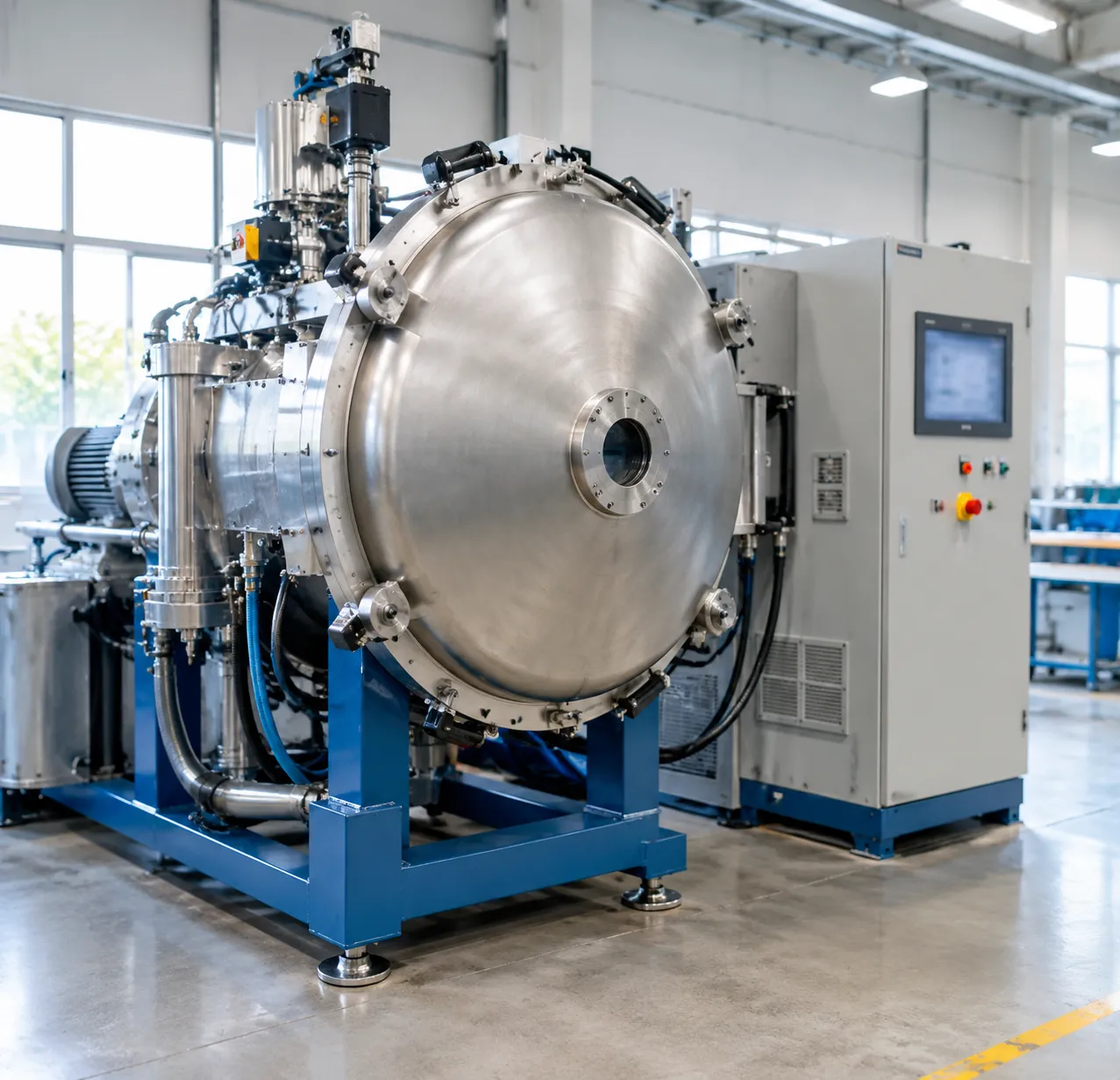
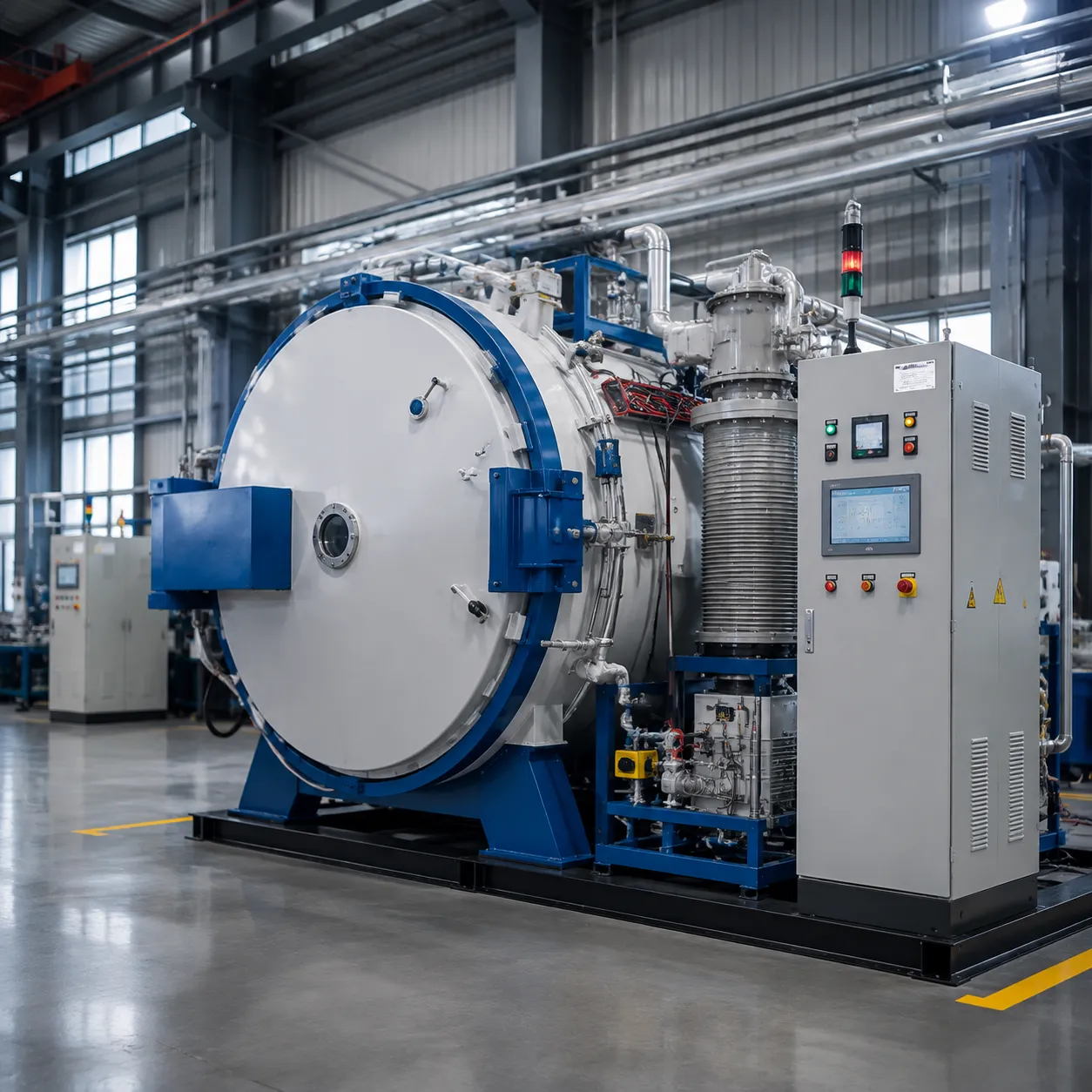
Clean Heat Treatment Overview and Vacuum Annealing Mechanics
Discover how advanced high-vacuum thermal processing eliminates metal surface oxidation, removes entrapped internal gases, and delivers mirror-bright finishes without aggressive chemical pickling or mechanical blasting.
Oxidation-Free Processing in Ultra-Clean Vacuum Environments
Conventional atmospheric annealing subjects high-temperature metal surfaces to residual oxygen and water vapor. This unwanted reaction forms rough oxide scale, severe surface discoloration, and localized surface decarburization.
By operating inside an ultra-clean vacuum vessel, the Haitem Furnace vacuum heat treatment furnace process eliminates atmospheric contaminants completely. Metals retain their native surface luster, effectively bypassing post-treatment acid bathing, solvent cleaning, and abrasive grit blasting.
Degassing Mechanism and Internal Stress Relief
Elevated temperatures under deep vacuum conditions induce powerful outgassing mechanics. Dissolved interstitial gases—such as hydrogen, nitrogen, and oxygen—diffuse rapidly out of the metallic lattice matrix into the vacuum stream.
This active vacuum degassing prevents catastrophic hydrogen embrittlement in sensitive titanium alloys and refractory metals. Concurrently, controlled isothermal soak cycles allow dislocation movement and stress relief annealing while safeguarding tensile ductility and grain structure integrity.
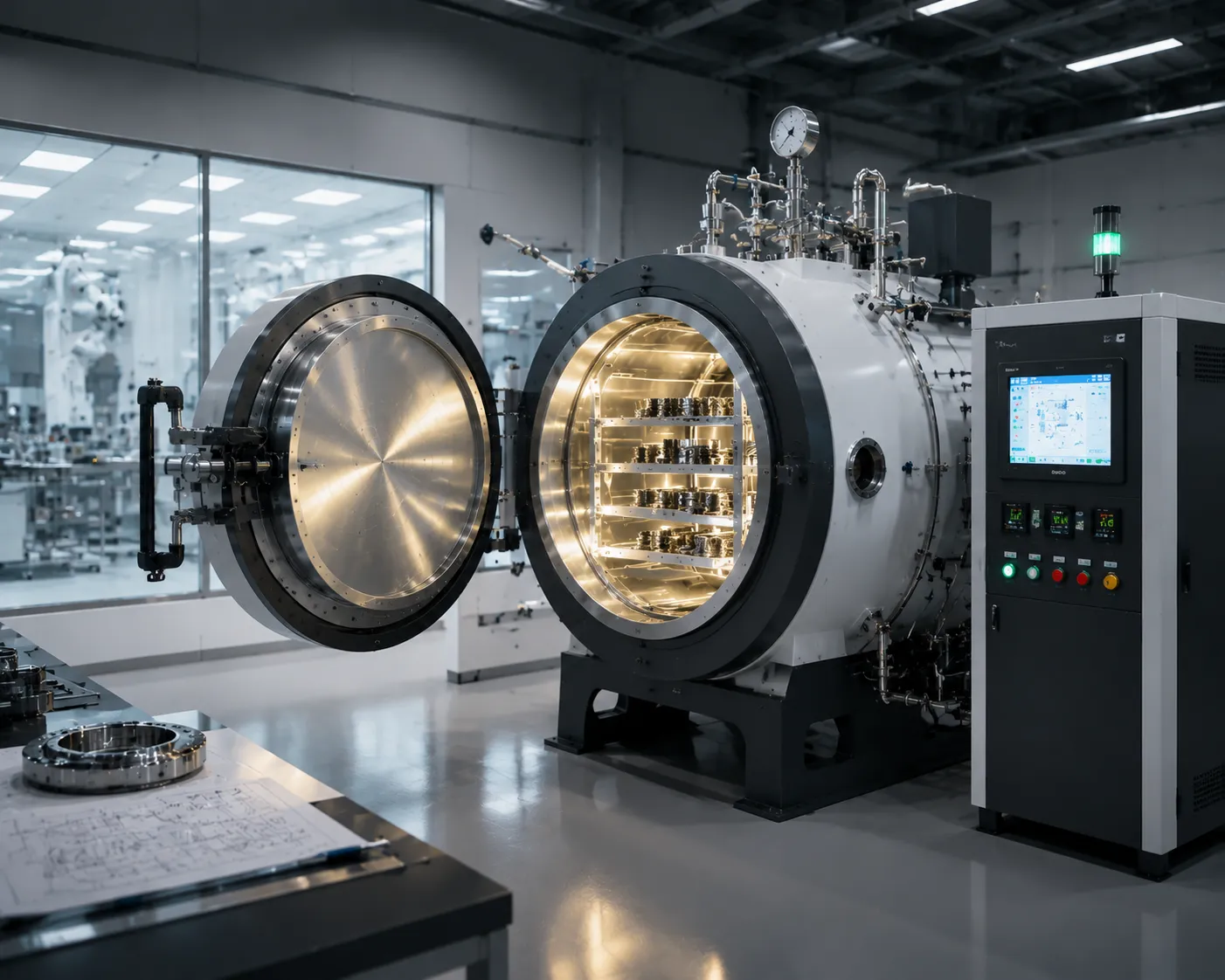
High-purity vacuum thermal chamber engineered to deliver repeatable bright annealing across mission-critical metal components.
- ✓ Zero Surface Decarburization: Preserves exact carbon ratios and surface hardness in high-strength alloy steels.
- ✓ 100% Bright Finish: Yields stain-free surface quality, eliminating toxic acid washing and liquid waste treatment expenses.
- ✓ Enhanced Magnetic Permeability: Optimizes magnetic domain alignment and minimizes core losses in soft magnetic alloys.
Core Capabilities of Vacuum Heat Treatment
Surface Integrity
Completely prevents oxidation, scaling, and tarnish, maintaining fine surface finishes on high-precision aerospace and medical parts.
Microstructure Control
Multi-zone thermal management guarantees uniform grain recrystallization without localized overheating, hot spots, or component warping.
Eco-Friendly Process
Operates cleanly without toxic chemical baths, volatile protective gas mixtures, or hazardous effluent disposal requirements.
Hydrogen Removal
Deep vacuum evacuation extracts trapped hydrogen atoms from the material core, protecting titanium components from delayed brittle failure.
Four-Stage Clean Thermal Cycle Process
How Haitem Furnace systems execute repeatable, oxidation-free thermal treatment cycles.
Chamber Evacuation
High-speed vacuum pumping systems draw vessel pressure down past critical threshold levels prior to element heating.
Programmed Ramp Heating
Multi-zone heating elements increase temperature along strictly regulated PID curves, preventing thermal stress and part distortion.
Vacuum Degassing Soak
Sustained high-temperature holding allows total stress relaxation and complete outgassing of volatile molecular impurities.
Controlled Inert Cooling
High-purity argon or nitrogen gas reintroduction facilitates accelerated, uniform cooling while maintaining total surface purity.
Core Hardware Architecture for Industrial Thermal Precision
Engineered with double-wall water-cooled vessels, multi-zone heating systems, and automated vacuum skids, Haitem Vacuum Annealing Furnaces deliver exceptional thermal stability and bright, oxidation-free results through advanced design-engineering.
Heavy-Duty Water-Cooled Vacuum Vessel
Fabricated with dual-layer stainless steel water jackets, maintaining external shell temperatures below 45°C to preserve seal integrity and operator safety during high-heat processing.
High-Efficiency Thermal Shielding
Configurable with rigid graphite felt or all-metal molybdenum radiation shields, reducing energy losses by 30% while preventing carbon contamination on sensitive alloys.
Automated Vacuum Pumping Systems
Combines backing, Roots, and diffusion or turbomolecular pumps with automatic pneumatic valves and anti-oil-backflow protection for rapid evacuation to 5 × 10⁻⁴ Pa.
Precise Temperature Control PLC
Features a 15-inch industrial touchscreen PLC driving multi-zone PID loops, storing hundreds of custom annealing profiles with full data logging and remote monitoring capabilities.
Multi-Tier Safety Interlocks
Hardware safety interlocks continuously monitor water pressure, over-temperature conditions, power phases, and vacuum thresholds for fully safe, unattended industrial runs.
High-Pressure Rapid Gas Cooling
Integrated high-pressure argon or nitrogen forced-convection cooling accelerates heat exchange, significantly shortening overall thermal cycle times and maximizing throughput.
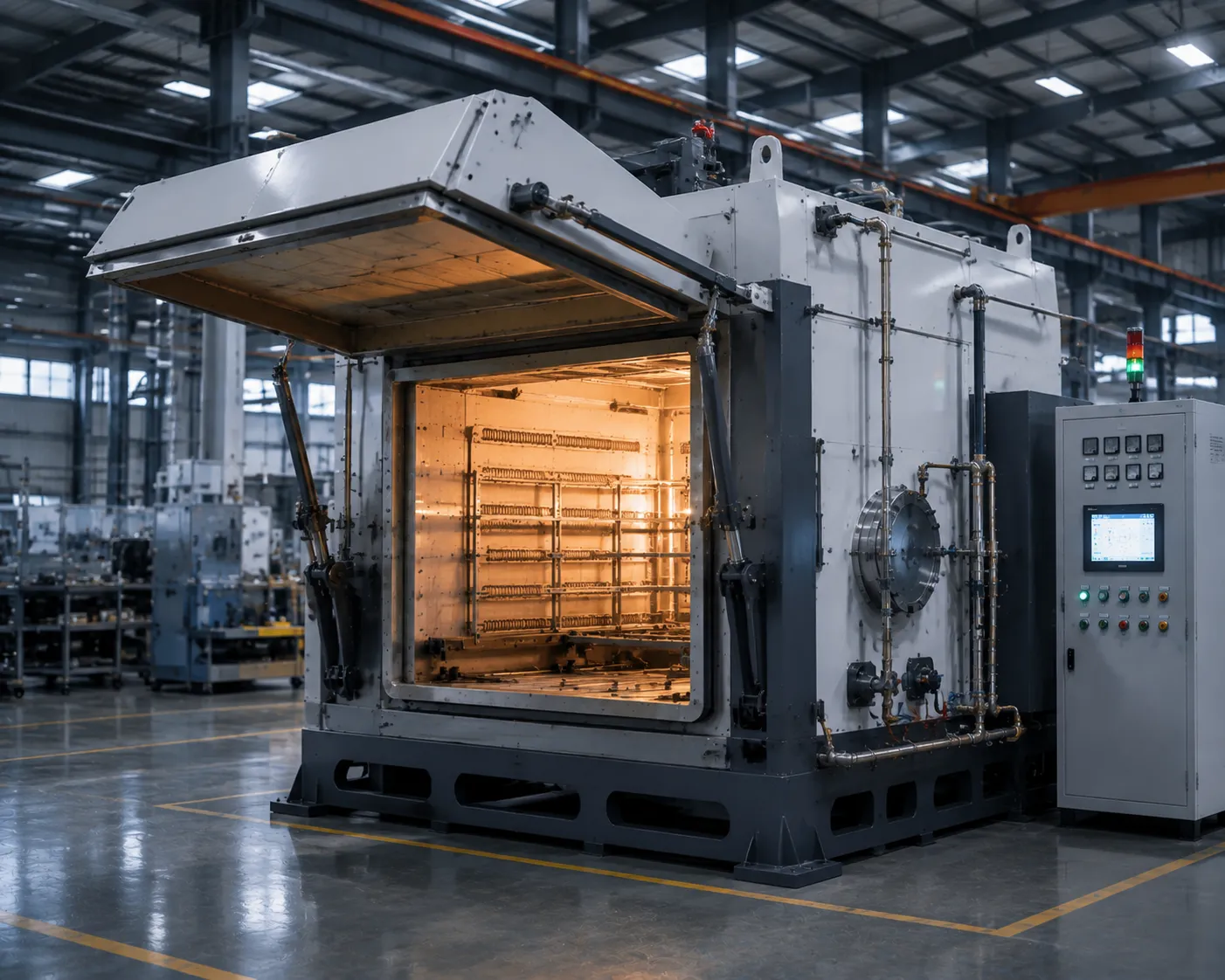
Uniform Heating Chamber Designed for Heavy Industrial Duty
Haitem Furnace pairs robust structural engineering with advanced thermal field modeling to guarantee identical material properties across every batch load.
High-Vacuum Processing: Pumping configurations achieve operational vacuum levels down to 5 × 10⁻⁴ Pa, eliminating residual oxygen and preventing surface discoloration.
Precise Temperature Control: Independently regulated heating zones maintain chamber temperature uniformity within ±2°C to ±5°C across all working zones.
Modular Maintenance Access: Quick-release heating elements, external sensor ports, and accessible pumping manifolds reduce operational maintenance downtime by 30%.
Need custom furnace chamber dimensions or high-vacuum specifications?
Consult with Haitem Furnace engineers to design tailor-made vacuum annealing solutions for your specific manufacturing workflow.
Sensitive Alloy Processing and Industrial Solutions
Haitem Furnace delivers oxidation-free thermal processing for critical alloys requiring strict material purity, magnetic performance, and structural integrity. Learn more about us and our engineering leadership in custom solutions for demanding thermal applications.
Titanium Alloys and Refractory Metal Annealing
Titanium alloys such as Ti-6Al-4V, alongside refractory metals including tantalum, niobium, tungsten, and molybdenum, require absolute oxygen-free vacuum environments. At elevated temperatures, these reactive materials readily absorb atmospheric gases, leading to severe embrittlement and catastrophic surface degradation.
Haitem Furnace high-vacuum annealing systems eliminate interstitial gas pickup while facilitating active hydrogen degassing. Controlled heating cycles and uniform cooling preserve critical grain boundary structures, optimizing yield strength and ductility for demanding aerospace and defense applications backed by advanced manufacturing capabilities.
- Complete Hydrogen Degassing: Drives out entrapped hydrogen gas to prevent delayed hydrogen embrittlement and cracking.
- Zero Alpha Case Formation: Suppresses oxygen-rich brittle surface layers to preserve mechanical fatigue resistance.
- Uniform Stress Relief: Relieves residual stresses without component warping, ensuring precise dimensions for machining.
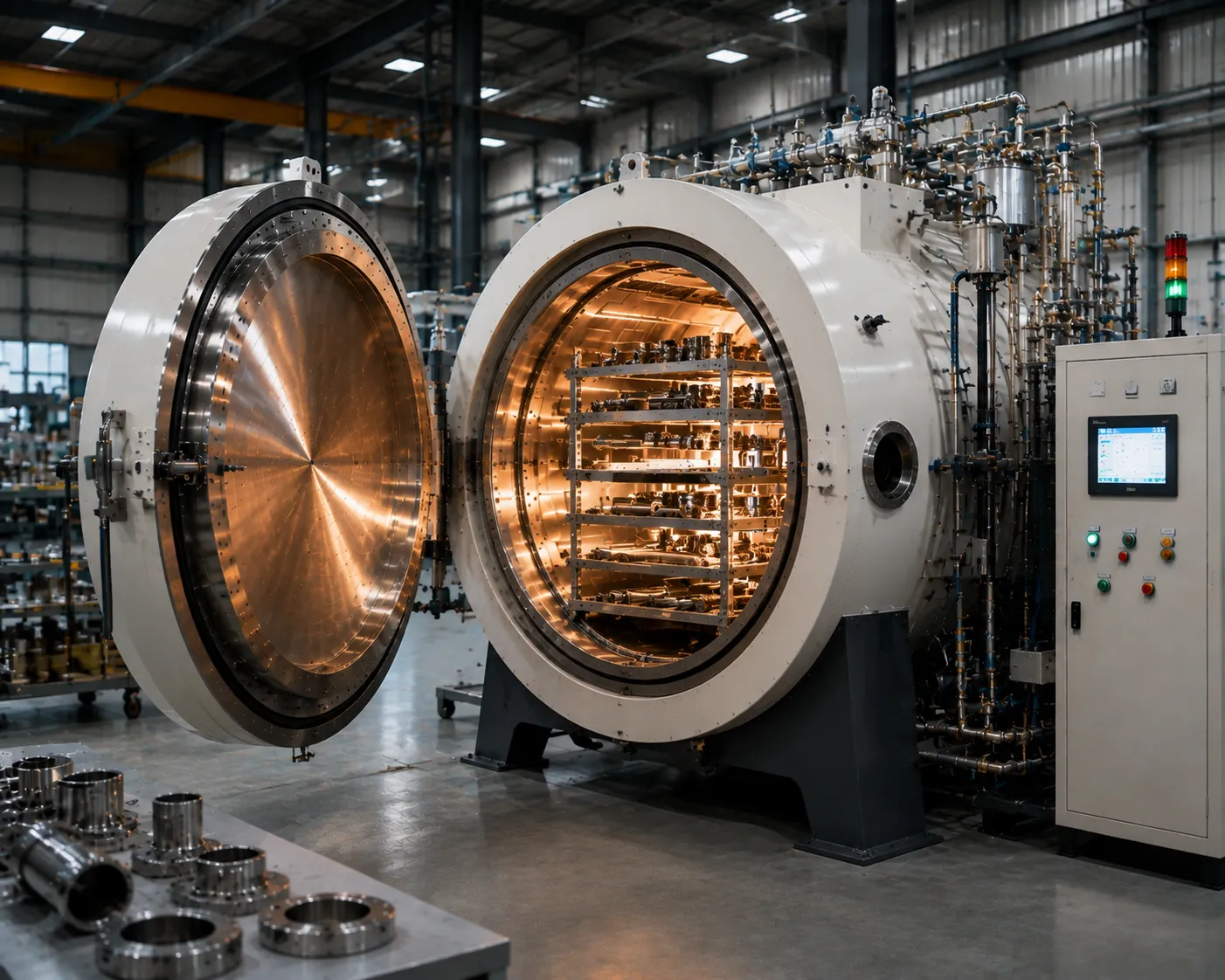
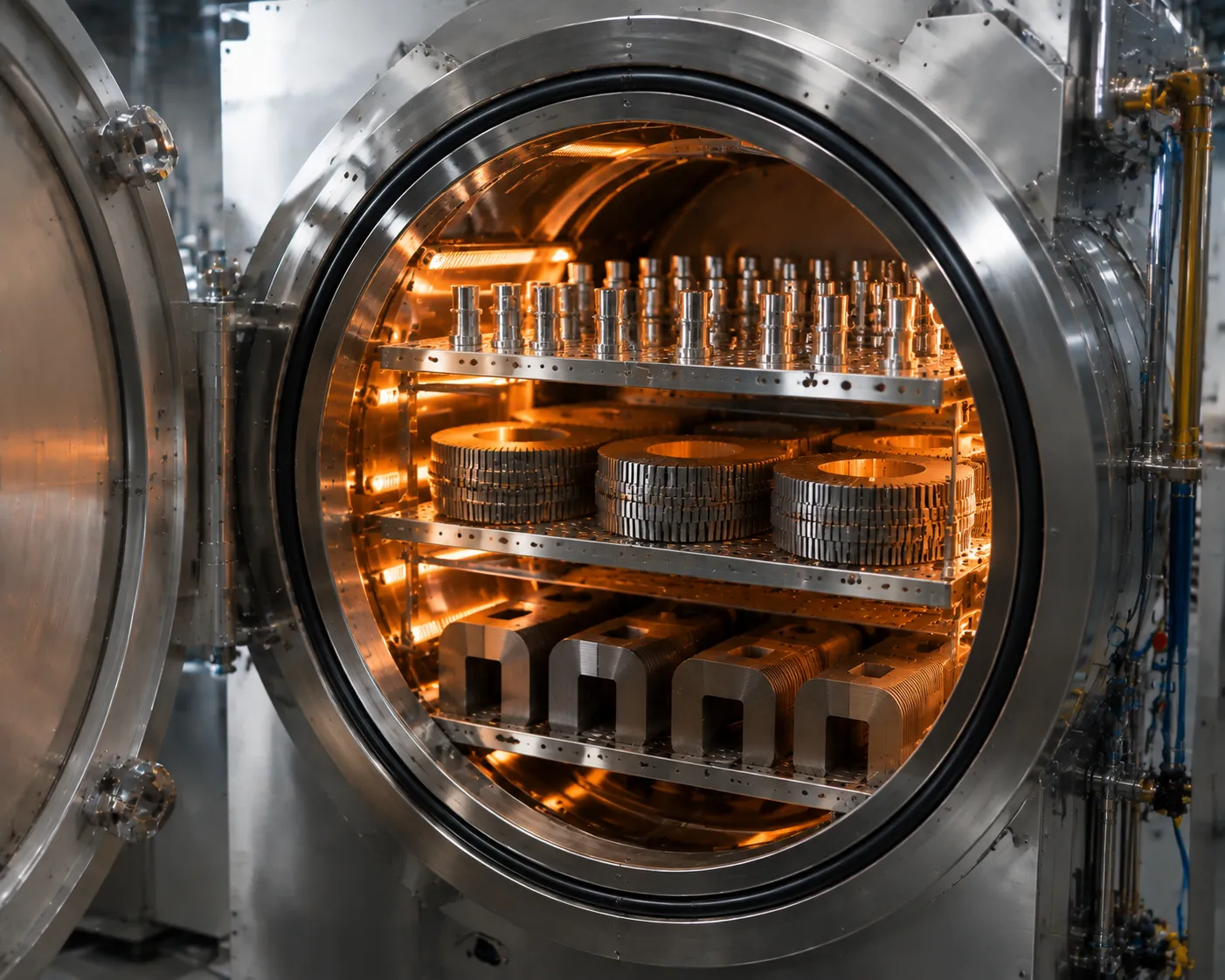
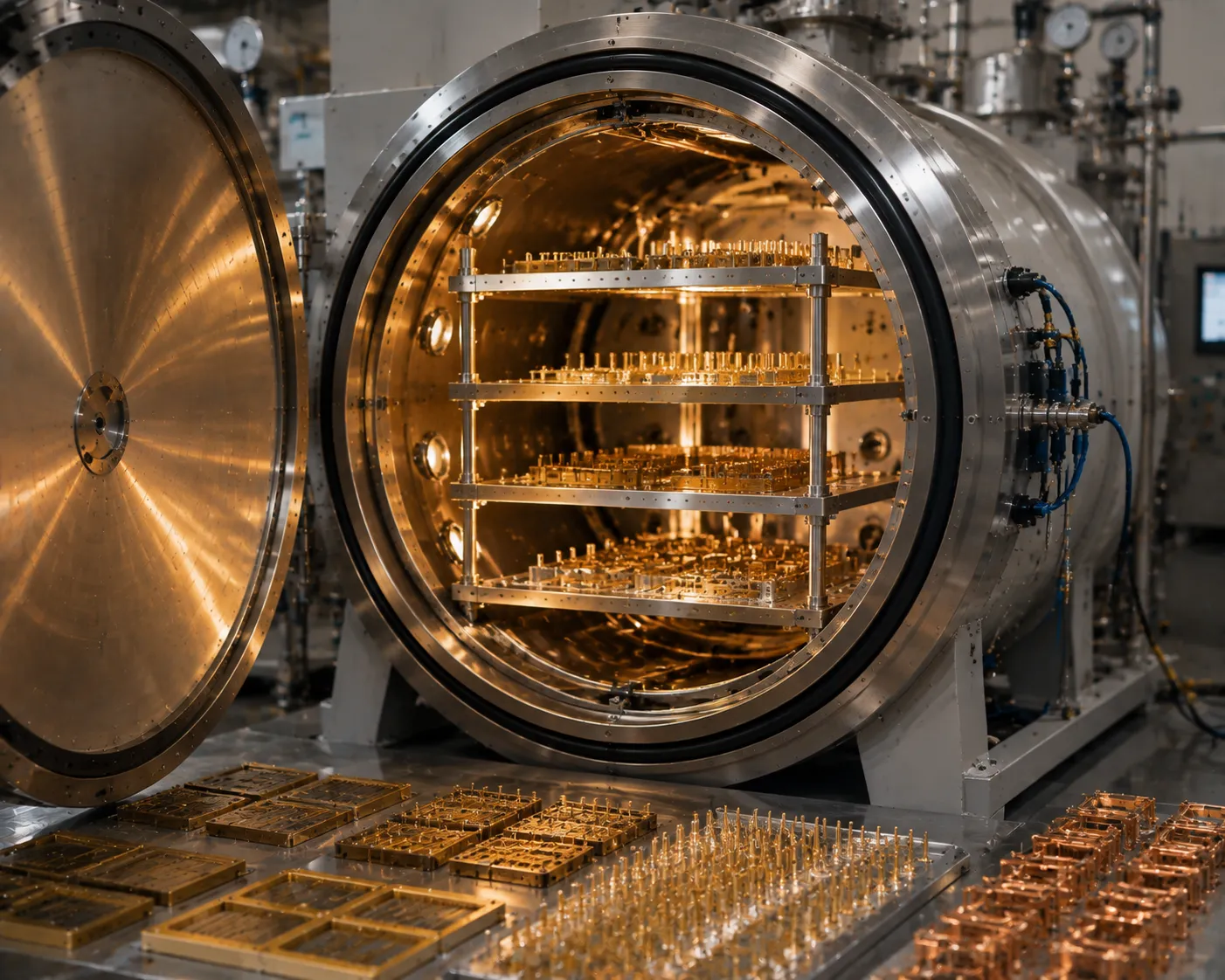
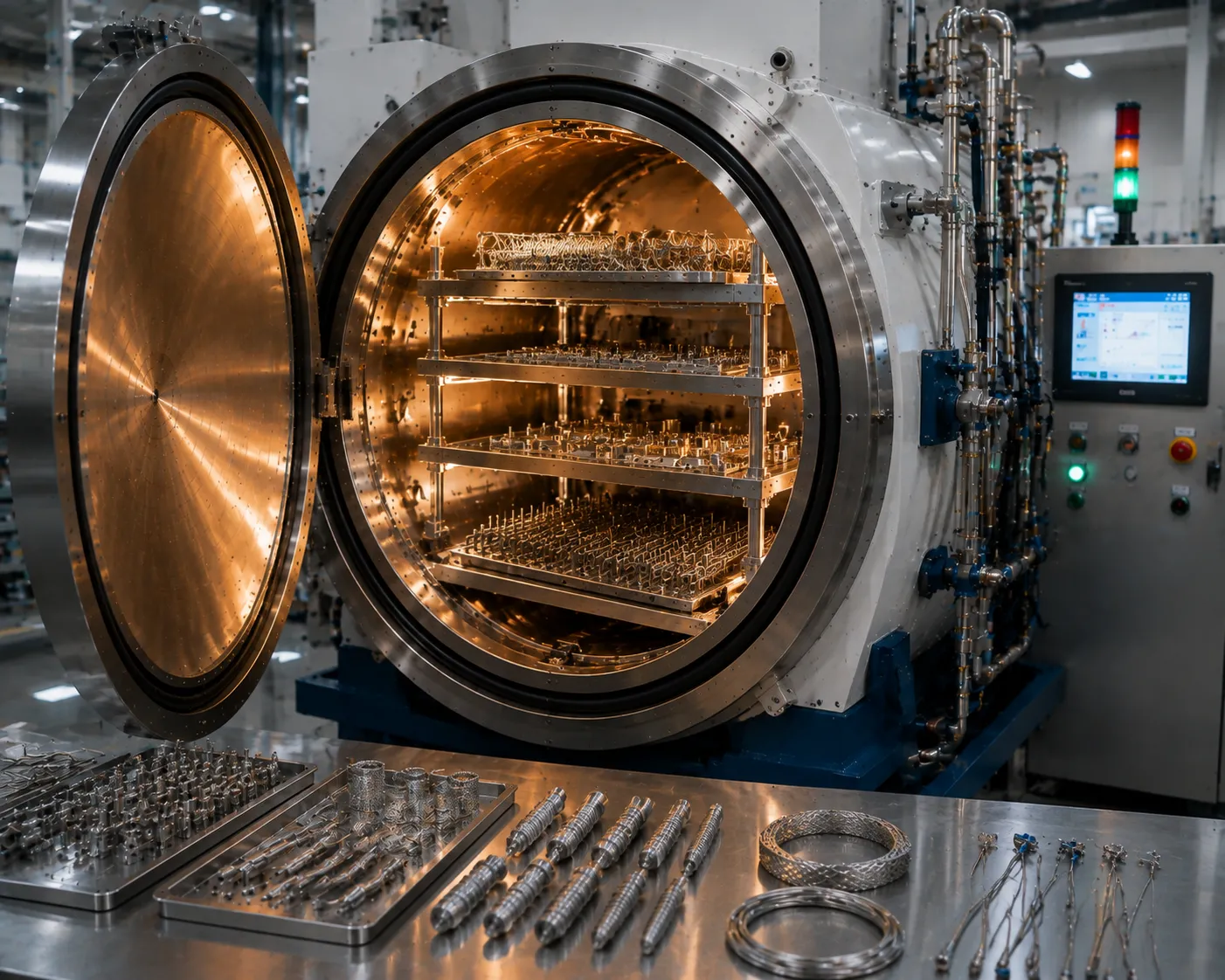
Metallurgical Benefits of Clean Vacuum Heat Treatment
Understanding how high-vacuum environments alter material kinetics, eliminate oxidation, and prevent structural metallurgical defects.
Vacuum Degassing & Gas Extraction
High vacuum levels reduce ambient partial pressures, causing trapped hydrogen, oxygen, and nitrogen to diffuse out of the metal matrix. This degassing process prevents hydrogen embrittlement and improves overall fatigue life.
Critical for Titanium, Tantalum, & High-Strength Steels
Prevention of Intergranular Corrosion
By combining precise multi-zone heating profiles with rapid inert gas quenching, stainless steels and nickel alloys traverse critical sensitization ranges quickly. This suppresses chromium carbide precipitation along grain boundaries.
Critical for Medical Implants & Chemical Hardware
Surface Decarburization Protection
Carbon depletion on alloy steel surfaces lowers hardness and fatigue strength. Vacuum annealing eliminates reactive carbon dioxide and water vapor molecules, preserving exact surface stoichiometry and uniform hardness.
Critical for Precision Springs, Tooling, & Bearings
Material Processing Reference Matrix
General processing guidelines for common sensitive alloys engineered in Haitem Vacuum Annealing Furnaces
| Material Category | Typical Alloys | Process Temperature | Vacuum Level | Primary Technical Goal |
|---|---|---|---|---|
| Titanium Alloys | Ti-6Al-4V, Grade 2 Titanium | 650°C to 850°C | ≤ 5 × 10⁻³ Pa | Stress relief, hydrogen removal, alpha case prevention |
| Refractory Metals | Tantalum, Niobium, Tungsten, Molybdenum | 1000°C to 1300°C | ≤ 1 × 10⁻⁴ Pa | Recrystallization, extreme high-temperature ductility |
| Soft Magnetic Materials | Permalloy, Silicon Steel, Nanocrystalline | 1100°C to 1200°C | ≤ 5 × 10⁻³ Pa | Maximum permeability, coercivity reduction, grain growth |
| Medical Shape Memory | Nitinol Wire, Tubing, Implants | 500°C to 600°C | ≤ 1 × 10⁻³ Pa | Shape setting, phase calibration, oxide-free surface |
| Precious Conductive Alloys | OFHC Copper, Gold/Silver Contacts | 400°C to 700°C | ≤ 1 × 10⁻² Pa | Bright annealing, zero surface oxidation, bondability |
Standard Vacuum Annealing Furnace Specifications & Models
Explore engineered industrial vacuum annealing furnaces designed for oxidation-free thermal processing, high-purity bright annealing, and precise thermal cycle control.
HT-VA Compact Series
Precision high-vacuum batch annealing systems engineered for laboratory research, medical implants, and delicate electronic components.
- Max Temp: 1200°C – 1300°C
- Vacuum Level: 5 × 10⁻⁴ Pa
- Uniformity: ±2°C to ±3°C
- Heating Zone: Molybdenum / Graphite
HT-VA Industrial Heavy Series
High-tonnage vacuum annealing systems for large-scale stress relieving, titanium alloy treatment, and magnetic materials processing.
- Max Temp: 1200°C – 1300°C
- Load Capacity: 100 kg – 5 Tons
- Pumping Unit: Diffusion / Roots / Vane
- Cooling System: Forced Inert Gas (Ar/N₂)
HT-VA Custom & Vertical Series
Tailored top-loading, pit-type, or multi-zone vacuum annealing systems built for long shafts, wire coils, and specialized aerospace parts.
- Max Temp: 1300°C – 1600°C
- Vacuum Level: Up to 10⁻⁵ Pa
- Control Zones: 3 – 6 Independent PID
- Configuration: Horizontal / Pit / Custom
Vacuum Annealing Furnace Parameter Matrix
Compare primary engineering specifications across standard Haitem Furnace vacuum furnaces annealing configurations.
| Model Series | Chamber Dimensions (W×H×D) | Max Temperature | Ultimate Vacuum | Heating Power | Load Capacity |
|---|---|---|---|---|---|
| HT-VA-303040 | 300 × 300 × 400 mm | 1200°C (2192°F) | 5 × 10⁻⁴ Pa | 35 kW | 100 kg |
| HT-VA-606090 | 600 × 600 × 900 mm | 1300°C (2372°F) | 5 × 10⁻⁴ Pa | 90 kW | 500 kg |
| HT-VA-9090120 | 900 × 900 × 1200 mm | 1300°C (2372°F) | 5 × 10⁻⁴ Pa | 160 kW | 1500 kg |
| HT-VA-120120150 | 1200 × 1200 × 1500 mm | 1300°C (2372°F) | 1 × 10⁻⁴ Pa | 240 kW | 3000 kg |
| HT-VA-Custom | Custom Chamber Sizing | Up to 1600°C (2912°F) | 10⁻³ to 10⁻⁵ Pa | Tailored to Load | Up to 5000 kg |
Precision Thermal Engineering & Custom Vacuum Annealing Systems
Haitem Furnace builds custom vacuum annealing equipment tailored to specialized metallurgy and production requirements through our advanced manufacturing-capabilities. Our engineering team integrates low-mass thermal shielding and intelligent multi-zone control to ensure high-purity, repeatable heat treatment.
Thermal Efficiency
High-purity metal molybdenum or graphite felt shields cut energy loss up to 30%.
PLC Automation
Intuitive touchscreen controls store custom heating curves with full data traceability.
Safety Interlocks
Automated over-temperature, water-flow, and vacuum loss interlocks ensure reliable operation.
Custom Sizing
Chamber dimensions and multi-tier loading racks custom-built for specific plant layouts.
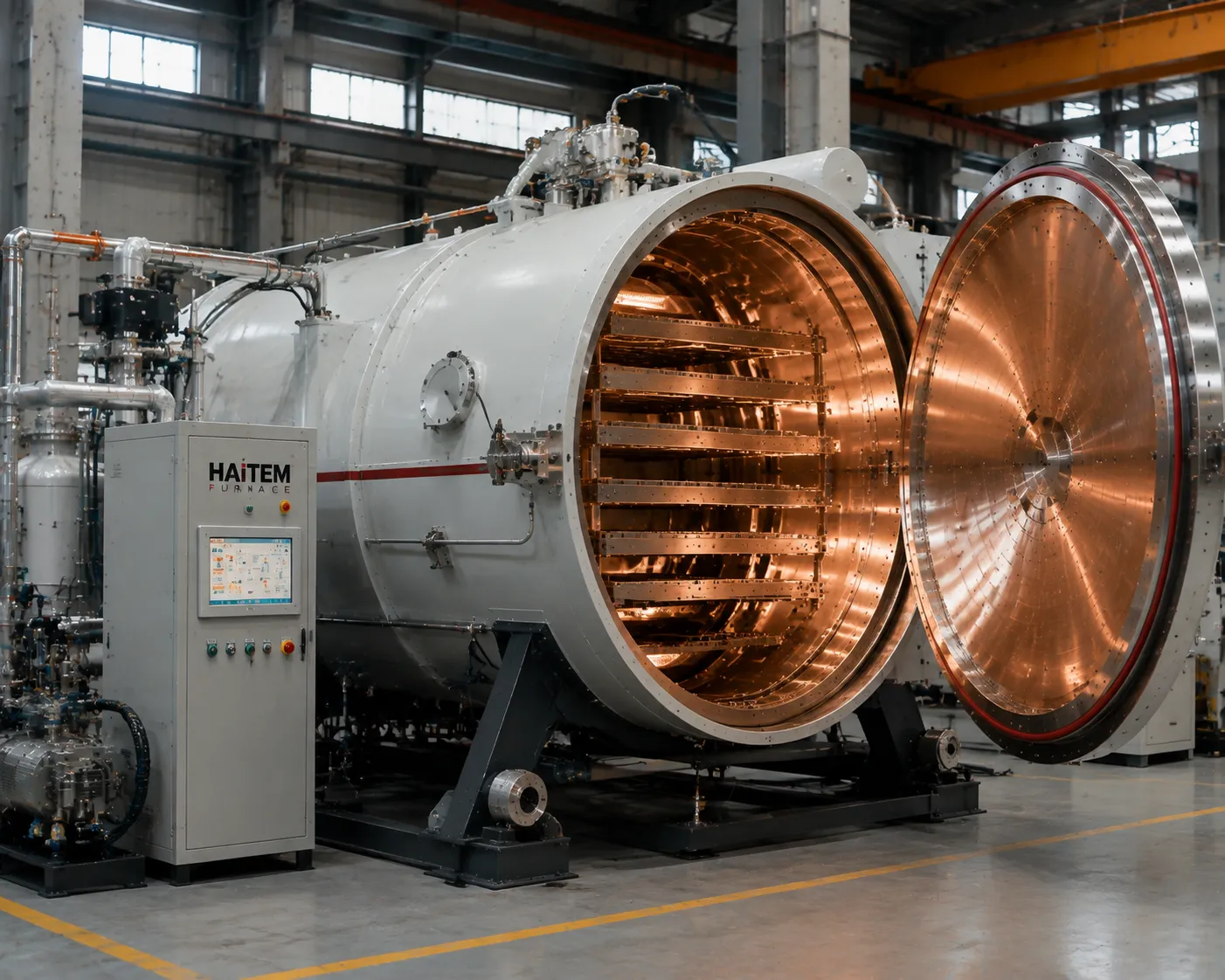
Dynamic Thermal Cycle Simulator and Custom Vacuum Control Systems
Haitem Furnace delivers high-precision temperature control architectures engineered for demanding vacuum thermal processing. Our custom vacuum furnaces design integrates dynamic thermal cycle simulation, multi-zone PID temperature tuning, and automated vacuum sequencing to eliminate thermal gradients and guarantee consistent metallic microstructures across complex workloads.
Precision Heat Treatment Optimization and Curve Modeling
High-vacuum thermal processing demands strict thermal cycle control to achieve stress relief annealing, bright surface finishes, and deep material degassing without surface oxidation or crystalline distortion. Standard static furnace controllers frequently suffer from thermal lag during initial ramp stages and temperature overshoot during stabilization phases, risking metallurgical defects.
The Haitem Furnace intelligent control platform continuously monitors multi-zone thermocouple feedback, dynamically adjusting SCR power distribution to compensate for varying load densities. By modeling heat transfer dynamics prior to firing, heat treaters can optimize soak dwell durations and high-pressure gas quenching rates for intricate, high-value components.
- Multi-Segment Programmable Profiles: Store up to 500 custom thermal recipes featuring multi-stage ramp, soak, and controlled cooling steps.
- Dynamic Vacuum Interlocking: Automatically coordinates electro-pneumatic high-vacuum valve actuation based on real-time vacuum pressure thresholds.
- Zero Carbon Contamination: Tailored multi-zone power management for all-metal molybdenum or high-purity graphite hot zones.
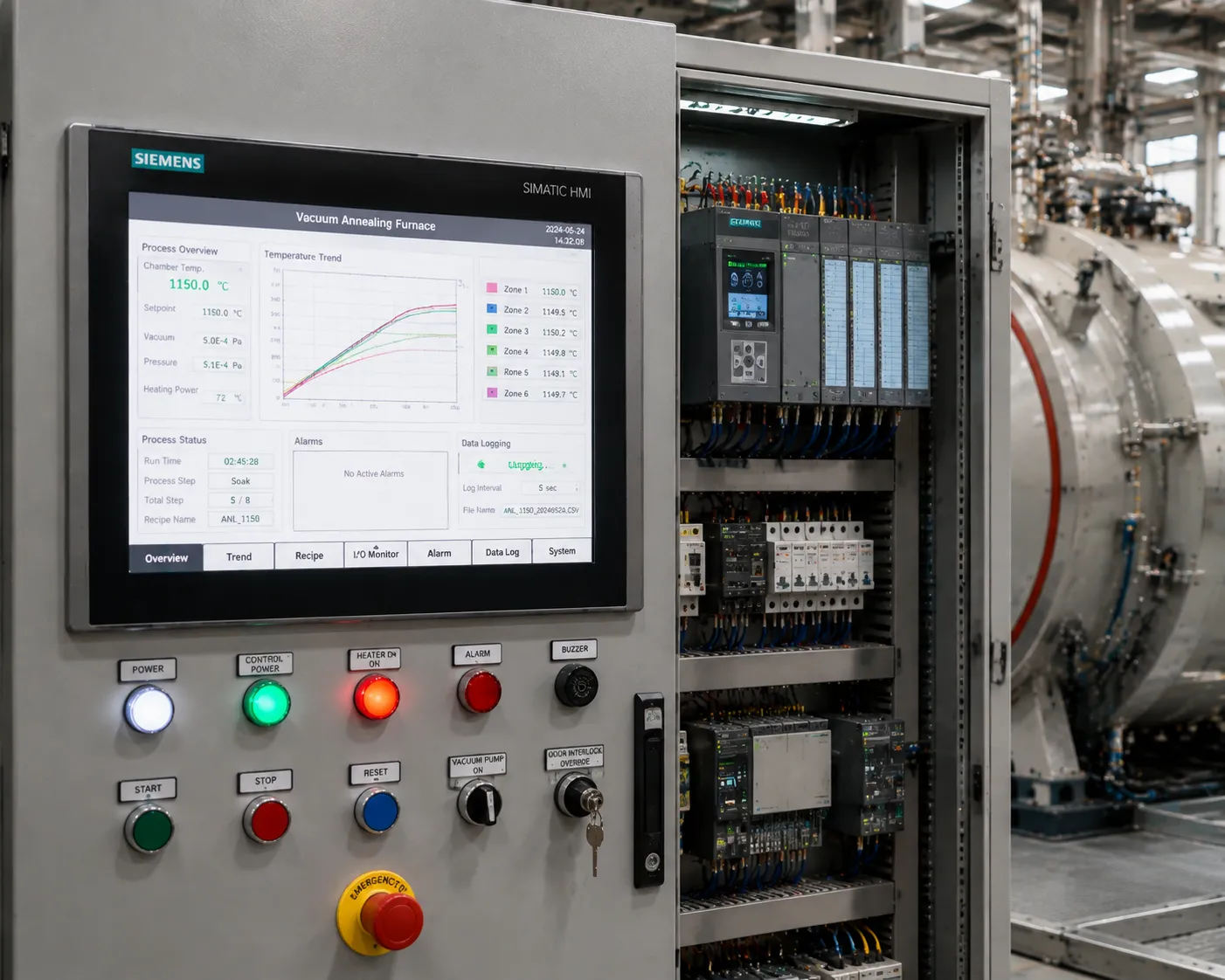
Integrated PLC Architecture and Touchscreen Control
Industrial control cabinets feature 15-inch high-resolution touchscreen HMIs paired with Siemens or Allen-Bradley PLCs. Continuous multi-parameter data logging guarantees complete traceability to satisfy ISO 9001, AMS 2750G, and CQI-9 quality requirements.
Interactive Vacuum Thermal Cycle Simulator
Simulate heating ramps, dwell temperatures, vacuum pressure points, and forced gas quenching profiles for critical technical alloys.
Advanced Custom Control System Features
Engineered for maximum reliability, Haitem custom vacuum furnace architecture incorporates redundant safety protection, precise thermal field measurement, and scalable PLC automation.
Multi-Zone PID Temperature Tuning
Independent SCR power modules control top, middle, and bottom heating zones separately, maintaining thermal field uniformity within ±2°C across the entire effective hot zone.
Automated Vacuum Valve Interlocks
Electro-pneumatic isolation valves automatically respond to active vacuum gauge readings, preventing heating element energized states until specified vacuum thresholds are reached.
Data Logging & AMS 2750 Compliance
Continuous digital recording of temperature, chamber vacuum, water temperature, and cooling gas flow rate satisfies demanding aerospace and medical device quality standards.
Over-Temperature Safety Shutoff
Independent hardware-based secondary over-temperature limit controllers immediately cut main heating power if primary thermocouple failure or PLC fault occurs.
Remote Monitoring & Telemetry
Secure industrial Ethernet gateways allow process engineers to monitor real-time cycle status, review historical graphs, and receive remote factory diagnostics securely.
Partial Pressure Gas Injection
High-accuracy mass flow controllers regulate partial pressure backfilling of argon or nitrogen, preventing volatile alloy element evaporation at elevated processing temperatures.
Control Systems Feature Matrix Comparison
Evaluate key differences between standard single-loop furnace controllers and Haitem advanced multi-zone intelligent vacuum control systems.
| Control Specification | Standard Single-Loop Controller | Haitem Advanced Custom Control System |
|---|---|---|
| Thermal Uniformity Control | Single feedback loop with ±10°C thermal variation | Multi-zone independent SCR PID tuning achieving ±2°C uniformity |
| Vacuum System Integration | Manual pump toggle switches without safety logic | Fully automated vacuum interlocks and electro-pneumatic valve sequencing |
| Recipe Memory Storage | Basic 8 to 16 segment memory capacity | Up to 500 customized thermal profiles with unlimited multi-stage steps |
| Data Traceability & Export | Manual paper chart recorder or unverified logs | Real-time digital SCADA logging with USB, Ethernet, and cloud export |
| Safety & Interlock Protection | Basic single over-temperature fuse | Comprehensive multi-tier interlocks for cooling water, vacuum loss, and power fault |
Vacuum vs. Atmosphere Annealing: Financial Impact & Quality Matrix
Evaluating high vacuum thermal processing against traditional protective atmosphere furnaces reveals substantial operational savings, superior metallurgical purity, and total elimination of hazardous chemical post-processing for industrial heat treatment facilities.
Rapid capital recovery achieved through 80% lower gas consumption, zero chemical post-treatment, and drastically reduced scrap rates.
Achieving a 100% bright annealing surface finish completely removes the requirement for hazardous acid pickling or grinding steps.
Scrap Rate Reduction
Multi-zone PID temperature control prevents thermal distortion, grain growth anomalies, and oxidation in high-value alloys.
| Evaluation Metric | Haitem Vacuum Annealing Systems | Controlled Atmosphere Furnaces |
|---|---|---|
| Surface Finish & Cleanliness | 100% Bright Surface: Complete absence of oxygen prevents scaling, discoloration, or decarburization. Parts emerge factory bright. | Variable Oxidation Risk: Trace oxygen or dew point spikes cause surface yellowing, scaling, or required chemical pickling. |
| Material Purity & Degassing | Active Vacuum Degassing: Evacuates entrapped hydrogen, nitrogen, and oxygen from deep within the metal lattice structure. | No Degassing Effect: Incapable of removing internal dissolved gases; risk of hydrogen embrittlement in sensitive titanium and alloys. |
| Operational Safety Profile | Inert Physical State: No high-pressure flammable process gas lines. Zero risk of furnace explosion or toxic gas release. | Elevated Safety Risk: Relies on pure hydrogen, cracked ammonia, or endothermic gas with strict explosion-proof mandates. |
| Consumable Gas Overhead | Near-Zero Continuous Gas Cost: Gas used only during specific accelerated cooling cycles using inert argon or nitrogen. | Continuous Heavy Consumption: Requires high-volume continuous purge gas flow throughout heating and cooling cycles. |
| Environmental Compliance | Zero Hazardous Emissions: Completely clean operation with zero liquid chemical effluents or toxic combustion gases. | High Waste Management Cost: Generates hazardous exhaust flaring and toxic chemical sludge from post-process acid baths. |
Surface Integrity and Bright Processing Superiority
Traditional heat treatment methods rely on purging oxygen with protective shielding gases such as nitrogen, argon, or hydrogen mixtures. However, even microscopic dew point fluctuations or minor air ingress during door transitions lead to surface oxidation and alloy decarburization. Comparing vacuum vs atmosphere annealing, a high-performance vacuum heat treatment furnace operates under ultimate vacuum pressures down to 10-4 Pa, eliminating gaseous reactants from the heating chamber entirely.
This deep mechanical vacuum environment enables true bright vs traditional annealing performance advantages for stainless steels, copper conductors, and refractory metals. Materials exit the chamber with absolute metallic luster, eliminating downstream surface grinding, mechanical blasting, or acid pickling operations. By removing these post-treatment steps, manufacturers drastically reduce turnaround times while lowering labor costs by up to 25% per batch.
- ✓ Zero Surface Decarburization: Maintains exact original carbon ratios in tool steels and high-carbon alloys.
- ✓ Pore and Cavity Cleanliness: Evacuates air from complex internal channels in 3D-printed components and fine tubing.
- ✓ Consistent Reflectivity: Delivers pristine cosmetic surfaces required for semiconductor packaging and medical implants.
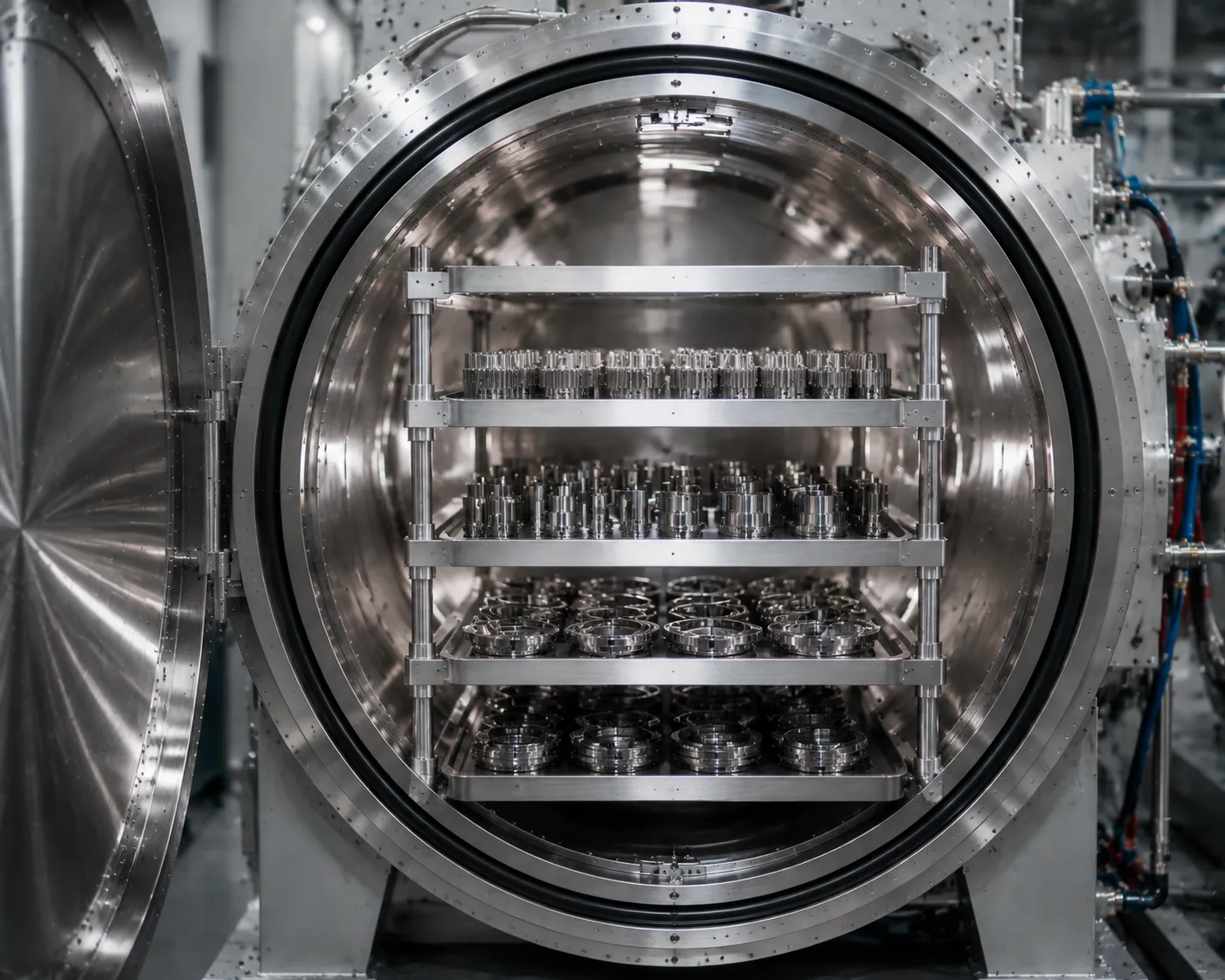
Metallurgical Purity and Vacuum Degassing Performance
Beyond surface finish, the fundamental physics of high vacuum thermal processing offer profound metallurgical benefits that atmosphere furnaces cannot replicate. When metals are heated under ultra-low vacuum conditions, dissolved volatile impurities, trapped atmospheric moisture, and interstitial gases desorb naturally from the material matrix.
This degassing process is crucial during titanium & alloy annealing, soft magnetic core production, and stress relief annealing of sensitive metal processing components. Removing internal hydrogen prevents catastrophic hydrogen embrittlement under mechanical stress, while removing internal oxygen enhances electrical conductivity and magnetic permeability in soft magnetic alloys such as Permalloy and silicon steel.
"Haitem Furnace vacuum systems combine multi-zone PID heating with rapid high-vacuum pumping stacks to ensure atomic degassing without risk of thermal shock or alloy element volatilization."
Process Feature Performance Breakdown
Financial ROI and Total Cost of Ownership
While the initial equipment expenditure for a premium custom vacuum furnace design is higher than a standard atmosphere continuous furnace, the Total Cost of Ownership calculation heavily favors high vacuum technology over a 3- to 5-year operational horizon.
Direct Operational Cost Savings
Atmosphere furnaces require endless streams of expensive hydrogen, dissociated ammonia, or exothermic gas generators running continuously. Vacuum furnaces only consume minor volumes of inert gas during rapid cooling phases, cutting gas utility expenses by up to 80%.
Labor and Chemical Elimination
Eliminating post-anneal acid pickling saves thousands of dollars annually in chemical procurement, hazardous waste disposal permits, neutralizing equipment, and dedicated chemical handling labor.
Haitem Furnace provides comprehensive thermal process financial modeling to help your engineering and financial teams calculate exact payback schedules based on your facility utility rates and production volume.
Vacuum Annealing Furnace Procurement & Maintenance FAQ
Get expert engineering answers, thermal uniformity insights, routine maintenance schedules, and cost optimization criteria to assist metallurgists and procurement teams in specifying high vacuum processing equipment.
Need Custom Engineering Advice or Technical Support?
Our thermal processing engineering team is ready to review your material specifications, chamber dimensions, and vacuum pumping requirements.
Ready to Build Your Custom Vacuum Thermal Processing System?
Work directly with Haitem Furnace engineers to develop precision vacuum furnace solutions based on your material requirements, temperature profile, atmosphere control, and production goals.
Haitem Furnace provides customized vacuum furnace design, manufacturing, testing, and global technical support.