Custom Furnace Design Engineering & Technical Consultation
Translating Complex Thermal Processing Requirements into Precision Industrial Furnace Specifications.
Haitem Furnace provides advanced thermal processing design engineering services tailored for challenging global manufacturing environments. Learn more about our company background and expertise on our about-us page.
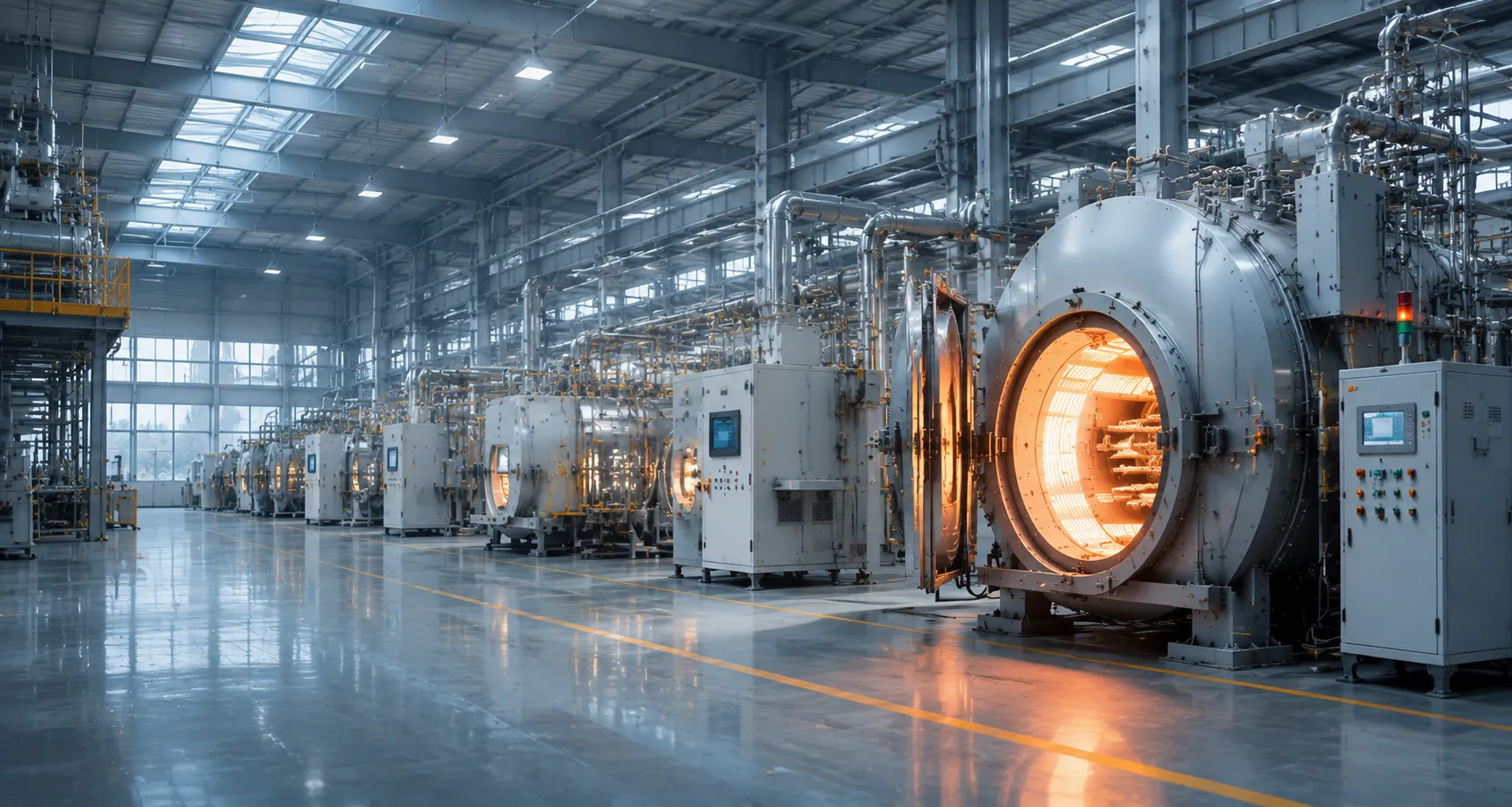
Advanced Industrial Furnace Engineering Capabilities
From thermodynamic finite element analysis to custom vacuum atmosphere containment, explore our multi-disciplinary engineering pillars for heavy industrial heating applications.
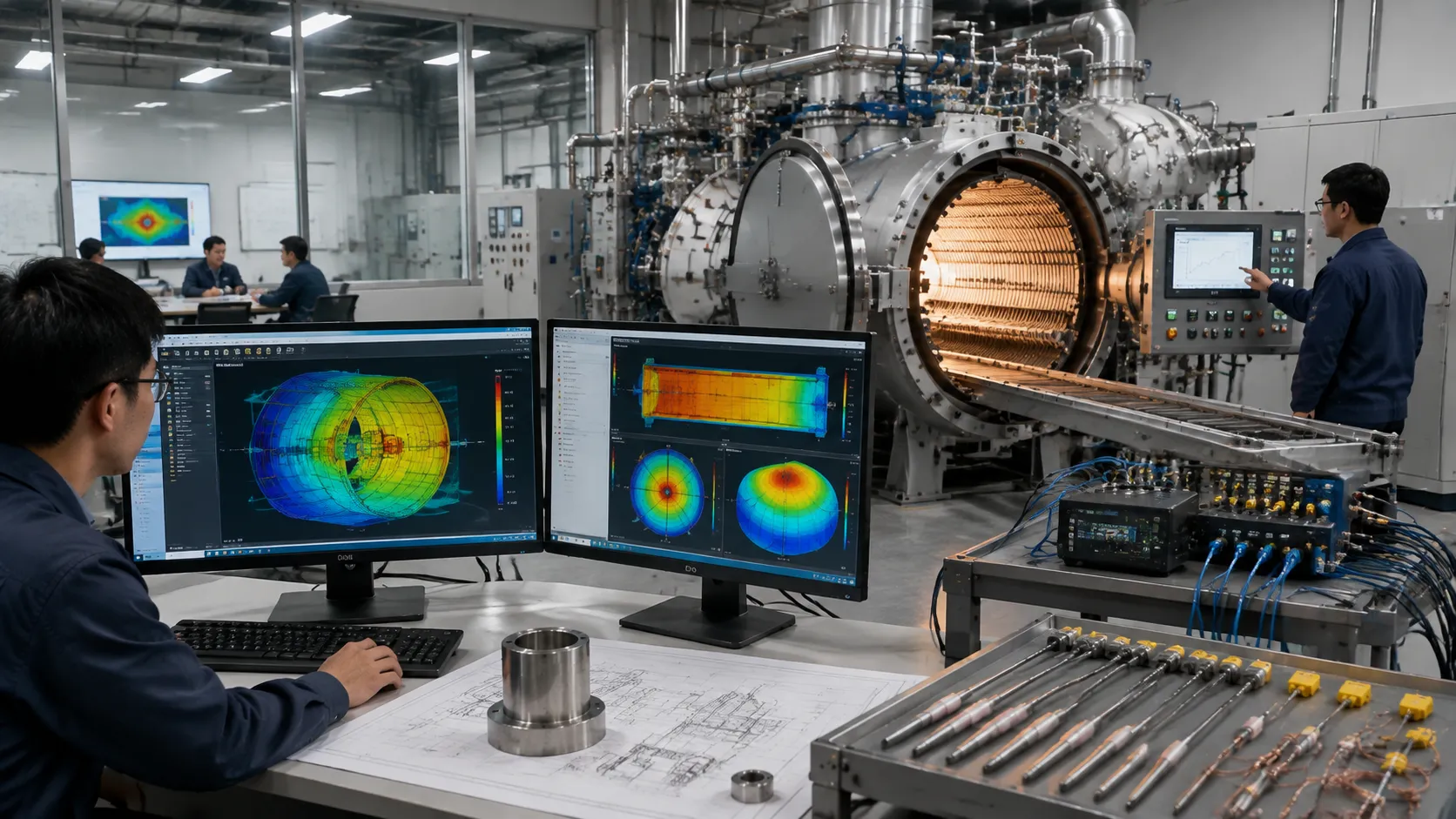
Thermodynamic Process Simulation & Uniformity Control
High-performance thermal processing relies on accurate mathematical modeling. Backed by our state-of-the-art manufacturing capabilities, our engineering team conducts advanced steady-state and 3D transient heat flux simulations to eliminate cold spots, optimize heating element positioning, and guarantee tight spatial temperature uniformity across full production workloads.
- Multi-Zone Power Trim: Independent power control vectors designed to counteract end-loss thermal dissipation and load variation.
- Watt-Density Optimization: Custom element loading calculations that prevent localized thermal stress and extend element operating life.
- AMS2750 & CQI-9 Compliance: Strict thermal field tolerances verified down to ±1°C to ±3°C for aerospace and automotive standards.
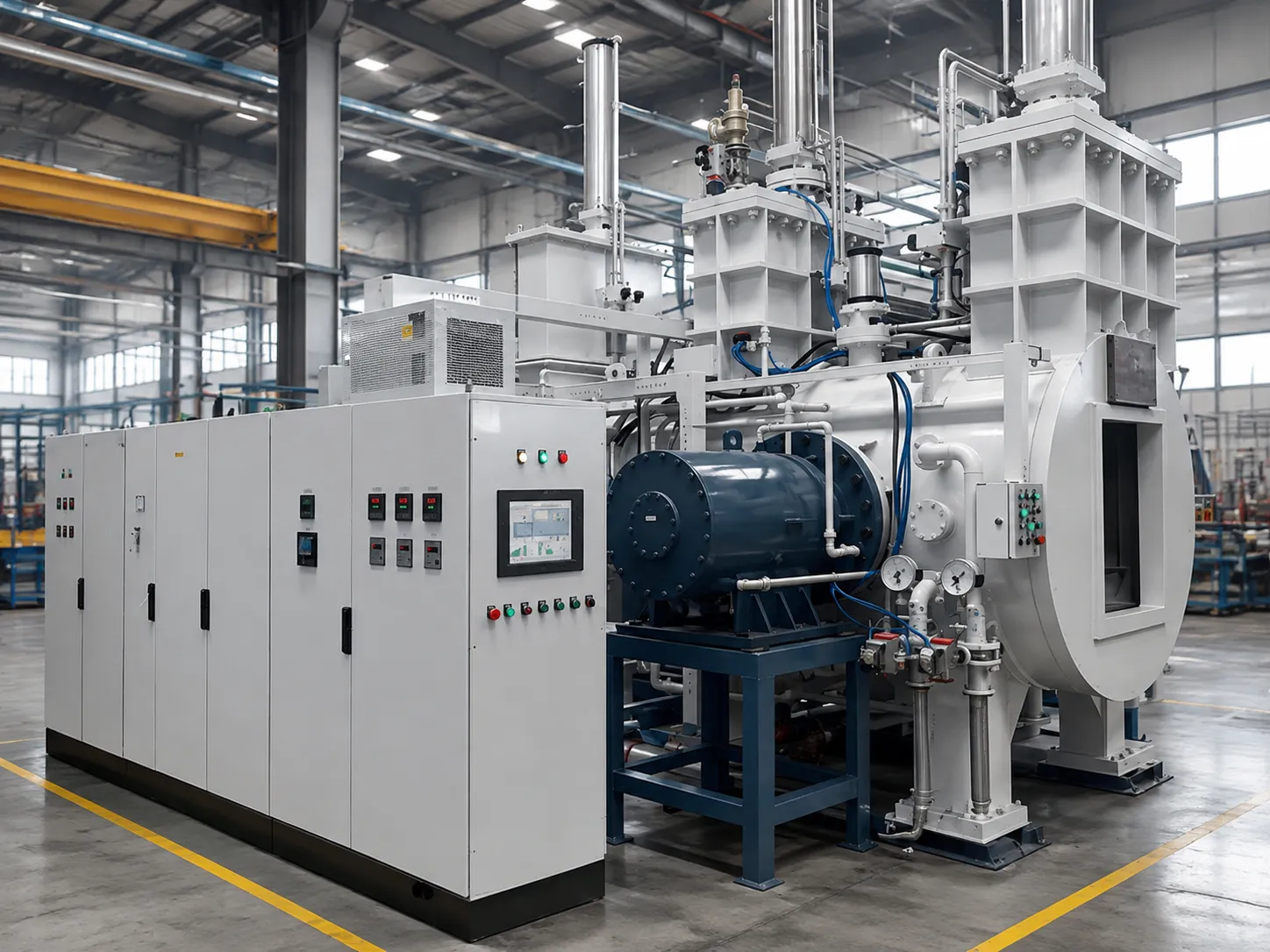
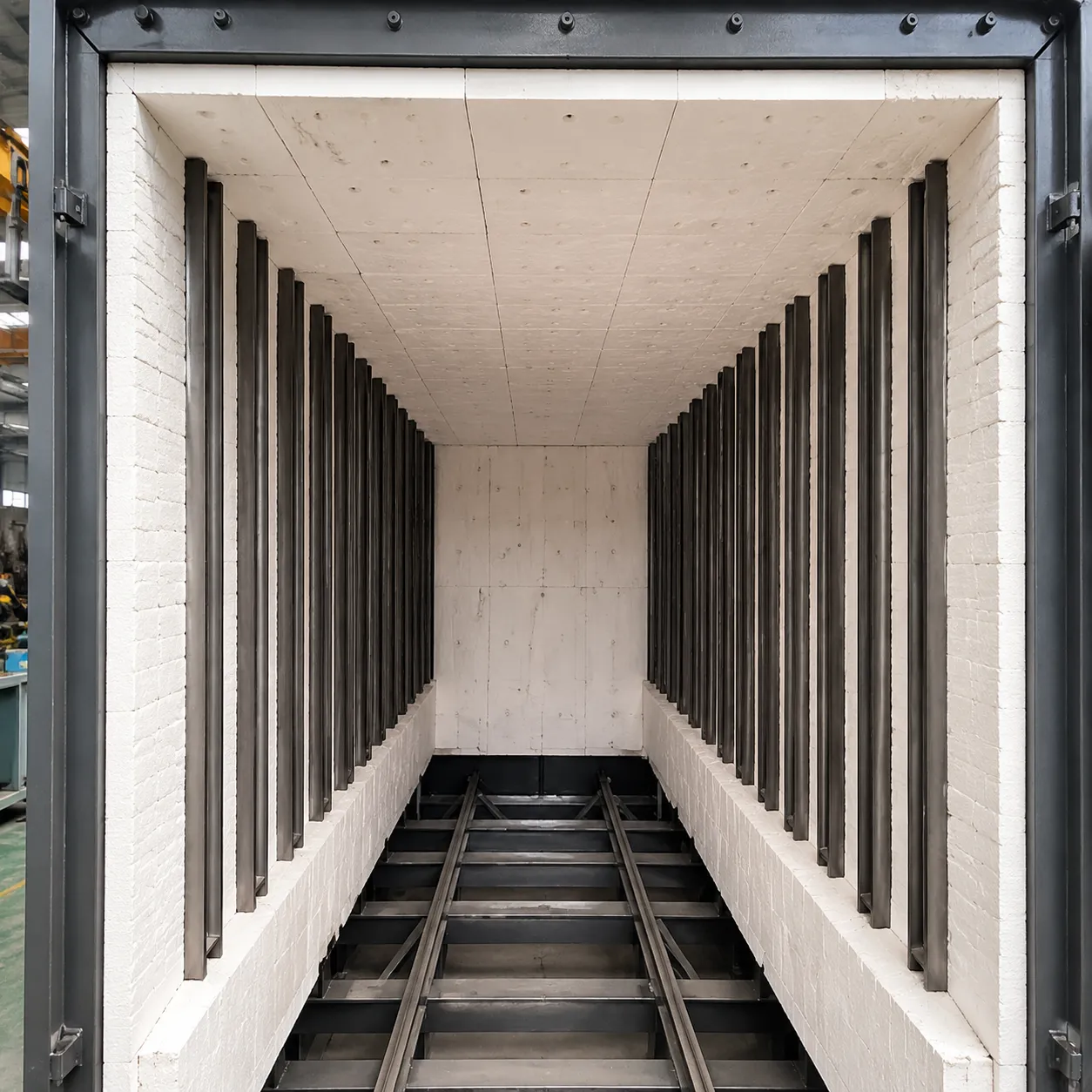
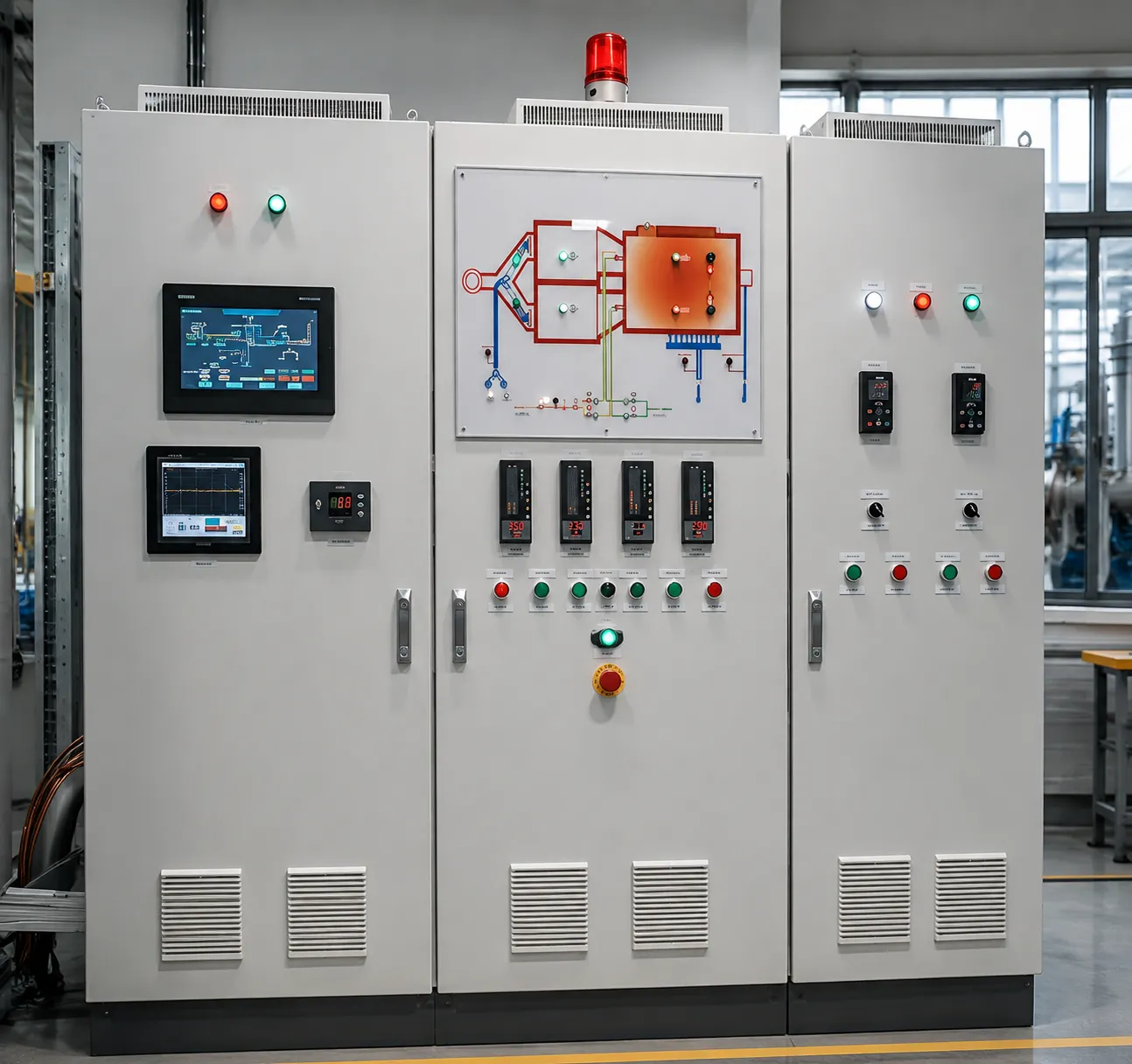
Core Furnace Engineering Pillars
End-to-end technical expertise delivering custom furnace design, thermal analysis, and turnkey commissioning.
Thermal & Thermodynamic Analysis
Precision heat balance modeling, zoned heating element placement, and dynamic power distribution engineered for uniform heat treating.
Atmosphere & Vacuum Systems
Sealed pressure vessel construction, CFD gas dynamics optimization, and high-vacuum pumping skids engineered for clean processing.
Refractory & Mechanical Design
Robust structural steel framing, stress-relieved expansion joints, and high-performance refractory insulation for continuous heavy duty.
PLC Control & SCADA Integration
Advanced PLC hardware programming, multi-zone PID tuning, automated recipe management, and secure IIoT telemetry architectures.
Require Custom Furnace Design or Technical Process Consultation?
Our engineering team provides engineering feasibility reviews, 3D CAD modeling, and comprehensive thermodynamic calculation reports prior to manufacturing.
Our Engineering & Design Consultation Workflow
Developing high-performance custom thermal processing equipment requires precise technical alignment at every phase. Learn more about us as Haitem Furnace enforces a structured 5-step custom furnace workflow to guarantee that every engineering specification directly aligns with your operational targets—eliminating design bottlenecks, mitigating capital investment risk, and ensuring flawless field commissioning.
Process Requirement Audit
Every successful thermal equipment consultation begins with an exhaustive evaluation of your metallurgical targets and operational parameters. Our senior technical design consultation team collaborates directly with your plant engineering specialists to capture critical process variables, establishing a rigorous furnace engineering process foundation prior to initiating CAD modeling.
Feasibility & Thermal Simulation
Prior to finalizing physical geometry, Haitem Furnace executes advanced thermodynamic calculation and computational fluid dynamics (CFD) simulation services. We simulate multi-physics heat transfer, structural stress expansion, and protective gas flow dynamics under extreme operating temperatures to eliminate structural weaknesses early in the custom thermal equipment development lifecycle.
Optimizes protective atmosphere distribution, eliminating stagnant zones and ensuring uniform gas-metal reactions.
Evaluates structural expansion gradients in high-temperature atmosphere designs to prevent fatigue and warpage.
Calculates exact kilowatt distribution and refractory insulation performance to maximize operational energy efficiency.
Conceptual Architecture & Specs
Translating validated physics simulations into precision hardware design, our engineering team drafts a complete furnace design specification package. We define specific heating element zoning, refractory insulation layering, vacuum furnaces chamber structural engineering plans, and automated process control schematics.
Key Design Deliverables in Step 3
- Full 3D CAD parametric assembly models
- Utility topology & fluid P&ID schematics
- Custom refractory lining engineering plans
- PLC SCADA furnace control design schematics
- Atmosphere manifold & vacuum pumping specs
- Preliminary Hardware Bill of Materials (BOM)
Engineering Refinement & Review
True engineering quality demands close technical alignment. During this consultation phase, Haitem Furnace engineers conduct collaborative design reviews alongside your plant operations, safety, and quality assurance teams. We execute hazard audits, cross-check regional electrical codes, and optimize service access points to streamline future factory floor operations.
Cross-referencing custom heat treat equipment specs against NFPA 86, CE directives, quality-certifications like ISO 9001, and regional industrial electrical codes.
Optimizing heating element replacement paths, thermocouple calibration access, and ergonomic door loading mechanisms to minimize downtime.
Design Sign-off & Production Release
Following formal technical sign-off, engineering documentation is locked and released directly to our fabrication facility. Because every structural and thermal parameter has been verified through simulation and collaborative reviews, manufacturing transitions seamlessly from procurement through shop assembly and factory acceptance testing (FAT).
Why Our Standardized Workflow Reduces Equipment Risk
Virtual Thermal Validation
By executing comprehensive thermal processing design simulations during Phase 2, we eliminate costly shop-floor re-engineering and guarantee spatial uniformity before metal cutting begins.
Cross-Discipline Alignment
Mechanical, electrical, refractory, and automation engineers work within unified CAD repositories to ensure seamless subsystem integration and full code compliance.
Predictable Delivery Timelines
Structured sign-off gates freeze component specifications early, allowing long-lead materials to be ordered ahead of production release for faster delivery schedules.
Parameter Translation: From Process Needs to Machine Specs
Through precise spec translation, Haitem Furnace bridges the gap between client metallurgical targets and robust furnace hardware design. Our thermal engineering team translates complex temperature profile requirements, atmosphere purities, and vacuum tolerances into high-reliability mechanical, electrical, and structural industrial furnace specifications. Learn more about our manufacturing capabilities to see how we bring these designs to life.
Thermal Profile Mapping
Converting operating temperatures, ramp rates, and strict spatial temperature uniformity design targets into zoned heating element layouts and high-purity thermal insulation packages.
Atmosphere & Vacuum Tuning
Matching reactive gas chemistries, pressure limits, and ultra-high vacuum targets with explosion-proof safety skids, gas purifiers, and multi-stage vacuum pumping systems.
Structural & Control Specs
Translating process parameters into precise furnace component customization, thermal expansion compensation mechanisms, and multi-loop PID controllers with customized SCADA integration.
Interactive Requirement Translation Canvas
Hover over or select any metallurgical process input on the left to view its corresponding engineered hardware specification on the right.
1700°C Operating Temperature with ±2°C Spatial Temperature Uniformity Constraint
Requires spatial heat balancing across large hot zones without element sagging, localized overheating, or excessive radiant heat losses.
Metal Injection Molding (MIM) Debinding & Sintering Under High-Purity Hydrogen
Demands safe handling of explosive atmospheric gases, proactive removal of organic binder effluent, and zero oxygen ingress during active thermal cycles.
10⁻⁵ Pa Ultra-High Vacuum Target Paired with Rapid Gas Quenching Cycles
Requires deep pressure drawdown to eliminate metal oxidation, coupled with high-velocity gas cooling to achieve specified alloy microstructures.
Molybdenum/Tungsten-Molybdenum Element Zoning + Multi-Layer Metallic Radiation Shields + Multi-Channel PID Controller
- ✓ Heating Elements: Zoned molybdenum and tungsten-molybdenum elements engineered for exceptional creep resistance at continuous 1700°C temperatures.
- ✓ Radiation Shielding: Concentric refractory metallic radiation shields engineered for precise temperature uniformity design and low energy loss.
- ✓ Temperature Control: Multi-channel SCR digital power controllers featuring fine-tuned PID loops for dependable ±2°C spatial stability.
Explosion-Proof Safety Manifold Skid + Positive-Pressure Thermal Debinding Exhaust System + Real-Time Oxygen Sensors
- ✓ Safety Controls: Explosion-proof safety gas skid with automated double-block-and-bleed purge interlocks for flammable gas management.
- ✓ Effluent Exhaust: Heated positive-pressure exhaust piping with multi-stage condensate traps to eliminate binder and wax clogging.
- ✓ Gas Monitoring: In-line zirconia oxygen sensor array providing continuous atmosphere monitoring and safety interlock triggers.
Diffusion & Dry Pump Vacuum Pumping Skid + 360° Directional High-Pressure Gas Quenching Plenum Architecture
- ✓ Vacuum System: High-vacuum diffusion pump coupled with a dry scroll roughing pump achieving consistent 10⁻⁵ Pa vacuum levels.
- ✓ Quenching Plenum: 360-degree directional gas nozzles powered by a high-pressure variable frequency blower assembly.
- ✓ Chamber Vessel: Water-cooled double-walled stainless steel vessel engineered for rapid cooling cycles and zero leak rates.
Engineering Translation Matrix: Process Variables to Hardware Specifications
Translating client metallurgical parameters into tailored industrial equipment requires rigorous thermo-fluid and mechanical engineering discipline. The matrix below demonstrates how key process inputs dictate furnace component customization across controlled atmosphere and vacuum furnaces platforms.
| Process Variable | Client Target / Parameter | Haitem Engineered Hardware Output | Performance Standard |
|---|---|---|---|
| Temperature Uniformity | ±1.5°C to ±3°C spatial tolerance at 1200°C–1700°C | Multi-zone independent SCR power regulation, molybdenum thermal baffles, tuned element positioning | AMS 2750G Class 1/2 |
| Atmosphere Purity | Residual oxygen < 1 ppm and dew point below -65°C | Electropolished stainless piping manifolds, fluoropolymer/metal flange seals, zirconia O2 analyzers | ISO 9001:2015 |
| Vacuum Capability | 10⁻⁵ Pa operating vacuum under full thermal load | Dry scroll backing pump with high-throughput diffusion pump, helium leak-tested chamber shell | Leak Rate < 10⁻⁹ mbar·l/s |
| Gas Quenching Rate | Cooling speeds exceeding 50°C/min for microstructure control | 360-degree directional gas nozzles, internal water-cooled heat exchangers, 20-bar rated blower housing | ASME Section VIII Div 1 |
| Binder Removal | Continuous binder debinding without tar condensation | Heated exhaust manifold, multi-stage condensate trap assembly, active thermal oxidizer flare skid | NFPA 86 Class A |
How Haitem Furnace Translates Metallurgical Targets into Hardware Reality
Custom heat treating equipment achieves repeatable metallurgical quality only when physical hardware specifications mirror underlying thermodynamic principles. Through disciplined process requirement translation, Haitem Furnace evaluates your operational parameters—including heating curves, atmosphere purity targets, cycle times, and spatial uniformity constraints—to engineer reliable thermal processing hardware.
Our engineering team eliminates equipment compromises through targeted furnace component customization. Whether configuring tungsten heating element assemblies for high-vacuum sintering or designing explosion-proof safety skids for continuous hydrogen atmospheres, every subsystem is engineered for optimal temperature uniformity design, long operational lifespan, and predictable yield.
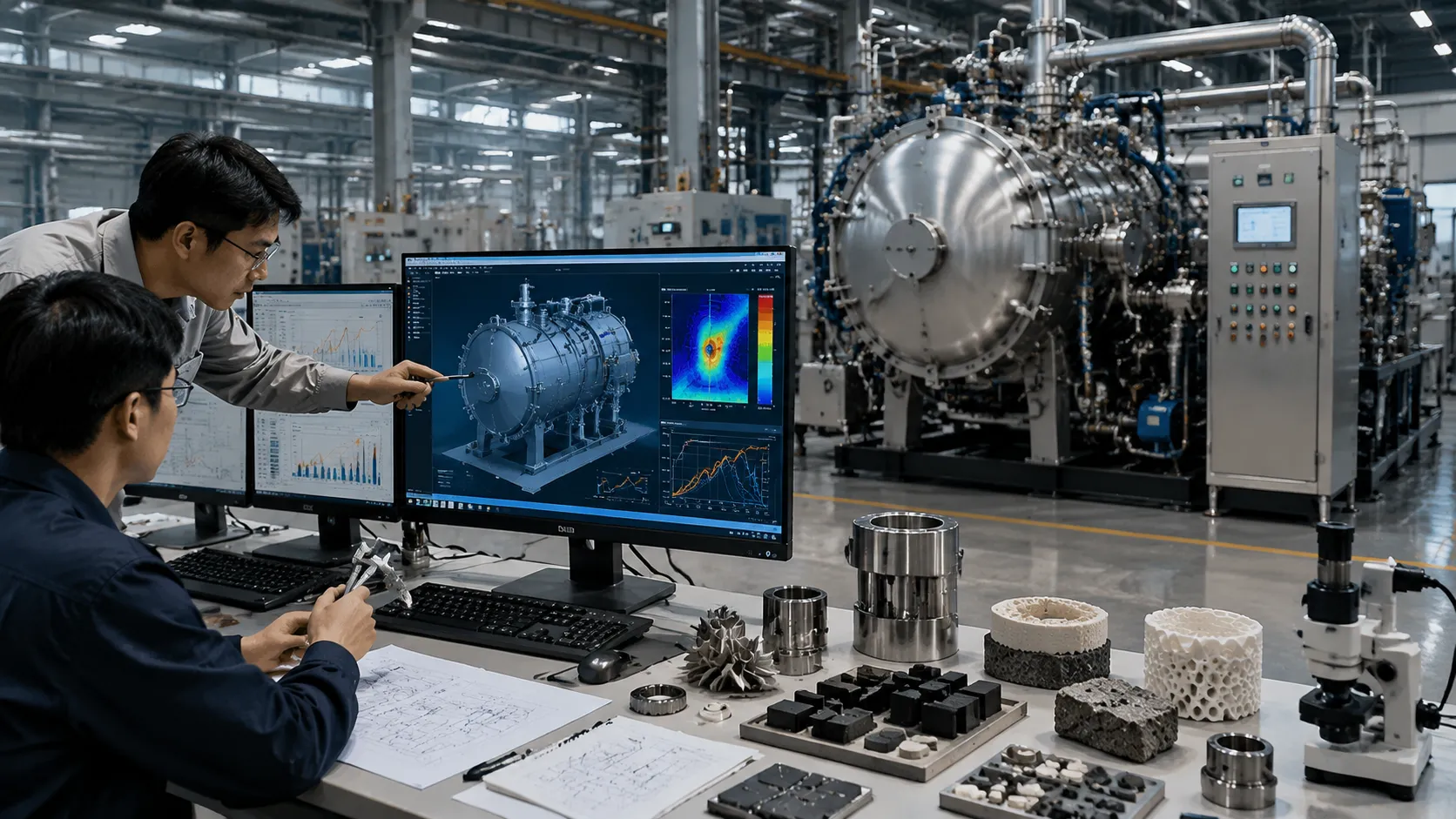
Rigorous High Temperature Thermal Simulation & Engineering Standards
Haitem Furnace utilizes state-of-the-art thermal and physical simulation tools to validate custom architectures prior to manufacturing. By combining Finite Element Analysis (FEA) and Computational Fluid Dynamics (CFD), we eliminate design risks before physical assembly begins. Learn more about us and our engineering commitment.
Digital Simulation Coverage
Every custom furnace design undergoes complete multi-physics digital validation to verify high-temperature reliability.
Temperature Uniformity Precision
CFD-guided atmosphere velocity profiles ensure tight temperature control across all furnace hot zones.
Quality & Safety Compliance
Rigorous engineering verification reports guarantee full compliance with international safety and quality standards.
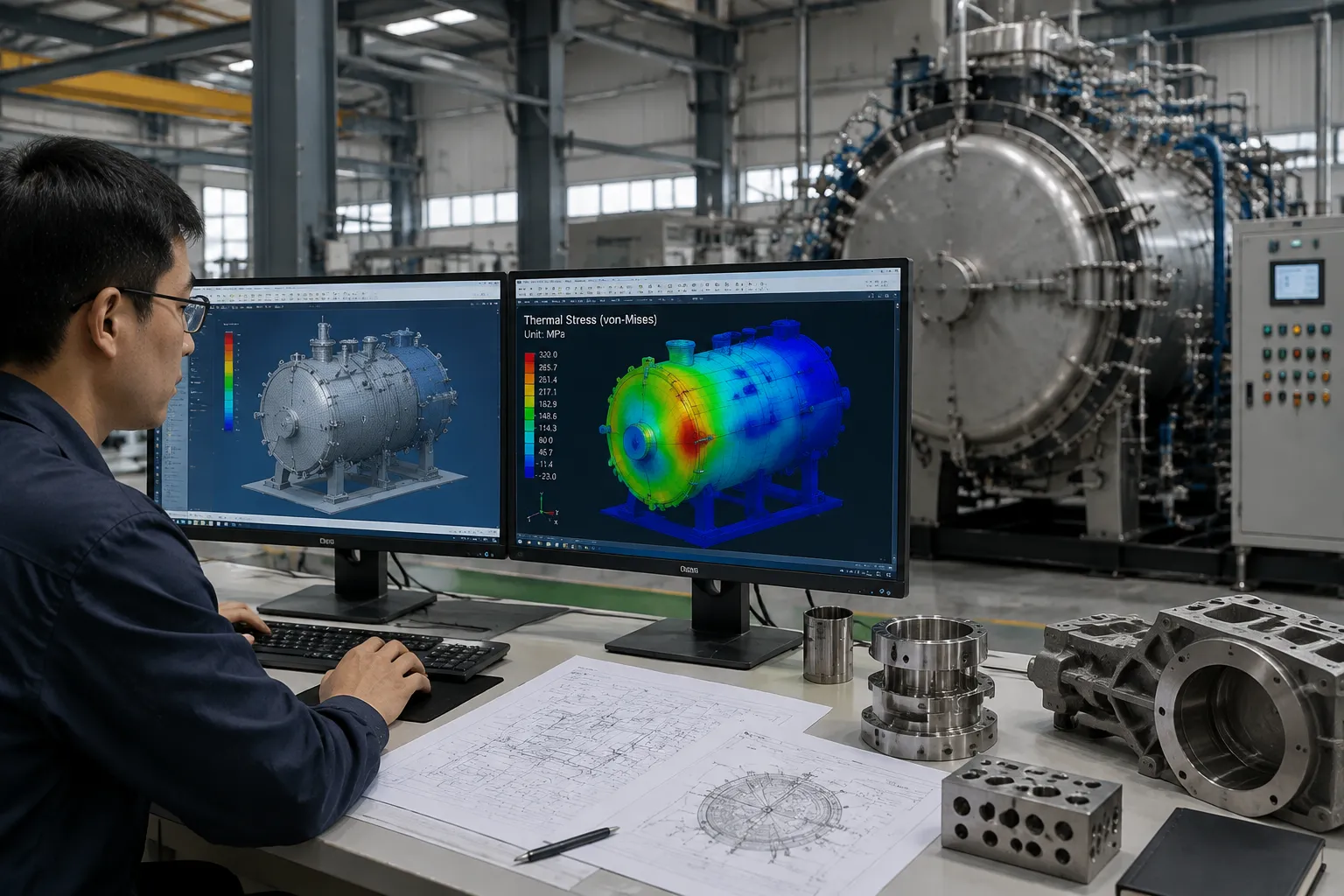
FEA Thermal Stress Modeling & Structural Verification
High-temperature operations expose furnace chambers to severe thermal expansion and structural stress. Our FEA models simulate exact thermal stress distribution across heating cycles, preventing mechanical distortion and structural failure. Our advanced manufacturing capabilities ensure these structural standards are maintained during production.
- High temperature thermal simulation maps multi-zone heat expansion and stress concentrations.
- Predictive thermo-mechanical fatigue calculations optimize alloy selection and refractory lining design.
- Dynamic structural load analysis ensures vessel stability under continuous extreme heating ramps.
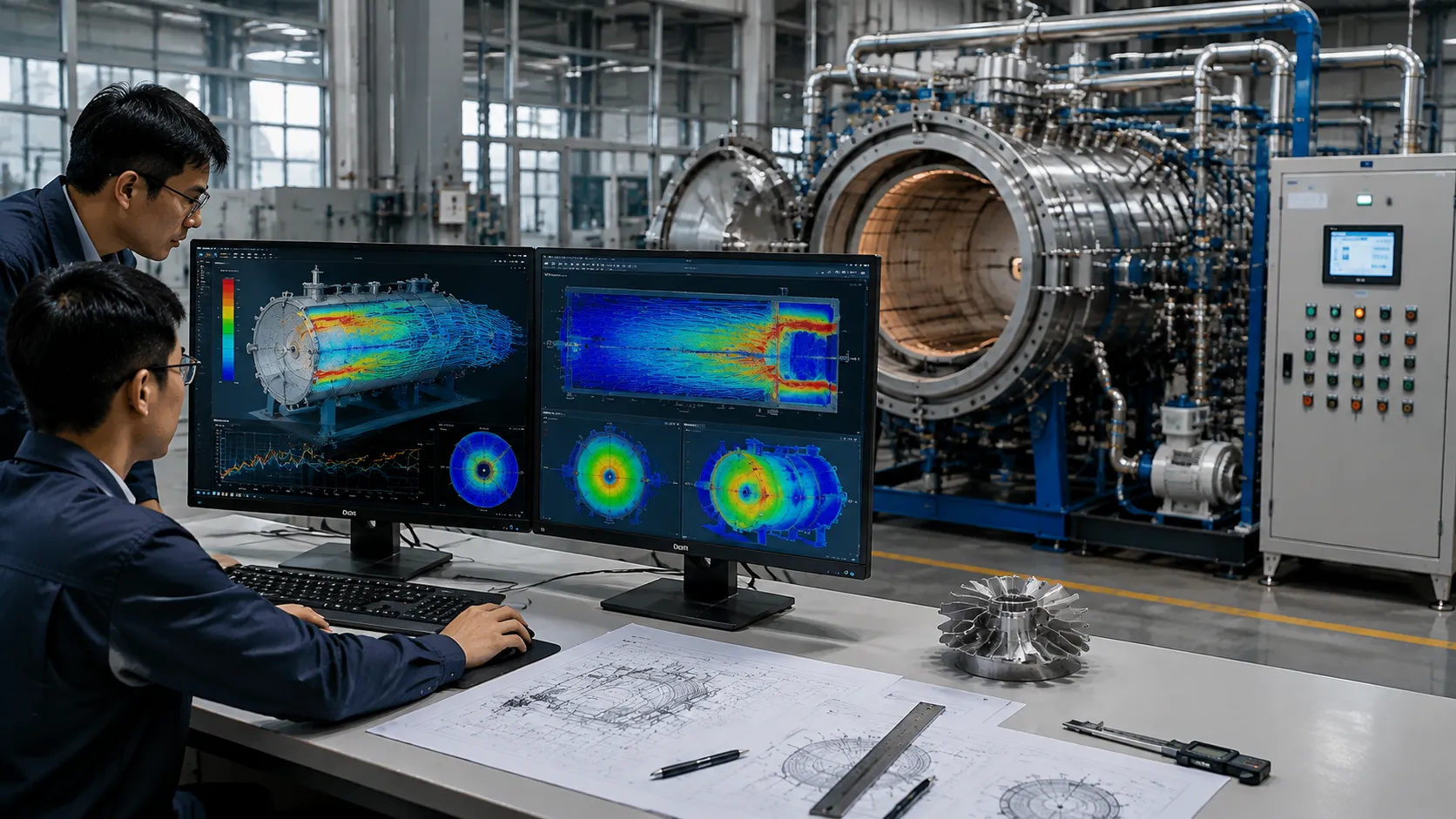
Furnace CFD Analysis & Velocity Optimization
Achieving exceptional temperature uniformity requires precise gas velocity profiles and internal pressure management. We deploy advanced furnace CFD analysis to simulate atmosphere dynamics and eliminate thermal cold spots.
- Seamless integration with our specialized vacuum furnaces guarantees precise pressure gradient stability across all hot zones.
- Gas recirculation flow mapping prevents atmosphere stagnation in critical heat treatment work charges.
- Optimized forced-convection heating accelerates thermal cycle times while drastically lowering power consumption.
Engineering Test Reports & Compliance Credentials
Digital Simulation Reports
Every custom capital project includes multi-zone thermal stress and flow calculation documentation prior to fabrication.
ISO 9001 Quality Framework
Systematic design verification and audit procedures govern every phase of manufacturing, component sourcing, and assembly.
CE Directives Validation
Full compliance with European safety, electrical, and pressure equipment directives for global operational deployment.