High Temperature Tube Furnaces for Precise Thermal Processing
Haitem Furnace provides custom-engineered tube furnaces designed for precise temperature control, uniform thermal gradients, and versatile laboratory and industrial applications. Learn more about us and our specialized thermal processing equipment.
- Maximum operating temperatures up to 1800°C for advanced material research.
- Single, dual, and multi-zone configurations ensuring customizable thermal zones.
- High-vacuum integration and multi-gas atmosphere control options.
Flagship Equipment
High Temperature Tube Furnace
Core Performance Specifications & Technical Highlights
Engineered with Haitem's advanced thermal insulation and gas-tight sealing technologies, our controlled atmosphere tube furnace and vacuum furnaces systems deliver ultra-stable thermal environments for advanced material synthesis, semiconductor processing, and high-precision sintering.
Max Operating Temp
Reaches up to 1800°C (3272°F) using premium Kanthal wire, SiC, or MoSi₂ heating elements.
Control Precision
High-precision thermal regulation of ±1°C via 30-segment programmable PID controllers.
Vacuum Level
High-vacuum capability down to 10⁻³ Pa integrated with turbomolecular pumping systems.
Zone Customization
Single, dual, and multi-zone heating configurations for custom thermal profile gradients.
Engineered for Exacting Industrial & Research Standards
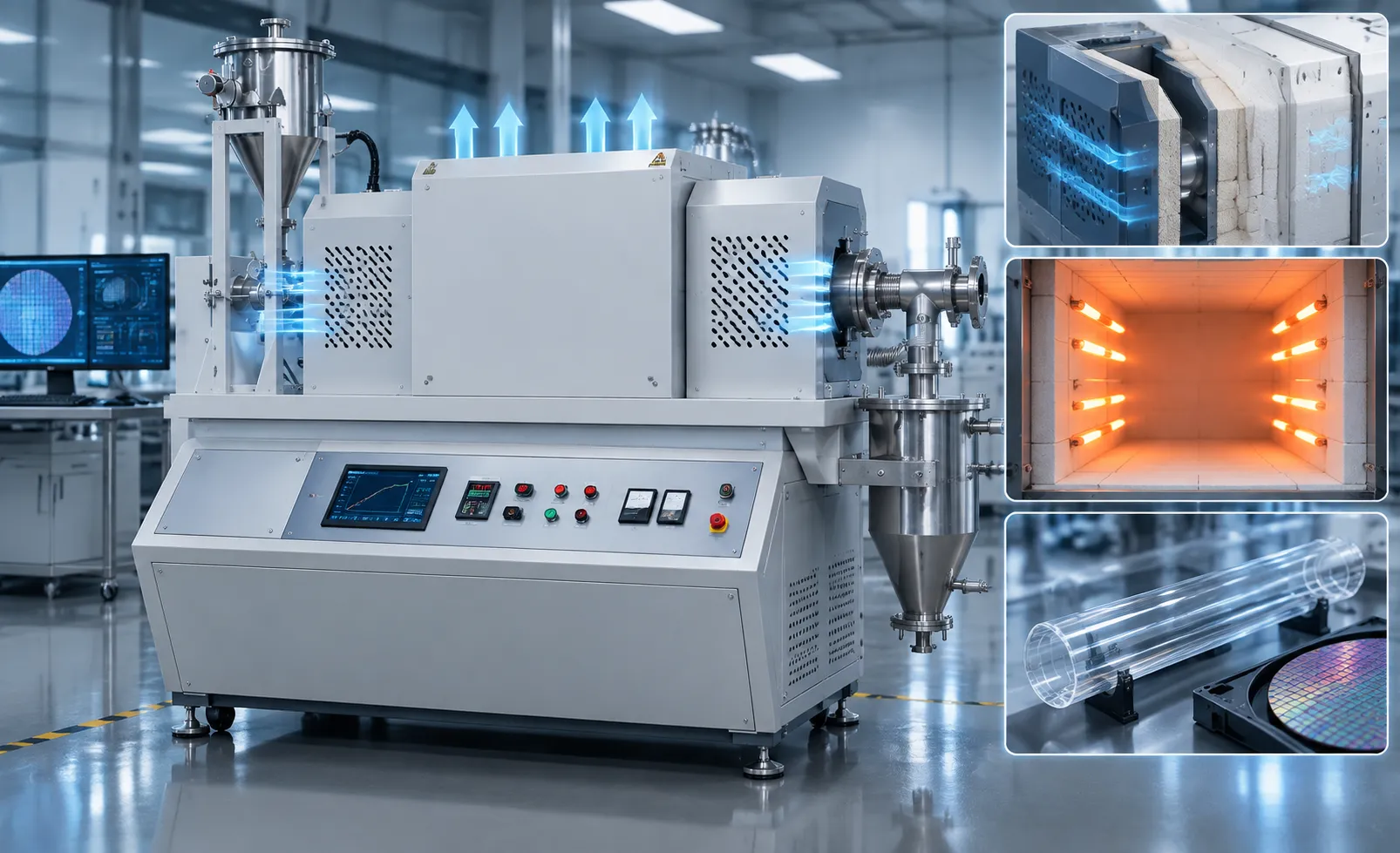
Haitem Furnace combines heavy-duty double-shell construction with active forced-air cooling to maintain low skin temperatures while maximizing internal heat retention. Our modular heating zone architecture delivers accurate temperature gradient control necessary for high-yield crystal growth, semiconductor annealing, and CVD material processing.
Atmospheric Integrity
Multi-channel gas mixing panels for argon, nitrogen, oxygen, and hydrogen process lines.
Thermal Efficiency
Vacuum-formed ceramic fiber insulation ensures rapid thermal response and minimal energy loss.
High-Performance Tube Furnace Series & System Selection Matrix
Selecting the optimal tube furnace architecture requires evaluating thermal zone length, sample mechanics, operating temperature, and gas containment standards. Haitem Furnace manufactures a comprehensive range of standard and custom-engineered tube furnaces tailored to high-precision laboratory research and industrial scaling. Explore our complete product lineup to see how, whether your thermal processing demands rapid split-shell sample loading, continuous powder agitation, multi-zone gradient control, or high-vacuum atmosphere purging up to 1800°C, our configurations deliver repeatable thermal performance.
Split & Multi-Zone Tube Furnaces
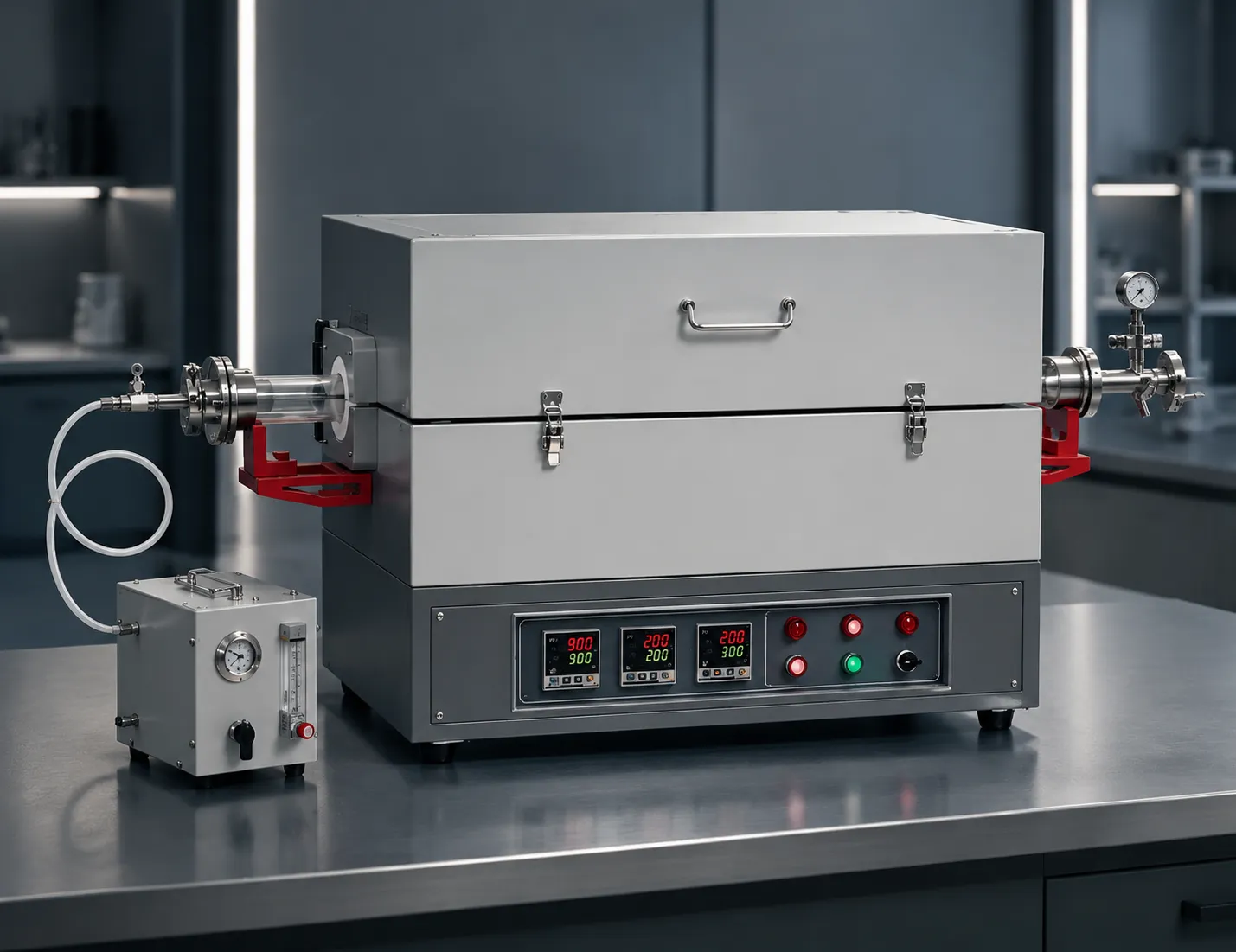
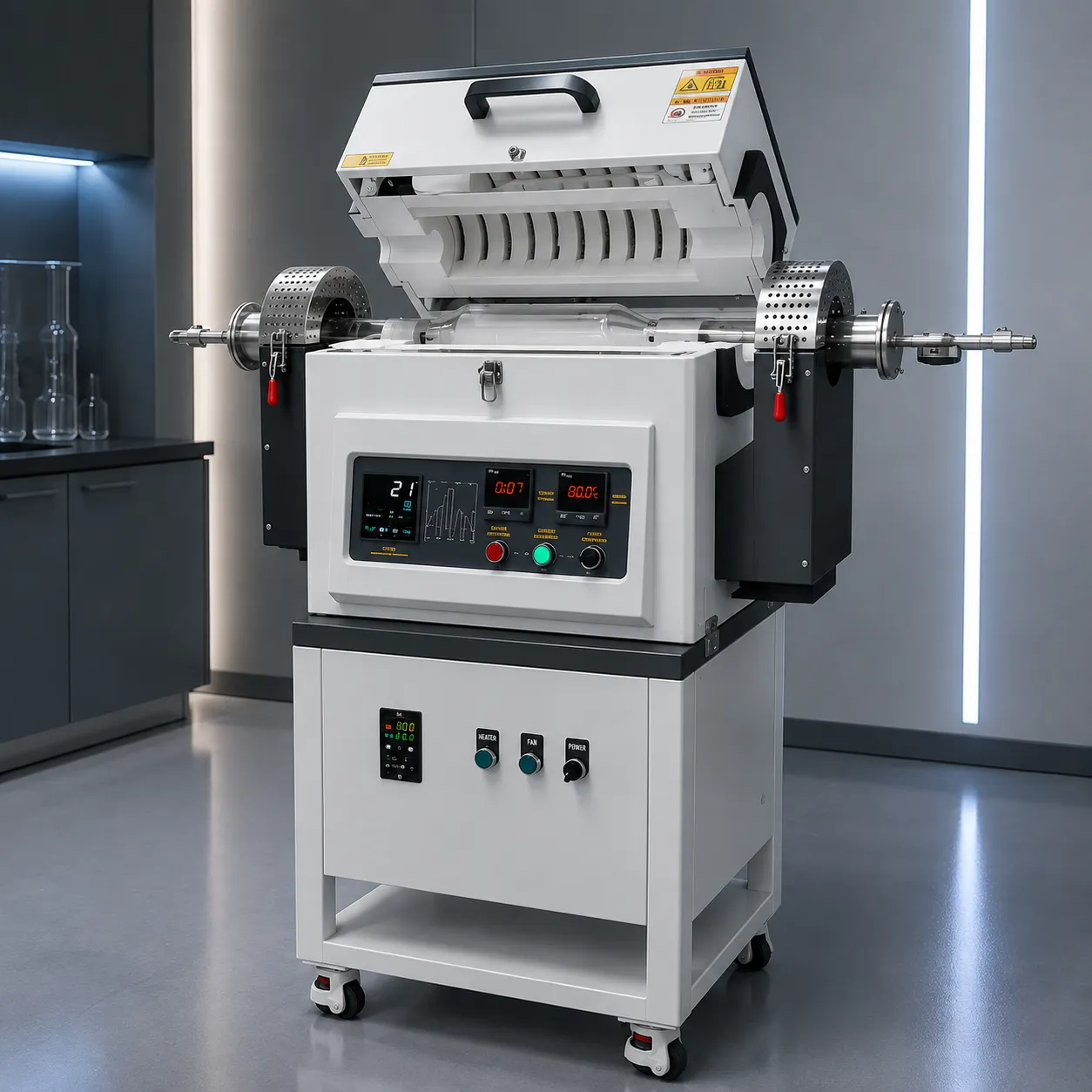
Engineered with a longitudinal split-hinge housing, these models streamline tube loading, simplify internal reaction tube inspection, and support rapid thermal cooling cycles. Available as a single zone tube furnace for uniform benchtop heating or configured as a multi zone tube furnace with up to 5 independently controlled thermal fields to establish precise temperature gradients.
- Zone Configuration: 1 to 5 independent programmable heating zones
- Structural Engineering: Heavy-duty split chassis with automatic safety power cut-off switch
- Thermal Performance: Exceptional thermal profile control via individual PID digital loops
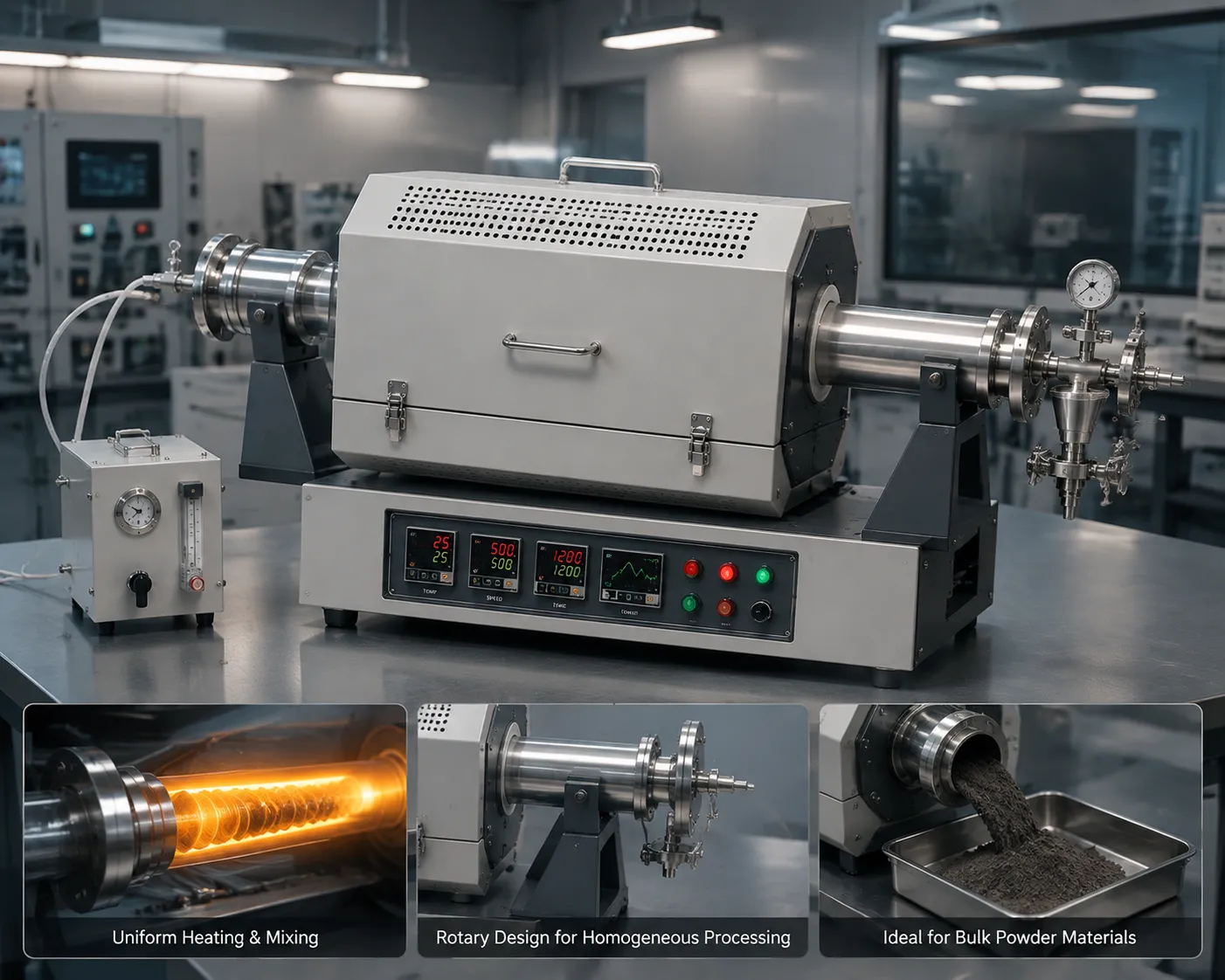
Rotary Tube Furnaces for Bulk Powders
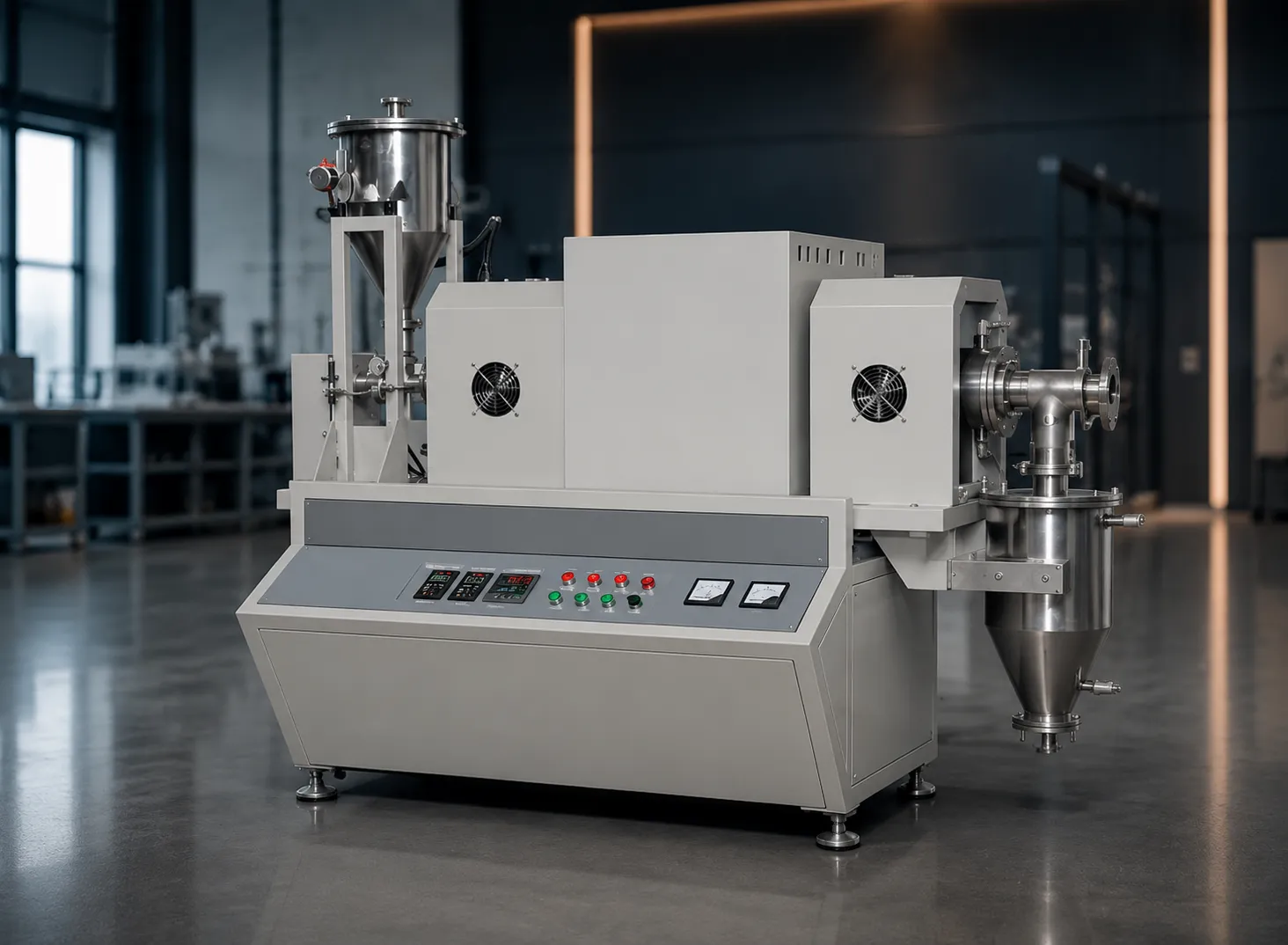
Designed specifically for continuous powder processing, dynamic calcination, and uniform heat exposure. A rotary tube furnace prevents core thermal stagnation in loose particulate samples by maintaining continuous tumbling inside an inclined worktube with precise rotation and tilt adjustments.
- Motion Control: Adjustable tilt frame up to 30° with variable VFD rotation speed drive
- Target Materials: Lithium-ion battery cathode powders, catalysts, and ceramic granules
- Atmosphere Integration: Gas-tight rotary seals supporting inert gas purging and reaction atmospheres
Vacuum & Controlled Atmosphere Tube Furnaces
Purpose-built for oxidation-sensitive thermal processing, CVD thin-film synthesis, and high-purity material annealing. These systems combine high-vacuum stainless steel sealing flanges with multi-channel mass flow controllers (MFC) to maintain absolute atmosphere control under extreme temperatures.
- Vacuum Capability: Deep vacuum sealing performance down to 10-3 Pa
- Gas Management: Integrated MFC lines for H2, Ar, N2, and reactive process gases
- Sealing Engineering: Water-cooled stainless steel end flanges with dual O-ring seals
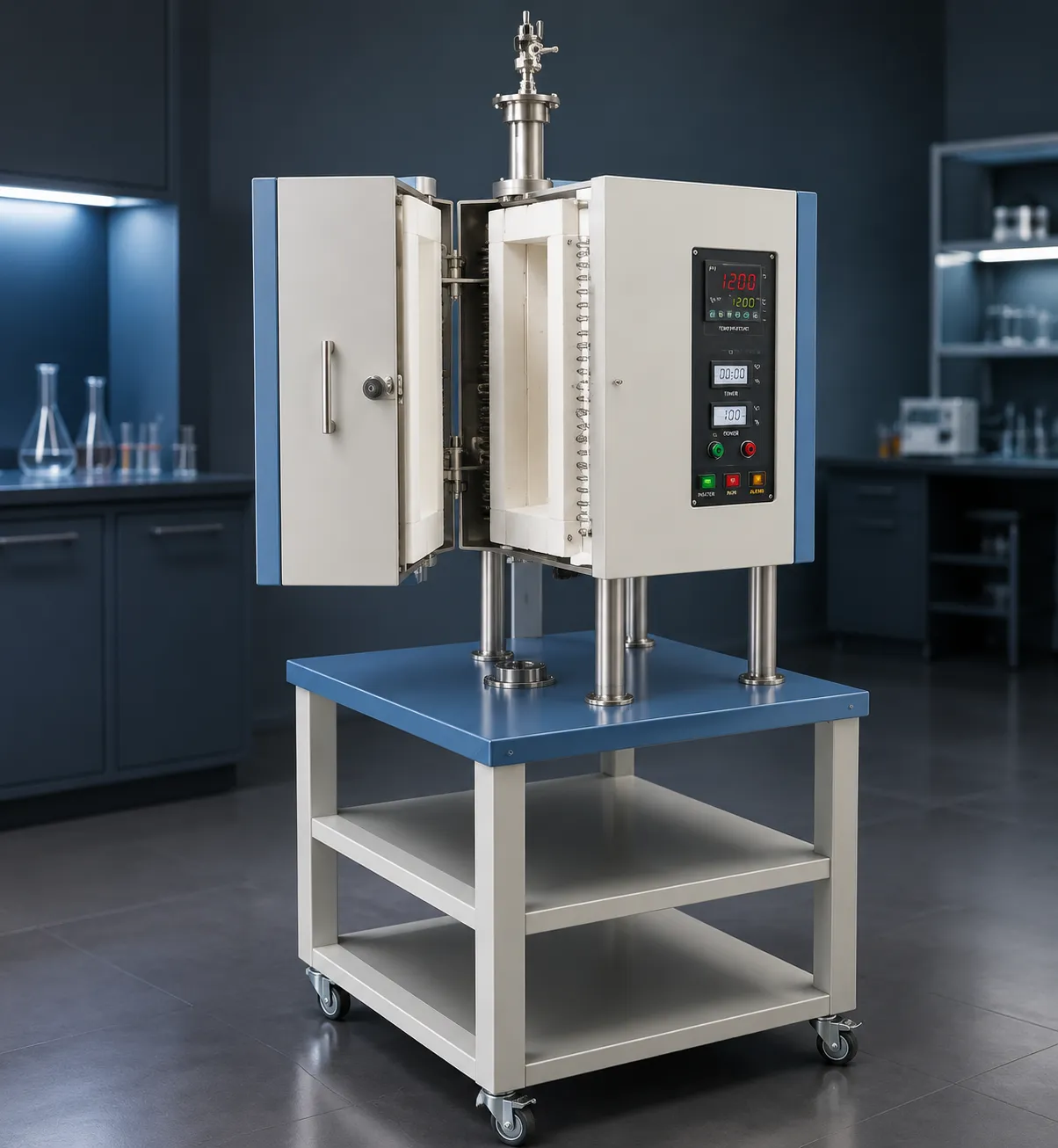
Vertical & Tiltable Tube Furnaces
Designed to minimize benchtop footprint while enabling gravity-driven reaction mechanics and thermal drop-quenching testing. Vertical tube furnaces provide optimal orientation for wire drawing, vertical fiber synthesis, and liquid immersion quenching experiments.
- Orientation Options: Fixed vertical chassis or multi-angle tilting structural frame
- Quenching Integration: Automated worktube drop mechanisms for rapid liquid bath immersion
- Space Efficiency: Compact vertical design suitable for space-constrained research labs
Technical Specification Comparison Matrix
Compare operational capabilities across Haitem's core tube furnace configurations to select the ideal system for your research protocol or manufacturing pipeline.
| Furnace Series | Max Operating Temp | Thermal Heating Zones | Atmosphere Capability | Sample State | Primary Advantage |
|---|---|---|---|---|---|
| Split-Hinge Tube Furnace | 1200°C – 1700°C | 1 to 5 Zones | Inert Gas / Air Purge | Static Substrates & Boats | Easy tube loading & rapid thermal cooling |
| Rotary Powder Tube Furnace | 1100°C – 1600°C | 1 to 3 Zones | Gas Purging / Mild Vacuum | Loose Powders & Granules | Continuous agitation for 100% heat uniformity |
| High-Vacuum CVD Furnace | 1200°C – 1800°C | 1 to 3 Zones | Ultra-High Vacuum (10-3 Pa) & Reactive Gas | Thin-Film Wafers & Coatings | Zero oxidation and controlled chemical deposition |
| Vertical Quench Furnace | 1200°C – 1700°C | Single or Dual Zone | Inert Gas Purging | Suspended Wires & Rods | Gravity-assisted rapid drop-quenching testing |
Engineering Selection Guide: Matching Furnace Architecture to Process Needs
When selecting a controlled atmosphere tube furnace for advanced materials research or industrial production, system geometry and zone management are critical to process repeatability. The choice between a single zone tube furnace and a multi zone tube furnace depends largely on the required uniform temperature zone length. Single-zone systems offer a cost-effective solution for localized sample sintering and small boat heating, whereas multi-zone furnaces utilize independent PID loops to compensate for end-loss thermal dissipation, establishing extended isothermal plateaus ideal for chemical vapor deposition (CVD) and crystal growth.
Considerations for Static Substrates
For stationary substrates, ceramic wafers, or quartz boat charges, a split tube furnace provides superior operational flexibility. The hinged split-shell mechanism allows operators to open the furnace housing while cooled or at elevated temperatures for rapid thermal shock testing, while facilitating fast insertion and extraction of worktubes fitted with vacuum flange assemblies.
Considerations for Loose Granular Media
Heating bulk particulate media like battery active materials, metal powders, or carbon nanostructures in static crucibles often produces non-uniform reactions and thermal lag. A rotary tube furnace solves this issue by continuously agitating the material inside a rotating tube, ensuring full exposure of every particle to the controlled atmosphere and uniform heat field.
Atmosphere Integrity & Custom Engineering Standards
Every Haitem tube furnace system can be custom configured with high-vacuum flange connections, mass flow control gas mixing cabinets, automated over-temperature protection, and PLC-based touchscreen controllers with data logging. Leveraging our advanced manufacturing capabilities and combining ultra-lightweight polycrystalline alumina fiber insulation with high-grade heating elements—including Kanthal alloy wire, SiC rods, and MoSi2 elements—Haitem delivers exceptional energy efficiency, tight temperature accuracy (±1°C), and reliable multi-shift operation.
High-Temperature Tube Furnace Applications & Industry Solutions
Haitem Furnace designs and manufactures advanced thermal processing equipment tailored to the rigorous demands of global research facilities and industrial manufacturing lines. Learn more about us and how our manufacturing capabilities support next-generation battery material calcination, semiconductor annealing, and CVD thin-film growth through custom atmosphere and vacuum furnaces that deliver repeatable temperature profiles, strict gas flow management, and long-term operating durability.
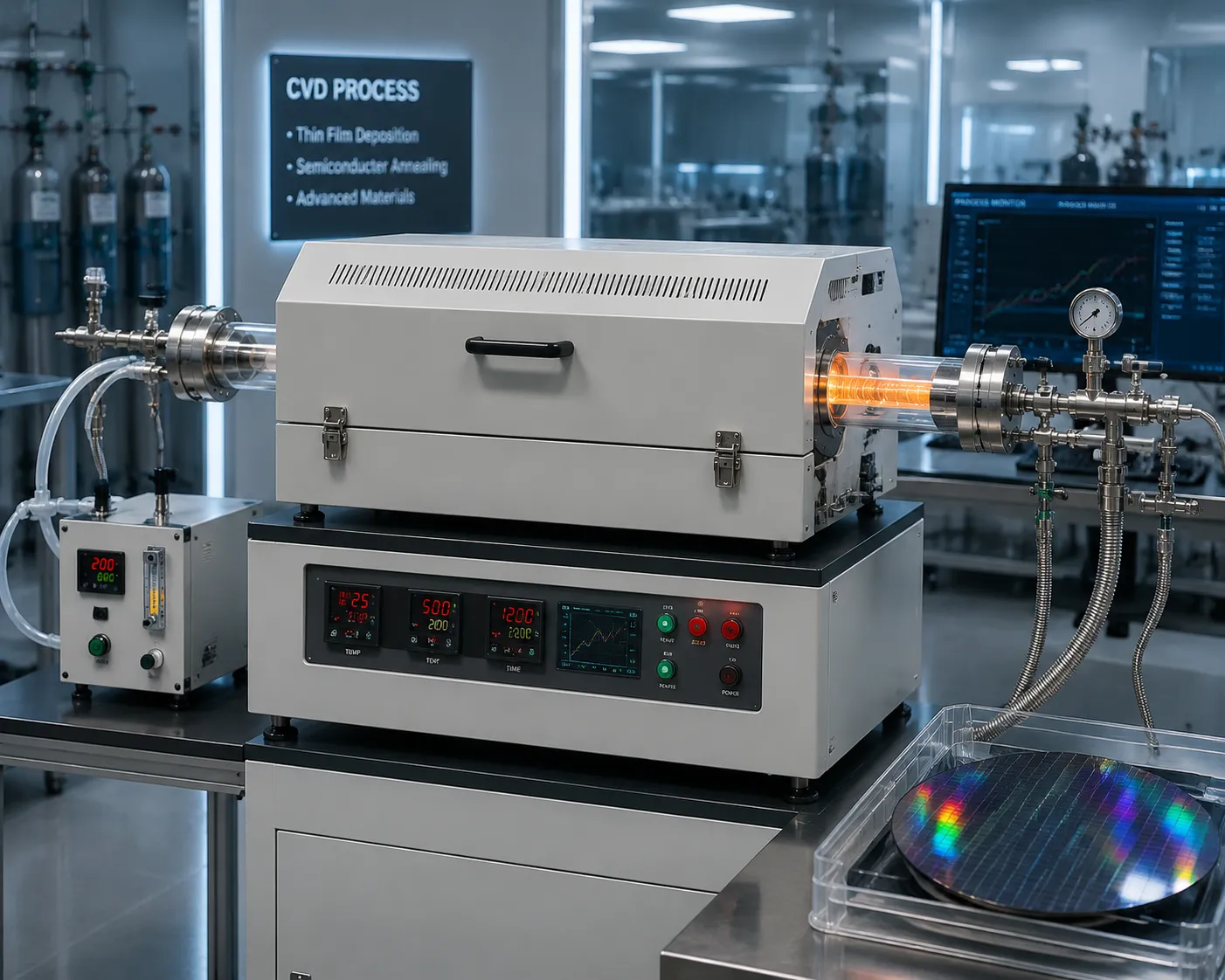
CVD Tube Furnace Deposition & Semiconductor Annealing
Chemical vapor deposition (CVD) and plasma-enhanced synthesis require stringent thermal profiling, precise atmosphere composition, and deep vacuum capabilities. A specialized CVD tube furnace system ensures high-efficiency thin-film growth and crystalline phase uniformity across advanced electronic and photonic materials.
- Two-Dimensional Material Growth: Multi-zone thermal control enables scalable, high-purity synthesis of graphene, carbon nanotubes, and transition metal dichalcogenides (TMDs).
- Semiconductor Annealing Furnace Systems: Delivers multi-zone thermal uniformity to alleviate wafer lattice strain, restore ion-implanted crystal structures, and form reliable ohmic contacts.
- Atmosphere & Gas Flow Precision: Integrated multi-channel mass flow controllers (MFCs) ensure stable vapor transport and accurate precursor reaction kinetics.
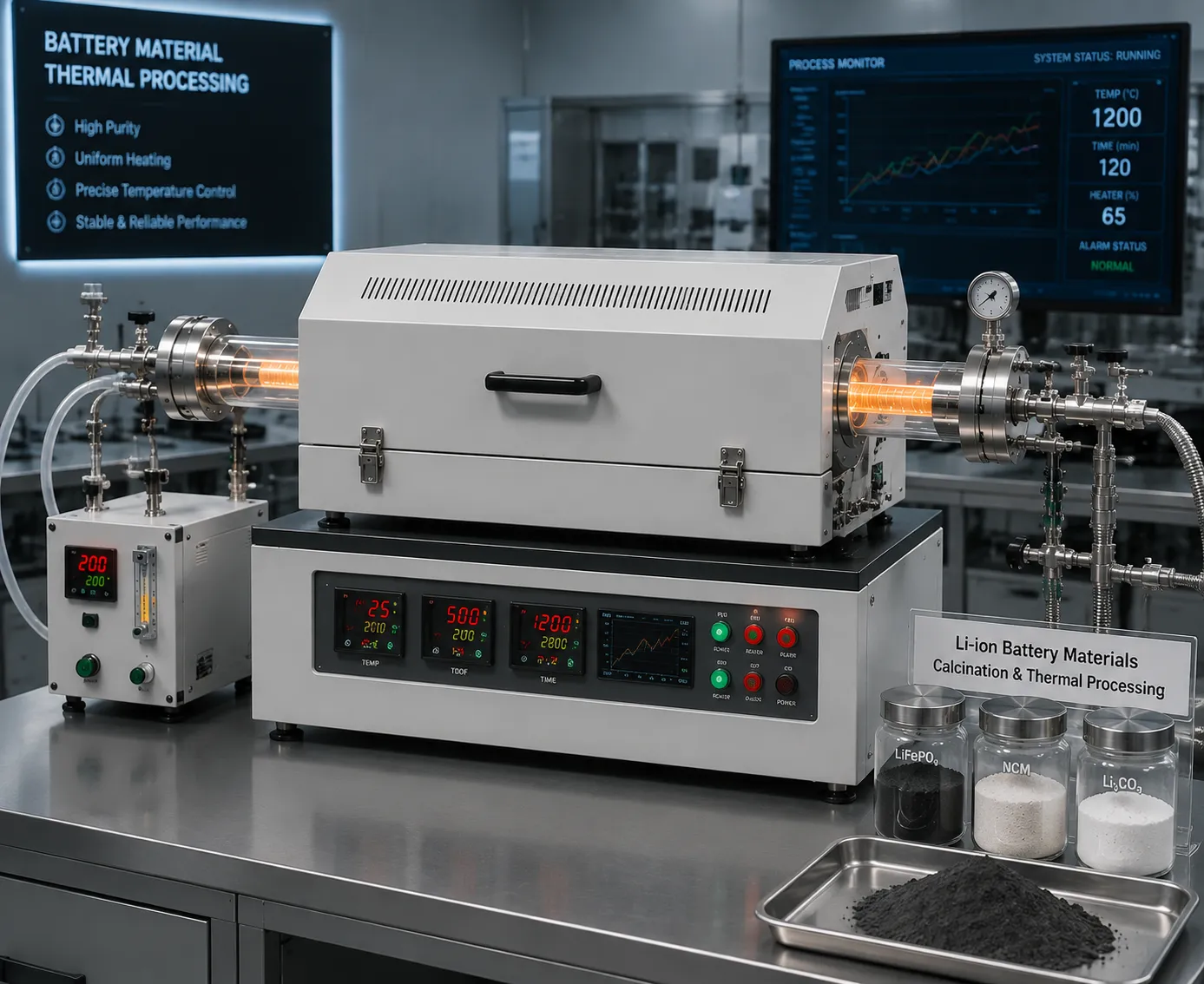
Lithium Battery Material Calcination & Thermal Processing
Developing high-capacity energy storage materials calls for uninterrupted atmosphere control and uniform thermal exposure. Continuous rotary tube furnaces and sealed controlled atmosphere systems provide the ideal dynamic heating environment for high-volume powder calcination.
- Cathode & Anode Powder Calcination: Continuous dynamic tumbling eliminates thermal gradients, preventing phase segregation in high-nickel NCM, LFP, and silicon-carbon anodes.
- Solid-State Electrolyte Synthesis: Hermetically sealed process chambers maintain ultralow moisture and oxygen levels required for sensitive halide and sulfide chemistries.
- Uniform Carbon Encapsulation: Precision inert gas purging enables uniform pyrolytic carbon coating over active battery particles to improve electrical conductivity.
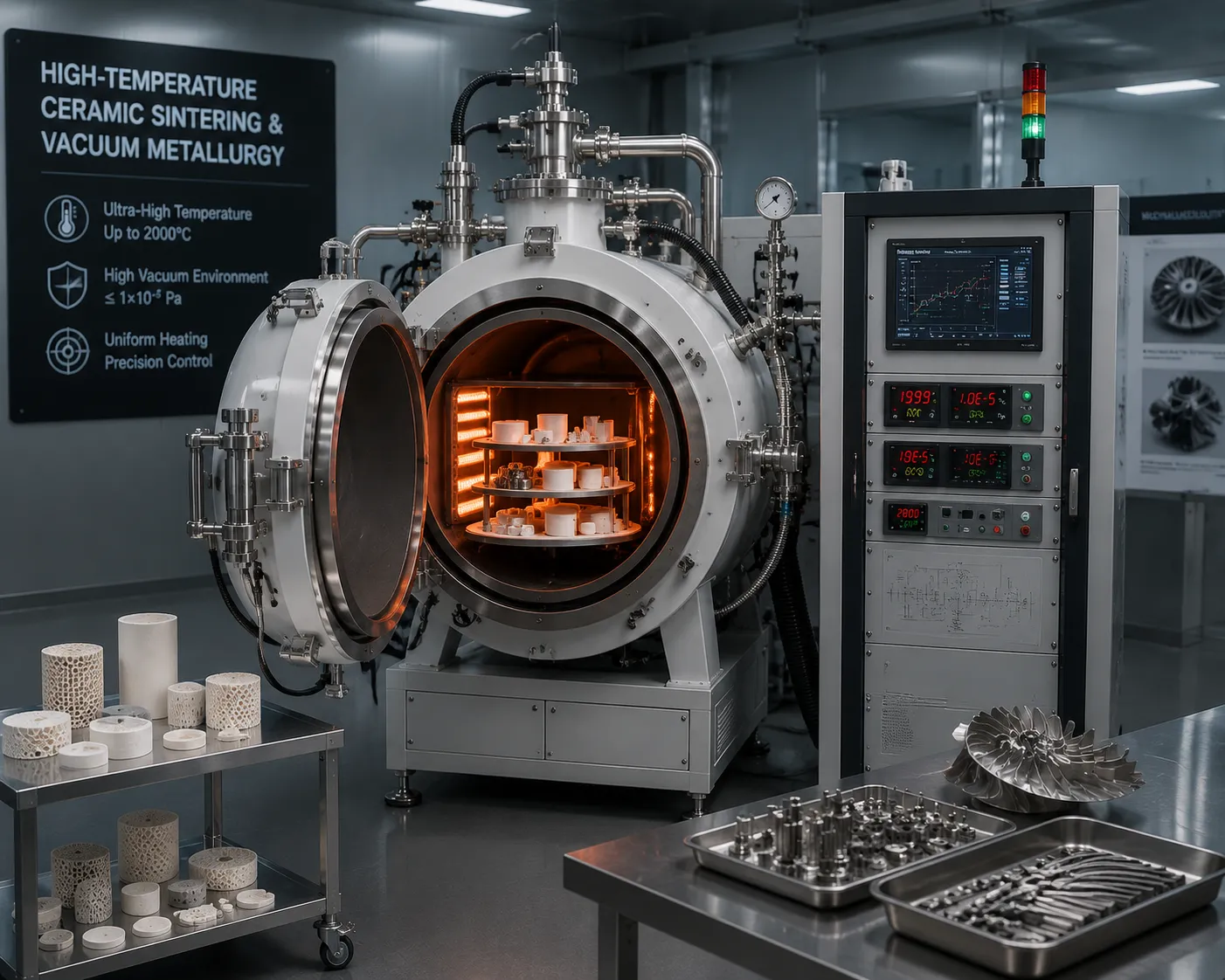
High-Temperature Ceramic Sintering & Vacuum Metallurgy
High-density consolidation of advanced ceramics and specialized alloy heat treatments demand ultra-clean thermal environments reaching up to 1800°C. Engineered with high-purity alumina heating chambers and vacuum flanging, Haitem tube furnaces ensure reliable, oxidation-free metallurgical processing.
- Ceramic Matrix Composites (CMCs): High-vacuum thermal environments prevent oxidation, ensuring maximum mechanical strength in structural ceramics and silicon carbide composites.
- Metal Injection Molding (MIM): Integrated thermal profiles enable single-pass binder burnout and high-density sintering of stainless steel and titanium components.
- Specialty Alloy Annealing: Multi-zone heating elements provide prolonged thermal soaking with precise ramp-and-soak routines for aerospace superalloys.
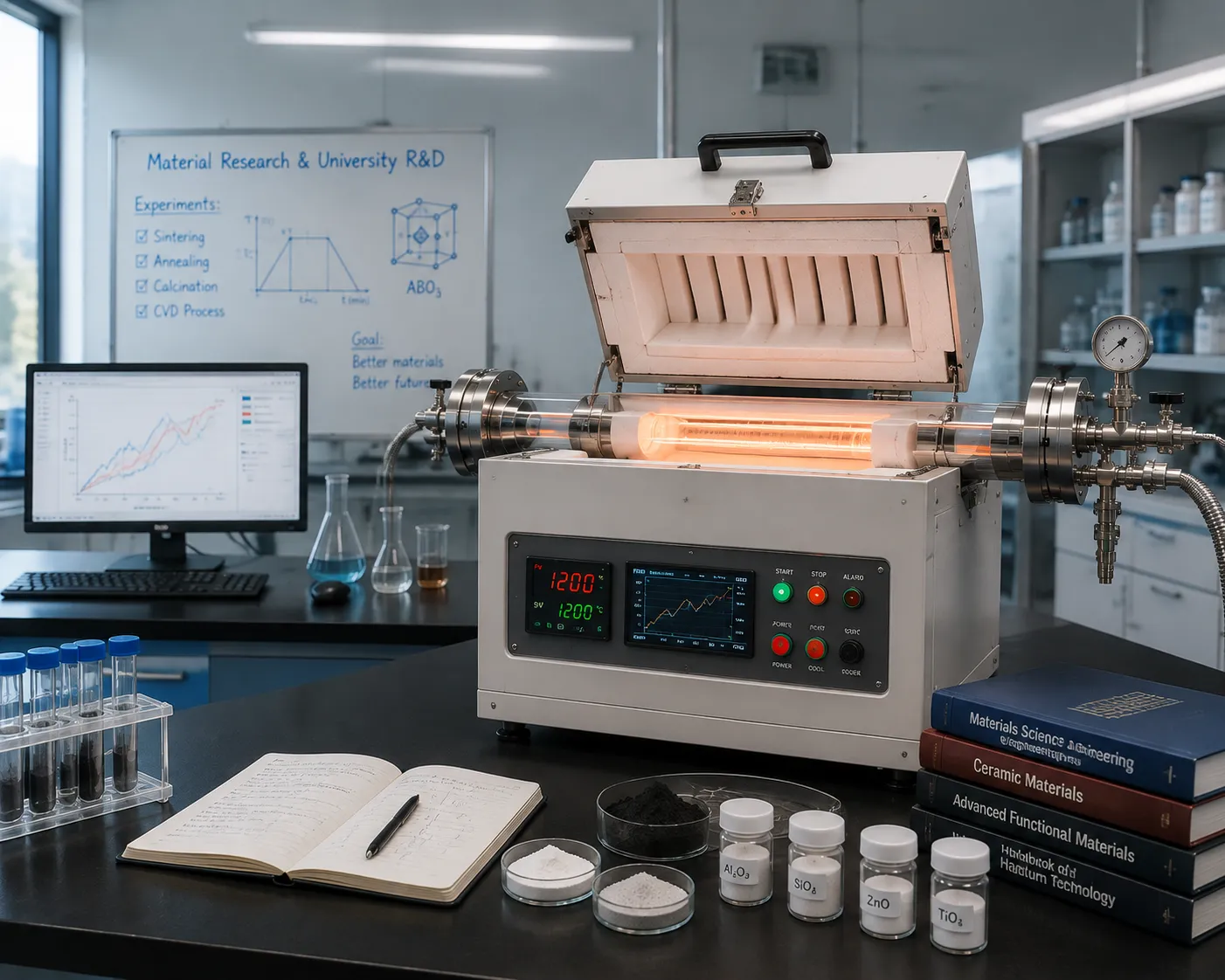
Material Research Heating & University R&D Laboratories
Academic institutions and experimental laboratories require highly versatile heating platforms to accommodate rapidly shifting research needs. Compact benchtop tube furnace systems provide customizable material research heating with flexible work tube configurations and programmable multi-segment controls.
- Precision Thermal Profiling: Programmable PID microprocessors support up to 50 heating segments for exact trial-to-trial experimental repeatability.
- Versatile Atmosphere Control: Quick-connect vacuum flanges and gas fittings simplify switching between argon, nitrogen, oxygen, and hydrogen purging gas flows.
- Modular Work Tube Selection: Easily swap quartz, high-purity ceramic alumina, or refractory alloy tubes to match varying chemical reactivity and operating temperatures.
Application Technical Matrix
Match your specific process requirements with optimal work tube materials, vacuum capabilities, and heating zone configurations.
| Application Sector | Operating Temperature | Work Tube Material | Atmosphere & Vacuum Control | Recommended Series |
|---|---|---|---|---|
| Thin-Film CVD & PECVD Growth | 800°C to 1200°C | High-Purity Fused Quartz | Vacuum to 10⁻³ Pa / Multi-Gas MFC | Multi-Zone CVD Tube Furnace |
| Semiconductor Wafer Annealing | 600°C to 1100°C | Quartz or Silicon Carbide | Inert N₂ / Ar Flow Purge | Split Horizontal Tube Furnace |
| Battery Cathode & Anode Calcination | 700°C to 1100°C | Alumina / Heat-Resistant Alloy | Oxygen-Rich / Inert Atmosphere | Continuous Rotary Tube Furnace |
| Advanced Ceramic & Alloy Sintering | 1400°C to 1800°C | 99.8% Polycrystalline Alumina | High Vacuum or Reducing H₂ Gas | High-Temperature Vacuum Series |
| University Material Research | 300°C to 1700°C | Interchangeable Quartz / Alumina | Hermetic Seals / Optional Vacuum | Compact Laboratory Benchtop Series |
Technical Consultation & Sample Testing Services
Selecting the right furnace configuration depends on precise physical and chemical parameters. Haitem Furnace offers sample material heating trials, atmosphere compatibility evaluations, and custom CAD integration to guarantee your equipment meets exact operational specifications.
Precision Temperature Control and Custom Thermal Processing Equipment
Engineering reliable laboratory and industrial tube furnaces demands stringent material selection, advanced thermal field simulation, and uncompromising safety architecture. At Haitem Furnace, we combine high-purity refractory insulation with industry-leading heating element technology to deliver uniform thermal profiles, exceptional energy efficiency, and extended operational lifespans.
Our custom thermal processing equipment is built to meet demanding research and production criteria across semiconductor processing, energy material synthesis, advanced ceramics, and high-purity metallurgy. Powered by precision temperature control, customizable atmosphere management, and modular structural designs, every system is tailored to your exact laboratory and industrial parameters. Learn more about-us and our commitment to tailored thermal processing solutions.
Premium Heating Elements and Fiber Insulation
Sustained high-temperature operations demand absolute element stability and minimal heat dissipation. We integrate top-grade Kanthal wire, Silicon Carbide (SiC) rods, and Molybdenum Disilicide (MoSi2) heating elements engineered for thermal performance up to 1800°C.
- Polycrystalline Alumina Fiber: Vacuum-formed multi-layer insulation minimizes heat loss and lowers external shell temperature.
- Dual-Shell Forced Air Cooling: Heavy-duty double-walled steel housing keeps external contact temperatures below 50°C during maximum heating cycles.
- Thermal Shock Resistance: Low thermal mass lining enables fast ramp rates while significantly lowering power consumption per run.
Advanced Vacuum Sealing and Gas Safety Systems
Controlled atmosphere applications require leak-tight vacuum sealing and proactive gas safety protections. Our sealing engineering guards sensitive samples against oxidation while maintaining controlled chemical reaction conditions.
- Stainless Steel Flanges: Precision-machined 304 or 316 stainless steel vacuum flanges with double silicone O-ring sealing assemblies.
- Water-Cooled Flange Option: Active water jacket cooling protects elastomer seals during prolonged processing above 1400°C.
- Atmosphere Safety Interlocks: Integrated safety pressure relief valves and automated inert gas purging channels facilitate safe handling of hydrogen, argon, and nitrogen.
Intelligent PID Control and Touchscreen System
Achieving tight process repeatability relies on automated, high-precision thermal management. Industrial PLC controllers paired with intuitive color touchscreens deliver multi-segment curve programming, real-time logging, and system diagnostics.
- Multi-Segment PID Control: Programmable ramp, dwell, and cooling stages supporting up to 50 configurable thermal segments.
- Data Logging and USB Export: Continuous temperature curves and operational logs captured automatically for quality control and process auditing.
- Ethernet Remote Monitoring: Secure network integration enables remote monitoring of thermal profiles, system alarms, and process status.
Tailored OEM and ODM Customization Engineering
Every material processing setup presents distinct geometric and operational demands. We provide full manufacturing-capabilities to adapt tube dimensions, heating zone lengths, and frame orientations to your exact setup.
- Custom Tube Diameters: Versatile design engineering supporting process tube outer diameters from 25 mm up to 300 mm.
- Multi-Zone Geometry: Independent thermal zone configurations spanning 1 to 5 zones to create gradient or ultra-flat uniform temperature fields.
- Multi-Angle Tilting Frames: Manual or motorized tilting mechanisms (0° to 90°) for specialized powder flow and continuous processing.
Custom Engineering Standards for Complex Processing Needs
Custom thermal processing equipment requires rigorous pre-assembly validation. Our thermal simulation algorithms model heat propagation across multi-zone configurations, ensuring optimal thermal uniformity across the entire active hot zone.
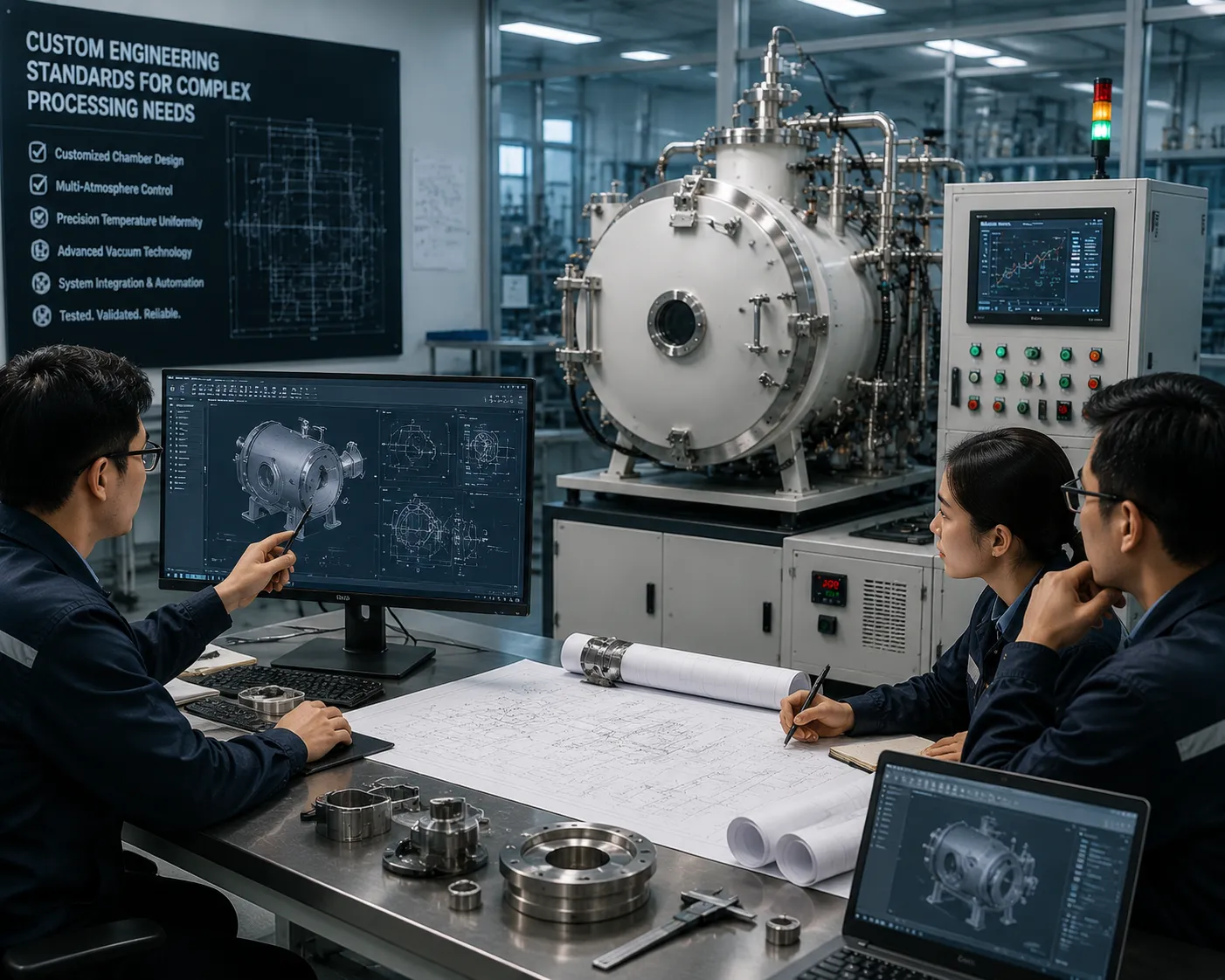
Manufacturing Capabilities and Hardware Specifications
| Engineering Module | Standard Configuration | Custom Processing Options | Primary Engineering Value |
|---|---|---|---|
| Heating Elements | Fe-Cr-Al Resistance Wire or SiC Rods | MoSi2 Rods, Customized Pitch and Spacing | Stable thermal output up to 1800°C |
| Refractory Insulation | 1400 Grade Fiber Board | 1800 Grade Polycrystalline Alumina Fiber | Low thermal mass and rapid heat efficiency |
| Vacuum & Atmosphere Flanges | Standard Quick-Clamp Stainless Flanges | Water-Cooled Jackets, Gas Valves, Hinge Supports | High sealing integrity for sensitive gas synthesis |
| Thermal Control Unit | 30-Segment Microprocessor PID Controller | Siemens PLC Touchscreen with Remote Data Logging | Precision temperature control and curve tracing |
Built with industrial-grade components, Haitem Furnace ensures every tube furnace delivers long-term repeatability and precise atmosphere control.
How to Choose a Tube Furnace: Technical FAQ & Selection Guide
Selecting the ideal high-temperature laboratory tube furnace requires evaluating target thermal processing temperatures, process tube materials, atmosphere safety requirements, and uniform heating lengths. Haitem Furnace provides custom-engineered thermal processing equipment and advanced vacuum furnaces tailored to demanding laboratory research and industrial scale-up.
How do I select between quartz, alumina, and alloy process tubes based on application needs?
Process tube material selection depends directly on maximum working temperatures, operational gas chemistry, vacuum levels, and thermal shock sensitivity. Choosing the proper process tube ensures long operational lifespans and prevents material contamination in high-purity thermal processes.
- Quartz Process Tubes: Engineered for continuous operation up to 1200°C (2192°F). Features high optical clarity for visual inspection, excellent thermal shock resistance, and acid tolerance—making quartz the standard choice for vacuum annealing, low-temperature chemical vapor deposition (CVD), and general material testing.
- High-Purity Alumina (99.5% Al₂O₃) Tubes: Designed for extreme thermal environments reaching up to 1800°C (3272°F). Offers chemical inertness under hydrogen, reducing atmospheres, and corrosive vapors. Requires controlled ramp-up and cool-down rates to mitigate thermal stress.
- Heavy-Duty Alloy Tubes (Inconel / Stainless Steel): Engineered for high-pressure gas reactions and mechanical stress up to 1100°C (2012°F). Ideal for pressurized gas synthesis, continuous industrial throughput, and corrosive atmosphere applications.
- Silicon Carbide (SiC) Tubes: Operates reliably up to 1600°C (2912°F) with rapid heating capabilities and high mechanical strength. Superior resistance to thermal cycling and abrasive environments makes SiC optimal for powder calcination and battery material research.
What is the difference in temperature field uniformity between single-zone and multi-zone tube furnaces?
Thermal field uniformity determines chemical reaction consistency and heating stability across the sample tube length. Selecting between single-zone and multi-zone configurations directly impacts sample capacity, heating profile precision, and process repeatability.
- Single-Zone Uniformity: Utilizes a single thermal control loop. Heat loss at the tube ends restricts the uniform isothermal zone to approximately the central one-third of the total heated length, making it cost-effective for standard batch heating.
- Multi-Zone Precision: Incorporates dual, 3-zone, or 5-zone heating modules driven by independent PID controllers. Power compensation at outer zones actively counteracts radiation end-losses, expanding the isothermal uniform region up to two-thirds of the tube length.
- Controlled Thermal Gradients: Multi-zone systems allow operators to program tailored temperature gradient profiles along the process tube. This capability is vital for physical vapor transport (PVT), semiconductor annealing, and multi-temperature CVD film deposition.
What safety protections and gas manifolds are required for hydrogen, argon, or oxygen atmospheres?
Controlled atmosphere tube furnaces processing flammable, reducing, or volatile gases require rigorous safety protocols. Haitem Furnace builds multi-layered safety mechanisms and automated gas management directly into atmospheric thermal processing equipment.
- Gas-Tight Sealing Flanges: Stainless steel flanges equipped with double Viton/silicone O-rings and integrated water-cooling jackets prevent seal degradation under extreme processing temperatures.
- Automated Inert Gas Purging: Smart PLC controllers enforce mandatory pre-heating purge sequences with nitrogen or argon, ensuring complete ambient oxygen removal prior to introducing combustible gases like hydrogen (H₂).
- Active Explosion-Proof Interlocks: Integrated gas detectors continuously check cabinet pressure and ambient air. Solenoid safety valves instantly trip and cut off fuel gas supply upon pressure drops, power interruptions, or gas detection.
- Precision Flow Management: Digital Mass Flow Controllers (MFCs) deliver precise gas proportioning, continuous positive pressure monitoring, and repeatable flow rates for accurate reactive gas delivery.
What determines laboratory tube furnace pricing, customization lead times, and warranty coverage?
Understanding laboratory tube furnace price drivers allows researchers and industrial procurement managers to align hardware specifications with performance requirements and project budgets.
- Primary Cost Drivers: Core variables affecting price include heating element type (resistance wire vs SiC vs 1900°C MoSi₂ elements), chamber diameter, number of independently controlled heating zones, vacuum pump configurations (roughing vs high-vacuum turbomolecular systems), and mass flow gas channels.
- Customization Engineering: Incorporating motorized tube rotation (rotary tube furnaces), vertical tilt mechanisms, automated PLC touchscreen displays, or specialized multi-gas purge cabinets adds tailored functionality to system setups. Learn more about our robust engineering standards on our about-us page.
- Production & Shipping Lead Times: Standard benchtop tube furnaces generally ship in 2 to 3 weeks. Custom industrial thermal processing systems with specialized gas manifolds require 4 to 6 weeks for precision manufacturing and Factory Acceptance Testing (FAT).
- Warranty Assurance: Every Haitem furnace includes comprehensive multi-year warranty protection, factory calibration documentation, lifetime spare parts supply, and continuous engineering consultation.
Process Tube Material Selection Matrix
Compare key physical characteristics, temperature thresholds, and atmosphere compatibility to identify the optimal process tube material for your furnace configuration.
| Material Type | Max Operating Temp | Atmosphere Compatibility | Thermal Shock Resistance | Ideal Applications |
|---|---|---|---|---|
| High-Purity Quartz | 1200°C (2192°F) | Vacuum, Oxidizing, Inert | High | CVD thin films, vacuum annealing, optical sample inspection |
| 99.5% Alumina (Corundum) | 1800°C (3272°F) | Reducing, Hydrogen, Inert, Vacuum | Moderate | High-temperature ceramic sintering, alloy debinding, powder roasting |
| Specialized Alloy (Inconel) | 1100°C (2012°F) | High Pressure, Corrosive Gas | High | Pressurized gas synthesis, continuous industrial thermal processing |
| Silicon Carbide (SiC) | 1600°C (2912°F) | Corrosive, Abrasive, Inert | Excellent | Rapid heating cycles, battery material calcination, harsh thermal environments |
Still evaluating process tube dimensions, heating zone counts, or gas safety interlocks? Haitem's engineering team provides dedicated pre-selection support to help you configure the optimal tube furnace setup.
Configure Your Custom Thermal System
Haitem's engineering team provides dedicated pre-selection support to help you configure the optimal tube furnace setup. Talk directly with thermal engineers to match your temperature curves and atmosphere requirements.
Custom heating lengths and tube diameters up to 300 mm
Multi-zone PID control for tight isothermal zone precision
Integrated vacuum stations down to 10⁻³ Pa high vacuum
Explosion-proof hydrogen purging and automatic safety valves
Direct Technical Hotline
Factory Direct Quotation
24-Hour Technical Proposal Turnaround