Core Performance Metrics for Precision Metallurgical Control
Haitem hardening systems integrate optimized heating element configurations with advanced thermal insulation to guarantee precise metallurgical repeatability across every processing cycle.
Maximum Operating Temp
Supports demanding austenitizing cycles for high-alloy tool steels and engineered alloys requiring deep-case hardening.
Thermal Uniformity
Maintains strict ±3°C to ±5°C temperature uniformity across heating zones to eliminate hot spots and prevent part distortion.
Hardening Yield Consistency
Delivers consistent martensitic microstructures batch after batch, minimizing structural defects, part rework, and material scrap.
Reduced Power Consumption
Consumes up to 25% less energy than legacy thermal processing equipment through low-mass refractory linings and zoned power control.
Quantitative Thermal Reliability for Industrial Production
Haitem hardening furnaces and vacuum furnaces deliver robust thermal reliability tailored for metallurgical engineers and plant operations managers. By combining optimized multi-zone heating with low-mass ceramic insulation, our advanced manufacturing capabilities optimize cycle times and elevate product quality.
Hardening Process Mechanics & Technical Superiority
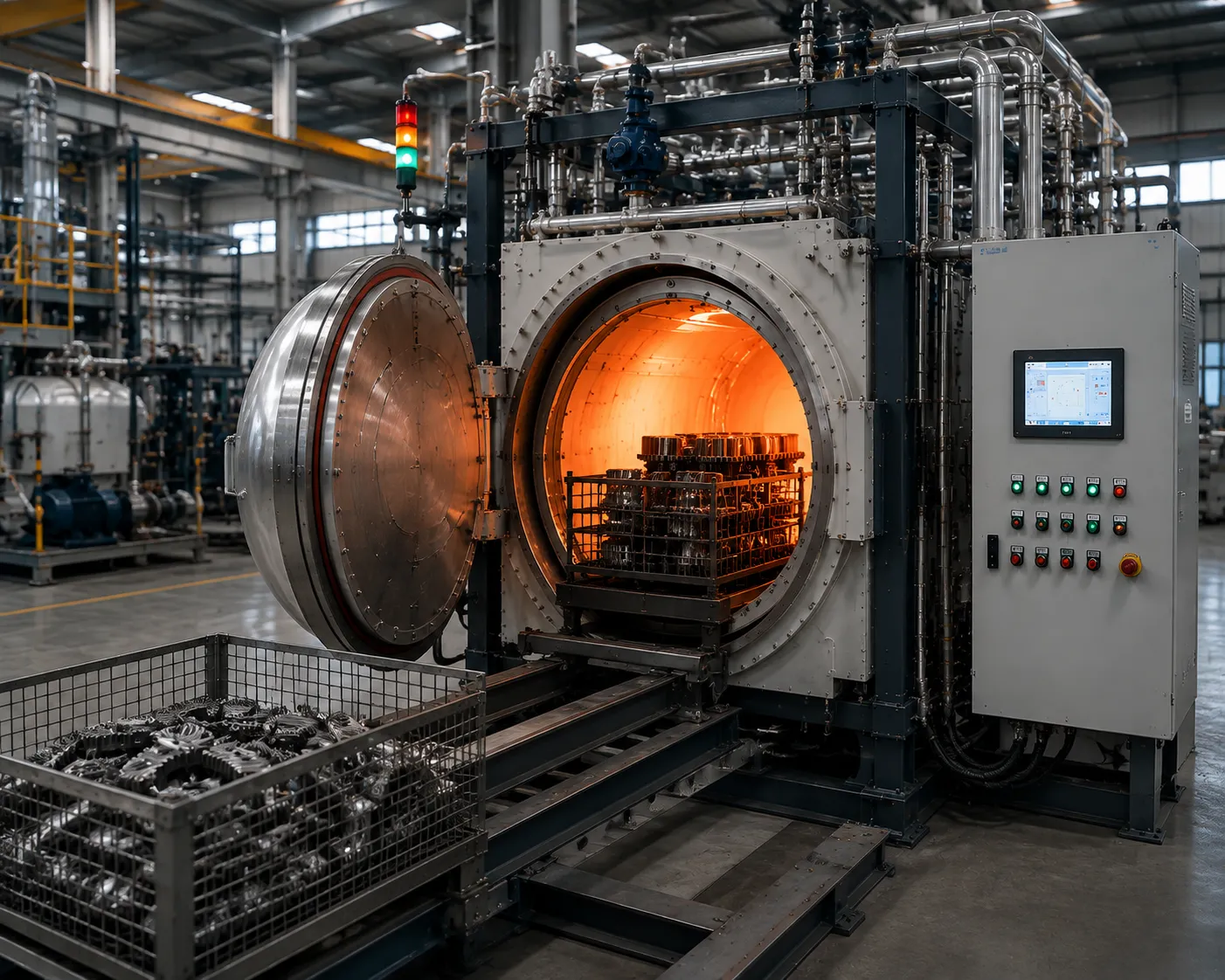
Achieving peak tensile strength and wear resistance in steel hardening heat treatment demands exact coordination between thermal input, atmosphere chemistry, and rapid cooling dynamics. Backed by decades of thermal engineering, Haitem Furnace combines precise atmosphere management with multi-zone heating control to eliminate quench cracking risks, prevent surface decarburization, and yield consistent martensitic structures across heavy industrial workloads.
Precise Austenitizing & Controlled Atmosphere Systems
Superior core hardness and controlled case depth require rigid thermal uniformity during the critical austenitizing phase. Uncontrolled thermal gradients cause localized overheating, resulting in grain coarsening, non-uniform phase transformation, and structural weakness. Haitem industrial hardening furnace systems employ advanced multi-zone temperature regulation to stabilize heat soak and maintain precision metallurgical control across variable charge densities. For specialized high-vacuum processing needs, explore our vacuum furnaces solution.
Precise Austenitizing Temperature Control
Multi-zone heating element configurations prevent localized overheating and grain coarsening, ensuring repeatable, deep, and uniform case and core hardness depth across complex alloy geometries.
Controlled Atmosphere & Surface Protection
Integrated protective gas delivery systems utilizing Nitrogen, Argon, or Endothermic atmospheres eliminate surface decarburization, oxidation, and heavy scale formation during high-temperature soaking cycles.
Rapid Quench Interface & Advanced Automation
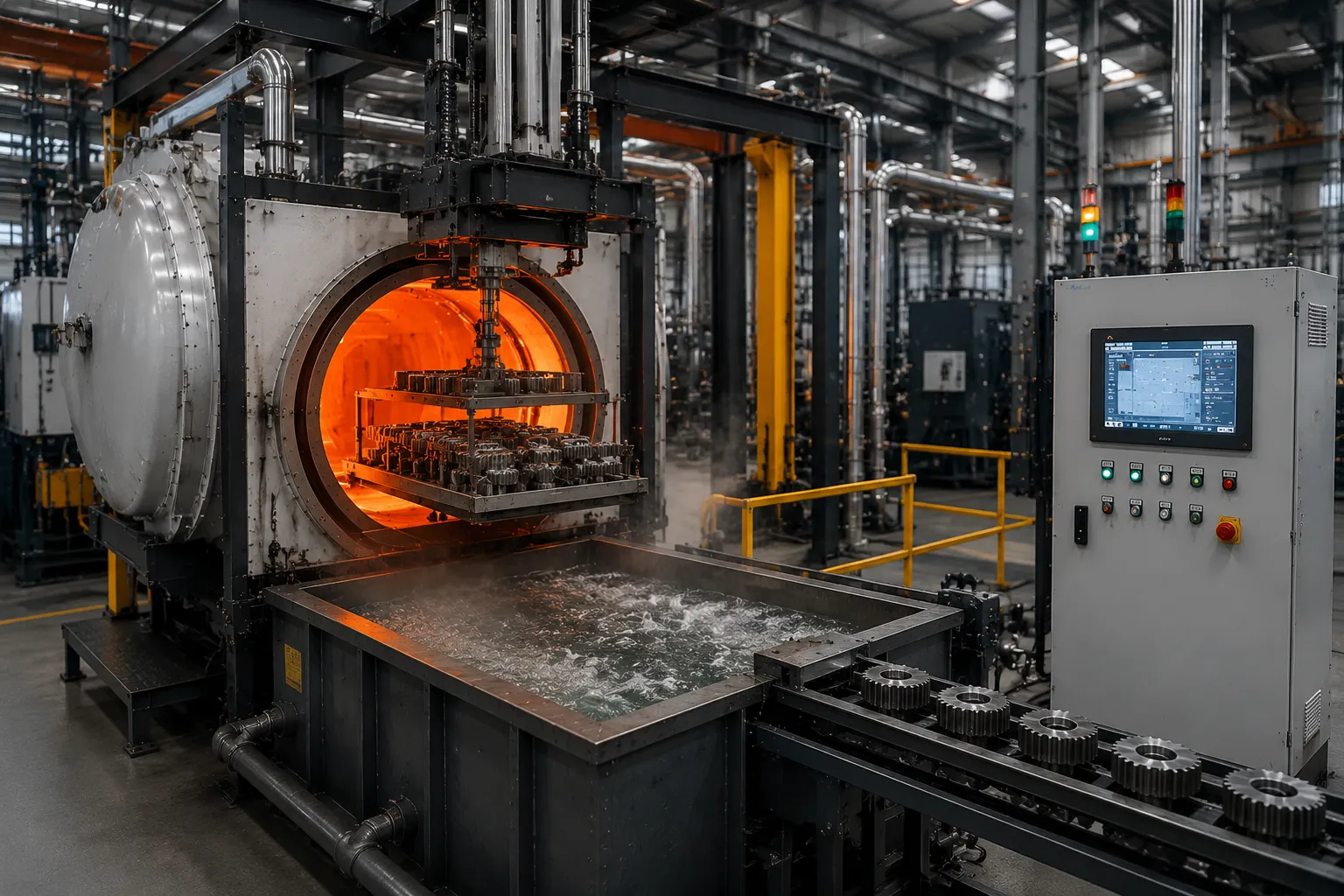
The rapid transfer from the heating chamber to the quenching medium is the single most critical phase where metallurgical success is determined. Uncontrolled transfer delays lead to premature atmospheric cooling, unwanted pearlite or ferrite phase transformations, and severe distortion. Haitem quench hardening furnace designs feature automated charge-handling mechanics and protective gas shielding to guarantee full, uniform martensitic conversion.
Rapid & Uniform Quench Interface
Optimized furnace-to-quench bath movement minimizes air exposure, while engineered compatibility with oil, water, polymer, or high-pressure gas media mitigates thermal shock distortion and micro-cracking.
Smart PLC & Thermal Profiling
Industry 4.0-compliant programmable controllers feature continuous heat treat cycle logging, automated atmosphere regulation, and direct CQI-9/AMS 2750F data export for complete batch-to-batch traceability.
Engineering Superiority for High-Precision Standards
Haitem controlled atmosphere hardening systems are custom-engineered to meet stringent automotive CQI-9 and aerospace AMS 2750F pyrometry standards, backed by rigorous quality-certifications guaranteeing maximum yield, minimal rework, and consistent metallurgical hardness.
Industrial Hardening Furnace Configurations & Systems
Select the optimal hardening furnace architecture engineered for your workpiece geometry, target metallurgical throughput, and plant integration needs. From specialized batch processing to automated high-speed production lines, Haitem Furnace tailors equipment configurations to your exacting specs. Beyond traditional atmosphere systems, we also offer high-precision vacuum furnaces for advanced metallurgical processing.
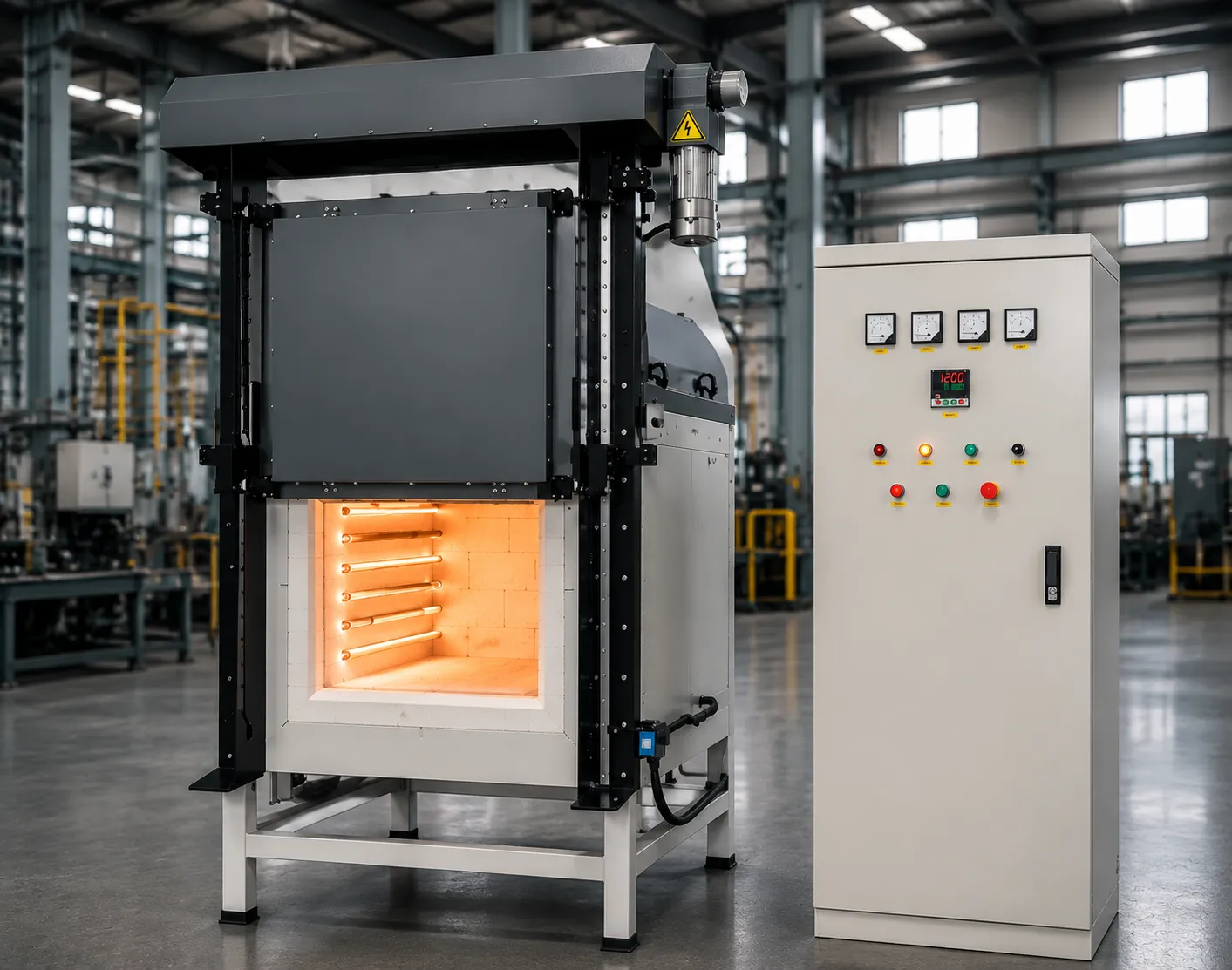
Box Hardening Furnaces
Optimized for toolrooms, batch production runs, and custom prototype parts requiring versatile heating profiles and controlled quench transfers.
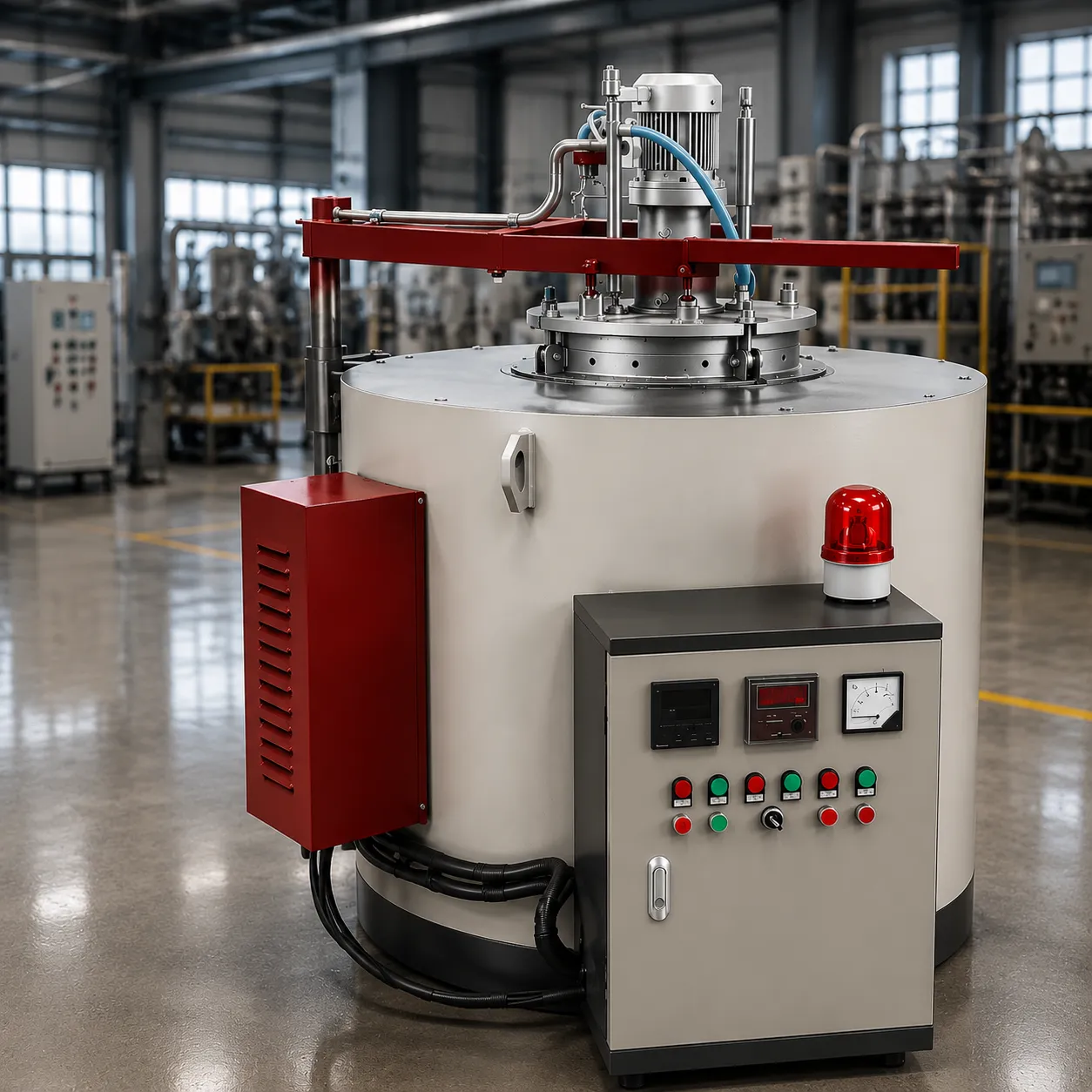
Pit Quench Furnaces
Engineered for the vertical suspension of long shafts, rods, and heavy rings to eliminate thermal distortion and bending during heating and quenching.
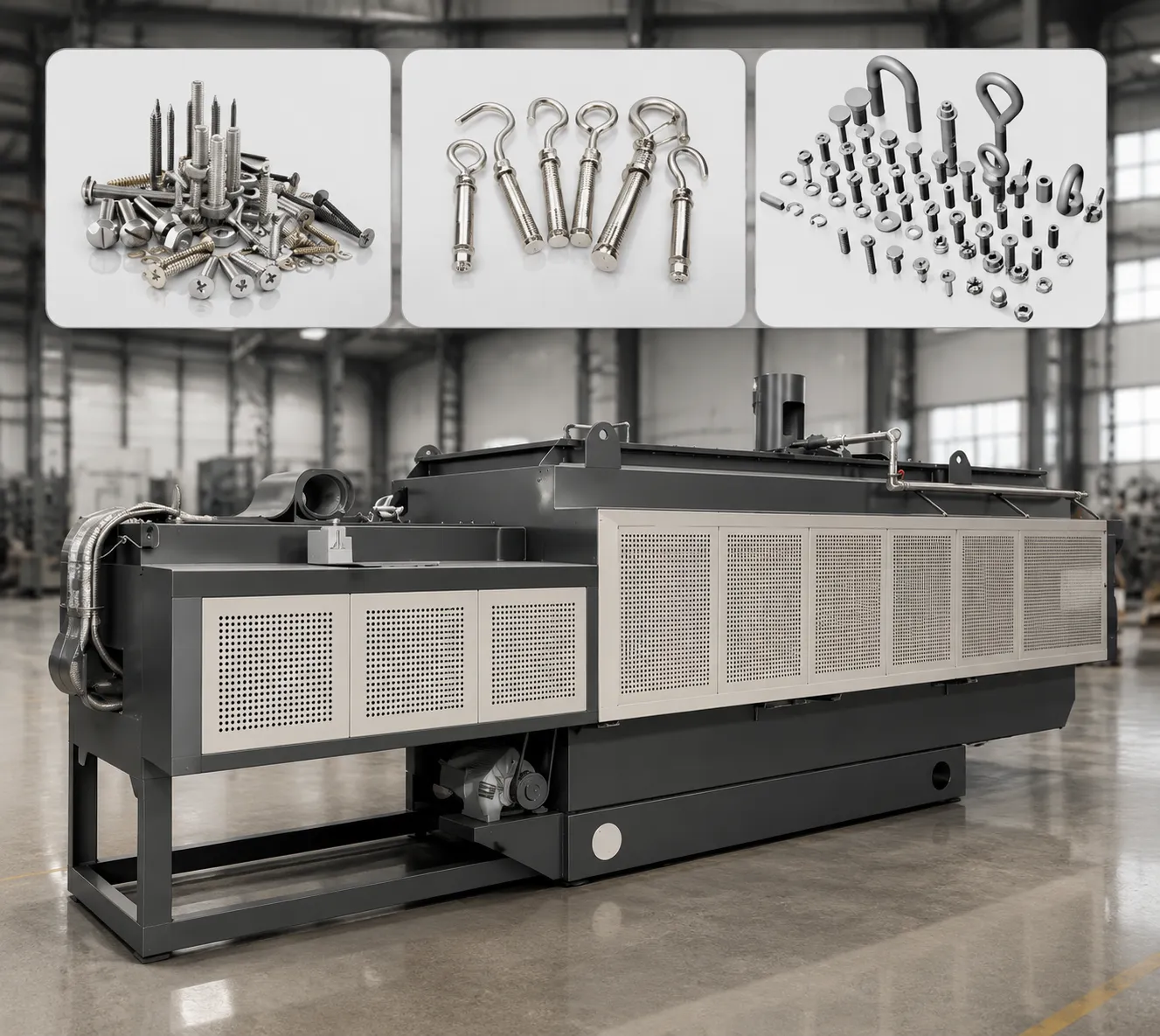
Continuous Hardening Lines
Mesh belt or roller hearth conveyor architectures designed for high-volume, automated component manufacturing with strict metallurgic consistency.
Need a Custom Hardening Architecture?
From single-piece heavy industrial forgings to high-cadence production lines, Haitem Furnace engineers leverage our advanced manufacturing capabilities to custom-design furnace configurations tailored to your exact plant layout and metallurgical goals.
Steel Hardening Heat Treatment Workflows & Process Comparison
Industrial thermal processing requires tight metallurgical control across distinct heating, soaking, and cooling phases to achieve precise grain transformations and mechanical properties. Understanding where a high-performance quench hardening furnace fits into your broader thermal pipeline—and how it differs from annealing and tempering equipment—is essential for optimizing production throughput and component durability. Haitem Furnace engineers fully integrated, automated thermal processing lines that unite pre-treatment, quench hardening, and post-temper operations for maximum fatigue resistance and repeat batch consistency. Learn more about us and our dedicated industrial focus.
The Three-Stage Heat Treatment Sequence
From initial grain refinement to final toughness balancing, explore how structural alloy components progress through the core thermal pipeline.
Annealing & Stress Relief
Controlled heating followed by isothermal soaking and ultra-slow furnace cooling. This stage coarsens microstructures and eliminates internal machining stresses, reducing hardness to maximize cold workability, machinability, and dimensional stability prior to final hardening.
Quench Hardening (Current Focus)
Rapid heating into the full austenitizing zone (800°C–1250°C), held under protective atmosphere, followed by immediate immersion in oil, polymer, water, or pressurized gas. Traps carbon in solution to transform soft ferrite-pearlite into high-strength, wear-resistant martensite.
Tempering & Stabilization
Controlled sub-critical reheating of brittle, as-quenched martensitic steel. Tempering relieves severe quenching stresses, eliminates retained austenite risks, and fine-tunes Rockwell hardness to achieve the required balance between high yield strength and impact toughness.
Core Metallurgy: Precision Control in Quench Hardening Systems
Achieving target core hardness and case depth across heavy-duty steel components requires rigid thermal and atmospheric control during the austenitizing phase. Unlike annealing—which allows carbon atoms to diffuse into equilibrium phases through slow furnace cooling—a Haitem high-performance quench hardening furnace locks carbon within the face-centered cubic lattice by rapid temperature drop, forming a dense, wear-resistant body-centered tetragonal martensitic structure.
When evaluating hardening vs tempering dynamics, heat treatment engineers must balance heating velocity, surface oxidation, and distortion risks. Quench hardening demands high-temperature thermal uniformity (±3°C conforming to AMS 2750F), protective atmosphere delivery (endothermic or nitrogen-methanol) to prevent surface decarburization, and rapid transfer into turbulent quench agitation tanks before pearlite transformation curves can begin. Our advanced manufacturing capabilities ensure every furnace meets rigorous standards.
Critical Thermal Processing Milestones
- Austenitizing Thermal Soak: Sustaining workpieces at elevated temperatures (typically 800°C to 1250°C) until ferrite and carbide phases convert completely into homogenous austenite.
- Critical Cooling Velocity Management: Transferring red-hot workloads into active oil, water, or high-pressure gas quenching systems within seconds to bypass lower transformation knees.
- Microstructural Stabilization: Securing deep case hardness across heavy cross-sections while mitigating thermal shock, part warping, and quench cracking risks.
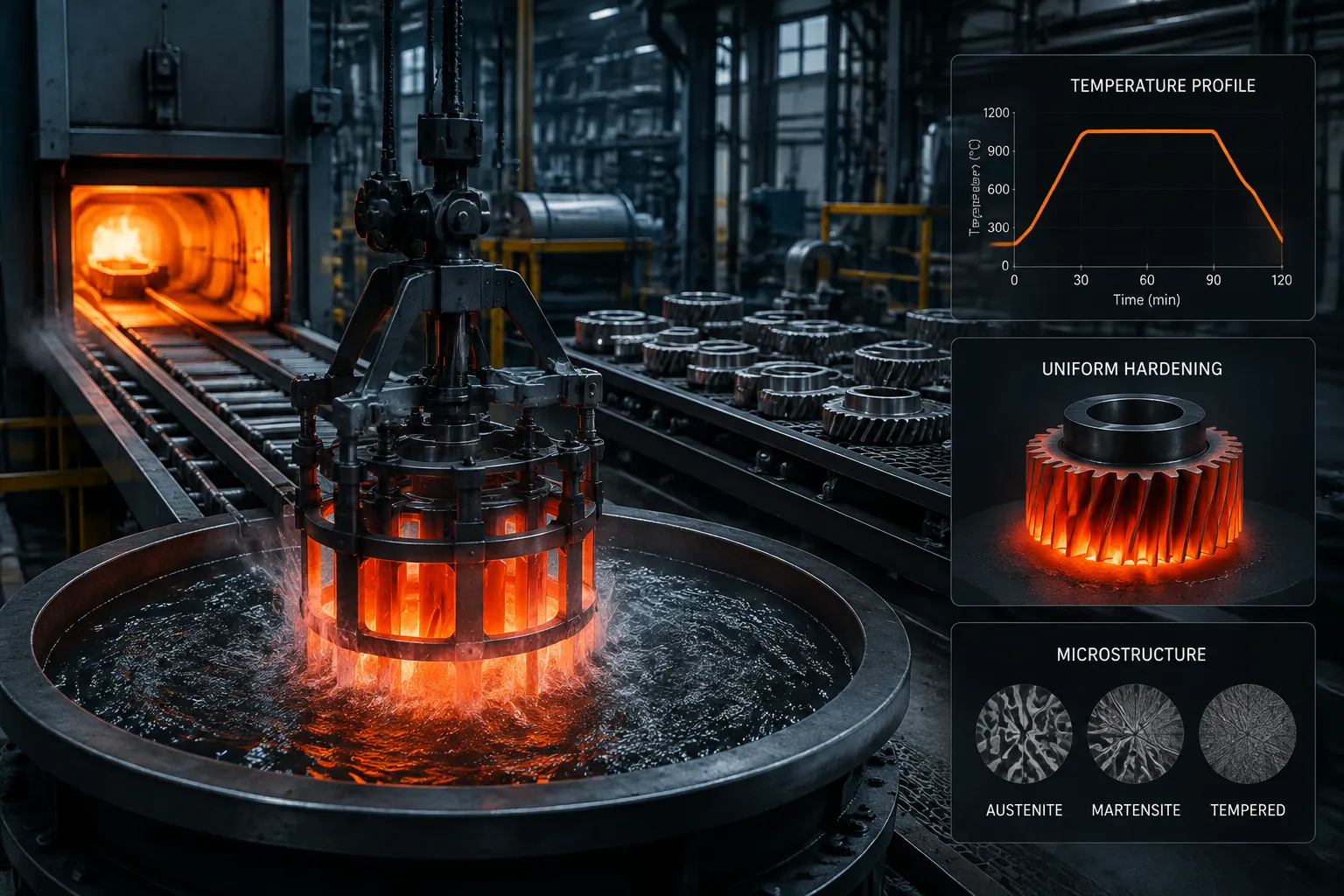
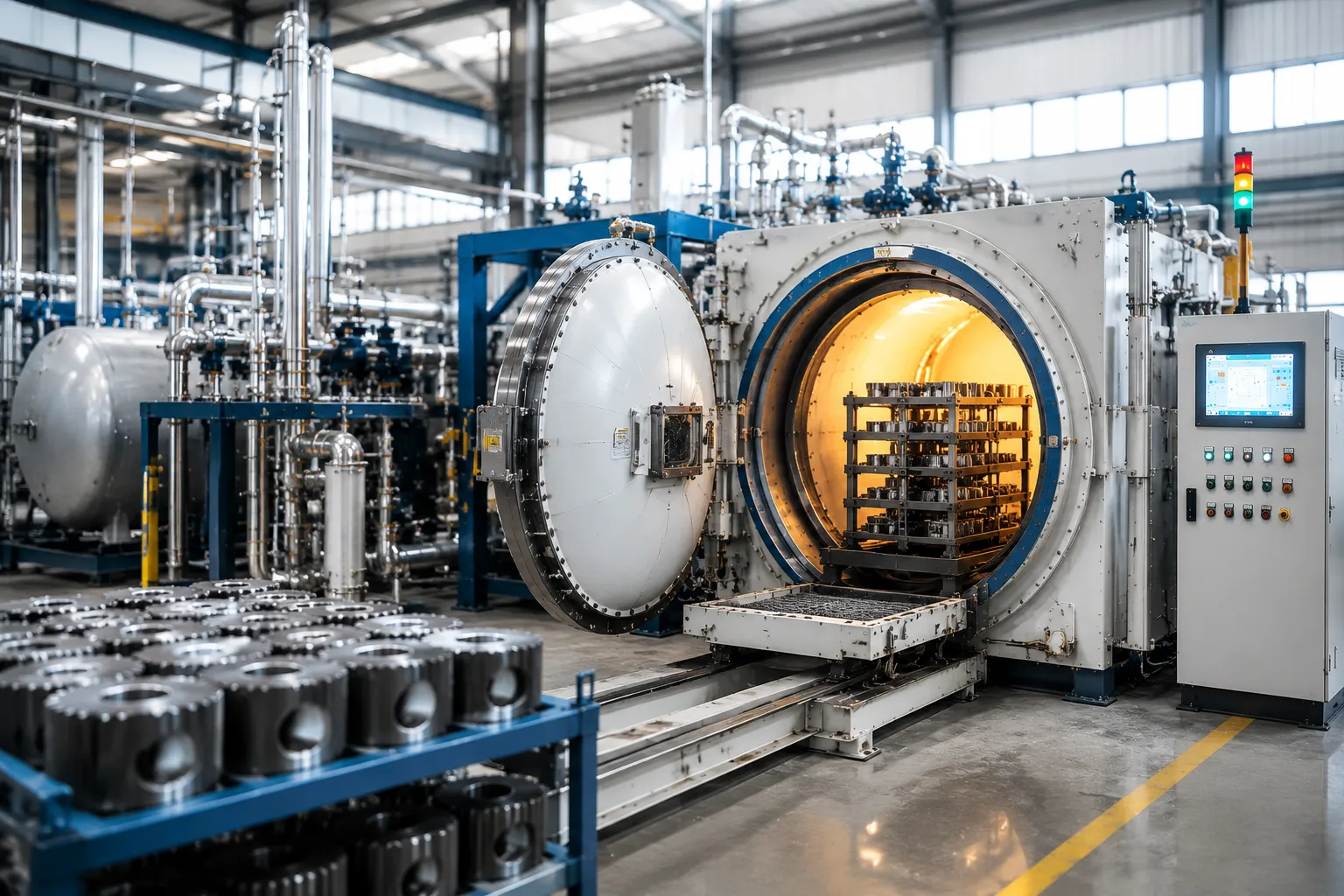
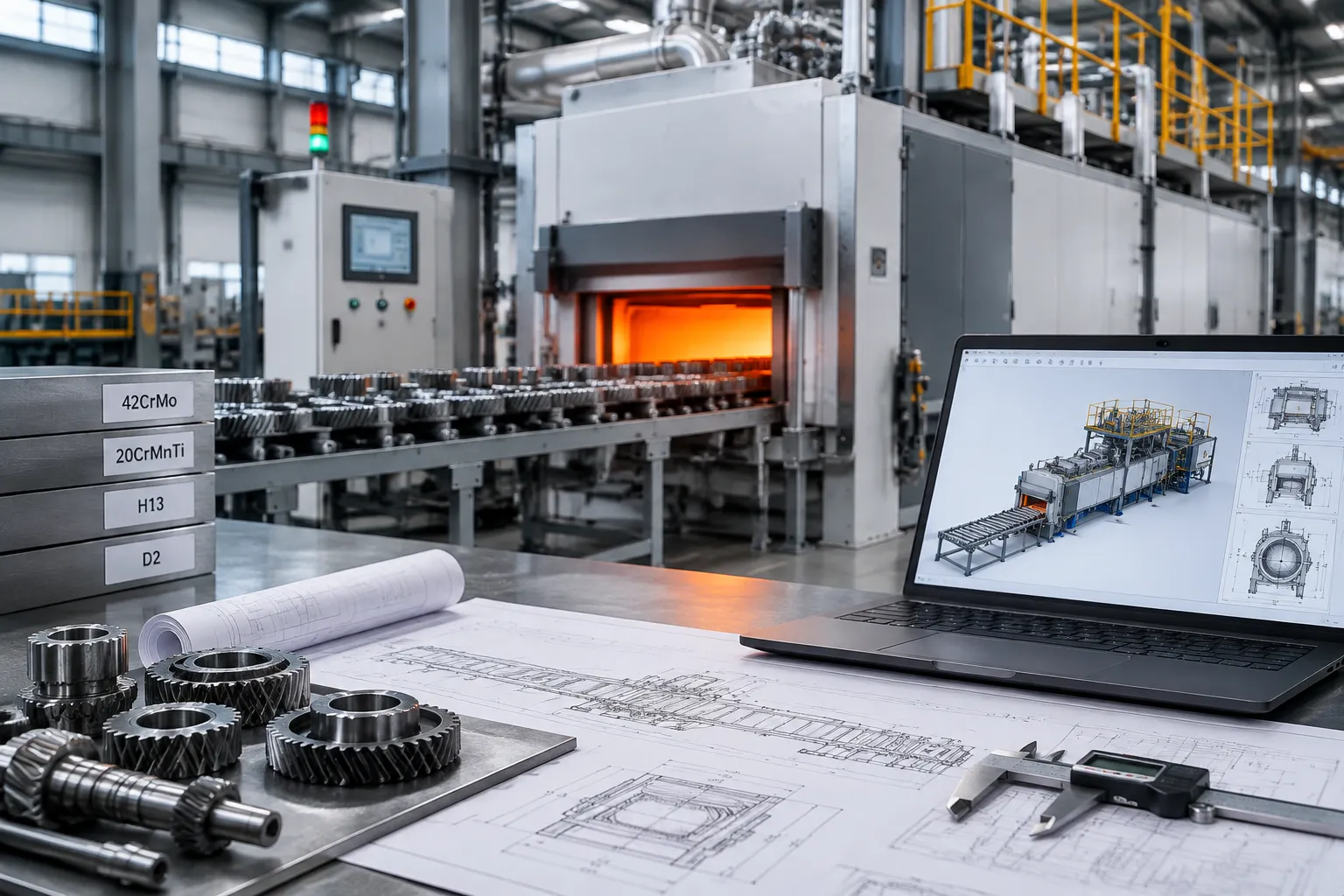
Figure 1.1: Haitem automated thermal processing cell featuring an atmosphere-controlled hardening furnace integrated with high-velocity quench agitation systems.
Equipment Comparison: Hardening vs. Annealing vs. Tempering Furnaces
Compare core operational parameters, thermal profiles, and protective atmosphere dynamics across thermal equipment configurations in the Haitem products catalog.
| Operational Parameter | Hardening Furnaces (Focus) | Annealing Furnaces | Tempering Furnaces |
|---|---|---|---|
| Operating Temp Range | 800°C – 1250°C (1472°F – 2282°F) | 600°C – 1050°C (1112°F – 1922°F) | 150°C – 700°C (302°F – 1292°F) |
| Primary Thermal Dynamics | Rapid heat soak, uniform soak, fast media quench | Controlled ramp-up, long soak, ultra-slow furnace cool | Forced convection air heating, precise low-temp hold |
| Atmosphere Management | Endothermic, Nitrogen/Methanol, Argon (Anti-Decarb) | Protective Nitrogen/Hydrogen or vacuum retort | Ambient air or protective Nitrogen atmosphere |
| Metallurgical Transformation | Austenite to fully hardened Martensite structure | Ferrite and Pearlite grain coarsening and softening | Tempered Martensite with balanced yield toughness |
| Typical Cycle Duration | Short to medium thermal soak + fast quenching | Extended long cycles (up to 24+ hours) | Medium duration thermal soaking (2 to 6 hours) |
| Primary Industrial Goal | Maximum surface wear resistance and hardness depth | Internal stress relief, ductility restoration, machining | Toughness balancing, crack resistance, resiliency |
Build a Complete End-to-End Thermal Processing Line
While continuous and batch industrial hardening furnace installations deliver primary strength and case depth, overall metallurgical performance relies on synchronized pre- and post-heat treatment equipment. Haitem Furnace designs fully integrated production lines where workpieces automatically transition from stress-relieving Annealing Furnaces into high-precision Hardening Furnaces, concluding in forced-convection Tempering Furnaces. Explore our sibling product category hubs to discover tailored equipment configurations for every step of your heat treat cycle.
Annealing Furnaces
Discover batch, pit, and continuous annealing systems for stress relief, grain homogenization, and pre-hardening workability.
Tempering Furnaces
Explore heavy-duty recirculating tempering furnaces designed to balance toughness and achieve exact Rockwell hardness specifications.
100%
CQI-9 & AMS 2750F Compliant
Haitem thermal application engineers customize chamber dimensions, protective atmosphere delivery, and material handling automation to fit your exact plant layout.
Consult a Thermal EngineerIndustrial Applications and Sector Solutions for Quench Hardening Systems
Achieving superior surface hardness, core toughness, and structural integrity requires specialized thermal processing engineered for specific mechanical demands. Haitem quench hardening systems are backed by state-of-the-art manufacturing capabilities and deployed in Tier 1 automotive, aerospace, fastener, and precision tooling facilities worldwide to meet strict metallurgical standards and demanding production schedules.
Whether processing high-volume transmission components or tight-tolerance aerospace alloys, our industrial hardening vacuum furnaces and thermal processing systems provide exact temperature uniformity, advanced protective atmospheres, and optimized quench interface mechanics. Explore how our custom quench hardening furnace lines and atmosphere hardening systems address critical wear and high-stress operational requirements across key global industries.
Automotive and Power Transmission
High-frequency and bulk steel hardening heat treatment engineered specifically for drive shafts, transmission gears, crankshafts, differential rings, and heavy-duty roller bearings.
- Deep uniform case depth for high fatigue resistance under torque load
- Rapid automated oil or polymer quench bath coupling mechanism
- Controlled cooling kinetics for gear tooth distortion control
Tool and Die Manufacturing
High-hardness, wear-resistant thermal processing tailored for cold-work, hot-work, and high-speed tool steels requiring supreme edge retention and dimensional stability.
- Zero decarburization via protective atmosphere hardening systems
- Tight dimensional stability control for complex stamping dies
- Precise austenitizing soaking control up to 1250°C operating limits
High-Tensile Fasteners and Hardware
Continuous hardening line setups using mesh belt or roller hearth configurations for automated mass production of Grade 8.8+ high-tensile bolts, rivets, and springs.
- High-volume production lines tailored for heavy structural fasteners
- Seamless furnace-to-quench bath continuous drop interface
- Consistent batch-to-batch metallurgical hardness across long runs
Aerospace and Precision Components
Atmosphere-protected precision hardening engineered for mission-critical high-alloy structural components, landing gear pins, turbine actuators, and hydraulic fittings.
- AMS 2750F pyrometry compliance meeting international quality certifications with multi-zone thermal tracking
- Inert protective gas purge for bright, oxide-free surface results
- Real-time CQI-9 heat treat data logging and digital export capabilities
Engineering Precision Metallurgical Control for High-Wear Components
Different industrial sectors present distinct metallurgical challenges during steel hardening heat treatment. Components subjected to continuous friction, dynamic impact, or high-cycle bending require precise martensitic microstructure creation while eliminating micro-cracking, residual strain, and excessive distortion. Haitem Furnace designs each industrial hardening furnace system with custom heating element configurations, multi-zone thermal control, advanced refractory insulation, and tailored quench media management to guarantee repeatable, high-grade metallurgical results.
Mitigating Quench Distortion in Complex Geometries
Asymmetrical components such as transmission gears, slender drive shafts, and large ring bearings are particularly vulnerable to thermal warping during the rapid cooling phase. Our pit quench furnaces and automated batch systems integrate controlled agitation mechanisms that optimize fluid dynamics across every workpiece surface.
- ✓ Vertical Suspension Options: Pit furnace configurations suspend long shafts vertically to prevent thermal sagging and bowing during high-temperature soaking.
- ✓ Variable Velocity Agitation: Customized impellers in the quench bath maintain uniform fluid velocity, eliminating localized heat pockets.
- ✓ Multi-Media Capability: Seamlessly integrate oil, polymer, water, or high-pressure gas quench systems tailored to alloy specifications.
Surface Protection and Atmosphere Control Systems
High-alloy tool steels and aerospace hardware cannot tolerate surface decarburization or heavy oxide scale formation during high-temperature austenitizing. Haitem atmosphere hardening systems incorporate gastight chamber designs and active carbon potential monitoring to safeguard surface integrity.
- ✓ Protective Gas Blankets: Nitrogen, Argon, and endothermic gas systems maintain ideal carbon equilibrium throughout the heating cycle.
- ✓ Precision Oxygen Probes: In-situ oxygen sensor feedback loops continuously regulate gas injection in real time.
- ✓ Reduced Post-Heat Finishing: Clean surface outcomes eliminate or significantly reduce costly post-quench machining and grinding operations.
Technical Specifications & Customization Options
Evaluate core technical parameters for our industrial hardening furnace line. Haitem application engineers customize 100 percent of chamber geometries, heating element configurations, and material handling automation to align with your facility layout and metallurgical standards through our bespoke customization services.
Standard Atmosphere Hardening Systems Specs
AMS 2750G Compliant| Engineering Parameter | Standard Rating / Capability |
|---|---|
| Chamber Dimensions (W x H x D) | 600 x 600 x 900 mm up to 1800 x 1800 x 2400 mm (Custom build available) |
| Max Power Rating (kW) | 45 kW to 350+ kW (Multi-Zone Independent SCR Control) |
| Temperature Uniformity Zones | ±5°C (Class 2) across 3 to 6 independent heating zones |
| Quench Tank Coupling | Integrated Oil, Water, Polymer, or High-Velocity Gas Systems |
| Max Operating Temperature | 1250°C (2282°F) Continuous Duty |
| Atmosphere Control | Endothermic, Nitrogen-Methanol, Dissociated Ammonia, Argon |
Modular Custom Options
Tailor system parameters for specialized heat treatment workflows during procurement evaluation:
-
Automated Charge/Discharge Manipulators
Heavy-duty automated manipulators and transfer cars for rapid, repeatable quench cycles supported by our advanced manufacturing-capabilities.
-
Integrated Agitation Quench Tanks
Variable-speed impeller agitation and active heat exchangers for uniform cooling profiles.
-
Multi-Zone Independent Power Control
Precision SCR power management with fast recovery algorithms to maximize throughput.
-
Full SCADA & PLC Integration
Real-time telemetry, continuous oxygen probe tracking, and digital audit trails for CQI-9 audits.
Request RFP CAD Package
Access 2D/3D CAD models, utility load sheets, and detailed performance specs for seamless engineering review.
Frequently Asked Questions Regarding Industrial Hardening Furnaces
Address critical engineering concerns around atmospheric protection, quench medium integration, distortion prevention, and thermal accuracy. Haitem Furnace delivers high-repeatability thermal equipment backed by decades of metallurgical expertise. Learn more about-us and our core industry focus.
How does an atmosphere hardening furnace prevent surface decarburization during high-temperature soaking?
Surface decarburization occurs when steel components are heated above their critical transformation temperatures (typically 1500°F to 2200°F / 815°C to 1205°C) in an ambient oxidizing atmosphere. Uncontrolled oxygen, carbon dioxide, and water vapor deplete carbon atoms from the steel surface matrix, creating a soft ferrite layer that drastically compromises surface hardness, wear resistance, and fatigue life.
Haitem controlled atmosphere hardening furnace systems eliminate surface oxidation by creating a hermetically sealed heating environment purged with protective endothermic or synthetic gases (such as Nitrogen-Methanol blends). For specialized processing requiring high-vacuum environments, explore our advanced vacuum-furnaces solutions. Zirconium oxide oxygen probes continuously measure oxygen partial pressure to calculate carbon potential in real time.
- Active Carbon Potential Regulation: Automated PLC feedback loops inject enriching hydrocarbon gas (e.g., propane or natural gas) to maintain precise carbon equilibrium with the specific alloy grade.
- Zero Scale & Bright Finish: Prevents metal mass loss, surface micro-cracking, and heavy oxide scaling during extended thermal soaking.
- Uniform Case Depth & Core Hardness: Guarantees predictable martensitic transformation directly from the extreme outer skin inward.
Which furnace geometry—Box-Type vs Pit Quench—is best suited for long shaft components prone to distortion?
Selecting between a box hardening furnace and a pit quench furnace depends heavily on component geometry, orientation during thermal soaking, and susceptibility to thermal and gravitational sagging during rapid quenching.
Pit Quench Furnaces
Engineered specifically for long drive shafts, lead screws, landing gear components, turbine spindles, and large ring gears. Workpieces are suspended vertically inside the heating chamber, using gravity to prevent bending or sagging at elevated temperatures. Vertical plunge immersion into the quench tank ensures symmetrical fluid agitation across the entire length, minimizing thermal shock warpage.
Box Hardening Furnaces
Optimal for horizontal batch loading of compact parts, tool and die steels, gears, forgings, and small mechanical components. Parts sit flat on heavy-duty cast alloy hearth plates or modular fixtures, optimizing chamber volume utilization and simplifying automated push-pull loading systems.
What quenching media can be integrated into Haitem quench hardening furnace systems?
Haitem quench hardening furnace systems can be custom-engineered to interface seamlessly with various liquid and gaseous quenching media. Quench media selection is guided by continuous cooling transformation (CCT) diagrams, section thickness, alloy hardenability, and target hardness specifications:
- Accelerated Quench Oil Tanks: Equipped with variable-speed agitation impellers, directional flow baffles, and liquid-to-air heat exchangers to rapidly collapse the vapor blanket phase and ensure uniform cooling rates across dense work loads.
- Aqueous Polymer & Water Solutions: Environmentally friendly polymer quenchant systems that allow precise tuning of cooling severity between water and oil, making them ideal for carbon steels and medium-alloy forgings.
- High-Pressure Gas Quenching (HPGQ): Fully integrated cold-chamber or single-chamber gas quenching utilizing pressurized Nitrogen or Argon up to 20 bar. Radial 360-degree nozzle arrays deliver rapid heat extraction, resulting in clean, bright, distortion-free hardening for high-alloy tool steels.
How do Haitem furnaces ensure compliance with AMS 2750F pyrometry and CQI-9 heat treat standards?
High-precision aerospace and automotive manufacturing demand strict adherence to quality specifications. Haitem industrial hardening furnaces are designed to meet or exceed AMS 2750F (Class 2 and Class 3) pyrometry standards and AIAG CQI-9 thermal processing requirements.
We utilize multi-zone heating element configurations driven by solid-state relays (SSR) or silicon-controlled rectifiers (SCR) for smooth, stepless temperature regulation. Every furnace includes dedicated System Accuracy Test (SAT) ports, secondary over-temperature limiters, and integrated multi-point Temperature Uniformity Survey (TUS) ports. Review our full range of industry-recognized quality-certifications to see how we maintain global standard compliance. We guarantee temperature uniformity within ±3°C to ±5°C (±5°F to ±10°F) across the certified work zone, supported by high-resolution SCADA data logging for complete digital audit compliance.
Does Haitem Furnace provide on-site commissioning, thermal survey validation, and process training?
Yes. Haitem Furnace delivers complete turnkey engineering support that extends well beyond equipment delivery. Our field service engineers manage site installation supervision, utility hookups, and initial cold and hot system commissioning at your facility.
During startup, our technical team executes multi-point Temperature Uniformity Surveys (TUS) and System Accuracy Tests (SAT) under real operational load conditions to validate compliance with your target specs. We also conduct thorough operator and metallurgical training modules covering program recipe development, carbon potential calibration, safety shutdown procedures, and preventive maintenance protocols.
How does controlled atmosphere hardening lower overall manufacturing costs?
Implementing a controlled atmosphere hardening furnace eliminates surface oxidation and scale formation during elevated-temperature soaking. In conventional open-air furnaces, surface scaling degrades dimensional tolerances and strips away critical alloy mass.
By producing scale-free, bright hardened components, facilities eliminate or substantially reduce expensive post-heat treatment secondary operations such as shot blasting, acid pickling, and heavy finish grinding. This preserves machining tolerances, extends cutting tool life during final finishing, lowers scrap rates, and significantly reduces overall cost-per-part in production heat treatment lines.
Need Direct Technical Advice?
Our metallurgical thermal application engineers are ready to evaluate your CAD drawings, production rates, and alloy specifications to recommend the ideal furnace configuration.
Fast technical proposals delivered within 24 business hours.
Haitem Quality Assurance
Every industrial hardening furnace system undergoes rigorous factory acceptance testing (FAT) including full-power thermal soaking and atmosphere seal verification prior to shipment.