Advanced Industrial Sintering Furnaces & Thermal Processing Solutions
Learn more about us at Haitem Furnace, a premier sintering equipment manufacturer supplying high-stability continuous and batch thermal processing systems. Engineered for high temperature sintering with multi-atmosphere compatibility, our solutions ensure optimal density, precise temperature distribution, and maximum yield.
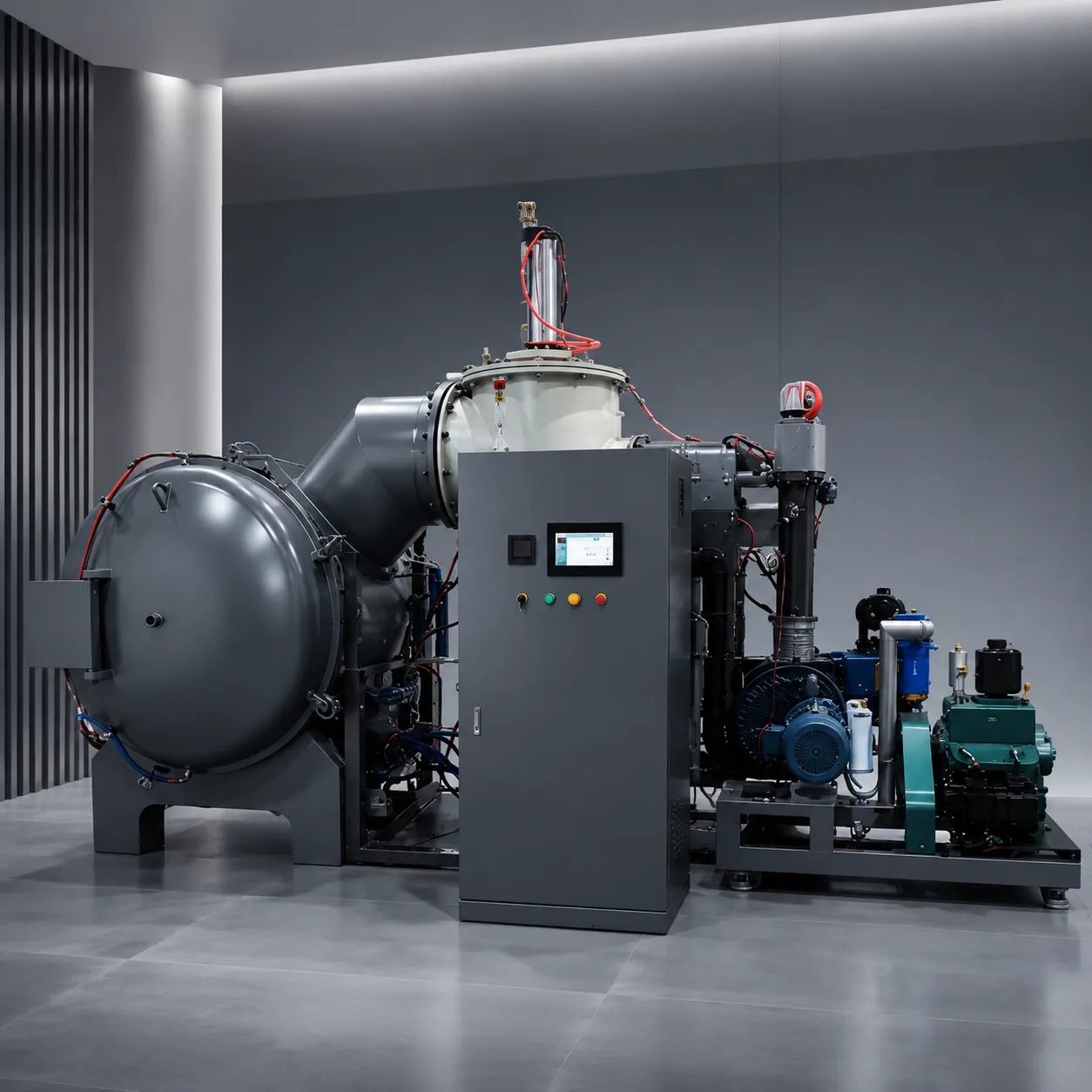
Industrial & High-Temperature Sintering Furnaces
Explore purpose-engineered thermal processing systems in our complete products line, designed for high-volume powder metallurgy, advanced technical ceramics, and precision thermal treatment.
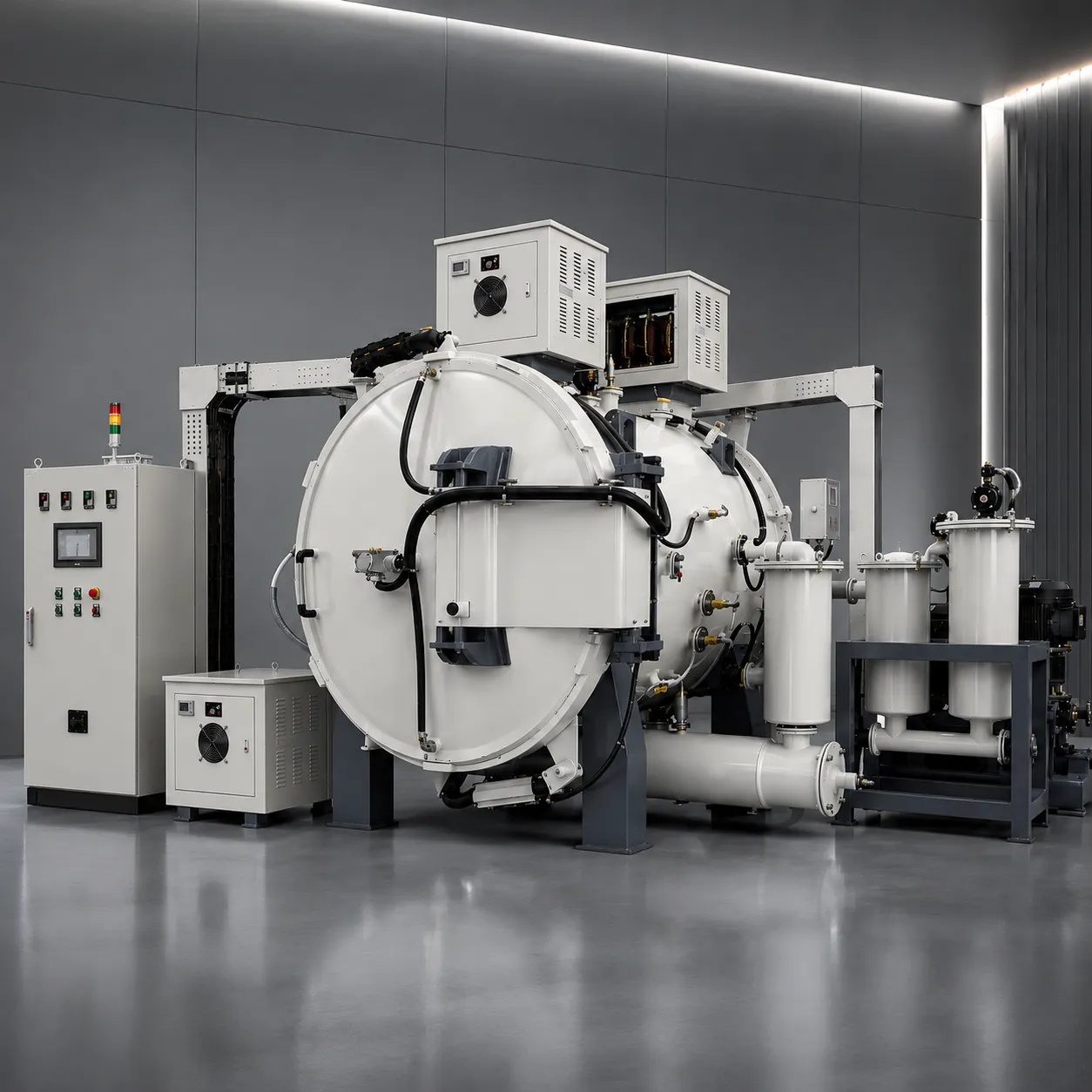 Industrial Production
 Industrial Sintering Furnace Series
Engineered for continuous powder metallurgy and metal component sintering, leveraging our advanced manufacturing capabilities to deliver high-throughput capacity, excellent thermal uniformity, and optimized energy utilization.
Core Specifications
- Max Temperature
- Up to 1400°C
- Chamber Capacity
- Customizable (up to 1200L)
- Atmosphere Control
- Inert, N2, H2, Formed Gas
- Heating Elements
- Heavy-duty FeCrAl / SiC
- Optimized industrial sintering furnace design for heavy continuous production.
- Advanced multi-layer thermal insulation significantly reduces energy losses.
- Multi-zone dynamic PID control ensures exceptional temperature uniformity.
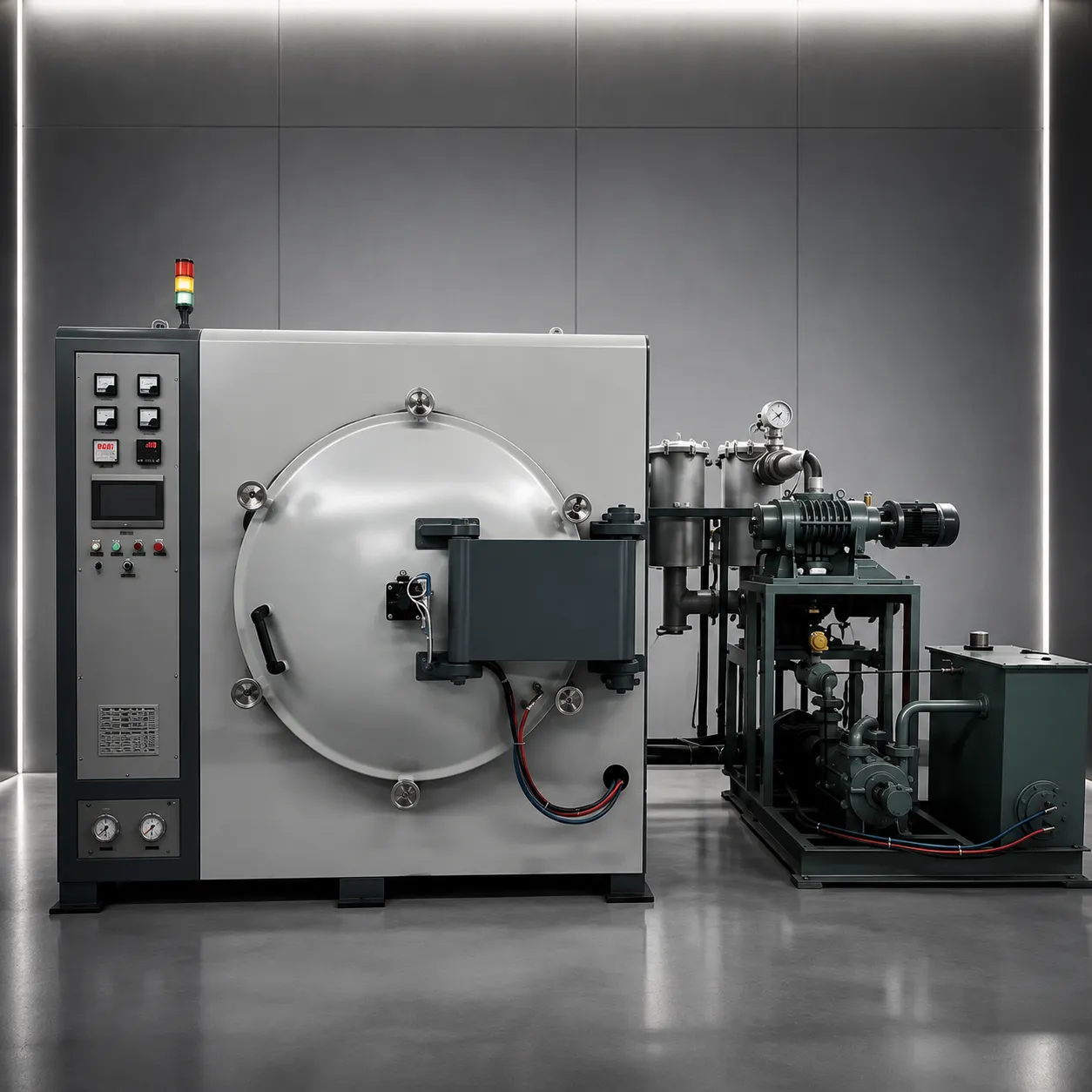 1700°C+ Extreme Temp
 High Temperature Sintering Furnace Series
Designed for advanced ceramic sintering systems and specialized material processing requiring uncompromised thermal stability at extreme temperatures of 1700°C and above.
Core Specifications
- Max Temperature
- 1700°C – 1800°C
- Chamber Capacity
- Precision Batch (10L – 300L)
- Atmosphere Control
- High Vacuum, Air, Inert Gas
- Heating Elements
- Premium MoSi2 Heating Rods
- Ultra-high temperature stability for long-duration processing up to 1800°C.
- Engineered specifically for structural ceramics, zirconia, alumina, and MIM parts.
- Precision atmosphere seals prevent oxidation during complex sintering cycles.
Tailored Engineering & Custom Solutions
Haitem Furnace's modular design allows standard industrial sintering furnaces and ultra-high temperature sintering furnace systems to be deeply customized for your specific production workflow with dedicated global service support.
Advanced Temperature Uniformity and Atmosphere Control Systems
High-precision thermal processing demands strict gas purity, fast thermal response, and minimal thermal variance across the entire working zone. Haitem Furnace designs industrial thermal processing equipment utilizing multi-zone heating architecture, advanced PID dynamic heating algorithms, and ultra-purity insulation to maximize product yield, density consistency, and batch-to-batch repeatability during every sintering thermal process.
Precision Atmosphere Control Furnace Architecture
Eliminate material oxidation, thermal cracking, and binder contamination with dynamic gas management. Our flagship atmosphere control furnace systems feature multi-channel Mass Flow Controllers (MFC) that regulate pure hydrogen, nitrogen, argon, or vacuum furnaces debinding environments with exact gas ratios.
- Multi-Channel MFC Integration: High-precision dynamic gas dosing with independent flow meters for accurate, automated gas proportioning.
- Integrated Vacuum Debinding: Automated multi-stage binder burnout sequences that eliminate thermal stress and maximize final microstructural density.
- Closed-Loop O₂ Monitoring: Real-time oxygen sensor feedback ensuring residual oxygen levels remain strictly below critical ppm thresholds.
Multi-Zone Heating with PID Dynamic Heating
Achieve exceptional temperature uniformity across large-volume industrial furnace chambers. By pairing multi-zone independent heating elements with smart PID dynamic heating algorithms, thermal deviation is strictly controlled during rapid ramps and critical dwell cycles.
- Independent Multi-Zone Loops: Up to 6 distinct heating zones dynamically compensated to eliminate cold corners and edge heat losses.
- PID Dynamic Heating Algorithms: Intelligent auto-tuning controllers that eliminate overshoot, stabilize thermal curves, and protect delicate workpieces.
- Calibrated Sensor Array: High-accuracy Type S/B thermocouples or non-contact pyrometers engineered for continuous high-temperature reliability.
Energy-Saving High-Purity Insulation Systems
Reduce operational power consumption by up to 35% with high-purity alumina ceramic fiber and graphite composite insulation linings. Haitem Furnace selects ultra-low thermal mass materials that minimize energy storage while enabling rapid heating and cooling cycles without structural degrading.
- Low Thermal Mass Linings: Vacuum-formed ceramic fibers with low heat absorption rates designed for rapid continuous cycling.
- Custom Chemistry Materials: Fiber or high-density graphite insulation options matched to operational temperatures up to 2400°C.
- Dual-Casing Cooling Shell: Double-walled air- or water-cooled outer shell that keeps external skin temperatures safely below 45°C.
Automated PLC Control & Integrated Safety Interlocks
Optimize every stage of your sintering thermal process with industrial PLC automation and intuitive touchscreen interfaces. Built-in safety interlocks, remote telemetry, and detailed batch logging ensure complete operator safety and rigorous regulatory compliance. Learn more about us and our commitment to safety.
- Interactive HMI Interface: Flexible multi-segment temperature programming, visual process displays, and extensive recipe storage.
- Hardware Safety Interlocks: Automatic over-temperature power shut-offs, gas pressure drop cutoffs, and power-failure memory protection.
- Complete Data Traceability: Automated batch parameter logging with USB and Ethernet export capabilities for quality audit verification.
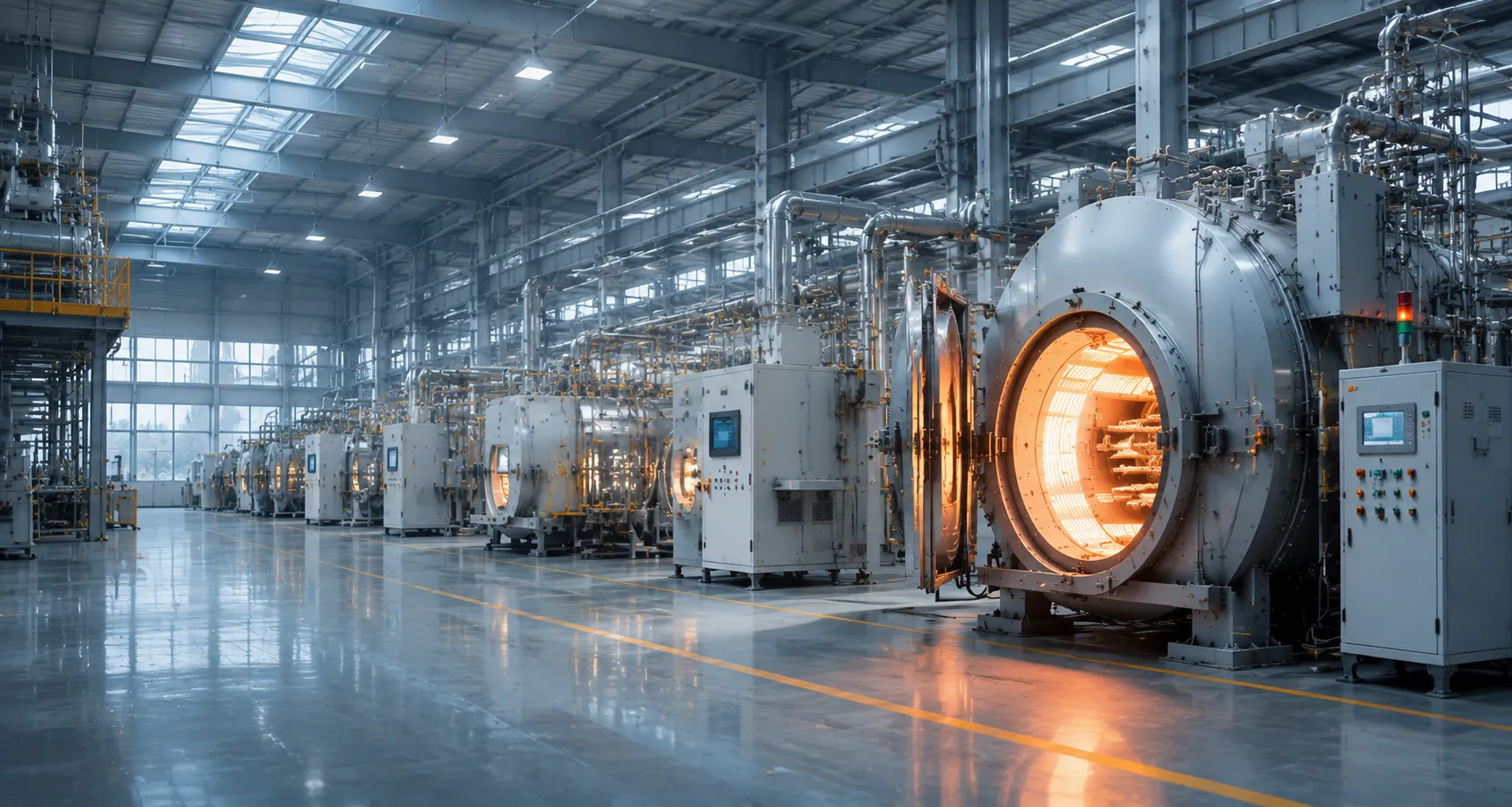
"Haitem Furnace's multi-zone heating controls and precise atmosphere systems reduced our component density variation to near zero while significantly improving overall batch throughput."
Engineered for Demanding High-Temperature Reliability
Powered by Haitem Furnace's proprietary multi-zone control and dynamic atmosphere management technologies, our systems deliver highly repeatable thermal cycles and superior product yields across complex industrial applications.
| Module Component | Technical Specification | Operational Advantage |
|---|---|---|
| Heating Elements | MoSi₂, SiC, or High-Purity Graphite | Rapid thermal response with temperature capabilities reaching up to 2400°C |
| Atmosphere Management | Multi-channel MFC (H₂, N₂, Ar, Vacuum) | Prevents alloy oxidation and precisely controls debinding safety windows |
| Thermal Uniformity | ±1°C to ±3°C dynamic chamber tolerance | Ensures uniform density and structural integrity across large batch loads |
| Control System | Industrial Siemens / Mitsubishi PLC | Fully automated safety shut-off, recipe management, and real-time data tracing |
Need Customized Thermal Processing Specifications?
Haitem Furnace thermal engineering specialists customize furnace chamber geometries, heating element configurations, and multi-gas purging systems tailored precisely to your production volumes and material kinetics.
Powder Metallurgy Sintering Systems
High-density thermal processing for structural automotive and industrial components
Conventional powder metallurgy (PM) sintering demands exceptional atmospheric stability and precise thermal zoning to drive solid-state atomic diffusion without component distortion. Designed for high-volume iron-based, copper-based, and stainless-steel structural gears, bearings, and sprockets, Haitem furnace systems deliver tight dew-point control and strict carbon potential management to eliminate surface oxidation and decarburization. Built to support diverse industry needs, these systems back demanding high-throughput production lines.
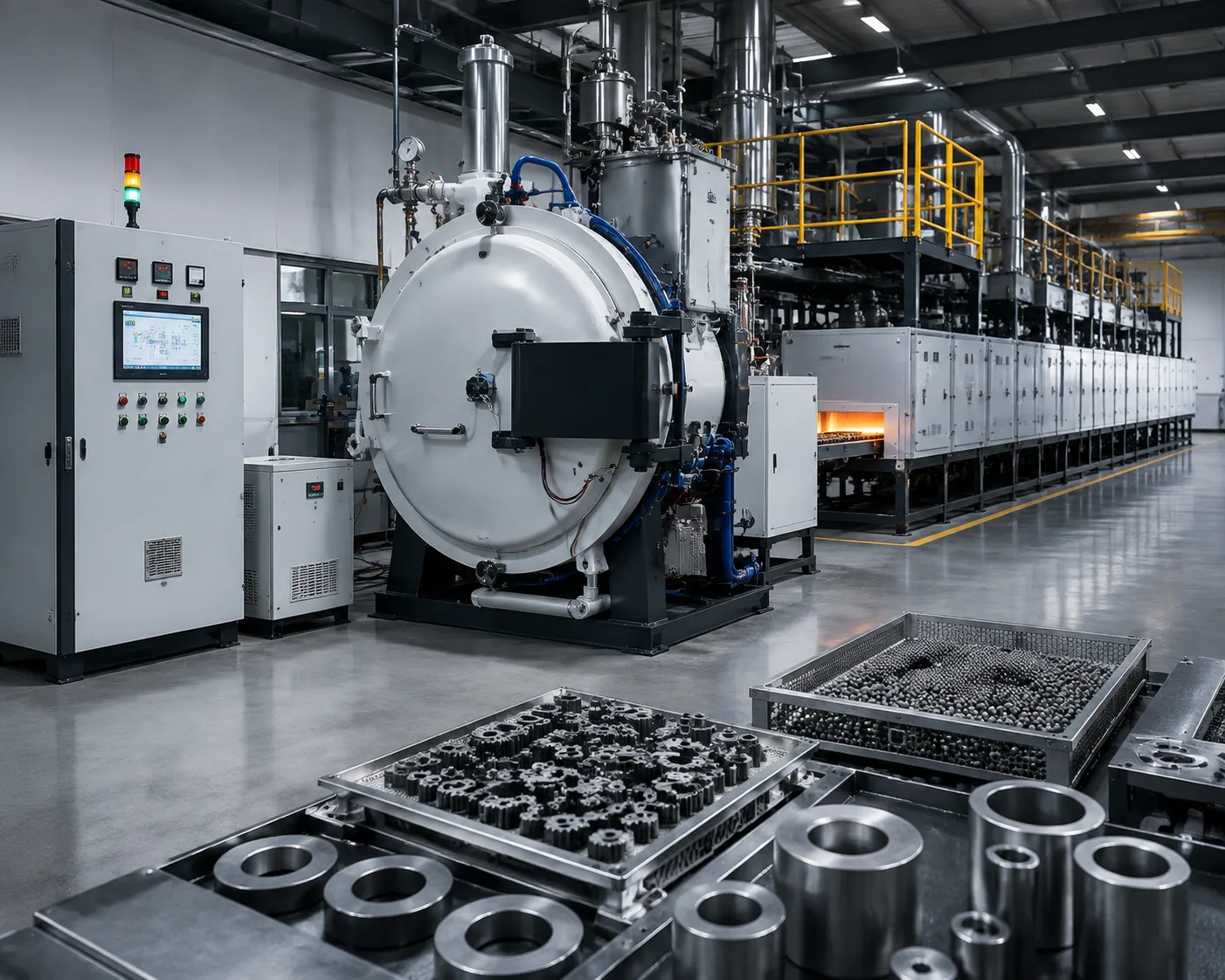
Core Technical Advantages for Powder Metallurgy
- Multi-zone atmosphere control: Integrated mass flow controllers maintain precise hydrogen and nitrogen ratios across heating zones.
- Delubrication optimization: Dedicated burn-off zones purge organic binders before high-temperature sintering.
- Sinter-hardening technology: Rapid convective gas quenching modules achieve martensitic structures directly in-line.
- Superior thermal efficiency: Ultra-low mass ceramic insulation minimizes power consumption and accelerates ramp rates.
Material-Specific Sintering Kinetics & Equipment Selection Matrix
Selecting the ideal furnace architecture requires aligning material thermodynamic behavior with core equipment parameters. The comparison matrix below illustrates how key operational parameters shift based on material chemistry, target density, and production throughput demands:
| Material Class | Target Applications | Primary Atmosphere | Temperature Range | Recommended Furnace Type |
|---|---|---|---|---|
| Iron & Steel PM | Automotive gears, engine bearings, structural sprockets | Endothermic Gas, N2 + H2 Blends | 1120°C - 1280°C | Continuous Mesh Belt / Pusher Furnace |
| Stainless Steel & Titanium MIM | Medical implants, aerospace fasteners, watch cases | High Vacuum, Partial Pressure Argon | 1250°C - 1380°C | Integrated Vacuum Debinding & Sintering Furnace |
| Zirconia & Alumina Ceramics | Dental prosthetics, wear plates, ceramic substrates | Air, Oxygen-Enriched, Argon Purge | 1500°C - 1750°C | High-Temp Box / Elevator Ceramic Furnace |
| Silicon Carbide & Nitride | Semiconductor wafer boats, high-wear nozzles | Ultra-pure Nitrogen, High Vacuum | 1700°C - 2400°C | Graphite Hot-Zone Vacuum Sintering System |
Sintering Furnace Selection Guide and Customization Process
Achieving optimal mechanical density, precise phase purity, and dimensional stability requires matching furnace capabilities with material kinetics. Haitem Furnace provides bespoke custom sintering furnace engineering tailored to your precise operating temperatures, atmospheric purity, and throughput goals through our full about-us / customization capabilities.
4 Critical Elements for Sintering Furnace Selection
Evaluate these essential technical parameters to align high-temperature furnace hardware with your specific metallurgical and advanced material processing needs.
Maximum Working Temperature
Select temperature ranges from 1100°C up to 2400°C+. Choosing the right heating elements—such as Silicon Carbide (SiC), Molybdenum Disilicide (MoSi₂), or high-purity Graphite—ensures element durability and thermal stability.
Atmosphere & Vacuum Depth
Define dynamic process atmospheres including high vacuum, ultra-pure inert gas (Ar/N₂), or reducing gas (H₂). Accurate mass flow control prevents intergranular oxidation during elevated sintering phases.
Throughput & Batch Geometry
Balance small-batch flexibility against continuous automated production lines. Sizing chamber dimensions, pusher speeds, or conveyor belts optimizes cycle times and overall thermal energy efficiency.
Integrated Debinding & Sintering
Implement single-stage integrated debinding and sintering equipment for MIM and PM applications to eliminate intermediate handling, minimize contamination, and streamline component production.
4-Step Engineering Customization & Manufacturing Process
Haitem Furnace delivers end-to-end turnkey solutions, leveraging advanced manufacturing-capabilities to manage projects from initial material feasibility tests through site installation, operator training, and commissioning.
Needs Analysis & Sample Testing
Our engineers review your metallurgical targets, shrinkage parameters, and atmosphere profiles. Sample thermal trials establish exact heating and cooling curves prior to structural design.
Custom Structural & Control Design
We develop targeted industrial heating design blueprints focusing on multi-zone temperature uniformity, low-mass insulation selection, precision gas delivery, and automated PLC safety systems.
Precision Manufacturing & Quality QC
Systems are built under strict ISO quality standards. Factory acceptance testing (FAT) validates vacuum hold times, gas seal integrity, heating element balance, and emergency shutoff controls.
On-Site Installation & Commissioning
Haitem Furnace engineers lead utility hookups, atmosphere manifold line connections, and initial thermal tuning on site while delivering complete hands-on operator training.
Require Special Custom Sintering Specifications?
Submit your material composition, target temperature profile, and output metrics to receive a tailored engineering proposal.
Rapid Sintering Furnace Selection Comparison Matrix
Compare key operating metrics across standard furnace configurations to identify the ideal processing platform for your facility.
| Furnace Configuration | Max Working Temp | Atmosphere Capability | Production Mode | Primary Target Applications |
|---|---|---|---|---|
| Continuous Sintering Furnace (Pusher / Mesh Belt) | 1100°C to 1750°C | Hydrogen, Dissociated Ammonia, Nitrogen, Air | High-volume continuous production | Powder metallurgy parts, MIM debinding & sintering, structural steel parts |
| Box Sintering Furnace (Chamber / Elevator) | Up to 1800°C | Controlled inert atmosphere (Ar/N₂) or Air | Flexible batch processing & medium yield | Structural ceramics, dental zirconia, electronic substrates, high-purity alumina |
| Tube Sintering Furnace (Rotary / Multi-Zone) | Up to 1800°C | High vacuum, inert multi-gas flow distribution | Laboratory R&D and pilot batch testing | Battery materials, advanced ceramic powders, crystal growth, material testing |
| Vacuum Sintering Furnace (Graphite / Moly Hearth) | Up to 2400°C | High vacuum or partial-pressure inert gas | High-precision batch processing | Titanium alloys, Silicon Carbide (SiC), Tungsten Carbide tooling, refractory metals |
Optimizing Industrial Sintering Equipment for High Yield Thermal Processing
Navigating sintering furnace selection requires balancing ramp rates, dynamic atmosphere purity, and mechanical cycle limits. Applying rigorous industrial heating design principles prevents internal thermal gradients, reduces part deformation, and ensures maximum theoretical density across complex components.
Establishing a reliable sintering thermal process requires multi-zone PID heating arrays coupled with precise multi-channel mass flow gas delivery. Whether processing press-and-sinter metal powders or technical ceramics, maintaining tight thermal stability through pre-heating, binder burnout, and soaking stages is critical for yield optimization.
The hot-engineering team at Haitem Furnace delivers complete thermal engineering solutions. From preliminary material testing through full custom sintering furnace manufacturing, we support industrial manufacturers in transitioning smoothly from laboratory engineering to high-volume commercial production.
- Integrated debinding traps and dynamic high-vacuum thermal processing
- Multi-zone dynamic PID heating arrays achieving tight ±1°C temperature uniformity
- Low-thermal-mass fiber and composite graphite insulation for low energy consumption
- Comprehensive PLC touch-screen automation with real-time data logging and safety shutoffs
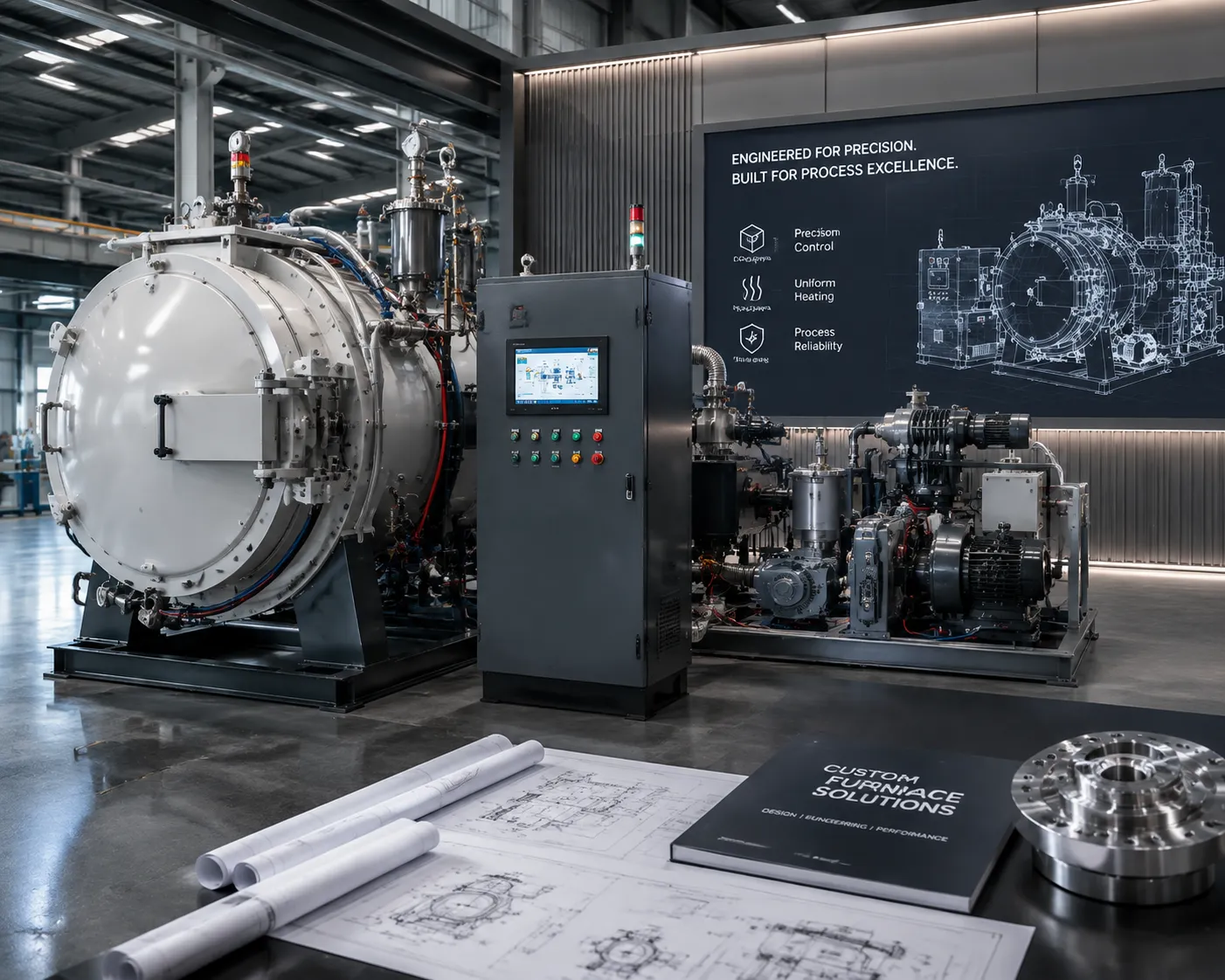
Bespoke furnace architecture and advanced thermal control engineered by Haitem Furnace.
Frequently Asked Questions & Technical Guidance
Find authoritative answers regarding industrial furnace operation, sintering heating element selection, protective atmosphere purity, debinding integration, and preventive furnace maintenance protocols.
01 What are common sintering heating elements, and how do you select them based on operating temperature?
Selecting the appropriate sintering heating elements is fundamental to ensuring process repeatability, optimizing energy usage, and maximizing furnace longevity. Selection depends directly on peak working temperature, atmosphere chemistry (oxidizing, inert, reducing, or vacuum), and the target thermal ramp rate.
Heating Element Selection Matrix
| Element Material | Temperature Limit | Atmosphere Compatibility | Typical Sintering Applications |
|---|---|---|---|
| Resistance Wire (FeCrAl / NiCr) | Up to 1200°C | Air, Nitrogen, Argon | Pre-sintering, low-temp powder metallurgy, metal annealing |
| Silicon Carbide (SiC) | 1200°C – 1450°C | Oxidizing, Inert, Mild Reducing | Structural ceramics, ferrite cores, high-throughput batch firing |
| Molybdenum Disilicide (MoSi2) | 1400°C – 1800°C | Air, Oxidizing, Inert, Hydrogen | Advanced technical ceramics, dental zirconia, glass melting |
| Graphite / Molybdenum / Tungsten | 1600°C – 2400°C+ | High Vacuum, Pure Nitrogen/Argon | Silicon carbide, MIM debinding/sintering, refractory alloys |
At Haitem Furnace, our engineers calculate localized watt densities and element positions to avoid premature thermal stress, guaranteeing long operational lifespans and accurate temperature uniformity across all dynamic heating cycles.
02 How do you ensure atmosphere purity and process safety during high-temperature sintering?
Operating an atmosphere control furnace requires rigid atmospheric seal integrity to prevent oxidation or decarburization. When working with flammable or reducing gases like pure hydrogen or dissociated ammonia, comprehensive safety interlocks are critical for safe industrial furnace operation.
Atmosphere Purity Protocols
- Digital Mass Flow Controllers (MFC): Multi-channel gas metering for precise stoichiometric mixing of hydrogen, nitrogen, or argon.
- Vacuum-Purge Cycles: Pre-evacuation down to vacuum levels removes trapped air, reducing oxygen concentration to under 5 ppm.
- Inline Dew Point & O2 Sensors: Continuous gas monitoring ensures strict atmospheric control throughout heating and cooling ramps.
Combustible Gas Safety Controls
- Emergency N2 Flush Interlock: Automatic high-pressure nitrogen purging activates instantly upon power loss or pressure drop.
- Burn-Off Flare & Pilot Igniters: Dual flame-monitoring sensors ensure safe thermal destruction of combustible exhaust gases.
- Water-Cooled Elastomer Flanges: Precision double-o-ring designs prevent gas escape during intense thermal expansion.
Whether running continuous hydrogen profiles or specialized low-pressure vacuum furnaces cycles, Haitem Furnace systems integrate fully automated PLC safety interlocks that comply with international industrial safety standards. Learn more about us and our engineering commitment.
03 Do your sintering furnaces support completing debinding and sintering in one continuous process?
Yes. Haitem Furnace designs integrated debinding and sintering systems tailored specifically for Metal Injection Molding (MIM), Ceramic Injection Molding (CIM), and powder metallurgy compacts requiring organic binder removal prior to high-density sintering.
How Combined Thermal Debinding & Sintering Works:
- Thermal Debinding Stage (200°C – 600°C): Slow, precise thermal ramps combined with forced sweep gas (N2, Ar, or partial vacuum) vaporize binders, polymers, and wax without disturbing fragile green parts.
- Condensation & Trap Extraction: Vaporized binders are channeled through heated exhaust pipes into external wax condenser units and thermal oxidizers, keeping the furnace hot zone free of carbon soot.
- High-Temperature Sintering Stage (1300°C – 1750°C+): Once debinding is complete, the furnace automatically advances to high-vacuum or partial-pressure sintering to achieve complete densification and uniform part shrinkage.
Combining debinding and sintering into a single automated program eliminates part transfer handling, prevents secondary surface oxidation, reduces total cycle time, and cuts energy consumption by up to 35%.
04 What post-sales technical support, furnace maintenance, and spare parts services do you provide?
To prevent unexpected downtime and maintain peak thermal efficiency, Haitem Furnace provides comprehensive lifecycle support for every continuous, box, tube, and high-temperature vacuum sintering installation backed by our global-service network.
PLC remote diagnostics, thermal profile troubleshooting, and process parameter tuning.
Stocked heating elements, thermocouples, refractory fiber boards, and vacuum seals.
Global commissioning, Temperature Uniformity Surveys (TUS), and technician training.
Our proactive furnace maintenance packages include routine thermal imaging inspections, atmosphere integrity checks, and preventive recalibrations structured around your production schedules.
05 How is temperature uniformity controlled across large-capacity industrial furnaces?
Maintaining tight temperature uniformity inside expanded hot zones requires multi-zone power management, low-mass thermal insulation, and advanced digital PID control loops.
- Multi-Zone Heating Control: Independent SCR power controllers adjust heat output dynamically across furnace zones, compensating for edge and door radiation losses.
- High-Purity Insulation Linings: Vacuum-formed alumina fiber or multi-layer graphite felt linings lower thermal mass, curbing heat dissipation and power consumption.
- Intelligent PID & PLC Tuning: Integrated Eurotherm or Siemens PLC architectures deliver precise PID dynamic heating, maintaining steady-state temperature accuracy within ±1°C.
Have Unanswered Sintering Process Questions?
Haitem Furnace provides 24/7 technical advisory services to help global industrial manufacturers overcome atmosphere control, temperature uniformity, and equipment maintenance challenges in high-precision thermal processing.
Ready to Optimize Your Industrial Sintering Process?
Contact thermal experts at Haitem Furnace to receive tailor-made equipment engineering proposals, precise atmosphere-control assessments, and competitive factory-direct quotes for your facility. Learn more about-us and our advanced manufacturing-capabilities to see how we back every custom solution.
24-Hour Response
Fast engineering review and tailored budget estimation delivered within 24 hours.
Free Evaluation
Comprehensive thermal profile and chamber compatibility analysis for your materials.
Instant Catalog
Gain immediate access to our full technical specifications and PDF product catalog.
Dedicated Thermal Engineering Support
Contact thermal experts to configure heating zone specs, chamber dimensions, and protective gas systems.
Get Furnace Quote
Provide your application specifications below to receive a customized technical proposal and pricing.