Advanced Ceramic Sintering Furnace & High-Temperature Calcination Systems
Engineered for structural, functional, and electronic ceramics, Haitem Furnace provides high-precision, multi-atmosphere industrial equipment for high-temperature ceramic processing. Achieve exceptional material density, dimensional accuracy, and batch-to-batch repeatability across your production line.
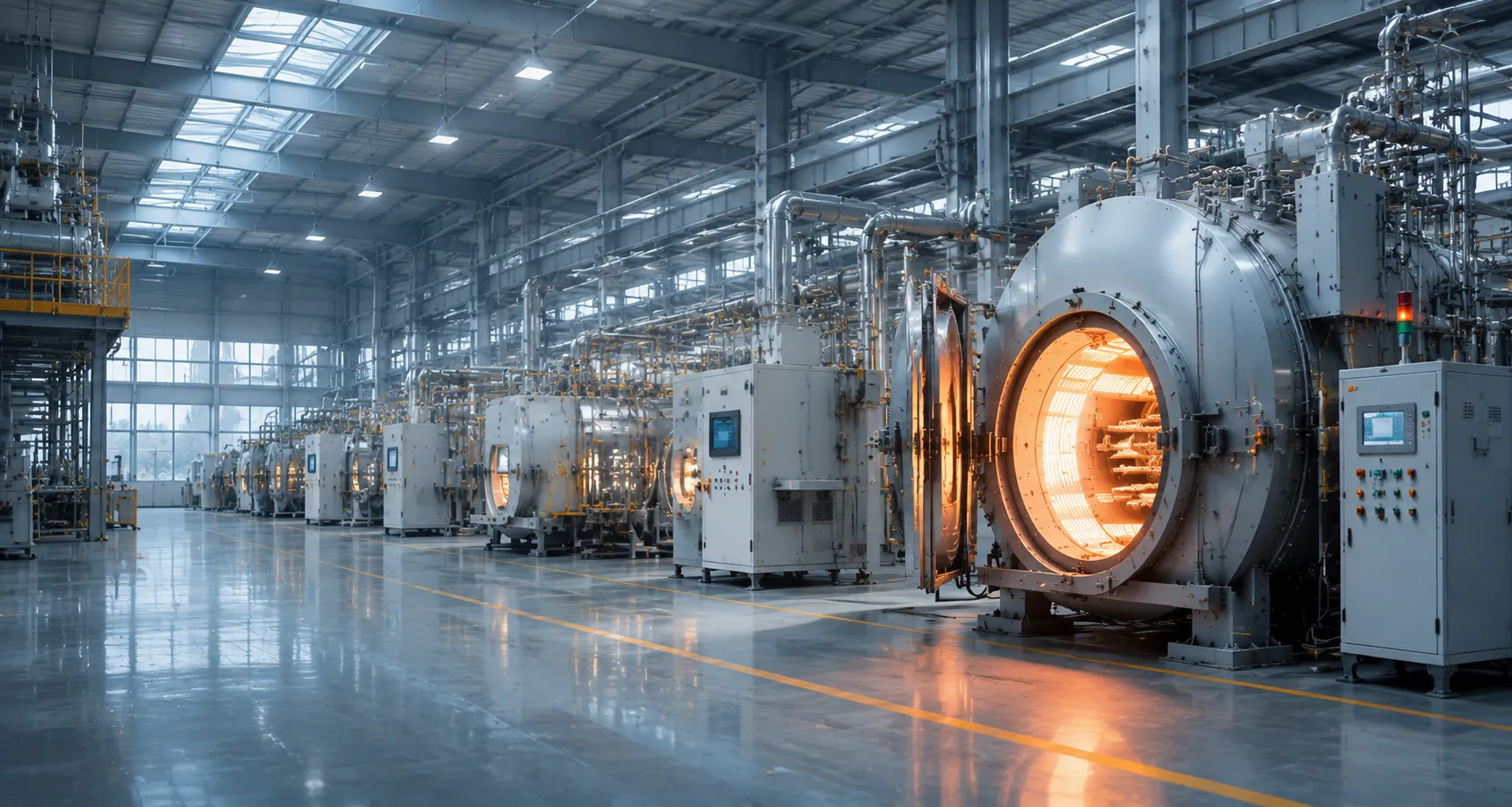
High-Temperature Processing
Custom Ceramic Sintering Furnace
Overcoming Core Thermal Processing Challenges in Advanced Ceramics
Haitem Furnace eliminates cracking, warping, and density variations through precise thermal gradient control, integrated debinding extraction, and stable atmosphere engineering across our line of thermal processing products.
Thermal Gradient Deformation
Inconsistent temperature distribution is causing internal stress, leading to warping and micro-cracking in large ceramic parts during ramp-up and soaking.
Multi-zone independent PID controllers manage individual heating elements to deliver strict thermal gradient control and ±3°C chamber uniformity.
Binder Residue & Contamination
Organic binder residue leaves carbon contamination, leading to surface discoloration, reduced dielectric strength, and lower mechanical performance.
Proprietary debinding exhaust channels and protective refractory linings continuously purge organic vapors before high-temperature densification.
Atmospheric Fluctuations
Oxygen leaks or gas pressure variations lead to improper oxidation or unwanted reduction, degrading non-oxide and electronic ceramics.
Automated multi-gas switching, vacuum pre-evacuation, and micro-positive pressure monitoring lock in pure inert or reducing environments.
Ceramic Defect Prevention & Process Control
Haitem Furnace integrates precise multi-zone heating and active gas management into every industrial system. Driven by our advanced manufacturing capabilities, our engineering ensures high density, uniform shrink rates, and repeatable structural integrity across all advanced ceramic batches.
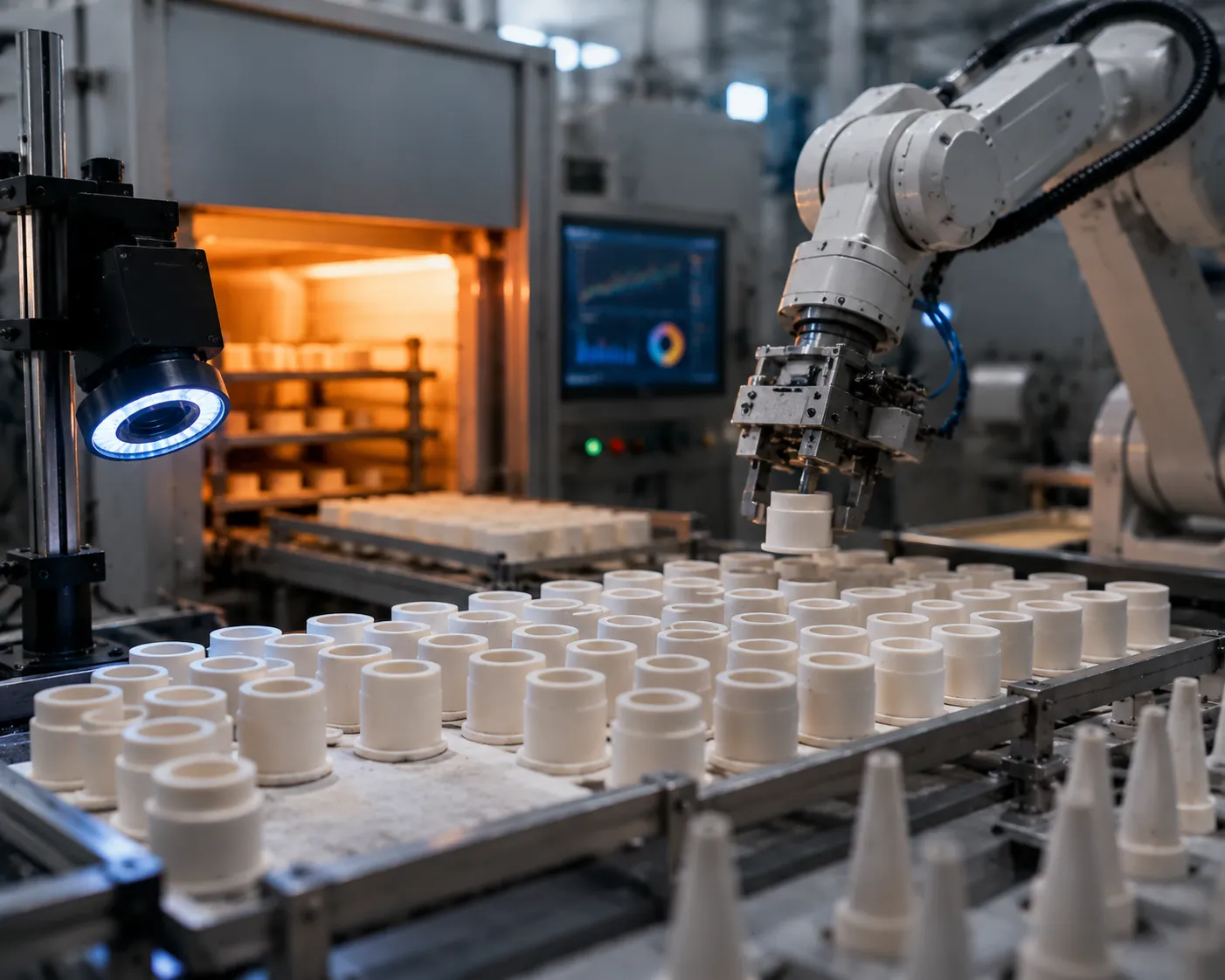
Advanced Ceramic Furnaces & High-Temperature Kilns
Engineered for structural ceramics, functional non-oxides, and advanced electronic substrates. Explore our comprehensive product catalog engineered to meet demanding industrial specifications across global market applications.
High-Vacuum & Pressure Sintering Systems for Non-Oxide Ceramics
Designed for oxygen-sensitive advanced ceramics such as Silicon Nitride (Si3N4), Aluminum Nitride (AlN), and Silicon Carbide (SiC), Haitem vacuum ceramic sintering furnaces provide precise atmosphere control, extreme vacuum levels down to 10⁻³ Pa, and temperatures reaching 2200°C. Backed by extensive manufacturing capabilities, these systems utilize graphite or refractory metal hot zones with multi-zone heating for exceptional temperature uniformity and zero oxidation.
High Vacuum Ceramic Sintering Furnace
Features graphite or metal thermal insulation, double-walled water cooling, and precision diffusion pumping to eliminate micro-voids in non-oxide technical ceramics.
Gas Pressure Sintering (GPS) Furnace
Combines high-vacuum thermal debinding with up to 10 MPa pressurized inert gas firing. Suppresses species volatilization at elevated temperatures to achieve full theoretical ceramic density.
Integrated Debinding & Vacuum Sintering Furnace
Utilizes specialized binder condensation traps and anti-contamination chamber liners to complete organic debinding and high-temperature vacuum sintering in a single, unbroken thermal cycle.
Strategic Selection Rules for Technical Ceramic Thermal Processing
Selecting the ideal ceramic furnace requires evaluating the chemical thermodynamics, phase transformation kinetics, and organic binder contents of your ceramic formulation. Mismatching furnace capabilities with material chemistry leads to critical defects including warping, micro-cracking, residual carbon discoloration, and sub-optimal theoretical density. For complete details about our thermal processing expertise, visit our about us page.
Oxide Ceramics vs. Non-Oxide Ceramics
Oxide ceramics such as high-purity alumina (Al2O3) and yttria-stabilized zirconia (YSZ) can generally be fired in clean air or oxidizing atmospheres using high-temperature box furnaces or continuous roller kilns. Conversely, non-oxide ceramics like silicon nitride (Si3N4), aluminum nitride (AlN), and silicon carbide (SiC) rapidly oxidize at elevated temperatures. These advanced non-oxides mandate a ceramic vacuum furnace or a gas pressure sintering system operating under ultra-high vacuum or high-purity nitrogen/argon overpressure.
- Oxides (Al2O3, ZrO2): Air firing, precise thermal gradient control up to 1800°C.
- Nitrides (Si3N4, AlN): High vacuum (10⁻³ Pa) or 1–10 MPa N₂ overpressure to prevent dissociation.
- Carbides (SiC, B4C): High-temperature vacuum/argon environments above 1900°C.
Production Scale: Batch R&D vs. Continuous Kilns
Process stage dictates furnace geometry and thermal control mechanics. R&D facilities and short-run custom components benefit from high-flexibility box ceramic furnaces or tube furnaces capable of dynamic program curve adjustments. For gigafactory-scale manufacturing of MLCCs, substrates, or structural parts, a continuous ceramic kiln (push-plate or roller hearth) provides uncompromised thermal consistency, high energy efficiency, and low labor overhead per unit.
- Lab & Pilot Prototyping: Batch box/tube furnaces, programmable multi-segment curves.
- High-Volume Components: Multi-zone continuous kilns with dedicated debinding segments.
- High-Density Parts: Gas pressure sintering (GPS) to eliminate residual microporosities.
Technical Ceramic Equipment Matrix Overview
Cross-reference material requirements against Haitem furnace equipment series.
| Ceramic Category | Sintering Environment | Max Temperature | Recommended Haitem Series | Key Yield Advantage |
|---|---|---|---|---|
| Silicon Nitride (Si3N4) | High Vacuum / N₂ Overpressure | 1850°C – 2200°C | GPS-Series / VSF-Series | Eliminates thermal decomposition; achieves >99.5% density |
| Aluminum Nitride (AlN) | High Vacuum & Pure Nitrogen | 1800°C – 1950°C | VSF-Series / DVS-Series | Prevents oxygen contamination; preserves high thermal conductivity |
| High-Purity Alumina (Al2O3) | Air / Oxidizing Atmosphere | 1600°C – 1750°C | HTB-Series / RHK-Series | Precise ±1°C PID control prevents abnormal grain growth |
| Zirconia (ZrO2 Structural) | Air / Controlled Vacuum | 1450°C – 1600°C | ELF-Series / HTB-Series | Uniform 360° heating eliminates warping in complex parts |
| Electronic Ceramics (MLCC/LTCC) | Air / N₂-H₂ Reducing Purge | 1100°C – 1400°C | PPK-Series / CBK-Series | Multi-zone continuous throughput with inline binder extraction |
Meeting Sintering Process Demands Across Diverse Advanced Ceramic Materials
Advanced ceramic processing requires precise thermal management tailored to specific crystal phase transformations, binder pyrolysis kinetics, and atmosphere purity requirements. Learn more about-us and our engineering focus. Haitem Furnace deeply understands phase transformation and grain growth dynamics across advanced ceramics, ensuring equipment perfectly matches specific material process curves—delivering exceptional density, mechanical integrity, and dielectric stability across demanding industrial applications. Supported by advanced manufacturing-capabilities, our systems deliver exceptional results.
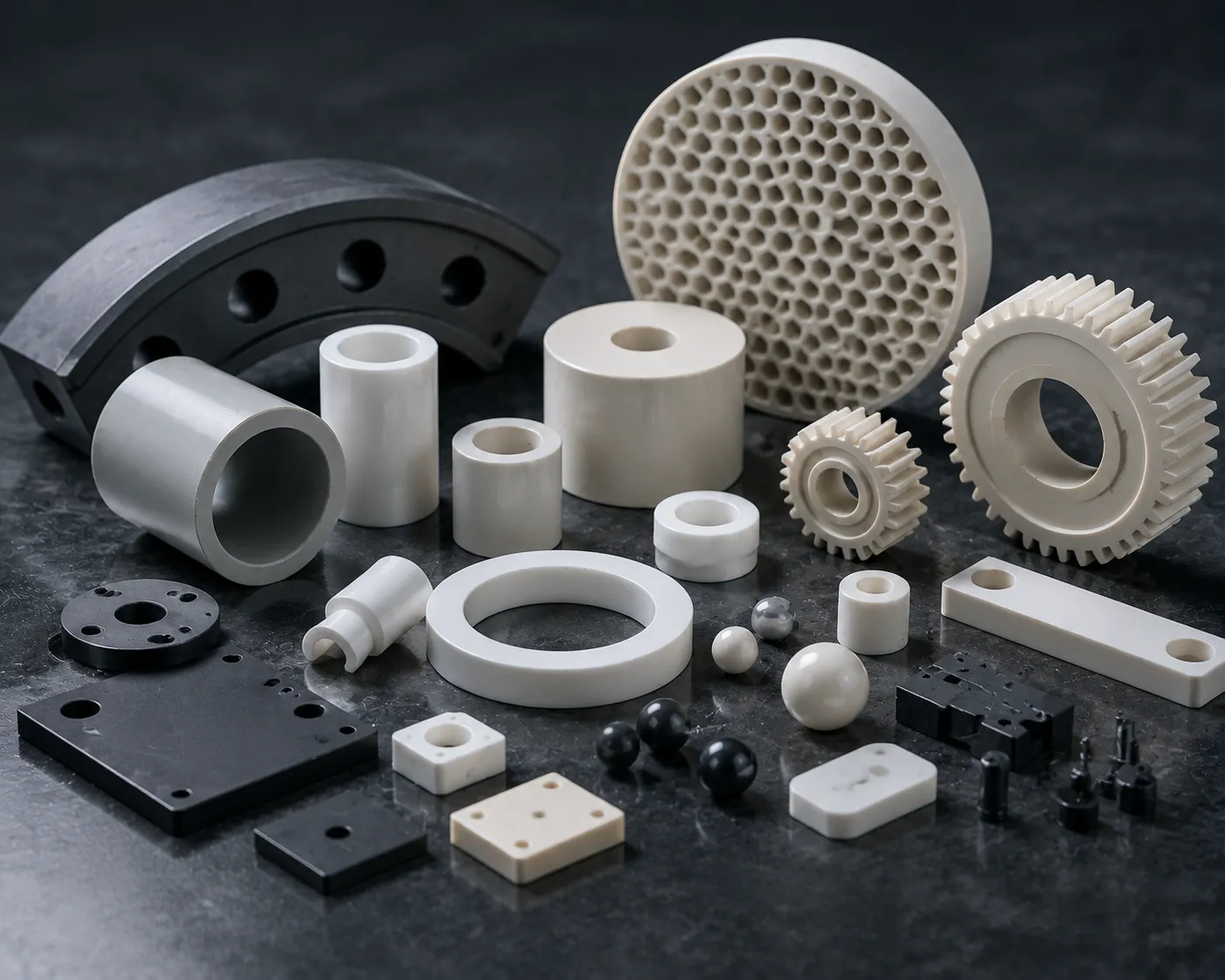
Wear-Resistant & Corrosion-Resistant Structural Ceramics
Precision structural components engineered from alumina (Al2O3) and zirconia (ZrO2) require comprehensive debinding and high-temperature sintering to eliminate micro-porosity and prevent thermal gradient cracking. Controlled heating ramps allow organic binders to pyrolyze completely without generating internal pressure build-up or structural micro-cracks.
- Alumina Sintering Precision: Multi-zone thermal gradient control achieves >99.5% theoretical density for wear rings, pump seals, and ballistic armor plates.
- Zirconia Heat Treatment: Precise cooling profiles prevent unwanted tetragonal-to-monoclinic phase transformations, maximizing fracture toughness.
- Integrated Debinding: Dedicated exhaust purge channels capture thermal decomposition gases before high-temperature densification.
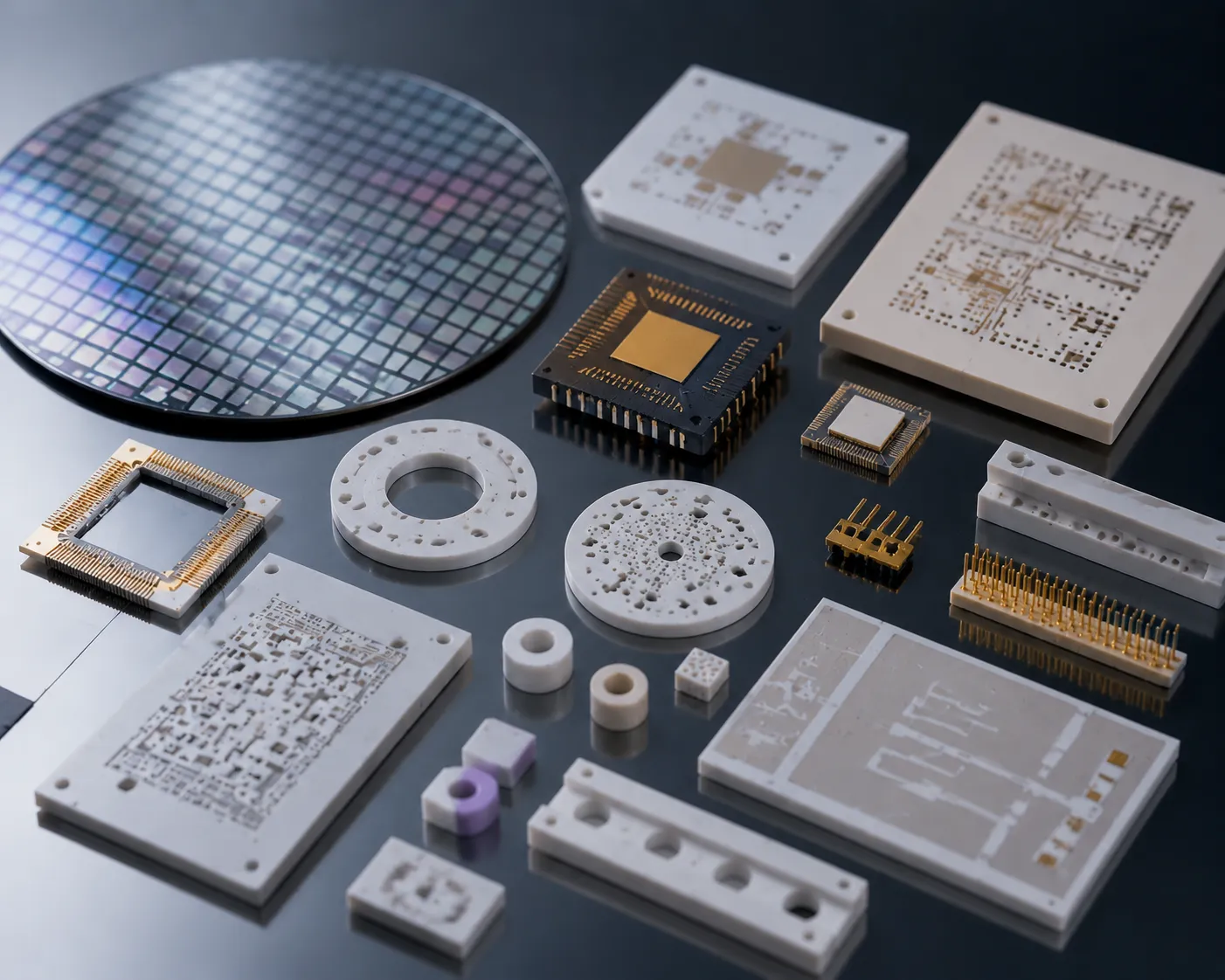
Semiconductor Substrates & Electronic Functional Components
Manufacturing aluminum nitride (AlN) substrates, multilayer ceramic capacitors (MLCCs), and piezoelectric transducers requires extreme atmosphere purity and positive-pressure gas containment. Haitem systems mitigate volatile element loss and oxygen contamination to preserve ultra-high thermal conductivity and dielectric constants.
- Aluminum Nitride (AlN) Substrates: Gas-tight muffle technology prevents oxygen contamination, yielding thermal conductivity >180 W/m·K.
- MLCC & Piezoelectric Firing: Precise N2/H2 micro-positive pressure regulation prevents nickel electrode oxidation and lead oxide volatility.
- Contamination Prevention: High-purity refractory linings ensure zero metallic ion transfer into electronic-grade ceramic matrices.
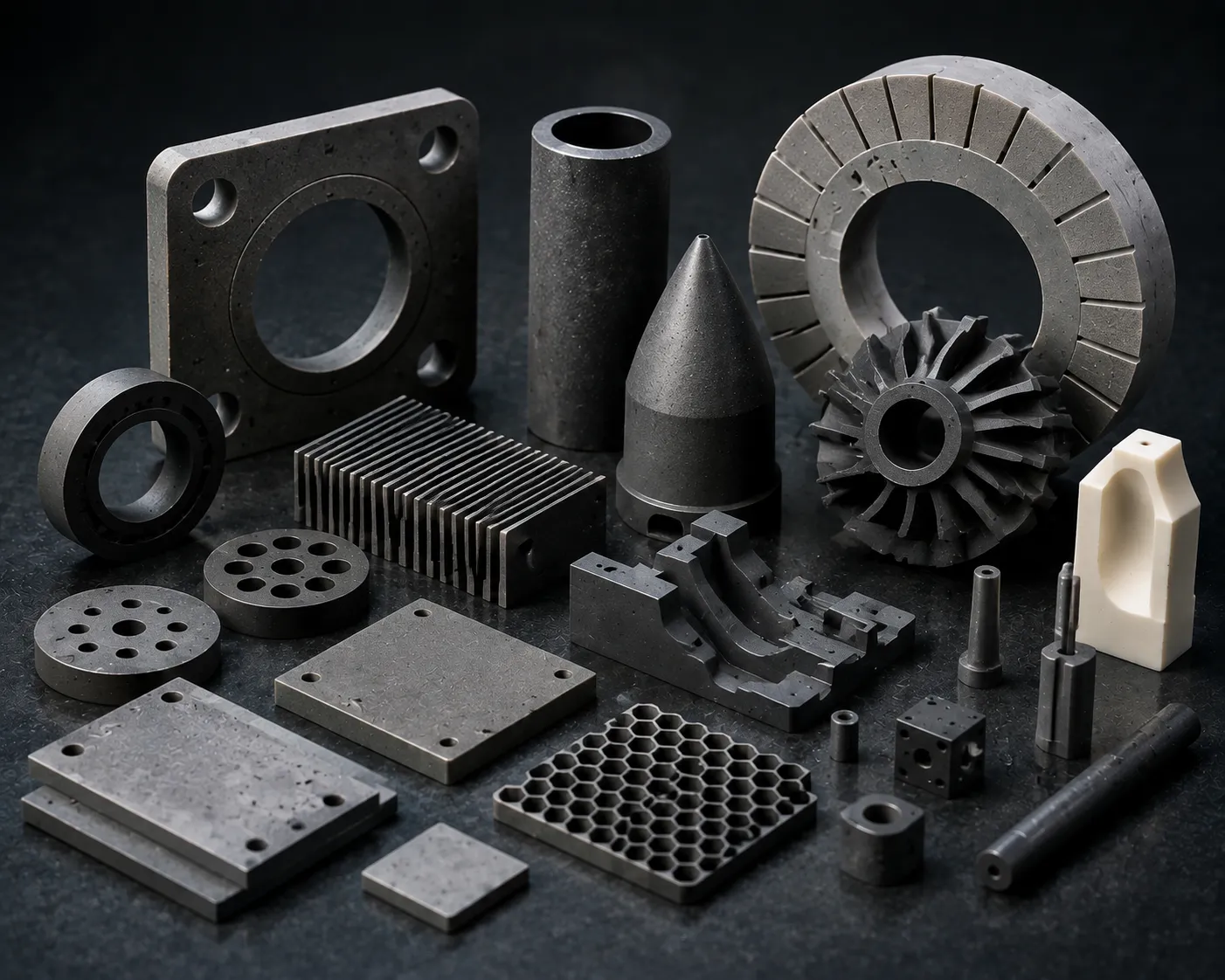
Silicon Carbide (SiC) & Ultra-High-Temperature Ceramics (UHTCs)
Advanced non-oxide ceramics, including reaction-bonded and pressureless sintered silicon carbide (SiC), boron carbide (B4C), and ultra-high-temperature ceramic composites (ZrB2, HfB2), require thermal environments exceeding 1900°C under high vacuum or high-purity argon protection using specialized vacuum-furnaces.
- Ultra-High Thermal Range: Reliable continuous operational capability up to 2000°C with graphite or tungsten heating element configurations.
- Deep Vacuum & Overpressure: Integrated high-vacuum pumping systems (10⁻³ Pa) combined with 10–100 bar gas pressure sintering (GPS) options.
- Grain Growth Control: Automated rapid heating and controlled quenching sequences prevent abnormal grain growth in structural composites.
Advanced Ceramic Sintering Process & Thermal Profile Matrix
Achieving target mechanical, electrical, and thermal properties requires rigorous matching of atmosphere dynamics, ramp rates, and dwell parameters. Below is a comprehensive engineering overview of critical sintering profile factors managed across Haitem industrial thermal platforms.
| Ceramic Material Category | Primary Sintering Atmosphere | Peak Thermal Range | Critical Thermal Curve Controls | Haitem System Solution |
|---|---|---|---|---|
| Oxide Ceramics (Al2O3, ZrO2, MgAl2O4) | Air, Pure Oxygen, or Ambient Vacuum | 1450°C – 1750°C | Controlled debinding ramp (250°C–600°C), uniform soaking stage, grain growth control during cooling. | High-Temperature Box & Shuttle Furnaces with MoSi2 / Kanthal elements |
| Nitride Ceramics (AlN, Si3N4, BN) | High-Purity N2, Vacuum (10⁻³ Pa), Overpressure N2 | 1700°C – 1950°C | Oxygen-free atmosphere purge, micro-positive pressure, grain-boundary phase liquid sintering control. | Vacuum Gas Pressure Sintering (GPS) Furnaces with Graphite / Metallic Mufflers |
| Carbides & UHTCs (SiC, B4C, ZrB2, HfB2) | Argon, High Vacuum, Inert Gas Quench | 1900°C – 2200°C | Ultra-high vacuum degassing, fast ramp rates, rapid cooling to prevent micro-cracking and phase decomposition. | Ultra-High Temperature Vacuum Sintering Furnaces with Graphite Insulation |
| Electronic & Functional (MLCCs, PZT, LTCC) | Forming Gas (N2/H2 mixtures), Dew-Point Controlled Air | 900°C – 1350°C | Multi-zone binder burnout, precise oxygen partial pressure control, high throughput consistency. | Continuous Push-Plate & Mesh-Belt Kilns with Multi-Zone PID Control |
Haitem Core Technologies Powering Precision Sintering
Haitem Furnace delivers reliable thermal processing for technical ceramics through advanced atmosphere control furnace technology, high temperature uniformity, and integrated debinding and sintering protection systems. Learn more about-us and how we support advanced thermal processing.
Precision Atmosphere Control
Integrated high-precision Mass Flow Controllers (MFC) ensure seamless gas switching and micro-positive pressure management across vacuum-furnaces, Ar, N2, H2, and reducing environments.
Debinding Exhaust Shielding
High-efficiency pyrolysis gas evacuation and condensation traps effectively protect heating elements and vacuum seals from binder contamination.
Energy-Efficient Insulation
High-purity polycrystalline mullite fiber and graphite composite linings minimize heat loss by 30%, maintaining thermal uniformity while lowering operational costs.
Intelligent PLC Profile Control
Multi-zone PID architecture supports 100-segment programmable firing profiles complete with over-temperature protection and thermocouple diagnostic alarms.
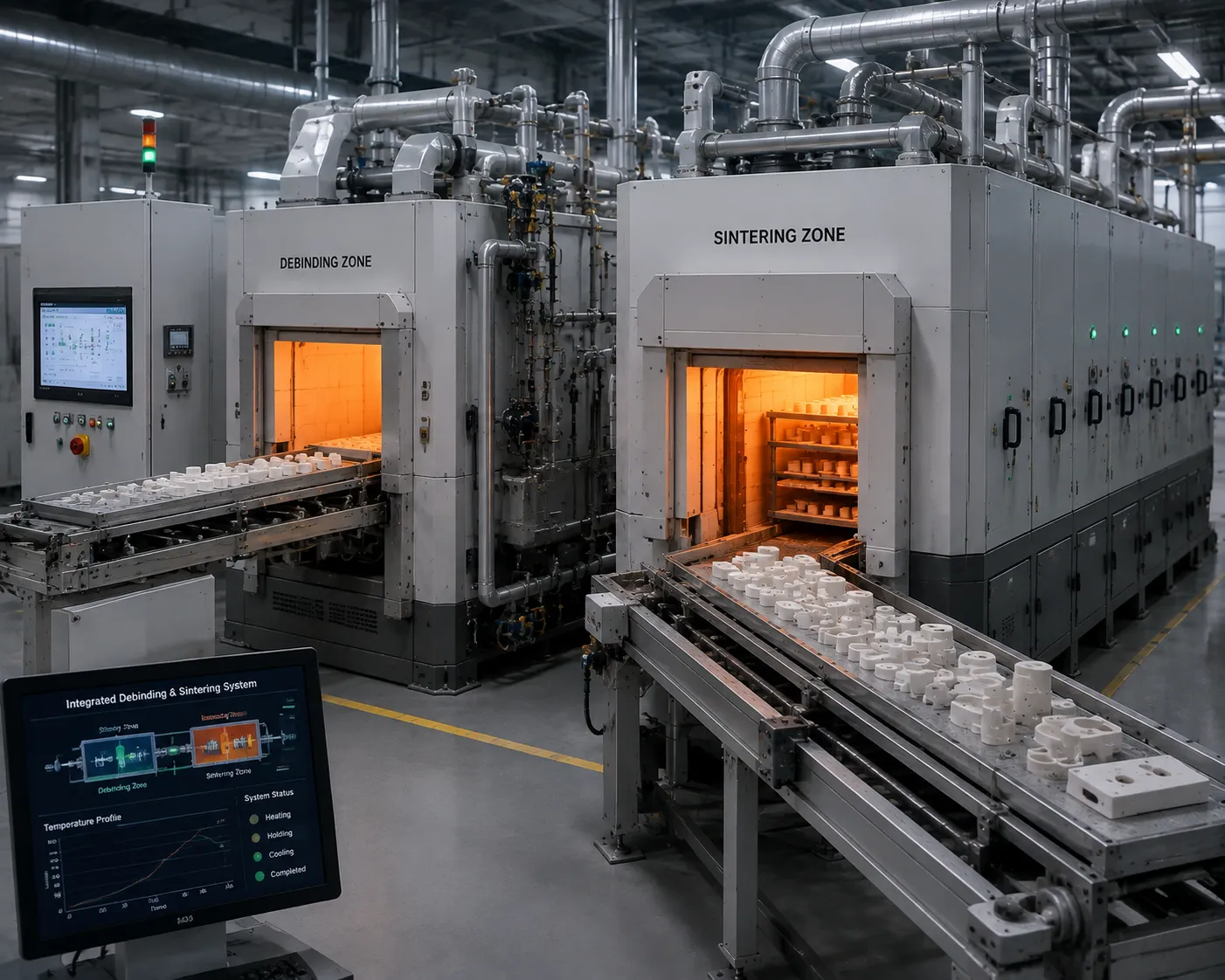
Integrated Debinding and Sintering Systems
Haitem Furnace combines debinding and high-temperature sintering into a single continuous automated thermal process. Our multi-zone atmosphere control furnace equipment eliminates transfer handling risks, ensures high temperature uniformity, and delivers reliable atmosphere anti-contamination performance across complex industrial cycles.
A Rigorous Engineering Journey: From Sample Sintering Tests to Mass Production Delivery
Eliminate equipment risks, thermal drift, and operational downtime in advanced ceramic manufacturing. Haitem Furnace delivers complete thermal profile optimization and custom furnace engineering to guarantee repeatable sintering and compliant ISO ceramic processing for maximum yield across every production run.
4-Phase
Validation Lifecycle
±3°C
Thermal Field Uniformity
100%
Process Traceability
ISO 9001
Certified Quality Assurance
Interactive Process Lifecycle
Click any step below to explore detailed engineering actions and quality verification protocols.
Every custom furnace project begins with deep technical evaluation. Our engineers assess your exact ceramic formulation, component dimensions, targeted yield rates, and firing environment requirements.
- • Material Parameters: Analysis of organic binder ratios, green-body shrinkage rates, and phase transition points.
- • Atmosphere Requirements: Precise evaluation for vacuum furnaces (10-3 Pa), nitrogen (N2), argon (Ar), or hydrogen (H2) atmospheres.
- • Production Scope: Sizing working dimensions to meet daily throughput targets without compromising thermal consistency.
We eliminate guesswork by conducting trial firings in the Haitem application center. We execute precise trial firings to establish optimal ramp rates and thermal soak profiles.
- • Thermal Profile Optimization: Fine-tuning multi-segment heating schedules to eliminate binder cracking and grain growth issues.
- • Debinding Curve Validation: Establishing controlled low-temperature burnout stages to prevent carbon residue contamination.
- • Empirical Analysis: Microstructural density testing and shrinkage verification for predictable, repeatable sintering outcomes.
Using finite element analysis (FEA) and advanced thermal field simulation, our engineering team customizes the structural architecture, heating elements, and insulation layout.
- • Heating Element Selection: Engineering configurations with Molybdenum Disilicide (MoSi2), graphite, or silicon carbide (SiC) elements.
- • Uniformity Optimization: Multi-zone independent PID loops maintaining precise chamber thermal balance within ±3°C.
- • Specialized Exhaust Engineering: Dedicated debinding channels prevent volatile condensates from degrading heating elements and seals.
Prior to shipment, each furnace undergoes rigorous factory acceptance testing (FAT) followed by expert on-site commissioning to guarantee turnkey production readiness.
- • Full-Load Burn-In: Continuous 48-hour high-temperature burn-in test verifying mechanical integrity and vacuum seal tightness.
- • Multi-Point Thermal Mapping: Calibrating thermocouples across 24 working points to certify strict ISO ceramic processing standards.
- • On-Site Training & Support: Comprehensive process training, parameter programming, and safety interlock validation for your operating team.
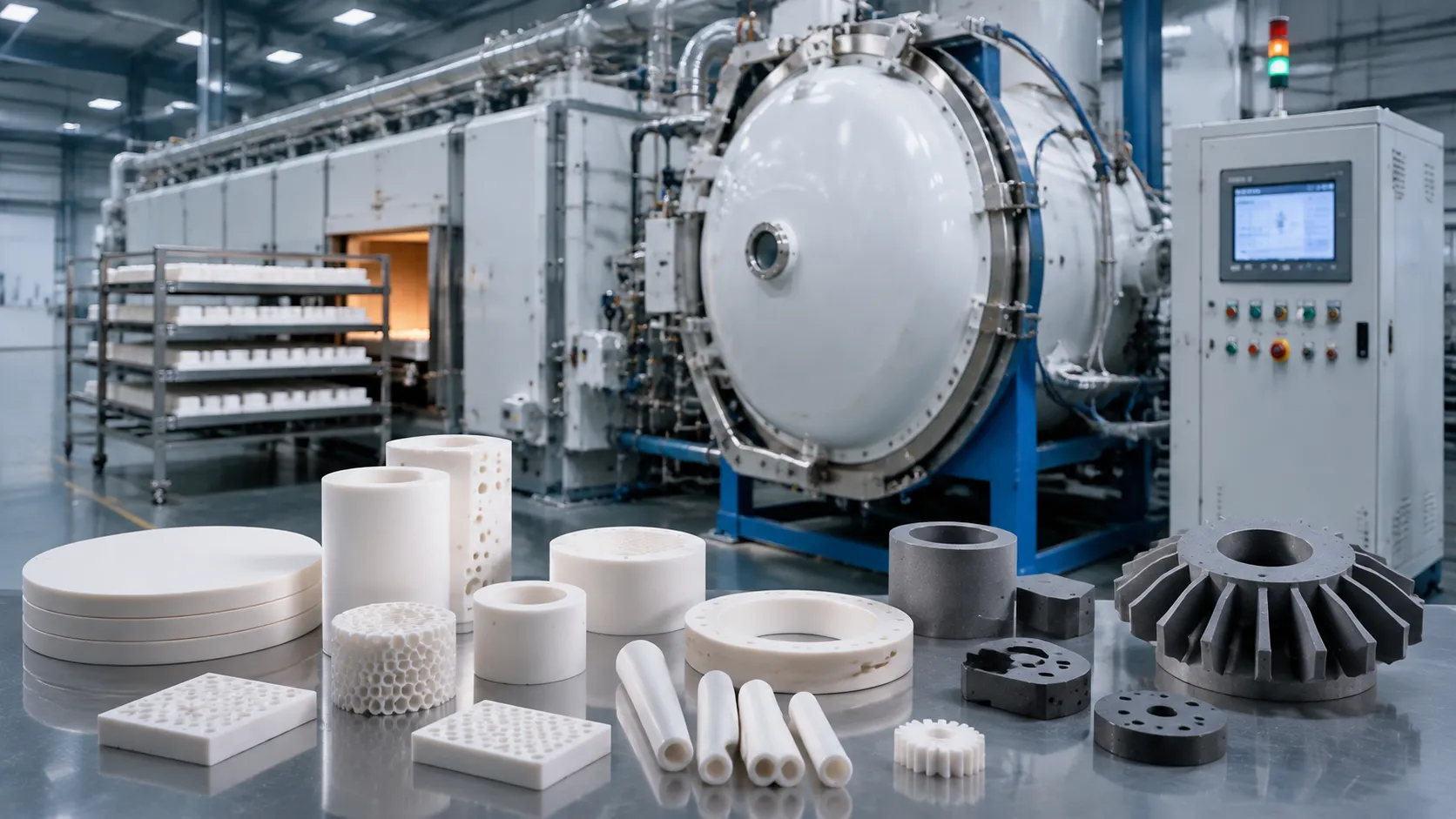
Precision Engineering Built for Technical Ceramics
Haitem Furnace provides end-to-end quality assurance backed by robust manufacturing-capabilities for ceramic enterprises worldwide. From high-purity oxide calcination to non-oxide vacuum overpressure sintering, our custom equipment guarantees maximum product density and long-term operating efficiency.
Engineering Lifecycle Matrix
A structured breakdown of deliverables and quality controls at every phase of equipment customization.
| Lifecycle Phase | Primary Focus Area | ISO & Quality Control Verification | Manufacturer Benefit |
|---|---|---|---|
| 01. Material & Scope Evaluation | Ceramic chemistry, green geometry, target throughput | Gas flow & vacuum level calculations | Prevents equipment under-sizing & atmosphere mismatches |
| 02. Trial Sintering & Profile Testing | Debinding schedules, ramp speed, soak times | Density measurements & shrinkage testing | Maximizes density and prevents cracking before scaling |
| 03. Custom Thermal Engineering | Element placement (MoSi2/graphite), multi-zone PID | 3D thermal field FEA simulation | Guarantees ±3°C uniformity across large workloads |
| 04. Factory Testing & Commissioning | 48-hour burn-in, thermal mapping, operator training | 24-point thermocouple calibration certificate | Ensures rapid, zero-risk ramp-up to mass production |
Core Engineering Advantages
Built-in technical safeguards designed to extend furnace lifespan and deliver repeatable sintering results.
Thermal Profile Optimization
Custom programmable multi-segment curves allow precise control over debinding, sintering, and cooling phases.
ISO Ceramic Processing
Strict quality standards ensure all atmosphere control systems and pressure vessels comply with global safety codes.
Repeatable Sintering
High consistency thermal fields guarantee uniform grain structure and eliminate lot-to-lot batch variation.
Energy-Efficient Insulation
High-purity polycrystalline mullite fiber or graphite composites reduce heat loss by up to 30%, lowering power usage.
Frequently Asked Questions on Ceramic Manufacturing and Sintering Thermal Processing
Engineered for procurement officers, material scientists, and thermal process engineers, this comprehensive ceramic furnace FAQ addresses critical operational, atmospheric, and metallurgical parameters in advanced ceramic manufacturing. Learn how Haitem Furnace equipment resolves complex production challenges in binder burnout, atmosphere stability, thermal gradient control, and defect prevention across high-temperature sintering workflows.
How do you select a ceramic furnace suitable for integrated debinding (binder burnout) and high-temperature sintering?
Selecting equipment for integrated debinding and sintering requires addressing severe chemical and thermal challenges generated during organic binder decomposition. Binders, plasticizers, and dispersants burn off between 200°C and 600°C, releasing corrosive volatile organic compounds (VOCs) and heavy carbonaceous tar residues that rapidly degrade heating elements, thermocouple assemblies, and refractory linings if left unmanaged.
Essential Engineering Requirements for Combined Debinding-Sintering Furnaces:
- Dedicated Debinding Exhaust Channels: Haitem Furnace integrates heated, non-condensing exhaust manifolds paired with thermal oxidizers to route organic gases out of the chamber, preventing carbon tar condensation on interior walls.
- Heating Element Anti-Corrosion Protection: Silicon Carbide (SiC) and Molybdenum Disilicide (MoSi₂) heating elements are protected with positive-pressure gas curtains during lower-temperature burnout cycles.
- Multi-Stage Thermal Ramp Controllers: Precision PID controllers execute ultra-slow heating ramps (as low as 0.2°C/min) during critical binder sublimation windows, preventing component bloating, blistering, or micro-cracking.
- Anti-Deposition Furnace Linings: High-purity polycrystalline mullite or alumina-silica fiber insulation designed to resist chemical contamination and thermal degradation over thousands of operational hours.
Combining debinding and high-temperature sintering into a single automated heating profile eliminates manual green-state transfer risks, prevents handling damage to delicate green parts, and lowers overall production energy consumption. To learn more about our company background and thermal processing experience, visit our about-us page.
What is the fundamental difference in sintering environments between oxide ceramics and nitride ceramics?
The fundamental distinction lies in chemical thermodynamics and phase stability. Oxide ceramics require oxidizing or neutral atmospheric conditions, whereas non-oxide nitride ceramics undergo thermal dissociation at elevated temperatures unless densified under precise sintering atmosphere selection parameters.
| Ceramic Material Family | Typical Examples | Required Sintering Atmosphere | Recommended Equipment Architecture |
|---|---|---|---|
| Oxide Ceramics | Alumina (Al₂O₃), Zirconia (ZrO₂), Ferrites | Air, pure Oxygen, or controlled inert purge | High-Temperature Box, Tube, or Pusher Kilns with ceramic fiber insulation |
| Nitride Ceramics | Silicon Nitride (Si₃N₄), Aluminum Nitride (AlN) | Ultra-pure Nitrogen (N₂), Argon, or Gas Pressure Sintering (GPS) | Ceramic vacuum furnace with high-purity nitrogen backfill capability |
| Carbide & Composite Ceramics | Silicon Carbide (SiC), Boron Carbide (B₄C) | High vacuum (10⁻³ Pa) or protective Argon flow | Graphite hot-zone ultra-high temperature vacuum-furnaces (up to 2200°C) |
For example, Silicon Nitride (Si₃N₄) decomposes into elemental liquid silicon and nitrogen gas when heated above 1700°C under ambient pressure. Haitem Furnace overpressure gas pressure sintering (GPS) systems apply positive nitrogen pressures (1–10 MPa) during peak dwell, suppressing thermal dissociation and delivering near-theoretical physical density.
How do you maintain temperature uniformity for large structural ceramic parts during sintering?
Large structural ceramic components—such as semiconductor SiC rings, ballistic armor plates, and heavy wear components—are vulnerable to warping and cracking caused by internal thermal gradients. Effective engineering mandates rigorous thermal gradient control across the entire heating and cooling cycle.
- Multi-Zone Independent PID Temperature Control: Haitem furnaces partition large heating chambers into 3 to 12 independently controlled thermal zones. Each zone incorporates separate thermocouple feedback loops and digital SCR power controllers to maintain internal thermal uniformity within ±1°C to ±3°C.
- Forced Atmosphere Convection (Low-to-Mid Temp): Sealed recirculating fan systems circulate hot shielding gas during low-temperature stages where radiant heat transfer alone is insufficient, ensuring uniform thermal absorption.
- Symmetrical Heating Element Placement: 360-degree element arrays and high-emissivity ceramic hearth setters eliminate localized cold spots across the hot zone.
- Controlled Ramp Cooling: Automated forced gas heat exchangers enforce uniform cooling rates, preventing destructive thermal shock during phase transformations.
Does Haitem Furnace support custom furnace engineering tailored to client-specific sintering profile curves?
Yes. Modern technical ceramics demand custom thermal profiles that off-the-shelf industrial furnaces cannot satisfy. Haitem Furnace specializes in custom engineering equipment tailored around customer-specific sintering curves, supporting seamless sintering profile optimization from R&D trial runs to industrial-scale production.
Custom Engineering Options Available:
- Multi-Gas Mass Flow Controller (MFC) Manifolds: Automated switching between H₂, N₂, Ar, Oxygen, or reducing gas mixtures according to temperature and time triggers.
- 100-Segment Programmable Industrial PLCs: Advanced touchscreen interfaces storing up to 50 custom thermal profiles, complete with SCADA system integration, automated diagnostics, and real-time data logging for quality auditing.
- Custom Chamber Structures & Automation: Tailored hot-zone dimensions, motorized bottom-loading elevators, continuous pusher tracks, and explosion-proof safety interlocks for hydrogen or flammable atmospheres. Our advanced manufacturing-capabilities ensure precise customization for every client setup.
What is the functional difference between ceramic calcination vs sintering during thermal processing?
Understanding calcination vs sintering is vital when planning complete ceramic thermal processing lines, as both stages serve distinct chemical and physical objectives:
Ceramic Calcination (Powder Pre-Firing)
Performed on raw precursor powders prior to green body forming. Calcination thermal processing drives off volatile bound moisture, decomposes carbonates or nitrates, synthesizes desired crystal phases, and controls initial particle size distribution.
Ceramic Sintering (Part Densification)
Performed on compacted green ceramic components. Sintering takes place at elevated temperatures (typically 70%–90% of absolute melting point), driving solid-state diffusion, grain boundary growth, and pore removal to convert porous green compacts into dense, high-strength final products.
Haitem Furnace provides dedicated rotary calcination kilns for raw powder preparation, alongside a full range of batch and continuous ceramic kiln systems for final component sintering.
How can ceramic manufacturers prevent defects like warping, cracking, or abnormal grain growth?
Defect prevention depends on balancing furnace atmosphere, temperature uniformity, and firing curve control. Common physical defects usually stem from three main thermal execution flaws:
- Cracking & Delamination: Caused by rapid heating during binder decomposition. Ensuring extended dwell times in the 200°C–500°C range allows organic gas to escape without creating internal pressure fractures.
- Warping & Dimensional Distortion: Caused by uneven heat distribution or improper hearth setter support. Utilizing high-flatness refractory plates and multi-zone PID control maintains dimensional stability across large ceramic surface areas.
- Abnormal Grain Growth: Caused by excessive peak sintering temperatures or overly long hold times. Implementing two-step sintering profiles (rapid heating to high peak temperature for densification followed by lower temperature dwell for grain refinement) preserves optimal mechanical strength and toughness.
Did not find your specific process question? Speak with our thermal processing engineers.
The Haitem application engineering team brings decades of ceramic thermal processing experience to deliver expert solutions for your complex process needs. Contact our thermal specialists today to review your formulation specs, schedule sample firing trials, or request detailed equipment quotes.