Advanced Powder Metallurgy Sintering Furnaces for Industrial PM Sintering
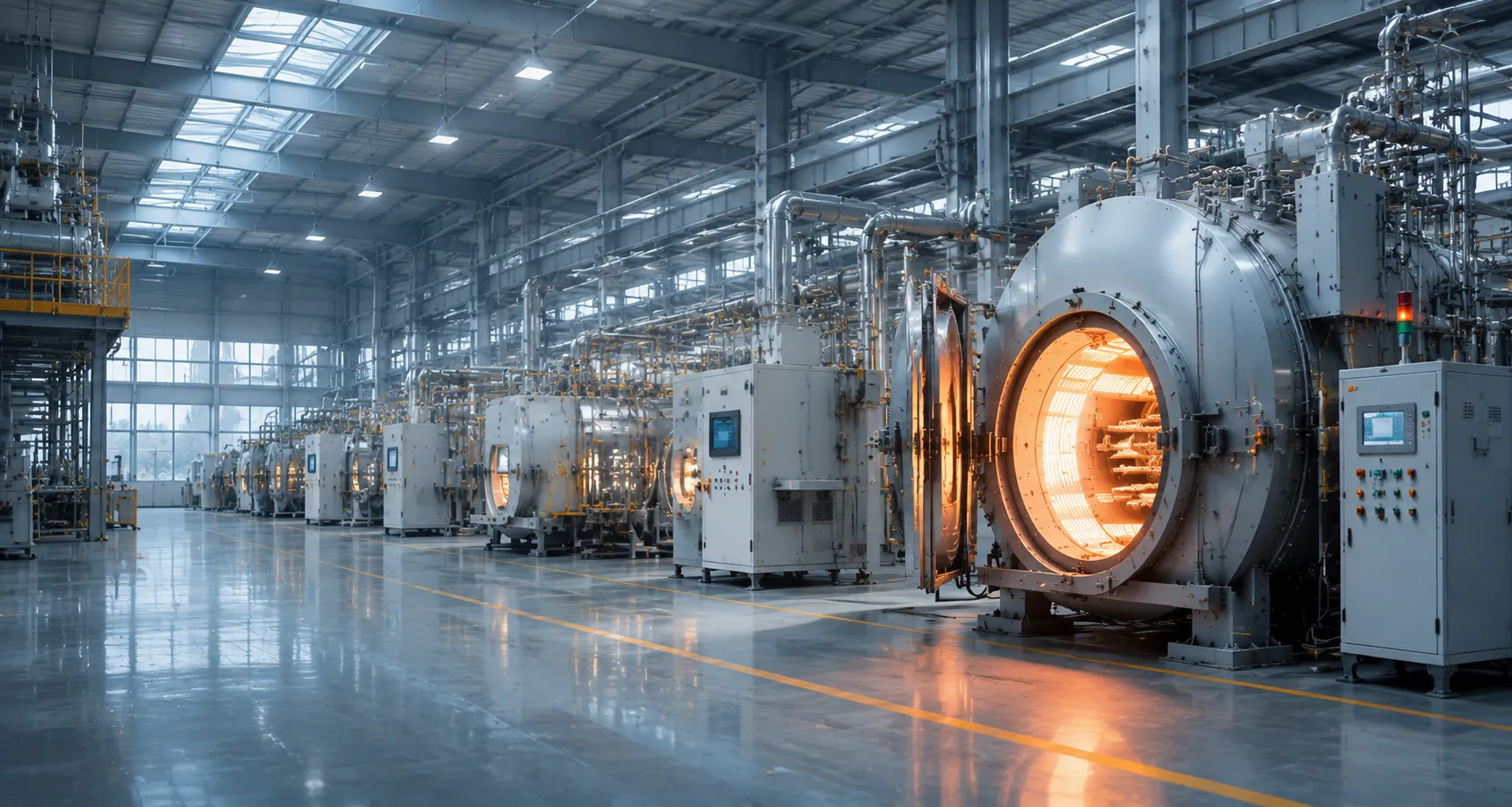
Haitem Furnace equips global manufacturers with high-performance industrial PM sintering systems. Achieve high-density, defect-free thermal processing with precise temperature control and multi-atmosphere regulation.
Thermal Accuracy
±1°C Precision
Quality Target
Zero-Defect Sintering
Mastering PM Debinding and Sintering: Process Panorama & Technical Challenges
Achieving defect-free, high-density powder metal parts demands rigorous control over thermal delubrication, solid-state necking, and phase transformations. Haitem Furnace combines material science expertise with advanced furnace engineering to master the densification process and overcome complex PM debinding and sintering challenges across high-volume production.
Thermal Debinding & Organic Extraction
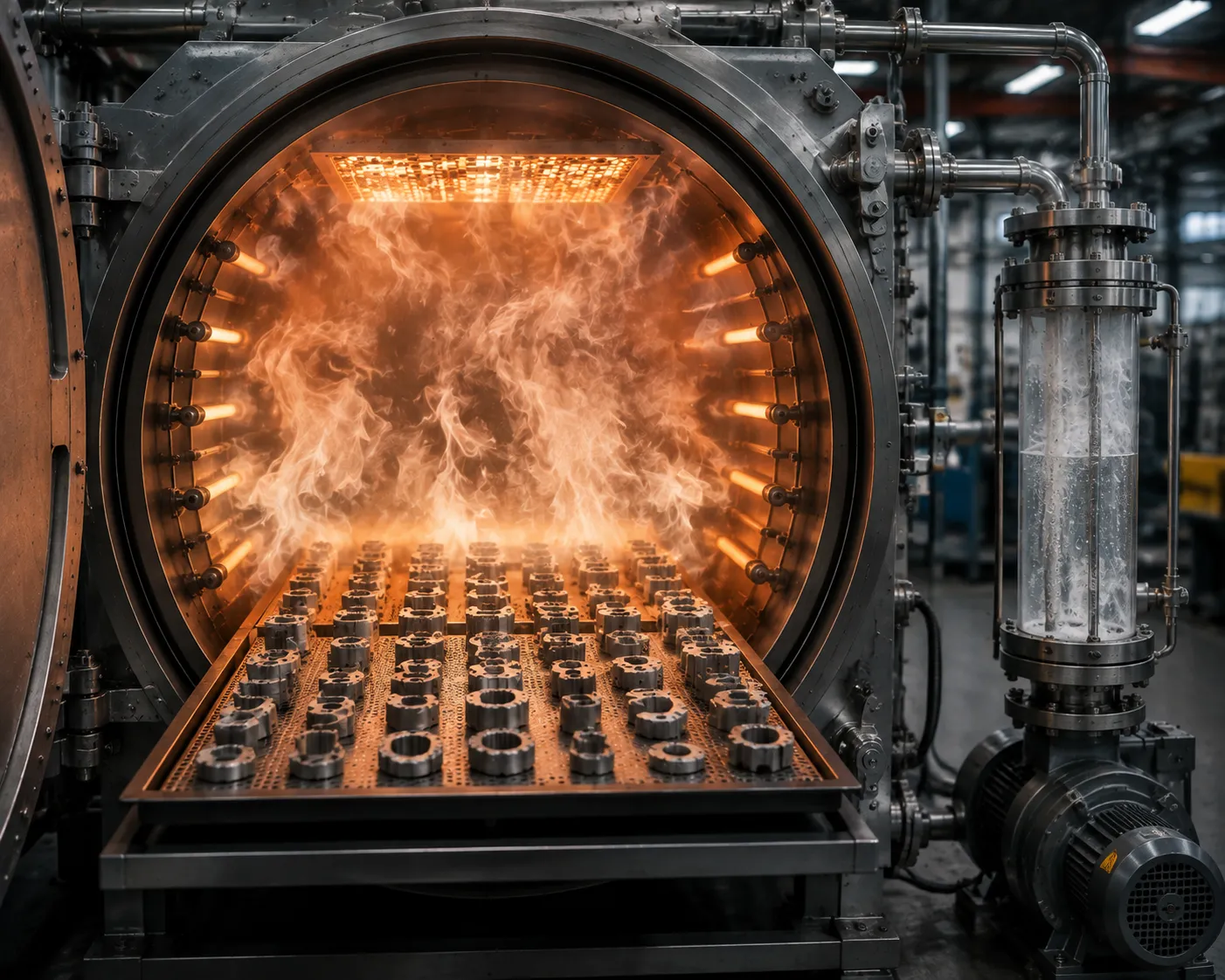
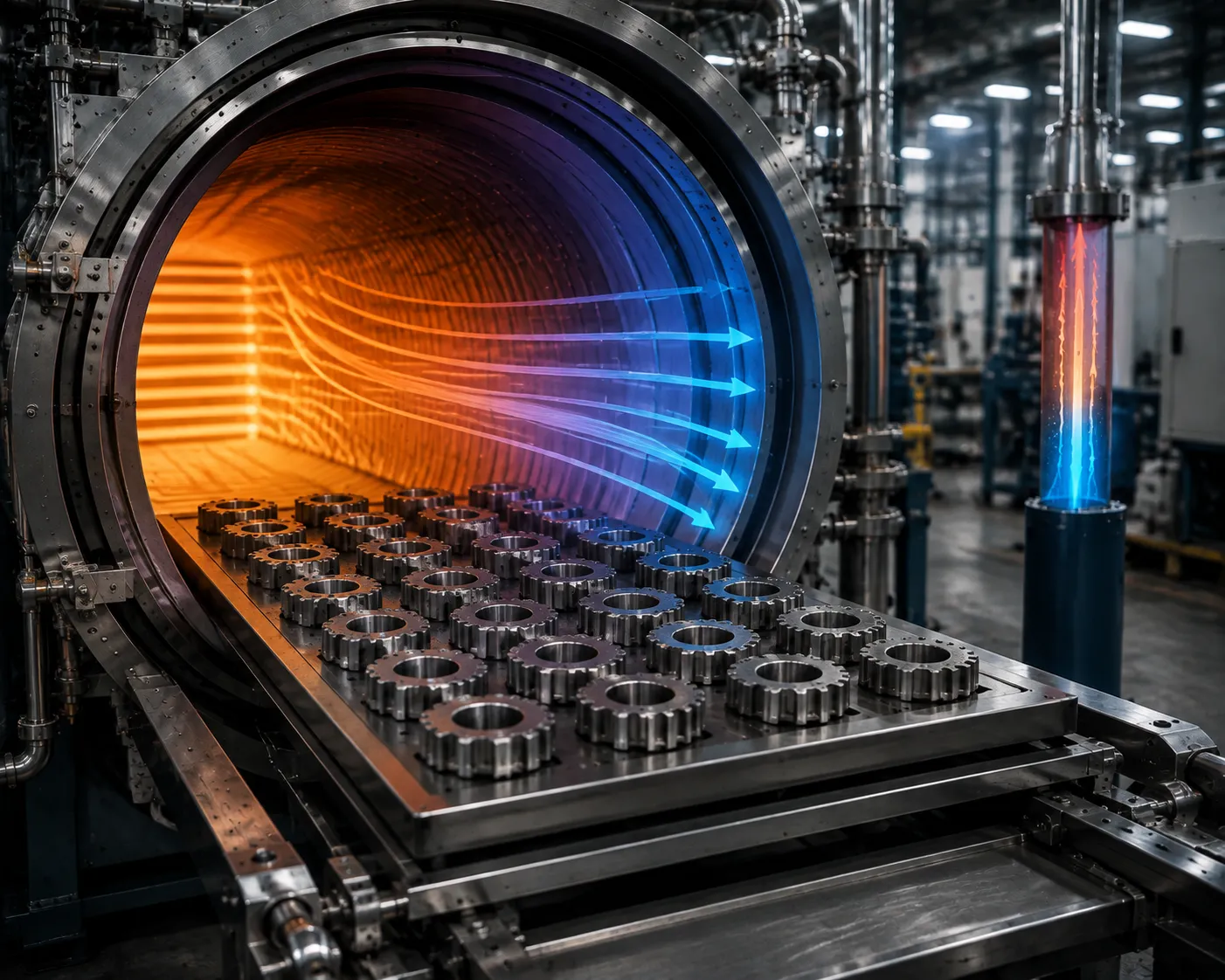
During early thermal ramps, organic binders, lubricants, and waxes are vaporized and swept from green compacts. Uncontrolled gas evolution or uneven heating causes internal micro-cracking, surface blistering, and hot-zone soot build-up, compromising part integrity.
Target Parameters
Ramp Rate: 1.0–2.5°C/min
Prevents explosive binder vaporization and micro-fissures
Atmosphere Protocol
Micro-Pressure Flow Sweep
Directs vaporized organics directly into thermal oxidizers
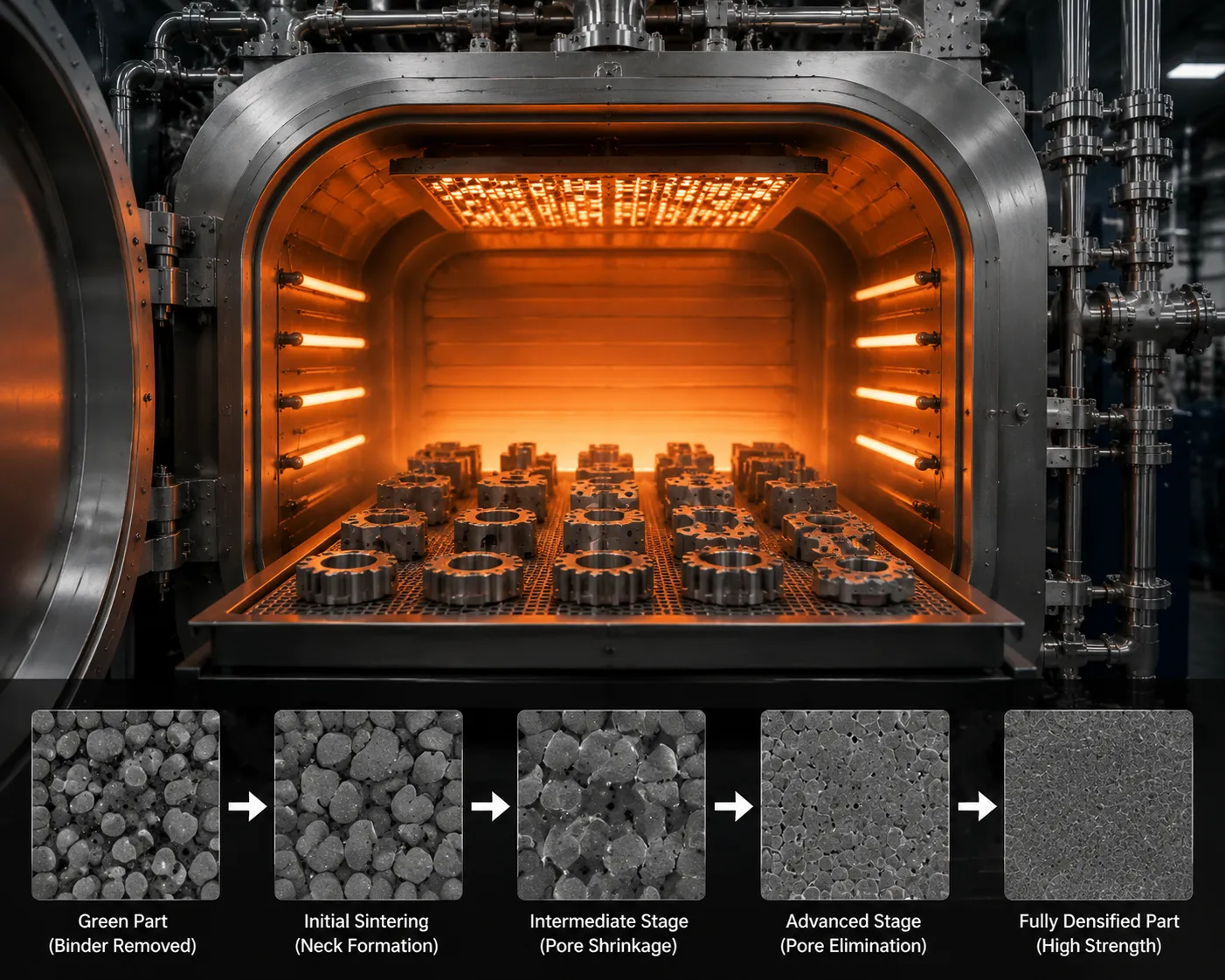
PM Sintering Technical Challenges
Root causes of part defects in continuous manufacturing
Precision PM parts suffer high scrap rates when thermal zones drift or atmosphere purity drops during continuous high-volume production runs.
Thermal imbalance across the belt or hearth causes uneven volumetric shrinkage, warping precision gear teeth and structural geometries.
Traces of moisture or oxygen cause surface carbon loss and alloy oxidation, leading to soft spots and compromised fatigue strength.
Inadequate thermal soak or poor heat transfer leaves internal pore networks open, reducing impact strength in thick-walled components.
Haitem Engineering Solutions
Haitem Furnace integrates multi-zone independent temperature regulation with advanced atmosphere controlled sintering systems to guarantee reproducible metallurgy and build long-term industrial trust:
- Multi-Zone PID Regulation: Up to 12 independently controlled heating zones maintain tight thermal uniformity across the entire furnace width.
- Micro-Pressure Gas Control: Positive-pressure gas manifolds completely seal the chamber against ambient oxygen and moisture ingress.
- Custom Hot Zone Design: Low-mass ceramic fiber insulation minimizes heat loss while accelerating thermal recovery during heavy load changes.
Engineering Precision in Atmosphere Controlled Sintering
High-performance PM manufacturing demands exact alignment between thermal profiles and gas-phase chemical reactions. In atmosphere controlled sintering, protective gases—including dissociated ammonia, endo-gas, nitrogen-hydrogen mixes, or high vacuum—actively prevent oxidation, control carbon potential, and drive rapid solid-state diffusion.
| Sintering Stage | Key Metallurgical Objective | Atmosphere Focus | Haitem Control Advantage |
|---|---|---|---|
| Thermal Debinding | Complete removal of organic binders without residual carbon contamination | High-velocity N2 purge or solvent-assisted atmosphere sweep | Multi-point vapor extraction system prevents binder re-deposition |
| Densification Process | Atomic diffusion, inter-particle necking, and core pore elimination | Ultra-pure H2/N2 or vacuum environment (Dew point < -50°C) | Multi-zone PID temperature management maintains strict ±1°C thermal stability |
| Sinter-Hardening | In-situ martensitic phase formation for high yield strength | High-velocity recirculated N2/H2 protective convection | Variable-frequency blower controls deliver precise cooling rates for target hardness |
Eliminating Material Decarburization
For iron-carbon automotive components, maintaining precise carbon potential equilibrium is critical. Haitem furnaces combine continuous oxygen sensing with automated carbon potential regulation during PM debinding and sintering, ensuring net-shape components retain exact surface hardness, carbon balance, and structural durability.
Optimized Thermal & Gas Efficiency
By pairing low-mass refractory insulation with automated gas flow control, Haitem furnace systems minimize protective gas consumption and cut energy usage by over 20%. This guarantees cost-effective high-volume production while maintaining complete control over the densification process.
Core Equipment Matrix for Powder Metallurgy Sintering
Haitem Furnace engineers a complete series of industrial thermal processing systems—from high-vacuum units to continuous mesh belt and precision controlled atmosphere furnaces. Explore our complete products line to align your material chemistry, compaction technique, and production throughput with the optimal PM sintering equipment. Learn more about us and our engineering commitment.
 High Vacuum Series
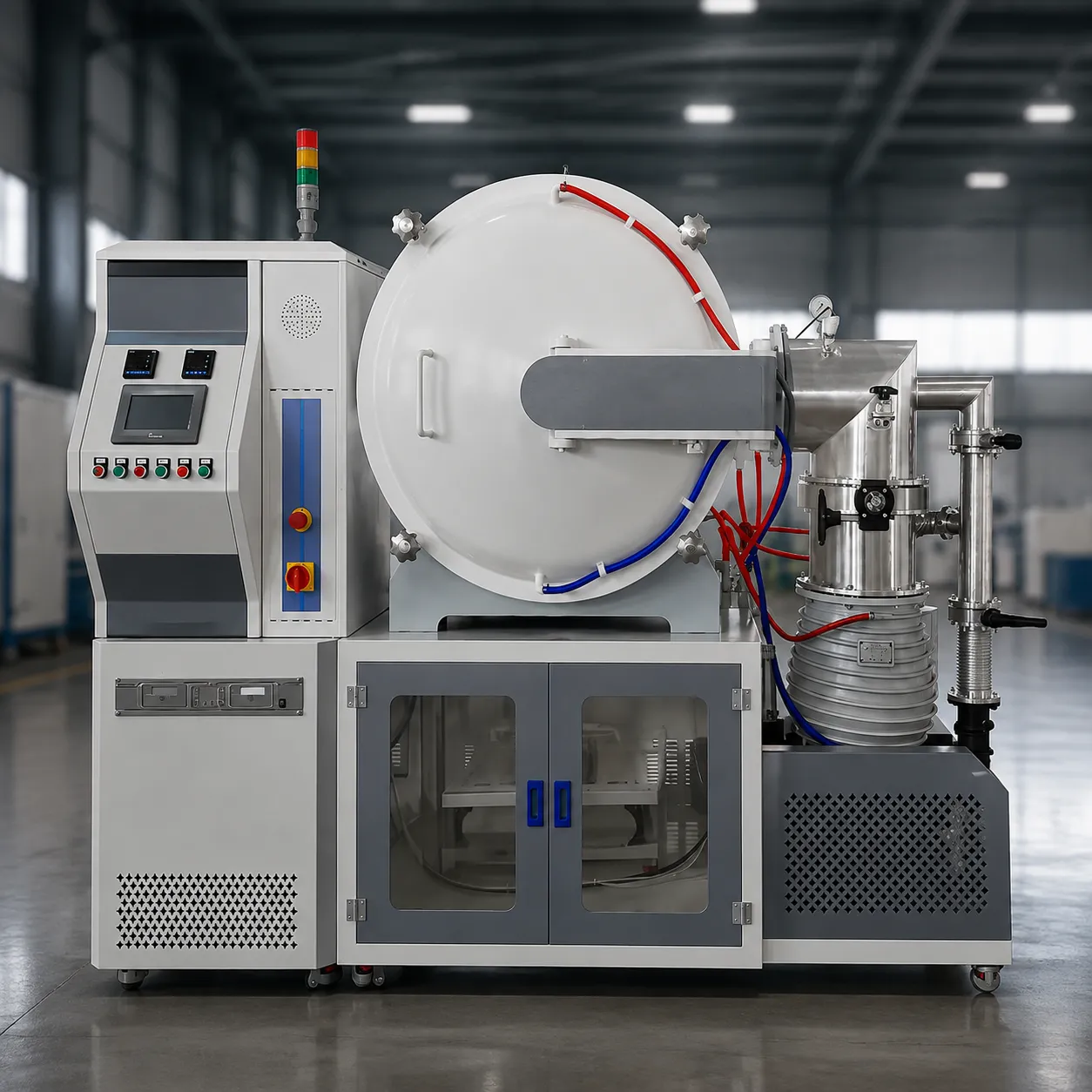
 Vacuum Sintering Furnace
Engineered for high-purity, reactive, and easily oxidized powder metallurgy alloys. Prevents oxidation and contamination while achieving maximum material densification.
| Target Materials | Titanium & Cemented Carbide |
|---|---|
| Max Temperature | Up to 2200°C |
| Ultimate Vacuum | 5 × 10⁻⁴ Pa |
| Atmosphere Options | High Vacuum, Ar, N₂, H₂ |
 High-Volume Production
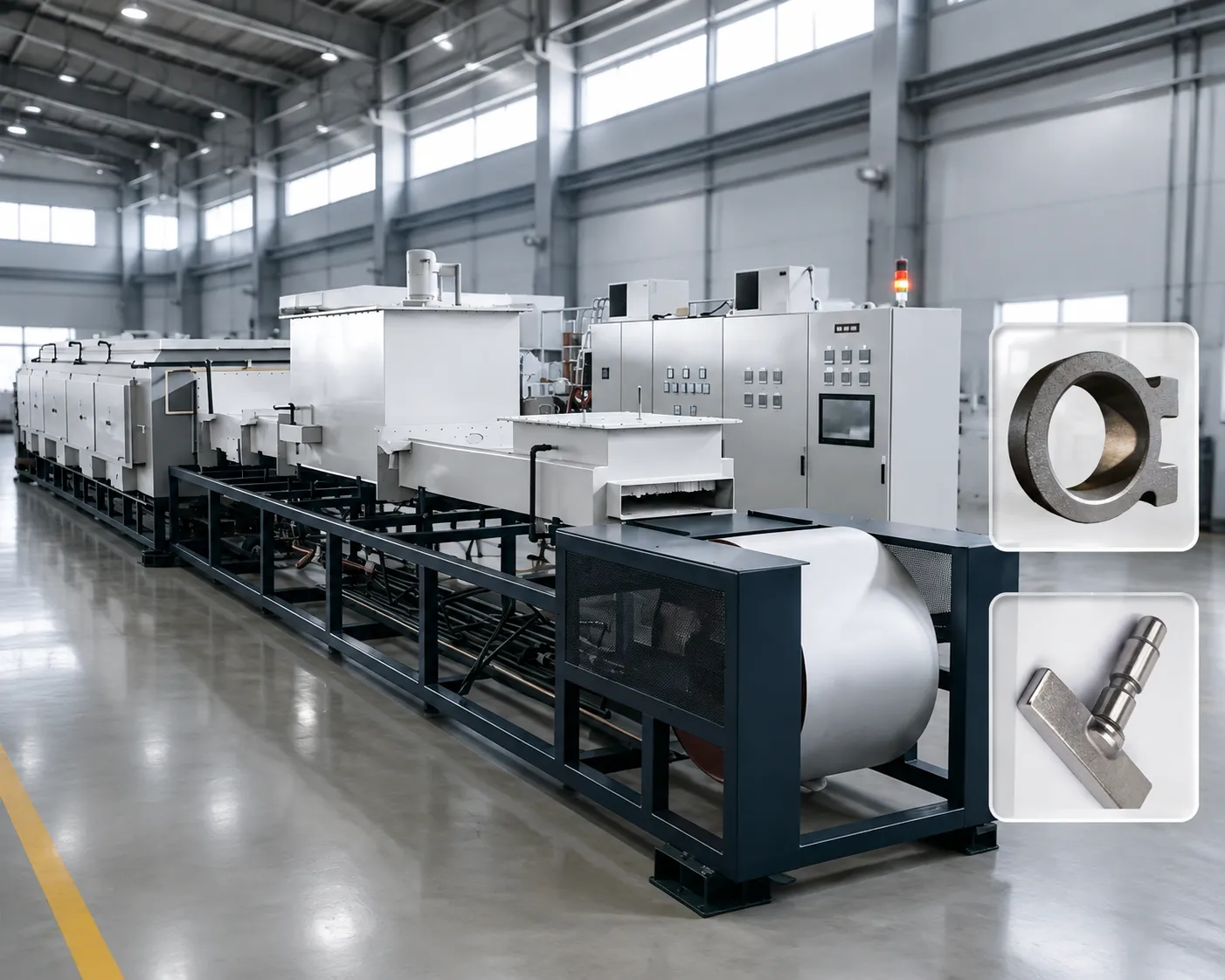
 Continuous Sintering Furnace
Heavy-duty mesh belt and pusher furnace configurations built for automated, high-throughput manufacturing of automotive and industrial PM components.
| Target Materials | Auto & Mechanical PM Parts |
|---|---|
| Max Temperature | 1150°C - 1350°C |
| Conveyor System | Mesh Belt / Hydraulic Pusher |
| Control Architecture | Multi-Zone PID Control |
 Precision Atmosphere
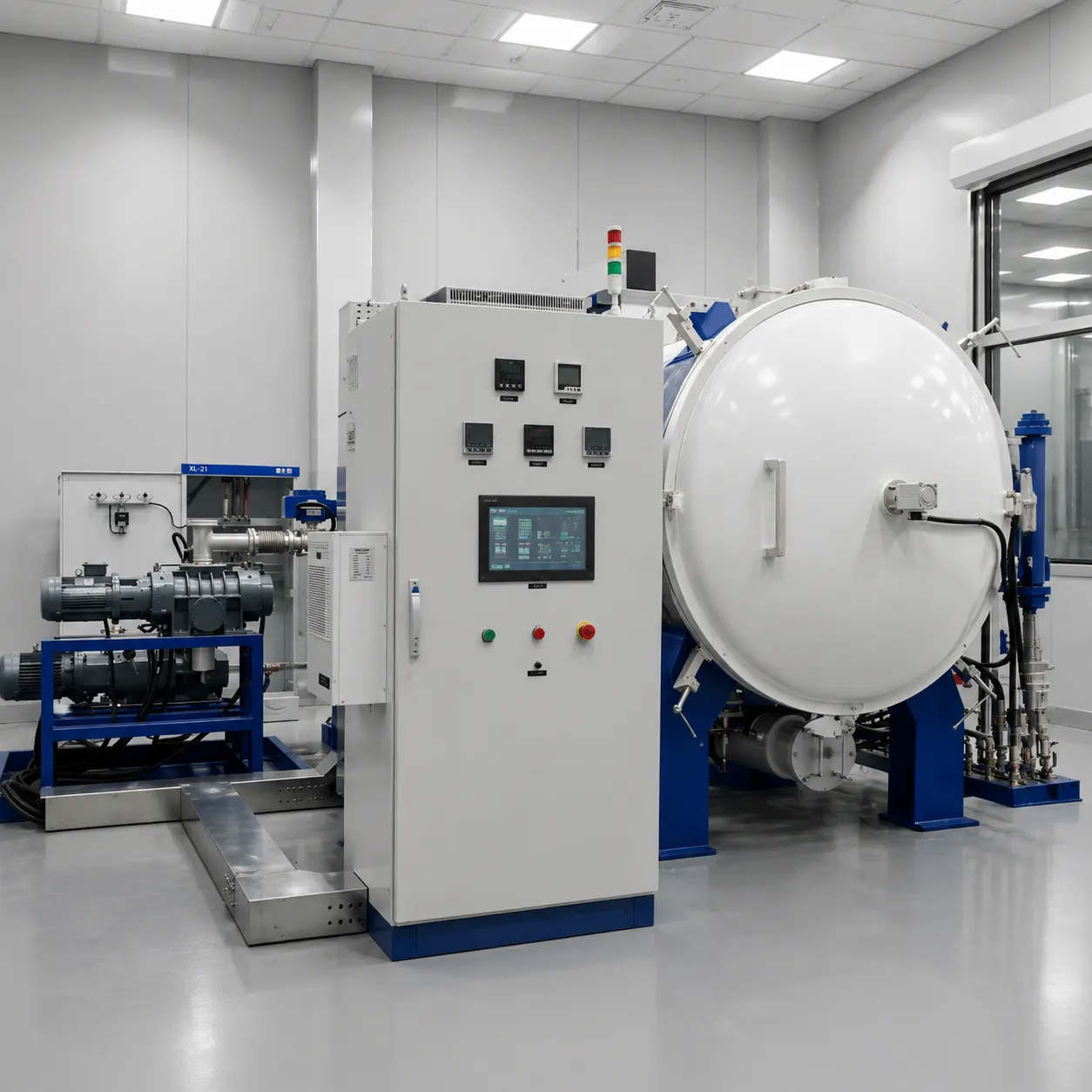
 Atmosphere Furnace for PM
Advanced atmosphere furnace for PM designed specifically for carbon potential regulation, debinding, and oxide reduction in iron- and copper-based structural parts.
| Target Materials | Fe-Based & Cu-Based Alloys |
|---|---|
| Max Temperature | 1200°C - 1400°C |
| Atmosphere Type | Endothermic / N₂-H₂ Blend |
| Carbon Control | Oxygen Sensor & Dew Point |
Need a Custom PM Sintering Configuration?
Our thermal engineering experts leverage our advanced manufacturing capabilities to deliver custom hot-zone dimensions, multi-stage debinding options, and multi-zone thermal profiling optimized for your specific metallurgy process.
Core Sintering Technology & Engineering Advantages
Built upon decades of specialized industrial furnace design, Haitem Furnace delivers advanced thermal processing systems engineered specifically for demanding powder metallurgy (PM) applications. By combining precise temperature control, controlled atmosphere distribution, and energy-saving sintering insulation, our equipment maximizes green-part density, eliminates surface oxidation, and ensures superior dimensional repeatability. Learn more about-us and our core focus in thermal engineering.
Overcoming Critical Thermal & Atmosphere Challenges in PM Processing
High-performance powder metallurgy manufacturing demands rigorous control over organic binder extraction, solid-state diffusion, and phase transformation. Standard sintering furnaces frequently suffer from thermal gradients, incomplete debinding, and unwanted decarburization—resulting in internal micro-voids, dimensional distortion, and structural weakness in finished components.
Haitem Furnace solves these critical manufacturing bottlenecks through multi-zone micro-processor regulation, high-purity atmosphere manifolds, and continuous dew-point monitoring. Whether processing iron-copper structural parts, heavy tungsten alloys, titanium compacts, or cemented carbide cutting tools, our thermal vacuum-furnaces architecture guarantees uniform densification, targeted atmosphere purity, and repeatable metallurgical excellence.
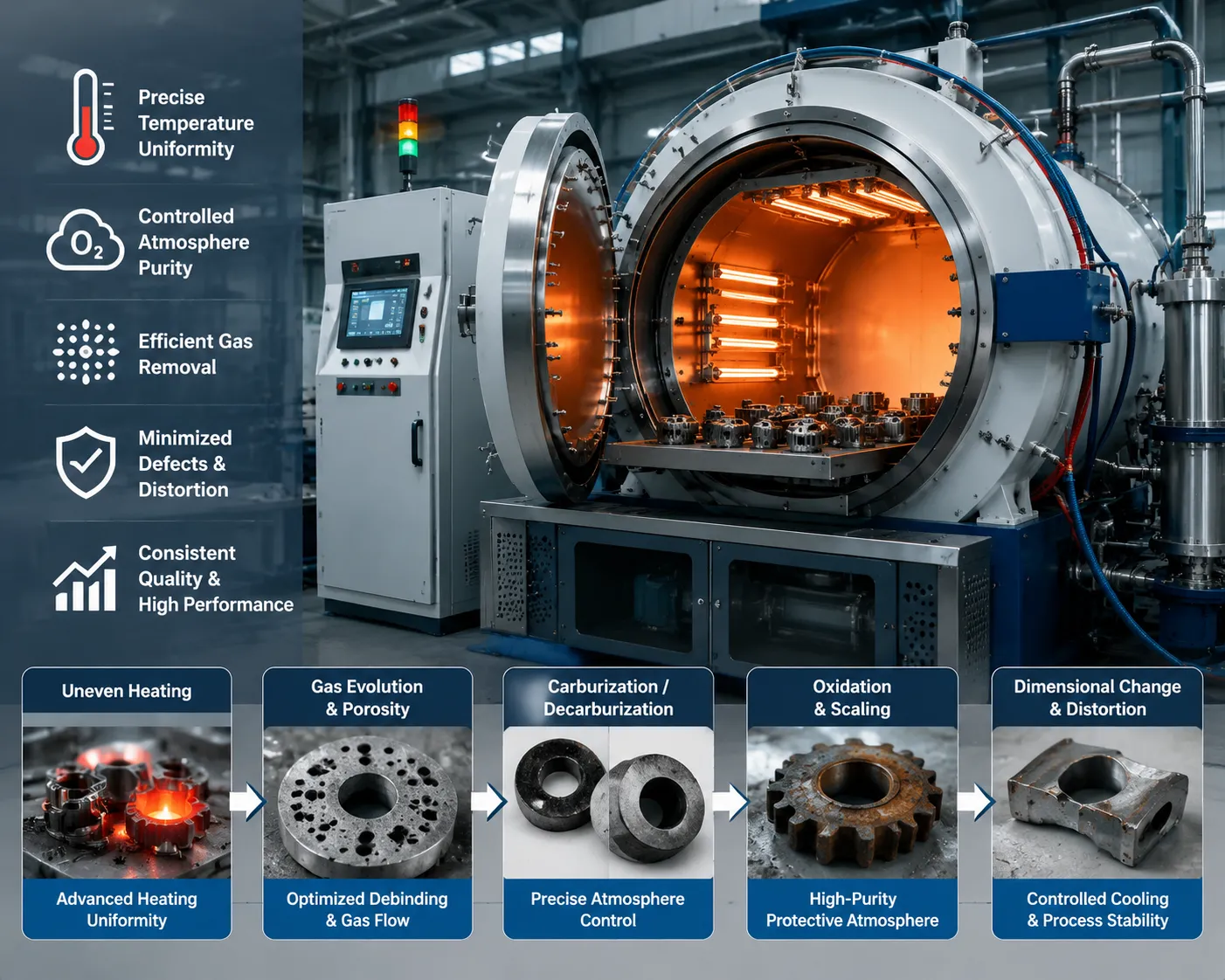
Precise Temperature Control
Multi-zone PID independent heating control delivers exceptional thermal uniformity across the hot zone, fully complying with rigorous ISO and AMS 2750 pyrometry standards backed by our strict quality-certifications.
- Accuracy: ±1°C steady-state stability
- Multi-zone heating balance
- AMS 2750 / CQI-9 pyrometry compliance
Furnace Atmosphere Control
Integrated multi-stage debinding and degassing systems pair with trace oxygen analysis for exact proportioning of hydrogen, nitrogen, and dissociated ammonia.
- Inline trace O₂ monitoring (< 5 ppm)
- Closed-loop micro-pressure regulation
- Zero-oxidation surface protection
Energy Saving Sintering
Advanced low-thermal-mass ceramic insulation paired with high-efficiency heating elements slashes power consumption by over 20% while accelerating thermal cycling.
- 20%+ thermal energy consumption reduction
- Ultra-low shell heat dissipation
- Rapid heating & cooling response
Automated Control
Industrial Siemens PLC touchscreen interface paired with real-time digital logging provides multi-segment recipe automation and complete production traceability.
- 100% digital batch traceability
- Automated thermal profile management
- SCADA & Ethernet network integration
Engineering Performance Comparison
See how Haitem Furnace sintering systems outperform standard market alternatives across critical thermal processing indicators.
| Engineering Indicator | Haitem Sintering Equipment Optimal | Conventional Sintering Furnaces |
|---|---|---|
| Temperature Uniformity | ±1°C to ±3°C (ISO / AMS 2750 Class 2) | ±8°C to ±15°C |
| Atmosphere Control & Dew Point | Inline dew point (-60°C) & trace O₂ analysis (< 5 ppm) | Manual rotameters without trace oxygen sensing |
| Debinding & Degassing Efficiency | Multi-stage thermal extraction with catalytic condensation traps | Single exhaust port prone to heavy binder accumulation |
| Thermal Energy Efficiency | 20% lower consumption with low-mass ceramic lining | High surface heat loss & heavy refractory brick absorption |
| Process Traceability | PLC digital curve records & SCADA system integration | Manual operator paper logs or basic single-loop controllers |
High-Throughput PM Automotive Parts Sintering
High-volume PM automotive parts and structural components sintering demand exact dimensional stability, controlled carbon potential, and accelerated cooling to maximize fatigue resistance. Haitem continuous mesh belt and pusher furnace systems incorporate multi-zone temperature control to drive high-efficiency production for transmission gears, synchronizer sprockets, and oil-impregnated bearings.
- Core Components: Transmission gears, synchronizer sprockets, oil-impregnated bearings.
- Atmosphere Control: Endothermic, nitrogen-hydrogen, or cracked ammonia gas.
- Key Advantage: Integrated convection rapid cooling zone for inline sinter-hardening.
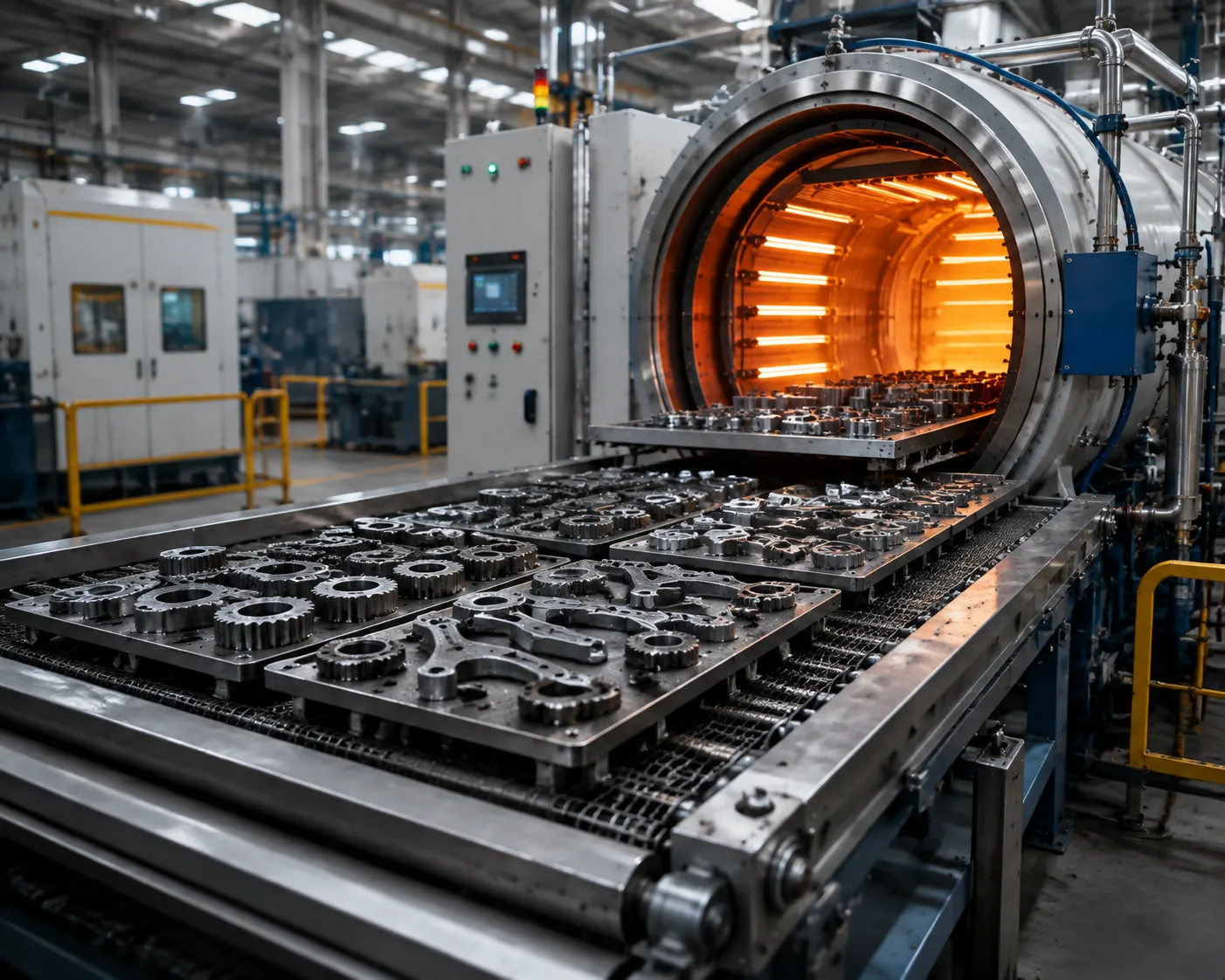
Typical Operating Parameters
| Material Grade | Sintering Temp. | Atmosphere | Achieved Density |
|---|---|---|---|
| Fe-Cu-C / Low-Alloy Steels | 1120°C – 1280°C | N₂ + H₂ / Endo Gas | 7.10 – 7.45 g/cm³ |
| Diffusion-Alloyed Powders | 1150°C – 1250°C | Micro-Pressure N₂/H₂ | 7.20 – 7.50 g/cm³ |
| Stainless Steel PM Components | 1250°C – 1350°C | High-Purity Pure H₂ / Vacuum | 7.25 – 7.55 g/cm³ |
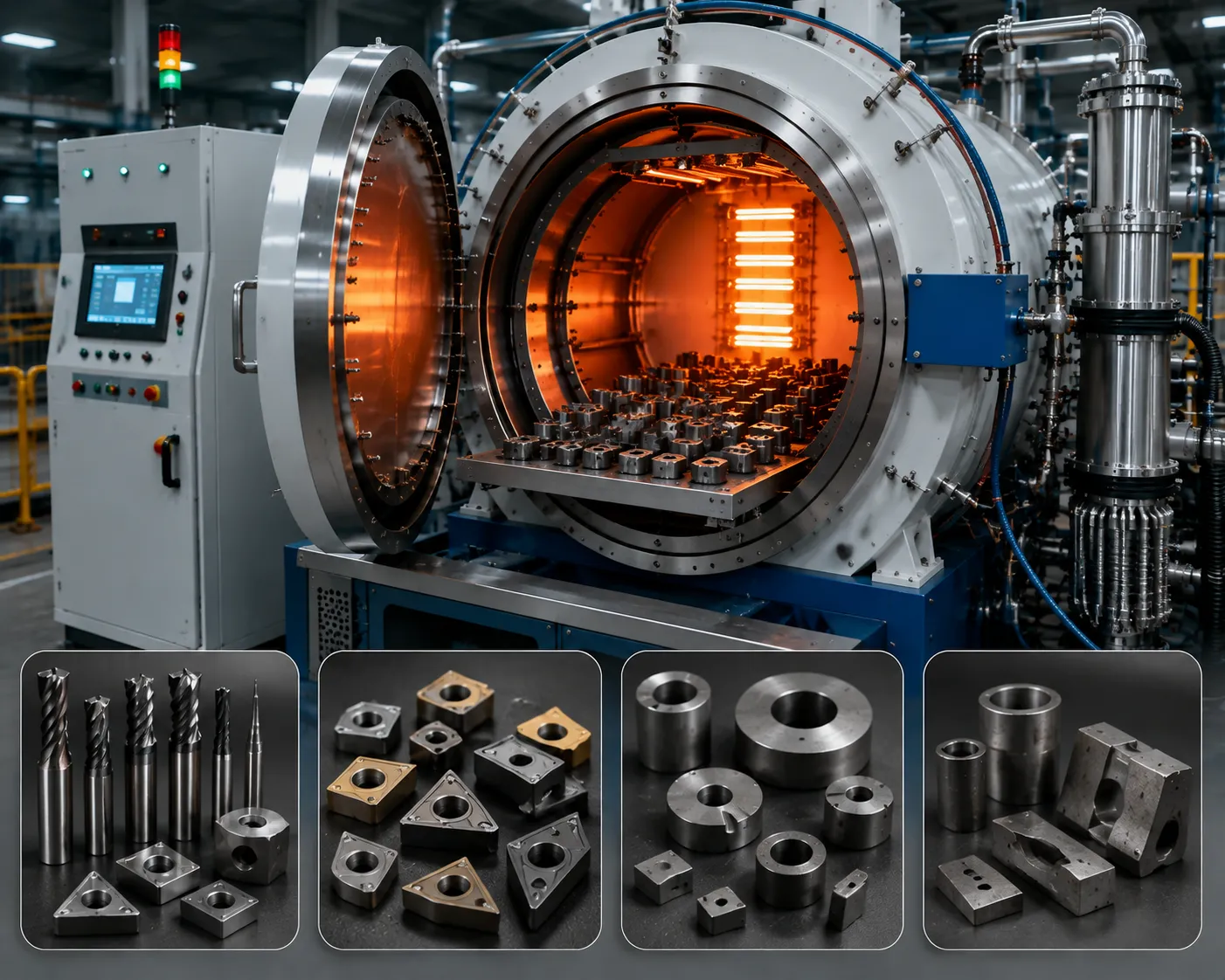
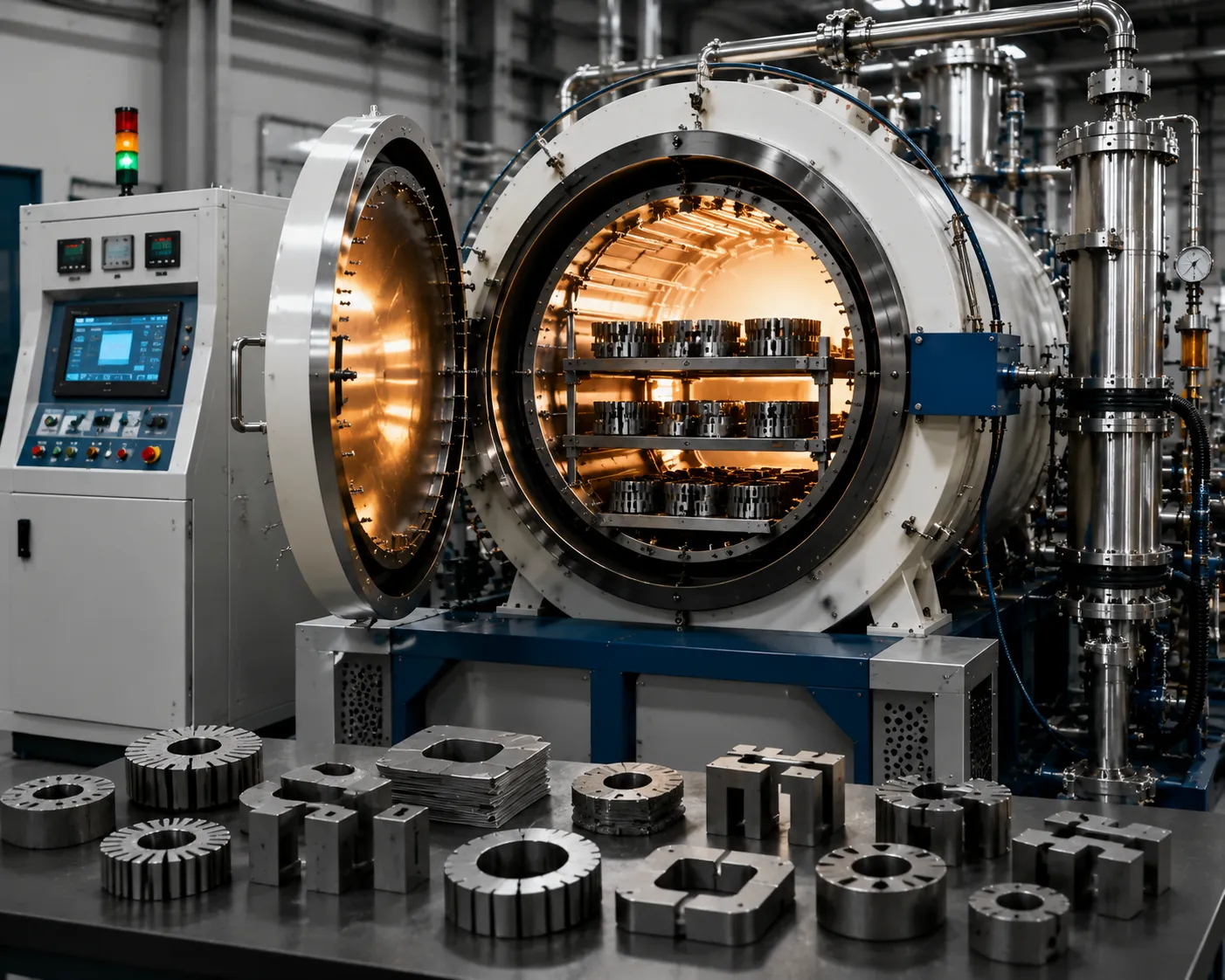
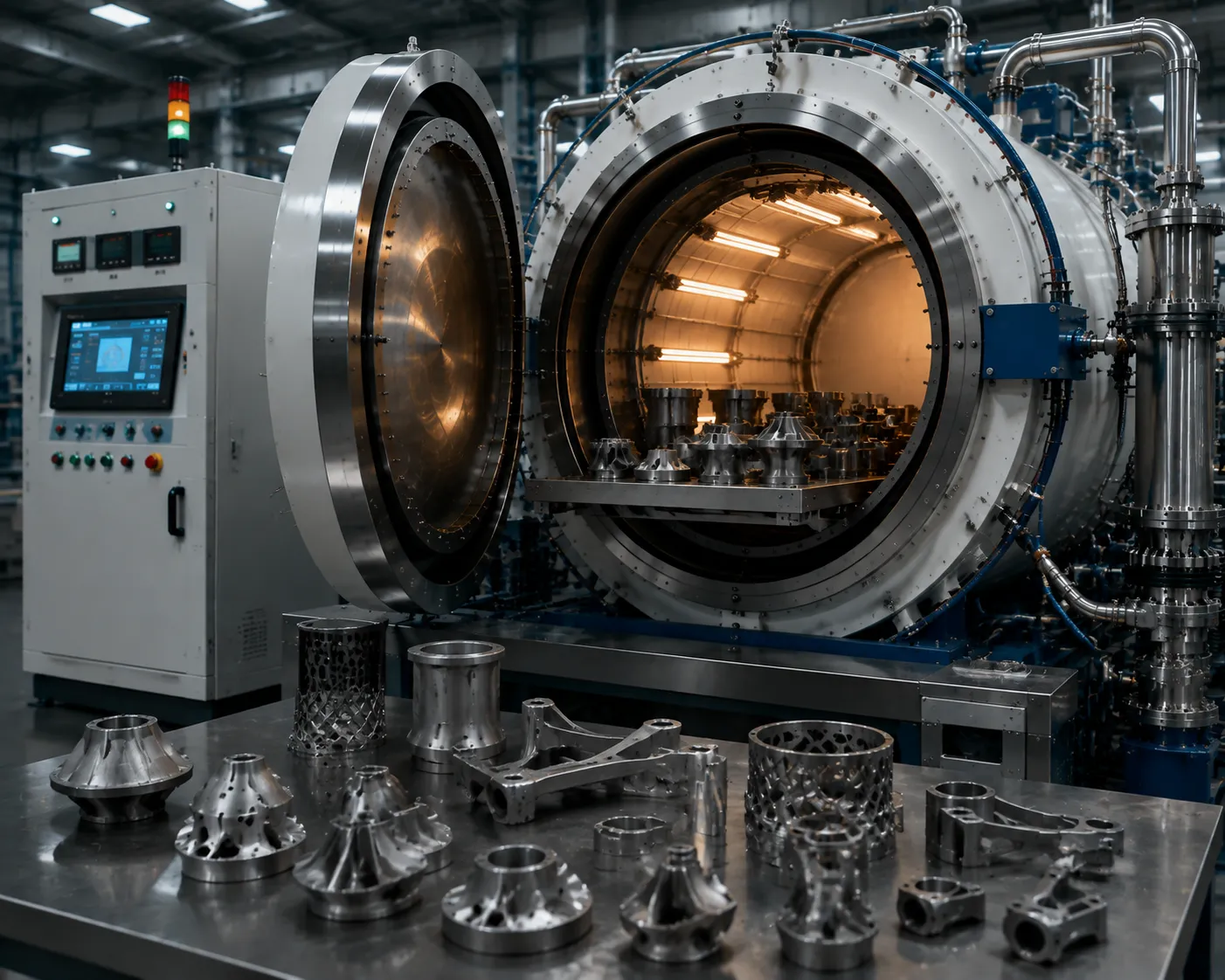
Need Custom Thermal Profile Engineering?
From high-strength PM automotive parts to high-precision cemented carbide, Haitem provides customized heat treatment process support for different powder metallurgy material characteristics.
Furnace Engineering Capability Backed by Global Standards
Haitem Furnace combines precision thermal engineering with rigorous quality control systems, serving as a trusted long-term equipment partner for leading powder metallurgy manufacturers worldwide.
Global Delivery Cases
Proven thermal processing systems successfully engineered and deployed across international industrial hubs.
Control Precision
Uncompromising temperature accuracy and thermal uniformity required for critical metallurgy applications.
Customized Match Rate
Tailored furnace architectures engineered precisely around client production workflows and material requirements.
ISO 9001 & CE Certified
Fully compliant with ISO 9001 quality management and CE industrial safety directives for reliable global operations.
Patented Technology
Proprietary hot zone engineering and precision atmosphere control deliver consistent, defect-free metallurgical outcomes.
Lifecycle Engineering
Turnkey project execution encompassing material testing, design customization, commissioning, and process optimization.
Lifetime Hot Zone Care
Responsive global technical service providing preventive maintenance, rapid spare parts, and specialized hot zone refurbishments.
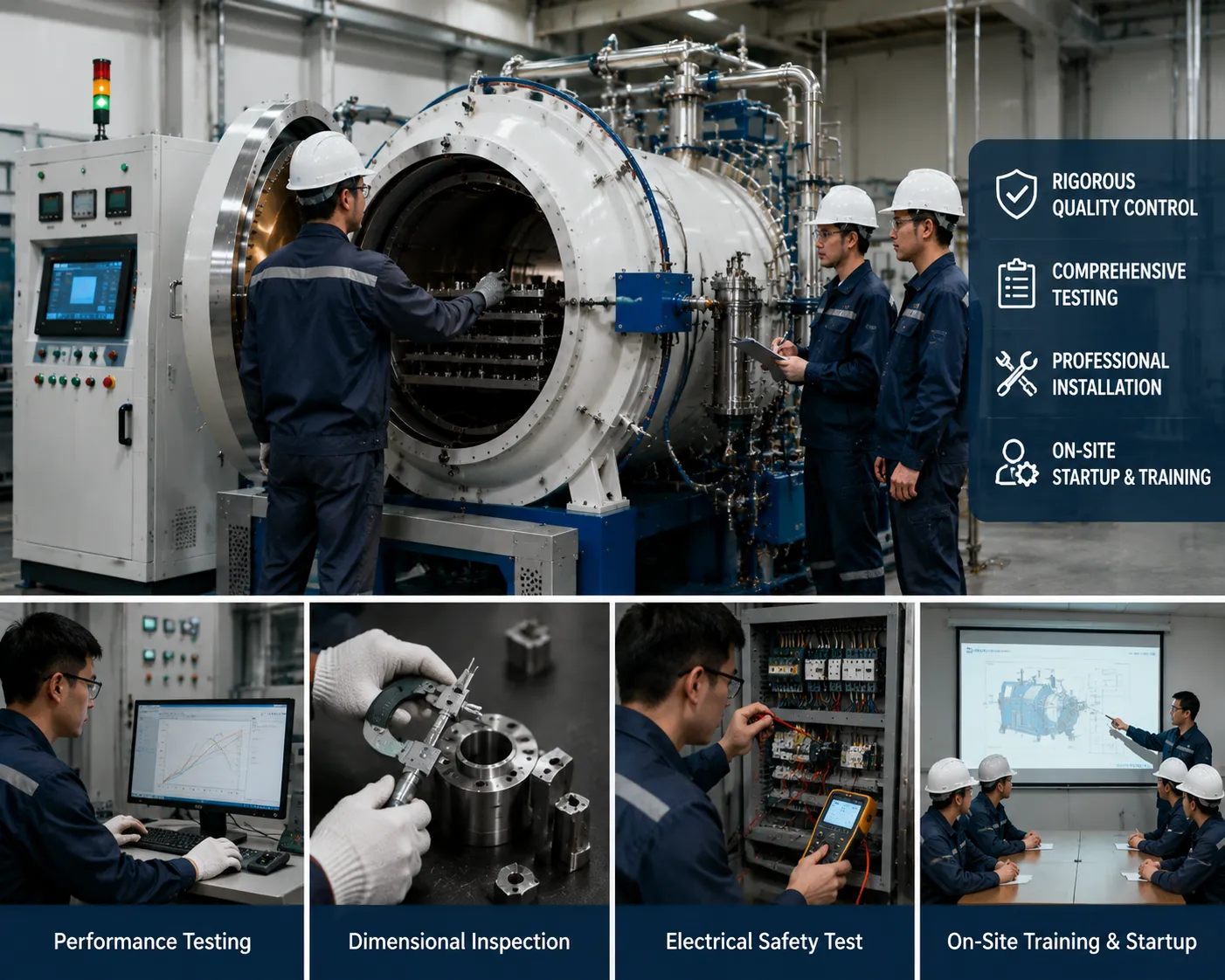
Rigorous Quality Control from Testing to On-Site Startup
Every furnace engineered by Haitem Furnace undergoes thermal modeling, multi-stage factory acceptance testing (FAT), and strict safety verification prior to export. Our manufacturing standards ensure your production line achieves target component density and process repeatability from day one.
Powder Metallurgy Sintering FAQs: Process Control & Furnace Selection
Selecting the optimal thermal processing equipment requires deep technical alignment between material chemistry, atmosphere dynamic control, and heating architecture. Learn more about-us and how the Haitem Furnace senior heat treatment engineer team provides expert technical answers below to resolve common challenges in sintering atmosphere selection, temperature management, debinding efficiency, and custom furnace design.
01 How do I select vacuum sintering or atmosphere sintering for my powder metallurgy parts?
The choice between a vacuum sintering furnace and a continuous atmosphere controlled sintering line depends primarily on material composition, sensitivity to oxidation, target part density, and required production output volume. Explore our advanced vacuum-furnaces line for specialized thermal treatment needs.
Vacuum Sintering Environment
Best suited for high-purity, reactive, or high-alloy materials such as titanium alloys, MIM stainless steel, tool steel, cemented carbide, and soft magnetic alloys. Vacuum thermal processing eliminates surface oxides, prevents atmospheric oxidation during high-temperature soak, and supports partial-pressure inert gas flushing (argon or nitrogen) to suppress the vaporization of volatile elements.
Controlled Atmosphere Sintering
Ideal for continuous, high-volume production of iron-based, copper-based, and bronze structural powder metallurgy components, such as automotive transmission gears, synchronizer sprockets, and self-lubricating bushings. Utilizes active protective atmospheres including nitrogen-hydrogen blends, endothermic gas, or dissociated ammonia to maintain precise carbon potential and accelerate oxide reduction.
| Selection Parameter | Vacuum Sintering System | Controlled Atmosphere System |
|---|---|---|
| Target Materials | Titanium alloys, Hard metals, MIM Stainless, Refractory Alloys | Iron-based PM parts, PM Automotive gears, Copper/Bronze bushings |
| Process Atmosphere | High Vacuum (10⁻² to 10⁻⁵ mbar), Argon/Nitrogen Partial Pressure | Endothermic Gas, N₂/H₂ Blends, Dissociated Ammonia |
| Production Mode | Batch / Semi-Continuous Vacuum Chambers | Continuous Mesh Belt / Continuous Pusher Sintering Line |
| Carbon & Oxide Control | High-vacuum degassing with zero atmospheric carbon flux | Active dynamic carbon potential control & micro-pressure regulation |
02 How does a Haitem sintering furnace solve binder contamination and exhaust gas treatment issues during debinding?
Thermal debinding (delubrication) generates significant organic vapors, paraffin waxes, and synthetic polymers. Uncontrolled binder burnout causes carbon black deposition, fouls furnace heating elements, degrades thermal insulation, and shortens vacuum pump service life.
Haitem Furnace resolves delubrication contamination and environmental emissions through a comprehensive multi-stage Thermal Debinding & Exhaust Protection System:
- ✓ Directional Thermal Sweep Gas Flow: Pre-heated nitrogen or inert sweep gas flows directly across the debinding hot zone, driving volatile organic vapors away from heating elements into dedicated exhaust manifolds.
- ✓ Dual-Stage Wax Traps & Condensation Units: Heavy organic binders are condensed and captured in water-cooled collection traps before exhaust streams enter filtration or vacuum pumping systems.
- ✓ Thermal Afterburners & Incinerators: For continuous atmosphere furnaces, integrated thermal oxidizers burn off volatile binder gases at high temperatures (>750°C), converting organic discharge into compliant CO₂ and H₂O emissions.
- ✓ Vacuum Pump Protection: High-vacuum systems incorporate active charcoal filtration, cold traps, and inline oil separators to maintain pump oil purity and extend overhaul intervals.
03 What are the equipment's maximum PM sintering temperature and furnace temperature uniformity indicators?
Thermal consistency is critical to achieving predictable dimensional shrink rates, optimal grain boundary growth, and reliable densification. Operational PM sintering temperature limits and temperature control parameters for Haitem equipment include:
Designed for iron, steel, and bronze high-throughput sintering with multi-zone heating control.
Standard rating for MIM stainless steel, tool steels, titanium alloys, and cemented carbide sintering.
Specialized tungsten or graphite hot zones for refractory metals, heavy alloys, and advanced ceramics.
Temperature Uniformity Standards: All Haitem powder metallurgy equipment strictly adheres to ISO/AMS 2750 pyrometry standards. Temperature uniformity across active heating zones achieves:
- Standard Industrial Sintering: ±3°C to ±5°C across the entire effective work zone envelope.
- High-Precision Hot Zones: Up to ±1°C temperature control precision through independent multi-zone PID power tuning and multi-point thermocouples.
04 Is custom furnace design supported for specific sintering curves and new material R&D?
Yes. Non-standard thermal engineering and bespoke custom furnace design represent core strengths of Haitem Furnace. Backed by our robust manufacturing-capabilities, we collaborate with automotive Tier-1 suppliers, powder metallurgy research institutes, and aerospace component makers to deliver tailored sintering systems matching complex thermal profiles.
Key Engineering Customization Options:
Whether you are scaling up novel soft magnetic alloys, titanium near-net shapes, or binder-jetting post-processing production, our engineers conduct pre-build thermal modeling and process validation to ensure long-term furnace reliability.
Have Specific Sintering Process Questions?
Our thermal engineering specialists are ready to review your material specifications, throughput targets, and process atmosphere requirements.